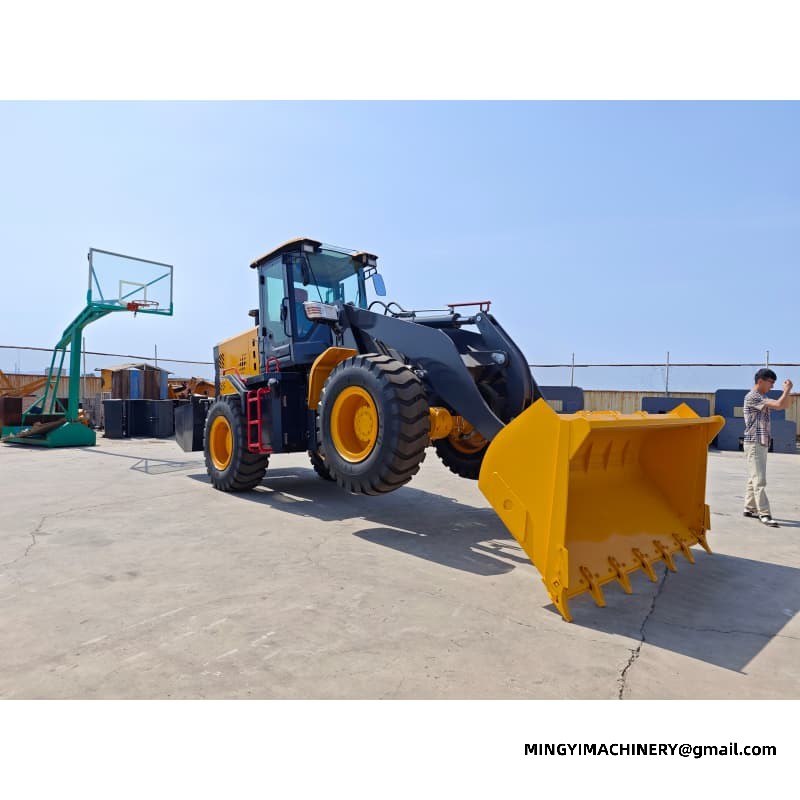
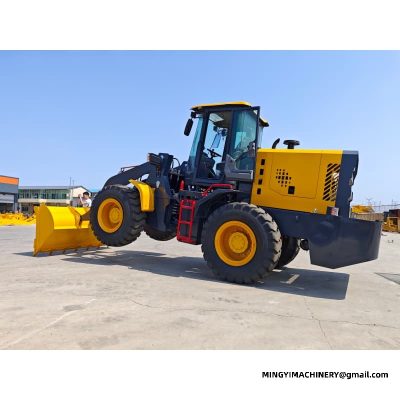
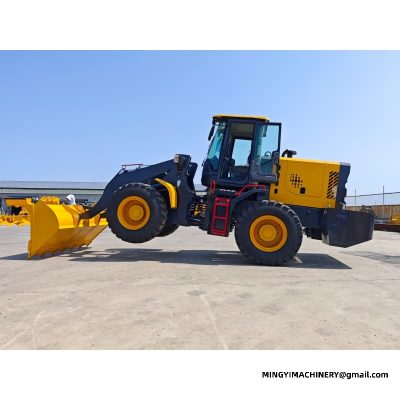
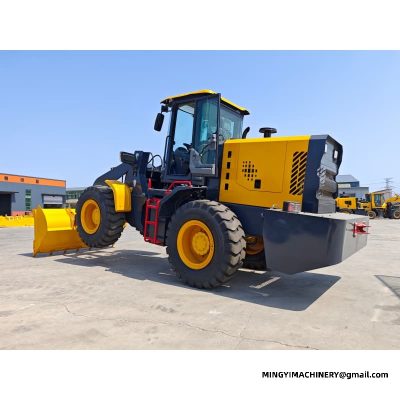
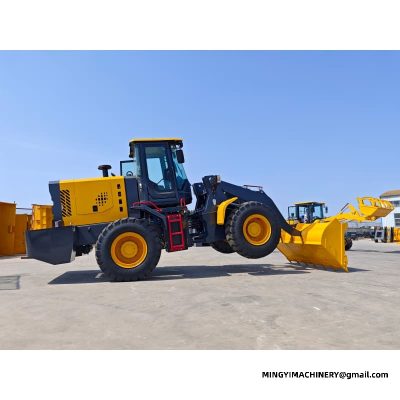
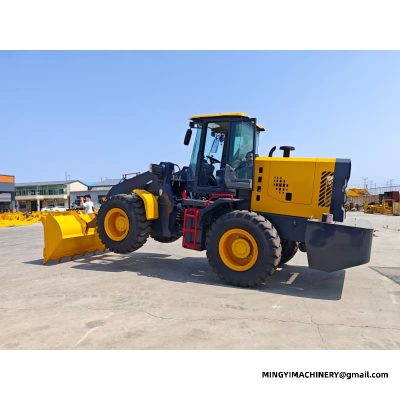
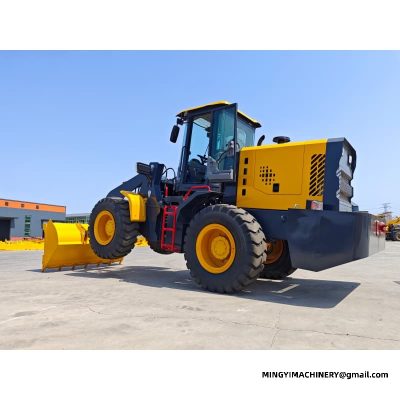
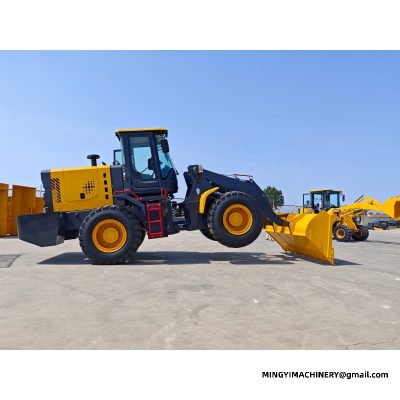
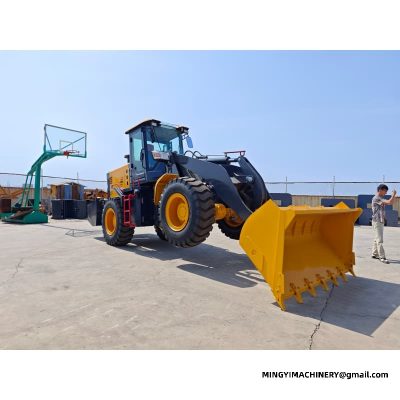
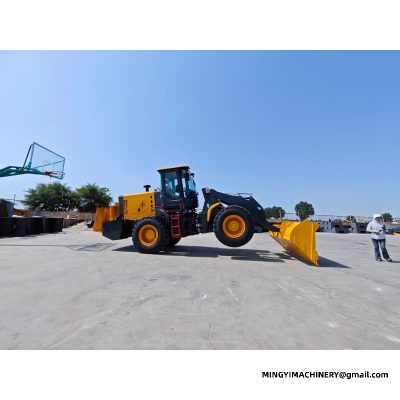
The first month tells you whether a loader machine supplier was specified correctly. Cooling holds or it does not. The bucket matches the material or it does not. The pins stay tight or they start to move. All three are visible in the first few weeks and all three trace back to rows on the sheet: 4100 core (490 engine); 4105 core (4102T engine), 0.38 m³ and 25 mm respectively. This page orders those rows by how soon they show up, using the light-duty 4.2 m small-frame wheel-side reduction wheel loader and the heavy-duty 4.5 m small-frame wheel-side reduction wheel loader as the worked examples.
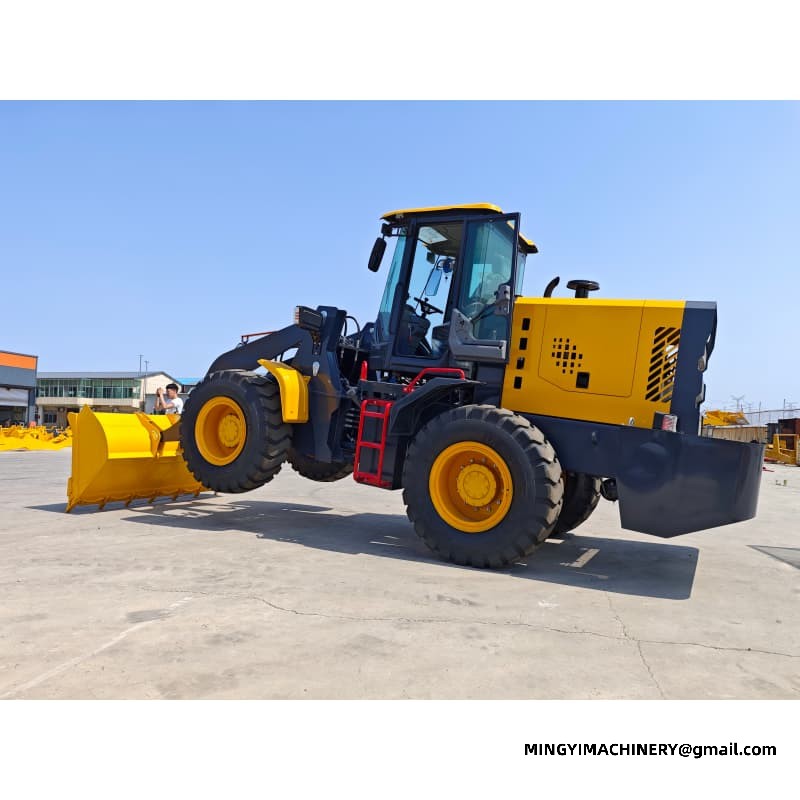
Breakout happens when the bucket is driven into the face and lifted, and it loads the boom in bending. The figures that resist it are wall 20 mm, width 300 mm, and the spacing between the two arms, 680 mm. A wider spacing spreads the load across the pins instead of concentrating it.
Length works against you here. A 2.05 m arm gives reach and height and multiplies the bending moment at the same time, which is why long-arm builds carry thicker walls. On the light-duty 4.2 m small-frame wheel-side reduction wheel loader the same comparison is 3.15 m of length against 25 mm of wall. Where the material is hard to break out, the shorter, thicker combination is usually the better machine.
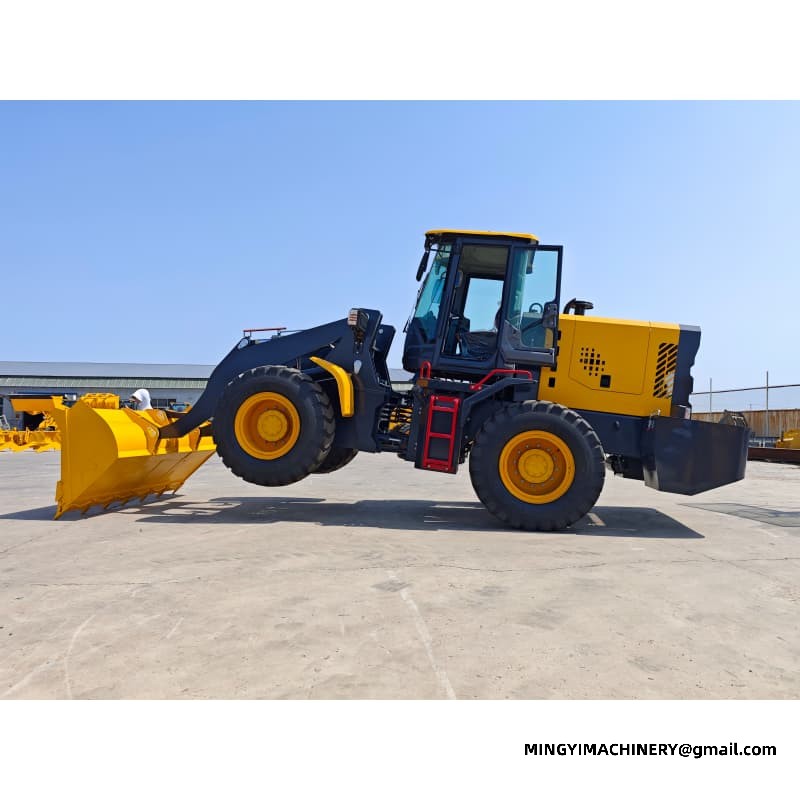
The most lengthy mistake in buying a loader is specifying capacity first. The light-duty 4.2 m small-frame wheel-side reduction wheel loader and the heavy-duty 4.5 m small-frame wheel-side reduction wheel loader differ by 4.2 m against 4.5 m of clearance, and that difference decides which bodies each can fill. Capacity only decides how many passes it takes once clearance exists.
Where clearance is marginal, look at the boom rather than the machine: the light-duty 4.2 m small-frame wheel-side reduction wheel loader works a 3.15 m arm from a 890 mm centre distance, the heavy-duty 4.5 m small-frame wheel-side reduction wheel loader a 3.15 m arm from 890 mm. A longer arm on a lighter frame buys height at the effort of stability, so match the arm to the counterweight — 4.1 m against 4.25 m — and not to a brochure figure.
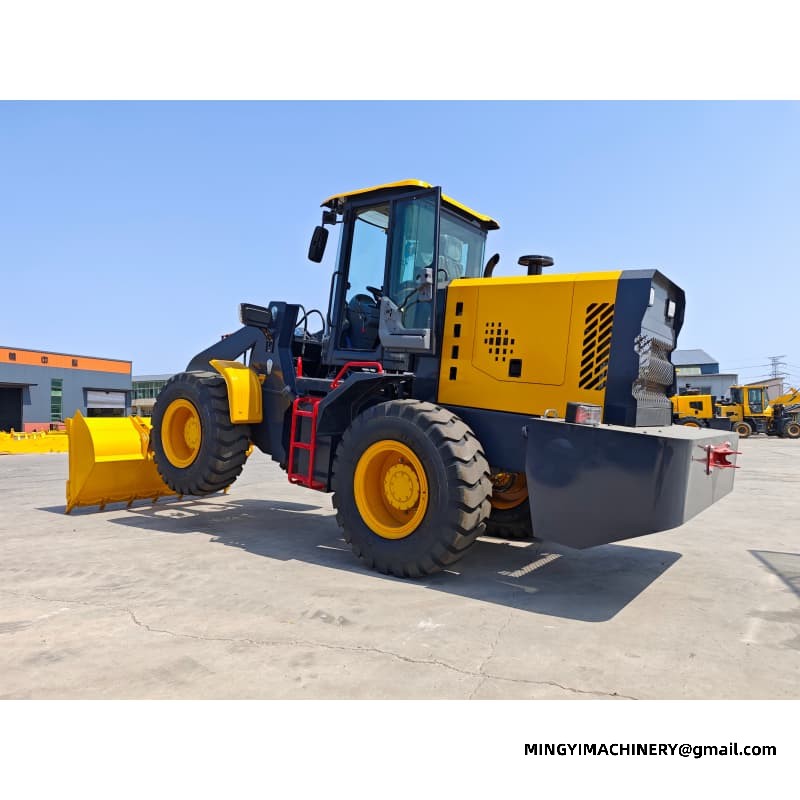
Battery capacity appears in the table as 60 Ah (490 engine); 80 Ah (4102 turbo engine) for the heavy-duty 4.5 m small-frame wheel-side reduction wheel loader and 80 Ah for the heavy-duty 3.8 m medium-frame wheel-side reduction wheel loader. On builds with two engine options the two figures track the engines: the naturally aspirated unit cranks on less, the turbo needs more, and the 24 V system exists precisely because cranking a turbo diesel at minus ten needs the extra headroom.
What buyers should confirm before dispatch is not the capacity but the condition and the connections. Machines ship with batteries disconnected and boxed, so the first start is also the first check of every terminal. On the heavy-duty 4.5 m small-frame wheel-side reduction wheel loader that pack feeds the 4100 core (490 engine); 4105 core (4102T engine) cooling circuit's fan drive and the instrument cluster; on the heavy-duty 3.8 m medium-frame wheel-side reduction wheel loader it feeds 4105 core and the same cluster. A marginal earth shows up as a slow crank in winter and as gauge flicker in summer.
| Sample build from the range — heavy-duty 4.5 m medium-frame wheel-side reduction wheel loader | |
|---|---|
| Bucket capacity | 0.65 m³ |
| Dump height | 4.5 m |
| Track width | 1.6 m |
| Boom arm thickness | 30 mm |
| Boom arm width | 520 mm |
| Boom arm length | 3.35 m |
| Boom arm centre distance | 960 mm |
| Cross-member thickness | 45 mm |
| Front hinge plate thickness | 45 mm |
| Rear hinge plate thickness | 30 mm |
| Rear frame section | 300 mm high x 800 mm wide |
| Hydraulic cylinders | centre cylinder 60 / side cylinder 50 |
| Fuel tank | 70 L (75# large tank) |
| Battery | 80 Ah |
| Front wheel to counterweight | 4.95 m |
| Radiator | 4105 core |
| Work pump | 2063 pump |
| Travel pump | 25 pump |
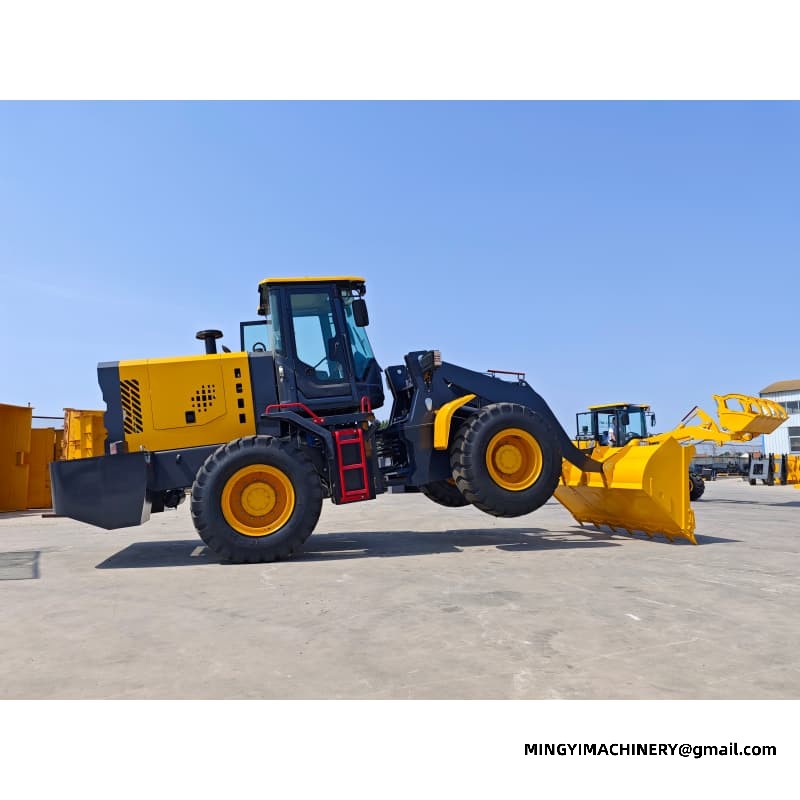
Front-wheel-to-counterweight length is the figure that decides whether a machine fits your site: 4.1 m on the light-duty 4.2 m small-frame wheel-side reduction wheel loader against 4.25 m on the heavy-duty 4.5 m small-frame wheel-side reduction wheel loader. Track width is the second: 1.5 m (wheel-side reduction axle); 1.45 m (Isuzu axle) against 1.5 m (wheel-side reduction axle); 1.45 m (Isuzu axle). Together they set the turning circle and the narrowest gap the machine will pass, and they are the two numbers least likely to be stated in a sales conversation.
Access is a hard constraint and it fails silently. A loader that cannot turn in a shed is a loader that cannot work in that shed, whatever its bucket capacity. Compare 4.1 m at 1.5 m (wheel-side reduction axle); 1.45 m (Isuzu axle) on the light-duty 4.2 m small-frame wheel-side reduction wheel loader with 4.25 m at 1.5 m (wheel-side reduction axle); 1.45 m (Isuzu axle) on the heavy-duty 4.5 m small-frame wheel-side reduction wheel loader, measure your tightest turn and your narrowest doorway, and buy the machine that passes. Where the gap is marginal, the 4.1 m machine with its 0.38 m³ bucket will earn more than the 4.25 m one with 0.4 m³.
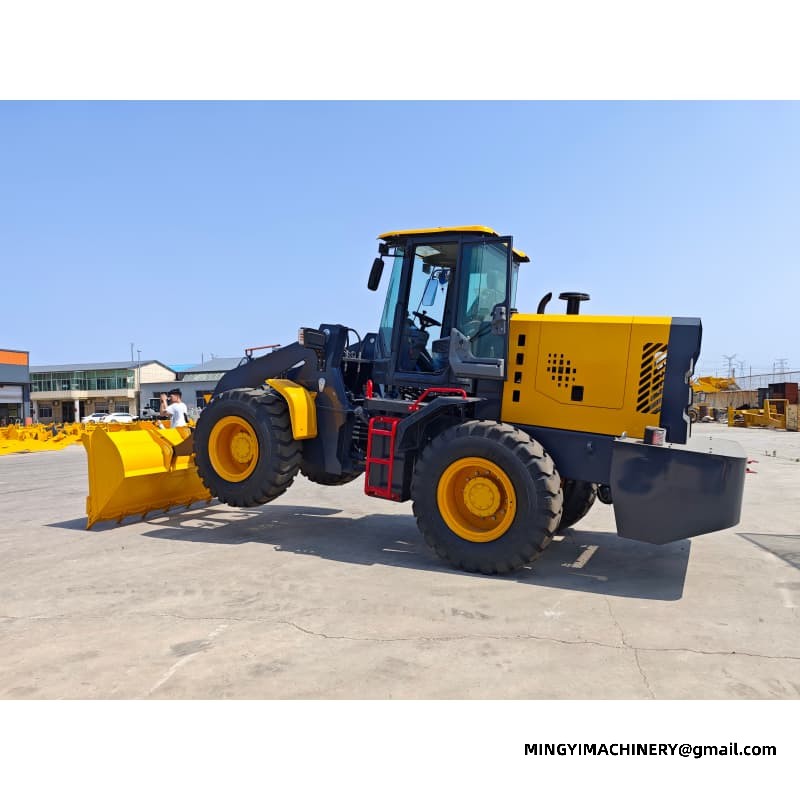
Hinge plates carry the pin loads that the boom and the steering articulation put into the frame, and they are where a loader shows its age first. The light-duty 4.2 m small-frame wheel-side reduction wheel loader runs 25 mm front plates and 20 mm rear plates over a 25 mm cross-member; the heavy-duty 4.5 m small-frame wheel-side reduction wheel loader runs 30 mm and 20 mm over 30 mm. Rear frame sections follow at 280 mm high x 800 mm wide and 280 mm high x 800 mm wide respectively.
The rear plate is the more telling of the two. Articulated steering loads the rear hinge every time the machine turns under load, and reversing out of a face with a full bucket doubles it. A 20 mm rear plate with a 25 mm cross-member is a light-duty specification; 20 mm over 30 mm is a heavy-duty one. Put those alongside the 0.38 m³ and 0.4 m³ buckets and the specification difference between the two builds stops looking arbitrary — it is steel.
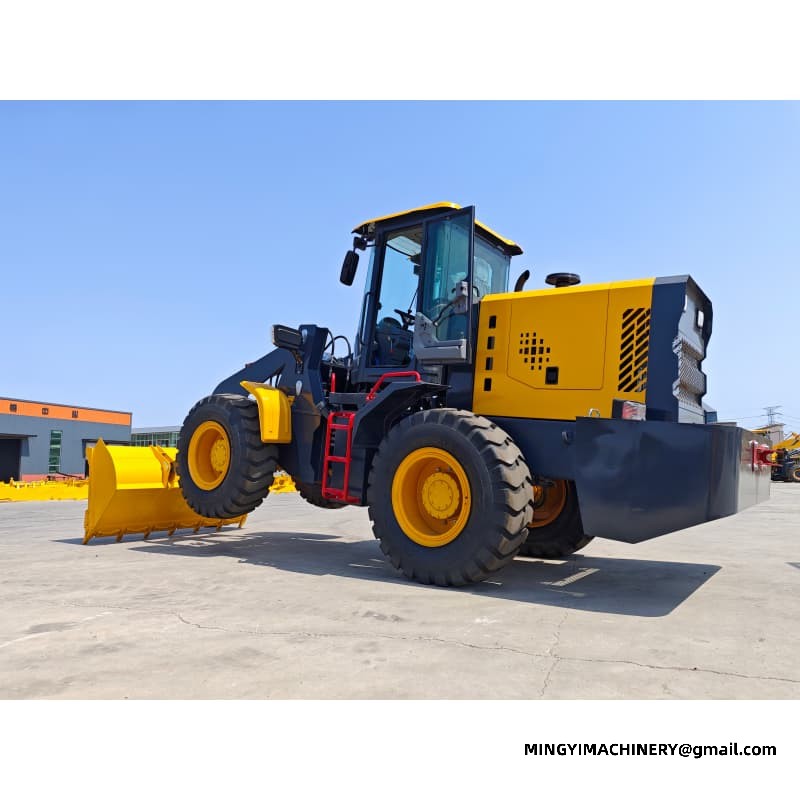
Photograph the specification plate, the cylinder markings and the frame plates on the day the machine arrives. Cylinders on this build are centre cylinder 45 / side cylinder 40; the pump is 32 pump; the radiator is 4100 core. Those three identify the build more reliably than any nameplate, because they are the parts that change between engine options.
Then photograph the geometry, because it is what a later claim will turn on. Dump height 2.8 m at full lift, arm length 2.05 m, spacing 680 mm, track 1.2 m (Isuzu axle); 1.3 m (wheel-side reduction axle). If a machine ever fails to clear a body it was sold to clear, those four photographs are the difference between a warranty claim and an argument.
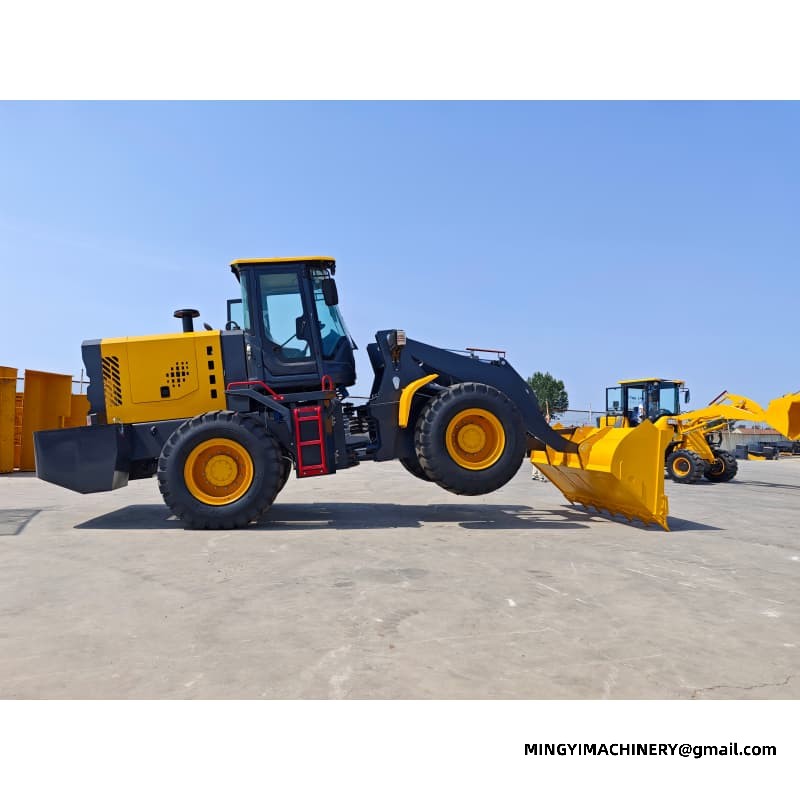
Fuel is visible and downtime is not, which is why fleets optimise the wrong one. A machine with a 30.8 L (48# large tank, 20.5/70-16 tyres); 24.6 L (48# small tank, 8.25-16 tyres) tank works a full shift without a refuel stop; that is worth a fraction of what a single day lost to a failed pump takes, and the pump is identified on the sheet as 32 pump.
The parts worth specifying against downtime are the ones that cannot be improvised: the battery rating, 45 Ah (24 V), the radiator, 4100 core, and the cylinders, centre cylinder 45 / side cylinder 40. All three are simple at build and lengthy in a field, and all three are listed. Read them as an availability decision rather than as a comfort one.
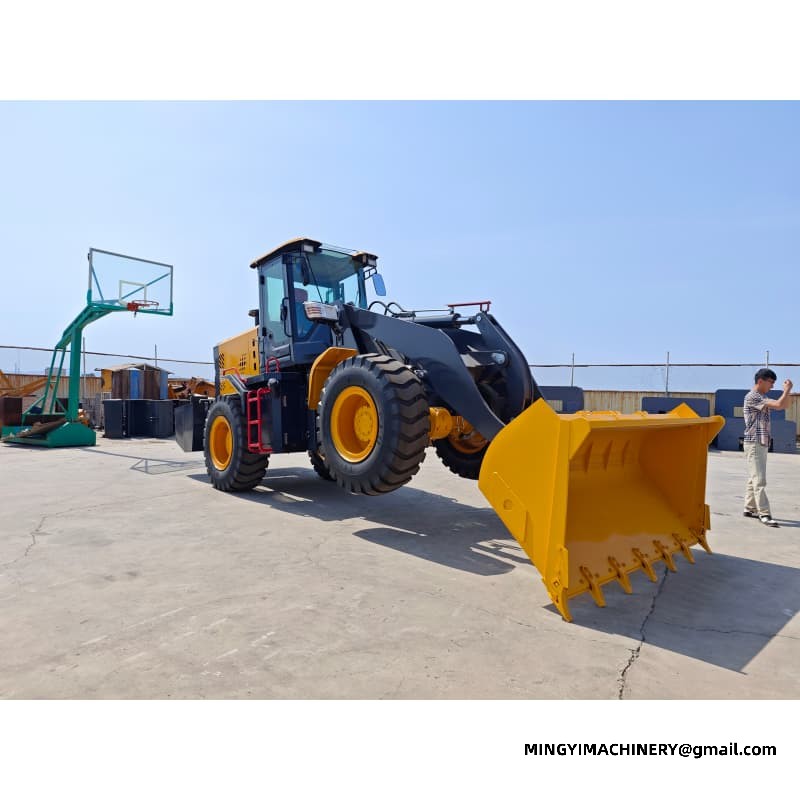
Fleet effort is driven by the size of the spares bin, and that is decided at purchase. Machines sharing an engine share a pump, 40 pump (490 engine); 1045 pump (4102 turbo engine), a radiator, 4100 core (490 engine); 4105 core (4102T engine), and a battery rating, 60 Ah (490 engine); 80 Ah (4102 turbo engine). Machines sharing a frame share cylinder sizes, centre cylinder 45 / side cylinder 45, and hinge geometry. Buy within one frame family and the bin halves.
The figures to compare are the ones that differ: bucket 0.4 m³ against 0.65 m³, dump height 4.5 m against 4.5 m, track 1.5 m (wheel-side reduction axle); 1.45 m (Isuzu axle) against 1.6 m. Where those differ, the wearing parts behind them usually differ too. Where they match, one part number covers both machines.
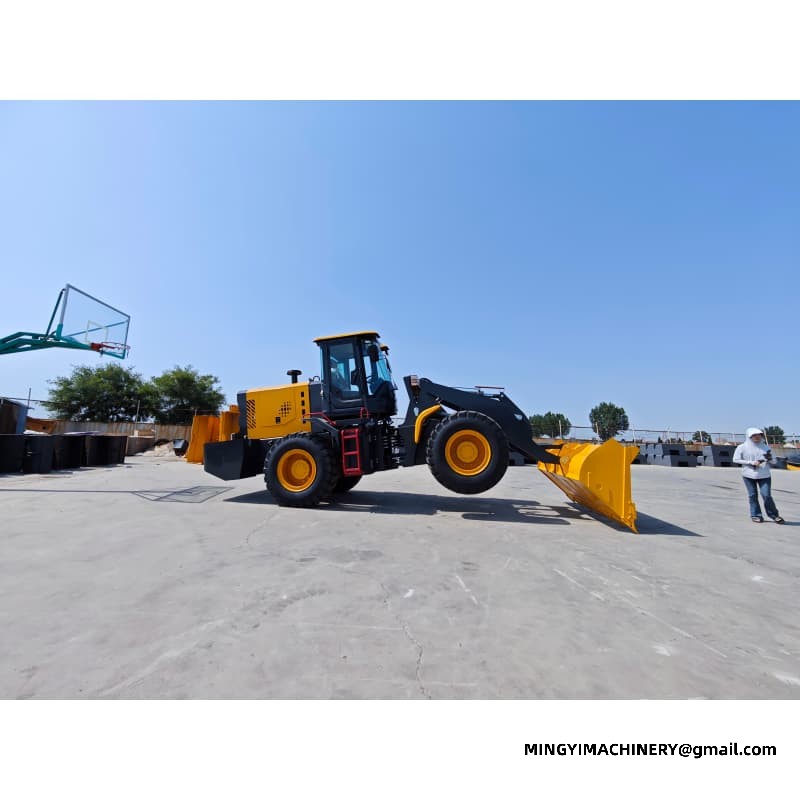
How should the battery on a loader machine supplier be cared for?
Keep the terminals clean and tight and use the isolator if the machine will stand. The rating is 60 Ah (490 engine); 80 Ah (4102 turbo engine), and a machine left connected for weeks will not start when it is needed.
What affects operator fatigue on a loader machine supplier?
Seat, visibility and how much the machine has to be corrected. A tight frame wanders less; a loose one behind the 30 mm plate is tiring to hold on the road.
How do I clean the radiator on a loader machine supplier working in dust?
From the clean side outwards, against normal airflow, so debris comes out rather than being pushed deeper. The core on this build is 4100 core (490 engine); 4105 core (4102T engine); blocked fins are the usual cause of gradual power loss.
What does a daily check on a loader machine supplier actually consist of?
Look at the ground under the machine, check coolant and oil, grease the hinge pins behind the 25 mm front and 20 mm rear plates, and glance at the cylinder rods. Ten minutes, every shift.
Why does my loader machine supplier bucket only fill two-thirds?
The material is denser than the bucket was matched to. At 0.3 m³ on the standard 2.8 m low-profile wheel loader against 0.38 m³ on the light-duty 4.2 m small-frame wheel-side reduction wheel loader, a smaller bucket that fills completely moves more per hour than a larger one that does not.
What does winter duty change on a loader machine supplier?
Cold cranking, oil viscosity and operator access. Battery 80 Ah covers the first; the 70 L (75# large tank) tank covers the longer idling that cold work brings.
How often will a loader machine supplier need refuelling?
The tank is 64.7 L (75# small tank), sized for a full shift at working throttle without a mid-day stop. Machines on short cycles with a lot of idling will use more than the figure suggests.
The range exists so that a loader machine supplier can be matched to the work rather than approximated to it. Start with dump height, check the steel, then let bucket volume follow from the material — that order gets it right more often than any other.
Handover and getting familiar with Loader Machine Supplier: Parts Support After Delivery
The first day with a new machine sets the pattern for the next five years. Handover for Loader Machine Supplier: Parts Support After Delivery covers the control layout, the daily check points and the limits the operator needs to know before the first real load is lifted or carried.
Reading the early symptoms on Loader Machine Supplier: Parts Support After Delivery
Operators notice things first because they hear the machine every day. Encouraging the person on Loader Machine Supplier: Parts Support After Delivery to report small changes, and acting on them, is the most effective maintenance programme there is.
Fuel, oil and fluid quality for Loader Machine Supplier: Parts Support After Delivery
Most engine trouble starts with what went into the tank. Clean fuel, stored properly and filtered before it reaches Loader Machine Supplier: Parts Support After Delivery, prevents more downtime than any other single habit an owner can adopt.
Commissioning Loader Machine Supplier: Parts Support After Delivery on site
Transport shakes things loose. A short check of Loader Machine Supplier: Parts Support After Delivery after the crate is opened, covering the same points the pre-delivery inspection covered, is the most useful insurance available on delivery day.
Contact MINGYI Machinery for the current wheel loader lineup, configuration options and a formal specification for your market. E-mail: sales@mingycn.com | LINE (ID): mingyicn
Wheel Loader Manufacturer: Records Worth Keeping on File · Wheel Loader Factory China: Packing, Loading and Voyage · Wheel Loader Snow Blower: Specifying the Third Circuit · Wheel Loader









