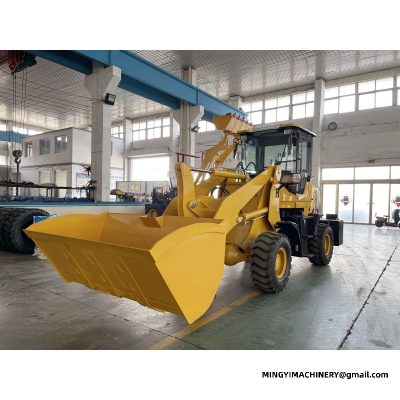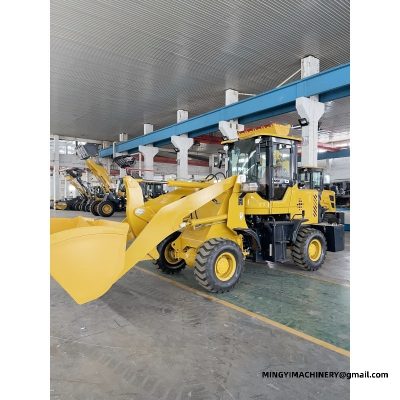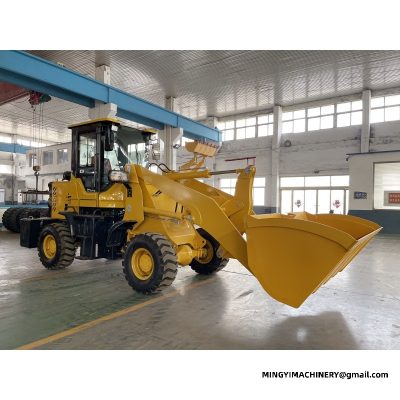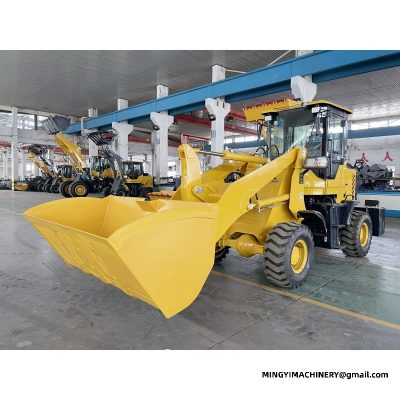
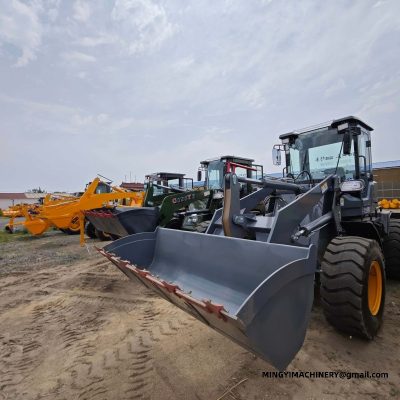
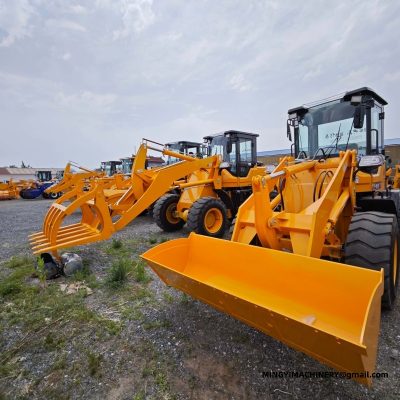
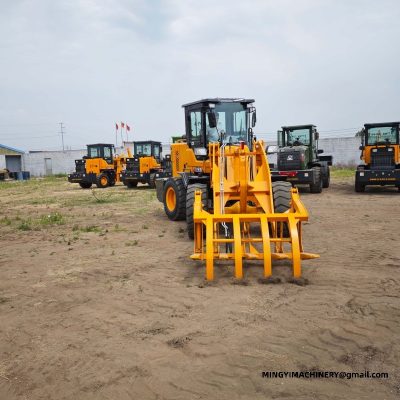
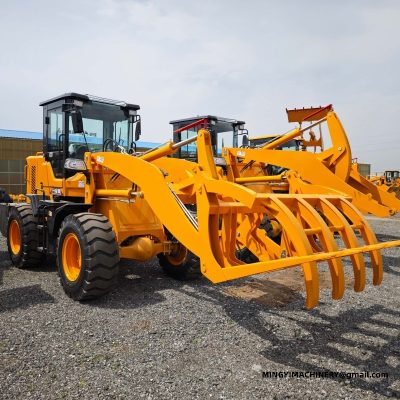
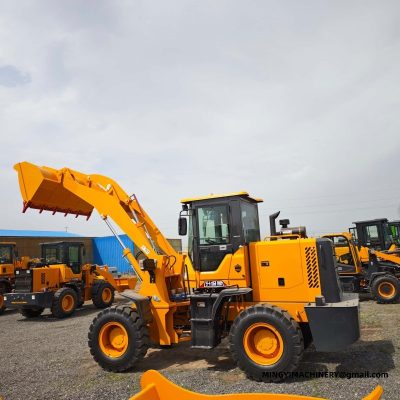
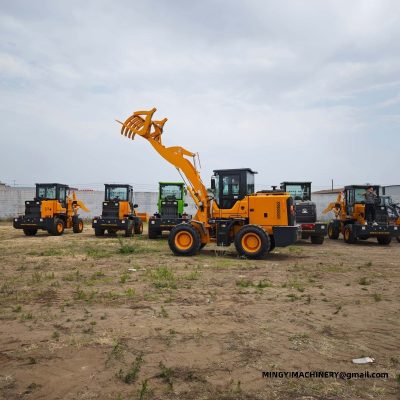
A wheel loader factory china that suits the work is quiet about it. It clears the board on the first pass, it does not hunt for grip, and nothing under it leaks at the end of the shift. Machines that draw attention are usually mis-specified rather than badly built. This page works through the rows that produce the quiet ones — 4.5 m of dump height, 1.6 m of track, 45 mm across the cross-member — and compares the heavy-duty 4.5 m medium-frame wheel-side reduction wheel loader against the standard 2.8 m low-profile wheel loader at each step.
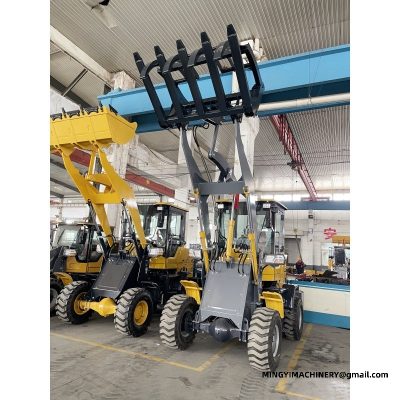
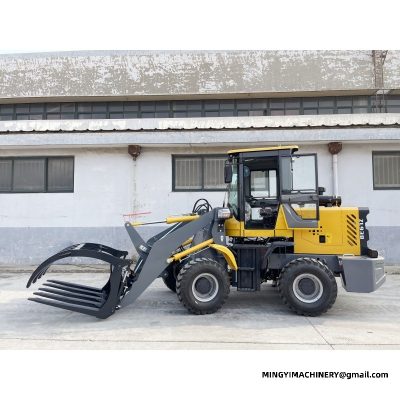
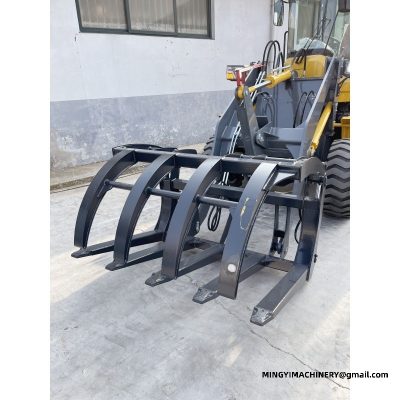
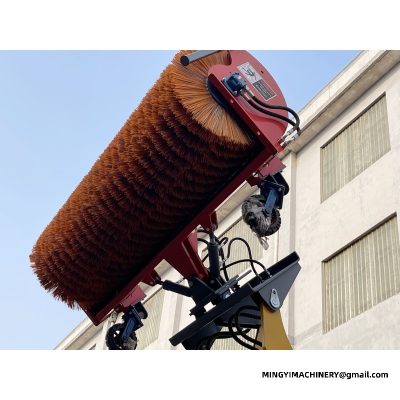
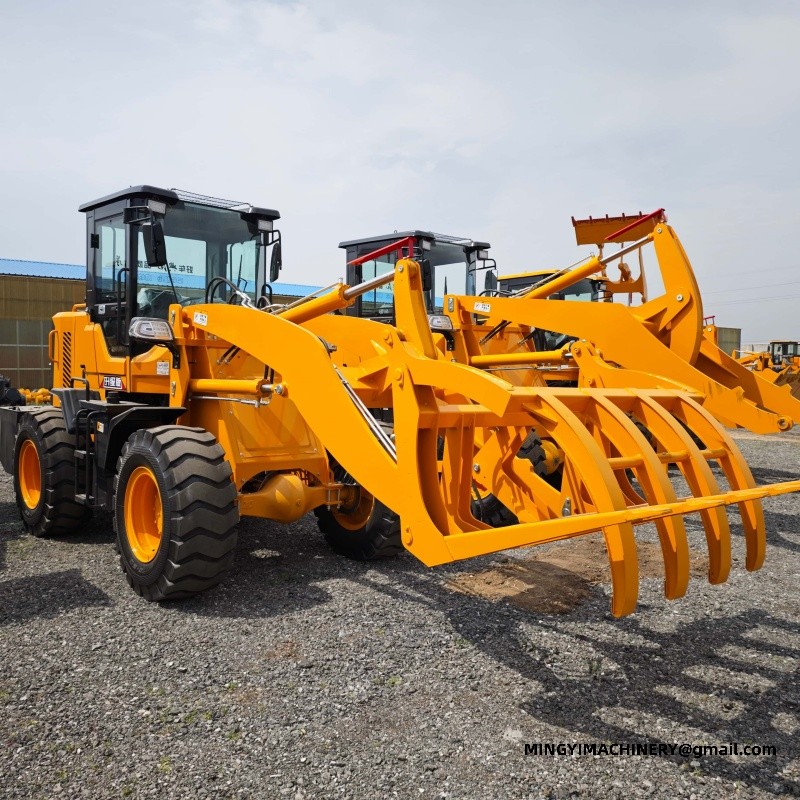
An attachment is only as useful as the hydraulics behind it. This build runs centre cylinder 60 / side cylinder 50 fed by a 2063 pump, and those two figures set the force available at the boom and the speed at which it arrives. A grapple, a fork carriage or a snow blower all ask for more flow than a bucket does.
The centre cylinder does the lifting and the side cylinders do the tilting, and they are specified together for a reason. On the heavy-duty 4.5 m medium-frame wheel-side reduction wheel loader the pair is centre cylinder 60 / side cylinder 50. If an attachment needs a third service, the question to ask is whether the pump has the flow to run it without starving the lift circuit, because a machine that lifts slowly with a grapple on is not a machine with a grapple problem. It has a 2063 pump problem.
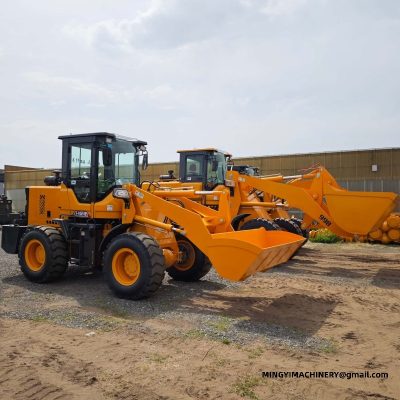
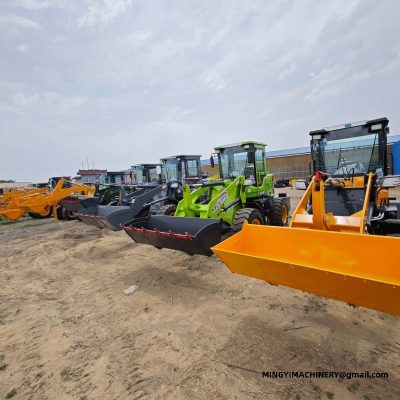
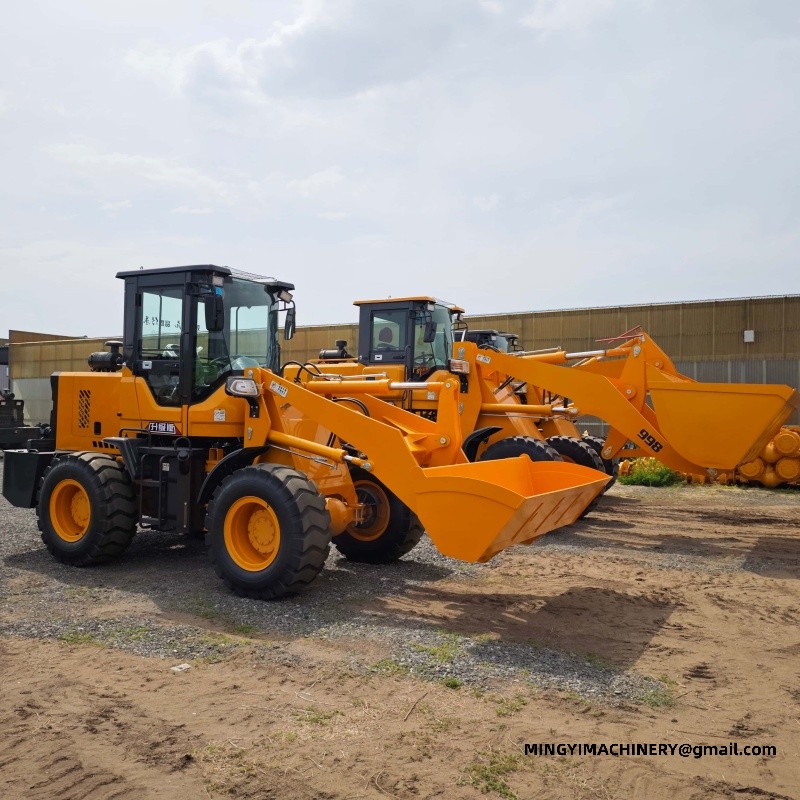
A loader is a tool carrier that happens to come with a bucket. What it can carry is decided at the factory — section width and pin geometry — which is why the heavy-duty 4.5 m medium-frame wheel-side reduction wheel loader with its 520 mm section and the standard 2.8 m low-profile wheel loader with 300 mm do not share tooling even where their bucket capacities look close.
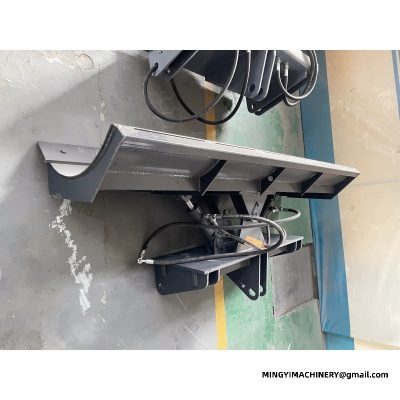
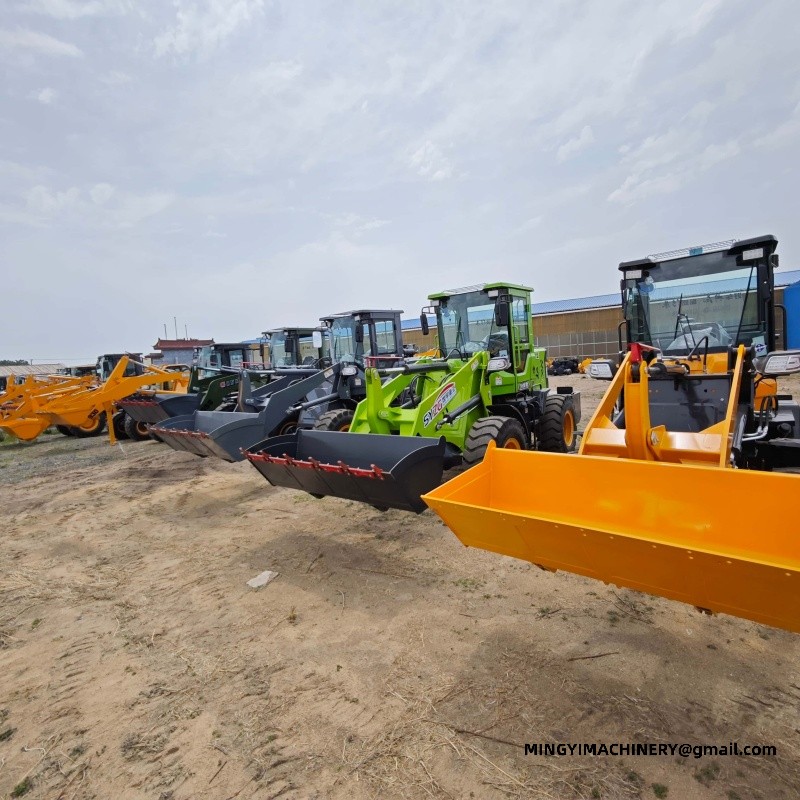
Plan the tool set with the machine order. Bucket plus forks covers most general work; add a grapple for silage, scrap or demolition; add a snow tool where winters are real. If any tool is hydraulically actuated, order the third circuit now, because the 2063 pump on the heavy-duty 4.5 m medium-frame wheel-side reduction wheel loader and the 32 pump on the standard 2.8 m low-profile wheel loader were sized for the base machine and a retrofit means a valve block, plumbing and labour in the field.
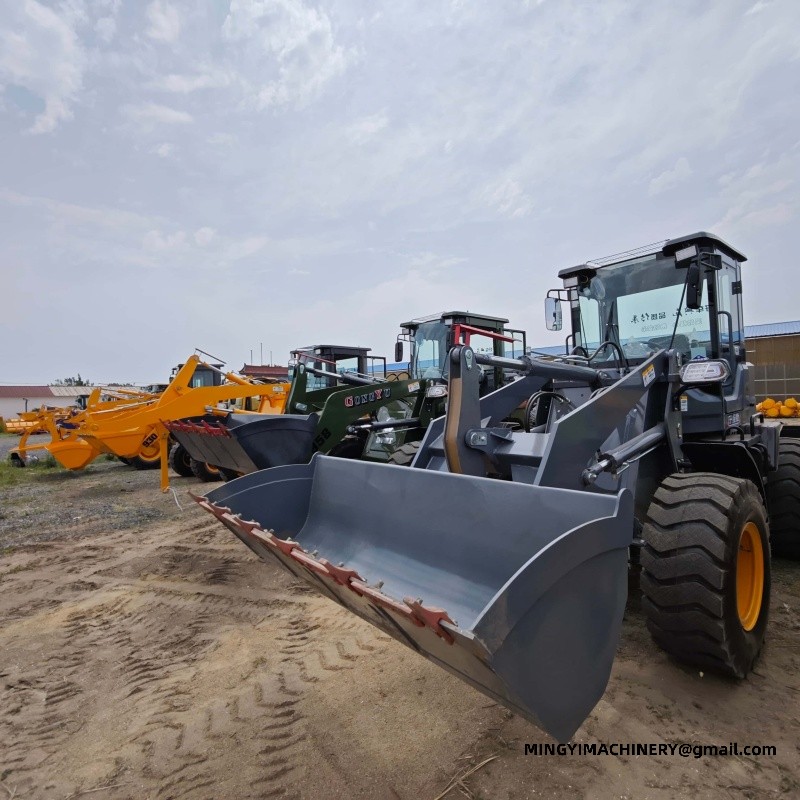
Cooling capacity is sized to the engine's heat rejection, so it appears in the table as a specification rather than a choice: 4100 core (490 engine); 4105 core (4102T engine) on the heavy-duty 4.2 m small-frame wheel-side reduction wheel loader, 4105 core on the light-duty 3.5 m medium-frame wheel-side reduction wheel loader. Where the build offers two engines — the 490 with a 4100 core, the 4102 turbo with a 4105 raised core — the raised core is the one for hot climates, high altitude and any site where fine material hangs in the air.
Practical advice that takes nothing: blow the core out at the end of every shift in dusty work, in the reverse direction to airflow, and check the cap seat before blaming the radiator. On the heavy-duty 4.2 m small-frame wheel-side reduction wheel loader the 4100 core (490 engine); 4105 core (4102T engine) core sits behind a 280 mm high x 800 mm wide rear frame with limited airflow at low engine speed; on the light-duty 3.5 m medium-frame wheel-side reduction wheel loader the 4105 core core is served by the same 25 pump driven circuit. Neither is difficult to keep clean, and both will lose a season to neglect.
| Published build data — standard 2.8 m low-profile wheel loader | |
|---|---|
| Bucket capacity | 0.3 m³ |
| Dump height | 2.8 m |
| Track width | 1.2 m (Isuzu axle); 1.3 m (wheel-side reduction axle) |
| Boom arm thickness | 20 mm |
| Boom arm width | 300 mm |
| Boom arm length | 2.05 m |
| Boom arm centre distance | 680 mm |
| Cross-member thickness | 16 mm |
| Front hinge plate thickness | 16 mm |
| Rear hinge plate thickness | 16 mm |
| Rear frame section | 200 mm high x 750 mm wide |
| Hydraulic cylinders | centre cylinder 45 / side cylinder 40 |
| Fuel tank | 30.8 L (48# large tank, 20.5/70-16 tyres); 24.6 L (48# small tank, 8.25-16 tyres) |
| Battery | 45 Ah (24 V) |
| Front wheel to counterweight | 3.5 m |
| Radiator | 4100 core |
| Work pump | 32 pump |
| Travel pump | 316 pump |
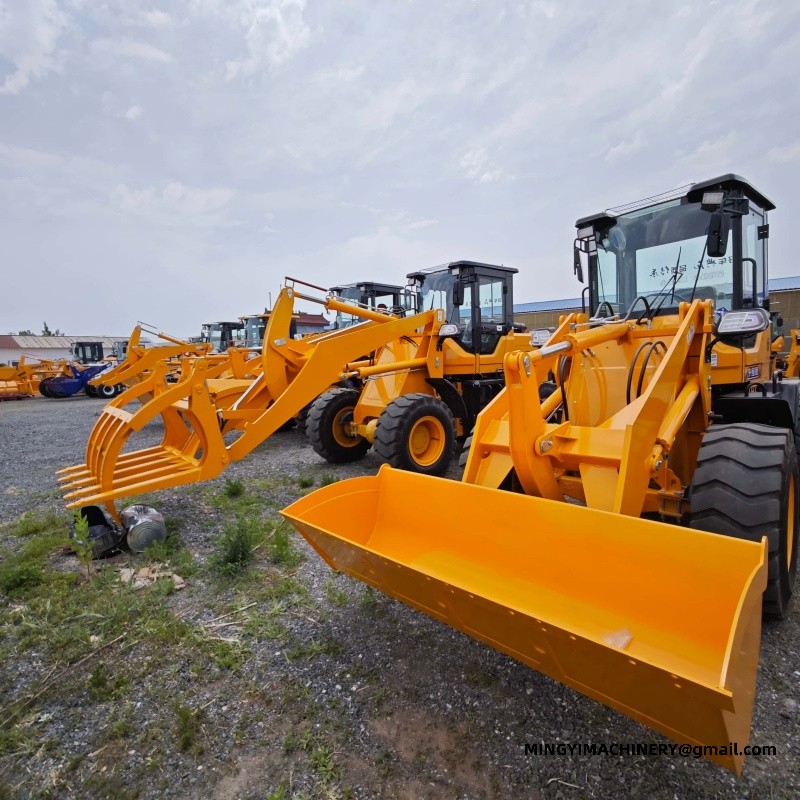
Farm work is governed by access and by the height of the things being filled. The heavy-duty 3.8 m small-frame wheel-side reduction wheel loader carries 0.4 m³ to 3.8 m on a 1.5 m (wheel-side reduction axle); 1.45 m (Isuzu axle) track with a 4.2 m footprint; the light-duty 3.5 m medium-frame wheel-side reduction wheel loader carries 0.52 m³ to 3.5 m on 1.6 m with 4.3 m. Gate widths, shed doors and feed-wagon sides are the constraints, and they are all fixed dimensions.
Attachments are where a farm loader earns its second life. Forks for bagged feed and pallets, a bale spear, a grapple for silage, a snow tool for the winter lane. They specification against the boom section, so check 430 mm on the heavy-duty 3.8 m small-frame wheel-side reduction wheel loader against 430 mm on the light-duty 3.5 m medium-frame wheel-side reduction wheel loader before ordering, and specify the hydraulic circuit at build time if any of them is hydraulically actuated.
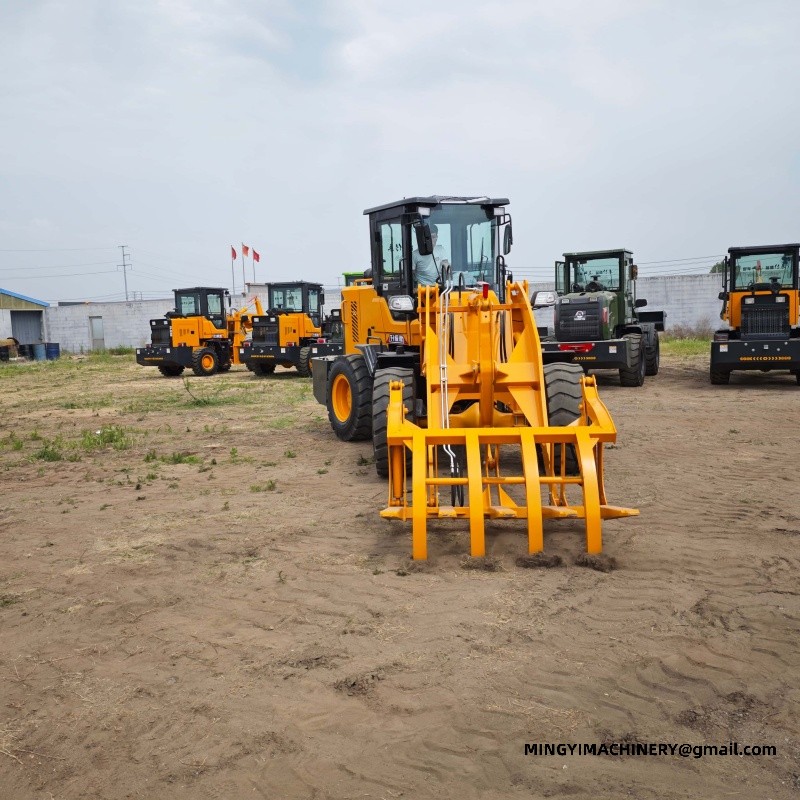
Three takes dominate ownership: fuel, downtime and the residual value of the machine when it is sold. Fuel is set by duty and tank planning — 70 L (75# large tank) on the heavy-duty 4.5 m medium-frame wheel-side reduction wheel loader, 30.8 L (48# large tank, 20.5/70-16 tyres); 24.6 L (48# small tank, 8.25-16 tyres) on the standard 2.8 m low-profile wheel loader. Residual value is set by whether the frame is still tight, which is set by the 30 mm and 16 mm rear hinge plates and the 45 mm and 16 mm cross-members.
Downtime is the lengthy one, and it is usually caused by the simplest components: a hose on the centre cylinder 60 / side cylinder 50 circuit, a blocked 4105 core core, a flat battery from a machine that sat on the dock. None of them is a reason to buy a bigger machine, and all of them are reasons to keep a small spares box. plan for filters, hoses and a cutting edge per year, and for pins and bushes every second year.
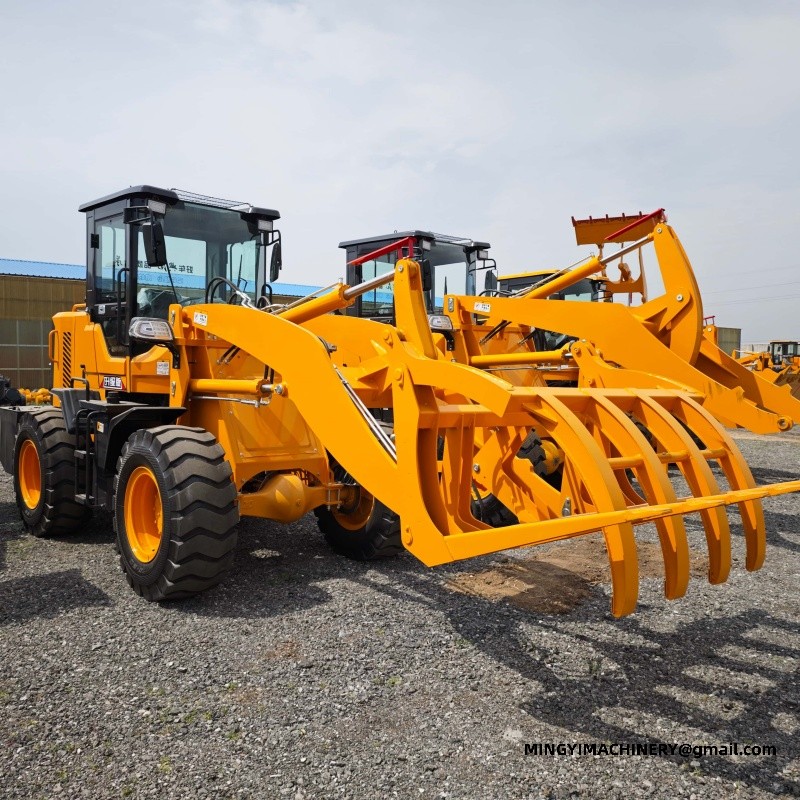
Front wheel to counterweight is the figure that decides whether a machine fits the space you have. Here it is 4.3 m on the light-duty 3.5 m medium-frame wheel-side reduction wheel loader and 4.95 m on the heavy-duty 4.5 m medium-frame wheel-side reduction wheel loader. Measure your tightest working bay, add the swing of the bucket, and compare — because a loader that has to reverse out of every corner loses more time than a bigger bucket ever recovers.
Track width closes the same question from the side. 1.6 m on this build. Where two figures are listed, the narrower belongs to the hard-ground axle, and a narrow machine on a narrow gate is often the right answer even where the work itself would suit something bigger. The rear frame section, 300 mm high x 800 mm wide, is what keeps a compact machine from feeling flimsy once it is loaded.
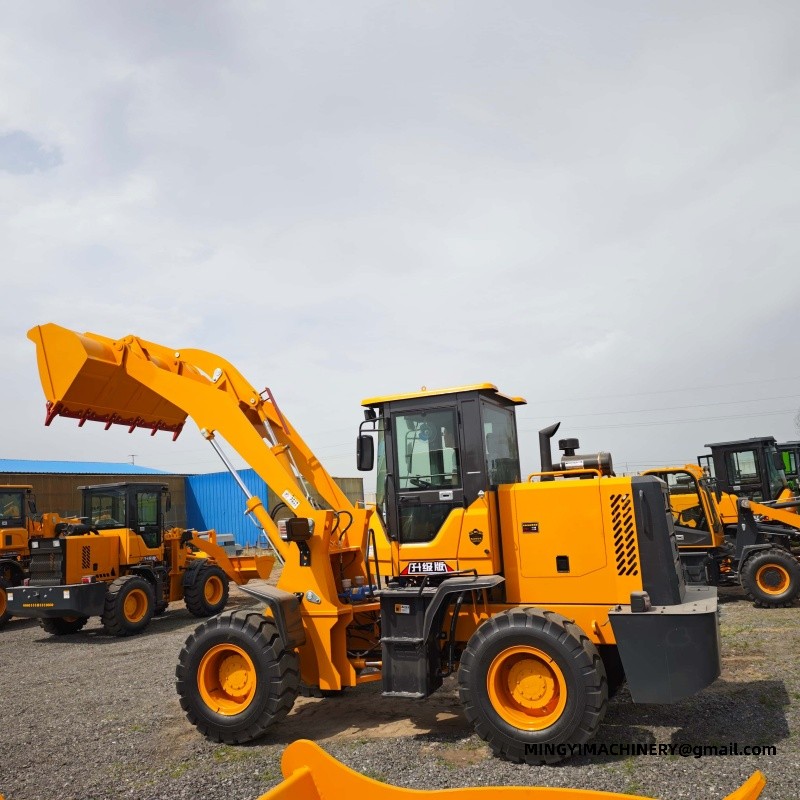
The commercial logic of a family-built range is parts commonality. Within a frame family the centre cylinder 45 / side cylinder 45 cylinder set, the 40 pump (490 engine); 1045 pump (4102 turbo engine) work pump and the 316 pump travel pump are shared, and the boom section — 430 mm on the heavy-duty 3.8 m small-frame wheel-side reduction wheel loader — is the same, so attachments interchange. Across families, as between the heavy-duty 3.8 m small-frame wheel-side reduction wheel loader and the heavy-duty 4.5 m medium-frame wheel-side reduction wheel loader, the cylinder set moves to centre cylinder 60 / side cylinder 50 and the section to 520 mm.
For a distributor that translates into a small, fast-moving inventory: one seal kit per cylinder family, one pump pair per family, pins and bushes per boom section, and cutting edges per bucket. Add the model-specific items — the 30 mm or 45 mm cross-member is not a wear part and does not need stocking — and the whole range is supported from a shelf that fits in a container.
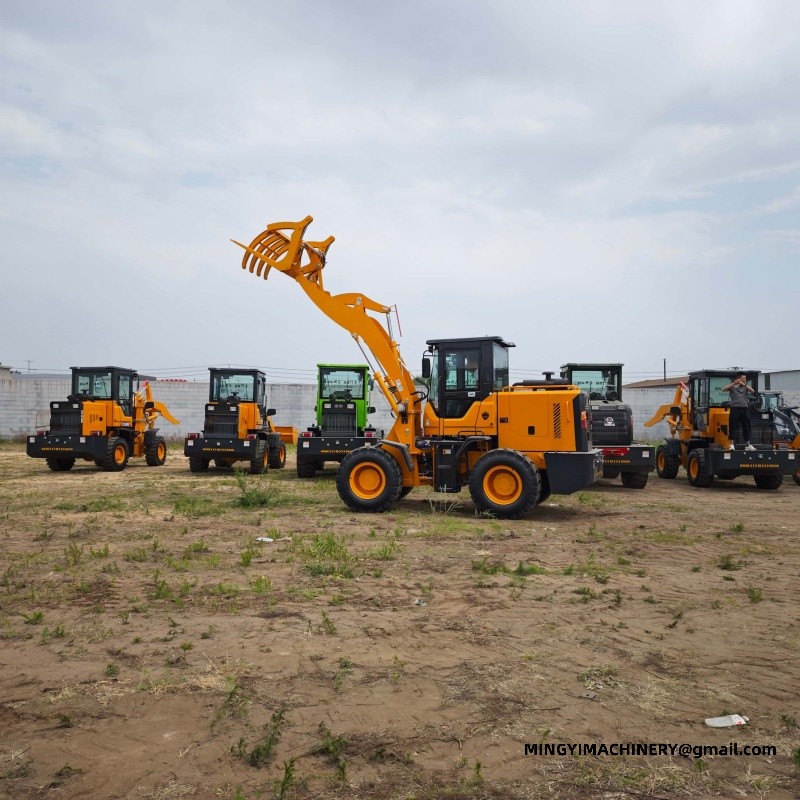
A loader standing idle while a truck reverses is the most common waste on a site, and it is usually a layout problem rather than a machine problem. What the machine contributes is turn radius and visibility, and both come out of the dimensions: 4.1 m from front wheel to counterweight, 1.5 m (wheel-side reduction axle); 1.45 m (Isuzu axle) of track, and a rear frame section of 280 mm high x 800 mm wide. A shorter machine turns inside its own length and works a tighter bay.
The other half is dump geometry. With 3.2 m of clearance and a 2.3 m arm, the heavy-duty 3.2 m small-frame wheel-side reduction wheel loader can stand back from the body and still place material where the driver wants it, which is safer than crowding the board. The heavy-duty 4.2 m small-frame wheel-side reduction wheel loader reaches 4.2 m with a 3.15 m arm; on a narrow bay the shorter of the two may be the faster machine even if it holds less.
What does a daily check on a wheel loader factory china actually consist of?
Look at the ground under the machine, check coolant and oil, grease the hinge pins behind the 30 mm front and 20 mm rear plates, and glance at the cylinder rods. Ten minutes, every shift.
What extra care does a wheel loader factory china need in dusty work?
Core cleaning at the end of every shift and more frequent air filter changes. The core is 4100 core (490 engine); 4105 core (4102T engine); a blocked one shows up as a slow loss of power rather than a stoppage.
What are the signs of a failing pump on a wheel loader factory china?
Slow lift with normal breakout points to flow, which is the 40 pump (490 engine); 1045 pump (4102 turbo engine). Weak lift and weak breakout together point to pressure. Noise under load usually means aeration or a suction leak.
Can I order the same wheel loader factory china build again next year?
Yes, if the order is written by figures rather than by name: bucket 0.4 m³, lift 3.8 m, cylinders centre cylinder 45 / side cylinder 45, pump 40 pump (490 engine); 1045 pump (4102 turbo engine). Names change; rows do not.
How far can a wheel loader factory china travel under its own power?
Short moves between faces, not road haulage. The travel circuit is 316 pump and sustained high-speed running generates heat the 4100 core (490 engine); 4105 core (4102T engine) core was not sized to reject.
Which tyre fitment does a wheel loader factory china use?
It follows the tank and axle specification: 64.7 L (75# small tank) on this build. The larger fitment goes with the larger tank and the heavier duty.
How much does material weight matter on a wheel loader factory china?
It sets the real limit, not the bucket. Volume is 0.3 m³; what the frame takes is set by the 16 mm cross-member and the 200 mm high x 750 mm wide rear section behind it.
None of this requires taking a wheel loader factory china on faith. The rows are published, the machines can be measured on delivery, and the five figures that matter — bucket, dump height, cylinders, track and hinge steel — are checkable in twenty minutes.
Documents that travel with Wheel Loader Factory China: Packing, Loading and Voyage
A clear parts book saves more time than any other document. When Wheel Loader Factory China: Packing, Loading and Voyage needs a replacement, the illustration and the part number are what turn a phone call into a shipment instead of a description.
Later additions and retrofits on Wheel Loader Factory China: Packing, Loading and Voyage
Retrofitting is limited by the base machine. Before anything is added to Wheel Loader Factory China: Packing, Loading and Voyage the hydraulic flow, the mounting interface and the stability allowance have to be checked, because those limits are what decide what is sensible.
Contact MINGYI Machinery for the current wheel loader lineup, configuration options and a formal specification for your market. E-mail: sales@mingycn.com | LINE (ID): mingyicn
Wheel Loader Supplier: Ordering the Same Build Twice · Construction Wheel Loader: Board Heights in Real Use · Wheel Loader Log Grapple: Grapple Loads and Hinge Steel · Wheel Loader