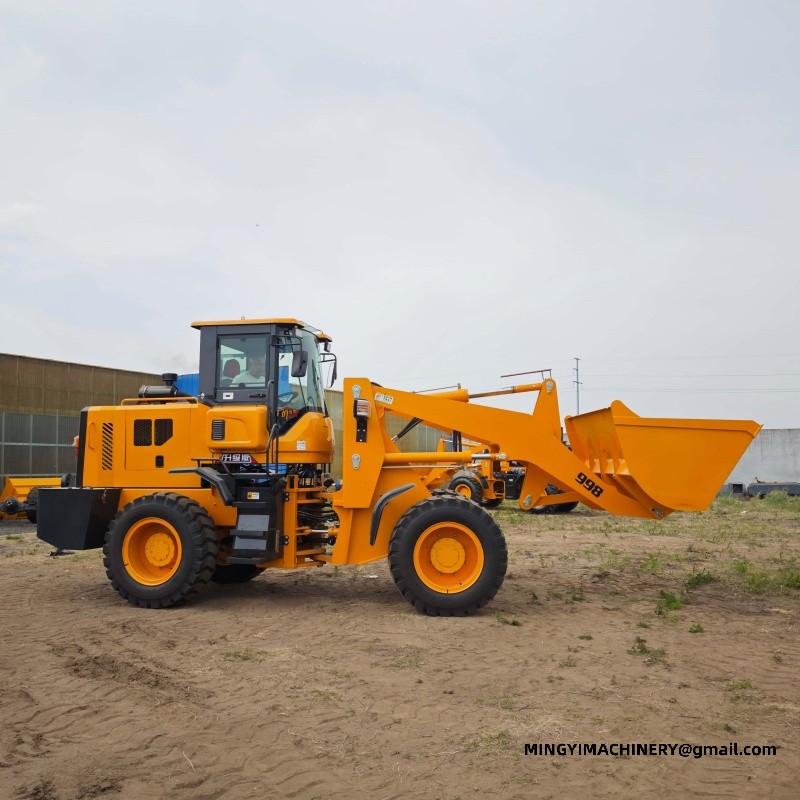
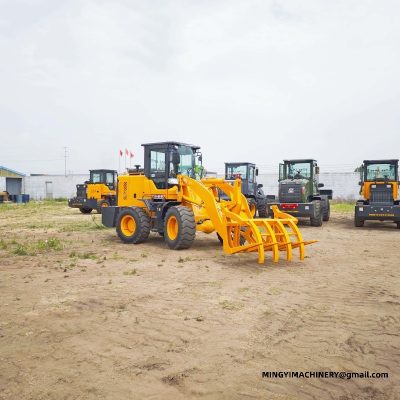
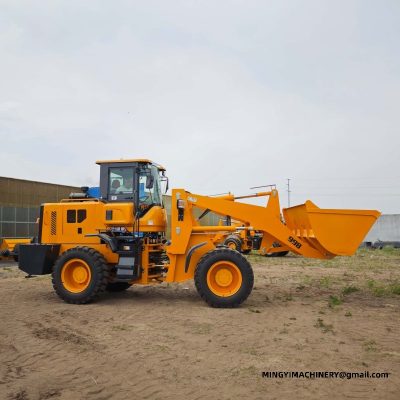
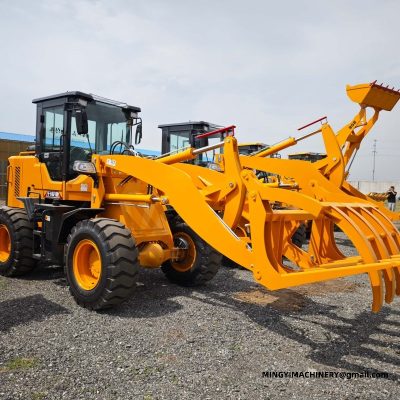
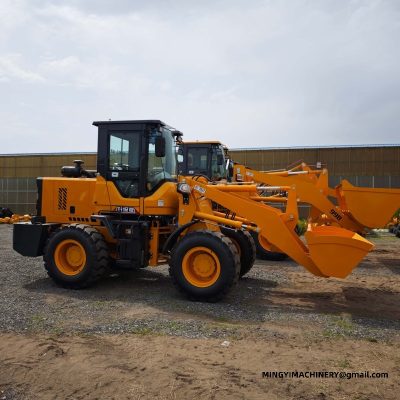
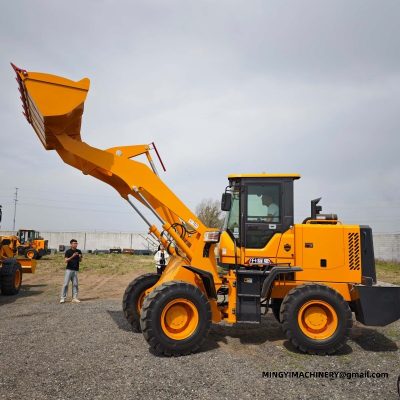
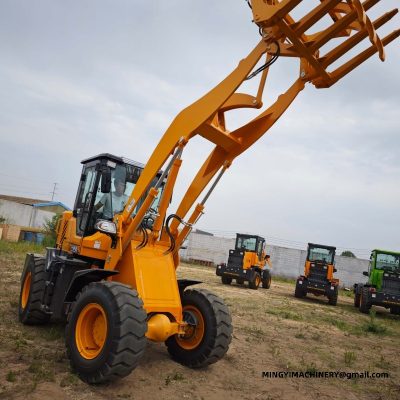
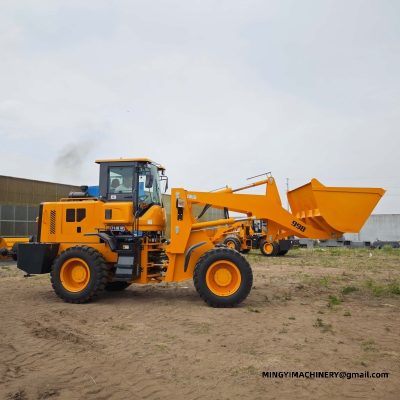
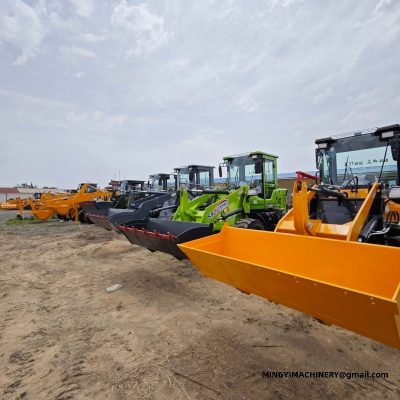
Owners judge a wheel loader supplier on things a brochure never lists. Does it start on a cold morning. Does it clear the body it was bought to clear. Does the steering still feel tight after two seasons. Those outcomes are decided by published figures: battery 60 Ah (490 engine); 80 Ah (4102 turbo engine), dump height 3.2 m, hinge plates 25 mm front and 14 mm rear. This page takes each of them in turn, using two builds from the range — the light-duty 3.2 m small-frame wheel-side reduction wheel loader and the light-duty 3.5 m small-frame wheel-side reduction wheel loader — to show what the numbers mean once the machine is working.
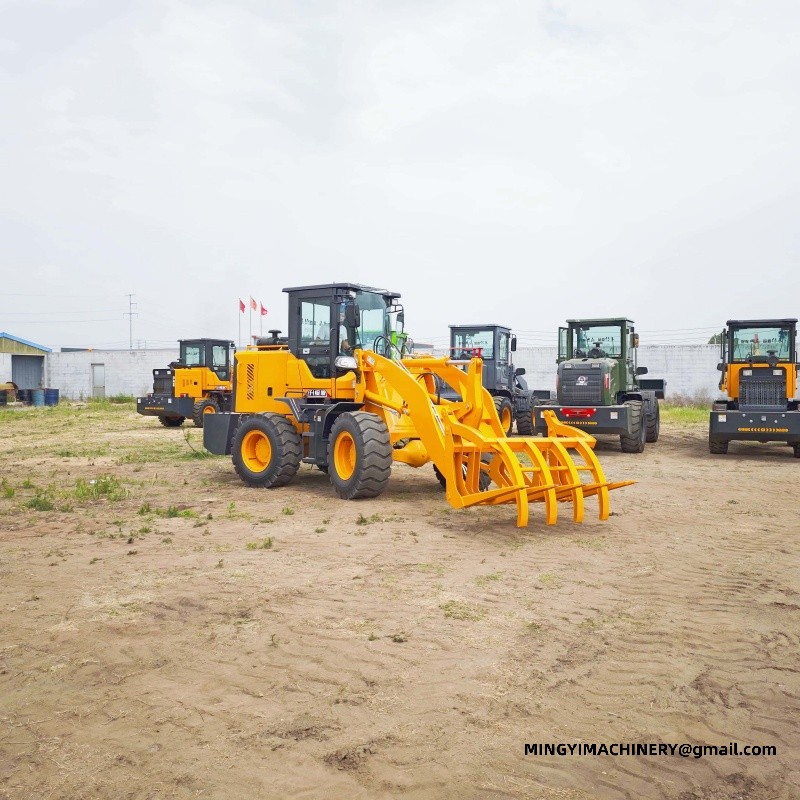
Attachments are specified against the carrier, not against the machine's size class. The figures that matter are the boom section and the hinge geometry: 370 mm on the light-duty 3.2 m small-frame wheel-side reduction wheel loader against 370 mm on the light-duty 3.5 m small-frame wheel-side reduction wheel loader, and centre distance 890 mm against 890 mm. Two loaders of the same rated capacity from different frame families will not share a fork frame.
Within one frame family the section and spacing match, so a single tool set covers the light and heavy builds of that frame — a genuine advantage for a mixed fleet. Across families it does not work. If you intend to run hydraulically actuated tools, a grapple, a four-in-one bucket or a hydraulic snow blade, order the third circuit at build time; the 40 pump (490 engine); 1045 pump (4102 turbo engine) and 40 pump (490 engine); 1045 pump (4102 turbo engine) circuits are specified per build and plumbing added later is the most common source of field leaks.
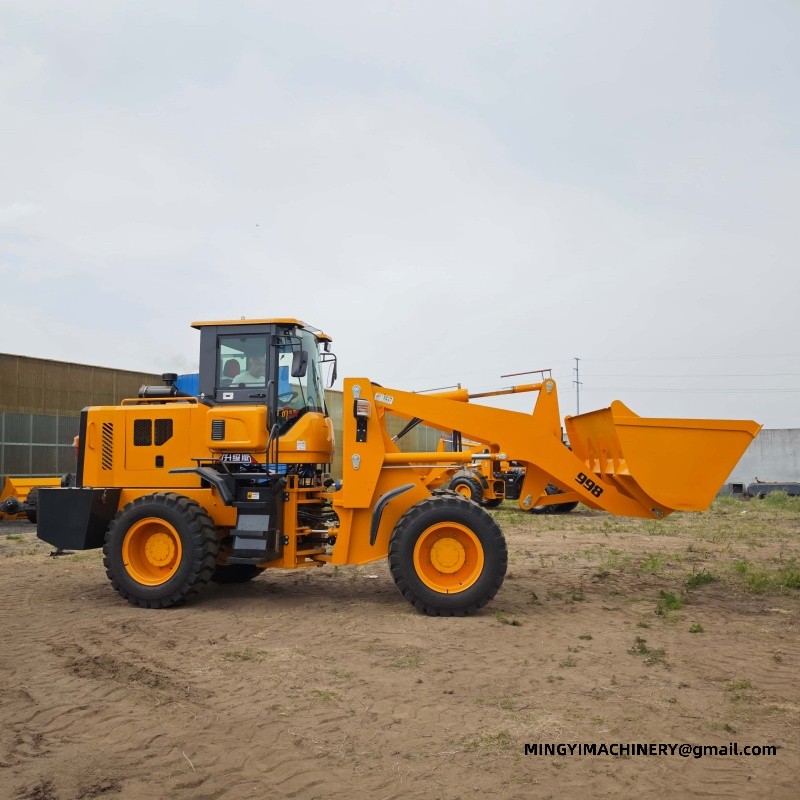
A bucket that fills completely every pass beats a larger one that fills partly, because a partly filled bucket is carrying air at the same effort as material. On a dense face, 0.38 m³ will fill where 0.65 m³ might not, and the smaller machine finishes the job first while putting less load into the 25 mm hinge.
There is also the question of what the load does to the machine in motion. Carrying a full bucket across rough ground loads the front axle, the hinge and the boom all at once. At 4.1 m front wheel to counterweight and 1.5 m (wheel-side reduction axle); 1.45 m (Isuzu axle) of track, the shorter machine with the right bucket is more stable as well as quicker, and stability is what keeps a cycle time consistent rather than occasionally fast.
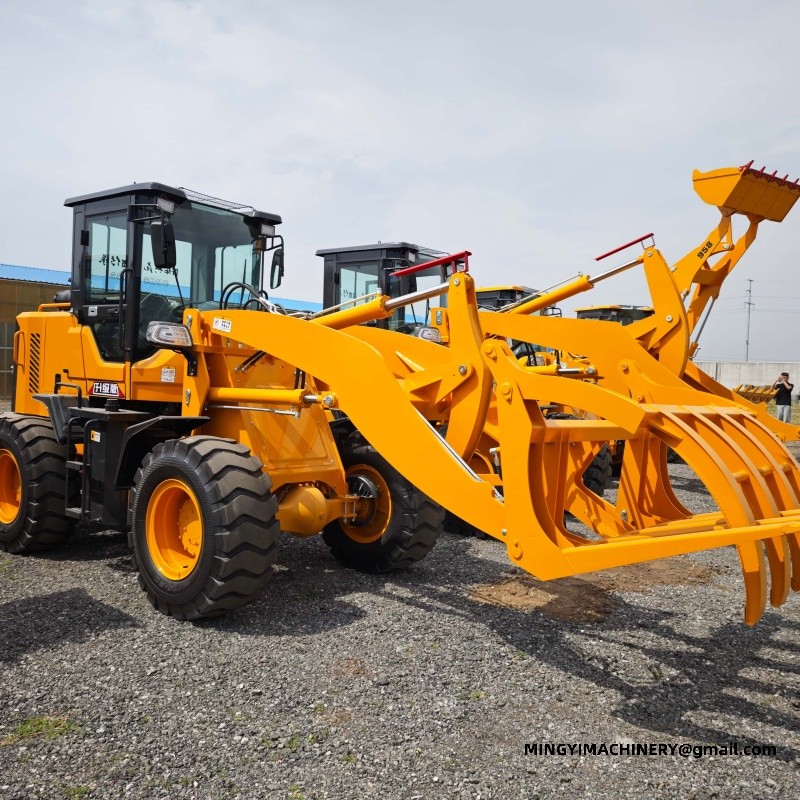
Put the two builds side by side and read four rows only. Bucket: 0.38 m³ against 0.65 m³. Dump height: 3.2 m against 4.2 m. Hinge steel: 25 mm and 14 mm against 45 mm and 30 mm. Cross-member: 25 mm against 45 mm.
Those four decide what the machine can carry, where it can put it, and how long the frame lasts doing it. Everything else on a specification sheet — paint, cab trim, lighting package — is cosmetic next to them. The pumps, 40 pump (490 engine); 1045 pump (4102 turbo engine) against 2063 pump, are the fifth row and matter only if the work is hydraulic rather than loading.
| Specification extract — light-duty 4.2 m small-frame wheel-side reduction wheel loader | |
|---|---|
| Bucket capacity | 0.38 m³ |
| Dump height | 4.2 m |
| Track width | 1.5 m (wheel-side reduction axle); 1.45 m (Isuzu axle) |
| Boom arm thickness | 25 mm |
| Boom arm width | 370 mm |
| Boom arm length | 3.15 m |
| Boom arm centre distance | 890 mm |
| Cross-member thickness | 25 mm |
| Front hinge plate thickness | 25 mm |
| Rear hinge plate thickness | 20 mm |
| Rear frame section | 280 mm high x 800 mm wide |
| Hydraulic cylinders | centre cylinder 45 / side cylinder 40 |
| Fuel tank | 64.7 L (75# small tank) |
| Battery | 60 Ah (490 engine); 80 Ah (4102 turbo engine) |
| Front wheel to counterweight | 4.1 m |
| Radiator | 4100 core (490 engine); 4105 core (4102T engine) |
| Work pump | 40 pump (490 engine); 1045 pump (4102 turbo engine) |
| Travel pump | 316 pump |
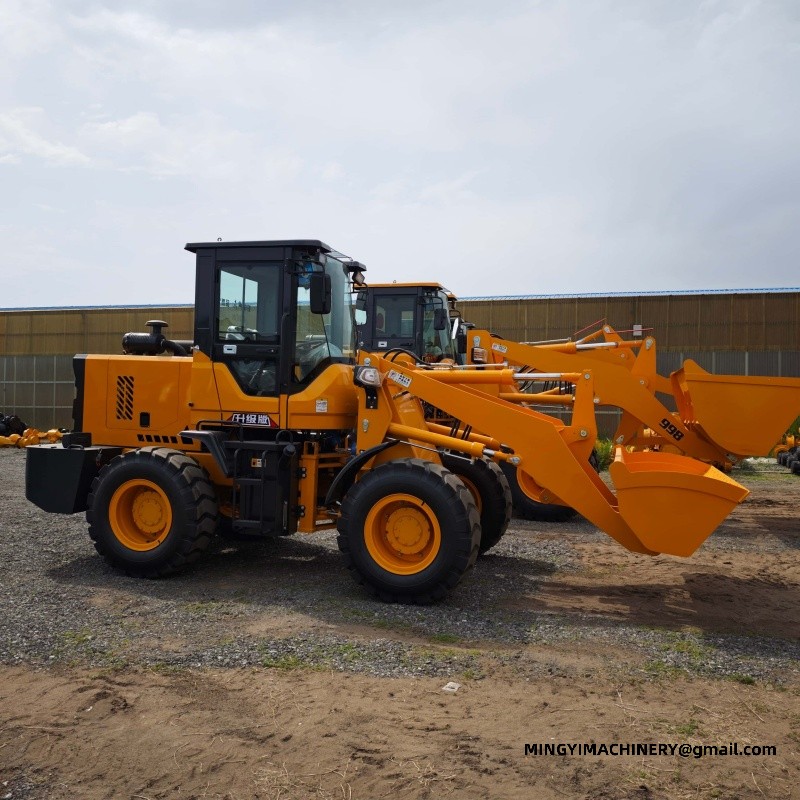
A loading cycle is four movements repeated a few hundred times a shift: approach, fill, lift, dump. Each one loads a different part of the machine, and the specification that matters changes with the movement. Filling asks for bucket volume and breakout, so 0.38 m³ on the light-duty 3.5 m small-frame wheel-side reduction wheel loader is the first figure to read. Lifting asks for boom section and cylinder size, which is 25 mm of wall and centre cylinder 45 / side cylinder 40. Dumping asks for height over the receiving board, 3.5 m here against 4.2 m on the heavy-duty 4.2 m medium-frame wheel-side reduction wheel loader.
The approach is the movement nobody specifies for, and it is where frames age. Every run at a face loads the front hinge plate, 25 mm on this build against 14 mm at the rear; the rear plate carries the weight of the counterweight and the swing of the whole rear frame, which is why it is the heavier of the two. A 4 m wheelbase keeps the machine settled when the bucket meets resistance rather than air.
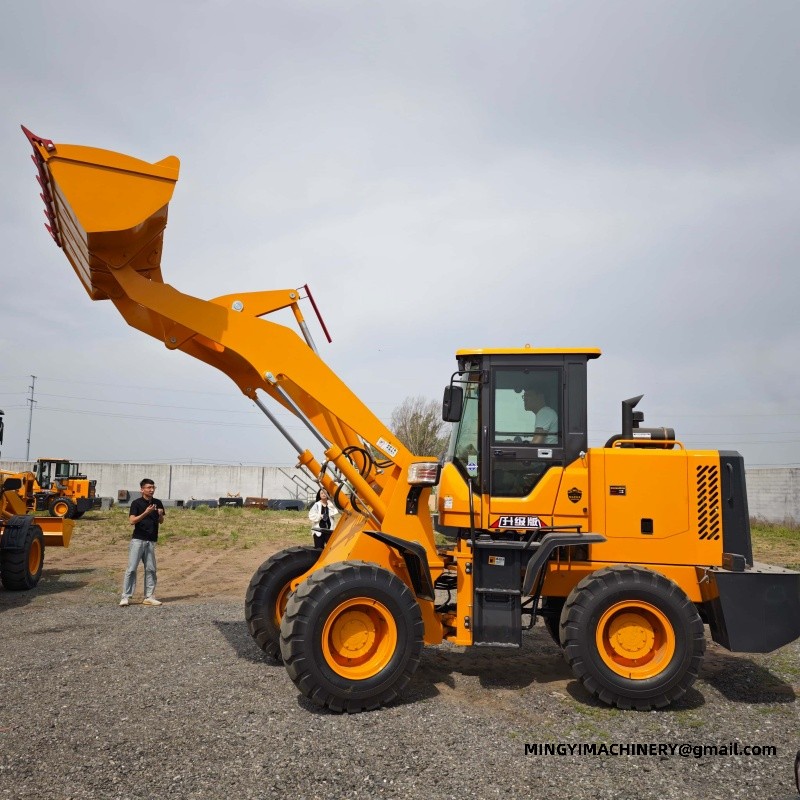
The distance from the front wheel to the rear of the counterweight is a stability specification dressed as a dimension. On the light-duty 3.2 m small-frame wheel-side reduction wheel loader it is 3.8 m working with a 0.38 m³ bucket at 3.2 m; on the light-duty 3.5 m small-frame wheel-side reduction wheel loader it is 4 m with 0.38 m³ at 3.5 m. Longer means more counterweight leverage, which is what lets a machine carry a full bucket high without lifting the rear wheels.
Longer also means a bigger turning circle, and that is the trade. In an open pit or a wide yard the 4 m machine with its 1.5 m (wheel-side reduction axle); 1.45 m (Isuzu axle) track is plainly the better tool. In a livestock shed, a nursery or an indoor renovation job, the 3.8 m machine on 1.5 m (wheel-side reduction axle); 1.45 m (Isuzu axle) will do work the other cannot start. Measure first; the specification only tells you what you are choosing between.
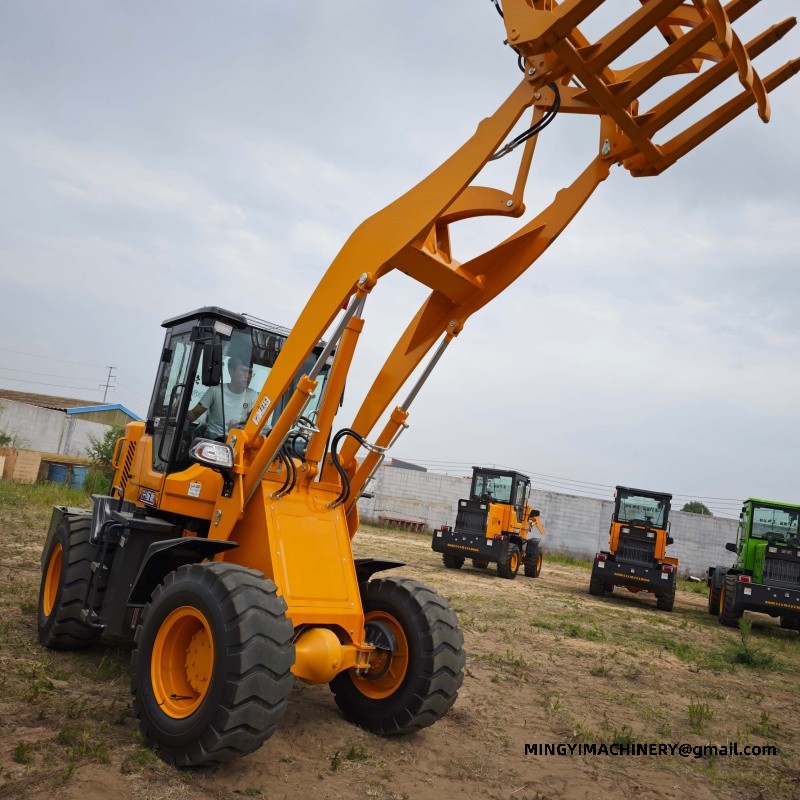
Fleet effort is driven by the size of the spares bin, and that is decided at purchase. Machines sharing an engine share a pump, 40 pump (490 engine); 1045 pump (4102 turbo engine), a radiator, 4100 core (490 engine); 4105 core (4102T engine), and a battery rating, 60 Ah (490 engine); 80 Ah (4102 turbo engine). Machines sharing a frame share cylinder sizes, centre cylinder 45 / side cylinder 40, and hinge geometry. Buy within one frame family and the bin halves.
The figures to compare are the ones that differ: bucket 0.38 m³ against 0.65 m³, dump height 3.5 m against 3.5 m, track 1.5 m (wheel-side reduction axle); 1.45 m (Isuzu axle) against 1.6 m. Where those differ, the wearing parts behind them usually differ too. Where they match, one part number covers both machines.
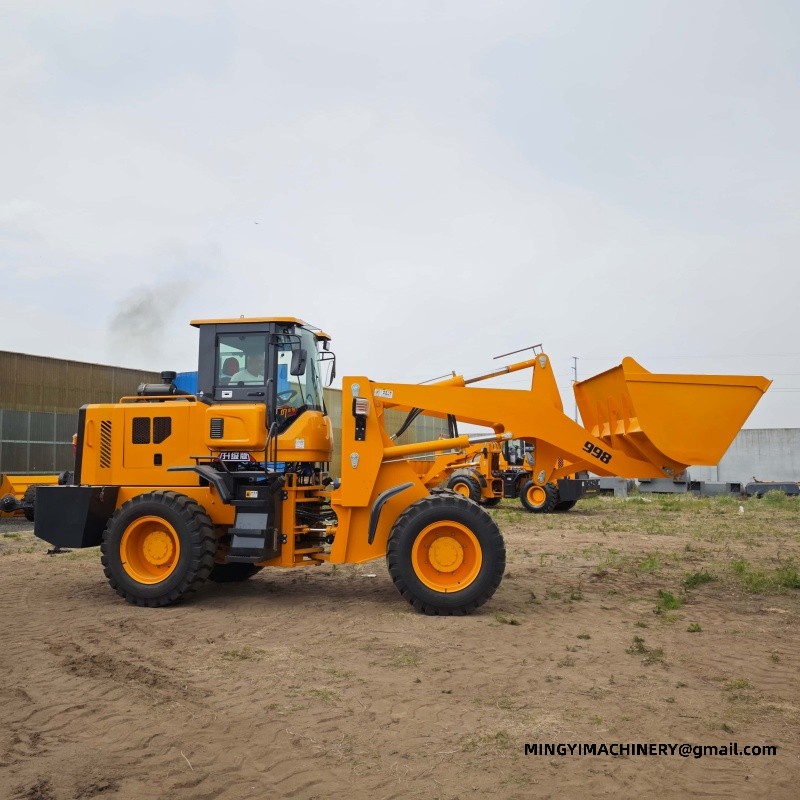
A machine crossing an ocean is exposed to salt air for weeks, and the parts that suffer are the ones that were never painted: cylinder rods, hinge pins and electrical terminals. This build carries centre cylinder 45 / side cylinder 45 and hinge plates of 30 mm and 20 mm; all three should be greased and wrapped before loading rather than cleaned on arrival.
The battery is the other item to plan for. 60 Ah (490 engine); 80 Ah (4102 turbo engine) will not survive a long voyage connected, and a flat machine cannot be driven off a container. Specify a disconnect, and specify the radiator, 4100 core (490 engine); 4105 core (4102T engine), to be checked for fin corrosion on arrival — salt air attacks the core from outside and the symptom is overheating in the first month, which everyone blames on the thermostat.
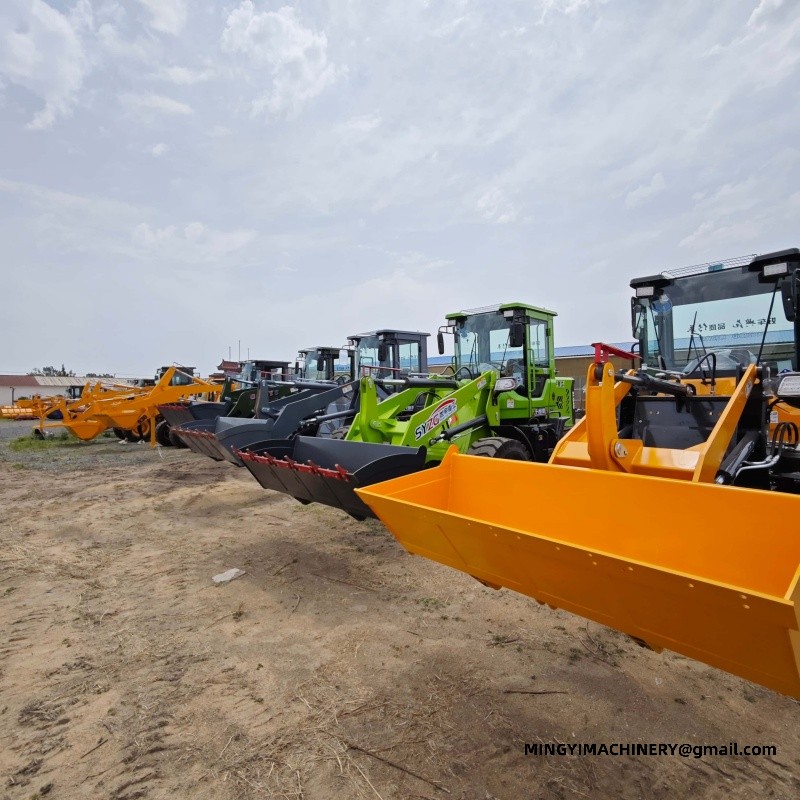
Construction duty is repetitive, dusty and unforgiving of a light frame. Specified for it, the heavy-duty 3.5 m medium-frame wheel-side reduction wheel loader carries a 0.65 m³ bucket to 3.5 m on 45 mm front and 30 mm rear hinge plates with a 45 mm cross-member and a 300 mm high x 800 mm wide rear frame. Lighter builds — the light-duty 3.8 m small-frame wheel-side reduction wheel loader at 0.38 m³, 3.8 m, 14 mm and 25 mm — suit smaller sites and lighter material.
Two site conditions change the specification. The first is the board height of the trucks, which fixes dump height and is measured, not guessed. The second is ground: a rough, rutted site with soft spots wants the wheel-side reduction axle at 1.6 m track over the lighter axle, and a site with long internal haul roads wants the opposite. Tell the factory both and the axle choice follows from the site, not from the catalogue.
What extra care does a wheel loader supplier need in dusty work?
Core cleaning at the end of every shift and more frequent air filter changes. The core is 4100 core (490 engine); 4105 core (4102T engine); a blocked one shows up as a slow loss of power rather than a stoppage.
How is dump height on a wheel loader supplier measured?
At the bucket edge, arm at full lift, machine level. The light-duty 3.2 m small-frame wheel-side reduction wheel loader publishes 3.2 m and the heavy-duty 3.8 m medium-frame wheel-side reduction wheel loader publishes 3.8 m, measured the same way, so the two can be compared directly.
What paperwork should come with a wheel loader supplier?
A specification listing bucket 0.38 m³, lift 3.2 m, cylinders centre cylinder 45 / side cylinder 40, core 4100 core (490 engine); 4105 core (4102T engine), battery 60 Ah (490 engine); 80 Ah (4102 turbo engine) and track 1.5 m (wheel-side reduction axle); 1.45 m (Isuzu axle). If those six are present, parts and warranty questions are answerable.
Is it worth rebuilding an older wheel loader supplier?
If the frame is tight, yes: cylinders centre cylinder 45 / side cylinder 45, pump 40 pump (490 engine); 1045 pump (4102 turbo engine) and core 4100 core (490 engine); 4105 core (4102T engine) are all replaceable. If the pins have ovalised their bores, the geometry will not come back.
What should I check before the first start of a wheel loader supplier?
Coolant level in the 4100 core (490 engine); 4105 core (4102T engine) package, oil level, battery charge to the 60 Ah (490 engine); 80 Ah (4102 turbo engine) rating, and a walk-round for anything loosened in transit. Then run it light for ten minutes before loading it.
What is involved in changing attachments on a wheel loader supplier?
Mechanical mounting plus hydraulics. The cylinders are centre cylinder 45 / side cylinder 40 and the pump is 40 pump (490 engine); 1045 pump (4102 turbo engine); flow, not force, is usually what limits an added service.
What should an operator be shown on a new wheel loader supplier?
Board clearance against the 3.5 m of lift, why the bucket should be squared to the face, and the daily walk-round. Most frame damage comes from corner-loading, not from overloading.
Two builds, light-duty 3.2 m small-frame wheel-side reduction wheel loader and light-duty 3.5 m small-frame wheel-side reduction wheel loader, have carried the comparisons on this page. The same rows can be produced for any machine in the range, and for the engine options that change the pump, radiator and battery with them.
Commissioning Wheel Loader Supplier: Ordering the Same Build Twice on site
The machine should be introduced to the site as well as the operator. Walking the route Wheel Loader Supplier: Ordering the Same Build Twice will take, noting the soft spots and the turns, prevents the kind of first-day incident that has nothing to do with the machine.
Packing, loading and shipment of Wheel Loader Supplier: Ordering the Same Build Twice
Container loading is a planning exercise. The overall dimensions and the operating weight of Wheel Loader Supplier: Ordering the Same Build Twice decide whether it ships whole, partly disassembled or with the attachment removed, and that decision is made before the booking.
Contact MINGYI Machinery for the current wheel loader lineup, configuration options and a formal specification for your market. E-mail: sales@mingycn.com | LINE (ID): mingyicn
Construction Wheel Loader: Board Heights in Real Use · Front End Loader Manufacturer: Boom and Hinge Checks · Front End Loader Log Grapple: Section Widths and Pin Geometry · Wheel Loader









