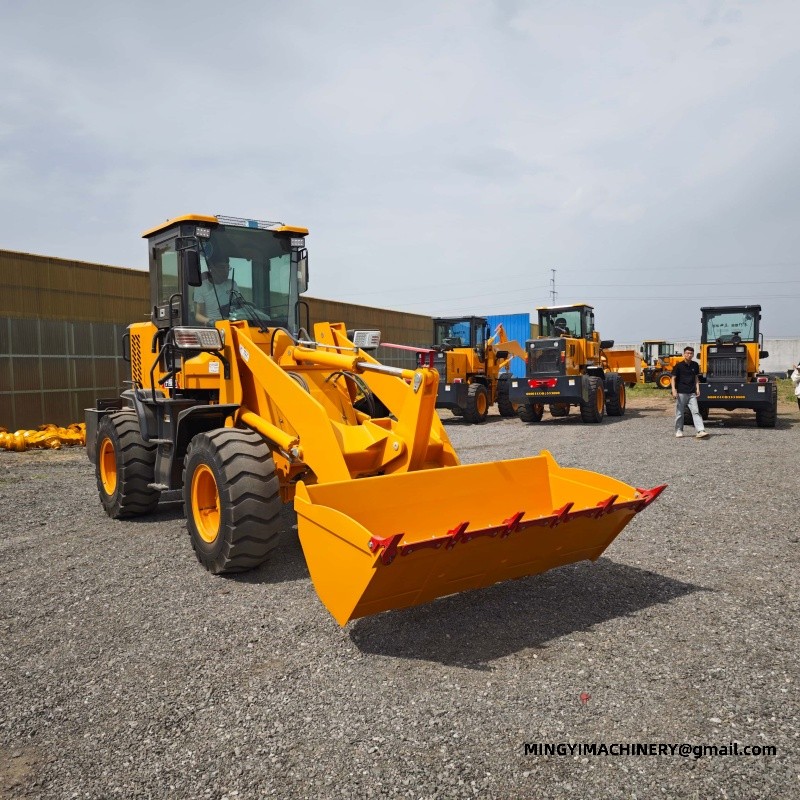
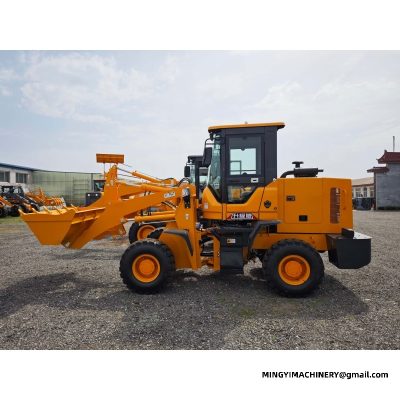
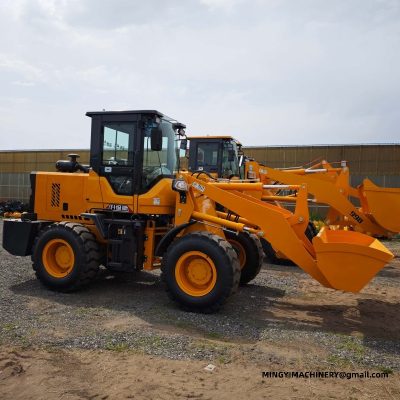
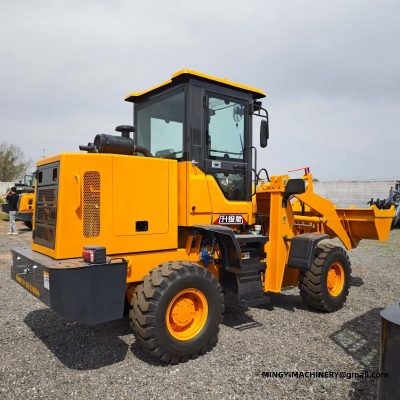
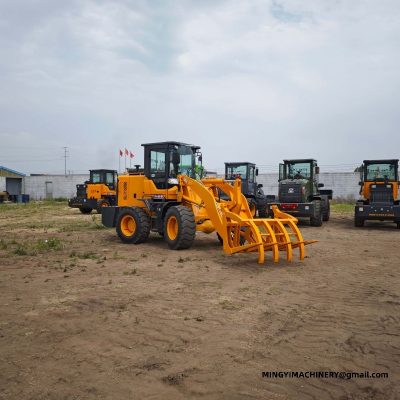
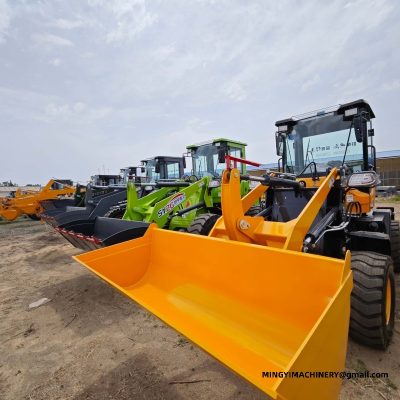
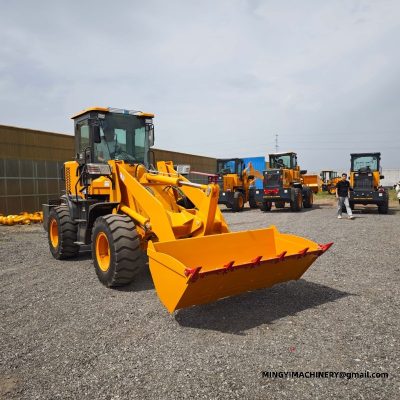
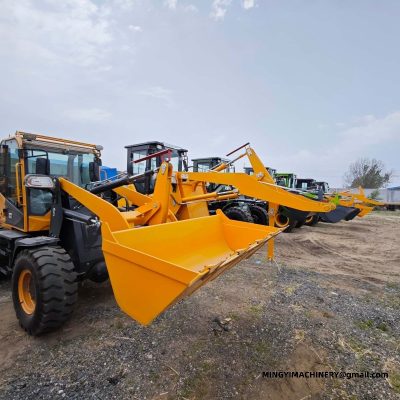
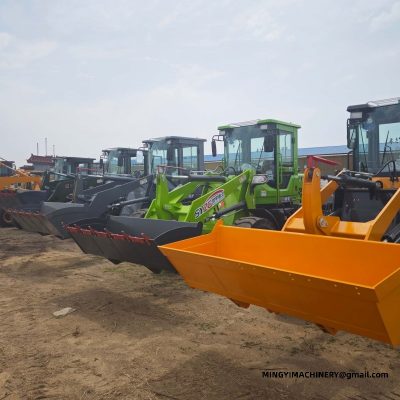
Ask two fleets what they want from a construction wheel loader and you get the same three answers: it starts, it clears the body, and it stays tight. Everything else is preference. Those three map directly onto published rows — battery 60 Ah (490 engine); 80 Ah (4102 turbo engine), dump height 3.8 m, and hinge plates 30 mm front with 20 mm rear over a 30 mm cross-member. This page takes those three answers as its structure, and uses the heavy-duty 3.8 m small-frame wheel-side reduction wheel loader and the heavy-duty 4.2 m small-frame wheel-side reduction wheel loader throughout so that every claim on it can be checked against the table.
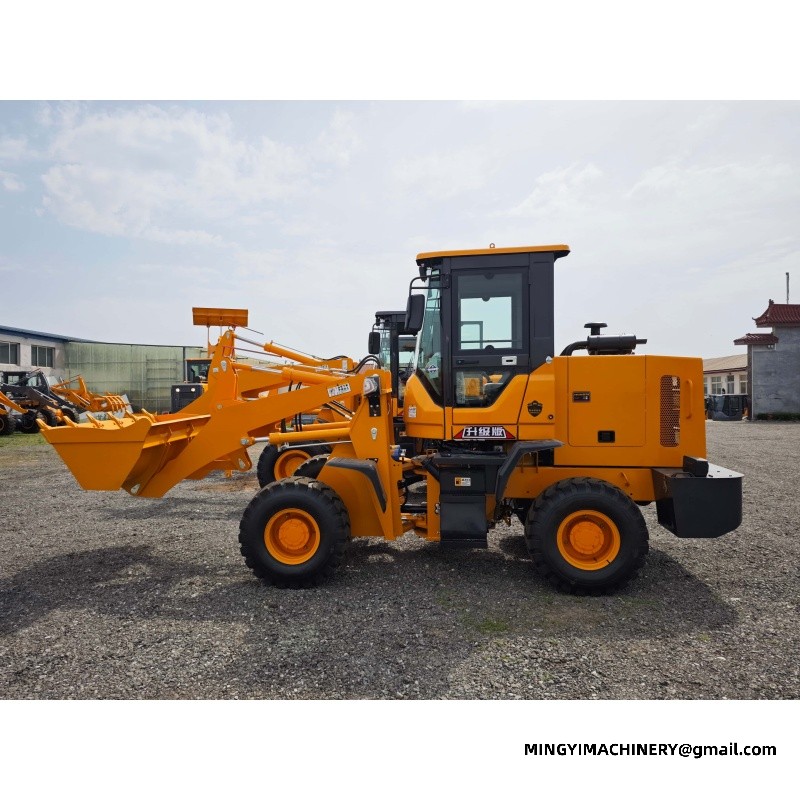
The standard bucket on this build is 0.38 m³, and it is the right tool for loose material moved from a heap to a body. Everything else is a compromise in one direction or another: forks give precision and lose volume, grapples give grip and lose speed, a snow blower gives reach and needs flow the bucket never asked for.
What makes attachments practical is whether the machine can lift them. Boom wall 25 mm and section 370 mm decide how much side load the arm takes, and the hinge plates — 25 mm at the front, 14 mm at the rear — decide how long the frame takes it. A grapple hanging off the end of a long arm is a side load the bucket never produces.
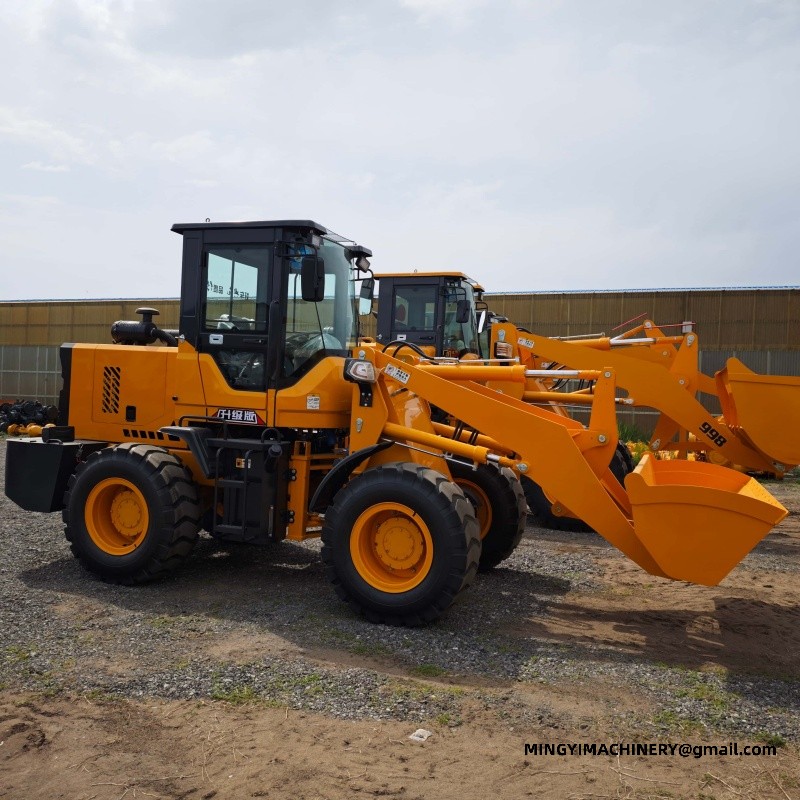
Winter changes three things: the battery has less to give, the oil is thicker, and the operator is working in gloves. The first two are specification questions. 80 Ah covers the first. The hydraulic side, centre cylinder 60 / side cylinder 50 with a 2063 pump, is sized for the loads it will see at working temperature and will simply be slower until it warms.
The third is a machine-layout question and comes down to the rear frame and the tank: 280 mm high x 800 mm wide of rear section and 70 L (75# large tank) of fuel. Cold-weather work also means more idling, so tank capacity should be read against winter consumption rather than summer consumption. A machine that needs refuelling at minus ten with an operator standing outside is a specification failure, not a weather problem.
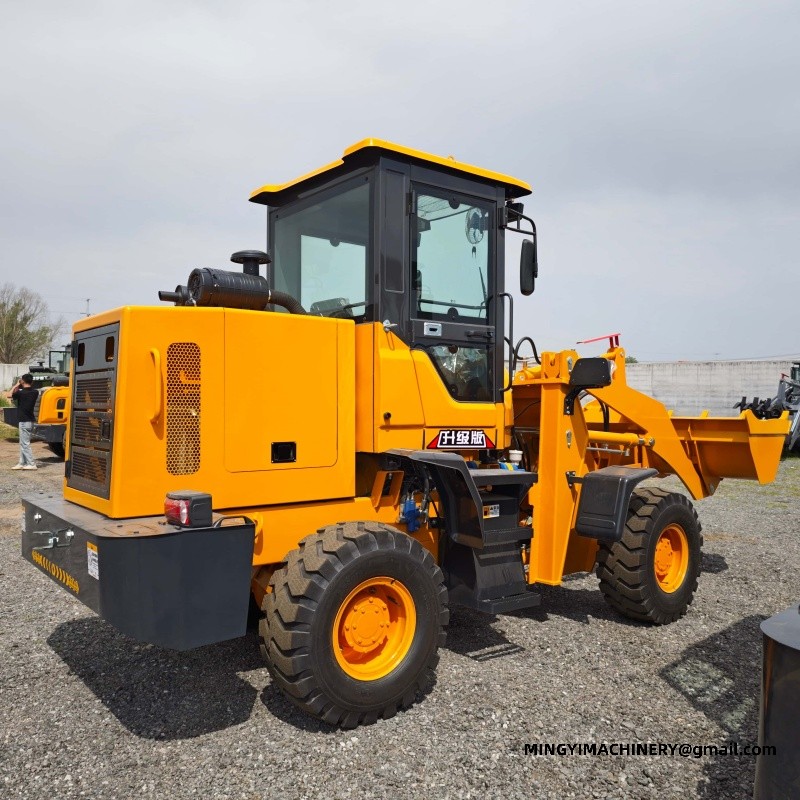
Farm work is governed by access and by the height of the things being filled. The standard 2.4 m low-profile wheel loader carries 0.3 m³ to 2.4 m on a 1.2 m (Isuzu axle); 1.3 m (wheel-side reduction axle) track with a 3.5 m footprint; the heavy-duty 4.2 m small-frame wheel-side reduction wheel loader carries 0.4 m³ to 4.2 m on 1.5 m (wheel-side reduction axle); 1.45 m (Isuzu axle) with 4.25 m. Gate widths, shed doors and feed-wagon sides are the constraints, and they are all fixed dimensions.
Attachments are where a farm loader earns its second life. Forks for bagged feed and pallets, a bale spear, a grapple for silage, a snow tool for the winter lane. They specification against the boom section, so check 280 mm on the standard 2.4 m low-profile wheel loader against 500 mm on the heavy-duty 4.2 m small-frame wheel-side reduction wheel loader before ordering, and specify the hydraulic circuit at build time if any of them is hydraulically actuated.
| Sample build from the range — light-duty 4.5 m medium-frame wheel-side reduction wheel loader | |
|---|---|
| Bucket capacity | 0.52 m³ |
| Dump height | 4.5 m |
| Track width | 1.6 m |
| Boom arm thickness | 30 mm |
| Boom arm width | 450 mm |
| Boom arm length | 3.35 m |
| Boom arm centre distance | 960 mm |
| Cross-member thickness | 45 mm |
| Front hinge plate thickness | 45 mm |
| Rear hinge plate thickness | 30 mm |
| Rear frame section | 300 mm high x 800 mm wide |
| Hydraulic cylinders | centre cylinder 60 / side cylinder 50 |
| Fuel tank | 70 L (75# large tank) |
| Battery | 80 Ah |
| Front wheel to counterweight | 4.7 m |
| Radiator | 4105 core |
| Work pump | 2063 pump |
| Travel pump | 25 pump |
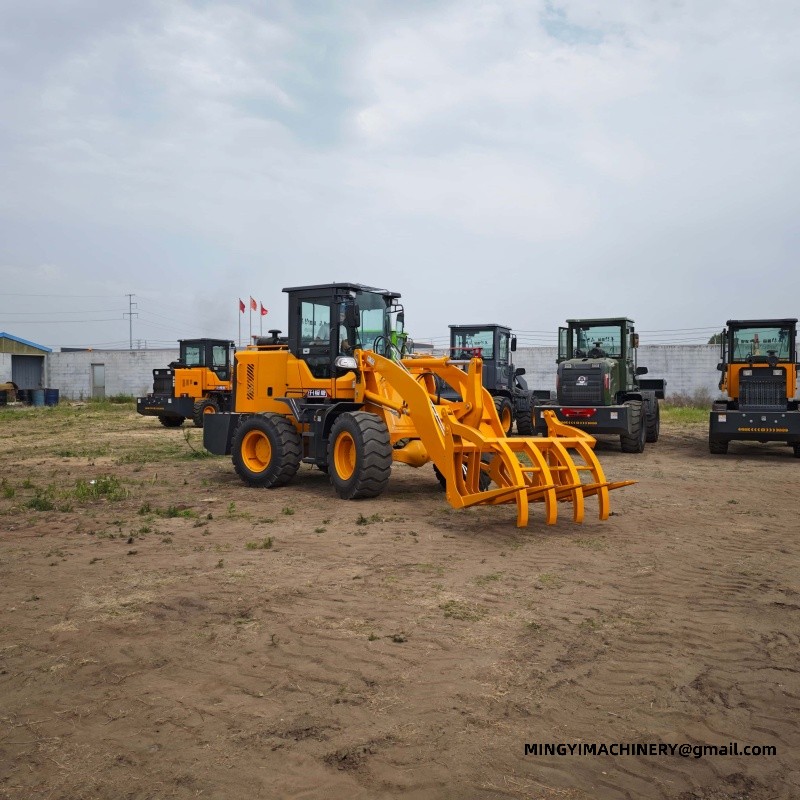
Four numbers describe a loader frame: front hinge plate, rear hinge plate, cross-member thickness and rear frame section. The heavy-duty 3.8 m small-frame wheel-side reduction wheel loader lists 30 mm, 20 mm, 30 mm and 280 mm high x 800 mm wide. The heavy-duty 4.2 m small-frame wheel-side reduction wheel loader lists 30 mm, 20 mm, 30 mm and 280 mm high x 800 mm wide. Everything else on a specification sheet — paint, cab trim, lighting package — is cosmetic next to those four.
The rear frame section is the one that surprises people. A wider rear frame lets the counterweight bolt directly to the chassis instead of hanging off brackets, and bracket-mounted counterweights crack. On the heavy-duty 3.8 m small-frame wheel-side reduction wheel loader the 280 mm high x 800 mm wide section carries the ballast for a 0.4 m³ bucket at 3.8 m; on the heavy-duty 4.2 m small-frame wheel-side reduction wheel loader the 280 mm high x 800 mm wide section carries it for 0.4 m³ at 4.2 m. Compare those against the 4.2 m and 4.25 m front-wheel-to-counterweight lengths and you have the whole stability picture in four figures.
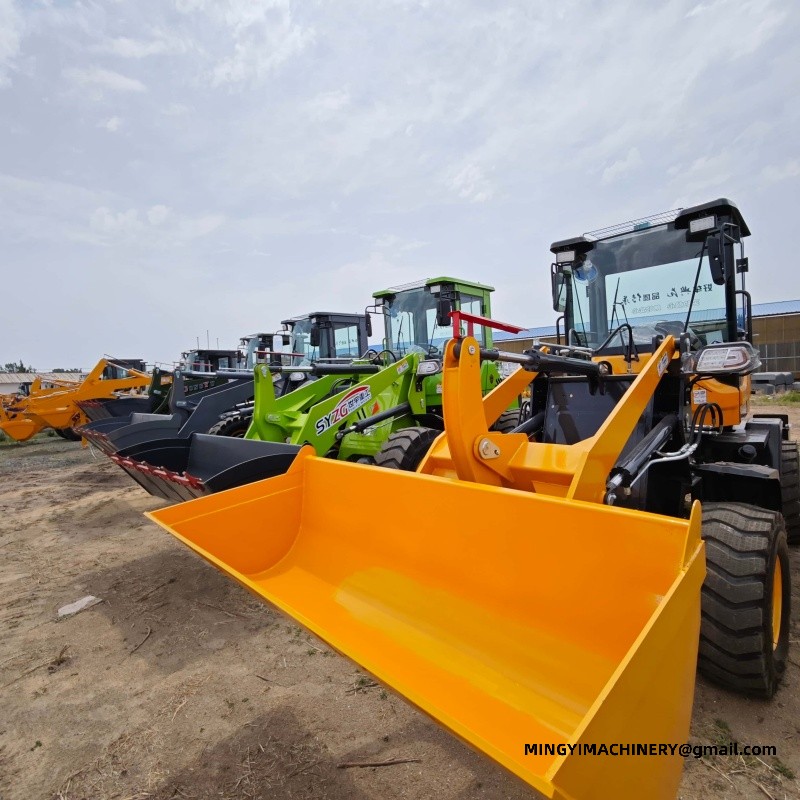
Photograph the specification plate, the cylinder markings and the frame plates on the day the machine arrives. Cylinders on this build are centre cylinder 45 / side cylinder 40; the pump is 40 pump (490 engine); 1045 pump (4102 turbo engine); the radiator is 4100 core (490 engine); 4105 core (4102T engine). Those three identify the build more reliably than any nameplate, because they are the parts that change between engine options.
Then photograph the geometry, because it is what a later claim will turn on. Dump height 3.2 m at full lift, arm length 2.3 m, spacing 890 mm, track 1.5 m (wheel-side reduction axle); 1.45 m (Isuzu axle). If a machine ever fails to clear a body it was sold to clear, those four photographs are the difference between a warranty claim and an argument.
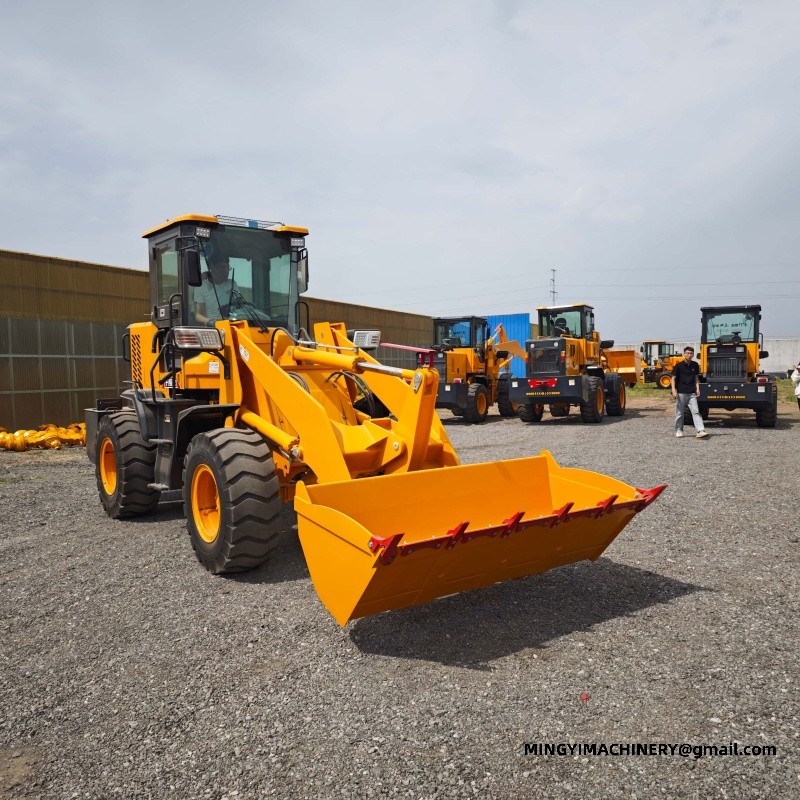
Purchase decision is the smallest of the three numbers that matter; the other two are downtime and residual value, and both are decided by the frame. A machine built with 20 mm rear hinge plates and a 30 mm cross-member, as on the heavy-duty 3.8 m small-frame wheel-side reduction wheel loader, will be tight at year three in light duty. A machine with 20 mm and 30 mm, as on the heavy-duty 4.2 m small-frame wheel-side reduction wheel loader, will still be tight in heavy duty.
Fuel, tyres and filters are the predictable takes, and they scale with duty rather than with capacity. A 0.4 m³ bucket working a short cycle on a 64.7 L (75# small tank) tank takes less per day than a 0.4 m³ bucket on 64.7 L (75# small tank) working a long one — and moves less material. The honest comparison is effort per tonne moved, which needs your cycle, not a brochure.
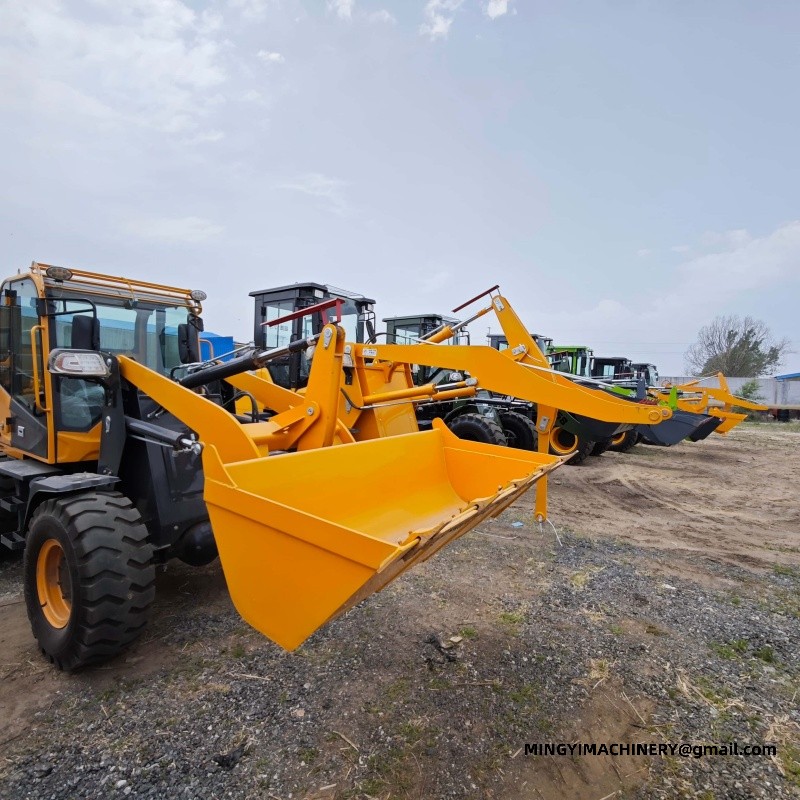
Keep the delivery photographs and the specification sheet with the machine. Bucket 0.38 m³, dump height 3.2 m, cylinders centre cylinder 45 / side cylinder 40, pump 40 pump (490 engine); 1045 pump (4102 turbo engine), track 1.5 m (wheel-side reduction axle); 1.45 m (Isuzu axle): a buyer who can verify five figures against the machine will pay for the certainty.
The frame figures do the rest. 25 mm and 14 mm hinge plates, 25 mm cross-member, 230 mm high x 800 mm wide rear section. Two machines of the same age and hours can be worth materially different amounts on those four rows alone, because they tell the buyer how much life is left in the part that is most lengthy to put right.
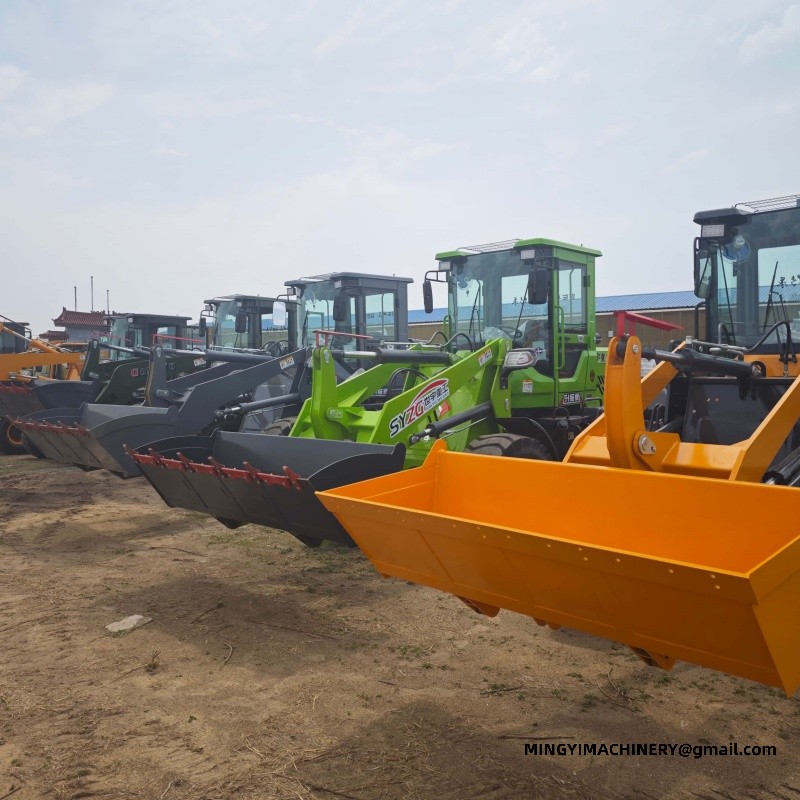
Continuous stockpile duty is where light builds are separated from heavy ones, and the separation is visible in steel. The heavy-duty 4.2 m small-frame wheel-side reduction wheel loader lists 30 mm front and 20 mm rear hinge plates over a 30 mm cross-member and a 280 mm high x 800 mm wide rear frame, carrying 0.4 m³ to 4.2 m. The light-duty 3.2 m low-profile wheel loader lists 25 mm, 14 mm, 25 mm and 230 mm high x 800 mm wide, carrying 0.38 m³ to 3.2 m.
Choose by cycle count rather than by material. Below twenty truck loads a day the lighter machine is the better economics; above it, the heavier frame pays for itself in avoided downtime. Then specify the cooling package for the material — 4100 core (490 engine); 4105 core (4102T engine) raised core for fines and dust — and the axle for the floor. Both are simple at order time and neither is simple later.
Why does my construction wheel loader bucket only fill two-thirds?
The material is denser than the bucket was matched to. At 0.3 m³ on the standard 2.4 m low-profile wheel loader against 0.4 m³ on the heavy-duty 4.2 m small-frame wheel-side reduction wheel loader, a smaller bucket that fills completely moves more per hour than a larger one that does not.
What should I check before running a grapple on a construction wheel loader?
Side load. A grapple levers the arm in a way a bucket does not, so the 25 mm wall and 370 mm section matter more than capacity. The hinge plates at 25 mm take the reaction.
My construction wheel loader overheats every afternoon. What is the cause?
In order of likelihood: blocked fins on the 4100 core (490 engine); 4105 core (4102T engine) core, a cap that will not hold pressure, a fan drive problem, or genuine overloading. Clean the core first, from the clean side.
Which engine option should a construction wheel loader be ordered with?
It follows the duty. The engine drags three rows with it: pump 32 pump, core 4100 core and battery 45 Ah (24 V). Choose it early rather than accepting whatever is in stock.
Can worn pins on a construction wheel loader be repaired?
Yes, if the plates are sound. Re-machining restores geometry for a while; once the 30 mm cross-member and 280 mm high x 800 mm wide rear section have been flexing, it will not hold.
Can a construction wheel loader work safely on a slope?
Track decides that: 1.6 m on this build, with the wider figure belonging to the hub-reduction axle. Work up and down the slope rather than across it.
Which tyre fitment does a construction wheel loader use?
It follows the tank and axle specification: 30.8 L (48# large tank, 20.5/70-16 tyres); 24.6 L (48# small tank, 8.25-16 tyres) on this build. The larger fitment goes with the larger tank and the heavier duty.
Those are the rows that decide how a construction wheel loader behaves once it is working. The full table for every build in the range is available on request, along with the engine options that change the pump, radiator and battery figures stated here.
Planning the season around Construction Wheel Loader: Board Heights in Real Use
Seasonal work rewards a machine that can change duty. Through the year Construction Wheel Loader: Board Heights in Real Use may move from one task to another, and the attachment list should be chosen for the whole year rather than for the first job.
Reading the early symptoms on Construction Wheel Loader: Board Heights in Real Use
Operators notice things first because they hear the machine every day. Encouraging the person on Construction Wheel Loader: Board Heights in Real Use to report small changes, and acting on them, is the most effective maintenance programme there is.
Fuel, oil and fluid quality for Construction Wheel Loader: Board Heights in Real Use
Contamination is easier to prevent than to cure. Keeping the filler caps sealed, the funnels clean and the containers closed around Construction Wheel Loader: Board Heights in Real Use is unglamorous work that shows up as reliability later.
Cold weather and winter care for Construction Wheel Loader: Board Heights in Real Use
Winter is hard on rubber and on seals as much as on the engine. Parking Construction Wheel Loader: Board Heights in Real Use under cover, keeping the tracks or tyres off standing water and checking the hoses for cracking are all part of the season.
Contact MINGYI Machinery for the current wheel loader lineup, configuration options and a formal specification for your market. E-mail: sales@mingycn.com | LINE (ID): mingyicn
Front End Loader Manufacturer: Boom and Hinge Checks · Heavy Duty Wheel Loader: Frame Steel for Long Shifts · Hydraulic Wheel Loader Log Grapple: Circuit and Cylinders · Wheel Loader









