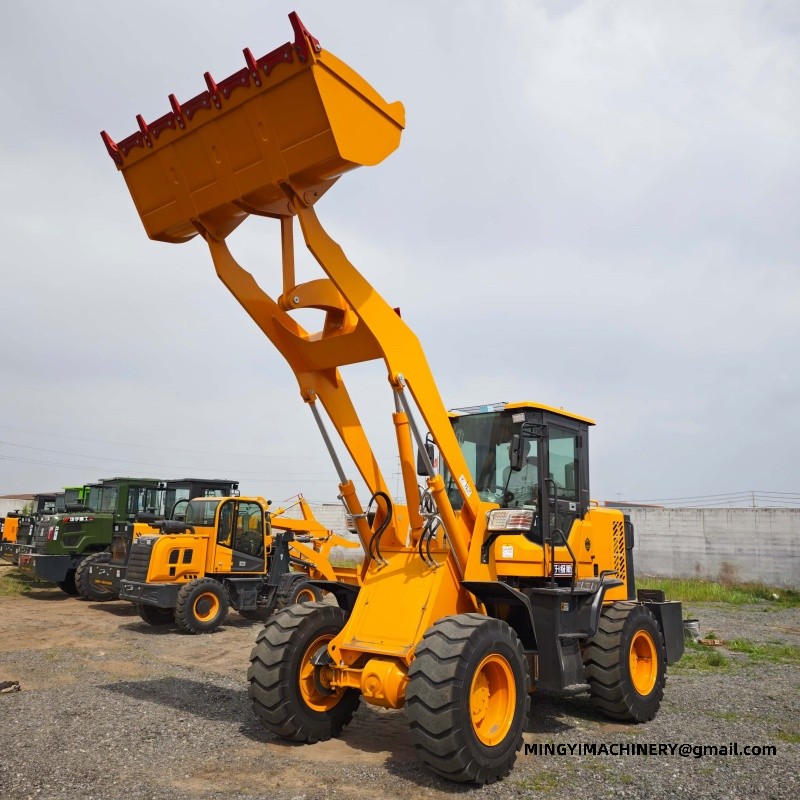
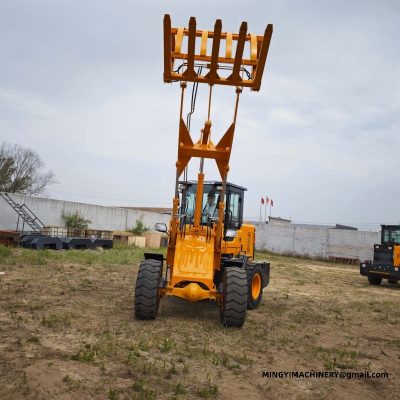
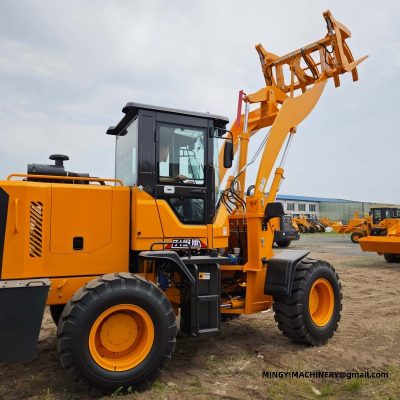
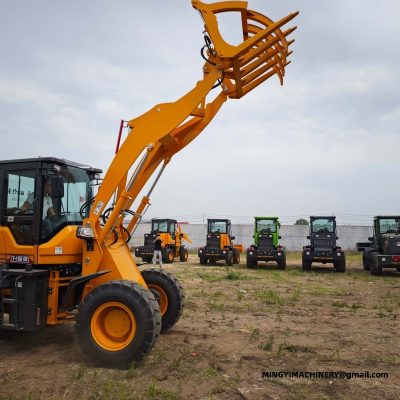
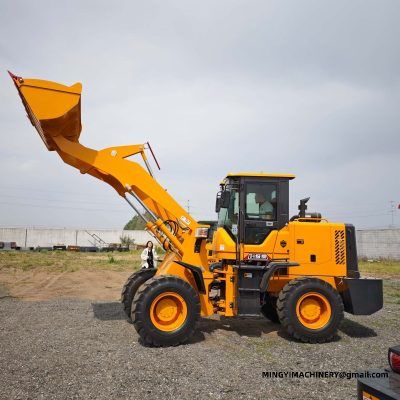
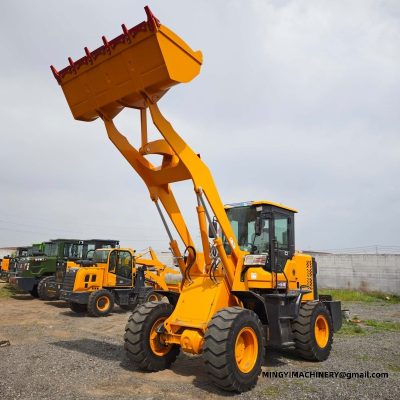
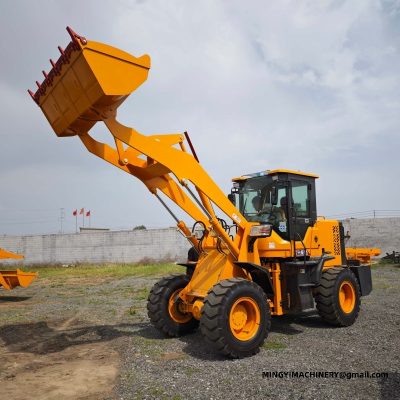
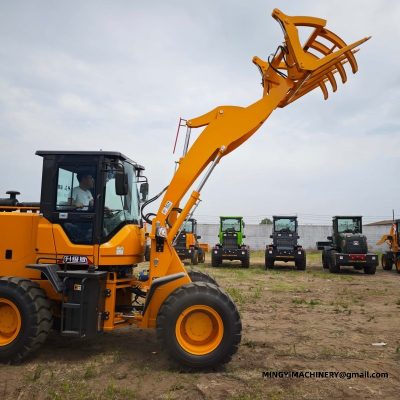
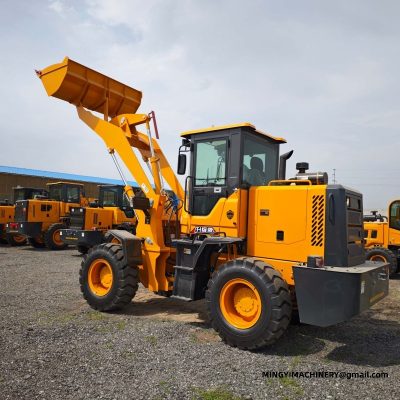
The simplest heavy duty wheel loader decision is the one made on paper.Choosing the wrong dump height takes a machine; choosing the wrong axle takes a driveline; choosing the wrong hinge steel takes a frame. Each of those is a row on a specification sheet, and each is published for every build here. The two machines compared throughout are the light-duty 4.5 m medium-frame wheel-side reduction wheel loader, lifting 4.5 m, and the standard 2.4 m low-profile wheel loader, lifting 2.4 m. Read the rows in the order they will effort you money and the choice usually makes itself.
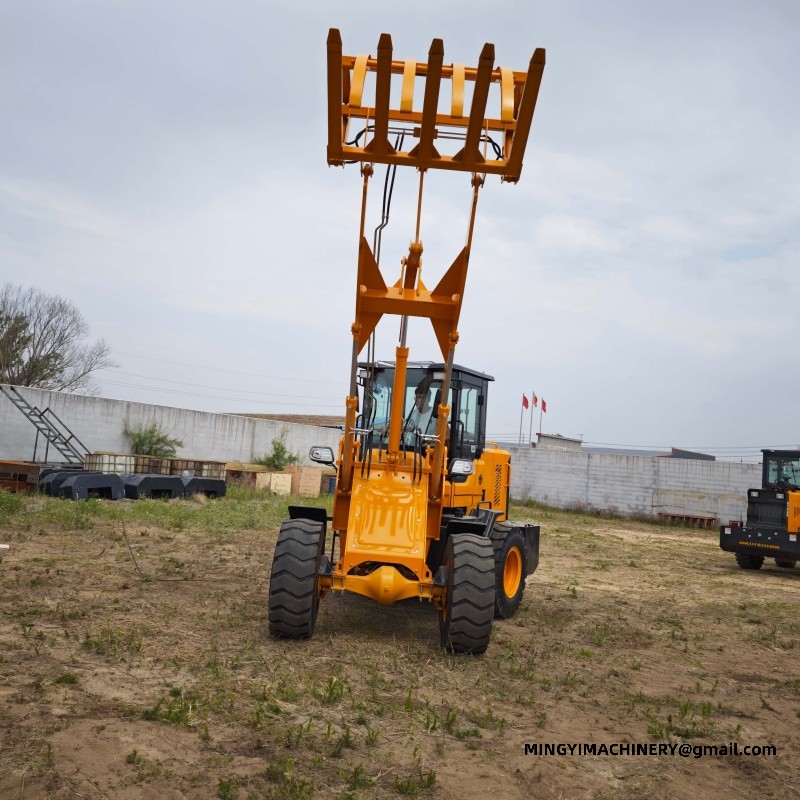
Two axle families appear across the range and the choice is about ground, not preference. Track width is the visible difference — 1.6 m on the light-duty 4.5 m medium-frame wheel-side reduction wheel loader against 1.2 m (Isuzu axle); 1.3 m (wheel-side reduction axle) on the standard 2.4 m low-profile wheel loader — but the mechanical difference is where the final reduction happens. An Isuzu-pattern axle reduces at the differential and sends torque down the shafts; a wheel-side reduction axle reduces at the hub.
Hub reduction is the right answer for soft lanes, ramps, uncompacted yards and pits, because torque arrives at the wheel instead of through a faster final drive that can spin. It is the wrong answer for long, fast, level transfers, where the extra unsprung mass and the lower top speed effort more than the traction gains. Read the track figures with the footprint — 4.7 m on the light-duty 4.5 m medium-frame wheel-side reduction wheel loader, 3.5 m on the standard 2.4 m low-profile wheel loader — and the choice usually makes itself.
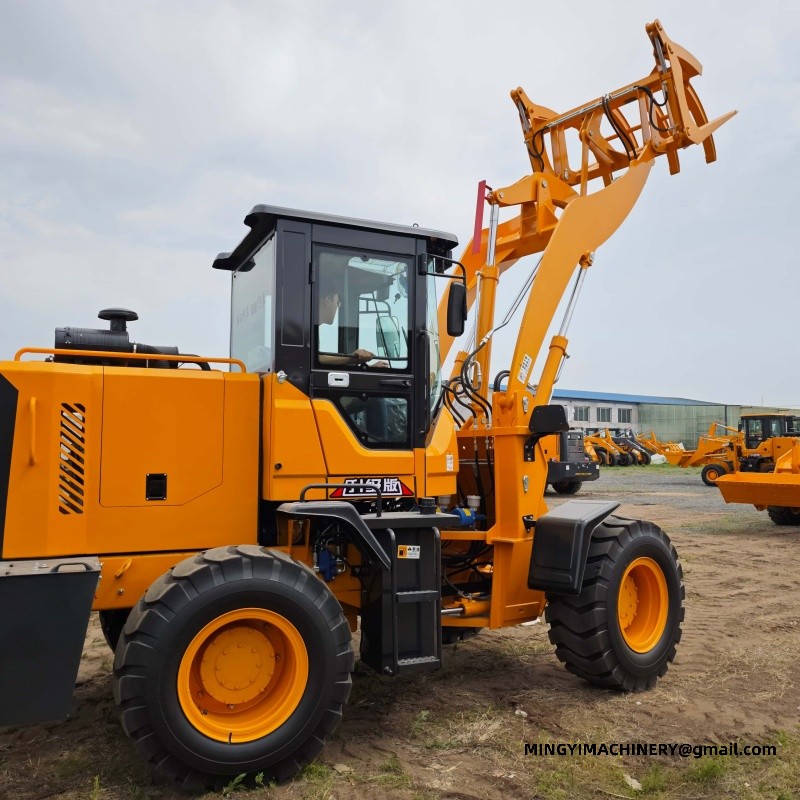
The bucket figures in the table are engineering capacities: 0.52 m³ on the light-duty 4.5 m medium-frame wheel-side reduction wheel loader, 0.3 m³ on the standard 2.4 m low-profile wheel loader. They assume a material density, and the machine is stable with them at full lift because the counterweight and the 4.7 m or 3.5 m footprint were sized around that density.
Change the material and you change the limit, not the machine. Light material — grain, woodchip, compost, snow — lets you run a larger bucket and a higher cycle. Heavy material — wet sand, crushed stone, ore — means the 0.3 m³ bucket needs the 16 mm rear hinge plate and 16 mm cross-member behind it, and the 0.52 m³ bucket on the lighter frame is the honest specification for the lighter material. Tell the factory what you are moving and let them match the bucket to it.
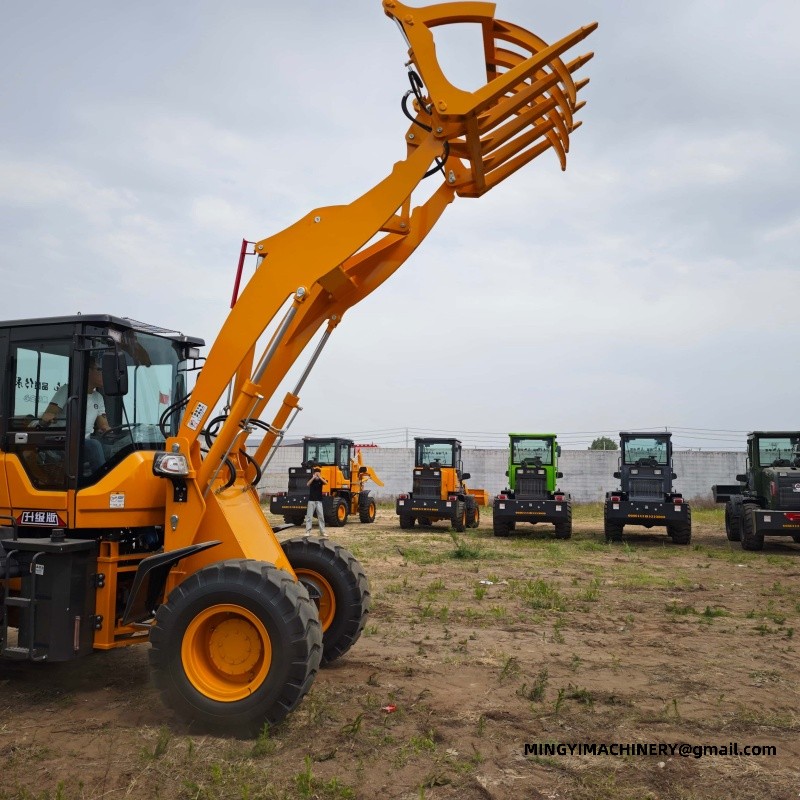
Cooling capacity is sized to the engine's heat rejection, so it appears in the table as a specification rather than a choice: 4105 core on the light-duty 4.5 m medium-frame wheel-side reduction wheel loader, 4100 core on the standard 2.4 m low-profile wheel loader. Where the build offers two engines — the 490 with a 4100 core, the 4102 turbo with a 4105 raised core — the raised core is the one for hot climates, high altitude and any site where fine material hangs in the air.
Practical advice that takes nothing: blow the core out at the end of every shift in dusty work, in the reverse direction to airflow, and check the cap seat before blaming the radiator. On the light-duty 4.5 m medium-frame wheel-side reduction wheel loader the 4105 core core sits behind a 300 mm high x 800 mm wide rear frame with limited airflow at low engine speed; on the standard 2.4 m low-profile wheel loader the 4100 core core is served by the same 316 pump driven circuit. Neither is difficult to keep clean, and both will lose a season to neglect.
| Published build data — standard 2.4 m low-profile wheel loader | |
|---|---|
| Bucket capacity | 0.3 m³ |
| Dump height | 2.4 m |
| Track width | 1.2 m (Isuzu axle); 1.3 m (wheel-side reduction axle) |
| Boom arm thickness | 20 mm |
| Boom arm width | 280 mm |
| Boom arm length | 1.85 m |
| Boom arm centre distance | 680 mm |
| Cross-member thickness | 16 mm |
| Front hinge plate thickness | 16 mm |
| Rear hinge plate thickness | 16 mm |
| Rear frame section | 200 mm high x 750 mm wide |
| Hydraulic cylinders | centre cylinder 40 / side cylinder 40 |
| Fuel tank | 30.8 L (48# large tank, 20.5/70-16 tyres); 24.6 L (48# small tank, 8.25-16 tyres) |
| Battery | 45 Ah (24 V) |
| Front wheel to counterweight | 3.5 m |
| Radiator | 4100 core |
| Work pump | 32 pump |
| Travel pump | 316 pump |
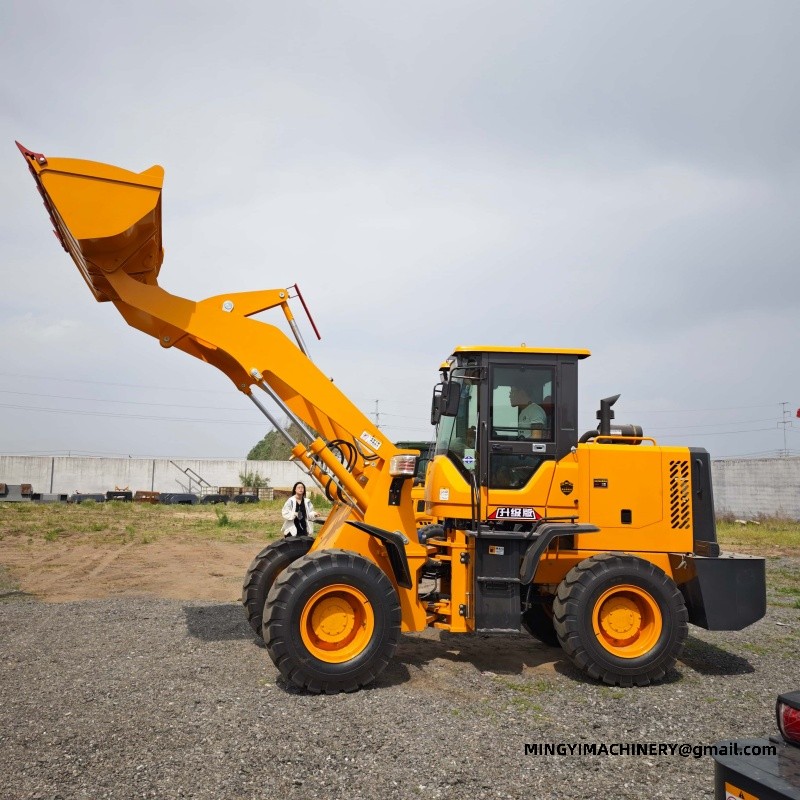
Electrical specification is short but consequential. The light-duty 3.8 m small-frame wheel-side reduction wheel loader lists 60 Ah (490 engine); 80 Ah (4102 turbo engine); the light-duty 4.5 m medium-frame wheel-side reduction wheel loader lists 80 Ah. Where a build offers two engines, the higher capacity belongs to the turbo — more compression to turn, more glow-plug load, and in a cold market that difference is the whole of a morning.
Beyond the battery, specify an isolator switch and confirm the alternator output matches the load you intend to add. Work lights, a beacon, a reversing alarm and a hydraulic third-circuit solenoid all draw from the same pack, and the 40 pump (490 engine); 1045 pump (4102 turbo engine) driven hydraulics on the light-duty 3.8 m small-frame wheel-side reduction wheel loader do not reduce that draw. On the light-duty 4.5 m medium-frame wheel-side reduction wheel loader the same applies with 2063 pump. If the machine will sit for more than a month before commissioning, specify the isolator and a maintenance charge interval.
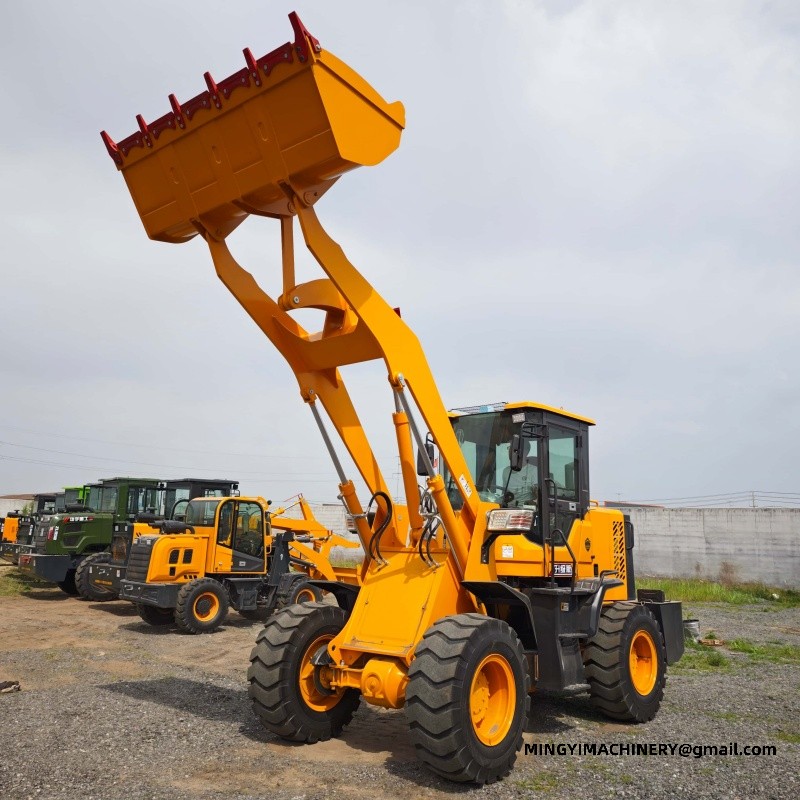
Hinge plates carry the pin loads that the boom and the steering articulation put into the frame, and they are where a loader shows its age first. The light-duty 4.5 m medium-frame wheel-side reduction wheel loader runs 45 mm front plates and 30 mm rear plates over a 45 mm cross-member; the standard 2.4 m low-profile wheel loader runs 16 mm and 16 mm over 16 mm. Rear frame sections follow at 300 mm high x 800 mm wide and 200 mm high x 750 mm wide respectively.
The rear plate is the more telling of the two. Articulated steering loads the rear hinge every time the machine turns under load, and reversing out of a face with a full bucket doubles it. A 30 mm rear plate with a 45 mm cross-member is a light-duty specification; 16 mm over 16 mm is a heavy-duty one. Put those alongside the 0.52 m³ and 0.3 m³ buckets and the specification difference between the two builds stops looking arbitrary — it is steel.
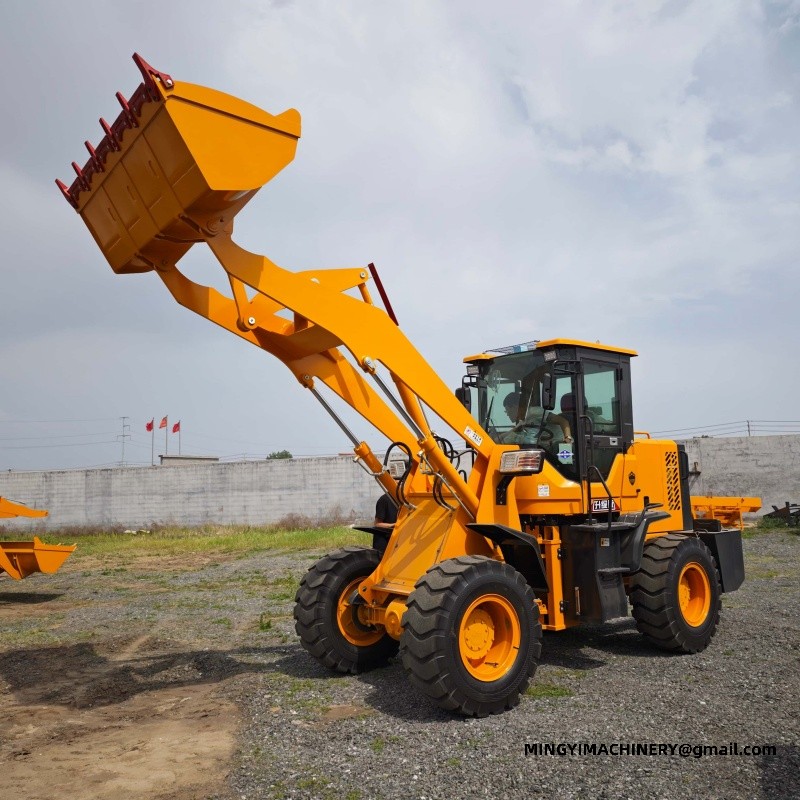
Construction duty is repetitive, dusty and unforgiving of a light frame. Specified for it, the light-duty 4.2 m small-frame wheel-side reduction wheel loader carries a 0.38 m³ bucket to 4.2 m on 25 mm front and 20 mm rear hinge plates with a 25 mm cross-member and a 280 mm high x 800 mm wide rear frame. Lighter builds — the standard 2.4 m low-profile wheel loader at 0.3 m³, 2.4 m, 16 mm and 16 mm — suit smaller sites and lighter material.
Two site conditions change the specification. The first is the board height of the trucks, which fixes dump height and is measured, not guessed. The second is ground: a rough, rutted site with soft spots wants the wheel-side reduction axle at 1.5 m (wheel-side reduction axle); 1.45 m (Isuzu axle) track over the lighter axle, and a site with long internal haul roads wants the opposite. Tell the factory both and the axle choice follows from the site, not from the catalogue.
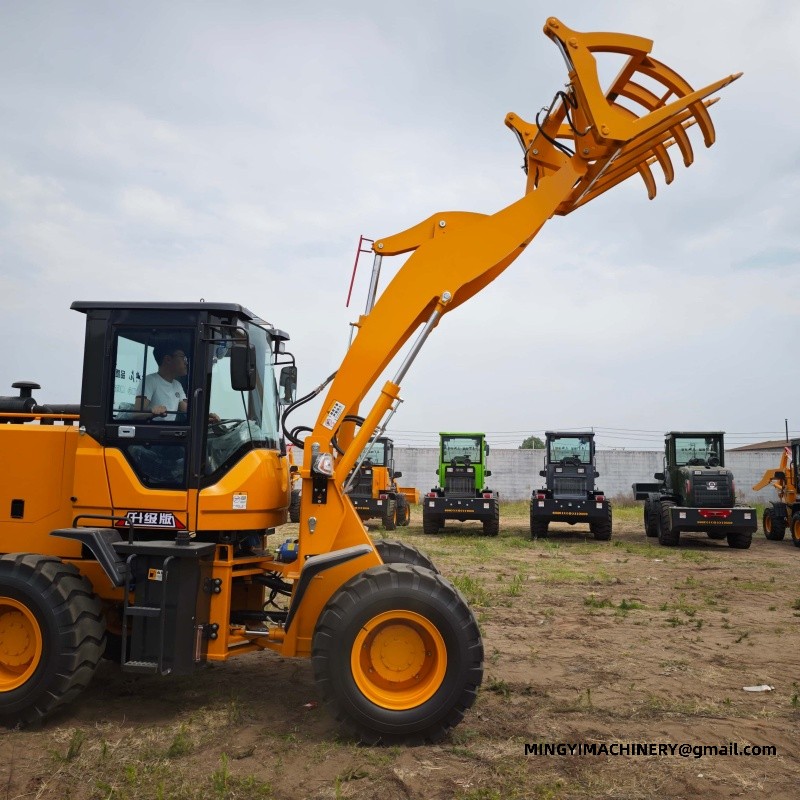
A boom that lifts slowly is usually a flow question, not a force question. The cylinders on this build are centre cylinder 45 / side cylinder 40 and the pump is 40 pump (490 engine); 1045 pump (4102 turbo engine); if lift is slow but breakout is normal, look at flow before looking at the cylinders. If breakout is weak as well, look at pressure.
Before either, rule out the simple causes: a blocked return filter, a low oil level, a suction leak, or a relief valve that has been tampered with to make a weak machine feel strong. Raising relief pressure above the setting the 25 mm wall and 25 mm cross-member were specified for is how frames get bent, and it is the most common fault found on machines that arrived second-hand.
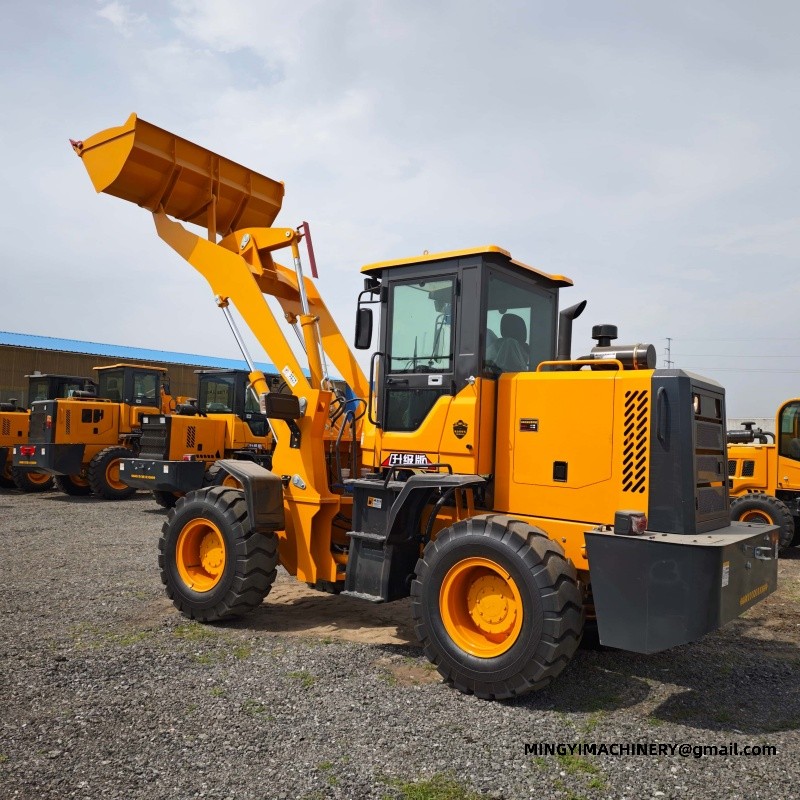
Ask any yard operator which part fails first and the answer is the articulation, not the engine. The rear hinge plate takes every reversing and turning load: 14 mm on the light-duty 3.8 m small-frame wheel-side reduction wheel loader against 30 mm on the light-duty 4.5 m medium-frame wheel-side reduction wheel loader, on cross-members of 25 mm and 45 mm respectively. That pair of figures predicts whether the machine is still tight at year three.
The rest of the specification follows the duty. A 0.38 m³ bucket at 3.8 m with centre cylinder 45 / side cylinder 40 cylinders is right for loose stock and loading out; 0.52 m³ at 4.5 m with centre cylinder 60 / side cylinder 50 is right where the machine has to break out of a face. Ground decides the axle — 1.5 m (wheel-side reduction axle); 1.45 m (Isuzu axle) against 1.6 m — and the material decides the radiator.
Will a heavy duty wheel loader ship assembled in a container?
It depends on the longest dimension, 4.25 m from front wheel to counterweight, and on track, 1.5 m (wheel-side reduction axle); 1.45 m (Isuzu axle). The bucket usually comes off; the arm must be lowered to clear the door.
How do I clean the radiator on a heavy duty wheel loader working in dust?
From the clean side outwards, against normal airflow, so debris comes out rather than being pushed deeper. The core on this build is 4100 core; blocked fins are the usual cause of gradual power loss.
How often do hydraulic hoses need replacing?
On condition rather than on a calendar: look for cracking, rubbing and weeping at the crimps. The circuit runs centre cylinder 40 / side cylinder 40 on a 32 pump, and a burst hose is a day while a failed pump is a week.
How is dump height on a heavy duty wheel loader measured?
At the bucket edge, arm at full lift, machine level. The standard 2.4 m low-profile wheel loader publishes 2.4 m and the light-duty 4.2 m small-frame wheel-side reduction wheel loader publishes 4.2 m, measured the same way, so the two can be compared directly.
Is a heavy duty wheel loader suitable for night work?
With adequate lighting, yes. Electrical capacity is the constraint and the rating is 60 Ah (490 engine); 80 Ah (4102 turbo engine); extra lamps and beacons come out of the same plan.
Why does my heavy duty wheel loader turn over slowly on cold mornings?
Cranking capacity falls with temperature, and the rating is 60 Ah (490 engine); 80 Ah (4102 turbo engine) on this build. Where two engines are offered the higher rating belongs to the turbo; specify it if the machine starts cold or stops often.
What are the signs of a failing pump on a heavy duty wheel loader?
Slow lift with normal breakout points to flow, which is the 40 pump (490 engine); 1045 pump (4102 turbo engine). Weak lift and weak breakout together point to pressure. Noise under load usually means aeration or a suction leak.
Where the duty is continuous rather than intermittent, the cooling and electrical rows move up the list: 4105 core of core and 80 Ah of battery on the light-duty 4.5 m medium-frame wheel-side reduction wheel loader. Where it is intermittent, the frame rows do. Deciding which case you are in is most of the specification.
Storage and long idle periods for Heavy Duty Wheel Loader: Frame Steel for Long Shifts
The battery and the fuel are the first things to suffer in storage. Preparing Heavy Duty Wheel Loader: Frame Steel for Long Shifts properly at the start of the idle period avoids the flat battery and the contaminated tank that greet an unprepared machine.
Cold weather and winter care for Heavy Duty Wheel Loader: Frame Steel for Long Shifts
Starting is only the first problem. Until Heavy Duty Wheel Loader: Frame Steel for Long Shifts reaches working temperature the hydraulic response is slower and the seals are stiffer, and warming the machine before asking for full output avoids unnecessary strain.
Contact MINGYI Machinery for the current wheel loader lineup, configuration options and a formal specification for your market. E-mail: sales@mingycn.com | LINE (ID): mingyicn
Compact Wheel Loader: Turning Space and Pin Wear · Front Wheel Loader: What Operators Notice First · Small Wheel Loader: Light Builds for Farms and Nurseries · Wheel Loader









