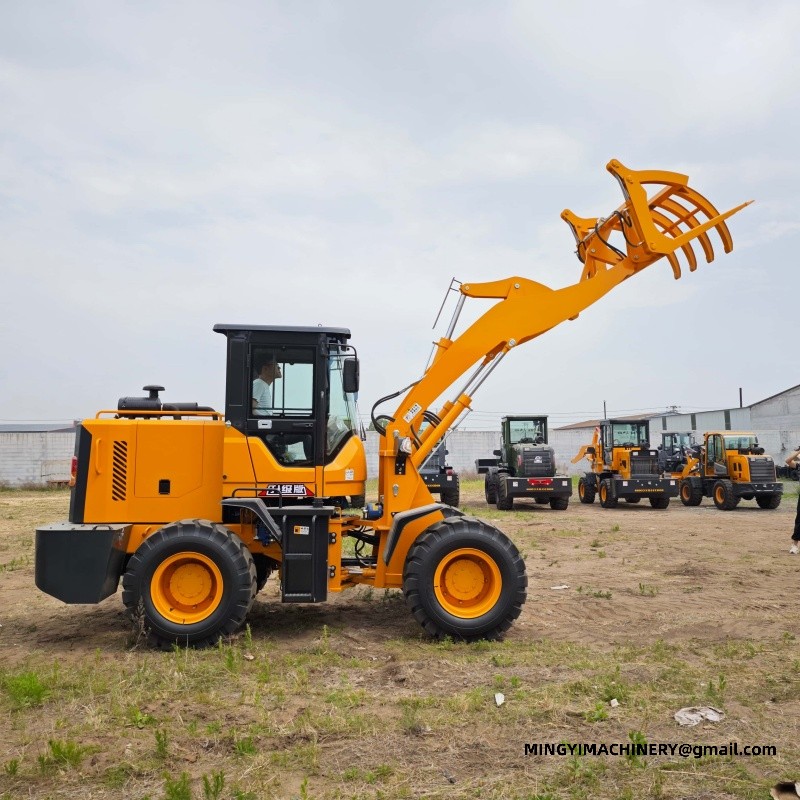
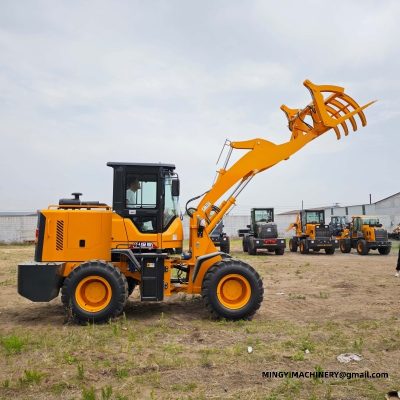
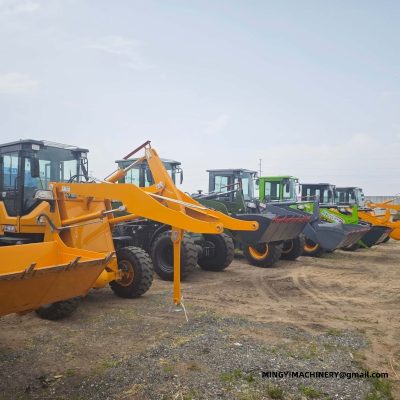
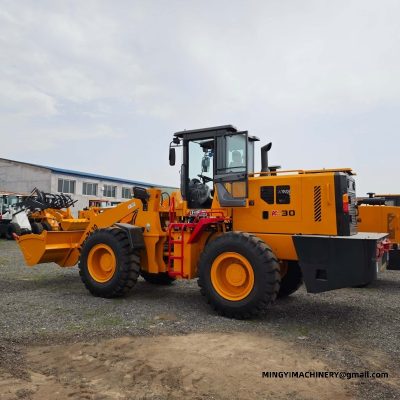
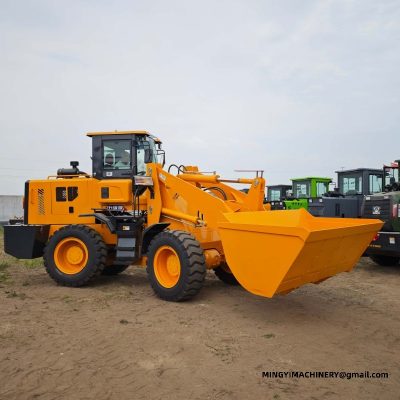
Fleet buyers read a compact wheel loader sheet differently from owner-operators. Fleets care whether the next machine matches the last one: same 40 pump (490 engine); 1045 pump (4102 turbo engine) pump, same 4100 core (490 engine); 4105 core (4102T engine) radiator, same 60 Ah (490 engine); 80 Ah (4102 turbo engine) battery, because that is what keeps one spares bin covering ten machines. Owner-operators care whether this one machine fits the job. This page is written to serve both, comparing the heavy-duty 3.2 m low-profile wheel loader and the heavy-duty 3.2 m small-frame wheel-side reduction wheel loader row by row, and saying plainly which rows matter for which kind of buyer.
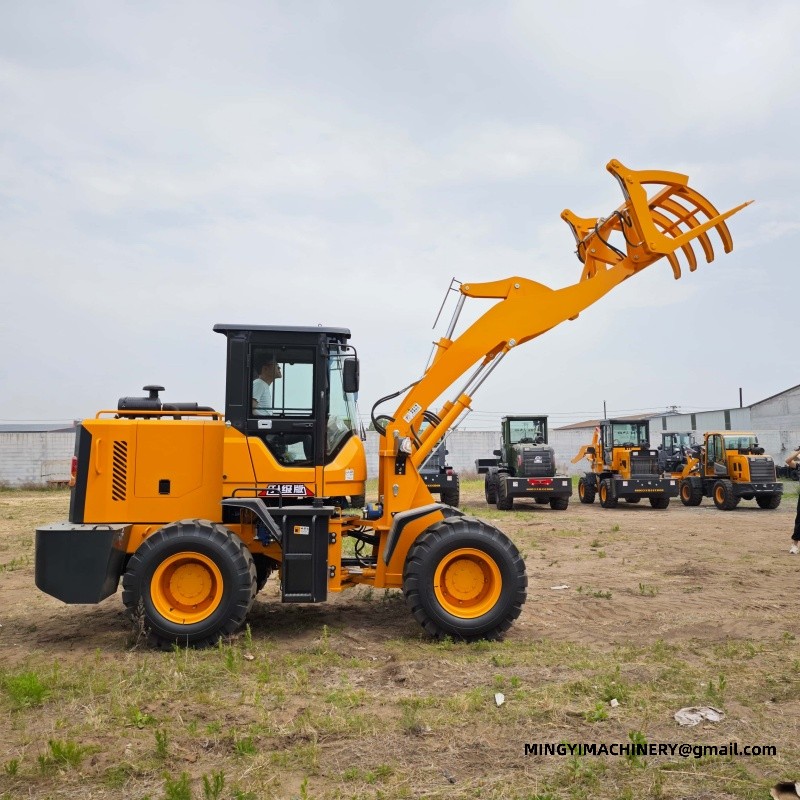
The boom section is the mounting standard. On the heavy-duty 3.2 m low-profile wheel loader it is 430 mm with a 890 mm centre distance; on the heavy-duty 3.2 m small-frame wheel-side reduction wheel loader it is 430 mm with 890 mm. Fork frames, grapples and snow tools specification against those two numbers, which is why "forks to suit a three-ton loader" is not a specification.
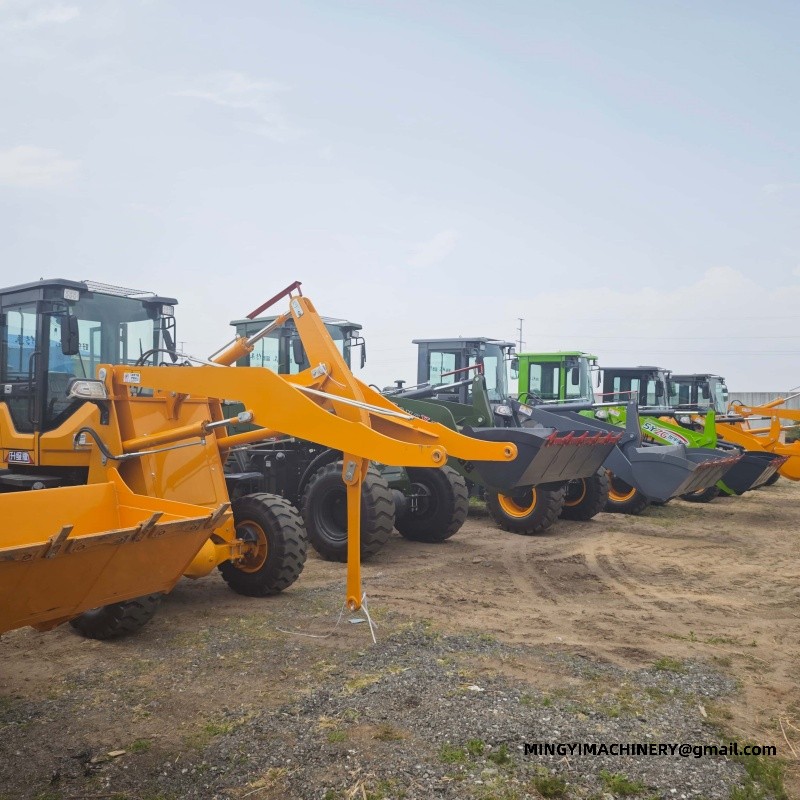
For a mixed fleet the practical set is four tools: a bucket for bulk, forks for pallets and bagged goods, a grapple for loose material and demolition, and a snow tool for winter work. Mechanical sets need no hydraulic circuit and swap in minutes; hydraulic sets need the circuit ordered with the machine. The 316 pump and 316 pump travel pumps keep drive independent either way, so steering is unaffected by tool load.
Operators get blamed for slow cycles that were decided in the frame shop. Where the lift is long, the pump and the cylinders set the pace: this build runs 40 pump (490 engine); 1045 pump (4102 turbo engine) with centre cylinder 45 / side cylinder 45. Where the run between face and truck is long, travel matters more, and that is the 316 pump and the 4.1 m wheelbase. Where the heap is packed, breakout matters most, and breakout comes from boom wall, 25 mm, working against bucket width.
Compare two builds on the same heap and the difference shows up as a few seconds a pass. The heavy-duty 3.8 m small-frame wheel-side reduction wheel loader carries 0.4 m³ against 0.4 m³ on the heavy-duty 3.2 m low-profile wheel loader, and lifts to 3.8 m against 3.2 m. Bigger is not automatically faster: a bucket that fills completely in two passes beats one that fills partly in three, and the frame that stays tight keeps doing it in month thirty.
On a farm the loader is judged by whether it can get to the work. The heavy-duty 3.2 m low-profile wheel loader at 1.5 m (wheel-side reduction axle); 1.45 m (Isuzu axle) track and 4.1 m length turns in places the heavy-duty 3.2 m small-frame wheel-side reduction wheel loader at 1.5 m (wheel-side reduction axle); 1.45 m (Isuzu axle) and 4.1 m cannot enter. Capacity — 0.4 m³ against 0.4 m³ — is the last consideration, not the first.
Dump height still matters, because feed wagons and high-sided trailers are tall: 3.2 m on the heavy-duty 3.2 m low-profile wheel loader, 3.2 m on the heavy-duty 3.2 m small-frame wheel-side reduction wheel loader. Measure the wagon side, then measure the shed door. Where both fit, take the larger bucket; where only one fits, take the machine that fits. Attachments specification against the boom section — 430 mm against 430 mm — so the tool carrier is decided in the same conversation.
| Specification extract — heavy-duty 3.8 m small-frame wheel-side reduction wheel loader | |
|---|---|
| Bucket capacity | 0.4 m³ |
| Dump height | 3.8 m |
| Track width | 1.5 m (wheel-side reduction axle); 1.45 m (Isuzu axle) |
| Boom arm thickness | 25 mm |
| Boom arm width | 430 mm |
| Boom arm length | 2.61 m |
| Boom arm centre distance | 890 mm |
| Cross-member thickness | 30 mm |
| Front hinge plate thickness | 30 mm |
| Rear hinge plate thickness | 20 mm |
| Rear frame section | 280 mm high x 800 mm wide |
| Hydraulic cylinders | centre cylinder 45 / side cylinder 45 |
| Fuel tank | 64.7 L (75# small tank) |
| Battery | 60 Ah (490 engine); 80 Ah (4102 turbo engine) |
| Front wheel to counterweight | 4.2 m |
| Radiator | 4100 core (490 engine); 4105 core (4102T engine) |
| Work pump | 40 pump (490 engine); 1045 pump (4102 turbo engine) |
| Travel pump | 316 pump |
An articulated loader turns by bending in the middle, and the hinge is where that bending happens. Front plate 30 mm, rear plate 20 mm. The front is the thicker of the two on every build in the range, because it carries the boom and the payload directly, while the rear carries the engine and the counterweight through every steering movement and is sized for the twisting those movements produce rather than for the weight alone.
Pin wear is how hinges fail, and it shows up as a machine that wanders and a steering that feels vague. The cross-member is what prevents it: 30 mm holding the two sides of the frame at a fixed distance so the pins stay square. Compare 45 mm on the light-duty 3.5 m medium-frame wheel-side reduction wheel loader and the difference in plate thickness starts to make sense — they are specified together, not separately.
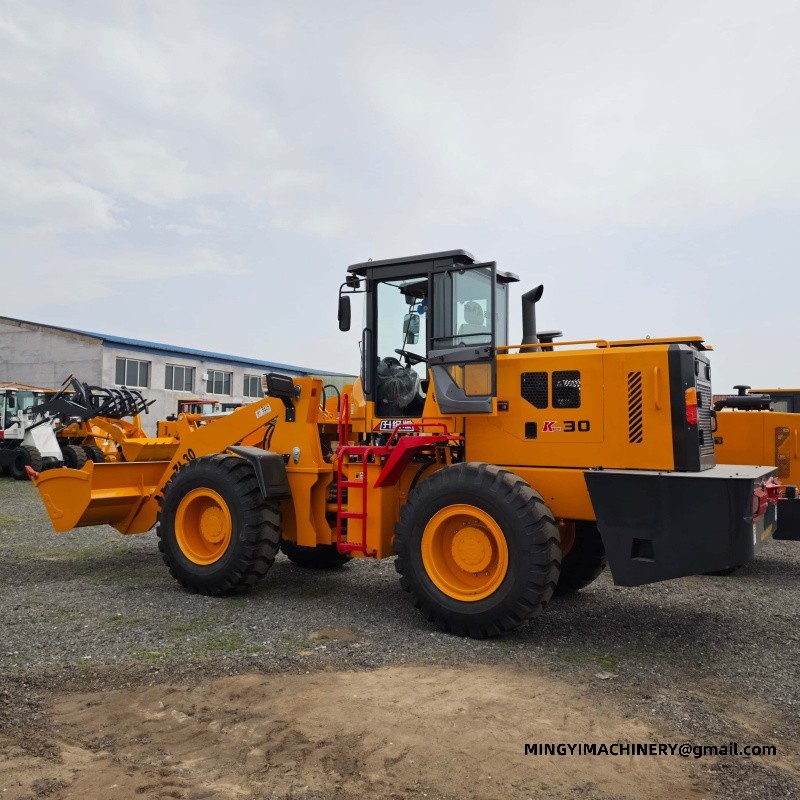
Model names are marketing; build codes are what the shop floor works from. Two machines with the same name can leave the factory with different hinge steel, and the difference is invisible until something wears. On this range the differences are published: 30 mm of cross-member against 45 mm, 30 mm of front hinge plate against 45 mm.
Specify the machine the way you would specify a pump: by the numbers. Bucket 0.4 m³, dump height 3.5 m, cylinders centre cylinder 45 / side cylinder 40, track 1.5 m (wheel-side reduction axle); 1.45 m (Isuzu axle). Write those into the order and the confirmation, and the machine that arrives is the machine you compared. Anything else relies on a name meaning the same thing to two people.
A machine crossing an ocean is exposed to salt air for weeks, and the parts that suffer are the ones that were never painted: cylinder rods, hinge pins and electrical terminals. This build carries centre cylinder 60 / side cylinder 50 and hinge plates of 45 mm and 30 mm; all three should be greased and wrapped before loading rather than cleaned on arrival.
The battery is the other item to plan for. 80 Ah will not survive a long voyage connected, and a flat machine cannot be driven off a container. Specify a disconnect, and specify the radiator, 4105 core, to be checked for fin corrosion on arrival — salt air attacks the core from outside and the symptom is overheating in the first month, which everyone blames on the thermostat.
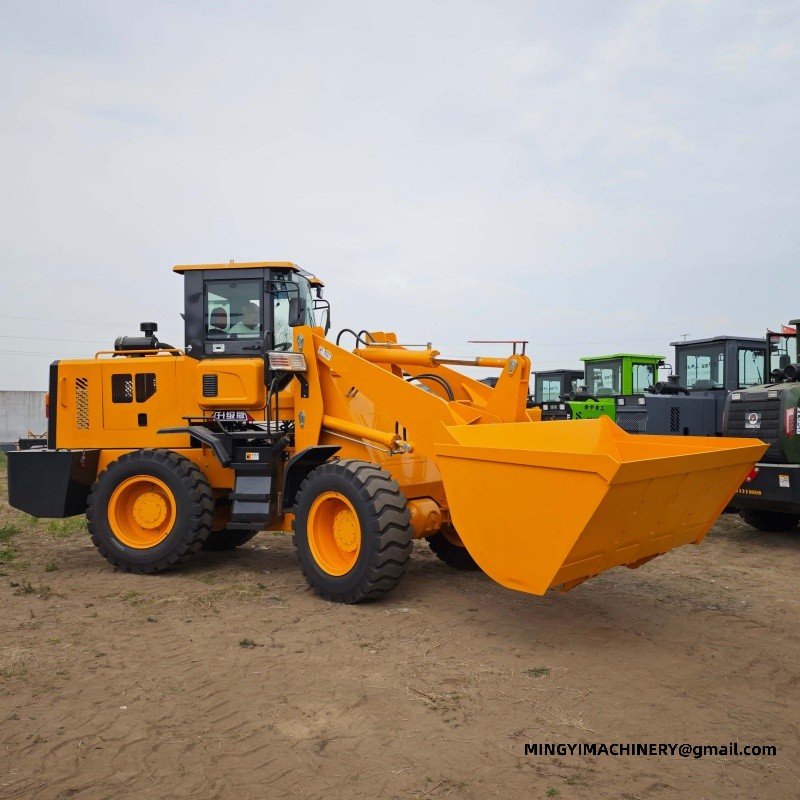
Front wheel to counterweight is the figure that decides whether a machine fits the space you have. Here it is 4.1 m on the heavy-duty 3.2 m low-profile wheel loader and 4.1 m on the heavy-duty 3.2 m small-frame wheel-side reduction wheel loader. Measure your tightest working bay, add the swing of the bucket, and compare — because a loader that has to reverse out of every corner loses more time than a bigger bucket ever recovers.
Track width closes the same question from the side. 1.5 m (wheel-side reduction axle); 1.45 m (Isuzu axle) on this build. Where two figures are listed, the narrower belongs to the hard-ground axle, and a narrow machine on a narrow gate is often the right answer even where the work itself would suit something bigger. The rear frame section, 280 mm high x 800 mm wide, is what keeps a compact machine from feeling flimsy once it is loaded.
Spares consolidate by frame family rather than by model, which is the point of building a range this way. One cylinder seal kit covers the centre cylinder 45 / side cylinder 45 set across the builds that share it; one pump set covers 40 pump (490 engine); 1045 pump (4102 turbo engine) and 316 pump; pins, bushes and cutting edges are common within a family. On the heavy-duty 3.2 m low-profile wheel loader and the heavy-duty 3.2 m small-frame wheel-side reduction wheel loader, where the two share a family, that is four line items.
What to keep on the shelf depends on the duty. A single machine on a farm needs a cutting edge, a hydraulic hose set, filters and a pin and bush kit. A fleet in a quarry needs those plus a cylinder seal kit, a pump, and one spare wheel-end. Because the 30 mm and 30 mm cross-members and the 20 mm and 20 mm hinge plates differ between builds, order wear parts against the model name, not against the frame.
Where do frames on a compact wheel loader crack first?
Weld toes at the cross-member and around the rear hinge. The section is 230 mm high x 800 mm wide over a 30 mm member on this build; check both monthly on hard duty.
What should I check before running a grapple on a compact wheel loader?
Side load. A grapple levers the arm in a way a bucket does not, so the 25 mm wall and 430 mm section matter more than capacity. The hinge plates at 30 mm take the reaction.
How often should the hinge pins of a compact wheel loader be greased?
Measured in hours, not weeks, on short-cycle work. The pins behind the 30 mm and 20 mm plates take every steering input; dry pins are how a frame goes loose.
Can a compact wheel loader work inside a building?
Clearance and ventilation are the constraints. Lift height is 3.2 m and the core is 4100 core (490 engine); 4105 core (4102T engine), which has to reject heat into air that is not moving.
What does winter duty change on a compact wheel loader?
Cold cranking, oil viscosity and operator access. Battery 60 Ah (490 engine); 80 Ah (4102 turbo engine) covers the first; the 54 L (50# tank) tank covers the longer idling that cold work brings.
Which records should I keep for a compact wheel loader?
The delivery measurements and the specification. Bucket 0.52 m³, lift 3.5 m, cylinders centre cylinder 60 / side cylinder 50, pump 2063 pump and track 1.6 m identify the build for parts and for resale.
What is involved in changing attachments on a compact wheel loader?
Mechanical mounting plus hydraulics. The cylinders are centre cylinder 45 / side cylinder 45 and the pump is 40 pump (490 engine); 1045 pump (4102 turbo engine); flow, not force, is usually what limits an added service.
Every figure stated on this page — bucket 0.4 m³, lift 3.2 m, hinge plates 30 mm and 20 mm — comes from the published build data for the heavy-duty 3.2 m low-profile wheel loader and the heavy-duty 3.2 m small-frame wheel-side reduction wheel loader. Send your board heights, material and shift pattern and the comparison can be run against your own numbers.
Hot, humid and dusty conditions around Compact Wheel Loader: Turning Space and Pin Wear
Heat and dust shorten service intervals rather than machine life. In these conditions the filters on Compact Wheel Loader: Turning Space and Pin Wear need attention more often, and the cooling surfaces need to be kept clear to hold the working temperature.
Reading the early symptoms on Compact Wheel Loader: Turning Space and Pin Wear
Temperature and pressure are the two things worth watching. A Compact Wheel Loader: Turning Space and Pin Wear that runs hotter than it used to, or whose pressure has drifted, is reporting a problem that is still simple to fix.
A second operator for Compact Wheel Loader: Turning Space and Pin Wear
A machine that only one person can use is a single point of failure. Training a second operator on Compact Wheel Loader: Turning Space and Pin Wear takes a day and removes the dependency that otherwise governs holidays, illness and busy weeks.
Contact MINGYI Machinery for the current wheel loader lineup, configuration options and a formal specification for your market. E-mail: sales@mingycn.com | LINE (ID): mingyicn
Front Wheel Loader: What Operators Notice First · Loader Machine for Construction: Cycle Work Day to Day · Wheel Loader for Sale: Builds, Options and Container Planning · Wheel Loader









