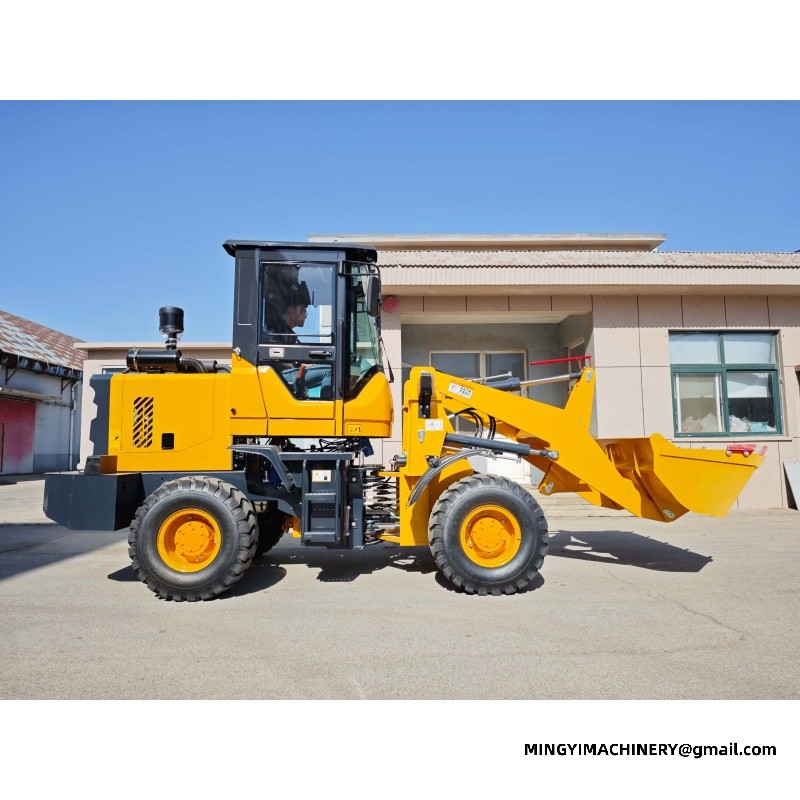
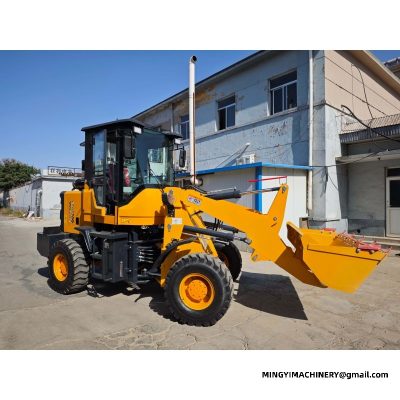
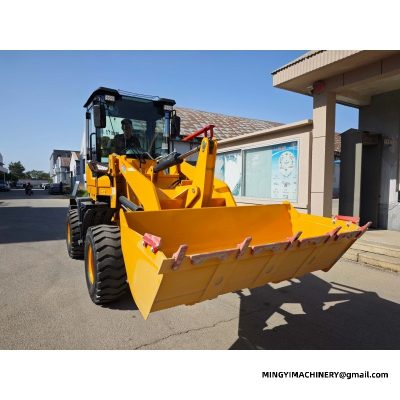
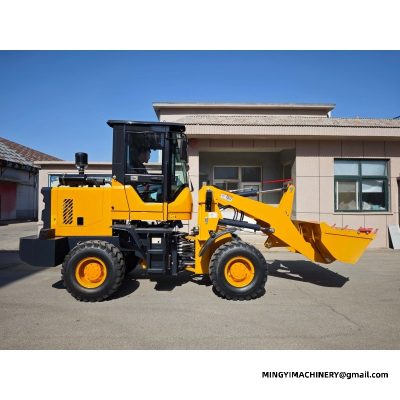
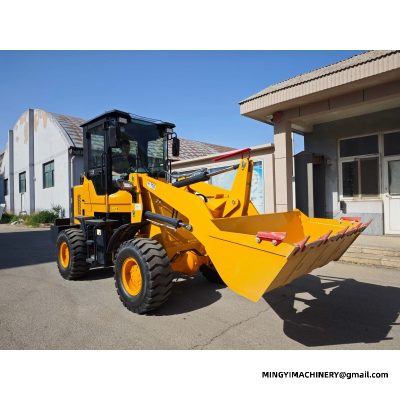
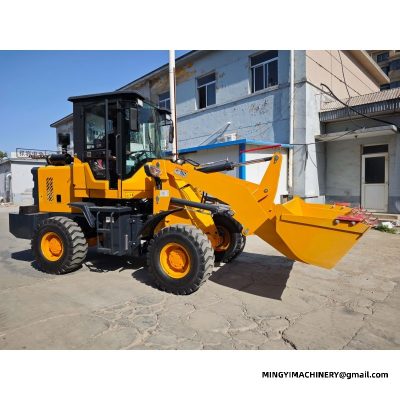
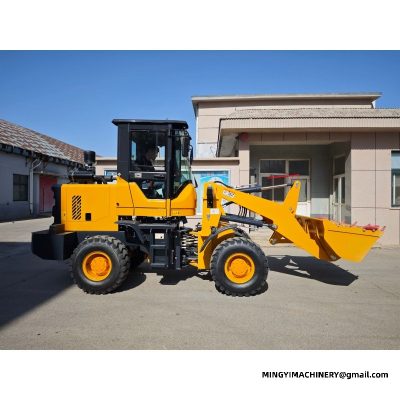
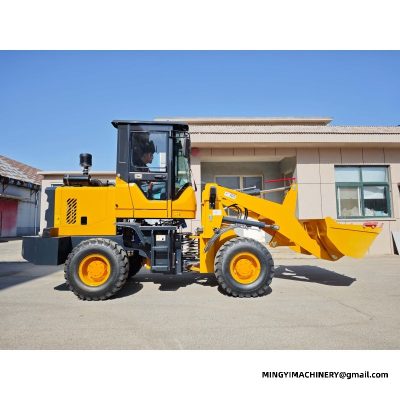
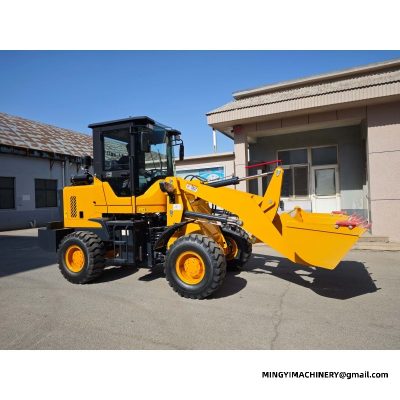
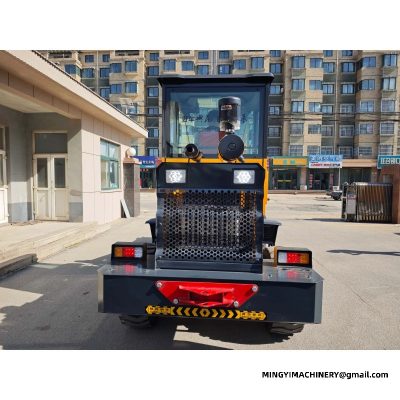
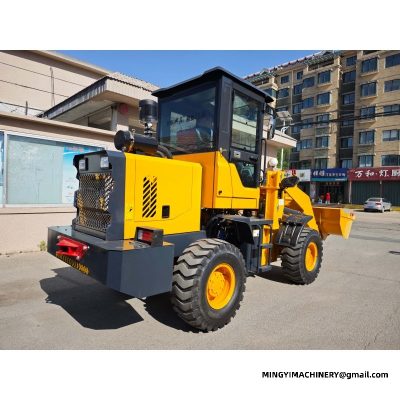
A wheel loader manufacturer earns its keep in the fourth hour of a shift, not the first. By then the cooling system is heat-soaked, the operator has stopped being careful, and the machine is working the face it will work all week. What holds up is what was specified: radiator 4105 core, tank 70 L (75# large tank), cylinders centre cylinder 60 / side cylinder 50. What fails is usually what was assumed. This page follows a working day through the specification, from cold start to shut-down, using the light-duty 3.8 m medium-frame wheel-side reduction wheel loader and the light-duty 4.2 m medium-frame wheel-side reduction wheel loader as the two reference builds.
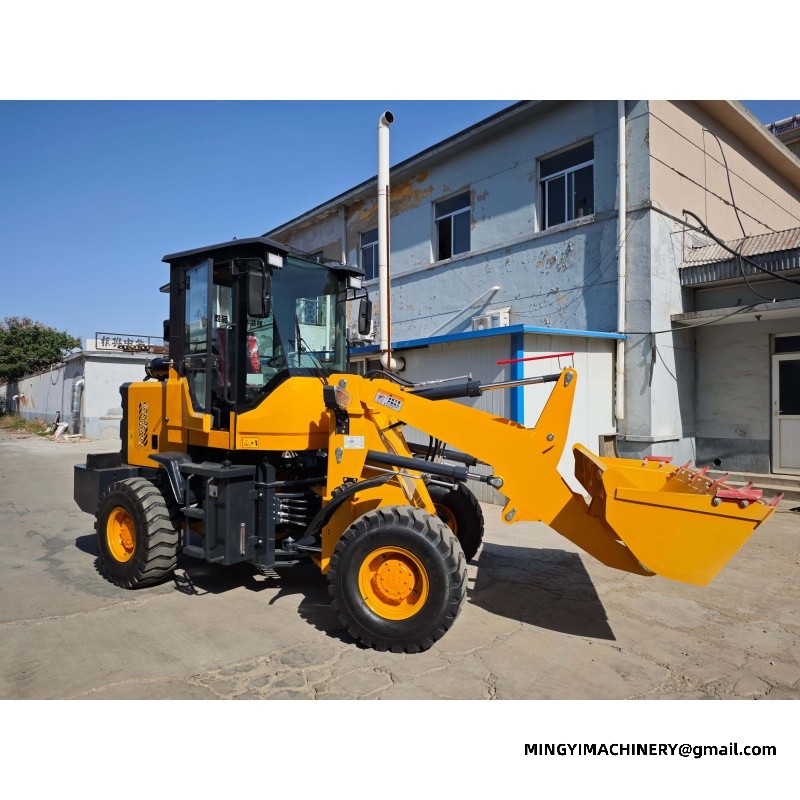
Fuel and cooling capacity are not comfort figures; they are shift-planning figures. A 54 L (50# tank) tank on the light-duty 3.2 m low-profile wheel loader is sized so a full working day at operating throttle does not need a mid-shift refuel, which matters on sites where the bowser is a long way from the face. The light-duty 4.5 m medium-frame wheel-side reduction wheel loader carries 70 L (75# large tank).
The radiator is the other side of the same question. 4100 core (490 engine); 4105 core (4102T engine) on this build against 4105 core on the other. Where a build offers two cores, the raised one serves the turbo engine, and it is the correct specification for dusty work, high ambient temperature, or any duty where the machine spends its day at high load and low speed with little air passing through the core.
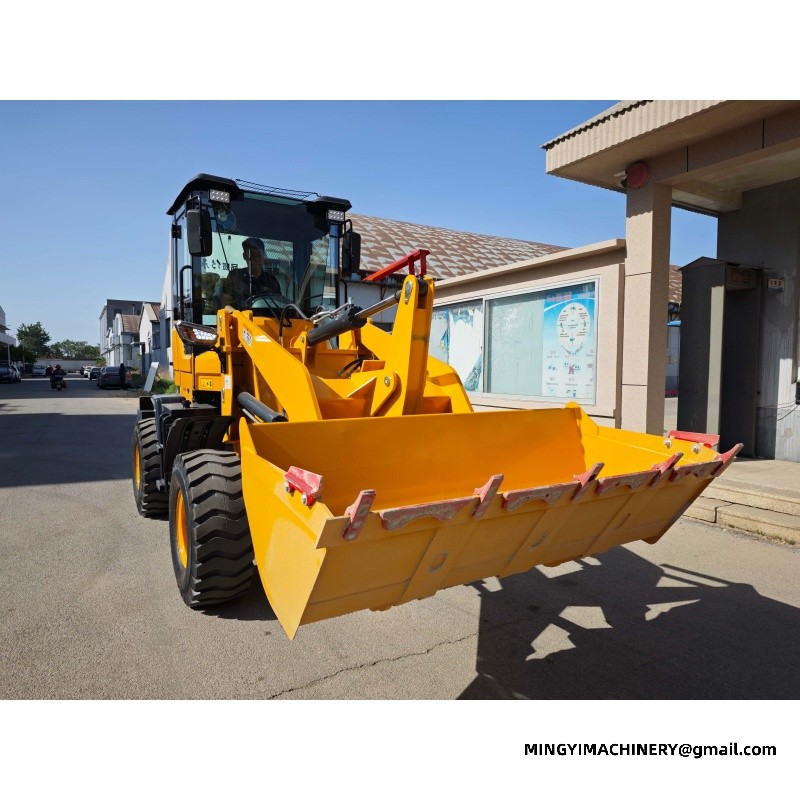
The distance from the front wheel to the rear of the counterweight is a stability specification dressed as a dimension. On the light-duty 3.8 m medium-frame wheel-side reduction wheel loader it is 4.3 m working with a 0.52 m³ bucket at 3.8 m; on the light-duty 4.2 m medium-frame wheel-side reduction wheel loader it is 4.3 m with 0.52 m³ at 4.2 m. Longer means more counterweight leverage, which is what lets a machine carry a full bucket high without lifting the rear wheels.
Longer also means a bigger turning circle, and that is the trade. In an open pit or a wide yard the 4.3 m machine with its 1.6 m track is plainly the better tool. In a livestock shed, a nursery or an indoor renovation job, the 4.3 m machine on 1.6 m will do work the other cannot start. Measure first; the specification only tells you what you are choosing between.
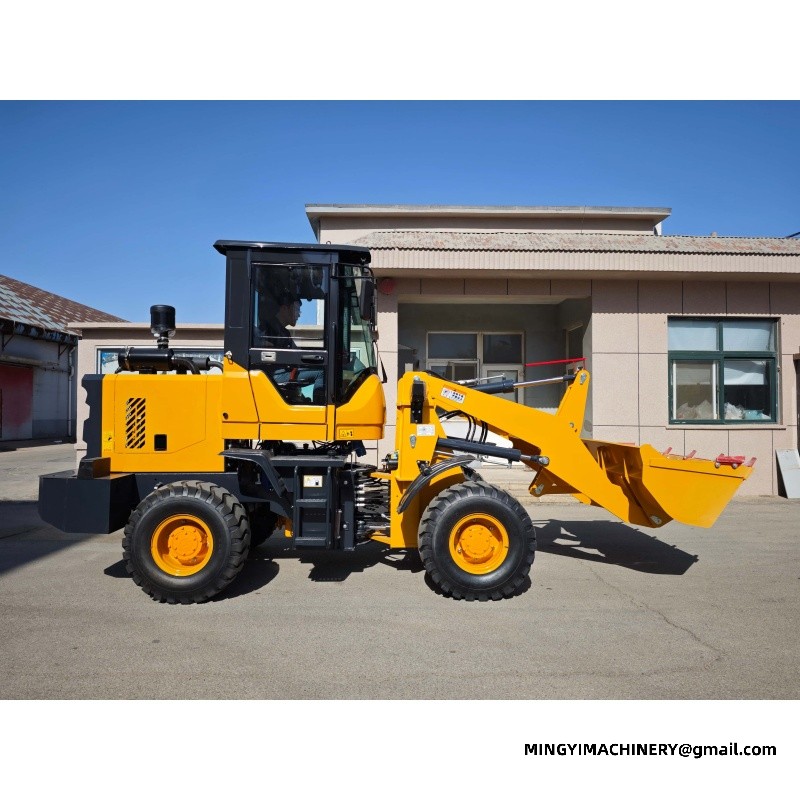
Fuel capacity on this range is specified per frame rather than per model: 70 L (75# large tank) on the light-duty 3.8 m medium-frame wheel-side reduction wheel loader and 70 L (75# large tank) on the light-duty 4.2 m medium-frame wheel-side reduction wheel loader. Both are intended to cover a full shift at working throttle, and both assume the machine is not idling for hours between loads — idling is where a "full day" tank becomes a half-day tank.
Plan refuelling around the tank, not around the clock. On the light-duty 3.8 m medium-frame wheel-side reduction wheel loader with 70 L (75# large tank) and a 0.52 m³ bucket at 3.8 m, a day of continuous loading will run the tank down; on the light-duty 4.2 m medium-frame wheel-side reduction wheel loader with 70 L (75# large tank) and 0.52 m³ at 4.2 m, the same day leaves allowance. Where a site has no bowser, that allowance is the difference between finishing at four and stopping at two.
| Reference specification — light-duty 3.8 m small-frame wheel-side reduction wheel loader | |
|---|---|
| Bucket capacity | 0.38 m³ |
| Dump height | 3.8 m |
| Track width | 1.5 m (wheel-side reduction axle); 1.45 m (Isuzu axle) |
| Boom arm thickness | 25 mm |
| Boom arm width | 370 mm |
| Boom arm length | 2.61 m |
| Boom arm centre distance | 890 mm |
| Cross-member thickness | 25 mm |
| Front hinge plate thickness | 25 mm |
| Rear hinge plate thickness | 14 mm |
| Rear frame section | 280 mm high x 800 mm wide |
| Hydraulic cylinders | centre cylinder 45 / side cylinder 40 |
| Fuel tank | 64.7 L (75# small tank) |
| Battery | 60 Ah (490 engine); 80 Ah (4102 turbo engine) |
| Front wheel to counterweight | 4.1 m |
| Radiator | 4100 core (490 engine); 4105 core (4102T engine) |
| Work pump | 40 pump (490 engine); 1045 pump (4102 turbo engine) |
| Travel pump | 316 pump |
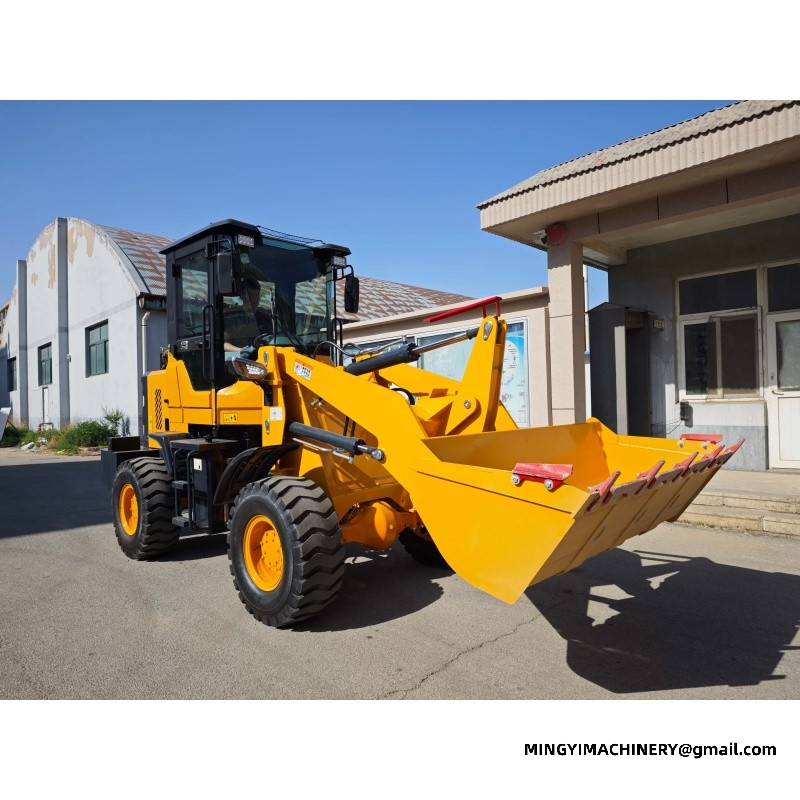
Lift and tilt come from a cylinder set and a pump pair, and both are specified per build. The light-duty 3.8 m medium-frame wheel-side reduction wheel loader runs centre cylinder 60 / side cylinder 50 with a 2063 pump work pump and a 25 pump travel pump; the light-duty 4.2 m medium-frame wheel-side reduction wheel loader runs centre cylinder 60 / side cylinder 50 with a 2063 pump work pump and a 25 pump travel pump. Splitting lift from travel is what keeps boom speed up while the machine is climbing a ramp loaded.
Cycle time is a product, not a published figure: bucket fill, lift height, travel distance and the operator's line all move it. What you can compare honestly is the hardware behind it. A centre cylinder 60 / side cylinder 50 set working a 2.9 m arm to 3.8 m is a different proposition from a centre cylinder 60 / side cylinder 50 set working 2.9 m to 4.2 m. On a short haul the smaller combination wins; over a longer push, or where the bucket is digging rather than shovelling, the larger bore and the 900 mm centre distance earn back the extra seconds of lift.
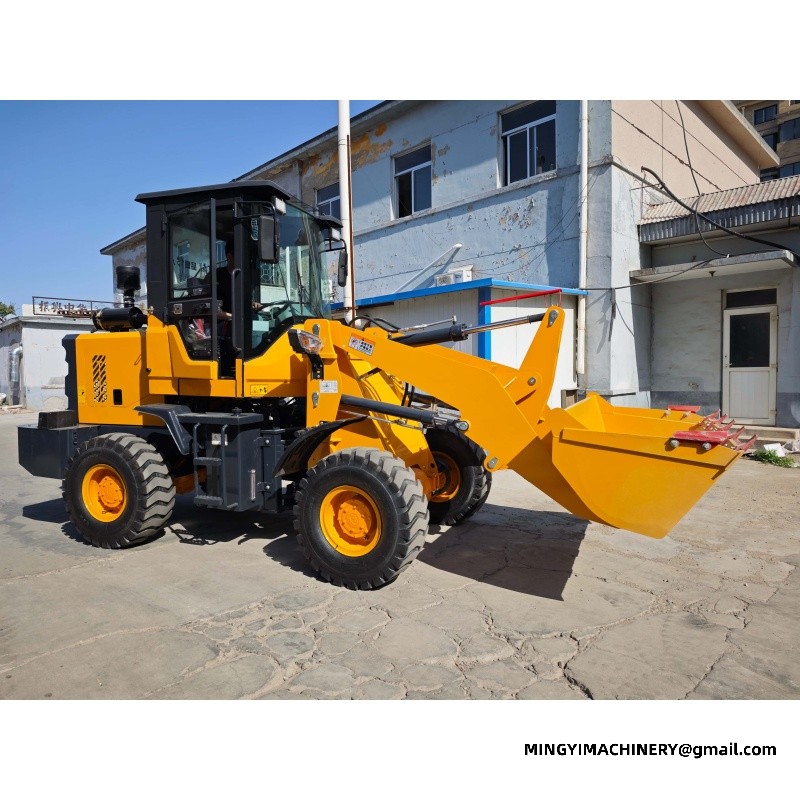
Fuel is visible and downtime is not, which is why fleets optimise the wrong one. A machine with a 64.7 L (75# small tank) tank works a full shift without a refuel stop; that is worth a fraction of what a single day lost to a failed pump takes, and the pump is identified on the sheet as 40 pump (490 engine); 1045 pump (4102 turbo engine).
The parts worth specifying against downtime are the ones that cannot be improvised: the battery rating, 60 Ah (490 engine); 80 Ah (4102 turbo engine), the radiator, 4100 core (490 engine); 4105 core (4102T engine), and the cylinders, centre cylinder 45 / side cylinder 40. All three are simple at build and lengthy in a field, and all three are listed. Read them as an availability decision rather than as a comfort one.
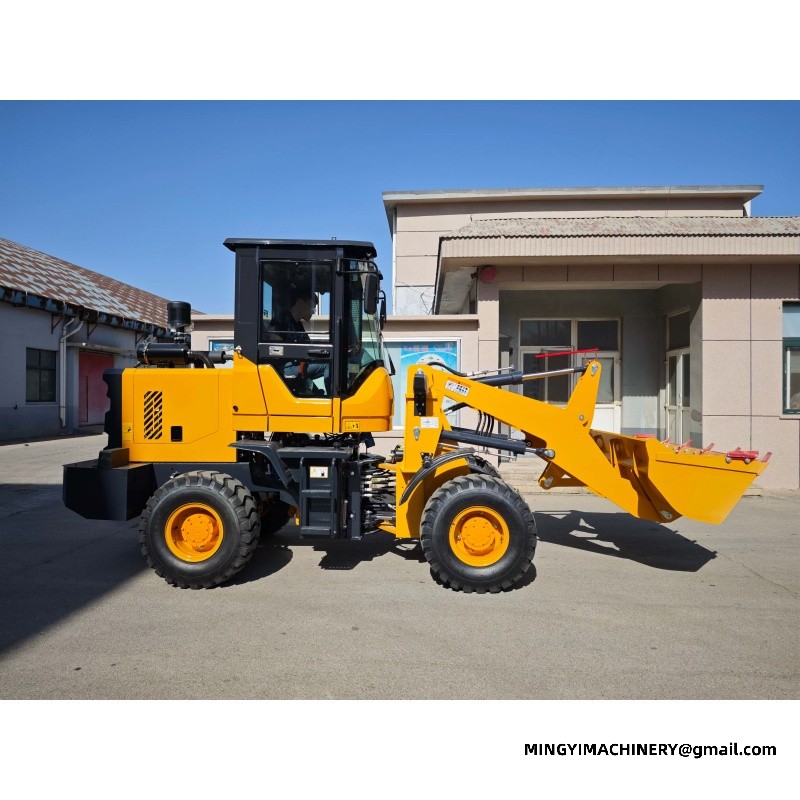
Export loading is a dimension problem. Rear frame width is the governing figure and it stays in a narrow band across this range — 280 mm high x 800 mm wide on the light-duty 3.8 m medium-frame wheel-side reduction wheel loader, 300 mm high x 800 mm wide on the light-duty 4.2 m medium-frame wheel-side reduction wheel loader — so two to three units load in a single forty-foot container with the booms and counterweights packed alongside.
Commissioning is the part buyers under-plan. Before the first start: torque the hinge pins, fill the 70 L (75# large tank) tank and the 4105 core circuit, check the 2063 pump and 25 pump connections, and charge or replace a battery that has sat through a voyage. Then check the five build figures — boom wall, boom width, front and rear hinge plates, cross-member — against the published table, because that is the one moment when a discrepancy is simple to fix.
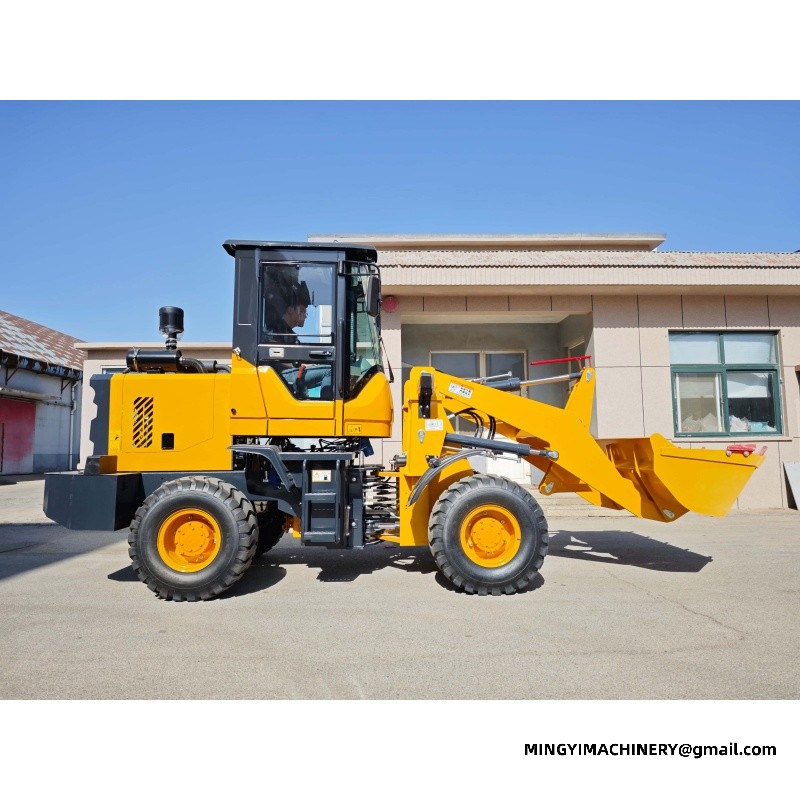
Work from the longest dimension. 3.5 m from front wheel to counterweight on this machine, 4 m on the light-duty 3.5 m small-frame wheel-side reduction wheel loader. The bucket usually comes off; the counterweight usually stays, because removing it changes the securing plan far more than the space it saves.
Track is the second constraint, 1.2 m (Isuzu axle); 1.3 m (wheel-side reduction axle), and it is the one that decides whether two machines can travel side by side. Where a build offers two axles the track differs slightly between them, so confirm which axle is on the unit before booking space. Fuel is drained to a residue for shipping, and the tank on this build is 30.8 L (48# large tank, 20.5/70-16 tyres); 24.6 L (48# small tank, 8.25-16 tyres); that figure matters for the hazmat paperwork rather than for the loading plan.
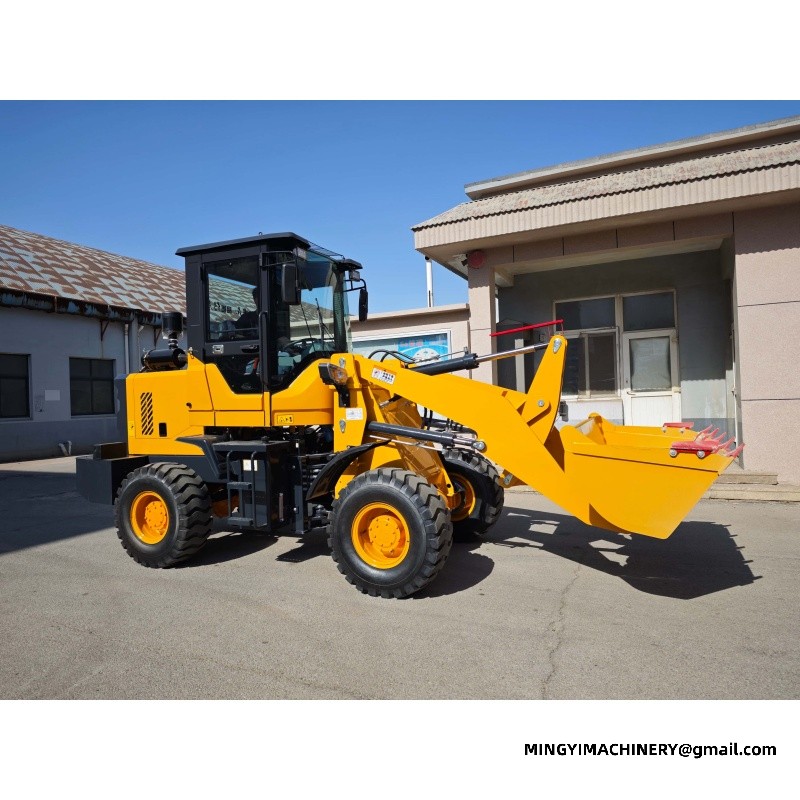
A radiator does not fail; it gets blocked. On this build the core is 4100 core (490 engine); 4105 core (4102T engine), and in dusty or chaff-heavy work it needs cleaning from the clean side outwards, in the reverse direction to normal airflow, because pushing debris further into the fins makes the blockage permanent.
Watch the cap and the seat while you are there. A system that loses pressure boils at a lower temperature, and the symptom is intermittent overheating under load that disappears on the level - - which is routinely misdiagnosed as a pump problem. The pump is 40 pump (490 engine); 1045 pump (4102 turbo engine); the travel circuit is 316 pump; neither produces that symptom. A cap does.
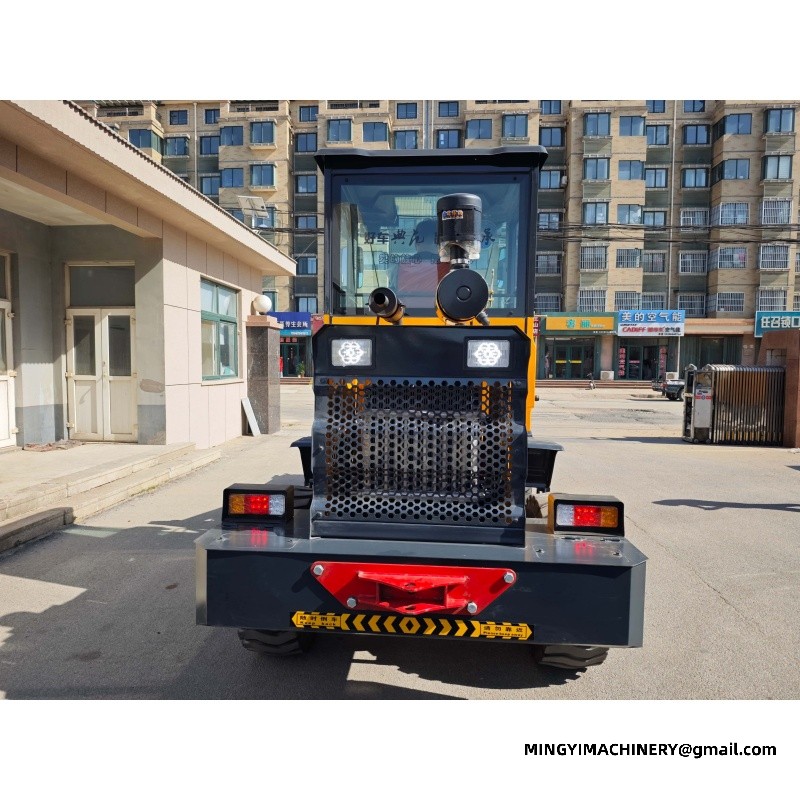
How is a wheel loader manufacturer transported between sites?
On a low-loader, arm strapped down, secured to the frame rather than the cylinders. Front wheel to counterweight is 3.5 m and track is 1.2 m (Isuzu axle); 1.3 m (wheel-side reduction axle), which is what the haulier needs.
My wheel loader manufacturer overheats every afternoon. What is the cause?
In order of likelihood: blocked fins on the 4100 core (490 engine); 4105 core (4102T engine) core, a cap that will not hold pressure, a fan drive problem, or genuine overloading. Clean the core first, from the clean side.
How does wet ground change how a wheel loader manufacturer is used?
Rolling resistance rises, so wheel spin and driveline load rise with it. Track is 1.5 m (wheel-side reduction axle); 1.45 m (Isuzu axle), and the hub-reduction option is the one for soft ground.
Is a wheel loader manufacturer noisy to work beside?
Engine and hydraulic noise, with the pump a contributor: 32 pump on this build. A pump that is cavitating is louder than a healthy one, so noise is also a diagnostic.
Why does my wheel loader manufacturer turn over slowly on cold mornings?
Cranking capacity falls with temperature, and the rating is 60 Ah (490 engine); 80 Ah (4102 turbo engine) on this build. Where two engines are offered the higher rating belongs to the turbo; specify it if the machine starts cold or stops often.
How many passes will fill a truck with a wheel loader manufacturer?
Divide body volume by bucket volume, then check the height. Against 3.2 m of lift with a 0.38 m³ bucket, a body that is too tall is not a pass-count problem at all.
Why does my wheel loader manufacturer wander on the road?
Worn hinge pins. Load the bucket, hold the machine on a slope and watch the joint while the steering is rocked; movement there is wear behind the 16 mm and 16 mm plates.
Keep this page against the delivery paperwork. Bucket 0.52 m³, lift 3.8 m, track 1.6 m and cylinders centre cylinder 60 / side cylinder 50 are the four rows that settle any later question about what was actually ordered.
Handover and getting familiar with Wheel Loader Manufacturer: Records Worth Keeping on File
The first day with a new machine sets the pattern for the next five years. Handover for Wheel Loader Manufacturer: Records Worth Keeping on File covers the control layout, the daily check points and the limits the operator needs to know before the first real load is lifted or carried.
Documents that travel with Wheel Loader Manufacturer: Records Worth Keeping on File
Keeping the documents together is part of ownership. The manual, the service record and the build sheet for Wheel Loader Manufacturer: Records Worth Keeping on File belong in one folder, and the machine is easier to sell later when that folder is complete.
Reading the early symptoms on Wheel Loader Manufacturer: Records Worth Keeping on File
Machines rarely fail without warning. A change in sound, a slower function or a new leak on Wheel Loader Manufacturer: Records Worth Keeping on File is the machine saying something early, and listening then takes a fraction of the time that waiting does.
Contact MINGYI Machinery for the current wheel loader lineup, configuration options and a formal specification for your market. E-mail: sales@mingycn.com | LINE (ID): mingyicn
Wheel Loader Factory China: Packing, Loading and Voyage · Wheel Loader Supplier: Ordering the Same Build Twice · Wheel Loader Snow Pusher: Frame Loads and Cold-Weather Starting · Wheel Loader









