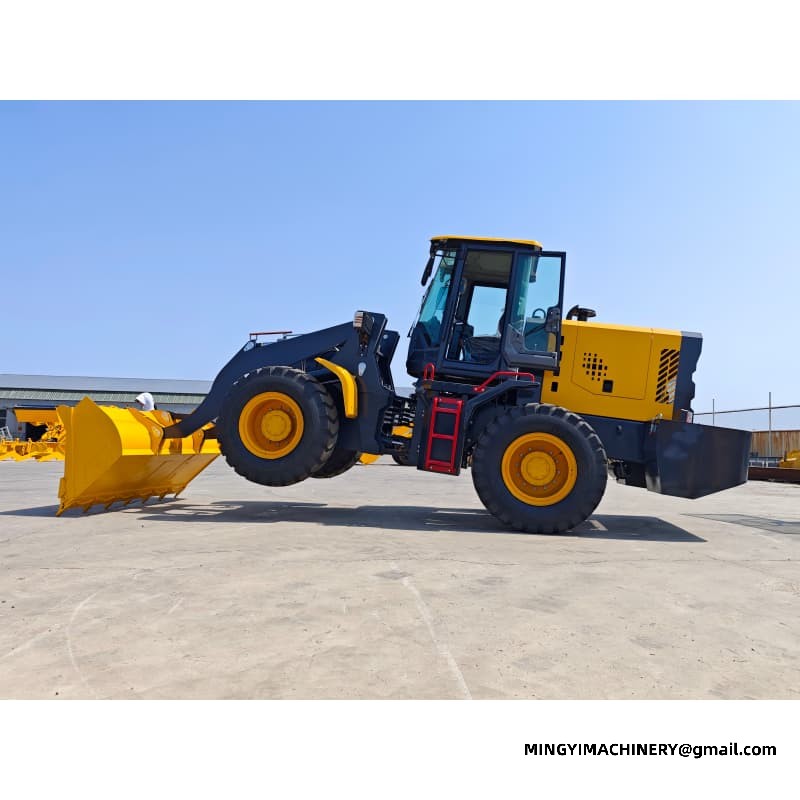
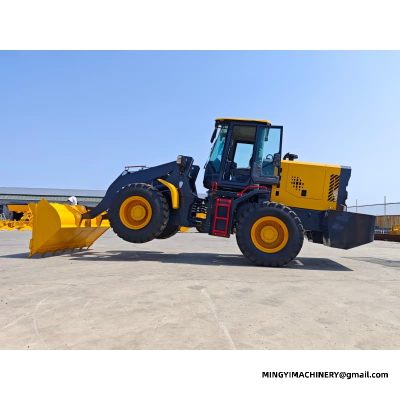
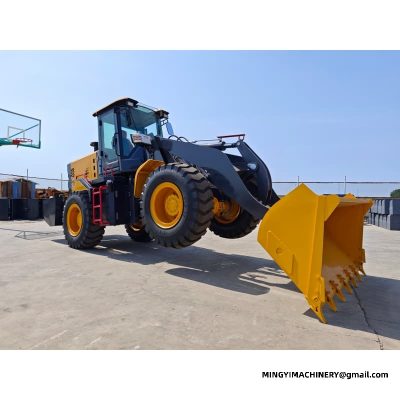
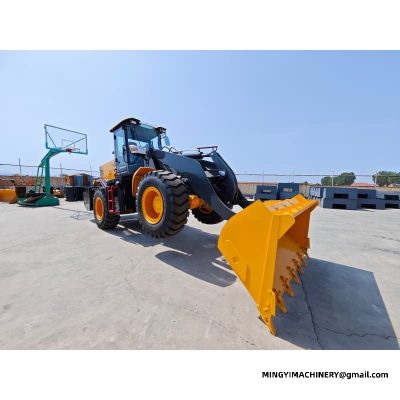
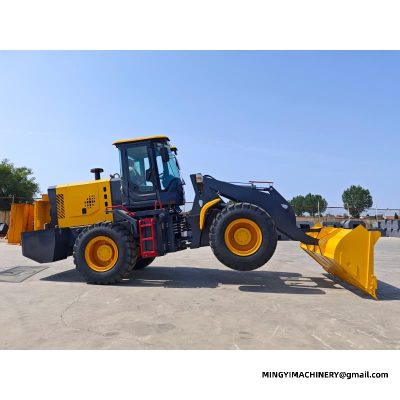
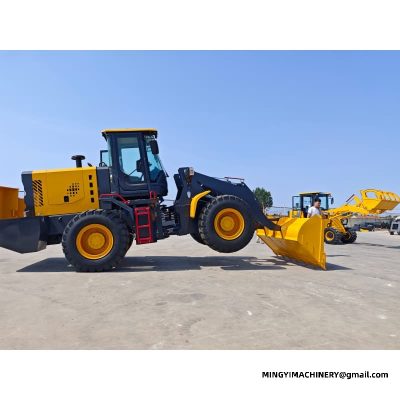
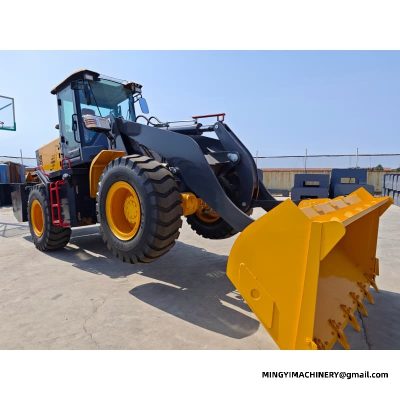
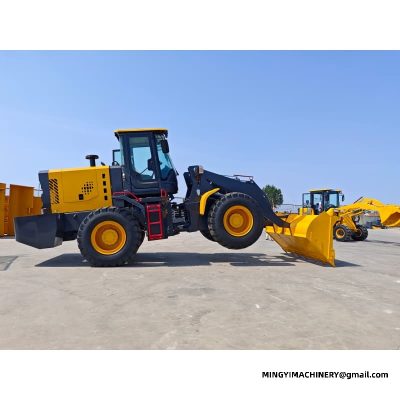
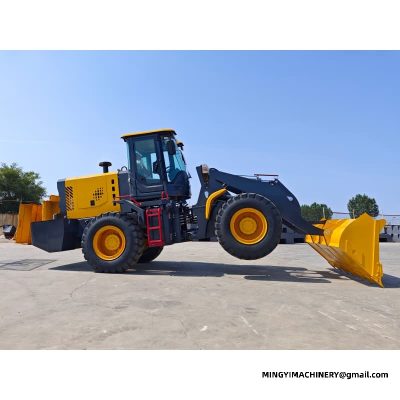
Everything on a earthmoving wheel loader is a compromise, and the sheet shows which one was made. Reach against stability. Capacity against weight. Speed against heat. The heavy-duty 3.2 m small-frame wheel-side reduction wheel loader runs a 2.3 m arm with a 25 mm wall and 890 mm of spacing behind a 0.4 m³ bucket; the heavy-duty 3.5 m small-frame wheel-side reduction wheel loader runs 2.62 m, 25 mm and 890 mm behind 0.4 m³. Neither is the better machine in the abstract. This page is about reading those trade-offs against your own ground, your own bodies and your own shift pattern.
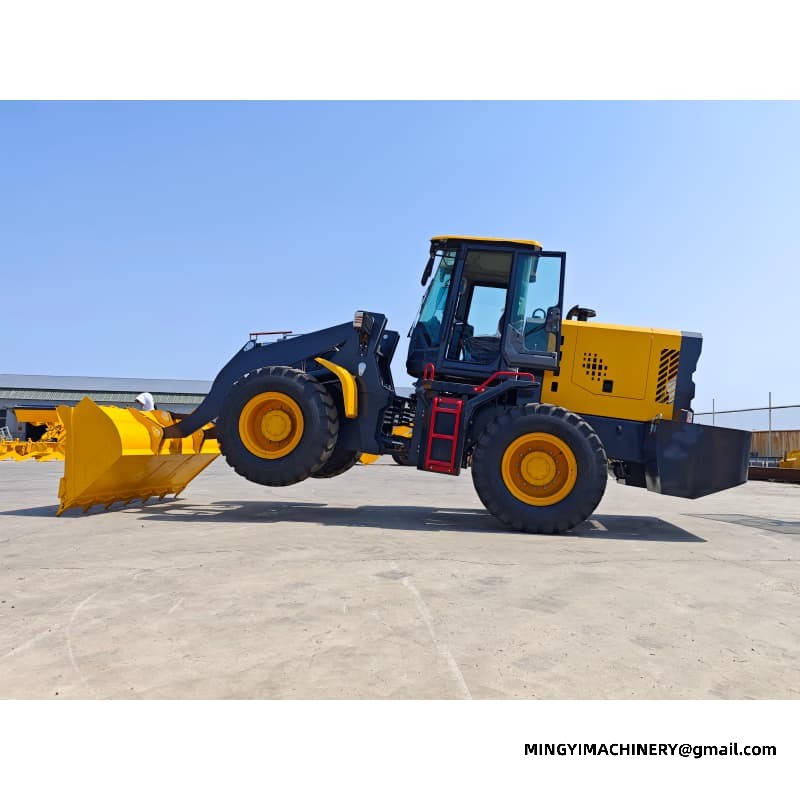
Bucket capacity is the first figure stated and the last one that should be decided. The heavy-duty 3.2 m small-frame wheel-side reduction wheel loader carries 0.4 m³; the heavy-duty 3.5 m small-frame wheel-side reduction wheel loader carries 0.4 m³. What those volumes mean depends on the material: a heaped bucket of dry sand weighs far less than the same heaped bucket of wet gravel or crushed rock, and the machine's stability, not its volume, sets the real limit.
Match the bucket to the receiving body and the material, in that order. A 0.4 m³ bucket at 3.2 m clearing a low pan mixer is correctly specified; the same bucket feeding a highway truck is a slow day. Against that, a 0.4 m³ bucket at 3.5 m needs the frame behind it — 30 mm front and 20 mm rear hinge plates, a 30 mm cross-member — or it will be a fast machine with a short life.
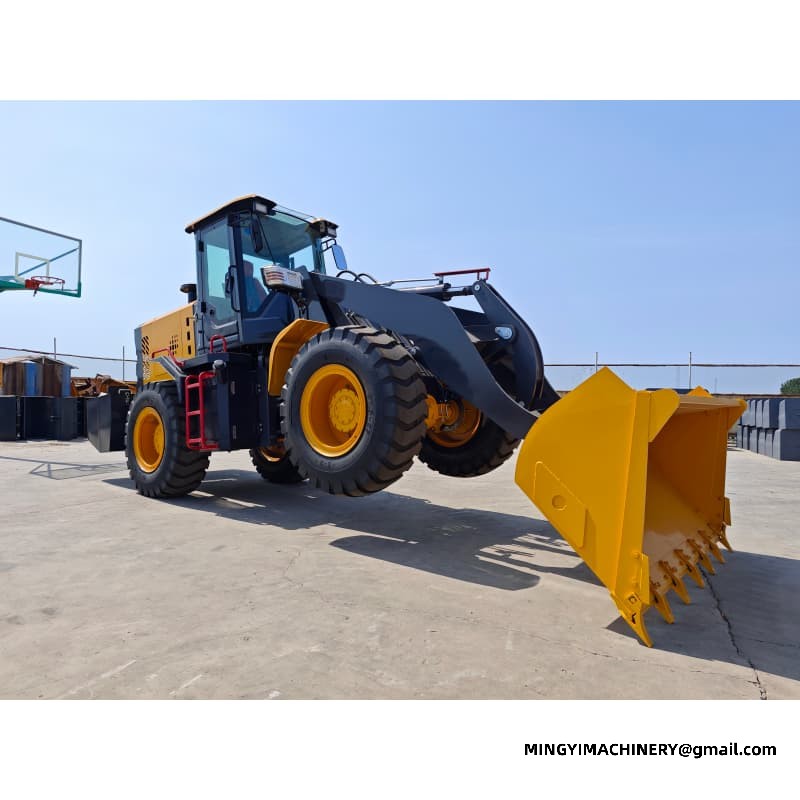
A loading cycle is four movements repeated a few hundred times a shift: approach, fill, lift, dump. Each one loads a different part of the machine, and the specification that matters changes with the movement. Filling asks for bucket volume and breakout, so 0.4 m³ on the heavy-duty 3.2 m small-frame wheel-side reduction wheel loader is the first figure to read. Lifting asks for boom section and cylinder size, which is 25 mm of wall and centre cylinder 45 / side cylinder 45. Dumping asks for height over the receiving board, 3.2 m here against 3.8 m on the light-duty 3.8 m medium-frame wheel-side reduction wheel loader.
The approach is the movement nobody specifies for, and it is where frames age. Every run at a face loads the front hinge plate, 30 mm on this build against 20 mm at the rear; the rear plate carries the weight of the counterweight and the swing of the whole rear frame, which is why it is the heavier of the two. A 4.1 m wheelbase keeps the machine settled when the bucket meets resistance rather than air.
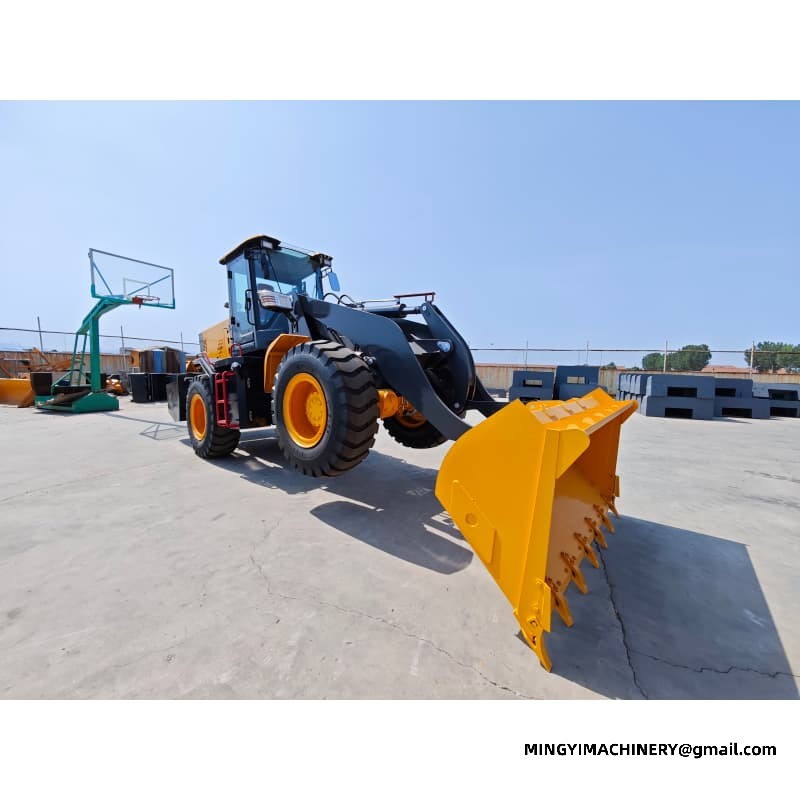
Frames do not usually fail at the boom. They fail at the hinge plates and the cross-member that ties them together, because that is where the articulated joint concentrates every steering and breakout load. On the heavy-duty 3.2 m small-frame wheel-side reduction wheel loader those figures are 30 mm front, 20 mm rear and 30 mm across; on the heavy-duty 3.8 m small-frame wheel-side reduction wheel loader they are 30 mm, 20 mm and 30 mm. The rear frame sections are 280 mm high x 800 mm wide and 280 mm high x 800 mm wide.
Why the rear plate is the one to watch even though it is the thinner of the two: the front hinge sees the boom loads, which are predictable and largely vertical; the rear sees articulation loads, which are sideways, repeated and often shock-loaded when an operator turns while breaking out. A machine specified with a 20 mm rear plate and a 30 mm cross-member will still be tight at year three in reverse-loading cycles where a 20 mm plate has started to ovalise its pin bores. If your fleet keeps machines past warranty, this is the row of the table to read twice.
| Specification extract — heavy-duty 4.2 m small-frame wheel-side reduction wheel loader | |
|---|---|
| Bucket capacity | 0.4 m³ |
| Dump height | 4.2 m |
| Track width | 1.5 m (wheel-side reduction axle); 1.45 m (Isuzu axle) |
| Boom arm thickness | 25 mm |
| Boom arm width | 500 mm |
| Boom arm length | 3.15 m |
| Boom arm centre distance | 890 mm |
| Cross-member thickness | 30 mm |
| Front hinge plate thickness | 30 mm |
| Rear hinge plate thickness | 20 mm |
| Rear frame section | 280 mm high x 800 mm wide |
| Hydraulic cylinders | centre cylinder 45 / side cylinder 45 |
| Fuel tank | 64.7 L (75# small tank) |
| Battery | 60 Ah (490 engine); 80 Ah (4102 turbo engine) |
| Front wheel to counterweight | 4.25 m |
| Radiator | 4100 core (490 engine); 4105 core (4102T engine) |
| Work pump | 40 pump (490 engine); 1045 pump (4102 turbo engine) |
| Travel pump | 316 pump |
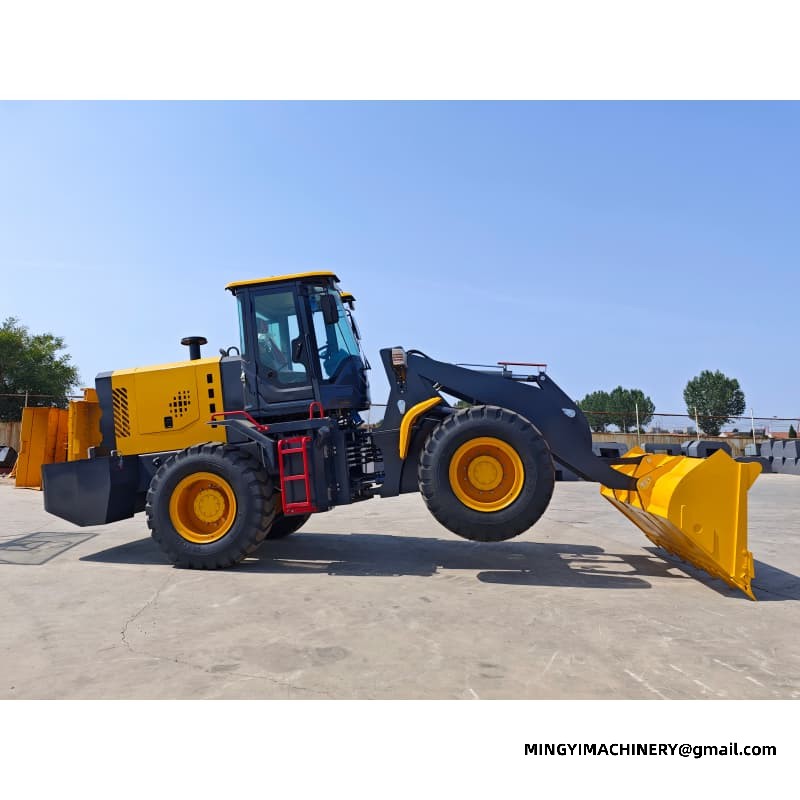
Acceptance takes twenty minutes and prevents a season of argument. Measure the bucket, 0.4 m³ on this build. Measure dump height with the arm at full lift, 3.8 m. Read the cylinders, centre cylinder 45 / side cylinder 45. Check the track, 1.5 m (wheel-side reduction axle); 1.45 m (Isuzu axle). Check the length from front wheel to counterweight, 4.2 m. Those five are on the sheet and on the machine.
The steel is harder to verify and worth verifying anyway, because it is what the money bought. Hinge plates 30 mm and 20 mm, cross-member 30 mm, boom wall 25 mm on a 430 mm section. A tape across the plate edge and a magnet will tell you whether the frame matches the order.
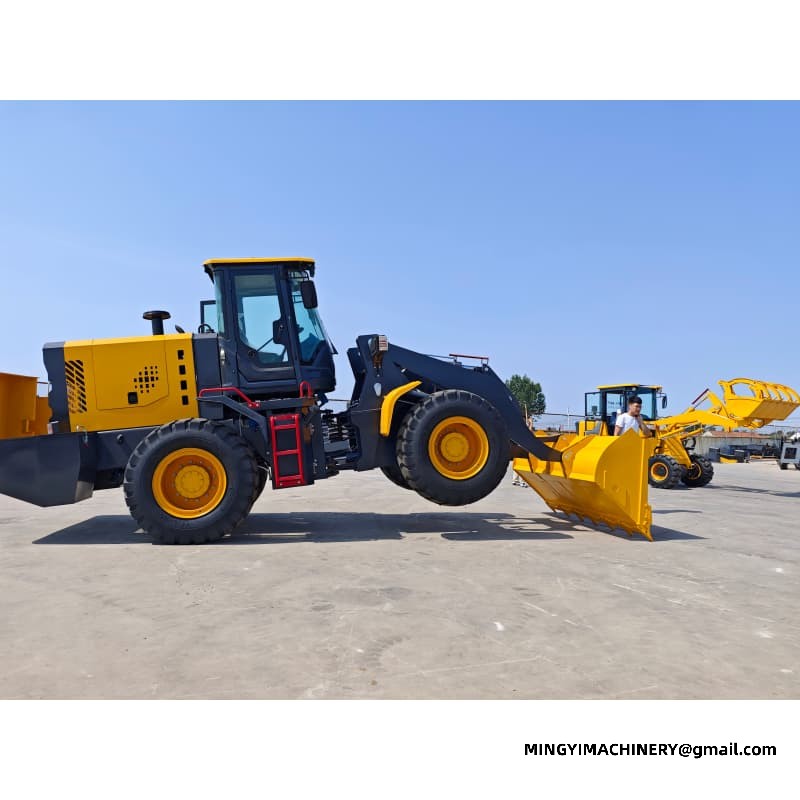
Most loader downtime is avoidable and most of what is avoidable is grease, coolant and hoses. Grease the articulation and the boom pins on the interval — on the heavy-duty 3.2 m small-frame wheel-side reduction wheel loader that is the 30 mm and 20 mm plates and the 890 mm boom mounts. Keep the 4100 core (490 engine); 4105 core (4102T engine) core clean, because overheating presents as lost power long before it presents as a fault.
Hoses are the second most common cause of a stopped machine and the easiest to plan for: a chafing hose on the centre cylinder 45 / side cylinder 45 circuit weeps before it bursts, and a weekly look finds it. Pumps — 40 pump (490 engine); 1045 pump (4102 turbo engine) and 316 pump on the heavy-duty 3.2 m small-frame wheel-side reduction wheel loader — rarely fail without warning; they get noisy first. On the light-duty 4.5 m medium-frame wheel-side reduction wheel loader the equivalents are centre cylinder 60 / side cylinder 50, 2063 pump and 25 pump. Keep a hose set and a filter set on site and most of this becomes a tea break rather than a week.
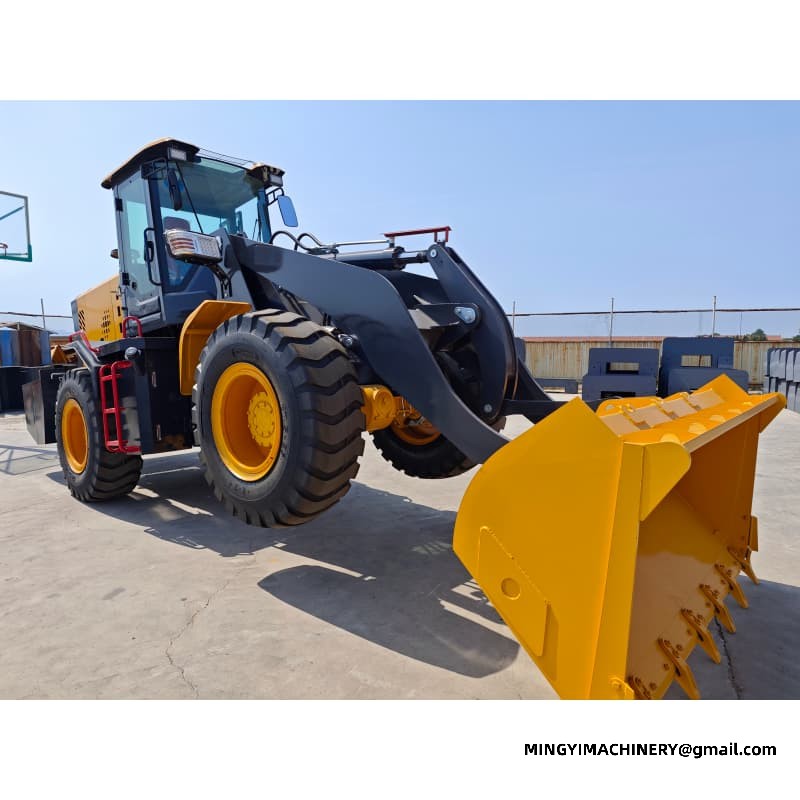
Hold the parts that stop the machine and cannot be improvised: hoses and seals for the centre cylinder 45 / side cylinder 45, a belt set, filters, and a battery to the 60 Ah (490 engine); 80 Ah (4102 turbo engine) rating. Do not hold the parts that are welded in — hinge plates at 30 mm and 20 mm, the 30 mm cross-member. Those are a repair, not a spare, and they are the same steel on every machine in the family.
The pump is the judgement call. 40 pump (490 engine); 1045 pump (4102 turbo engine) is a stocked item and a week of downtime if it is not; the 316 pump fails less often and is the one most fleets choose to order rather than hold. Decide on that by distance from the supplier, not by the effort of the part.
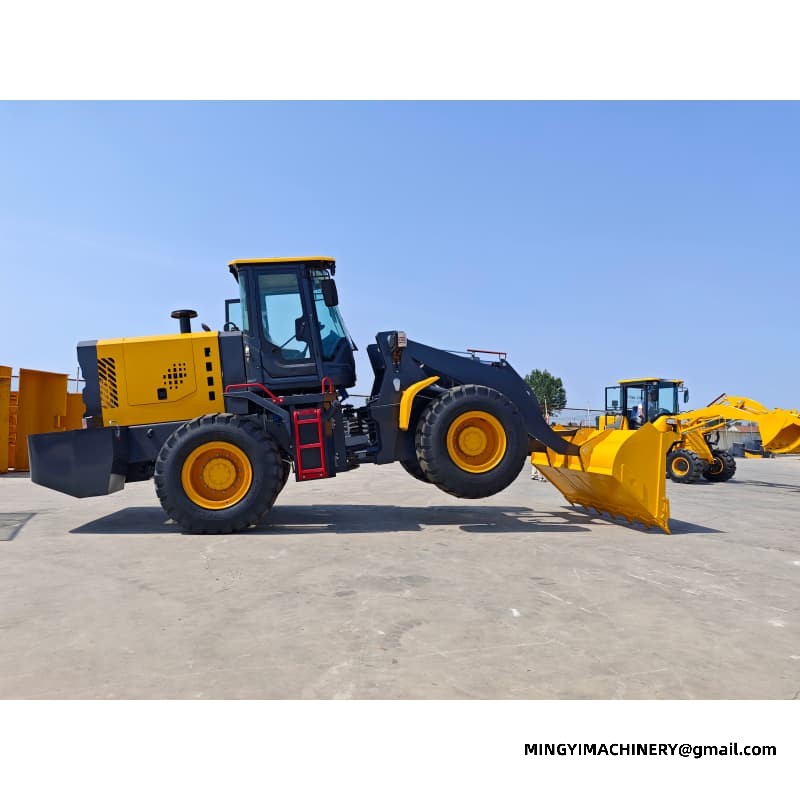
Spares consolidate by frame family rather than by model, which is the point of building a range this way. One cylinder seal kit covers the centre cylinder 45 / side cylinder 45 set across the builds that share it; one pump set covers 40 pump (490 engine); 1045 pump (4102 turbo engine) and 316 pump; pins, bushes and cutting edges are common within a family. On the heavy-duty 3.2 m small-frame wheel-side reduction wheel loader and the heavy-duty 3.5 m small-frame wheel-side reduction wheel loader, where the two share a family, that is four line items.
What to keep on the shelf depends on the duty. A single machine on a farm needs a cutting edge, a hydraulic hose set, filters and a pin and bush kit. A fleet in a quarry needs those plus a cylinder seal kit, a pump, and one spare wheel-end. Because the 30 mm and 30 mm cross-members and the 20 mm and 20 mm hinge plates differ between builds, order wear parts against the model name, not against the frame.
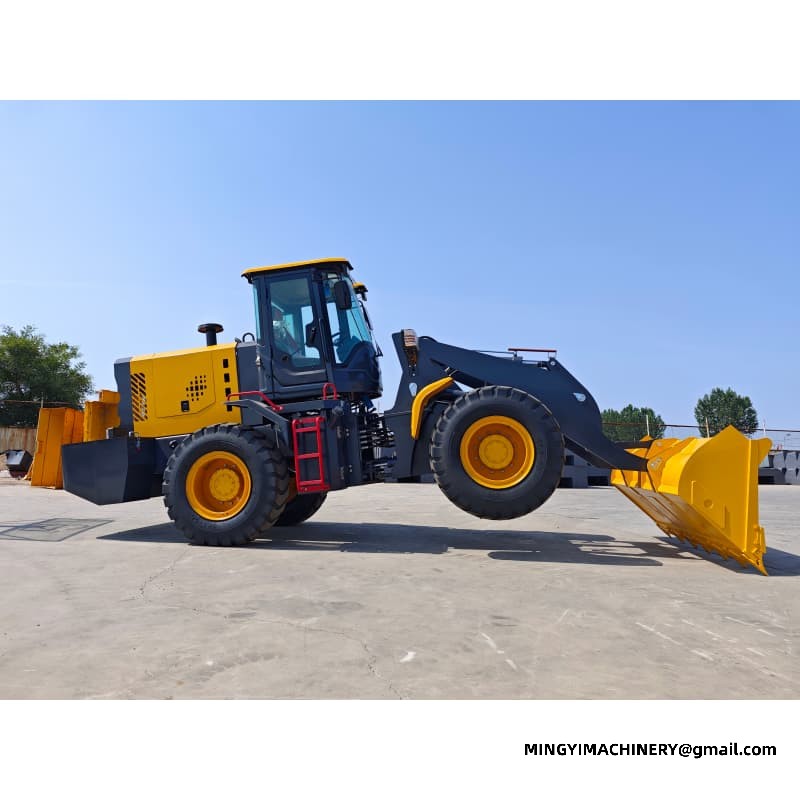
A machine that wanders on the road and feels vague in the turn has worn hinge pins. The plates are 30 mm front and 20 mm rear over a 30 mm cross-member; when the pin bores ovalise, the geometry the frame was built to hold is gone, and no amount of steering adjustment brings it back.
Check it by loading the bucket, holding the machine on a slope and watching the joint while an operator rocks the steering. Movement there is wear; movement at the rear, over the 280 mm high x 800 mm wide section, is a different and more serious problem. Catching the first case takes a set of pins; missing it takes a frame.
Should I go up a bucket size on a earthmoving wheel loader?
Only if the material is light enough to fill it. 0.4 m³ against 0.52 m³ looks like a gain on paper and is a loss on dense material, and the extra weight lands on the hinge.
Will a earthmoving wheel loader ship assembled in a container?
It depends on the longest dimension, 4.1 m from front wheel to counterweight, and on track, 1.5 m (wheel-side reduction axle); 1.45 m (Isuzu axle). The bucket usually comes off; the arm must be lowered to clear the door.
How many passes will fill a truck with a earthmoving wheel loader?
Divide body volume by bucket volume, then check the height. Against 3.5 m of lift with a 0.52 m³ bucket, a body that is too tall is not a pass-count problem at all.
Can worn pins on a earthmoving wheel loader be repaired?
Yes, if the plates are sound. Re-machining restores geometry for a while; once the 30 mm cross-member and 280 mm high x 800 mm wide rear section have been flexing, it will not hold.
How often will a earthmoving wheel loader need refuelling?
The tank is 64.7 L (75# small tank), sized for a full shift at working throttle without a mid-day stop. Machines on short cycles with a lot of idling will use more than the figure suggests.
What should I check before the first start of a earthmoving wheel loader?
Coolant level in the 4100 core (490 engine); 4105 core (4102T engine) package, oil level, battery charge to the 60 Ah (490 engine); 80 Ah (4102 turbo engine) rating, and a walk-round for anything loosened in transit. Then run it light for ten minutes before loading it.
How far can a earthmoving wheel loader travel under its own power?
Short moves between faces, not road haulage. The travel circuit is 316 pump and sustained high-speed running generates heat the 4100 core (490 engine); 4105 core (4102T engine) core was not sized to reject.
Every figure stated on this page — bucket 0.4 m³, lift 3.2 m, hinge plates 30 mm and 20 mm — comes from the published build data for the heavy-duty 3.2 m small-frame wheel-side reduction wheel loader and the heavy-duty 3.5 m small-frame wheel-side reduction wheel loader. Send your board heights, material and shift pattern and the comparison can be run against your own numbers.
Planning the season around Earthmoving Wheel Loader: Breaking Out of a Hard Face
Seasonal work rewards a machine that can change duty. Through the year Earthmoving Wheel Loader: Breaking Out of a Hard Face may move from one task to another, and the attachment list should be chosen for the whole year rather than for the first job.
Documents that travel with Earthmoving Wheel Loader: Breaking Out of a Hard Face
A clear parts book saves more time than any other document. When Earthmoving Wheel Loader: Breaking Out of a Hard Face needs a replacement, the illustration and the part number are what turn a phone call into a shipment instead of a description.
Contact MINGYI Machinery for the current wheel loader lineup, configuration options and a formal specification for your market. E-mail: sales@mingycn.com | LINE (ID): mingyicn
Loader Machine Supplier: Parts Support After Delivery · Wheel Loader Manufacturer: Records Worth Keeping on File · Wheel Loader Snow Blower: Hydraulic Circuits and Winter Duty · Wheel Loader









