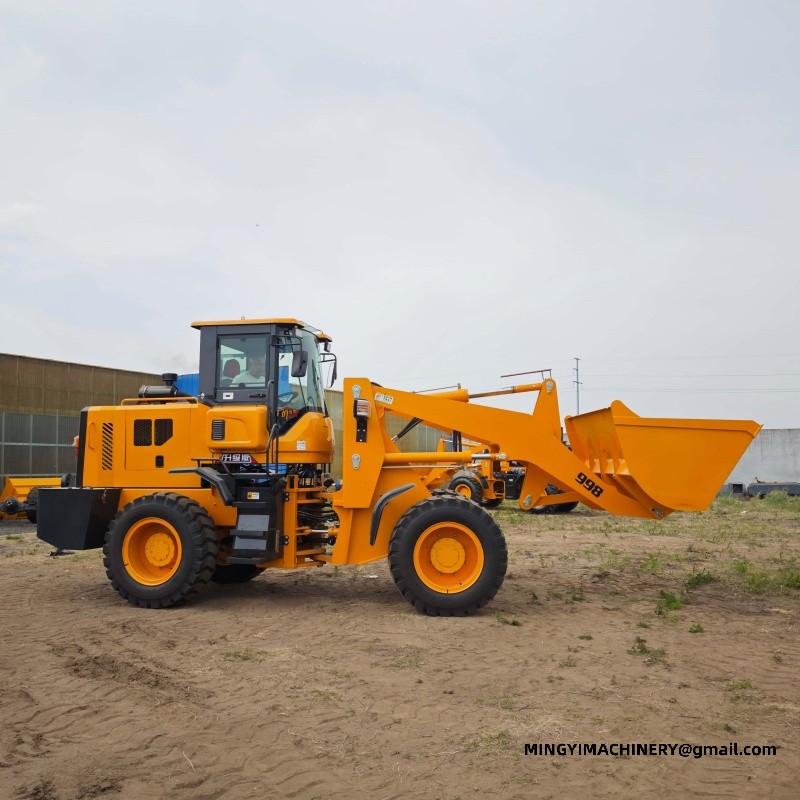
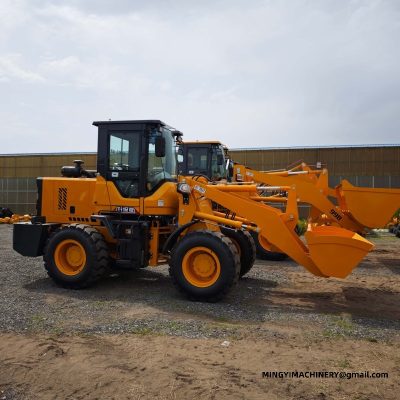
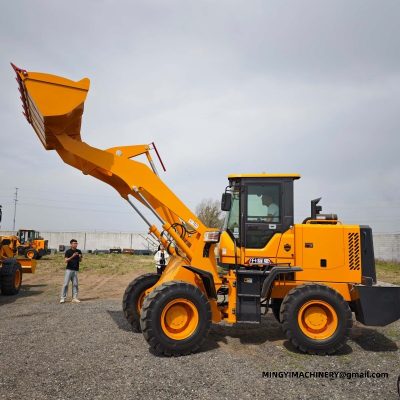
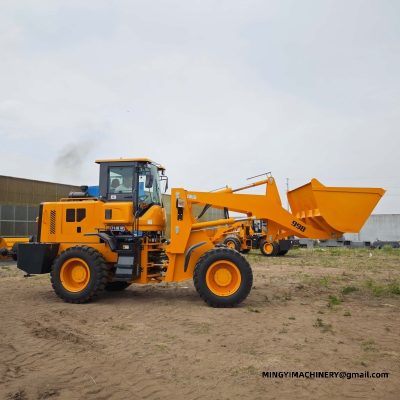
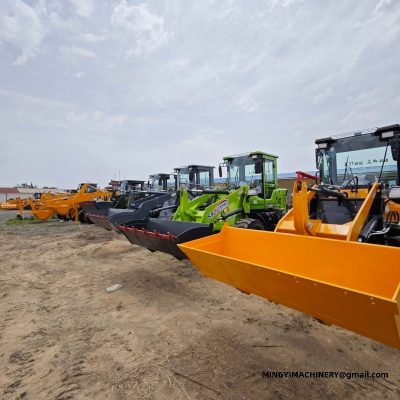
Buying a wheel loader supplier on capacity alone is the most common and most lengthy mistake in this class of machine.Capacity is simple to advertise and easy to change; stability, reach and frame life are neither. The light-duty 4.2 m small-frame wheel-side reduction wheel loader carries 0.38 m³ to 4.2 m on a 3.15 m boom with a 890 mm centre distance, while the heavy-duty 4.5 m small-frame wheel-side reduction wheel loader carries 0.4 m³ to 4.5 m on 3.15 m and 890 mm. Those are the figures that decide what the machine can do on your site, and this page walks through them in the order a buyer should read them.
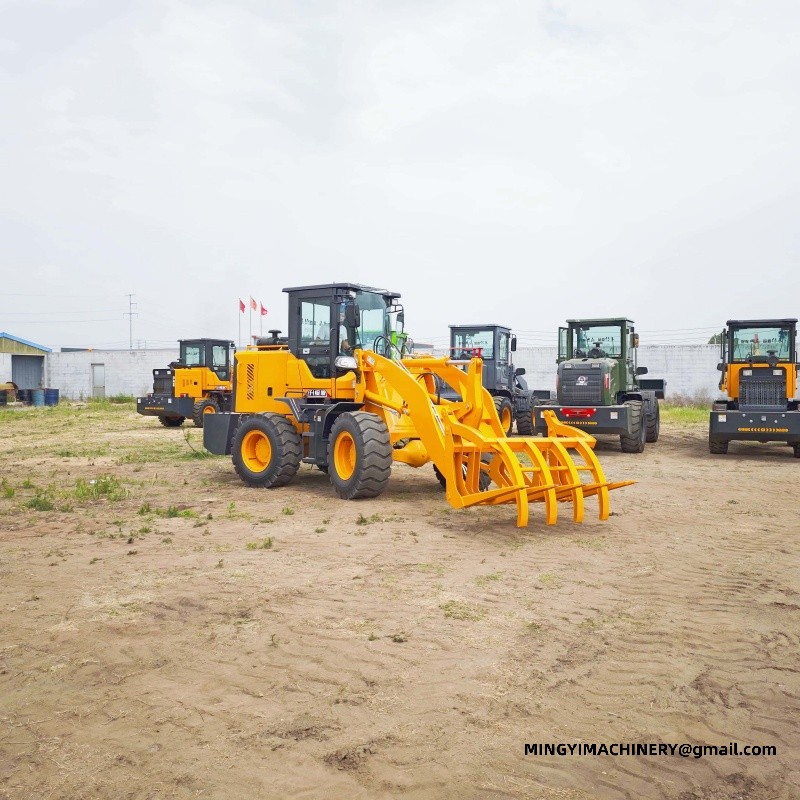
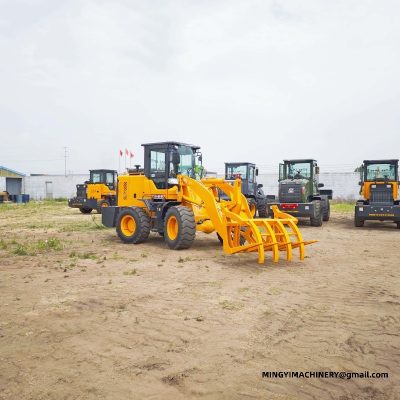
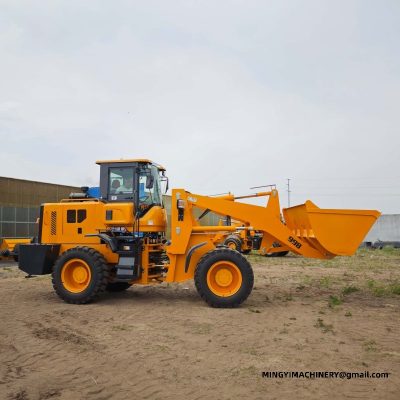
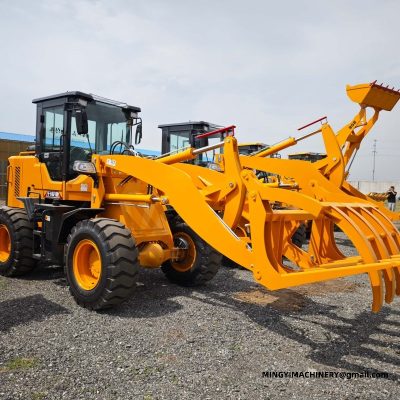
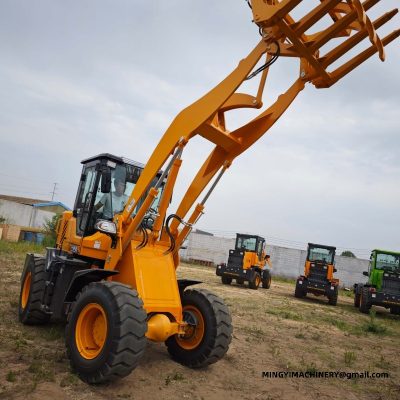
The standard bucket on this build is 0.4 m³, and it is the right tool for loose material moved from a heap to a body. Everything else is a compromise in one direction or another: forks give precision and lose volume, grapples give grip and lose speed, a snow blower gives reach and needs flow the bucket never asked for.
What makes attachments practical is whether the machine can lift them. Boom wall 25 mm and section 500 mm decide how much side load the arm takes, and the hinge plates — 30 mm at the front, 20 mm at the rear — decide how long the frame takes it. A grapple hanging off the end of a long arm is a side load the bucket never produces.
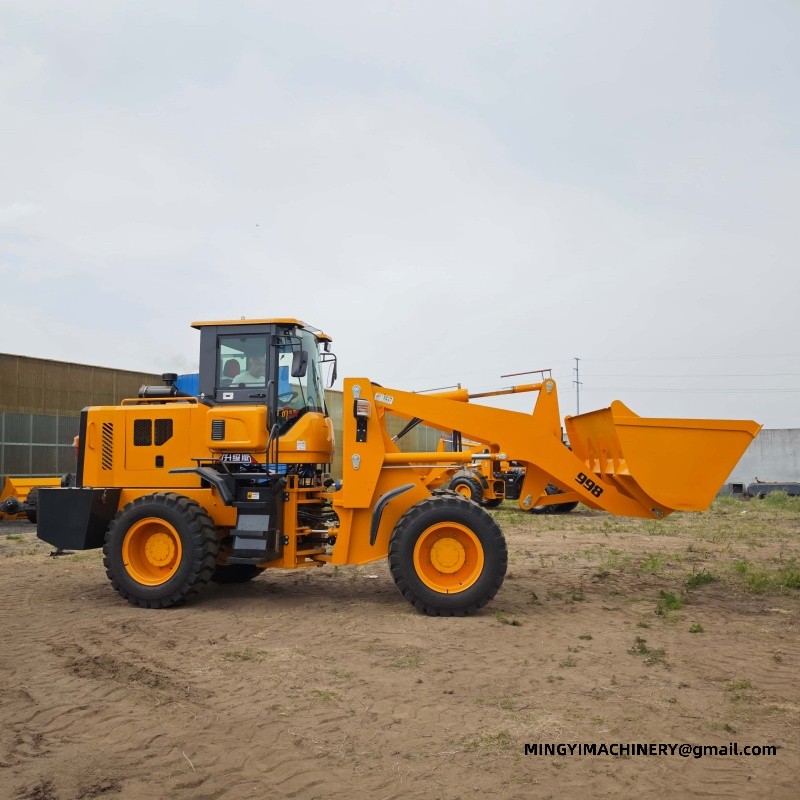
The boom is the part that turns engine power into a loaded bucket at height, and four figures describe it. Length runs 3.15 m on the light-duty 4.2 m small-frame wheel-side reduction wheel loader against 3.15 m on the heavy-duty 4.5 m small-frame wheel-side reduction wheel loader; wall thickness 25 mm against 25 mm; section width 370 mm against 500 mm; and the mount spacing — boom centre distance — 890 mm against 890 mm. Read together, those four numbers tell you more about how a machine will behave than bucket capacity ever will.
Length buys reach and takes stability, because every extra millimetre moves the load centre further from the front axle. Wall thickness resists bending; section width resists twisting. Centre distance is the one most buyers never ask about, and it is the one that decides whether the arm takes a side load cleanly or twists the pins — which matters the moment an operator digs one corner of the bucket into a heap instead of squaring up to it. On the light-duty 4.2 m small-frame wheel-side reduction wheel loader the combination of a 3.15 m arm, a 25 mm wall and a 890 mm spacing is matched to a 0.38 m³ bucket, and that match is what keeps the frame tight over a full season.
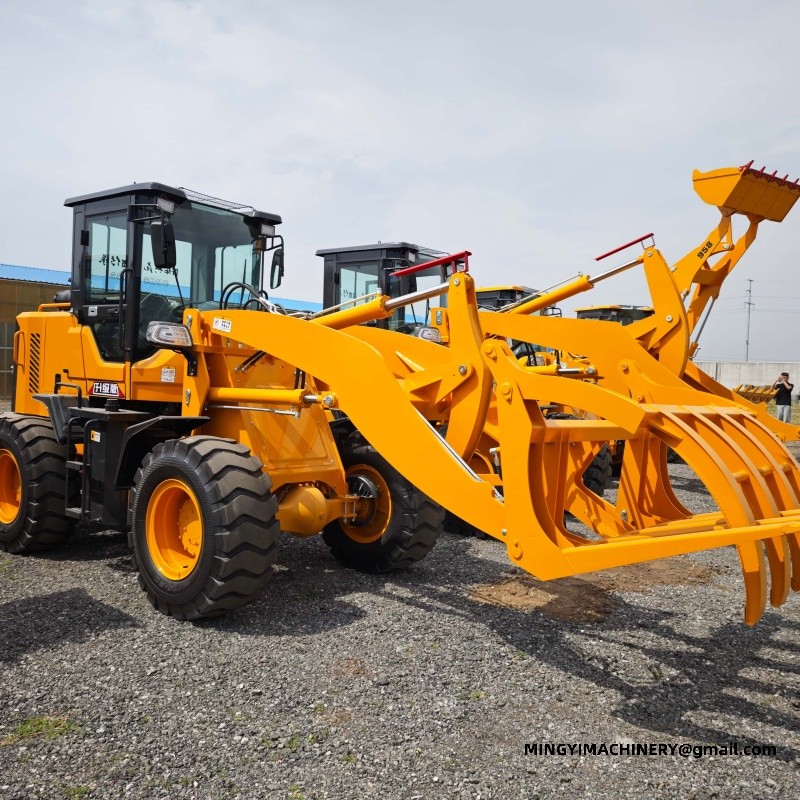
Track width decides two things at once: whether the machine stays upright on a slope, and whether it fits through what you need it to fit through. This build runs 1.2 m (Isuzu axle); 1.3 m (wheel-side reduction axle), against 1.6 m on the heavy-duty 4.5 m medium-frame wheel-side reduction wheel loader. Wider is more stable and needs more room. The choice is made by your narrowest gate, not by your widest heap.
The axle behind the track matters as much as the number. A wheel-side reduction axle puts the final reduction at the hub, which lowers the load on the half-shafts and suits soft, rutted or sandy ground. The alternative pattern suits hard, level surfaces and runs cooler at road speed. Where a build offers both, the hub-reduction figure in 1.2 m (Isuzu axle); 1.3 m (wheel-side reduction axle) is the one for quarry floors and unmade haul roads.
| Specification extract — heavy-duty 4.2 m medium-frame wheel-side reduction wheel loader | |
|---|---|
| Bucket capacity | 0.65 m³ |
| Dump height | 4.2 m |
| Track width | 1.6 m |
| Boom arm thickness | 30 mm |
| Boom arm width | 520 mm |
| Boom arm length | 3.16 m |
| Boom arm centre distance | 960 mm |
| Cross-member thickness | 45 mm |
| Front hinge plate thickness | 45 mm |
| Rear hinge plate thickness | 30 mm |
| Rear frame section | 300 mm high x 800 mm wide |
| Hydraulic cylinders | centre cylinder 60 / side cylinder 50 |
| Fuel tank | 70 L (75# large tank) |
| Battery | 80 Ah |
| Front wheel to counterweight | 4.55 m |
| Radiator | 4105 core |
| Work pump | 2063 pump |
| Travel pump | 25 pump |
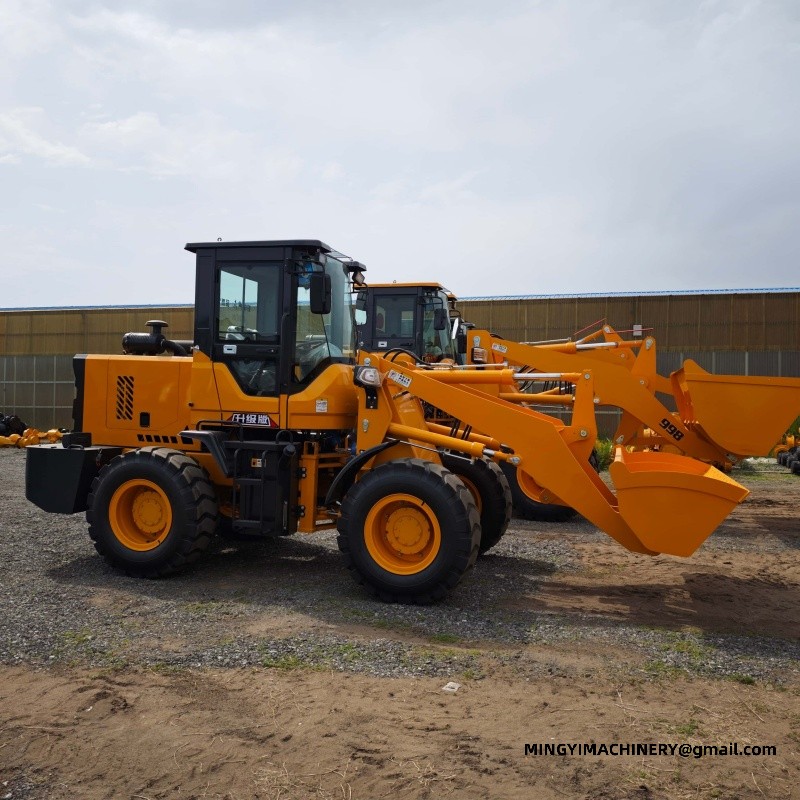
Machines kept past warranty should be bought on steel. Hinge plates 30 mm and 20 mm, cross-member 30 mm, rear frame 230 mm high x 800 mm wide: those are the figures that decide whether year five is a service year or a rebuild year.
The second decision is how repairable the machine is, and that is a parts question. Cylinders centre cylinder 45 / side cylinder 45, pump 40 pump (490 engine); 1045 pump (4102 turbo engine), radiator 4100 core (490 engine); 4105 core (4102T engine), battery 60 Ah (490 engine); 80 Ah (4102 turbo engine): if all four are standard items within the range, a machine can be kept indefinitely. If any is unique to one build, it cannot, and that is worth knowing before the order rather than at year six.
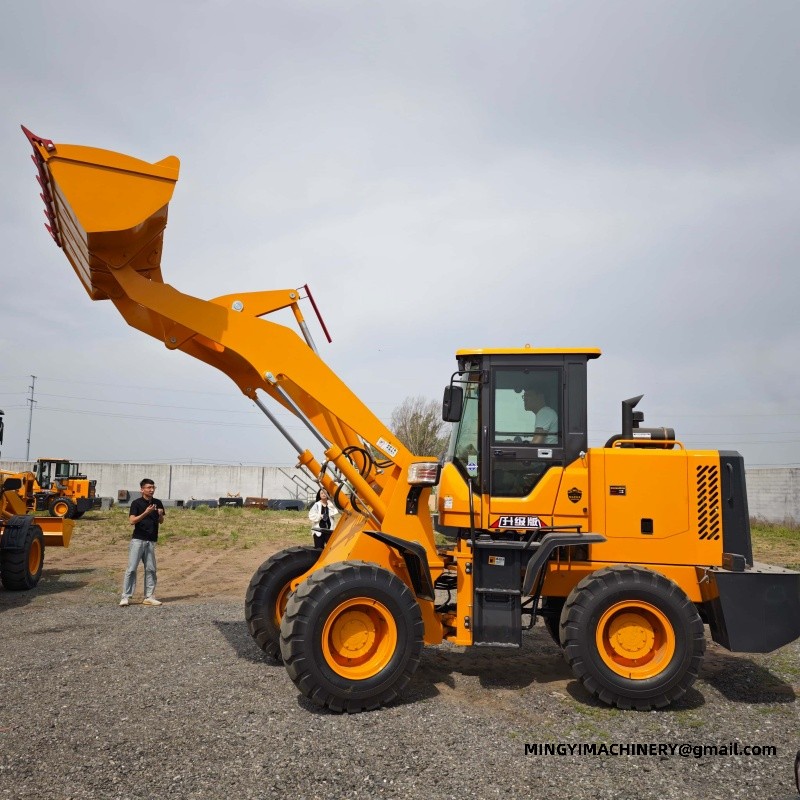
Model names are marketing; build codes are what the shop floor works from. Two machines with the same name can leave the factory with different hinge steel, and the difference is invisible until something wears. On this range the differences are published: 16 mm of cross-member against 45 mm, 16 mm of front hinge plate against 45 mm.
Specify the machine the way you would specify a pump: by the numbers. Bucket 0.3 m³, dump height 2.8 m, cylinders centre cylinder 45 / side cylinder 40, track 1.2 m (Isuzu axle); 1.3 m (wheel-side reduction axle). Write those into the order and the confirmation, and the machine that arrives is the machine you compared. Anything else relies on a name meaning the same thing to two people.
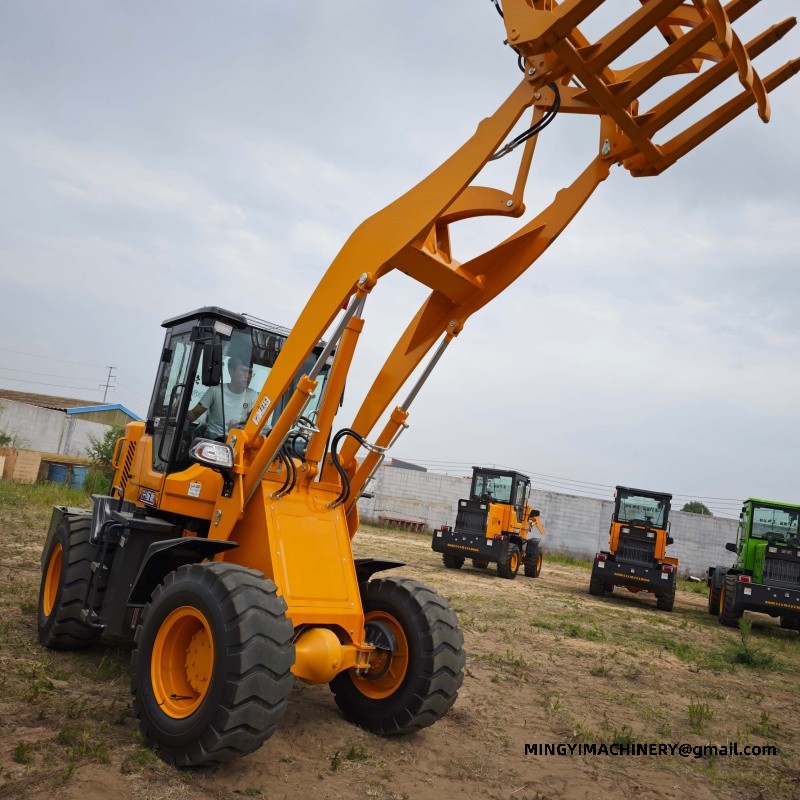
Articulated loaders wear at the pins, and pins wear because they were dry. Front plate 30 mm, rear plate 20 mm, and the cross-member behind them at 30 mm: that assembly is what steering works through, several hundred times a shift. Grease intervals are measured in hours, not months, on a machine doing short cycles.
The boom pivots are the second set, and they are the ones an operator feels first. A 2.3 m arm on a 890 mm spacing, lifted by centre cylinder 45 / side cylinder 45, loads its pins every pass. If the machine develops a clunk on lift, look there before looking at the pump — the pump, 40 pump (490 engine); 1045 pump (4102 turbo engine), is usually fine and the pin is usually not.
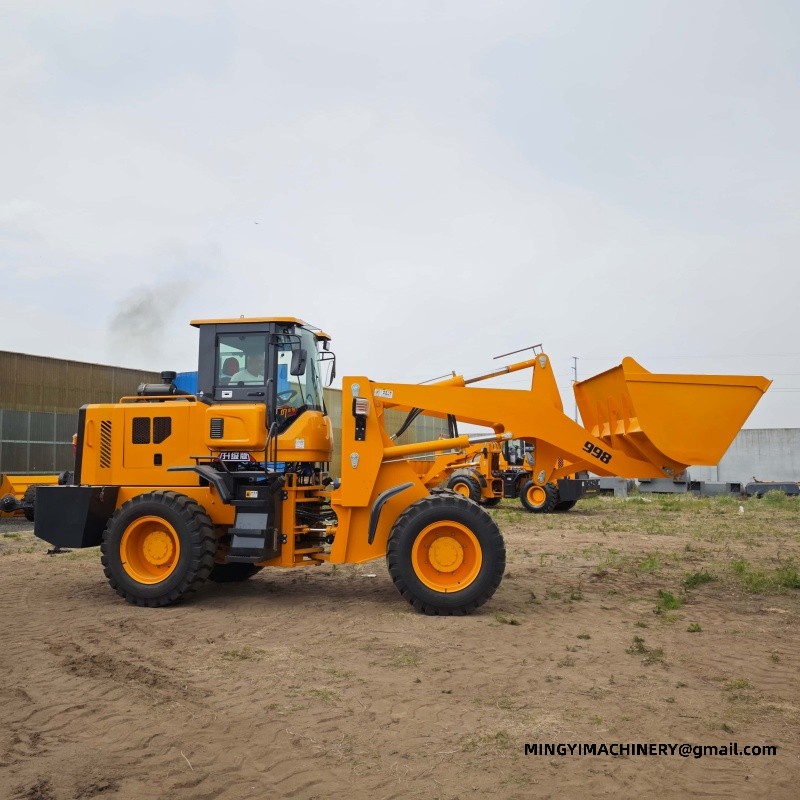
A boom that lifts slowly is usually a flow question, not a force question. The cylinders on this build are centre cylinder 45 / side cylinder 40 and the pump is 32 pump; if lift is slow but breakout is normal, look at flow before looking at the cylinders. If breakout is weak as well, look at pressure.
Before either, rule out the simple causes: a blocked return filter, a low oil level, a suction leak, or a relief valve that has been tampered with to make a weak machine feel strong. Raising relief pressure above the setting the 20 mm wall and 16 mm cross-member were specified for is how frames get bent, and it is the most common fault found on machines that arrived second-hand.
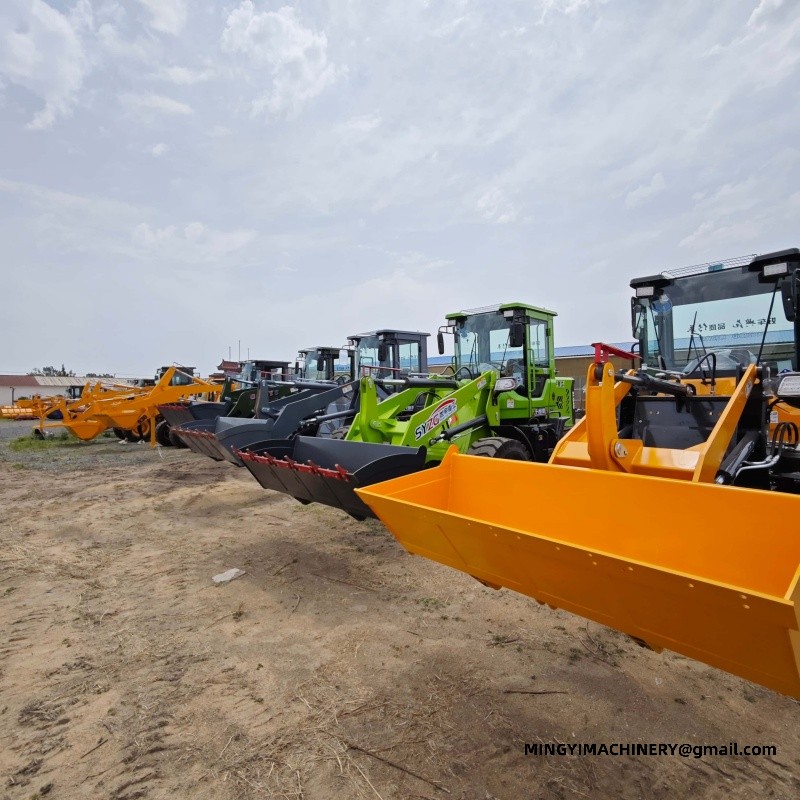
Stockpile work is the hardest duty a loader sees: the machine drives into a face, breaks out, reverses under load and turns, all day. The components that govern life are the rear hinge plate, the cross-member and the cooling pack. On the light-duty 4.2 m small-frame wheel-side reduction wheel loader those are 20 mm and 25 mm with 4100 core (490 engine); 4105 core (4102T engine); on the heavy-duty 4.5 m medium-frame wheel-side reduction wheel loader they are 30 mm and 45 mm with 4105 core.
Traction is the second half. A stockyard floor is rarely compacted and often rutted, which argues for the wheel-side reduction axle and the 1.6 m track rather than the lighter axle. Add the raised radiator core where the material is fine and dry — cement raw meal, lime, crushed fines — because a blanked core stops the machine in the middle of a shift, and a stopped loader stops everything behind it.
Do attachments interchange across the wheel loader supplier range?
Within a frame family, yes, because the boom section matches. Across families, no: a 370 mm section on the light-duty 4.2 m small-frame wheel-side reduction wheel loader is not the 500 mm section on the heavy-duty 4.5 m small-frame wheel-side reduction wheel loader.
How does a wheel loader supplier compare with a backhoe loader?
A loader moves more material per pass and carries it higher — 0.65 m³ at 4.2 m on the heavy-duty 4.2 m medium-frame wheel-side reduction wheel loader — while a backhoe digs below grade. Choose by which job you do most.
Why does boom centre distance matter on a wheel loader supplier?
It sets how side loads travel into the frame: 890 mm on the light-duty 4.2 m small-frame wheel-side reduction wheel loader against 920 mm on the heavy-duty 3.5 m medium-frame wheel-side reduction wheel loader. Wider spacing lets the cylinders work through a better lever.
What is the difference between the two hinge plates on a wheel loader supplier?
The front plate carries boom loads, which are mostly vertical; the rear carries articulation, which is sideways and shock-loaded. Hence 25 mm front against 20 mm rear.
What spares should I keep for a wheel loader supplier?
Filters, a hose set for the centre cylinder 45 / side cylinder 45 cylinders, pins and bushes for the 890 mm boom mounts and a cutting edge. One pump per fleet is usually enough.
Where is the extra steel in a heavier wheel loader supplier?
Boom wall 25 mm against 25 mm, front hinge 30 mm against 30 mm, rear hinge 20 mm against 20 mm, cross-member 30 mm against 30 mm.
How wide is a wheel loader supplier?
Track width is 1.5 m (wheel-side reduction axle); 1.45 m (Isuzu axle) on the light-duty 4.2 m small-frame wheel-side reduction wheel loader and 1.6 m on the heavy-duty 4.2 m medium-frame wheel-side reduction wheel loader. Check it against the narrowest gate, door or aisle before anything else on the sheet.
Machines ship knock-down with booms and counterweights packed loose, tanks removed and batteries boxed. Allow a day per unit to commission: torque the pins, fill the 64.7 L (75# small tank) tank and the 4100 core (490 engine); 4105 core (4102T engine) circuit, and check the build figures against the table.
Storage and long idle periods for Wheel Loader Supplier: Model Coverage and Container Planning
Standing still is harder on a machine than working. Preparing Wheel Loader Supplier: Model Coverage and Container Planning for a long idle period means clean fluids, a charged battery and protection for the exposed surfaces, because neglect is not the same as rest.
Packing, loading and shipment of Wheel Loader Supplier: Model Coverage and Container Planning
Container loading is a planning exercise. The overall dimensions and the operating weight of Wheel Loader Supplier: Model Coverage and Container Planning decide whether it ships whole, partly disassembled or with the attachment removed, and that decision is made before the booking.
Planning the season around Wheel Loader Supplier: Model Coverage and Container Planning
Seasonal work rewards a machine that can change duty. Through the year Wheel Loader Supplier: Model Coverage and Container Planning may move from one task to another, and the attachment list should be chosen for the whole year rather than for the first job.
Handover and getting familiar with Wheel Loader Supplier: Model Coverage and Container Planning
The first day with a new machine sets the pattern for the next five years. Handover for Wheel Loader Supplier: Model Coverage and Container Planning covers the control layout, the daily check points and the limits the operator needs to know before the first real load is lifted or carried.
Contact MINGYI Machinery for the current wheel loader lineup, configuration options and a formal specification for your market. E-mail: sales@mingycn.com | LINE (ID): mingyicn
Construction Wheel Loader: Site Loading, Backfill, Hardstands · Front End Loader Manufacturer: Boom Geometry and Hinge Steel · Mining Wheel Loader: Dust, Heat and Cooling Care · Loaders









