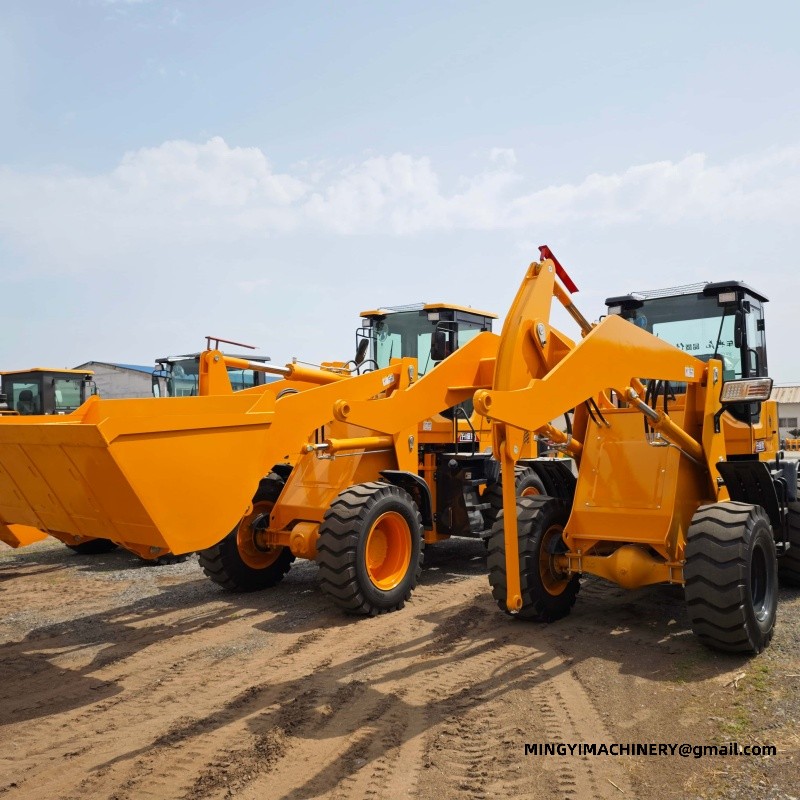
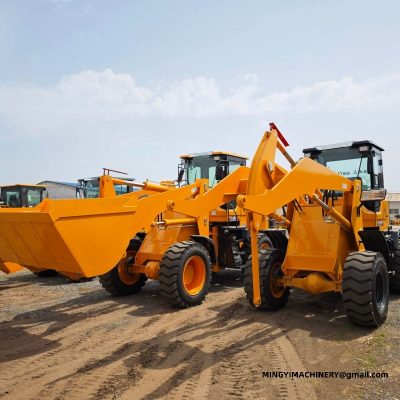
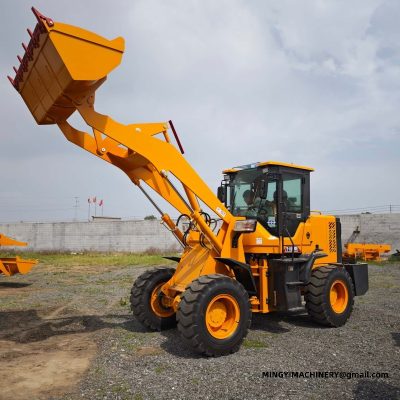
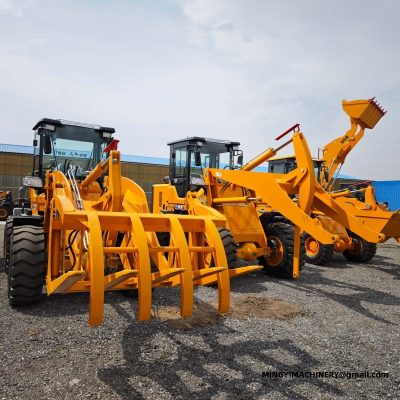
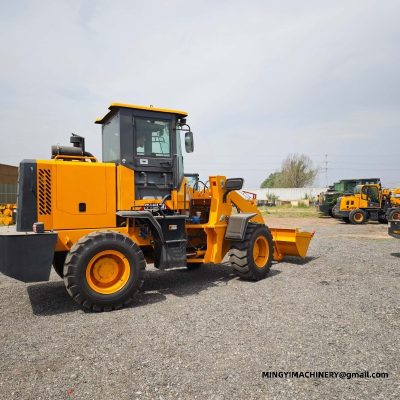
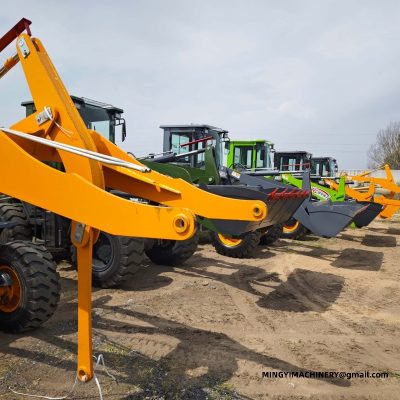
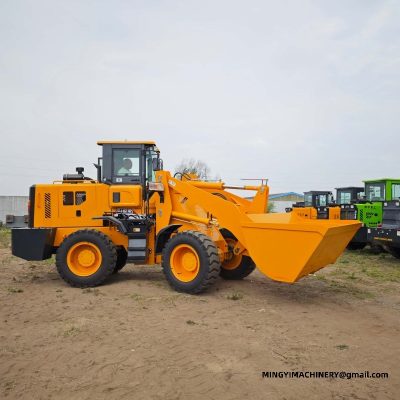
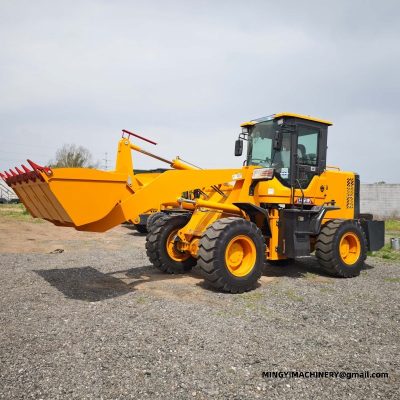
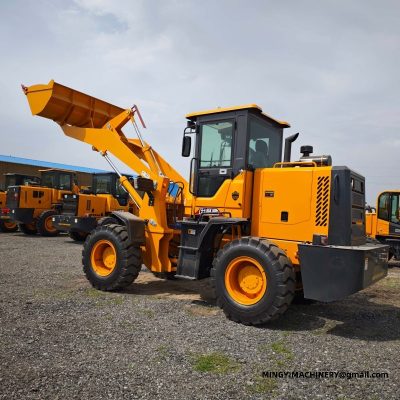
Specify a front end loader manufacturer from the work backwards, not from the catalogue forwards. Start with what it loads into — that fixes dump height, 4.5 m on the heavy-duty 4.5 m medium-frame wheel-side reduction wheel loader or 2.8 m on the standard 2.8 m low-profile wheel loader. Then the narrowest gap it must pass — that fixes track, 1.6 m or 1.2 m (Isuzu axle); 1.3 m (wheel-side reduction axle). Only then look at bucket volume, 0.65 m³ or 0.3 m³. What follows is the full sequence, with the steel, hydraulic and cooling figures that separate one build from the next and the reasoning behind each.
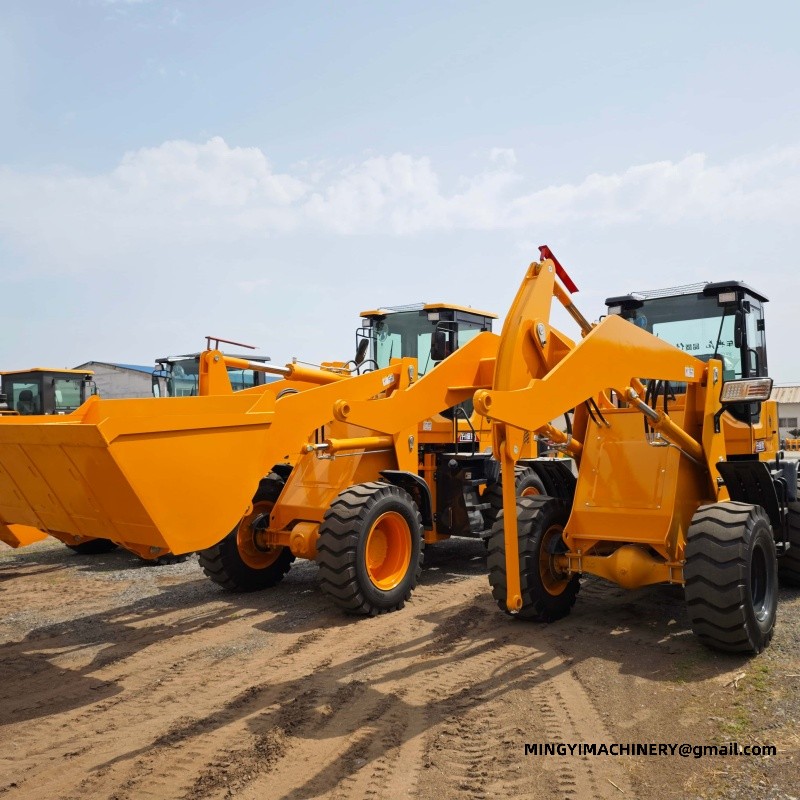
Cooling capacity is sized to the engine's heat rejection, so it appears in the table as a specification rather than a choice: 4100 core (490 engine); 4105 core (4102T engine) on the heavy-duty 3.2 m small-frame wheel-side reduction wheel loader, 4105 core on the light-duty 3.5 m medium-frame wheel-side reduction wheel loader. Where the build offers two engines — the 490 with a 4100 core, the 4102 turbo with a 4105 raised core — the raised core is the one for hot climates, high altitude and any site where fine material hangs in the air.
Practical advice that takes nothing: blow the core out at the end of every shift in dusty work, in the reverse direction to airflow, and check the cap seat before blaming the radiator. On the heavy-duty 3.2 m small-frame wheel-side reduction wheel loader the 4100 core (490 engine); 4105 core (4102T engine) core sits behind a 280 mm high x 800 mm wide rear frame with limited airflow at low engine speed; on the light-duty 3.5 m medium-frame wheel-side reduction wheel loader the 4105 core core is served by the same 25 pump driven circuit. Neither is difficult to keep clean, and both will lose a season to neglect.
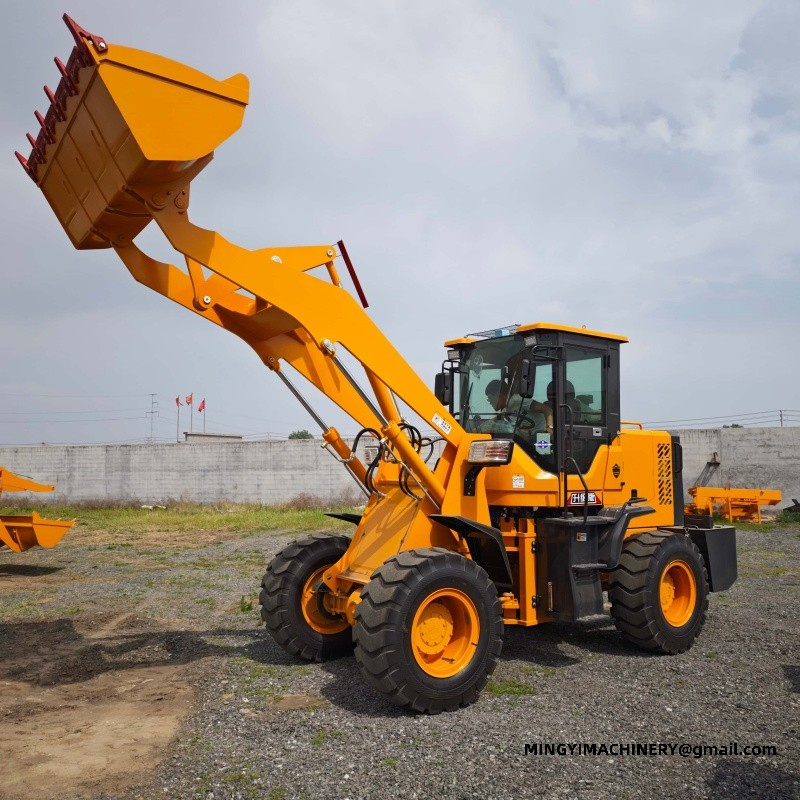
On a farm the loader is judged by whether it can get to the work. The standard 2.8 m low-profile wheel loader at 1.2 m (Isuzu axle); 1.3 m (wheel-side reduction axle) track and 3.5 m length turns in places the light-duty 3.5 m medium-frame wheel-side reduction wheel loader at 1.6 m and 4.3 m cannot enter. Capacity — 0.3 m³ against 0.52 m³ — is the last consideration, not the first.
Dump height still matters, because feed wagons and high-sided trailers are tall: 2.8 m on the standard 2.8 m low-profile wheel loader, 3.5 m on the light-duty 3.5 m medium-frame wheel-side reduction wheel loader. Measure the wagon side, then measure the shed door. Where both fit, take the larger bucket; where only one fits, take the machine that fits. Attachments specification against the boom section — 300 mm against 430 mm — so the tool carrier is decided in the same conversation.
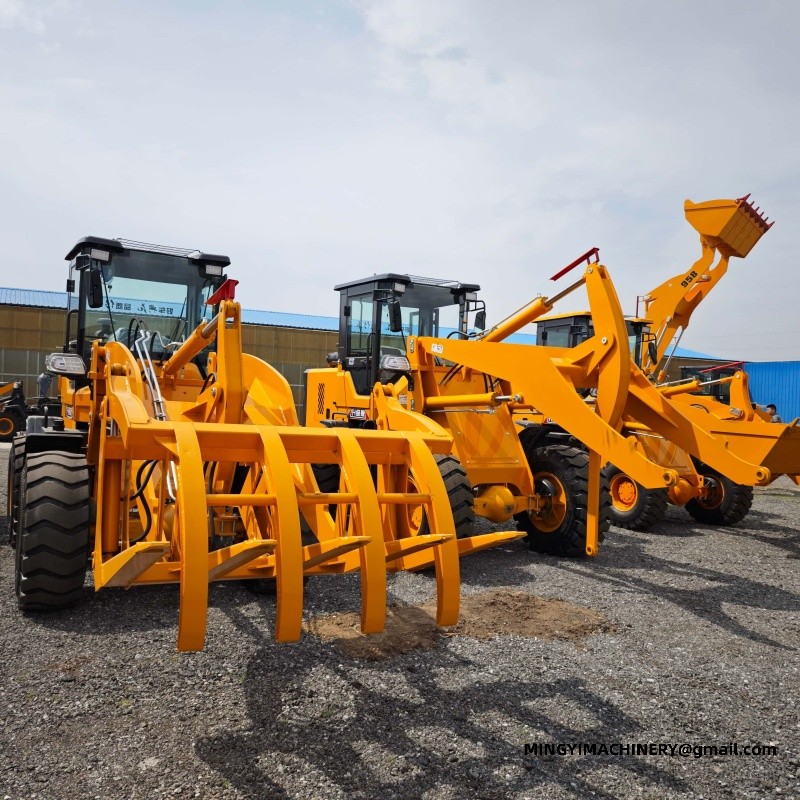
Tank size is a shift-planning figure. The light-duty 3.5 m medium-frame wheel-side reduction wheel loader carries 70 L (75# large tank); the heavy-duty 4.5 m medium-frame wheel-side reduction wheel loader carries 70 L (75# large tank). Both are sized for a full working day at operating throttle without a mid-shift refuel, which matters on sites where the bowser is a ten-minute round trip away and on farms where refuelling means driving back to the yard.
The number to combine it with is cooling: 4105 core on the light-duty 3.5 m medium-frame wheel-side reduction wheel loader, 4105 core on the heavy-duty 4.5 m medium-frame wheel-side reduction wheel loader. A machine that runs out of coolant capacity is stopped in the middle of a shift wherever it happens to be; a machine that runs low on fuel is stopped somewhere you chose. If the site has no refuelling point, the difference between the two tank sizes is a daily ten minutes, and over a season it is a working week.
| Reference specification — heavy-duty 4.5 m medium-frame wheel-side reduction wheel loader | |
|---|---|
| Bucket capacity | 0.65 m³ |
| Dump height | 4.5 m |
| Track width | 1.6 m |
| Boom arm thickness | 30 mm |
| Boom arm width | 520 mm |
| Boom arm length | 3.35 m |
| Boom arm centre distance | 960 mm |
| Cross-member thickness | 45 mm |
| Front hinge plate thickness | 45 mm |
| Rear hinge plate thickness | 30 mm |
| Rear frame section | 300 mm high x 800 mm wide |
| Hydraulic cylinders | centre cylinder 60 / side cylinder 50 |
| Fuel tank | 70 L (75# large tank) |
| Battery | 80 Ah |
| Front wheel to counterweight | 4.95 m |
| Radiator | 4105 core |
| Work pump | 2063 pump |
| Travel pump | 25 pump |
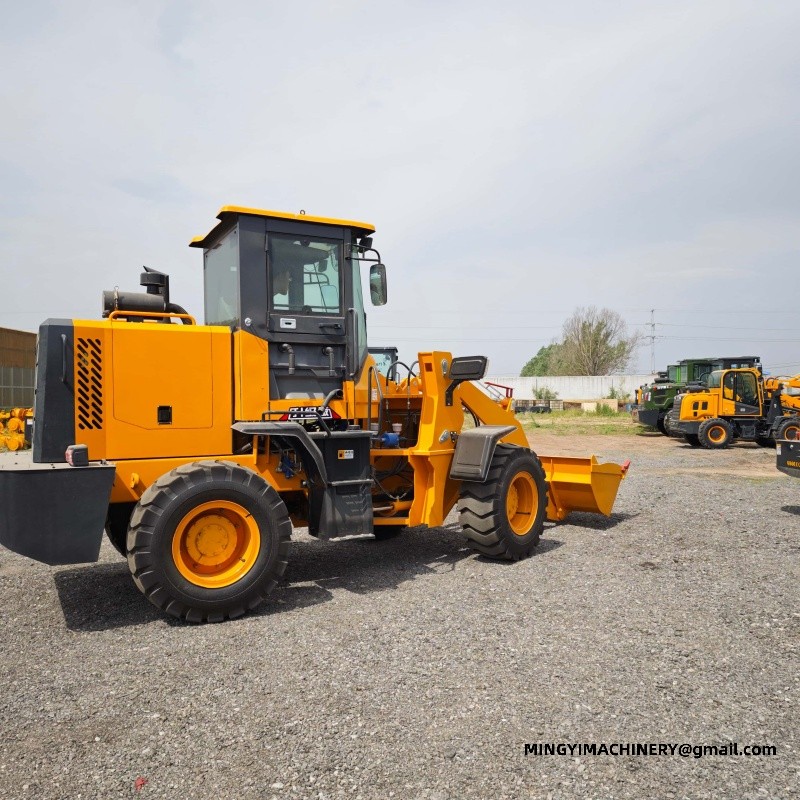
Photograph the specification plate, the cylinder markings and the frame plates on the day the machine arrives. Cylinders on this build are centre cylinder 45 / side cylinder 45; the pump is 40 pump (490 engine); 1045 pump (4102 turbo engine); the radiator is 4100 core (490 engine); 4105 core (4102T engine). Those three identify the build more reliably than any nameplate, because they are the parts that change between engine options.
Then photograph the geometry, because it is what a later claim will turn on. Dump height 3.2 m at full lift, arm length 2.3 m, spacing 890 mm, track 1.5 m (wheel-side reduction axle); 1.45 m (Isuzu axle). If a machine ever fails to clear a body it was sold to clear, those four photographs are the difference between a warranty claim and an argument.
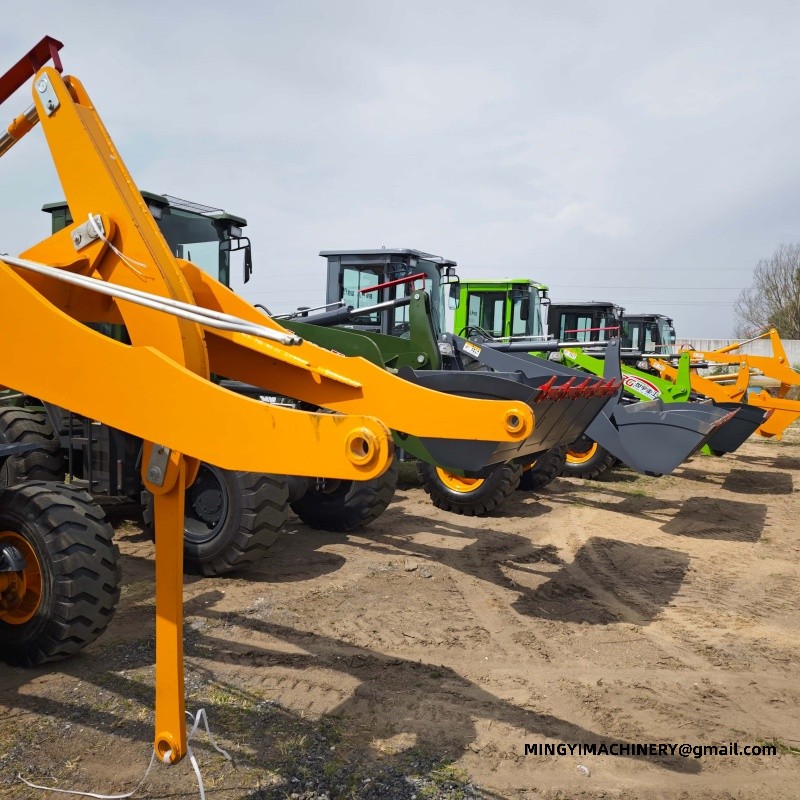
Most loader downtime is avoidable and most of what is avoidable is grease, coolant and hoses. Grease the articulation and the boom pins on the interval — on the standard 2.8 m low-profile wheel loader that is the 16 mm and 16 mm plates and the 680 mm boom mounts. Keep the 4100 core core clean, because overheating presents as lost power long before it presents as a fault.
Hoses are the second most common cause of a stopped machine and the easiest to plan for: a chafing hose on the centre cylinder 45 / side cylinder 40 circuit weeps before it bursts, and a weekly look finds it. Pumps — 32 pump and 316 pump on the standard 2.8 m low-profile wheel loader — rarely fail without warning; they get noisy first. On the light-duty 3.5 m medium-frame wheel-side reduction wheel loader the equivalents are centre cylinder 60 / side cylinder 50, 2063 pump and 25 pump. Keep a hose set and a filter set on site and most of this becomes a tea break rather than a week.
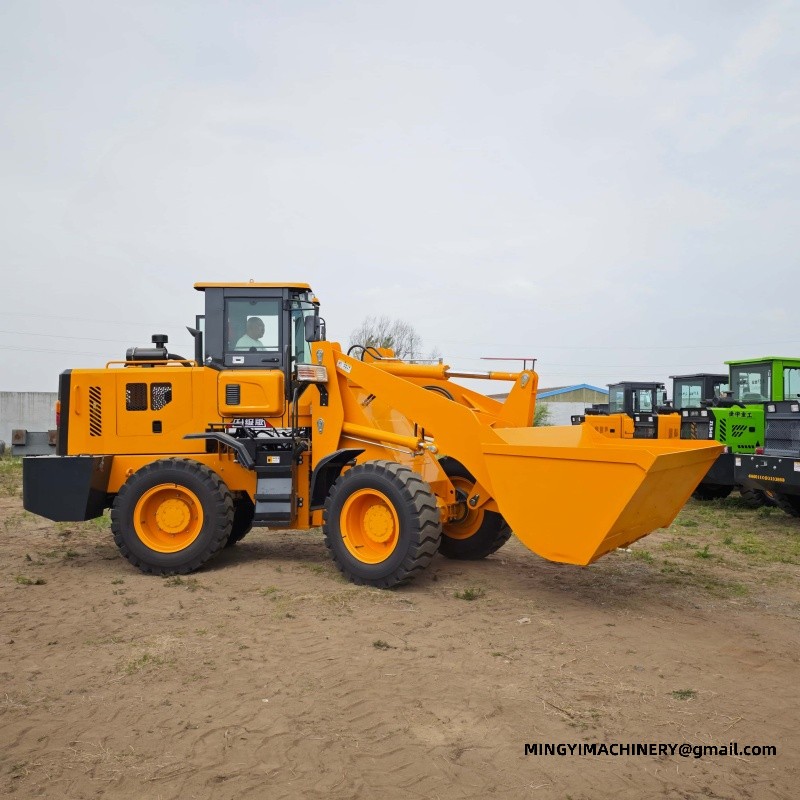
Parts are matched to a build, and the build is identified by its hydraulics and its engine long before its name. Specification centre cylinder 45 / side cylinder 45 and 40 pump (490 engine); 1045 pump (4102 turbo engine) and the pump is identified; specification 4100 core (490 engine); 4105 core (4102T engine) and the engine is identified; specification 60 Ah (490 engine); 80 Ah (4102 turbo engine) and the electrical specification is identified.
Frame parts are identified by the steel: 30 mm front plate, 20 mm rear plate, 30 mm cross-member, 280 mm high x 800 mm wide rear section. Sending those four with an enquiry removes the usual round of photographs and gets the right part on the first shipment.
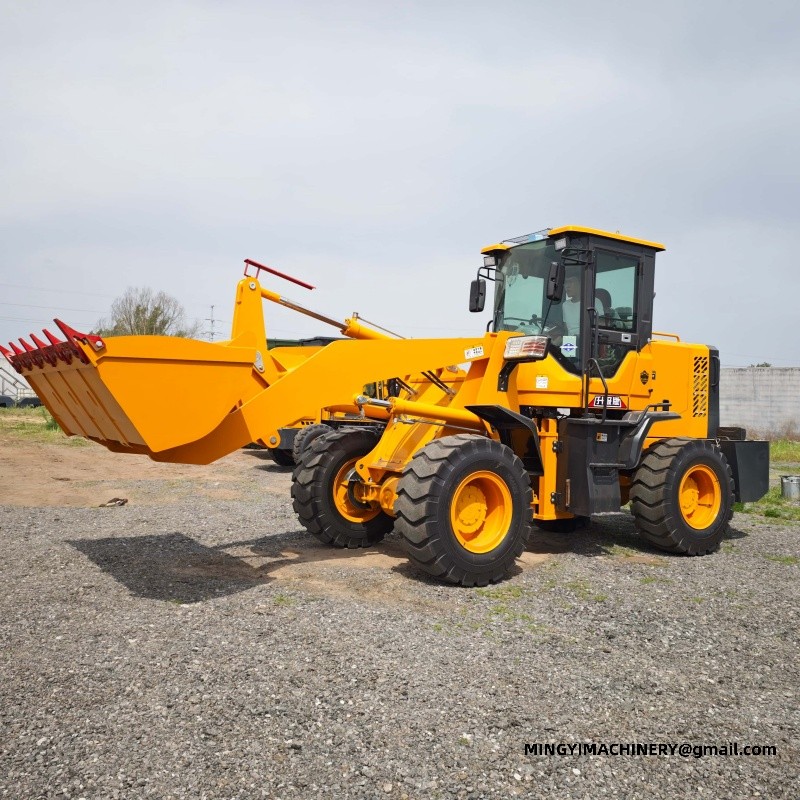
Second-hand buyers check three things and none of them is the hour meter. They rock the hinge and look for movement at the 30 mm front and 20 mm rear plates. They look along the boom for twist, which is a 430 mm section and 890 mm spacing question. They start it cold and listen, which is a 60 Ah (490 engine); 80 Ah (4102 turbo engine) question.
Steel thickness is what makes the first check pass or fail, and it is on the sheet: cross-member 30 mm, rear frame 280 mm high x 800 mm wide. A machine built with those figures published and verifiable is easier to sell than one with a lower hour count and no specification, because the buyer can check the claim instead of trusting it.
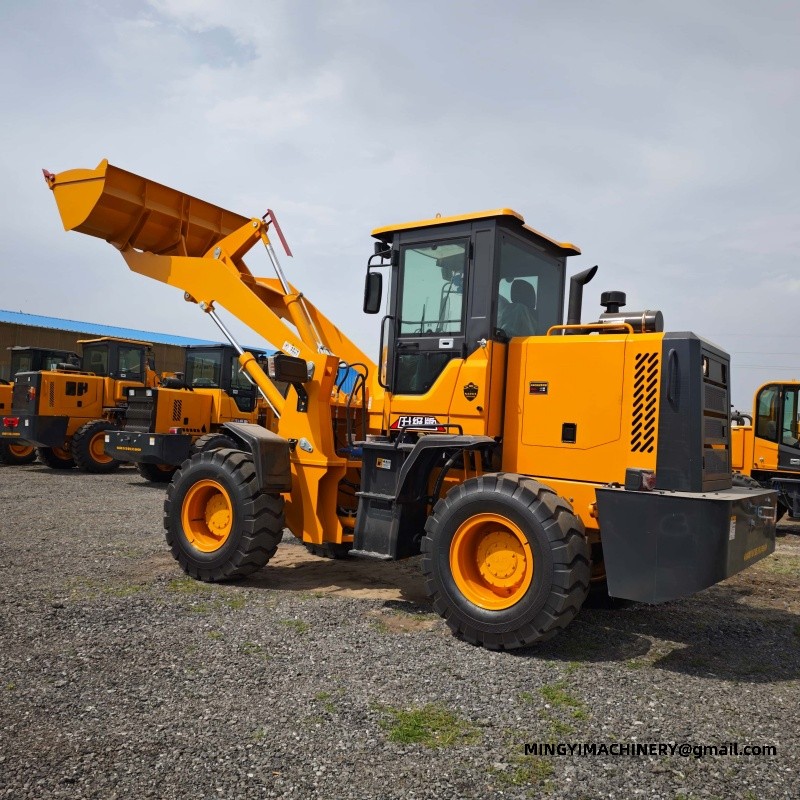
Every unit leaves the factory knock-down: booms and counterweights loose, tanks removed, batteries boxed and disconnected. Because rear frame sections stay within the 200 mm high x 750 mm wide to 280 mm high x 800 mm wide band across the range, two to three loaders ship in one forty-foot container.
What arrives is a machine plus a commissioning job. On the standard 2.8 m low-profile wheel loader that means fitting the 2.05 m boom to the 680 mm mounts, torquing the 16 mm hinge pins, filling the 30.8 L (48# large tank, 20.5/70-16 tyres); 24.6 L (48# small tank, 8.25-16 tyres) tank and the 4100 core cooling system, and connecting the battery. On the heavy-duty 4.2 m small-frame wheel-side reduction wheel loader the same sequence applies with 3.15 m, 30 mm, 64.7 L (75# small tank) and 4100 core (490 engine); 4105 core (4102T engine). Allow a day per machine, and allow for the fact that the battery will have sat for weeks.
How is the battery specified on a front end loader manufacturer?
80 Ah on the heavy-duty 4.5 m medium-frame wheel-side reduction wheel loader, matched to the engine it has to crank. The higher capacity belongs to the turbo option and matters in cold climates.
Can a front end loader manufacturer take a quick coupler?
Yes, if the coupler is built for the boom section and centre distance — 300 mm wide on 680 mm spacing for the standard 2.8 m low-profile wheel loader.
What radiator comes with this front end loader manufacturer build?
4100 core (490 engine); 4105 core (4102T engine) on the heavy-duty 3.2 m small-frame wheel-side reduction wheel loader and 4105 core on the light-duty 3.5 m medium-frame wheel-side reduction wheel loader. Where a build offers two engines, the raised core serves the turbo and is the one to specify for dusty work.
What should I check before a front end loader manufacturer works a ramp?
Traction and cooling. A 1.6 m track with wheel-side reduction holds on a ramp where an Isuzu-pattern axle would spin, and the 4105 core radiator keeps working at low speed.
How many units of a front end loader manufacturer fit one container?
Two to three, loaded knock-down. Rear frame sections stay between 280 mm high x 800 mm wide and 280 mm high x 800 mm wide across the range, so a forty-foot box takes a mixed pair or trio.
Can a front end loader manufacturer be used for snow clearance?
Yes, with a snow tool specified against the boom section — 430 mm on the heavy-duty 3.8 m small-frame wheel-side reduction wheel loader — and the third circuit ordered if the tool is hydraulically actuated.
Can a front end loader manufacturer run a hydraulic attachment?
Yes, provided the third circuit is ordered with the machine. The 2063 pump work pump and 25 pump travel pump are specified per build, and plumbing added later is the usual source of leaks.
The short version for any front end loader manufacturer: fix the dump height first, check the track against your narrowest opening second, and read the rear hinge plate — 30 mm on the heavy-duty 4.5 m medium-frame wheel-side reduction wheel loader, 16 mm on the standard 2.8 m low-profile wheel loader — third. Everything else on the sheet is detail.
Moving Front End Loader Manufacturer: Boom Geometry and Hinge Steel between sites
Travel time is not working time, and it should be planned as its own item. The hours spent moving Front End Loader Manufacturer: Boom Geometry and Hinge Steel between jobs are hours not worked, and a trailer that matches the machine reduces them every single trip.
Cold weather and winter care for Front End Loader Manufacturer: Boom Geometry and Hinge Steel
Winter is hard on rubber and on seals as much as on the engine. Parking Front End Loader Manufacturer: Boom Geometry and Hinge Steel under cover, keeping the tracks or tyres off standing water and checking the hoses for cracking are all part of the season.
Later additions and retrofits on Front End Loader Manufacturer: Boom Geometry and Hinge Steel
An added function should pay for itself quickly. Whether Front End Loader Manufacturer: Boom Geometry and Hinge Steel gains a different bucket, a hydraulic service or a protection package, the test is the number of days a year it is actually used.
Contact MINGYI Machinery for the current wheel loader lineup, configuration options and a formal specification for your market. E-mail: sales@mingycn.com | LINE (ID): mingyicn
Heavy Duty Wheel Loader: Frame Steel, Cylinders and Cooling · Compact Wheel Loader: Clearance, Footprint and Low Profile · Payloader Machine: Specifying One for Mixed Site Work · Loaders









