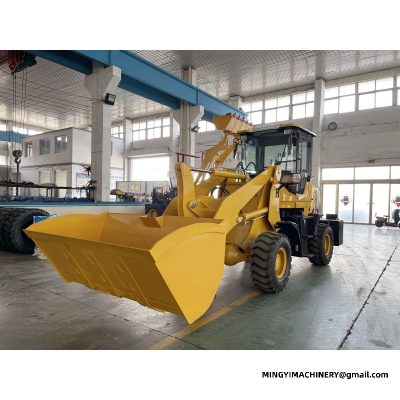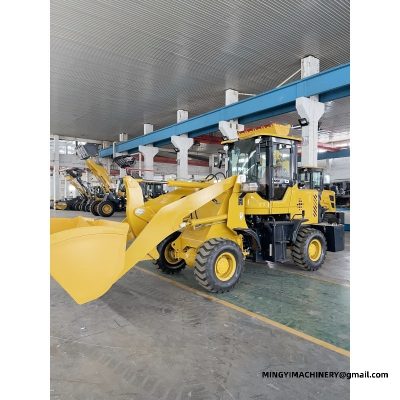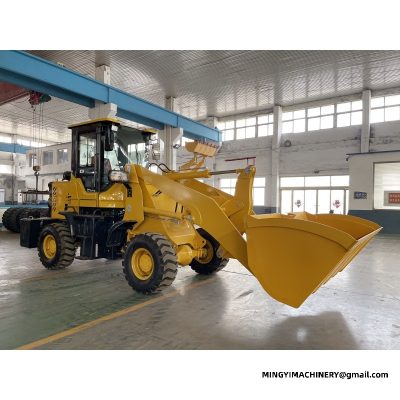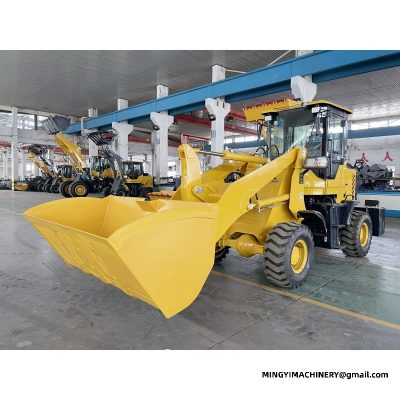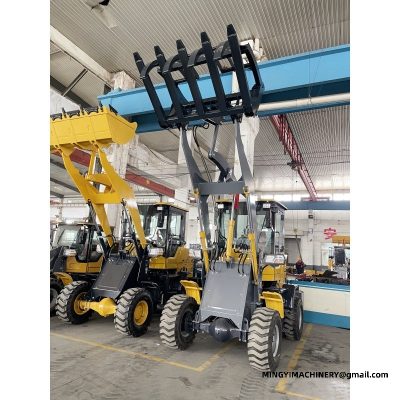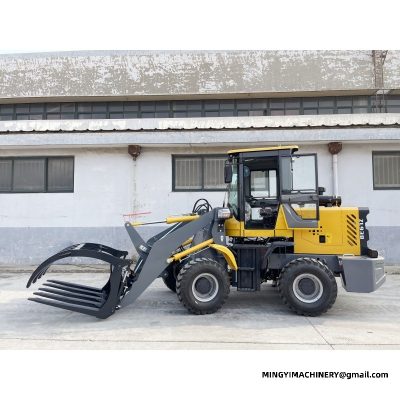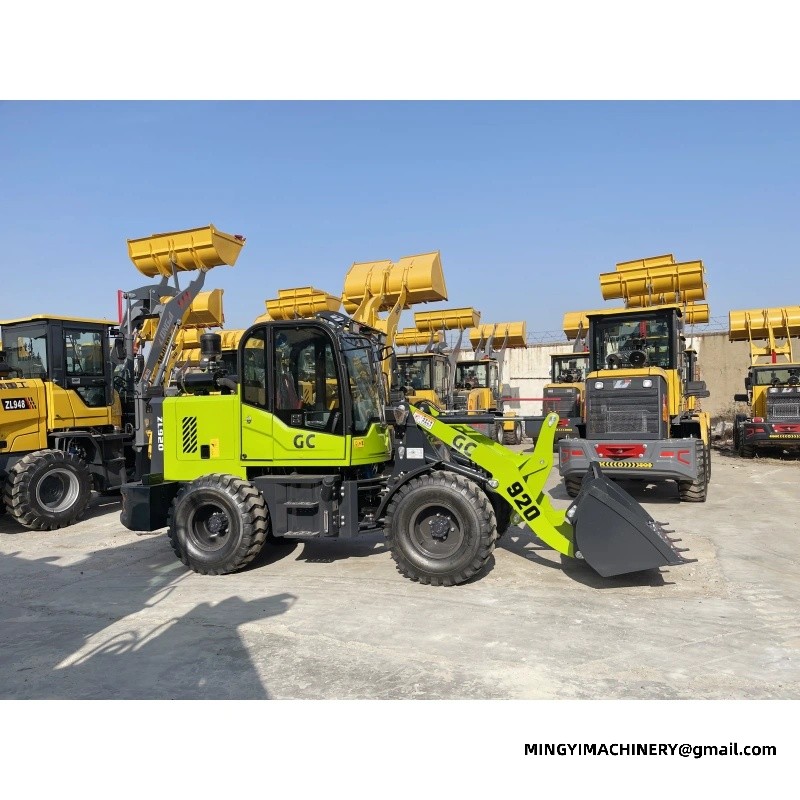
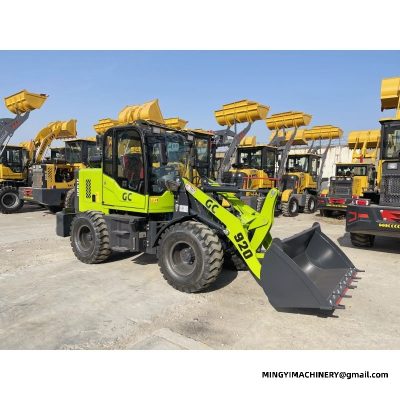
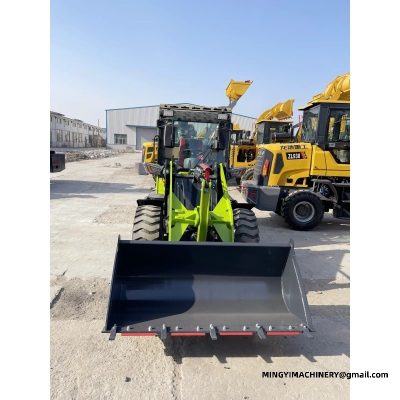
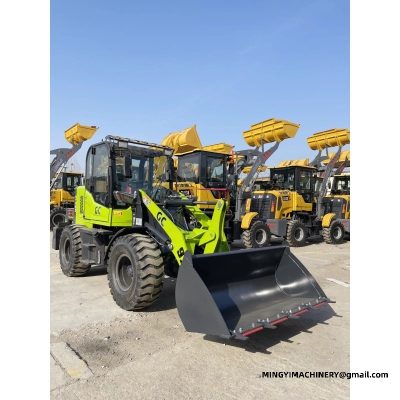
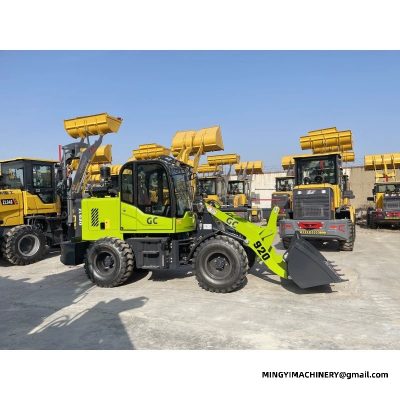
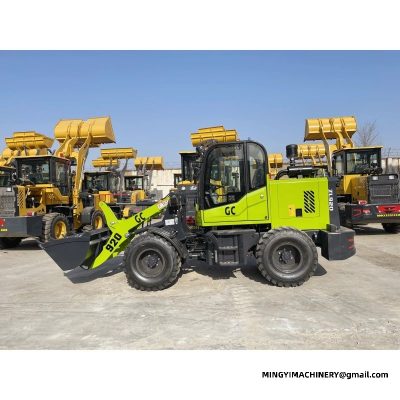
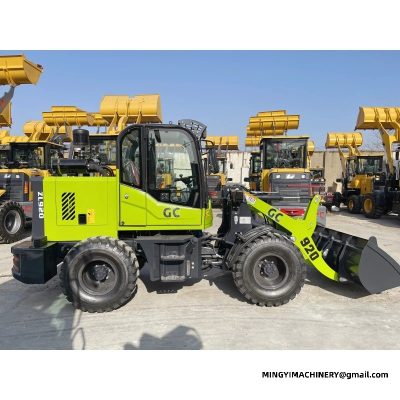
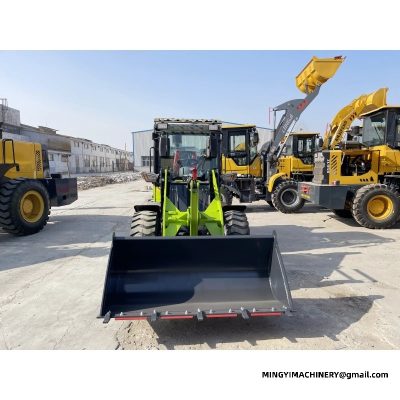
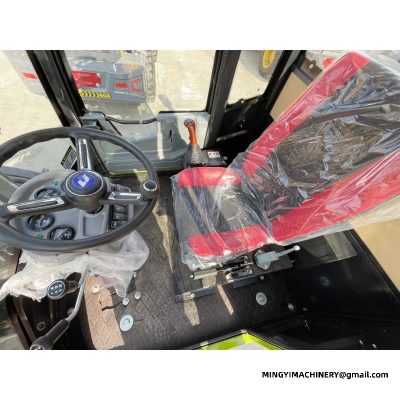
Buying a OEM wheel loader manufacturer on capacity alone is the most common and most lengthy mistake in this class of machine.Capacity is simple to advertise and easy to change; stability, reach and frame life are neither. The heavy-duty 3.5 m small-frame wheel-side reduction wheel loader carries 0.4 m³ to 3.5 m on a 2.62 m boom with a 890 mm centre distance, while the heavy-duty 3.8 m small-frame wheel-side reduction wheel loader carries 0.4 m³ to 3.8 m on 2.61 m and 890 mm. Those are the figures that decide what the machine can do on your site, and this page walks through them in the order a buyer should read them.
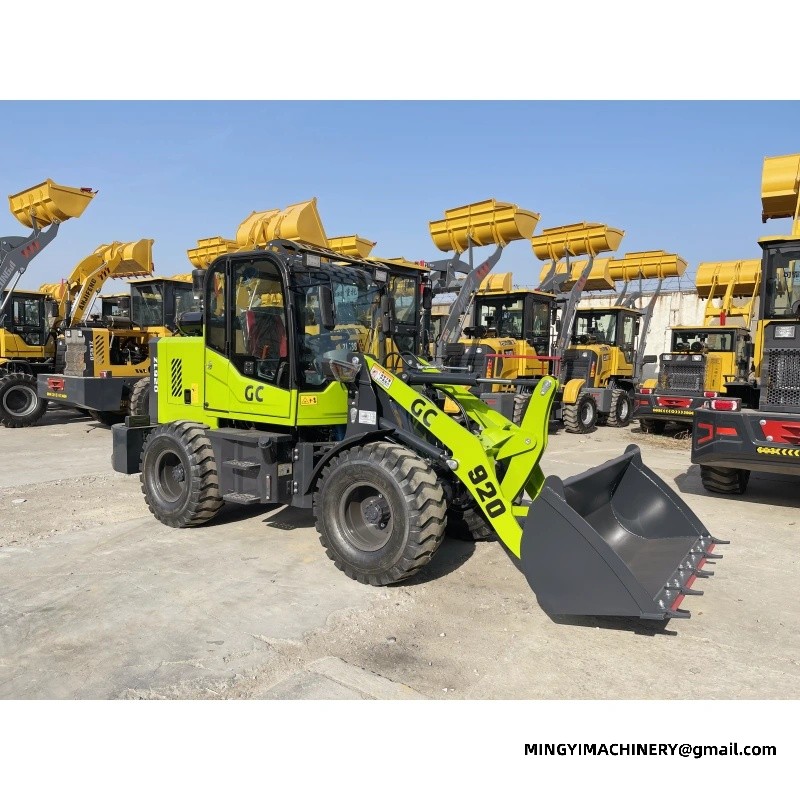
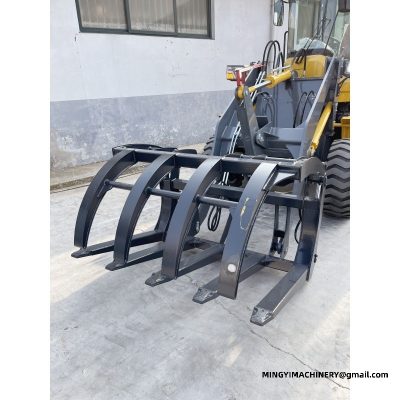
Attachments are specified against the carrier, not against the machine's size class. The figures that matter are the boom section and the hinge geometry: 280 mm on the standard 2.4 m low-profile wheel loader against 430 mm on the heavy-duty 3.8 m small-frame wheel-side reduction wheel loader, and centre distance 680 mm against 890 mm. Two loaders of the same rated capacity from different frame families will not share a fork frame.
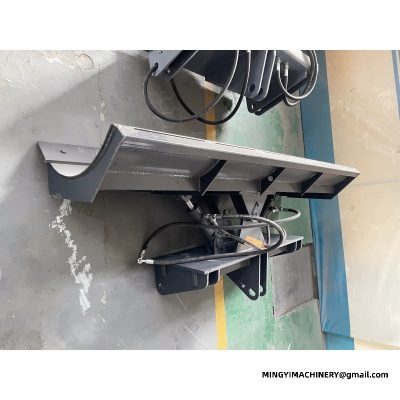
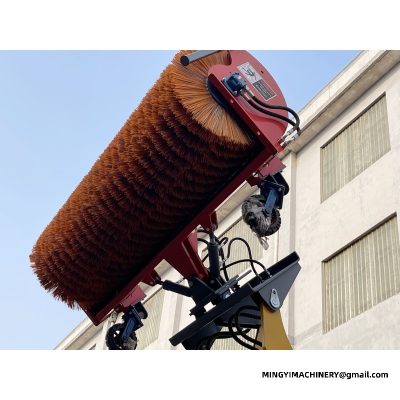
Within one frame family the section and spacing match, so a single tool set covers the light and heavy builds of that frame — a genuine advantage for a mixed fleet. Across families it does not work. If you intend to run hydraulically actuated tools, a grapple, a four-in-one bucket or a hydraulic snow blade, order the third circuit at build time; the 32 pump and 40 pump (490 engine); 1045 pump (4102 turbo engine) circuits are specified per build and plumbing added later is the most common source of field leaks.
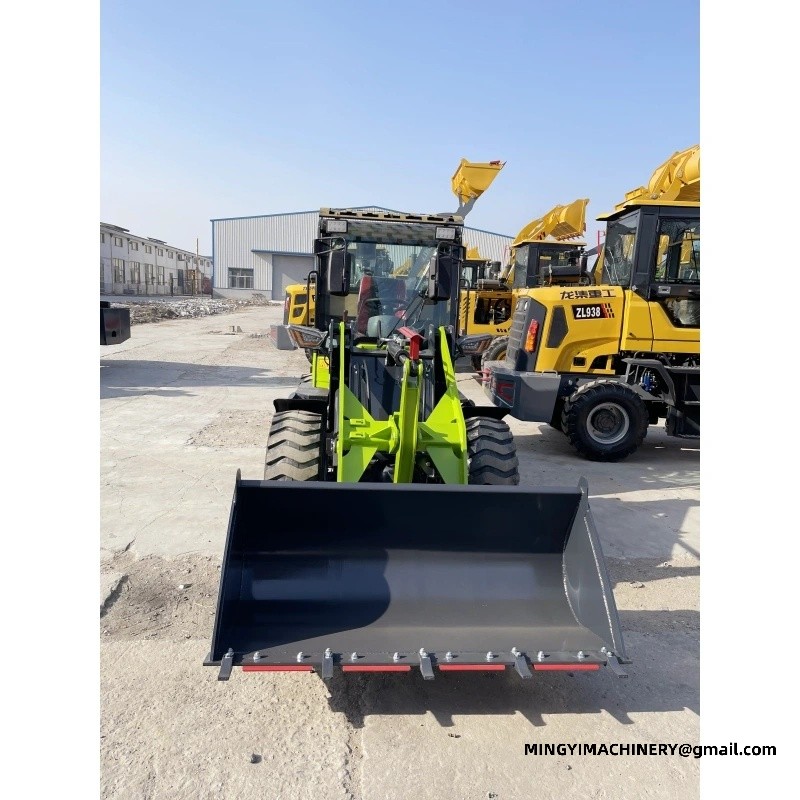
Two axle families appear across the range and the choice is about ground, not preference. Track width is the visible difference — 1.6 m on the light-duty 3.8 m medium-frame wheel-side reduction wheel loader against 1.6 m on the light-duty 4.5 m medium-frame wheel-side reduction wheel loader — but the mechanical difference is where the final reduction happens. An Isuzu-pattern axle reduces at the differential and sends torque down the shafts; a wheel-side reduction axle reduces at the hub.
Hub reduction is the right answer for soft lanes, ramps, uncompacted yards and pits, because torque arrives at the wheel instead of through a faster final drive that can spin. It is the wrong answer for long, fast, level transfers, where the extra unsprung mass and the lower top speed effort more than the traction gains. Read the track figures with the footprint — 4.3 m on the light-duty 3.8 m medium-frame wheel-side reduction wheel loader, 4.7 m on the light-duty 4.5 m medium-frame wheel-side reduction wheel loader — and the choice usually makes itself.
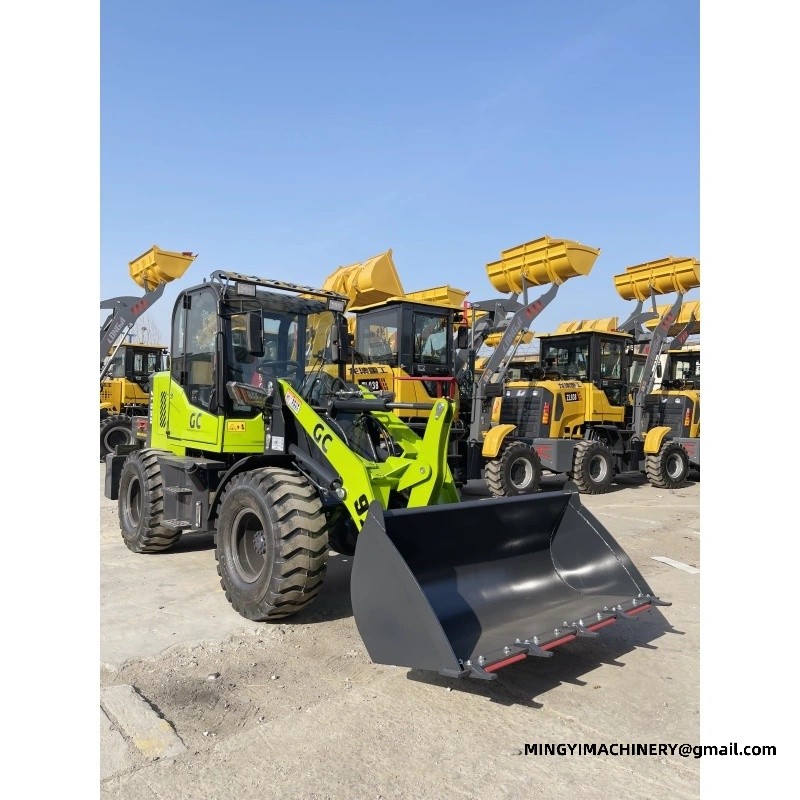
Bucket capacity is the first figure stated and the last one that should be decided. The standard 2.4 m low-profile wheel loader carries 0.3 m³; the heavy-duty 3.5 m small-frame wheel-side reduction wheel loader carries 0.4 m³. What those volumes mean depends on the material: a heaped bucket of dry sand weighs far less than the same heaped bucket of wet gravel or crushed rock, and the machine's stability, not its volume, sets the real limit.
Match the bucket to the receiving body and the material, in that order. A 0.3 m³ bucket at 2.4 m clearing a low pan mixer is correctly specified; the same bucket feeding a highway truck is a slow day. Against that, a 0.4 m³ bucket at 3.5 m needs the frame behind it — 30 mm front and 20 mm rear hinge plates, a 30 mm cross-member — or it will be a fast machine with a short life.
| Specification extract — light-duty 3.8 m medium-frame wheel-side reduction wheel loader | |
|---|---|
| Bucket capacity | 0.52 m³ |
| Dump height | 3.8 m |
| Track width | 1.6 m |
| Boom arm thickness | 30 mm |
| Boom arm width | 430 mm |
| Boom arm length | 2.9 m |
| Boom arm centre distance | 900 mm |
| Cross-member thickness | 45 mm |
| Front hinge plate thickness | 45 mm |
| Rear hinge plate thickness | 30 mm |
| Rear frame section | 280 mm high x 800 mm wide |
| Hydraulic cylinders | centre cylinder 60 / side cylinder 50 |
| Fuel tank | 70 L (75# large tank) |
| Battery | 80 Ah |
| Front wheel to counterweight | 4.3 m |
| Radiator | 4105 core |
| Work pump | 2063 pump |
| Travel pump | 25 pump |
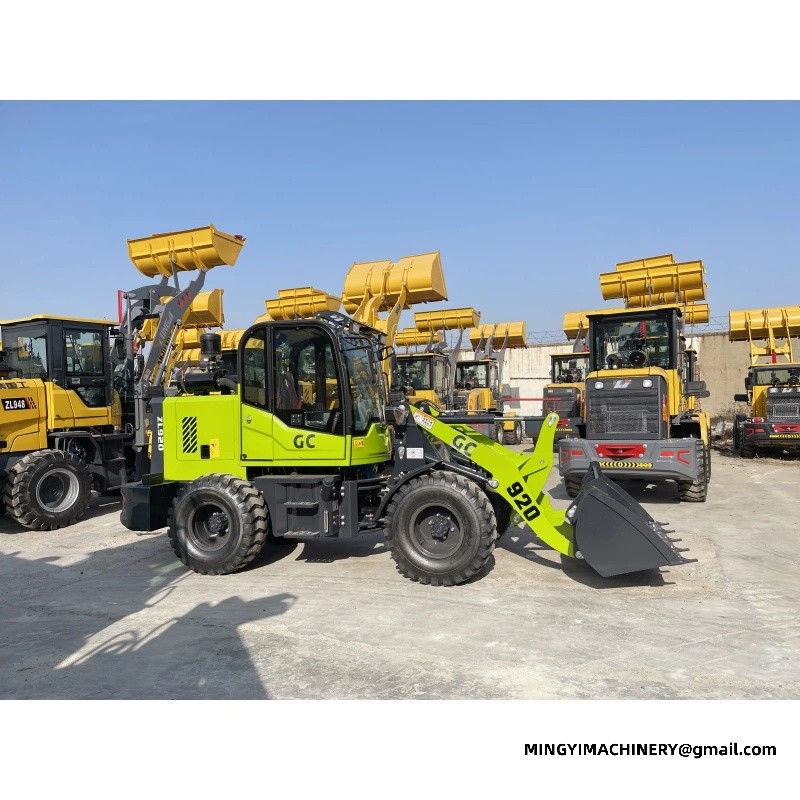
The most lengthy mistake in buying a loader is specifying capacity first. The standard 2.4 m low-profile wheel loader and the heavy-duty 3.8 m small-frame wheel-side reduction wheel loader differ by 2.4 m against 3.8 m of clearance, and that difference decides which bodies each can fill. Capacity only decides how many passes it takes once clearance exists.
Where clearance is marginal, look at the boom rather than the machine: the standard 2.4 m low-profile wheel loader works a 1.85 m arm from a 680 mm centre distance, the heavy-duty 3.8 m small-frame wheel-side reduction wheel loader a 2.61 m arm from 890 mm. A longer arm on a lighter frame buys height at the effort of stability, so match the arm to the counterweight — 3.5 m against 4.2 m — and not to a brochure figure.
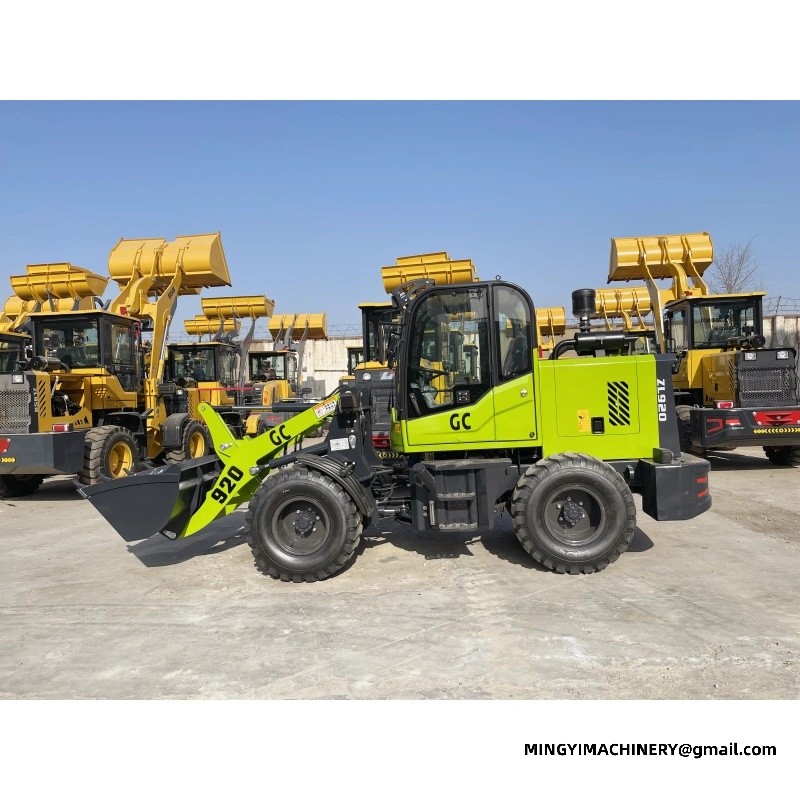
Fuel and cooling capacity are not comfort figures; they are shift-planning figures. A 30.8 L (48# large tank, 20.5/70-16 tyres); 24.6 L (48# small tank, 8.25-16 tyres) tank on the standard 2.4 m low-profile wheel loader is sized so a full working day at operating throttle does not need a mid-shift refuel, which matters on sites where the bowser is a long way from the face. The light-duty 4.2 m medium-frame wheel-side reduction wheel loader carries 70 L (75# large tank).
The radiator is the other side of the same question. 4100 core on this build against 4105 core on the other. Where a build offers two cores, the raised one serves the turbo engine, and it is the correct specification for dusty work, high ambient temperature, or any duty where the machine spends its day at high load and low speed with little air passing through the core.
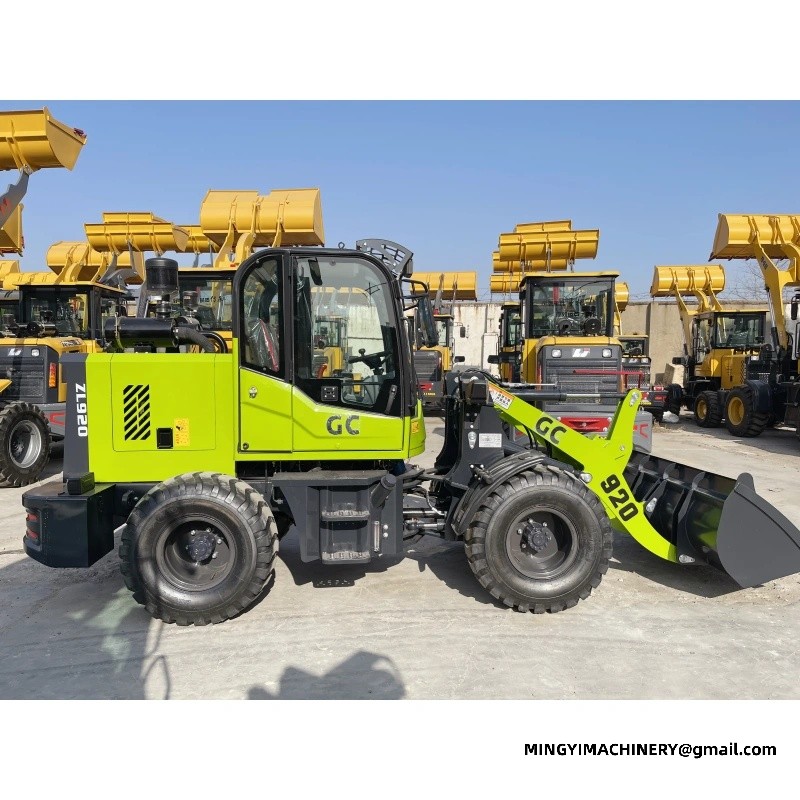
An agricultural loader is a small machine doing varied work, and the specification that matters is the one that lets it into the buildings. Track width 1.6 m on the light-duty 3.8 m medium-frame wheel-side reduction wheel loader against 1.6 m on the light-duty 4.5 m medium-frame wheel-side reduction wheel loader, footprint 4.3 m against 4.7 m, and dump height 3.8 m against 4.5 m for the wagon or hopper it fills.
Duty is seasonal and mostly light, which is why the light builds exist: a 0.52 m³ bucket with 45 mm cross-member and 30 mm rear hinge plates is correctly specified for silage, bagged goods and yard scraping. Where the machine also does heavy work — muck-out with a loaded bucket, or winter snow clearing — step to the heavier build with 45 mm and 30 mm. Over-specifying takes money once; under-specifying takes a frame.
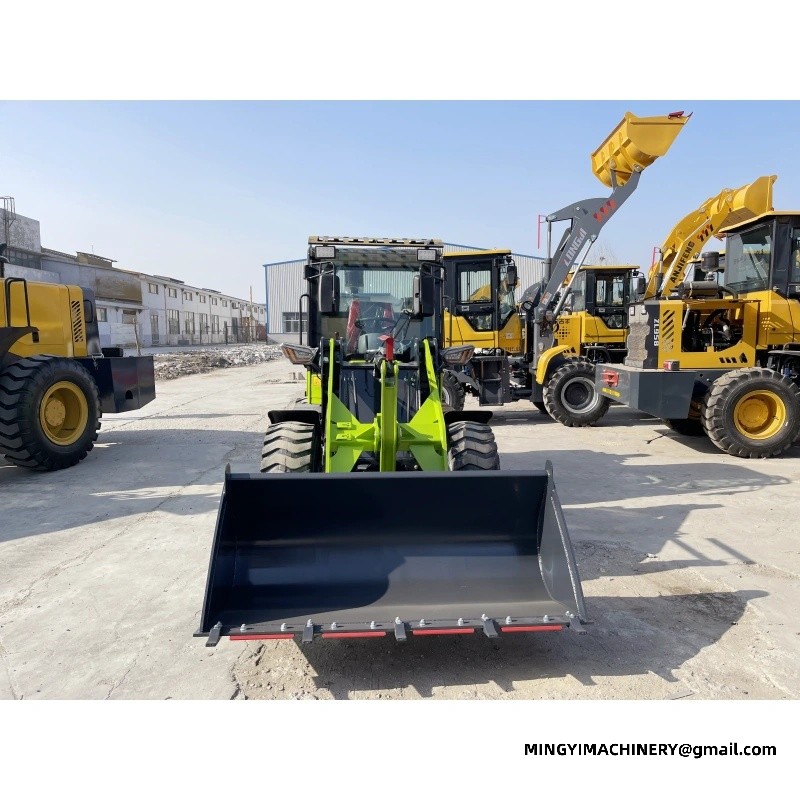
On broken ground the rear frame takes the twisting. Cabin and counterweight sit at one end, the articulation joint at the other, and every rut loads the section between them. Here that section is 280 mm high x 800 mm wide, and it is worth reading as a beam: the height resists vertical bending, the width resists twist.
The cross-member is the other half of the same job. 45 mm on the light-duty 3.8 m medium-frame wheel-side reduction wheel loader against 45 mm on the light-duty 4.2 m medium-frame wheel-side reduction wheel loader. Thicker steel there means the mounting faces stay aligned through seasons of flexing, which is what keeps the rear hinge pin, at 30 mm, from wearing oval. Frames rarely break; they go loose, and looseness starts at the pins.
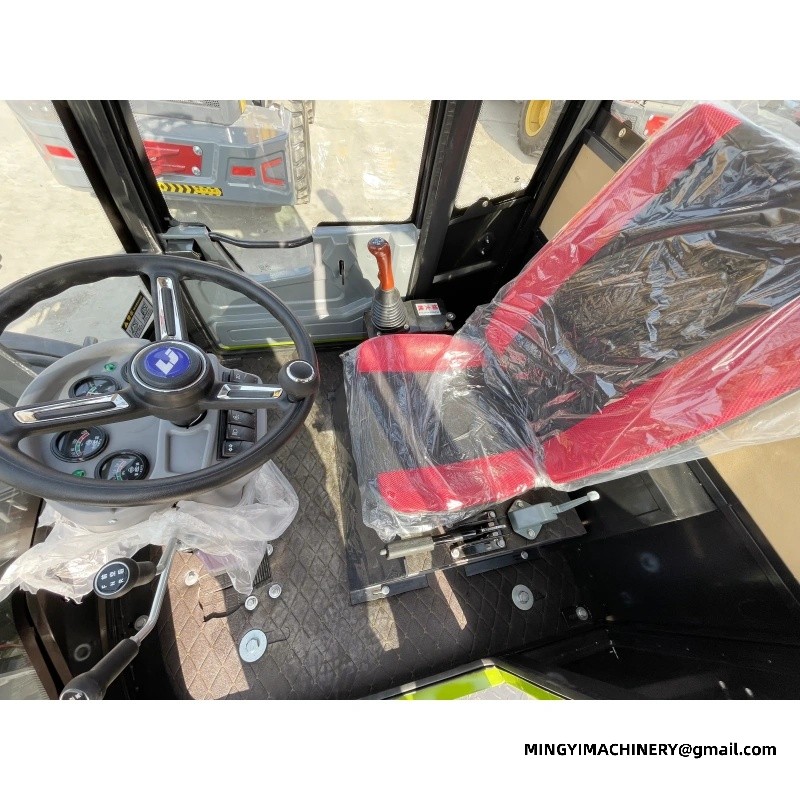
Keep the delivery photographs and the specification sheet with the machine. Bucket 0.52 m³, dump height 3.5 m, cylinders centre cylinder 60 / side cylinder 50, pump 2063 pump, track 1.6 m: a buyer who can verify five figures against the machine will pay for the certainty.
The frame figures do the rest. 45 mm and 30 mm hinge plates, 45 mm cross-member, 300 mm high x 800 mm wide rear section. Two machines of the same age and hours can be worth materially different amounts on those four rows alone, because they tell the buyer how much life is left in the part that is most lengthy to put right.
Which axle should a OEM wheel loader manufacturer be built with?
Match it to the ground. Track runs 1.5 m (wheel-side reduction axle); 1.45 m (Isuzu axle) on the heavy-duty 3.5 m small-frame wheel-side reduction wheel loader and 1.6 m on the light-duty 3.8 m medium-frame wheel-side reduction wheel loader; wheel-side reduction for soft or rutted surfaces, the Isuzu-pattern axle for hard, level ground.
How do I pick between the frame tiers of a OEM wheel loader manufacturer?
By reach and duty. The heavy-duty 4.2 m small-frame wheel-side reduction wheel loader carries 0.4 m³ to 4.2 m on a 30 mm cross-member; the light-duty 4.2 m medium-frame wheel-side reduction wheel loader carries 0.52 m³ to 4.2 m on 45 mm.
How is the counterweight mounted on a OEM wheel loader manufacturer?
Bolted to the rear frame section, 200 mm high x 750 mm wide on the standard 2.4 m low-profile wheel loader, rather than hung off brackets. Bracket-mounted ballast is what cracks under daily face work.
What is the fuel tank capacity of a OEM wheel loader manufacturer?
30.8 L (48# large tank, 20.5/70-16 tyres); 24.6 L (48# small tank, 8.25-16 tyres) on the standard 2.4 m low-profile wheel loader and 64.7 L (75# small tank) on the heavy-duty 3.5 m small-frame wheel-side reduction wheel loader, both sized for a full shift at working throttle without a mid-day refuel.
What is the difference between the two hinge plates on a OEM wheel loader manufacturer?
The front plate carries boom loads, which are mostly vertical; the rear carries articulation, which is sideways and shock-loaded. Hence 16 mm front against 16 mm rear.
What radiator comes with this OEM wheel loader manufacturer build?
4100 core (490 engine); 4105 core (4102T engine) on the heavy-duty 3.5 m small-frame wheel-side reduction wheel loader and 4100 core (490 engine); 4105 core (4102T engine) on the heavy-duty 3.8 m small-frame wheel-side reduction wheel loader. Where a build offers two engines, the raised core serves the turbo and is the one to specify for dusty work.
Which OEM wheel loader manufacturer build suits site work?
The heavier one, because dump height and hinge steel govern the day: 0.4 m³ at 3.8 m with 20 mm rear hinge plates and a 30 mm cross-member.
Whether the duty is farm, site or stockpile, the OEM wheel loader manufacturer choice comes back to ground, board height and cycle count. Tell us those three and the build follows: axle, radiator, cylinder set and the 0.4 m³ or 0.4 m³ bucket to suit.
A second operator for OEM Wheel Loader Manufacturer: Build Options and Labelling
Training is simpler than repair. An hour spent with a new operator on OEM Wheel Loader Manufacturer: Build Options and Labelling, covering the limits and the awkward cases, is the least lengthy hour in the whole ownership.
Later additions and retrofits on OEM Wheel Loader Manufacturer: Build Options and Labelling
Retrofitting is limited by the base machine. Before anything is added to OEM Wheel Loader Manufacturer: Build Options and Labelling the hydraulic flow, the mounting interface and the stability allowance have to be checked, because those limits are what decide what is sensible.
Wear items and spares worth holding for OEM Wheel Loader Manufacturer: Build Options and Labelling
The parts that stop a machine are rarely the parts that are hardest to find. Filters, belts, seals and the ground engaging tools on OEM Wheel Loader Manufacturer: Build Options and Labelling are easy to hold and slow to replace, which is why they belong on the shelf rather than on an order.
Storage and long idle periods for OEM Wheel Loader Manufacturer: Build Options and Labelling
Standing still is harder on a machine than working. Preparing OEM Wheel Loader Manufacturer: Build Options and Labelling for a long idle period means clean fluids, a charged battery and protection for the exposed surfaces, because neglect is not the same as rest.
Contact MINGYI Machinery for the current wheel loader lineup, configuration options and a formal specification for your market. E-mail: sales@mingycn.com | LINE (ID): mingyicn
China Wheel Loader Factory Supplier: Specs and Order Process · China Wheel Loader Factory Supplier: Fleet Orders and Spares · Heavy Duty Wheel Loader: Frame Steel for Long Shifts · Loaders