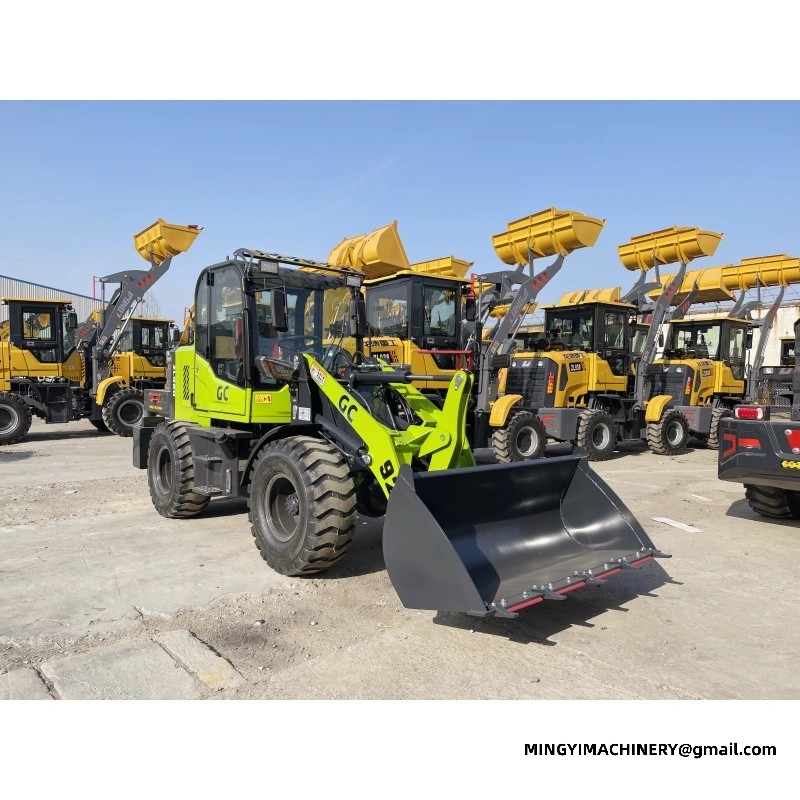
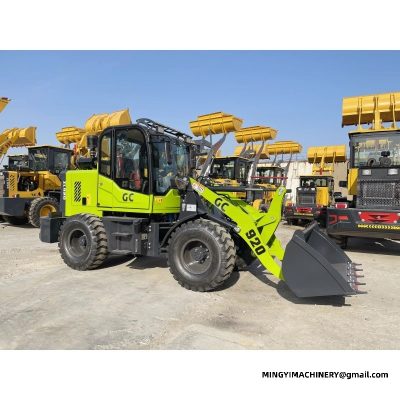
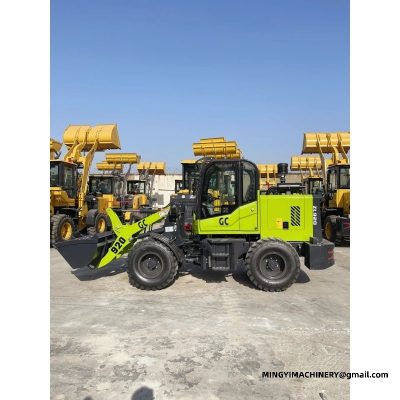
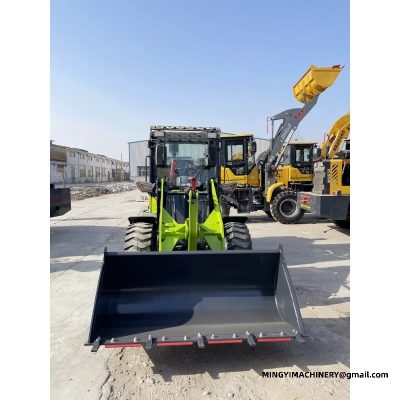
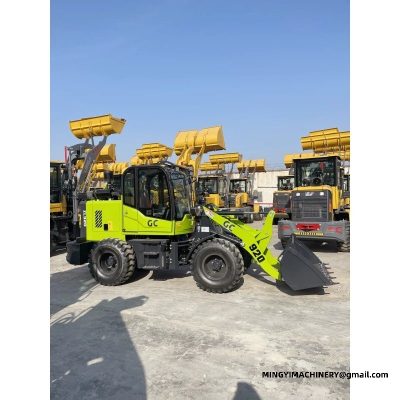
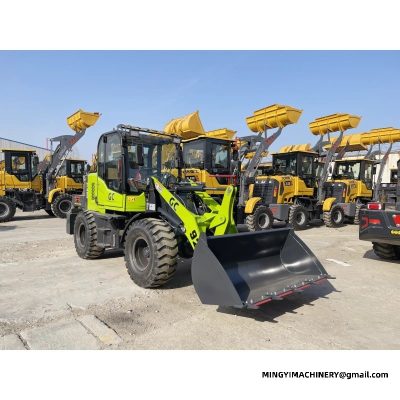
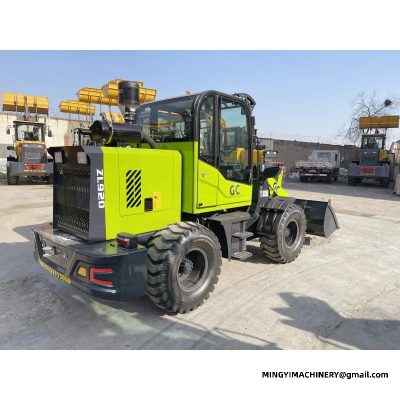
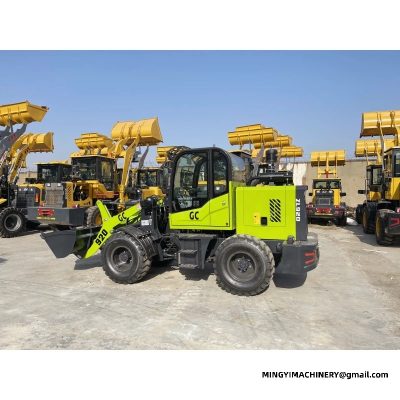
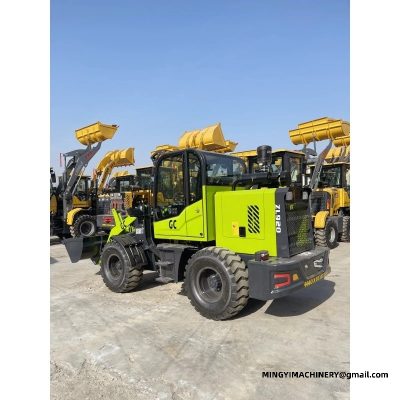
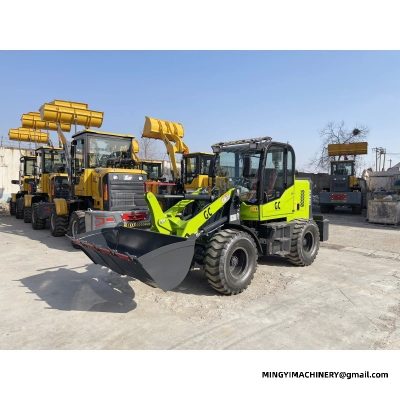
The useful question about any China wheel loader factory supplier is not what it is called but which frame sits underneath it. Two machines can share a capacity class and differ in every respect that matters: boom wall 25 mm against 30 mm, rear hinge plate 20 mm against 30 mm, cross-member 30 mm against 45 mm. This page takes the published specification of the range — buckets 0.4 m³ to 0.65 m³, dump heights 4.5 m to 3.5 m — and shows how each figure translates into behaviour, effort and service life.
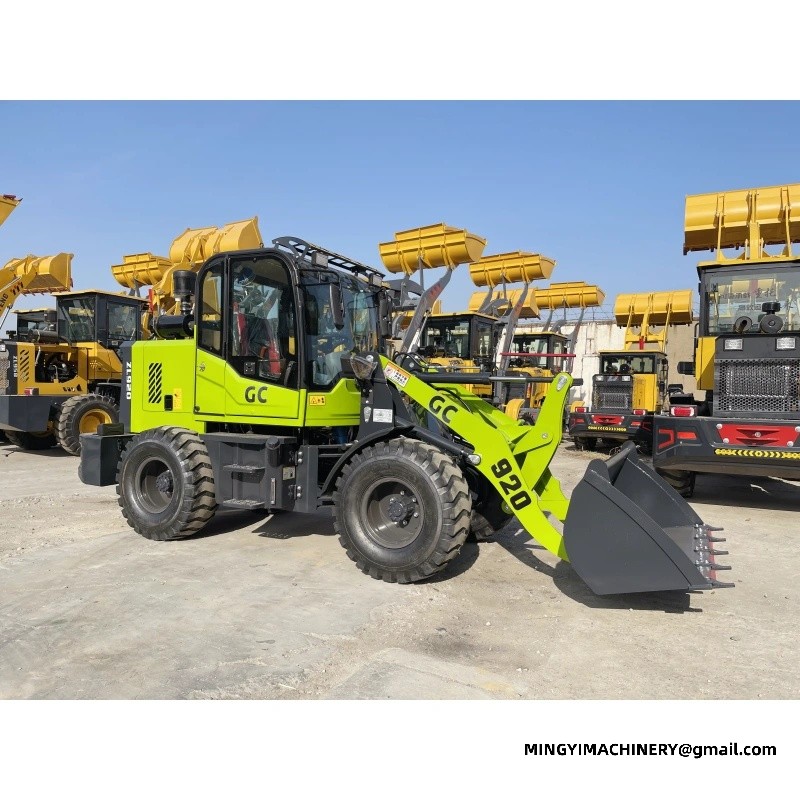
Attachments are specified against the carrier, not against the machine's size class. The figures that matter are the boom section and the hinge geometry: 430 mm on the heavy-duty 3.2 m low-profile wheel loader against 500 mm on the heavy-duty 3.5 m medium-frame wheel-side reduction wheel loader, and centre distance 890 mm against 920 mm. Two loaders of the same rated capacity from different frame families will not share a fork frame.
Within one frame family the section and spacing match, so a single tool set covers the light and heavy builds of that frame — a genuine advantage for a mixed fleet. Across families it does not work. If you intend to run hydraulically actuated tools, a grapple, a four-in-one bucket or a hydraulic snow blade, order the third circuit at build time; the 40 pump (490 engine); 1045 pump (4102 turbo engine) and 2063 pump circuits are specified per build and plumbing added later is the most common source of field leaks.
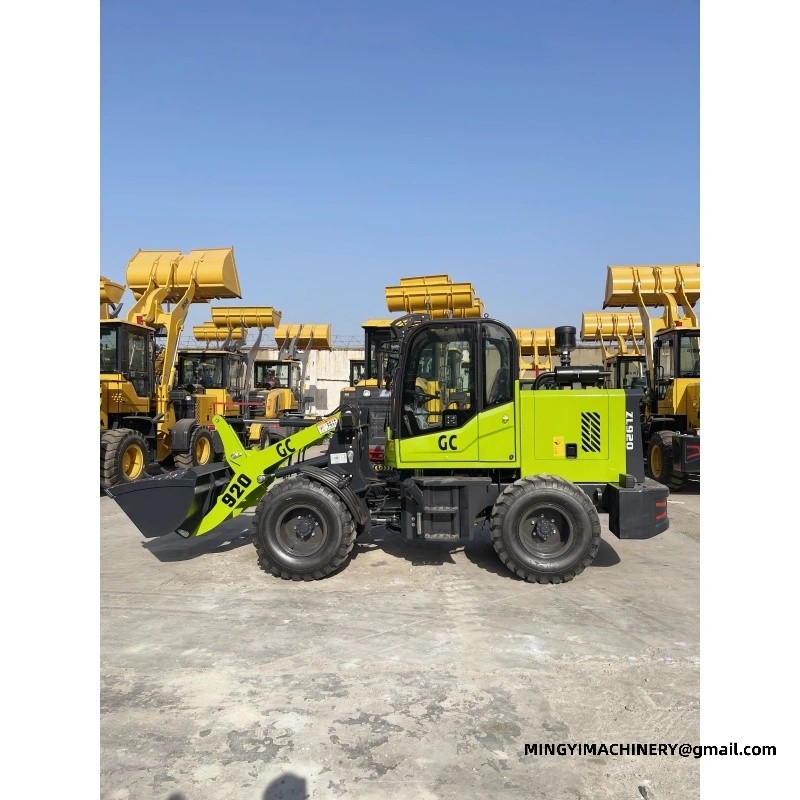
The two axle options on this range are differentiated by track: 1.2 m (Isuzu axle); 1.3 m (wheel-side reduction axle) on the standard 2.8 m low-profile wheel loader, 1.5 m (wheel-side reduction axle); 1.45 m (Isuzu axle) on the heavy-duty 4.5 m small-frame wheel-side reduction wheel loader. Behind the number is a different reduction layout. The Isuzu-pattern bridge is lighter, faster on hard ground and simpler to service. The wheel-side reduction bridge puts the final drive at the hub, which lowers the load on the shafts and raises the torque available at the tyre.
Choose by surface and gradient. On compacted hardstanding and long haul roads the Isuzu-pattern axle is the better machine; on a soft lane, a loading ramp or an uncompacted stockyard, hub reduction is what keeps the machine moving when a wheel would otherwise spin. Track width interacts with it: 1.2 m (Isuzu axle); 1.3 m (wheel-side reduction axle) on the standard 2.8 m low-profile wheel loader and 1.5 m (wheel-side reduction axle); 1.45 m (Isuzu axle) on the heavy-duty 4.5 m small-frame wheel-side reduction wheel loader are the figures to check against your narrowest gate, door or aisle before anything else on the sheet.
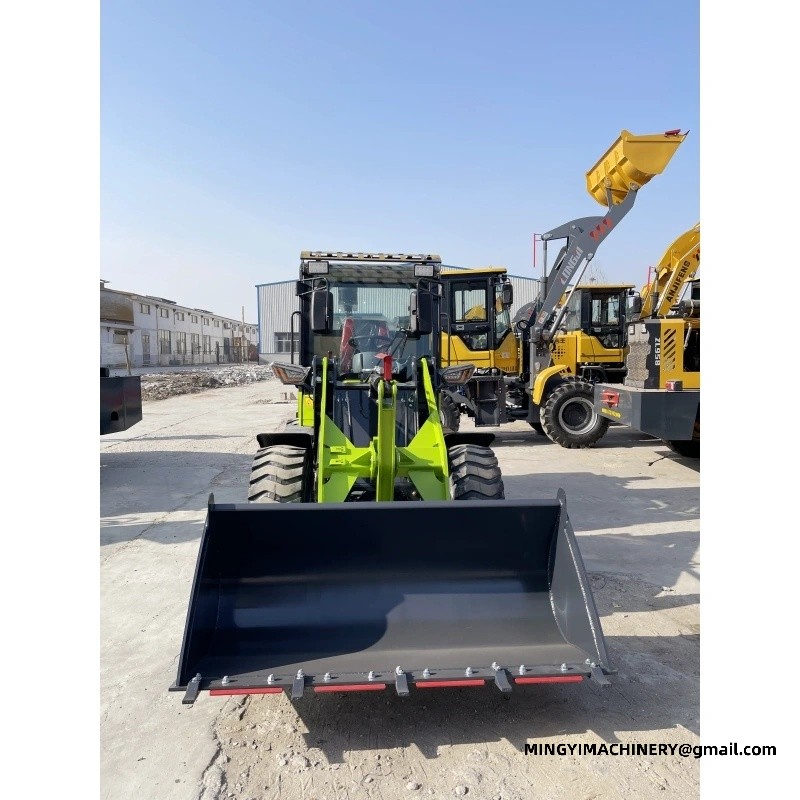
Two loaders can carry the same bucket and behave nothing alike, and the boom is usually why. Compare the heavy-duty 4.5 m small-frame wheel-side reduction wheel loader with the heavy-duty 4.2 m medium-frame wheel-side reduction wheel loader: bucket 0.4 m³ against 0.65 m³, but boom length 3.15 m against 3.16 m and section width 500 mm against 520 mm. The longer arm reaches further and dumps higher; the wider section survives being levered sideways. Both matter, and neither appears in a headline specification.
Wall thickness is the figure that separates a boom engineered for the frame from one merely bolted to it. The heavy-duty 4.5 m small-frame wheel-side reduction wheel loader runs 25 mm; the heavy-duty 4.2 m medium-frame wheel-side reduction wheel loader runs 30 mm. Centre distance — 890 mm against 960 mm — completes the picture, because pin loads fall as spacing rises. If your work involves breaking out from a stockpile face rather than shovelling loose stock, ask for those three numbers before you ask about bucket volume.
| Sample build from the range — heavy-duty 3.2 m low-profile wheel loader | |
|---|---|
| Bucket capacity | 0.4 m³ |
| Dump height | 3.2 m |
| Track width | 1.5 m (wheel-side reduction axle); 1.45 m (Isuzu axle) |
| Boom arm thickness | 25 mm |
| Boom arm width | 430 mm |
| Boom arm length | 2.3 m |
| Boom arm centre distance | 890 mm |
| Cross-member thickness | 30 mm |
| Front hinge plate thickness | 30 mm |
| Rear hinge plate thickness | 20 mm |
| Rear frame section | 230 mm high x 800 mm wide |
| Hydraulic cylinders | centre cylinder 45 / side cylinder 45 |
| Fuel tank | 54 L (50# tank) |
| Battery | 60 Ah (490 engine); 80 Ah (4102 turbo engine) |
| Front wheel to counterweight | 4.1 m |
| Radiator | 4100 core (490 engine); 4105 core (4102T engine) |
| Work pump | 40 pump (490 engine); 1045 pump (4102 turbo engine) |
| Travel pump | 316 pump |
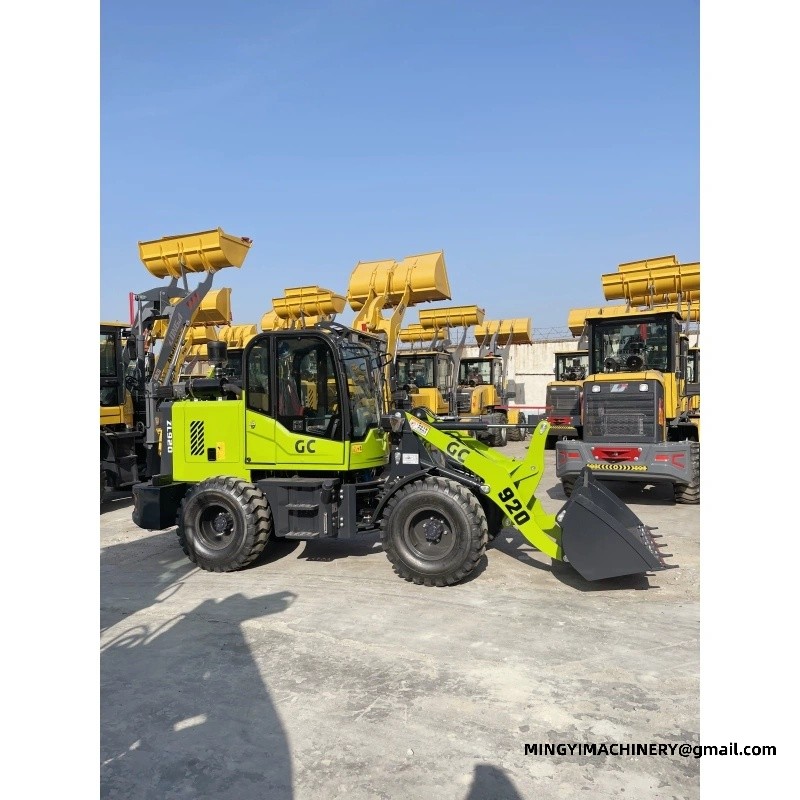
The bucket figures in the table are engineering capacities: 0.4 m³ on the heavy-duty 3.2 m small-frame wheel-side reduction wheel loader, 0.4 m³ on the heavy-duty 4.5 m small-frame wheel-side reduction wheel loader. They assume a material density, and the machine is stable with them at full lift because the counterweight and the 4.1 m or 4.25 m footprint were sized around that density.
Change the material and you change the limit, not the machine. Light material — grain, woodchip, compost, snow — lets you run a larger bucket and a higher cycle. Heavy material — wet sand, crushed stone, ore — means the 0.4 m³ bucket needs the 20 mm rear hinge plate and 30 mm cross-member behind it, and the 0.4 m³ bucket on the lighter frame is the honest specification for the lighter material. Tell the factory what you are moving and let them match the bucket to it.
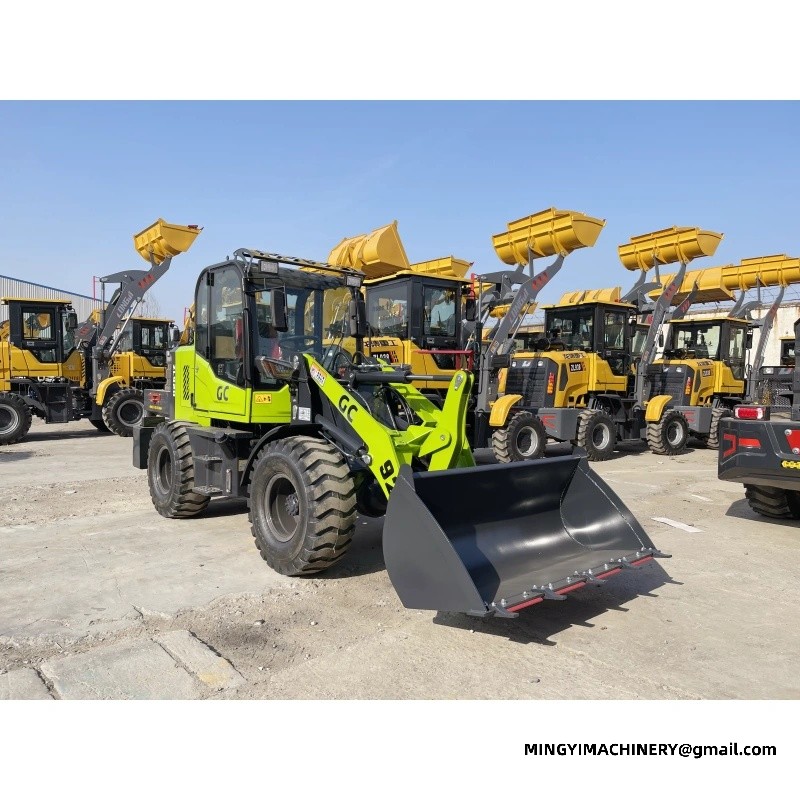
Photograph the specification plate, the cylinder markings and the frame plates on the day the machine arrives. Cylinders on this build are centre cylinder 45 / side cylinder 45; the pump is 40 pump (490 engine); 1045 pump (4102 turbo engine); the radiator is 4100 core (490 engine); 4105 core (4102T engine). Those three identify the build more reliably than any nameplate, because they are the parts that change between engine options.
Then photograph the geometry, because it is what a later claim will turn on. Dump height 3.2 m at full lift, arm length 2.3 m, spacing 890 mm, track 1.5 m (wheel-side reduction axle); 1.45 m (Isuzu axle). If a machine ever fails to clear a body it was sold to clear, those four photographs are the difference between a warranty claim and an argument.
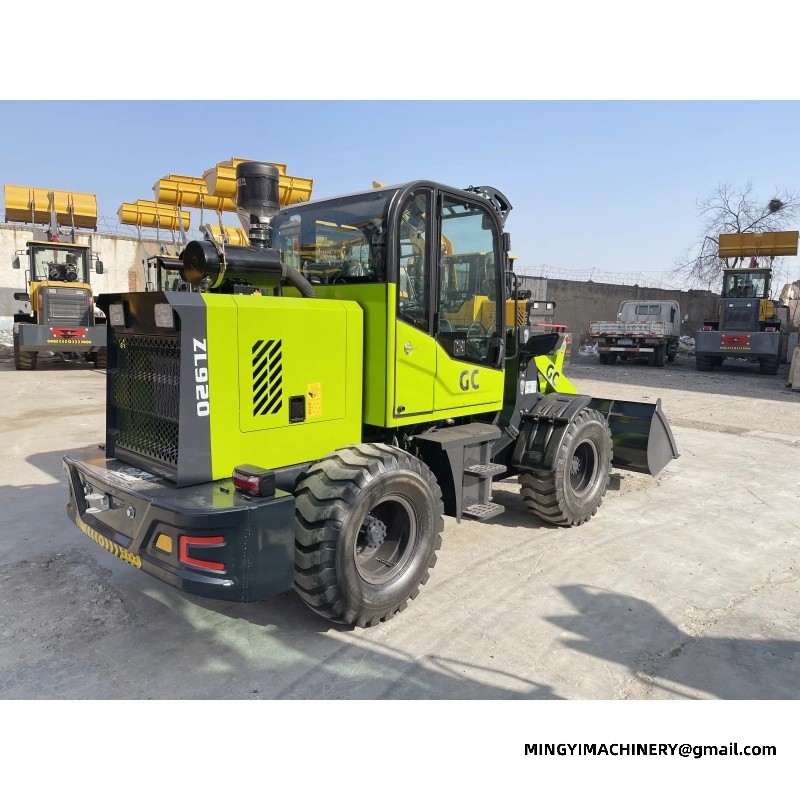
Some choices can be made after delivery and some cannot. Steel cannot: hinge plates at 30 mm and 20 mm, a 30 mm cross-member and a 280 mm high x 800 mm wide rear frame are decided when the frame is welded. Hydraulics mostly can: this build runs centre cylinder 45 / side cylinder 45 on a 40 pump (490 engine); 1045 pump (4102 turbo engine), and adding a service later is possible even if it is never as tidy as specifying it first.
The engine is the other early decision, because it drags three figures with it. Where two engines are offered, battery, radiator and pump all change: 60 Ah (490 engine); 80 Ah (4102 turbo engine), 4100 core (490 engine); 4105 core (4102T engine), 40 pump (490 engine); 1045 pump (4102 turbo engine). Choosing the engine late means choosing all three late, and usually accepting whatever is in stock.
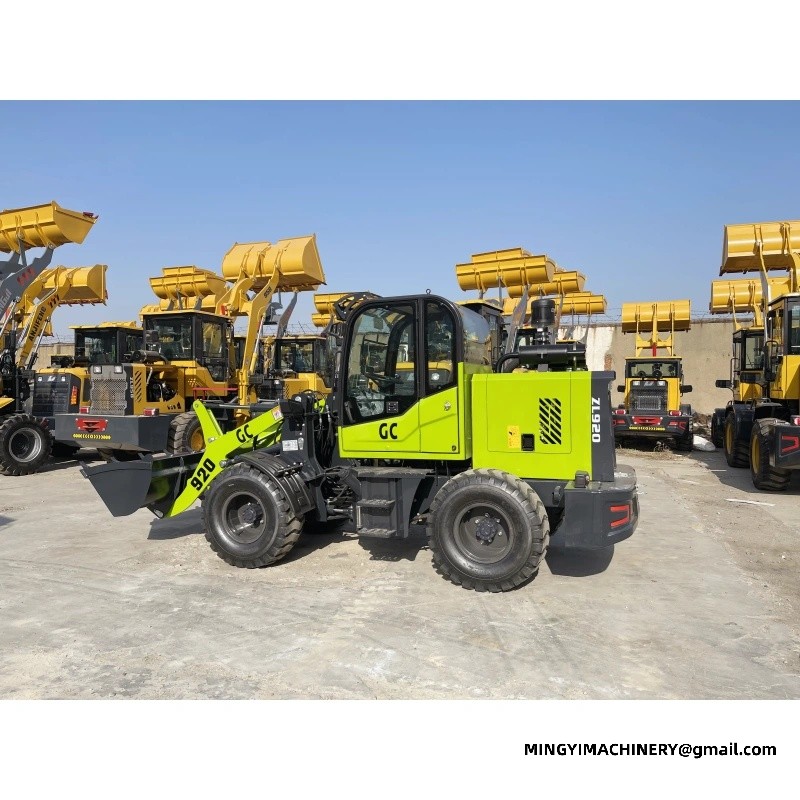
Work from the longest dimension. 4.55 m from front wheel to counterweight on this machine, 4.55 m on the heavy-duty 3.8 m medium-frame wheel-side reduction wheel loader. The bucket usually comes off; the counterweight usually stays, because removing it changes the securing plan far more than the space it saves.
Track is the second constraint, 1.6 m, and it is the one that decides whether two machines can travel side by side. Where a build offers two axles the track differs slightly between them, so confirm which axle is on the unit before booking space. Fuel is drained to a residue for shipping, and the tank on this build is 70 L (75# large tank); that figure matters for the hazmat paperwork rather than for the loading plan.
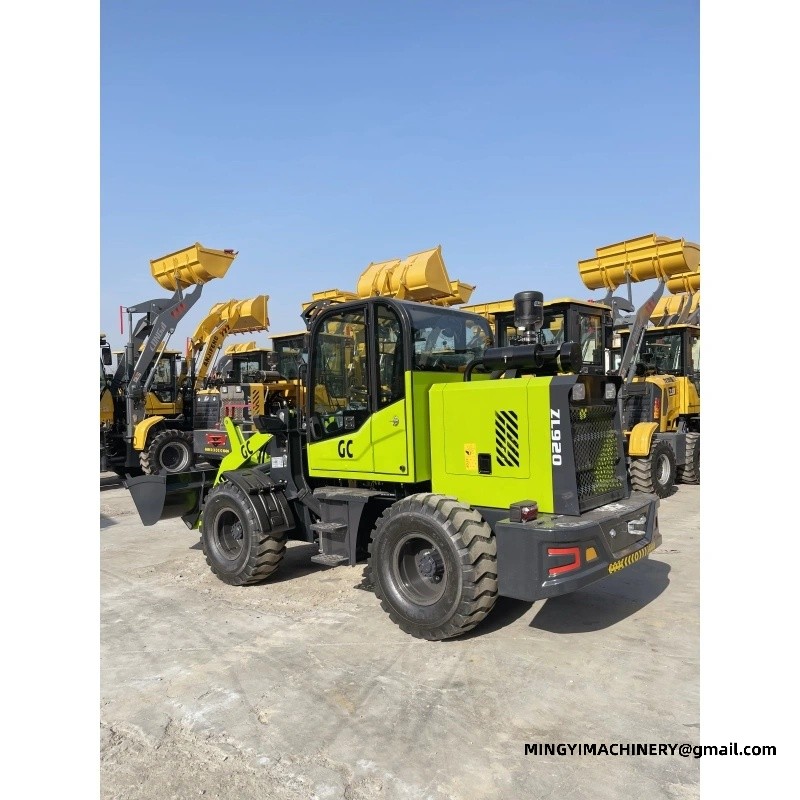
Before specifying anything else, measure the tallest body the loader will ever have to clear, at the front board, loaded, on the worst ground on site. That number decides the machine. The heavy-duty 4.2 m medium-frame wheel-side reduction wheel loader in this comparison dumps at 4.2 m; the heavy-duty 4.2 m medium-frame wheel-side reduction wheel loader at 4.2 m. The difference looks small on paper and is decisive at the face, because a loader that cannot clear the board cannot be worked around.
Once the height is settled, capacity sets the number of passes. 0.3 m³ on the standard 2.8 m low-profile wheel loader against 0.65 m³ on the heavy-duty 4.2 m medium-frame wheel-side reduction wheel loader. Multiply by your material weight per cubic metre and check it against what the chassis is carrying, not what the bucket holds — the frame, at 16 mm across the member, is the limit that arrives first.
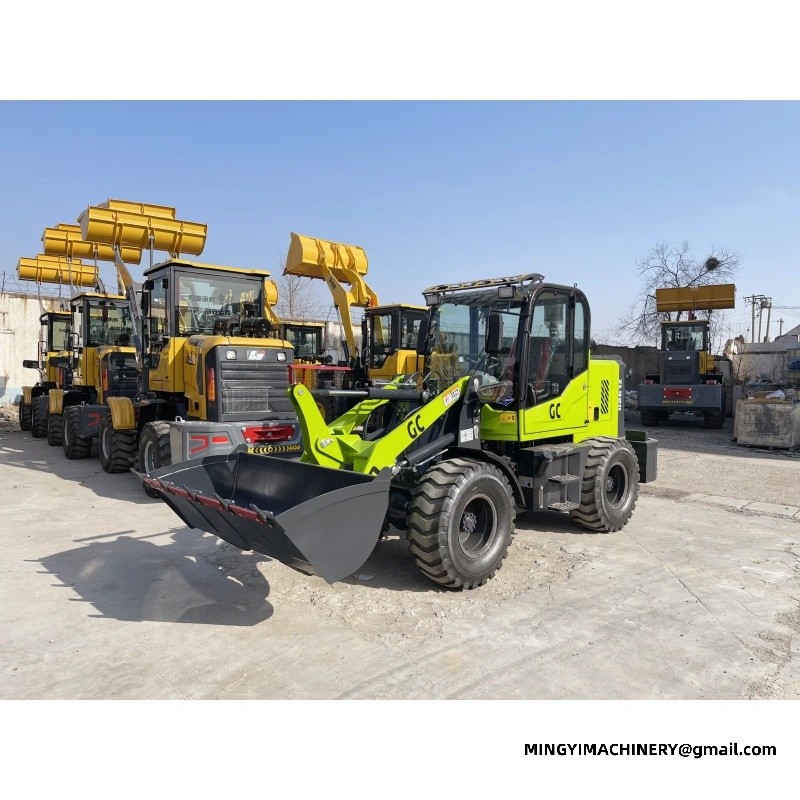
Do attachments interchange across the China wheel loader factory supplier range?
Within a frame family, yes, because the boom section matches. Across families, no: a 500 mm section on the heavy-duty 4.5 m small-frame wheel-side reduction wheel loader is not the 500 mm section on the heavy-duty 3.5 m medium-frame wheel-side reduction wheel loader.
How is the battery specified on a China wheel loader factory supplier?
60 Ah (490 engine); 80 Ah (4102 turbo engine) on the heavy-duty 3.2 m low-profile wheel loader, matched to the engine it has to crank. The higher capacity belongs to the turbo option and matters in cold climates.
What does a China wheel loader factory supplier need to run a grapple?
A grapple sized to the 430 mm boom section and a hydraulic third circuit. The 40 pump (490 engine); 1045 pump (4102 turbo engine) work pump is specified per build, so order the circuit with the machine.
How often should the articulation of a China wheel loader factory supplier be greased?
Every shift in stockpile or face work, weekly in light duty. The 30 mm front and 20 mm rear plates take every steering load, and missed greasing takes pins and bores.
Can a China wheel loader factory supplier work indoors?
The low-profile builds can, where height and footprint allow: 4.1 m front-to-counterweight length and 1.5 m (wheel-side reduction axle); 1.45 m (Isuzu axle) track on the heavy-duty 3.2 m low-profile wheel loader. Ventilation is the other constraint to check.
Which China wheel loader factory supplier build suits quarry or stockpile work?
The heavy build with the raised core: a 0.65 m³ bucket, 30 mm rear hinge plate, 45 mm cross-member and the 4105 core radiator for fines and dust.
Which China wheel loader factory supplier build suits site work?
The heavier one, because dump height and hinge steel govern the day: 0.4 m³ at 4.5 m with 20 mm rear hinge plates and a 30 mm cross-member.
Models, options and container plans are stated per order against the actual mix. Send the application, the material and the receiving body height, and we will specify the China wheel loader factory supplier — axle, radiator, bucket and third circuit — in one pass.
Later additions and retrofits on China Wheel Loader Factory Supplier: Specs and Order Process
Retrofitting is limited by the base machine. Before anything is added to China Wheel Loader Factory Supplier: Specs and Order Process the hydraulic flow, the mounting interface and the stability allowance have to be checked, because those limits are what decide what is sensible.
Moving China Wheel Loader Factory Supplier: Specs and Order Process between sites
Loading is where most damage happens. Ramps, angle of approach and the condition of the ground under them matter more than the machine when China Wheel Loader Factory Supplier: Specs and Order Process is being loaded, and a careful driver is worth more than a fast one.
Reading the early symptoms on China Wheel Loader Factory Supplier: Specs and Order Process
Temperature and pressure are the two things worth watching. A China Wheel Loader Factory Supplier: Specs and Order Process that runs hotter than it used to, or whose pressure has drifted, is reporting a problem that is still simple to fix.
Contact MINGYI Machinery for the current wheel loader lineup, configuration options and a formal specification for your market. E-mail: sales@mingycn.com | LINE (ID): mingyicn
China Wheel Loader Factory Supplier: Fleet Orders and Spares · Wheel Loader Manufacturer | China Factory: 0.3 m3 Entry Class · Compact Wheel Loader: Turning Space and Pin Wear · Loaders









