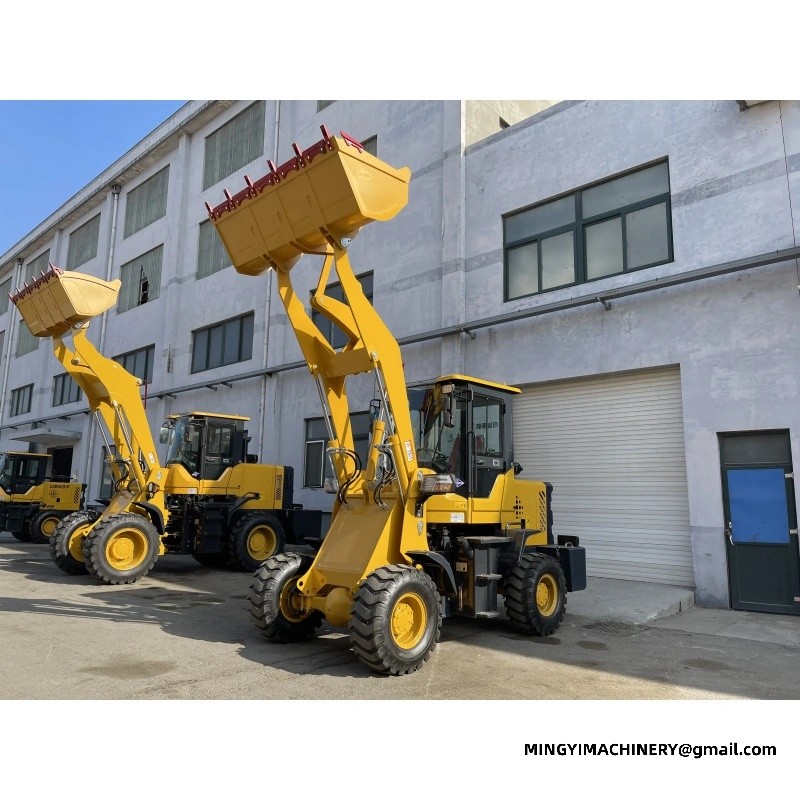
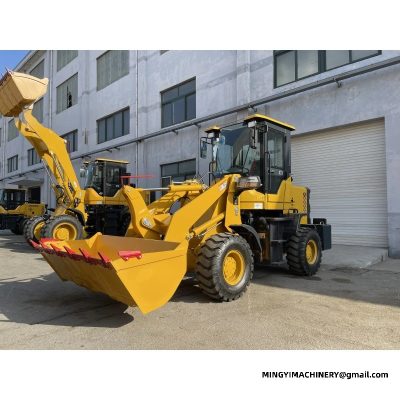
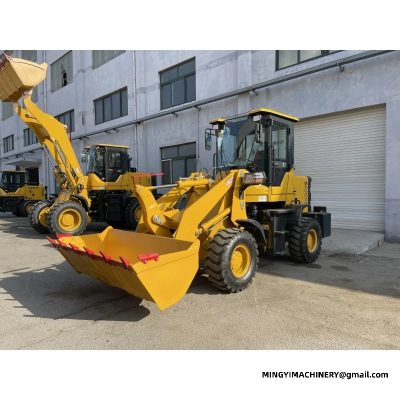
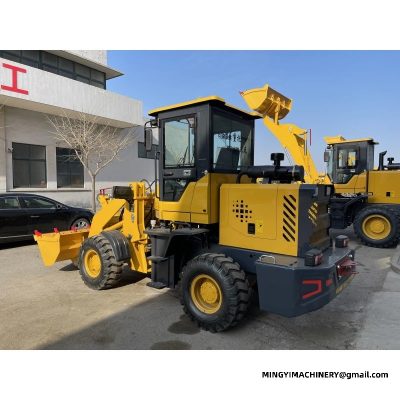
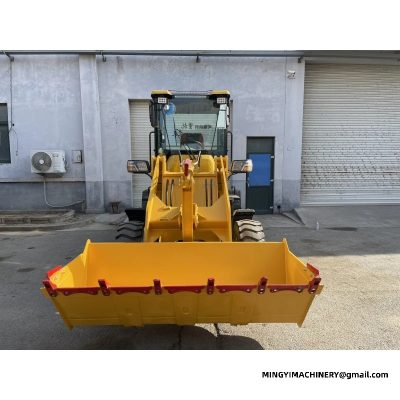
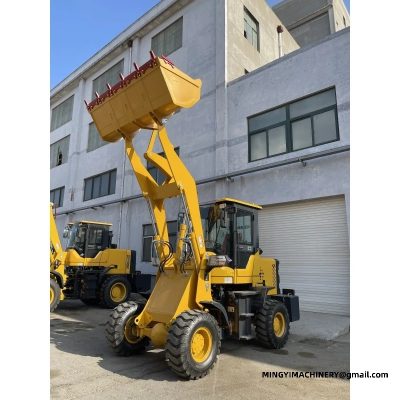
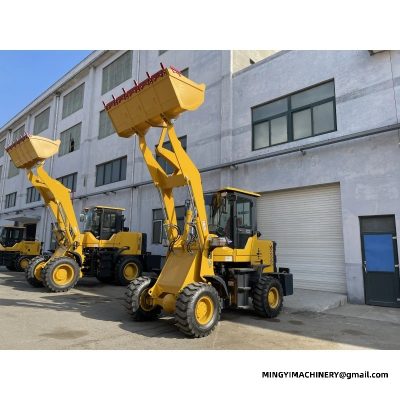
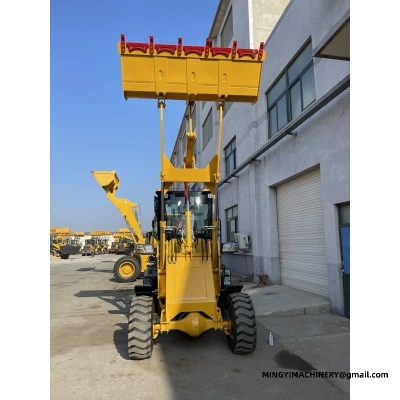
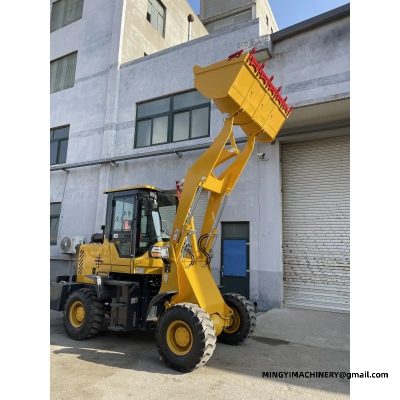
Everything on a small wheel loader is a compromise, and the sheet shows which one was made. Reach against stability. Capacity against weight. Speed against heat. The light-duty 3.8 m small-frame wheel-side reduction wheel loader runs a 2.61 m arm with a 25 mm wall and 890 mm of spacing behind a 0.38 m³ bucket; the light-duty 4.2 m small-frame wheel-side reduction wheel loader runs 3.15 m, 25 mm and 890 mm behind 0.38 m³. Neither is the better machine in the abstract. This page is about reading those trade-offs against your own ground, your own bodies and your own shift pattern.
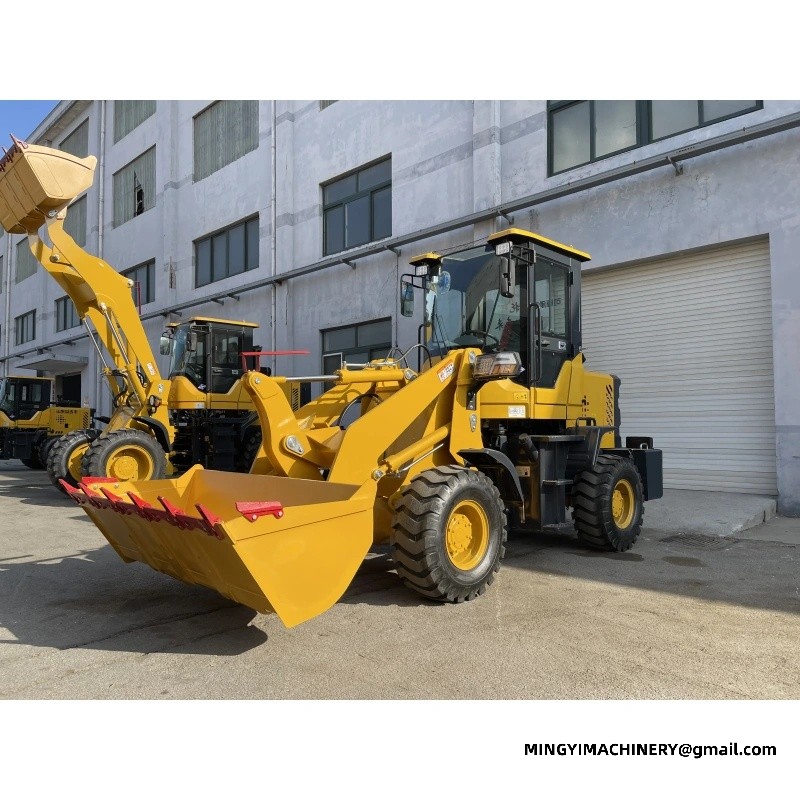
Two axle families appear across the range and the choice is about ground, not preference. Track width is the visible difference — 1.5 m (wheel-side reduction axle); 1.45 m (Isuzu axle) on the light-duty 3.8 m small-frame wheel-side reduction wheel loader against 1.5 m (wheel-side reduction axle); 1.45 m (Isuzu axle) on the light-duty 4.2 m small-frame wheel-side reduction wheel loader — but the mechanical difference is where the final reduction happens. An Isuzu-pattern axle reduces at the differential and sends torque down the shafts; a wheel-side reduction axle reduces at the hub.
Hub reduction is the right answer for soft lanes, ramps, uncompacted yards and pits, because torque arrives at the wheel instead of through a faster final drive that can spin. It is the wrong answer for long, fast, level transfers, where the extra unsprung mass and the lower top speed effort more than the traction gains. Read the track figures with the footprint — 4.1 m on the light-duty 3.8 m small-frame wheel-side reduction wheel loader, 4.1 m on the light-duty 4.2 m small-frame wheel-side reduction wheel loader — and the choice usually makes itself.
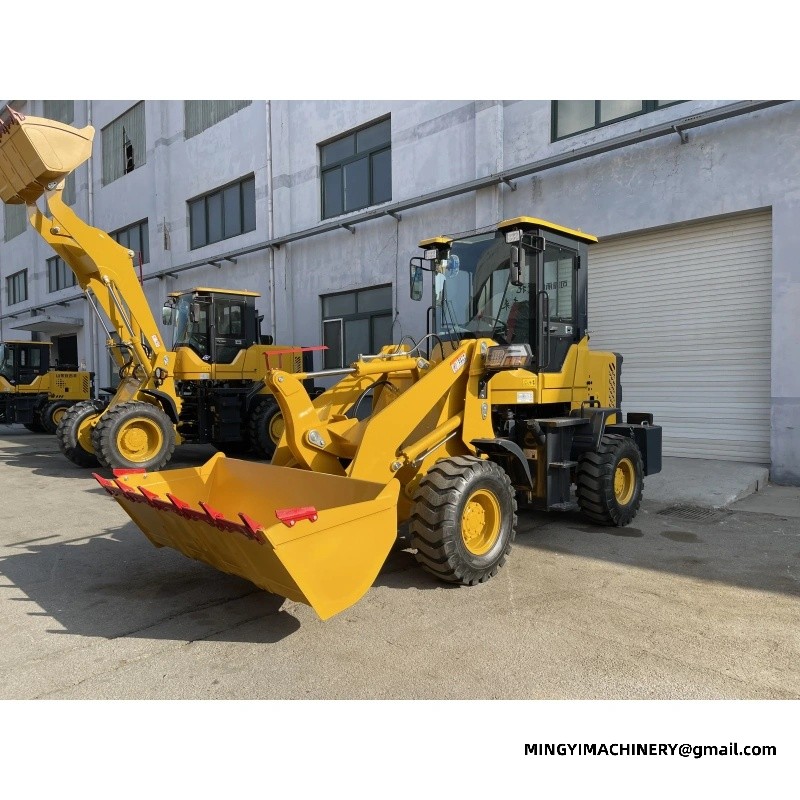
Track width decides two things at once: whether the machine stays upright on a slope, and whether it fits through what you need it to fit through. This build runs 1.6 m, against 1.6 m on the heavy-duty 4.5 m medium-frame wheel-side reduction wheel loader. Wider is more stable and needs more room. The choice is made by your narrowest gate, not by your widest heap.
The axle behind the track matters as much as the number. A wheel-side reduction axle puts the final reduction at the hub, which lowers the load on the half-shafts and suits soft, rutted or sandy ground. The alternative pattern suits hard, level surfaces and runs cooler at road speed. Where a build offers both, the hub-reduction figure in 1.6 m is the one for quarry floors and unmade haul roads.
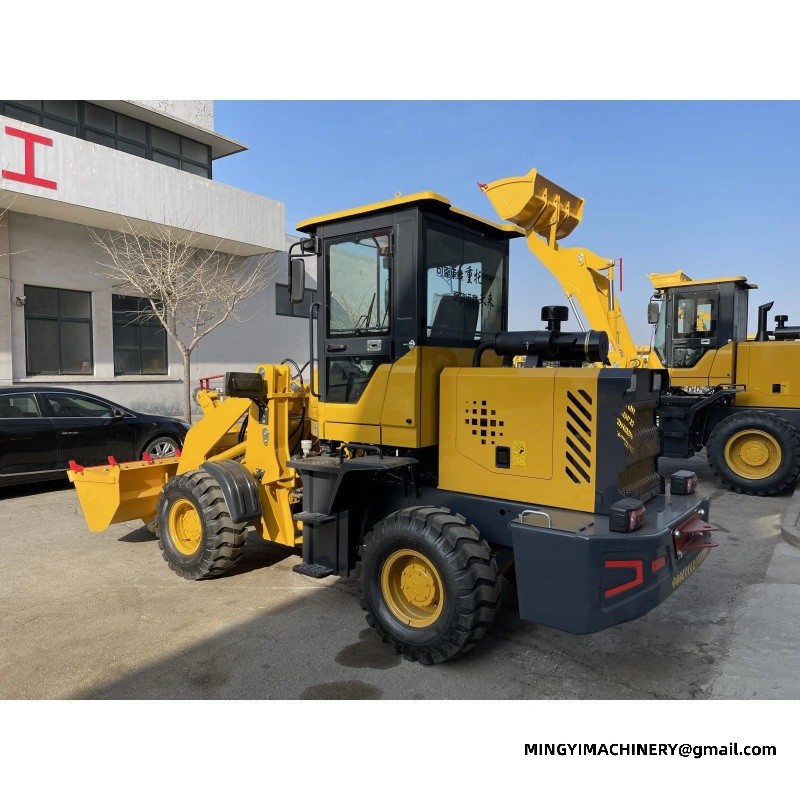
A loader that is greased, cool and clean will run for years on its original frame. The components that need attention are the articulation — 25 mm and 14 mm hinge plates on the light-duty 3.8 m small-frame wheel-side reduction wheel loader — the boom mounts at 890 mm, and the cooling pack, 4100 core (490 engine); 4105 core (4102T engine).
Set the intervals by duty, not by calendar. A machine working a dusty stockyard needs its core blown out daily; the same machine on a farm needs it monthly. A machine loading a face needs its pins greased every shift; one moving pallets needs it weekly. The specification tells you what to check — centre cylinder 45 / side cylinder 40 cylinders, 40 pump (490 engine); 1045 pump (4102 turbo engine) and 316 pump on the light-duty 3.8 m small-frame wheel-side reduction wheel loader, centre cylinder 45 / side cylinder 40, 40 pump (490 engine); 1045 pump (4102 turbo engine) and 316 pump on the light-duty 4.2 m small-frame wheel-side reduction wheel loader — and the duty tells you how often.
| Specification extract — heavy-duty 3.5 m medium-frame wheel-side reduction wheel loader | |
|---|---|
| Bucket capacity | 0.65 m³ |
| Dump height | 3.5 m |
| Track width | 1.6 m |
| Boom arm thickness | 30 mm |
| Boom arm width | 500 mm |
| Boom arm length | 3.15 m |
| Boom arm centre distance | 920 mm |
| Cross-member thickness | 45 mm |
| Front hinge plate thickness | 45 mm |
| Rear hinge plate thickness | 30 mm |
| Rear frame section | 300 mm high x 800 mm wide |
| Hydraulic cylinders | centre cylinder 60 / side cylinder 50 |
| Fuel tank | 70 L (75# large tank) |
| Battery | 80 Ah |
| Front wheel to counterweight | 4.55 m |
| Radiator | 4105 core |
| Work pump | 2063 pump |
| Travel pump | 25 pump |
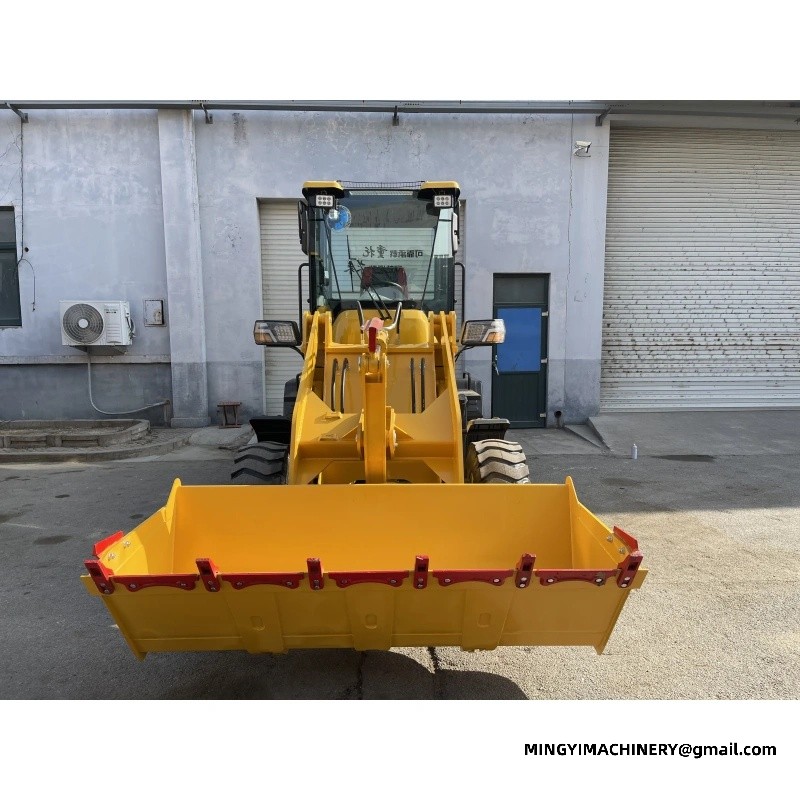
Three takes dominate ownership: fuel, downtime and the residual value of the machine when it is sold. Fuel is set by duty and tank planning — 64.7 L (75# small tank) on the light-duty 3.8 m small-frame wheel-side reduction wheel loader, 70 L (75# large tank) on the heavy-duty 3.5 m medium-frame wheel-side reduction wheel loader. Residual value is set by whether the frame is still tight, which is set by the 14 mm and 30 mm rear hinge plates and the 25 mm and 45 mm cross-members.
Downtime is the lengthy one, and it is usually caused by the simplest components: a hose on the centre cylinder 45 / side cylinder 40 circuit, a blocked 4100 core (490 engine); 4105 core (4102T engine) core, a flat battery from a machine that sat on the dock. None of them is a reason to buy a bigger machine, and all of them are reasons to keep a small spares box. plan for filters, hoses and a cutting edge per year, and for pins and bushes every second year.
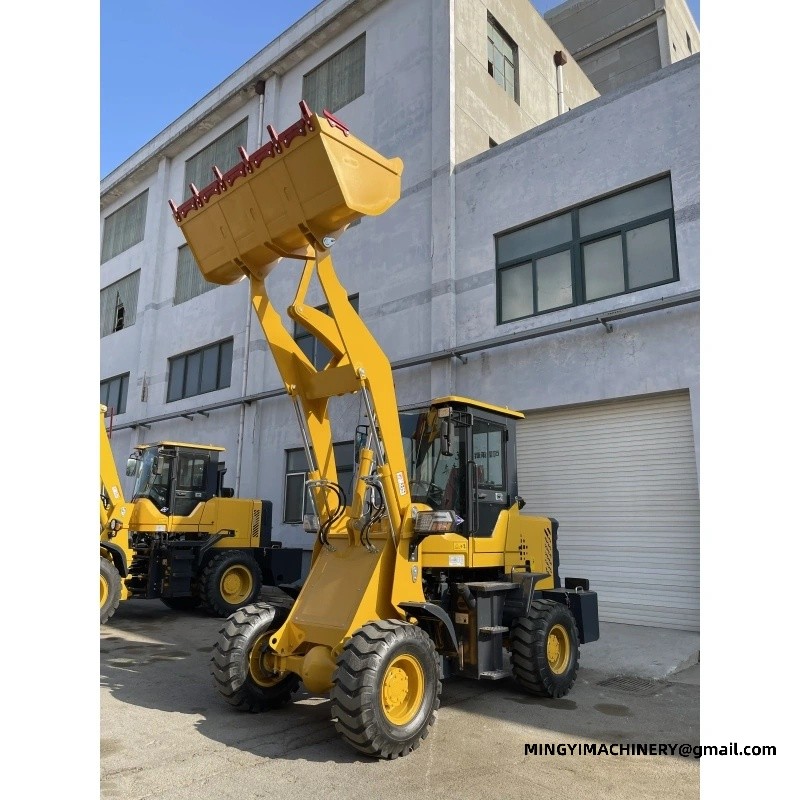
Fleet effort is driven by the size of the spares bin, and that is decided at purchase. Machines sharing an engine share a pump, 32 pump, a radiator, 4100 core, and a battery rating, 45 Ah (24 V). Machines sharing a frame share cylinder sizes, centre cylinder 45 / side cylinder 40, and hinge geometry. Buy within one frame family and the bin halves.
The figures to compare are the ones that differ: bucket 0.3 m³ against 0.65 m³, dump height 2.8 m against 3.8 m, track 1.2 m (Isuzu axle); 1.3 m (wheel-side reduction axle) against 1.6 m. Where those differ, the wearing parts behind them usually differ too. Where they match, one part number covers both machines.
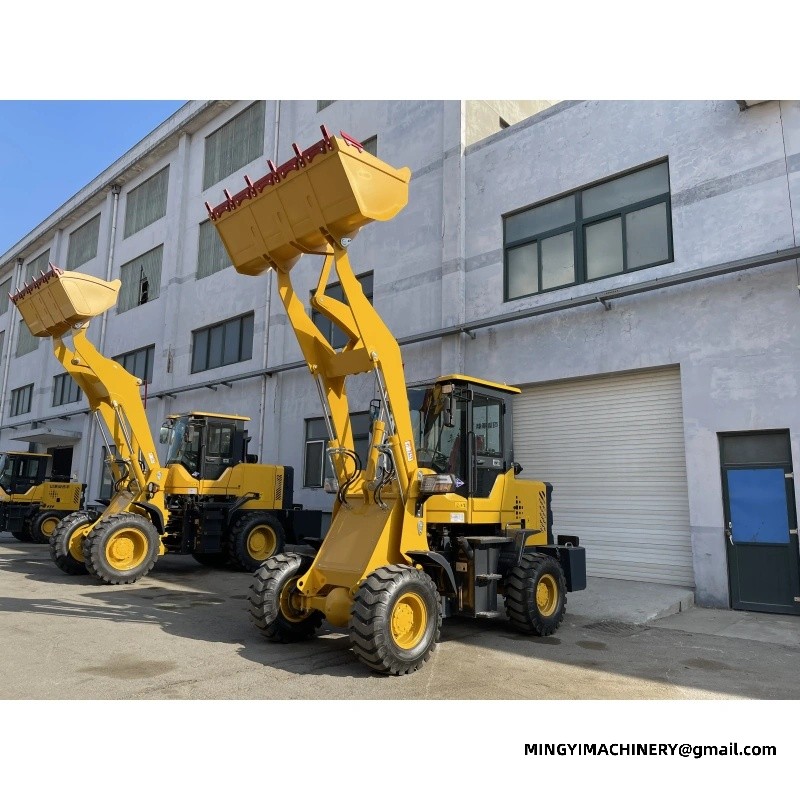
Site work is a truck-loading problem. The machine fills, reverses, turns, approaches and dumps, several hundred times a day, and the numbers that govern it are dump height, hinge steel and cycle time. The light-duty 3.8 m small-frame wheel-side reduction wheel loader brings 0.38 m³ at 3.8 m with 25 mm and 14 mm hinge plates; the light-duty 4.2 m small-frame wheel-side reduction wheel loader brings 0.38 m³ at 4.2 m with 25 mm and 20 mm.
Backfilling and heel-in work load the rear hinge harder than loading does, because the machine turns while pushing. That is why the rear plate figure — 14 mm against 20 mm — is the one to read for a site machine, ahead of engine power. Add the cooling question: site dust loads a radiator fast, so the raised core and the 4100 core (490 engine); 4105 core (4102T engine) package earn their keep where the 4100 core (490 engine); 4105 core (4102T engine) spec would need blowing out at lunch.
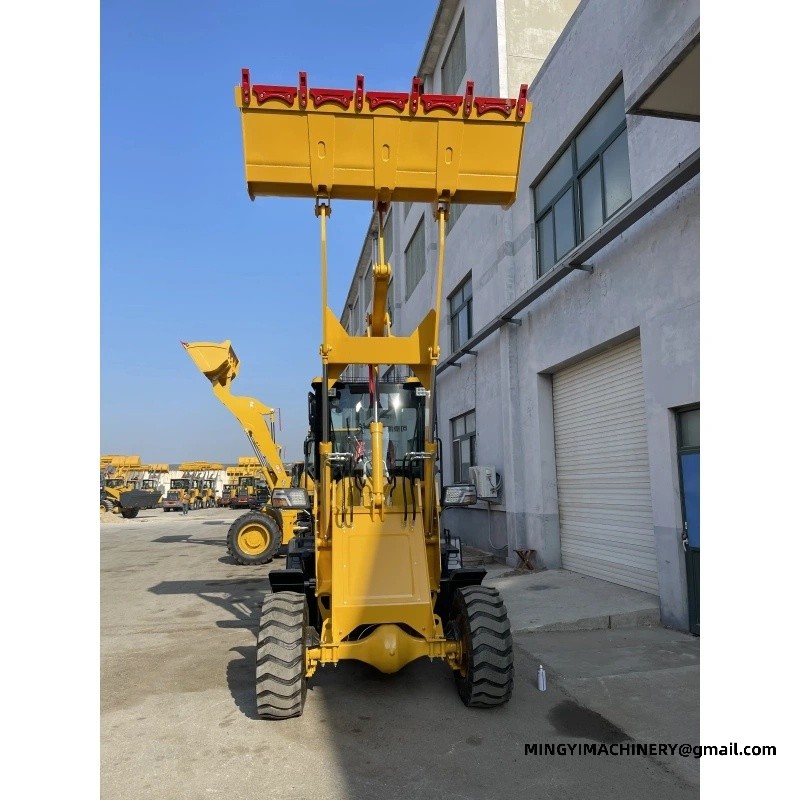
Overheating has four causes and only one of them is the radiator. In order of likelihood: blocked fins, a cap that will not hold pressure, a fan or drive problem, and genuine overloading. The core on this machine is 4100 core (490 engine); 4105 core (4102T engine); clean it first, from the clean side outwards.
If the machine is genuinely overloaded, the cause is upstream of the cooling system. A bucket carrying more than 0.38 m³ of dense material, cycled without pause, produces more heat than the system was sized to reject. The fix is a smaller bucket or a slower cycle, not a bigger radiator — and the frame, at 25 mm across the member, is the part that suffers if nobody makes that decision.
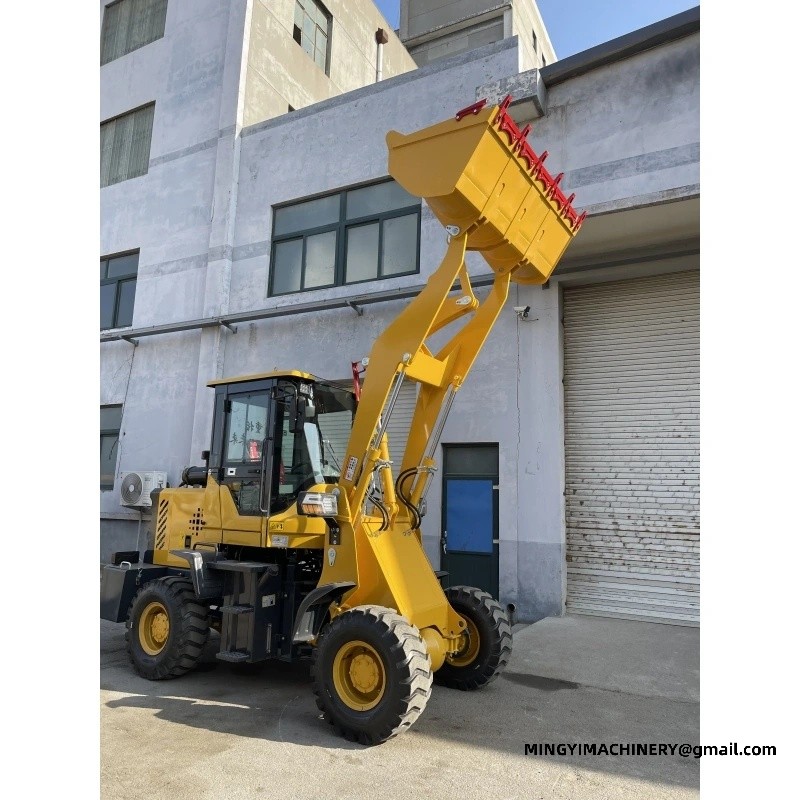
Before specifying anything else, measure the tallest body the loader will ever have to clear, at the front board, loaded, on the worst ground on site. That number decides the machine. The heavy-duty 4.5 m small-frame wheel-side reduction wheel loader in this comparison dumps at 4.5 m; the heavy-duty 3.8 m medium-frame wheel-side reduction wheel loader at 3.8 m. The difference looks small on paper and is decisive at the face, because a loader that cannot clear the board cannot be worked around.
Once the height is settled, capacity sets the number of passes. 0.4 m³ on the heavy-duty 4.5 m small-frame wheel-side reduction wheel loader against 0.65 m³ on the heavy-duty 3.8 m medium-frame wheel-side reduction wheel loader. Multiply by your material weight per cubic metre and check it against what the chassis is carrying, not what the bucket holds — the frame, at 30 mm across the member, is the limit that arrives first.
Should I go up a bucket size on a small wheel loader?
Only if the material is light enough to fill it. 0.38 m³ against 0.65 m³ looks like a gain on paper and is a loss on dense material, and the extra weight lands on the hinge.
What affects operator fatigue on a small wheel loader?
Seat, visibility and how much the machine has to be corrected. A tight frame wanders less; a loose one behind the 25 mm plate is tiring to hold on the road.
My small wheel loader overheats every afternoon. What is the cause?
In order of likelihood: blocked fins on the 4100 core core, a cap that will not hold pressure, a fan drive problem, or genuine overloading. Clean the core first, from the clean side.
Can a small wheel loader work inside a building?
Clearance and ventilation are the constraints. Lift height is 3.8 m and the core is 4100 core (490 engine); 4105 core (4102T engine), which has to reject heat into air that is not moving.
What paperwork should come with a small wheel loader?
A specification listing bucket 0.65 m³, lift 3.8 m, cylinders centre cylinder 60 / side cylinder 50, core 4105 core, battery 80 Ah and track 1.6 m. If those six are present, parts and warranty questions are answerable.
What are the signs of a failing pump on a small wheel loader?
Slow lift with normal breakout points to flow, which is the 32 pump. Weak lift and weak breakout together point to pressure. Noise under load usually means aeration or a suction leak.
How should a small wheel loader be stored for a season?
Isolate the battery, which is rated 60 Ah (490 engine); 80 Ah (4102 turbo engine), grease the pins, and protect the cylinder rods on the centre cylinder 45 / side cylinder 40. Machines stored outside suffer at the pins and the electrics.
Two builds, light-duty 3.8 m small-frame wheel-side reduction wheel loader and light-duty 4.2 m small-frame wheel-side reduction wheel loader, have carried the comparisons on this page. The same rows can be produced for any machine in the range, and for the engine options that change the pump, radiator and battery with them.
Planning the season around Small Wheel Loader: Day-to-Day Work on a Light Build
The calendar decides more than the specification does. Planning when Small Wheel Loader: Day-to-Day Work on a Light Build will be working, when it will be serviced and when it can be spared keeps the maintenance out of the weeks that matter.
Handover and getting familiar with Small Wheel Loader: Day-to-Day Work on a Light Build
Operators who come from a different machine need a short conversion. The controls on Small Wheel Loader: Day-to-Day Work on a Light Build follow the usual pattern, but the response, the sightlines and the stopping distance are learned by doing rather than by reading.
Moving Small Wheel Loader: Day-to-Day Work on a Light Build between sites
Travel time is not working time, and it should be planned as its own item. The hours spent moving Small Wheel Loader: Day-to-Day Work on a Light Build between jobs are hours not worked, and a trailer that matches the machine reduces them every single trip.
Contact MINGYI Machinery for the current wheel loader lineup, configuration options and a formal specification for your market. E-mail: sales@mingycn.com | LINE (ID): mingyicn
Wheel Loader for Sale: What to Confirm Before Ordering · Wheel Loader Manufacturer: Checking the Build You Ordered · Front Wheel Loader: Reading Boom, Hinge and Axle Specifications · Wheel Loader









