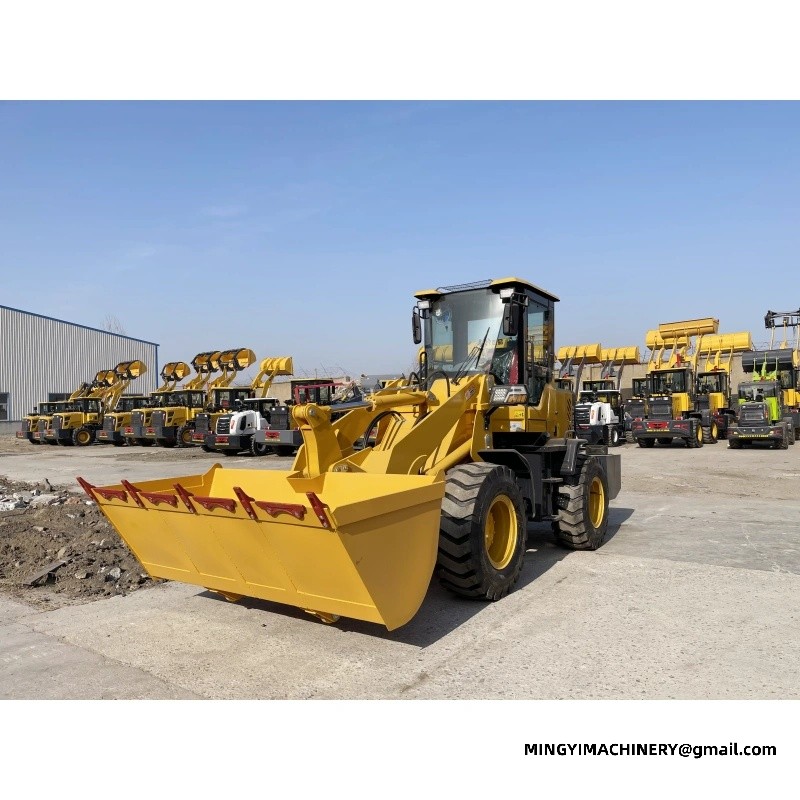
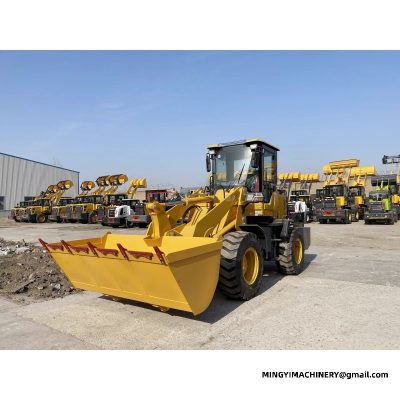
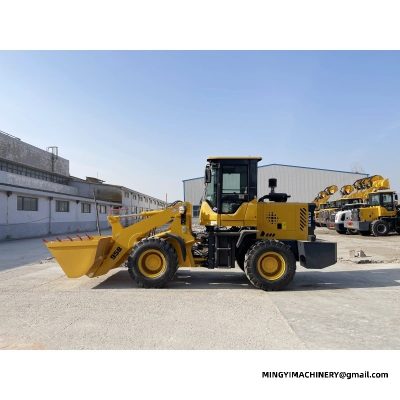
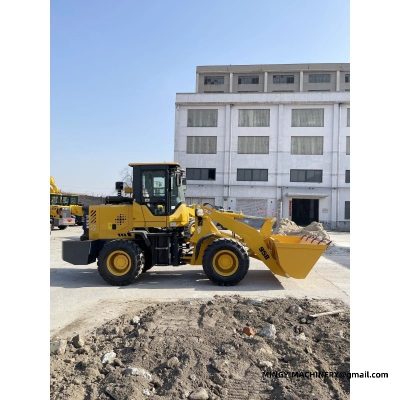
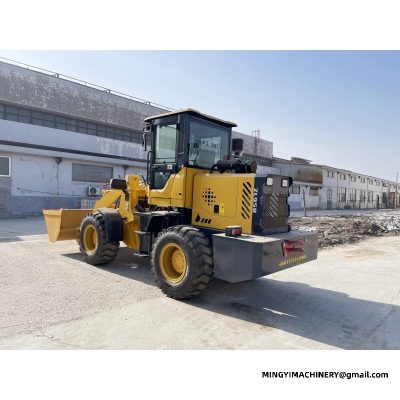
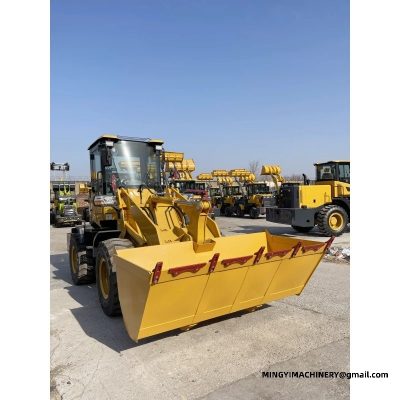
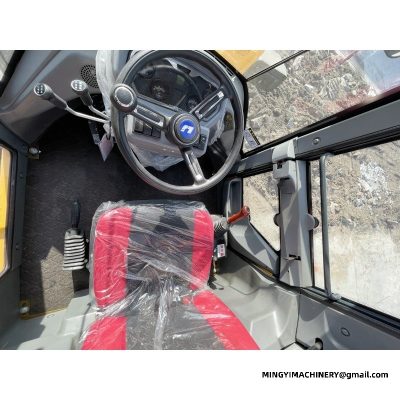
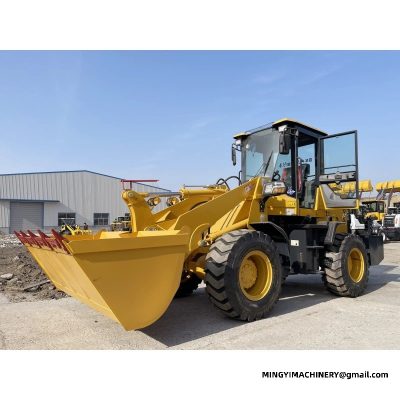
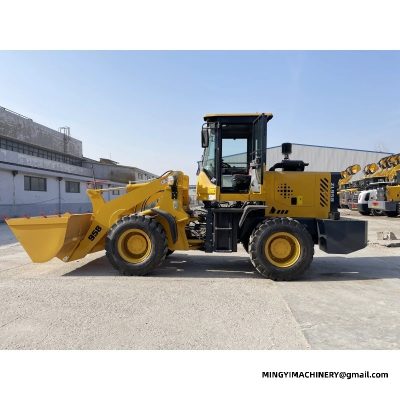
A wheel loader manufacturer earns its keep in the fourth hour of a shift, not the first. By then the cooling system is heat-soaked, the operator has stopped being careful, and the machine is working the face it will work all week. What holds up is what was specified: radiator 4105 core, tank 70 L (75# large tank), cylinders centre cylinder 60 / side cylinder 50. What fails is usually what was assumed. This page follows a working day through the specification, from cold start to shut-down, using the heavy-duty 4.2 m medium-frame wheel-side reduction wheel loader and the heavy-duty 4.5 m medium-frame wheel-side reduction wheel loader as the two reference builds.
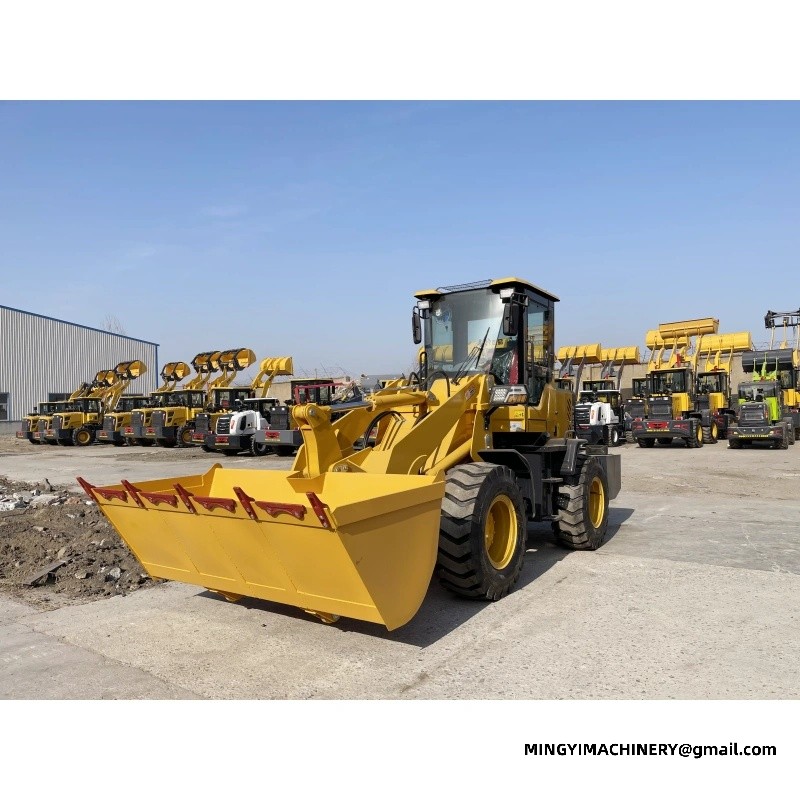
Every axle specification is a compromise between traction and speed, and the range resolves it with two families: 1.6 m track on the heavy-duty 4.2 m medium-frame wheel-side reduction wheel loader and 1.6 m on the heavy-duty 4.5 m medium-frame wheel-side reduction wheel loader. The wider track adds stability; the reduction layout decides whether the torque reaches the ground. Ask which ground the machine will spend eighty per cent of its hours on, then read the axle line.
Stability also comes from elsewhere in the table. The heavy-duty 4.2 m medium-frame wheel-side reduction wheel loader carries a 4.55 m front-wheel-to-counterweight length and a 0.65 m³ bucket at 4.2 m; the heavy-duty 4.5 m medium-frame wheel-side reduction wheel loader carries 4.95 m with 0.65 m³ at 4.5 m. A wide track on a short wheelbase is less stable than a narrower track on a long one, which is why the footprint figure belongs in the same conversation as the axle. On soft or rutted ground, take the hub reduction every time.
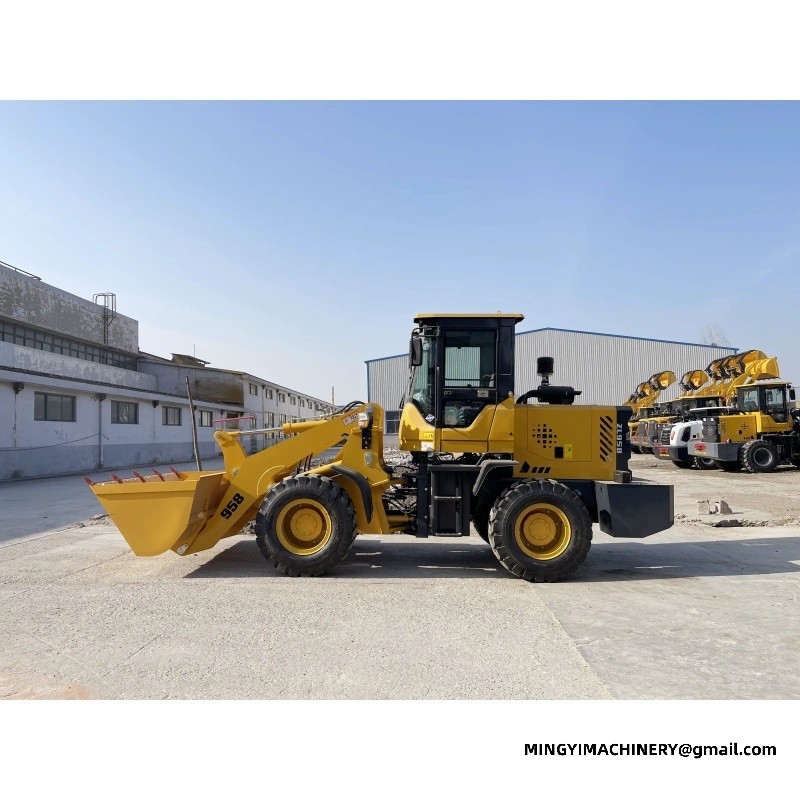
Capacity is bought and rarely used. If the receiving bodies sit below 4.2 m and the material is dense, a 0.4 m³ bucket that fills completely is faster than a 0.4 m³ bucket that fills to two-thirds, and it puts less into the hinge plates doing it.
Size matters twice more. A shorter machine, 4.25 m front wheel to counterweight against 4.1 m, works a tighter bay and turns inside its own length. A narrower one, 1.5 m (wheel-side reduction axle); 1.45 m (Isuzu axle) against 1.5 m (wheel-side reduction axle); 1.45 m (Isuzu axle), passes gates the other cannot. Where the work is confined, buy on dimensions and let capacity follow.
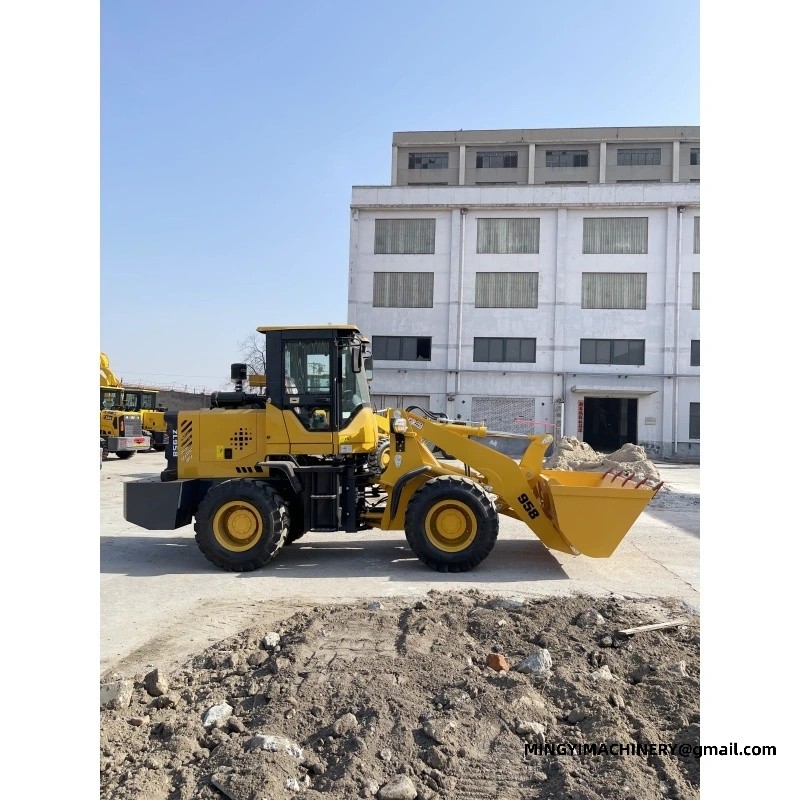
Airborne dust is the hardest thing a cooling system has to deal with, because it blocks the fin passages from the outside while the engine keeps producing heat. Core size is the buffer: 4100 core (490 engine); 4105 core (4102T engine) here against 4105 core on the heavy-duty 4.2 m medium-frame wheel-side reduction wheel loader. Screen area and access for cleaning matter as much as volume, so ask how the core is mounted before asking how big it is.
Work pumps generate heat too, not only the engine. This build runs 40 pump (490 engine); 1045 pump (4102 turbo engine) alongside 316 pump, and sustained hydraulic work in a hot climate adds load that the radiator was not sized for on a temperate machine. Where the duty is continuous rather than intermittent — a stockpile that never stops rather than a site that loads three trucks an hour — specify the larger core even if the engine is the same.
| Reference specification — heavy-duty 4.2 m small-frame wheel-side reduction wheel loader | |
|---|---|
| Bucket capacity | 0.4 m³ |
| Dump height | 4.2 m |
| Track width | 1.5 m (wheel-side reduction axle); 1.45 m (Isuzu axle) |
| Boom arm thickness | 25 mm |
| Boom arm width | 500 mm |
| Boom arm length | 3.15 m |
| Boom arm centre distance | 890 mm |
| Cross-member thickness | 30 mm |
| Front hinge plate thickness | 30 mm |
| Rear hinge plate thickness | 20 mm |
| Rear frame section | 280 mm high x 800 mm wide |
| Hydraulic cylinders | centre cylinder 45 / side cylinder 45 |
| Fuel tank | 64.7 L (75# small tank) |
| Battery | 60 Ah (490 engine); 80 Ah (4102 turbo engine) |
| Front wheel to counterweight | 4.25 m |
| Radiator | 4100 core (490 engine); 4105 core (4102T engine) |
| Work pump | 40 pump (490 engine); 1045 pump (4102 turbo engine) |
| Travel pump | 316 pump |
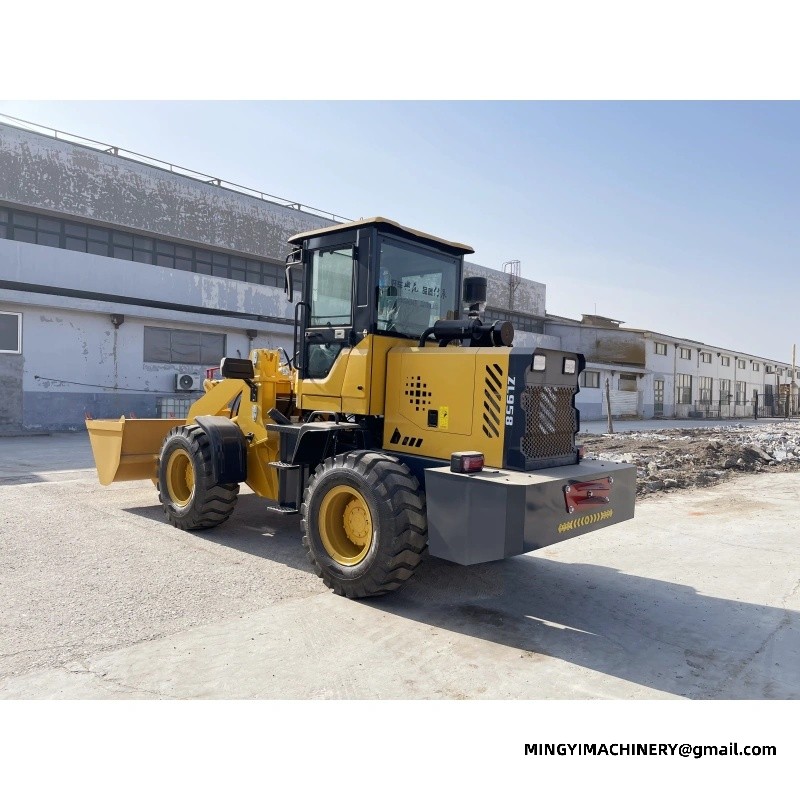
On a farm the loader is judged by whether it can get to the work. The heavy-duty 4.2 m medium-frame wheel-side reduction wheel loader at 1.6 m track and 4.55 m length turns in places the heavy-duty 4.5 m medium-frame wheel-side reduction wheel loader at 1.6 m and 4.95 m cannot enter. Capacity — 0.65 m³ against 0.65 m³ — is the last consideration, not the first.
Dump height still matters, because feed wagons and high-sided trailers are tall: 4.2 m on the heavy-duty 4.2 m medium-frame wheel-side reduction wheel loader, 4.5 m on the heavy-duty 4.5 m medium-frame wheel-side reduction wheel loader. Measure the wagon side, then measure the shed door. Where both fit, take the larger bucket; where only one fits, take the machine that fits. Attachments specification against the boom section — 520 mm against 520 mm — so the tool carrier is decided in the same conversation.
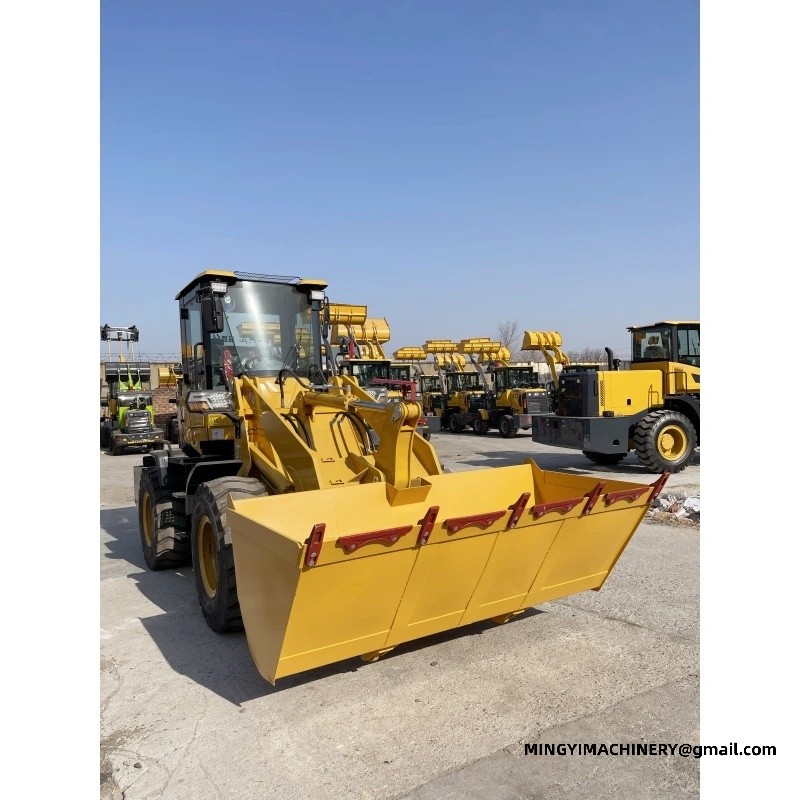
A specification is only as good as the figures on it. Before comparing numbers between suppliers, make sure the same figures appear on both: bucket 0.3 m³, dump height 2.8 m, boom section 300 mm over 20 mm of wall, hinge plates 16 mm front and 16 mm rear, cross-member 16 mm. If a sheet will not give you those five, it is not a specification, it is a description.
The second thing a sheet should let you check is which engine the figures belong to. Where a build offers two engines, the pump and radiator change with it: this one lists 32 pump and 4100 core. Asking for the build by engine, not by model name, is the single change that prevents most delivery disputes.
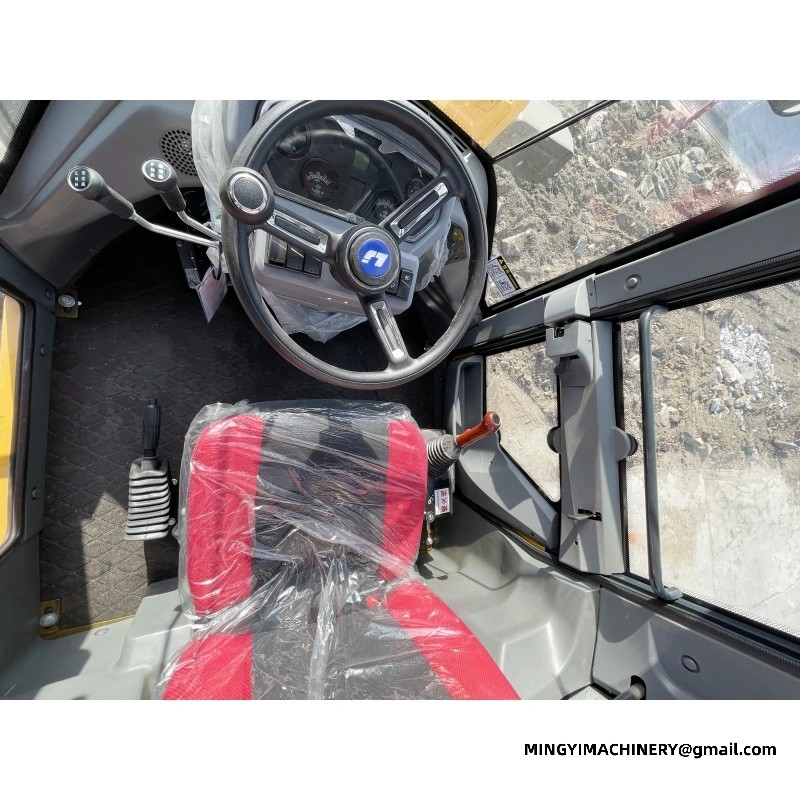
Shipping is a dimensions problem before it is a freight problem. Front wheel to counterweight is 3.5 m on this build and 4.1 m on the heavy-duty 3.2 m small-frame wheel-side reduction wheel loader; track is 1.2 m (Isuzu axle); 1.3 m (wheel-side reduction axle). Those two figures, plus the bucket, decide how many units fit a container and whether the machine travels assembled.
Dump height matters here for a reason that surprises people: a machine shipped with the arm raised will not fit under a container door. At 2.8 m of lift height the arm has to be strapped down, and the securing points are on the frame — the 200 mm high x 750 mm wide rear section and the cross-member behind it, not the cylinders.
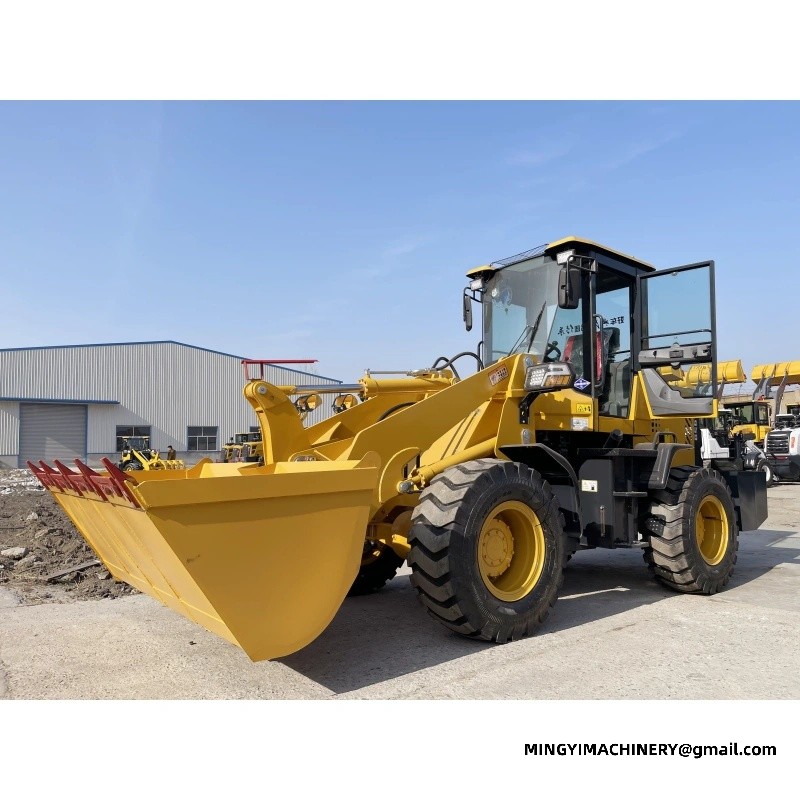
A starter spares box for the heavy-duty 4.2 m medium-frame wheel-side reduction wheel loader is short: filters to match the 4105 core cooling package and the engine, a hose set for the centre cylinder 60 / side cylinder 50 cylinders, a pin and bush kit for the 960 mm boom mounts, and a cutting edge. On the heavy-duty 4.5 m medium-frame wheel-side reduction wheel loader the same list applies with centre cylinder 60 / side cylinder 50, 960 mm and the 4105 core package.
Beyond that, stock by consequence. A failed hose stops the machine for a day; a failed pump stops it for a week; a failed hinge plate stops it for a season. Filters and hoses are simple and universal enough to keep on site. Pumps — 2063 pump and 25 pump on the heavy-duty 4.2 m medium-frame wheel-side reduction wheel loader, 2063 pump and 25 pump on the heavy-duty 4.5 m medium-frame wheel-side reduction wheel loader — are worth one spare per fleet, not per machine.
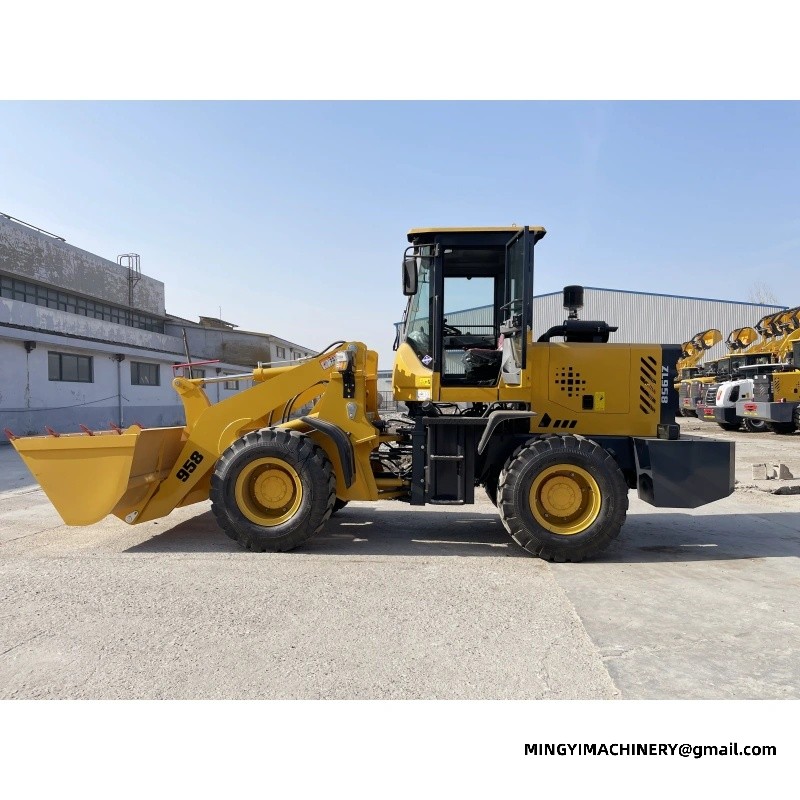
A boom that lifts slowly is usually a flow question, not a force question. The cylinders on this build are centre cylinder 45 / side cylinder 45 and the pump is 40 pump (490 engine); 1045 pump (4102 turbo engine); if lift is slow but breakout is normal, look at flow before looking at the cylinders. If breakout is weak as well, look at pressure.
Before either, rule out the simple causes: a blocked return filter, a low oil level, a suction leak, or a relief valve that has been tampered with to make a weak machine feel strong. Raising relief pressure above the setting the 25 mm wall and 30 mm cross-member were specified for is how frames get bent, and it is the most common fault found on machines that arrived second-hand.
Why does my wheel loader manufacturer bucket only fill two-thirds?
The material is denser than the bucket was matched to. At 0.4 m³ on the heavy-duty 3.2 m small-frame wheel-side reduction wheel loader against 0.4 m³ on the heavy-duty 3.2 m low-profile wheel loader, a smaller bucket that fills completely moves more per hour than a larger one that does not.
How is dump height on a wheel loader manufacturer measured?
At the bucket edge, arm at full lift, machine level. The heavy-duty 3.8 m small-frame wheel-side reduction wheel loader publishes 3.8 m and the heavy-duty 4.2 m medium-frame wheel-side reduction wheel loader publishes 4.2 m, measured the same way, so the two can be compared directly.
What does winter duty change on a wheel loader manufacturer?
Cold cranking, oil viscosity and operator access. Battery 60 Ah (490 engine); 80 Ah (4102 turbo engine) covers the first; the 64.7 L (75# small tank) tank covers the longer idling that cold work brings.
Which spares should I hold for a wheel loader manufacturer?
Hoses and seals for the centre cylinder 45 / side cylinder 45, filters, belts and a battery to the 60 Ah (490 engine); 80 Ah (4102 turbo engine) rating. Do not stock welded items; plates at 30 mm and 20 mm are a repair, not a spare.
How many passes will fill a truck with a wheel loader manufacturer?
Divide body volume by bucket volume, then check the height. Against 4.2 m of lift with a 0.4 m³ bucket, a body that is too tall is not a pass-count problem at all.
Can a wheel loader manufacturer work safely on a slope?
Track decides that: 1.2 m (Isuzu axle); 1.3 m (wheel-side reduction axle) on this build, with the wider figure belonging to the hub-reduction axle. Work up and down the slope rather than across it.
How much does material weight matter on a wheel loader manufacturer?
It sets the real limit, not the bucket. Volume is 0.4 m³; what the frame takes is set by the 30 mm cross-member and the 280 mm high x 800 mm wide rear section behind it.
If the comparison here is close, decide on the rows that outlast the job: cross-member 45 mm against 45 mm, rear frame 300 mm high x 800 mm wide against 300 mm high x 800 mm wide. Capacity can be changed with a bucket; steel cannot be changed at all.
Documents that travel with Wheel Loader Manufacturer: Checking the Build You Ordered
Keeping the documents together is part of ownership. The manual, the service record and the build sheet for Wheel Loader Manufacturer: Checking the Build You Ordered belong in one folder, and the machine is easier to sell later when that folder is complete.
Commissioning Wheel Loader Manufacturer: Checking the Build You Ordered on site
Transport shakes things loose. A short check of Wheel Loader Manufacturer: Checking the Build You Ordered after the crate is opened, covering the same points the pre-delivery inspection covered, is the most useful insurance available on delivery day.
A second operator for Wheel Loader Manufacturer: Checking the Build You Ordered
Training is simpler than repair. An hour spent with a new operator on Wheel Loader Manufacturer: Checking the Build You Ordered, covering the limits and the awkward cases, is the least lengthy hour in the whole ownership.
Keeping a service record for Wheel Loader Manufacturer: Checking the Build You Ordered
Service history also protects the warranty position. Evidence that Wheel Loader Manufacturer: Checking the Build You Ordered was maintained at the specified intervals and with the specified fluids settles questions that would otherwise be argued.
Contact MINGYI Machinery for the current wheel loader lineup, configuration options and a formal specification for your market. E-mail: sales@mingycn.com | LINE (ID): mingyicn
Wheel Loader Supplier: Spares, Answers and Lead Times · China Wheel Loader Factory: From Order to Container · Wheel Loader for Mining: Radiator Cores and Hub Reduction Axles · Wheel Loader









