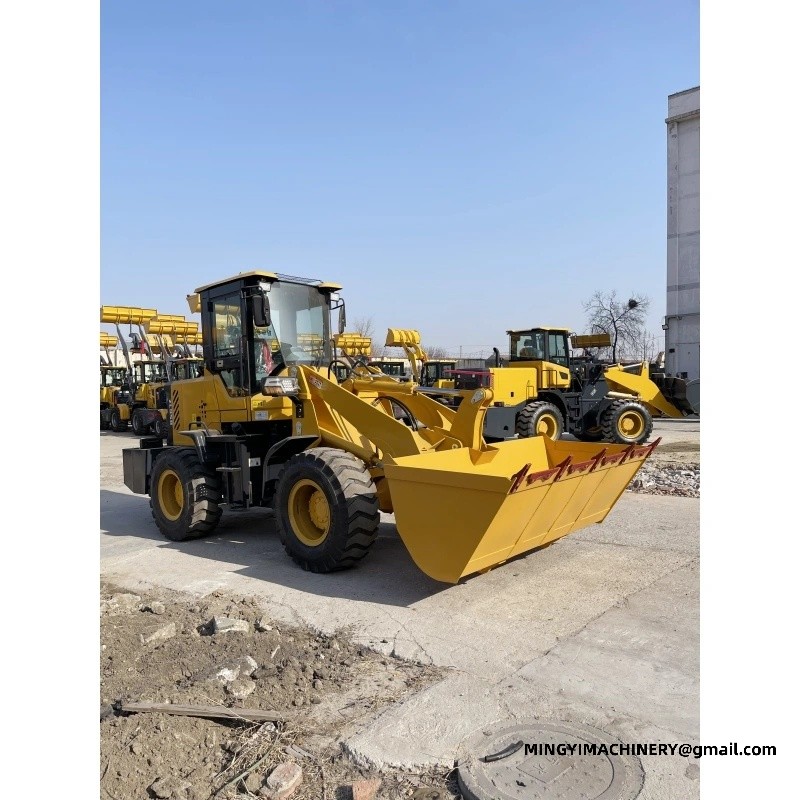
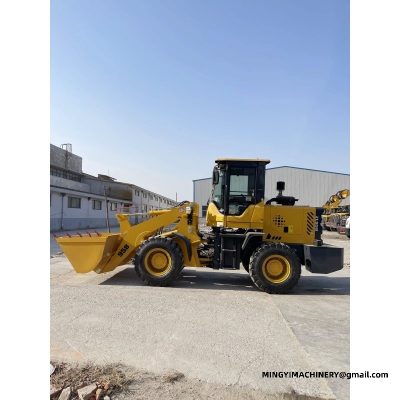
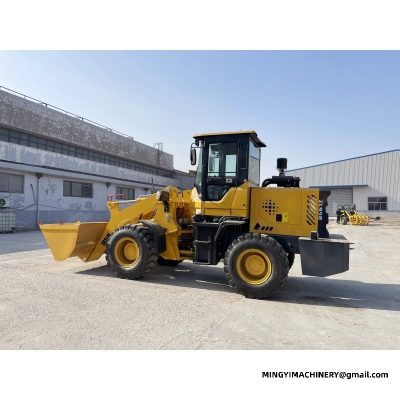
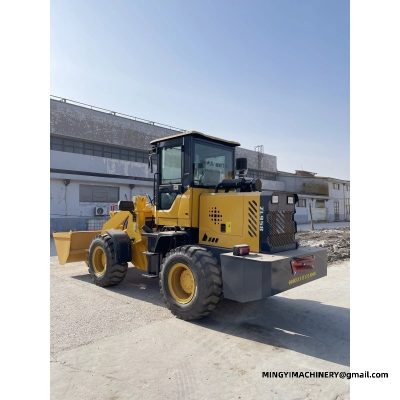
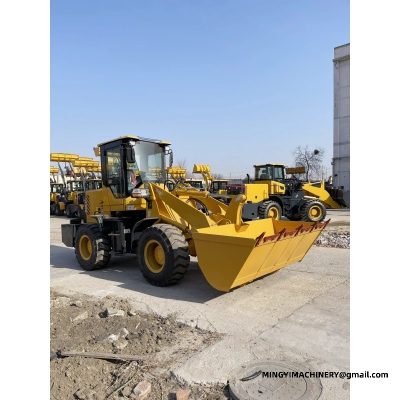
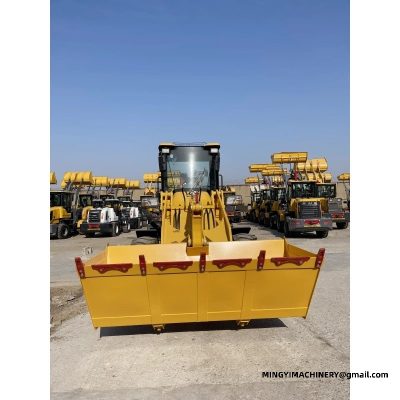
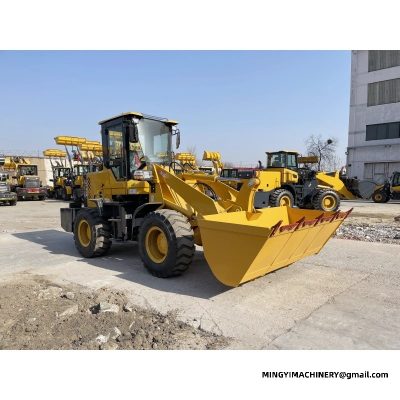
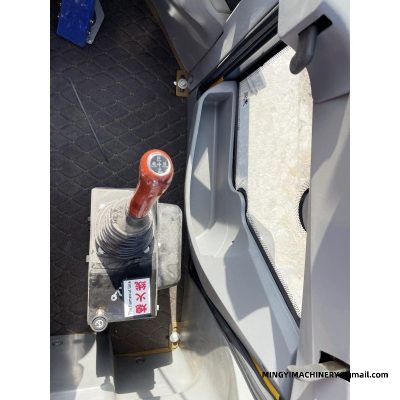
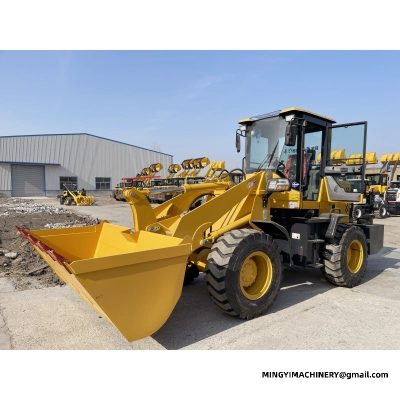
A wheel loader supplier that suits the work is quiet about it. It clears the board on the first pass, it does not hunt for grip, and nothing under it leaks at the end of the shift. Machines that draw attention are usually mis-specified rather than badly built. This page works through the rows that produce the quiet ones — 3.2 m of dump height, 1.5 m (wheel-side reduction axle); 1.45 m (Isuzu axle) of track, 25 mm across the cross-member — and compares the light-duty 3.2 m low-profile wheel loader against the light-duty 3.2 m small-frame wheel-side reduction wheel loader at each step.
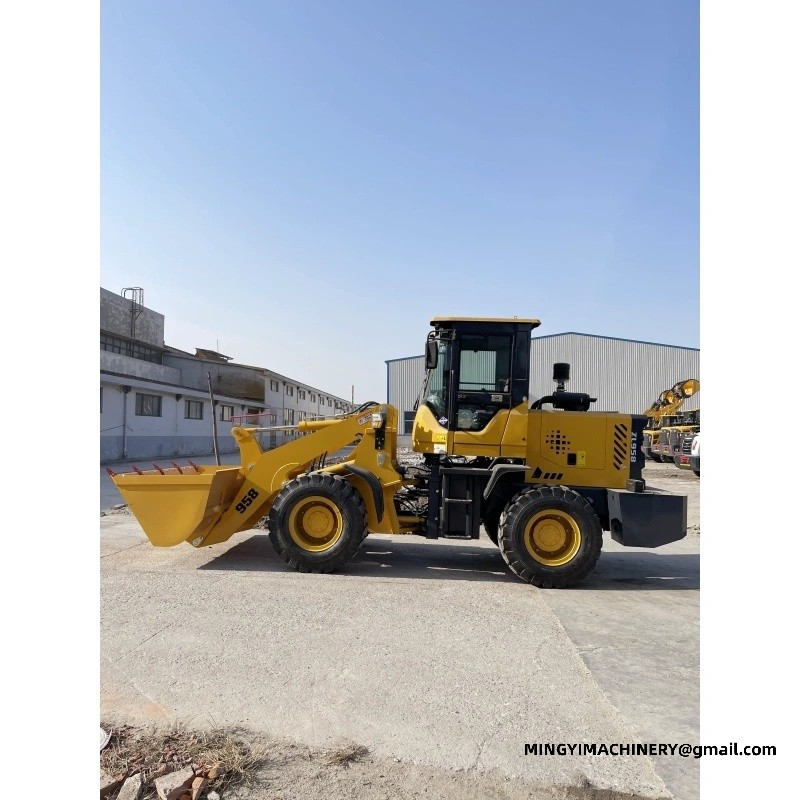
The standard bucket on this build is 0.38 m³, and it is the right tool for loose material moved from a heap to a body. Everything else is a compromise in one direction or another: forks give precision and lose volume, grapples give grip and lose speed, a snow blower gives reach and needs flow the bucket never asked for.
What makes attachments practical is whether the machine can lift them. Boom wall 25 mm and section 370 mm decide how much side load the arm takes, and the hinge plates — 25 mm at the front, 14 mm at the rear — decide how long the frame takes it. A grapple hanging off the end of a long arm is a side load the bucket never produces.
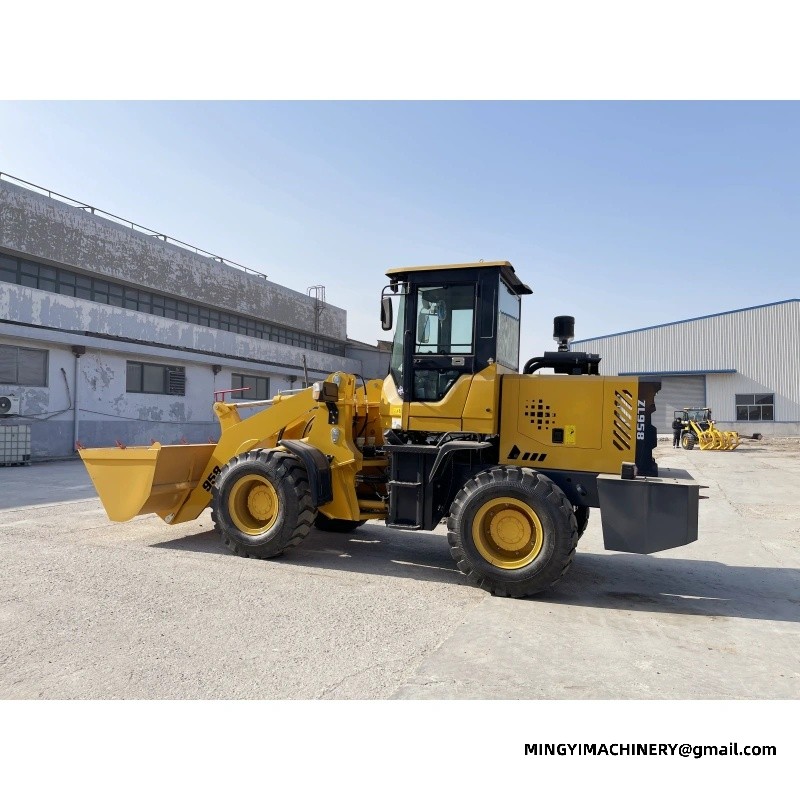
A loader is a tool carrier that happens to come with a bucket. What it can carry is decided at the factory — section width and pin geometry — which is why the light-duty 3.2 m low-profile wheel loader with its 370 mm section and the light-duty 3.2 m small-frame wheel-side reduction wheel loader with 370 mm do not share tooling even where their bucket capacities look close.
Plan the tool set with the machine order. Bucket plus forks covers most general work; add a grapple for silage, scrap or demolition; add a snow tool where winters are real. If any tool is hydraulically actuated, order the third circuit now, because the 40 pump (490 engine); 1045 pump (4102 turbo engine) on the light-duty 3.2 m low-profile wheel loader and the 40 pump (490 engine); 1045 pump (4102 turbo engine) on the light-duty 3.2 m small-frame wheel-side reduction wheel loader were sized for the base machine and a retrofit means a valve block, plumbing and labour in the field.
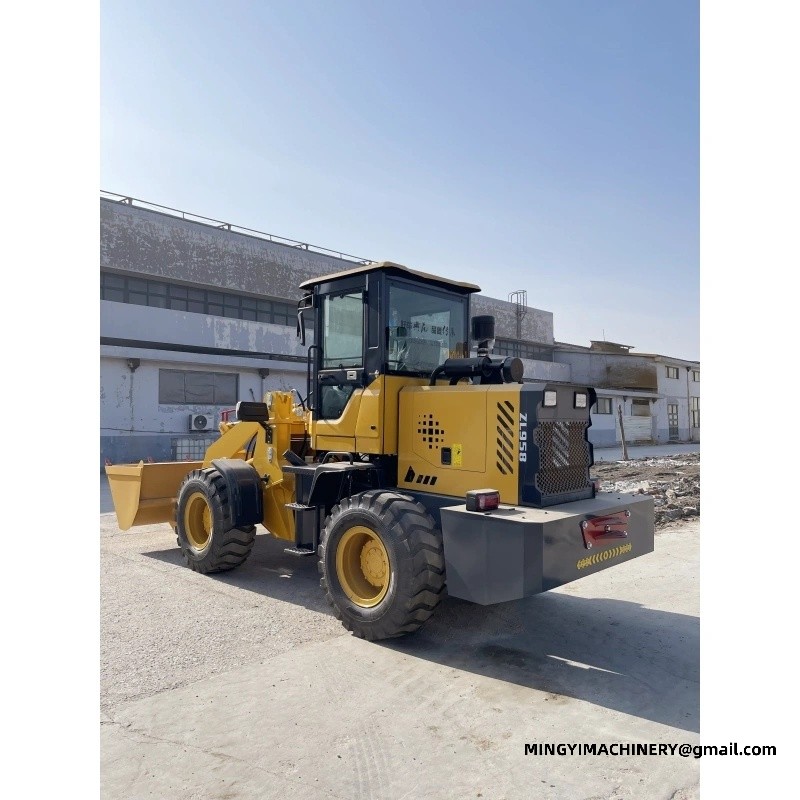
Volume is simple and stability is not. Across the range the buckets run 0.38 m³ on the light-duty 3.2 m low-profile wheel loader to 0.38 m³ on the light-duty 3.2 m small-frame wheel-side reduction wheel loader, and the machines behind them are built to match: 25 mm boom wall and 25 mm cross-member against 25 mm and 25 mm. That is why a bigger bucket on a lighter frame is a poor bargain.
Decide in three steps. First, what are you loading into — that fixes dump height, 3.2 m on the light-duty 3.2 m low-profile wheel loader or 3.2 m on the light-duty 3.2 m small-frame wheel-side reduction wheel loader. Second, what is the material's weight per cubic metre — that fixes whether 0.38 m³ or 0.38 m³ is honest. Third, how many passes a day — that fixes whether the extra volume saves enough time to pay for the heavier frame. Skip the second step and you buy a machine that is either slow or overloaded.
| Published build data — light-duty 3.2 m small-frame wheel-side reduction wheel loader | |
|---|---|
| Bucket capacity | 0.38 m³ |
| Dump height | 3.2 m |
| Track width | 1.5 m (wheel-side reduction axle); 1.45 m (Isuzu axle) |
| Boom arm thickness | 25 mm |
| Boom arm width | 370 mm |
| Boom arm length | 2.3 m |
| Boom arm centre distance | 890 mm |
| Cross-member thickness | 25 mm |
| Front hinge plate thickness | 25 mm |
| Rear hinge plate thickness | 14 mm |
| Rear frame section | 280 mm high x 800 mm wide |
| Hydraulic cylinders | centre cylinder 45 / side cylinder 40 |
| Fuel tank | 64.7 L (75# small tank) |
| Battery | 60 Ah (490 engine); 80 Ah (4102 turbo engine) |
| Front wheel to counterweight | 3.8 m |
| Radiator | 4100 core (490 engine); 4105 core (4102T engine) |
| Work pump | 40 pump (490 engine); 1045 pump (4102 turbo engine) |
| Travel pump | 316 pump |
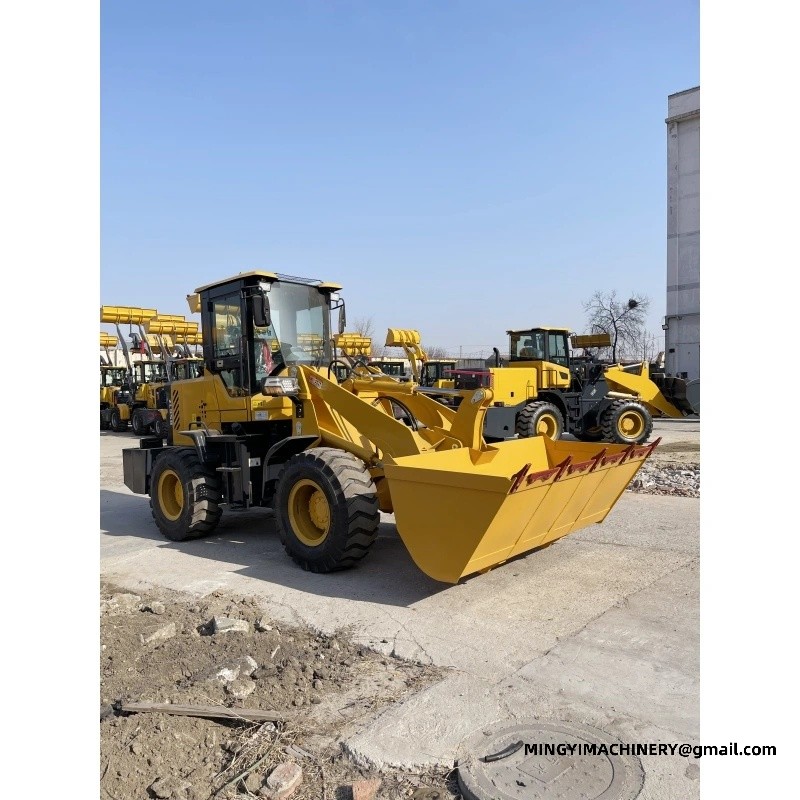
Every loader purchase starts with the thing being loaded into. On this range the choice runs from 3.2 m on the light-duty 3.2 m low-profile wheel loader to 3.2 m on the light-duty 3.2 m small-frame wheel-side reduction wheel loader, and the gap between those two figures is the gap between a machine that feeds a small mixer and one that feeds a highway truck.
Take the measurement at the highest point the bucket must clear, on the near side, with the truck loaded — a suspension that settles under load lowers the board. Then add allowance for the operator's approach angle. The light-duty 3.2 m low-profile wheel loader at 3.2 m with a 0.38 m³ bucket and a 2.3 m arm is a compact answer; the light-duty 3.2 m small-frame wheel-side reduction wheel loader at 3.2 m with 0.38 m³ and a 2.3 m arm is the answer where the board is high.
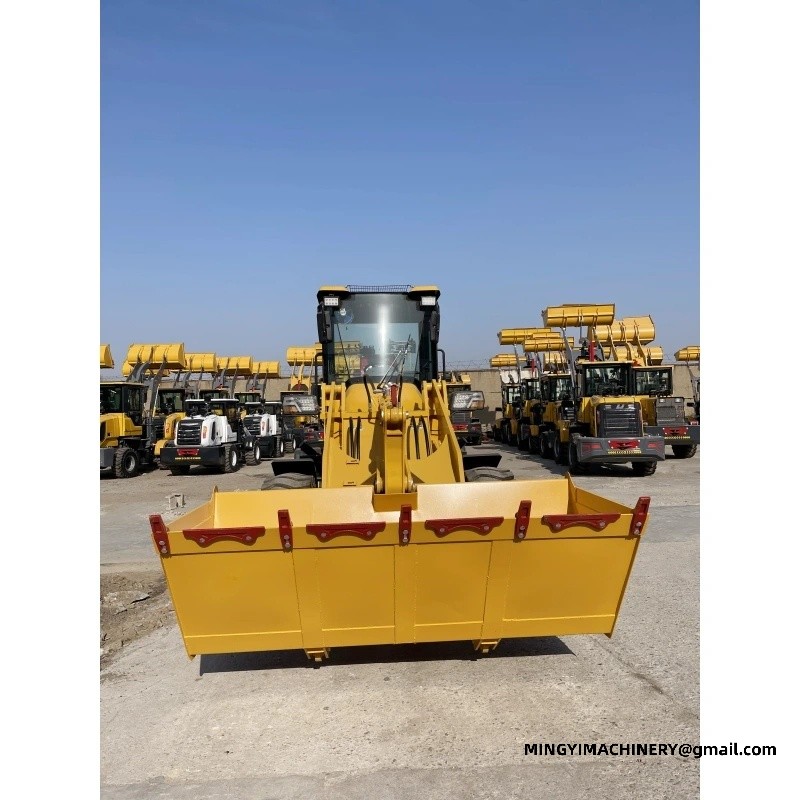
Airborne dust is the hardest thing a cooling system has to deal with, because it blocks the fin passages from the outside while the engine keeps producing heat. Core size is the buffer: 4100 core (490 engine); 4105 core (4102T engine) here against 4100 core (490 engine); 4105 core (4102T engine) on the heavy-duty 4.5 m small-frame wheel-side reduction wheel loader. Screen area and access for cleaning matter as much as volume, so ask how the core is mounted before asking how big it is.
Work pumps generate heat too, not only the engine. This build runs 40 pump (490 engine); 1045 pump (4102 turbo engine) alongside 316 pump, and sustained hydraulic work in a hot climate adds load that the radiator was not sized for on a temperate machine. Where the duty is continuous rather than intermittent — a stockpile that never stops rather than a site that loads three trucks an hour — specify the larger core even if the engine is the same.
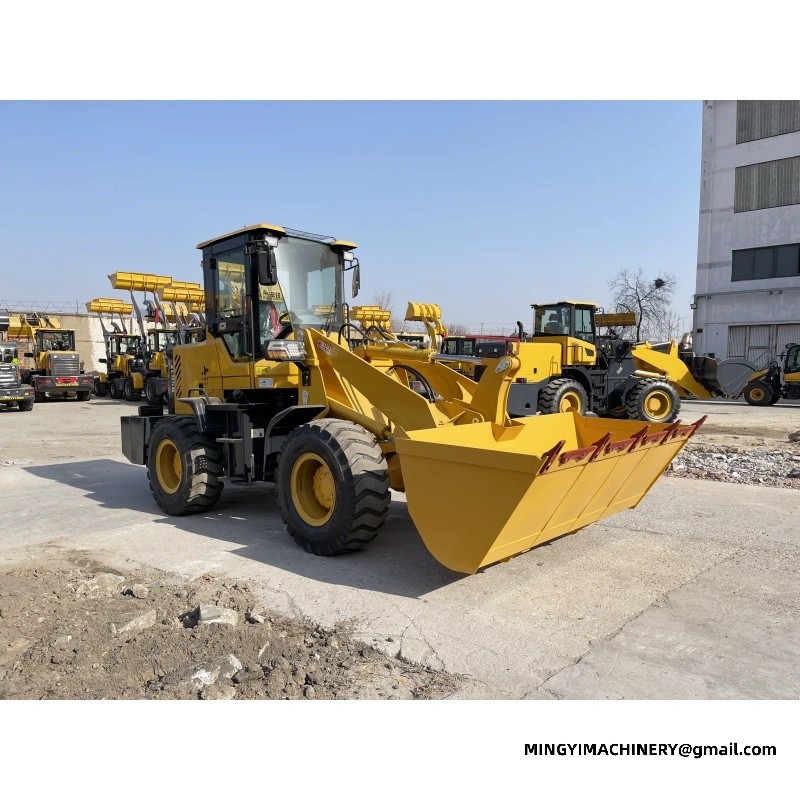
Every unit leaves the factory knock-down: booms and counterweights loose, tanks removed, batteries boxed and disconnected. Because rear frame sections stay within the 280 mm high x 800 mm wide to 280 mm high x 800 mm wide band across the range, two to three loaders ship in one forty-foot container.
What arrives is a machine plus a commissioning job. On the light-duty 3.2 m small-frame wheel-side reduction wheel loader that means fitting the 2.3 m boom to the 890 mm mounts, torquing the 25 mm hinge pins, filling the 64.7 L (75# small tank) tank and the 4100 core (490 engine); 4105 core (4102T engine) cooling system, and connecting the battery. On the light-duty 3.8 m small-frame wheel-side reduction wheel loader the same sequence applies with 2.61 m, 25 mm, 64.7 L (75# small tank) and 4100 core (490 engine); 4105 core (4102T engine). Allow a day per machine, and allow for the fact that the battery will have sat for weeks.
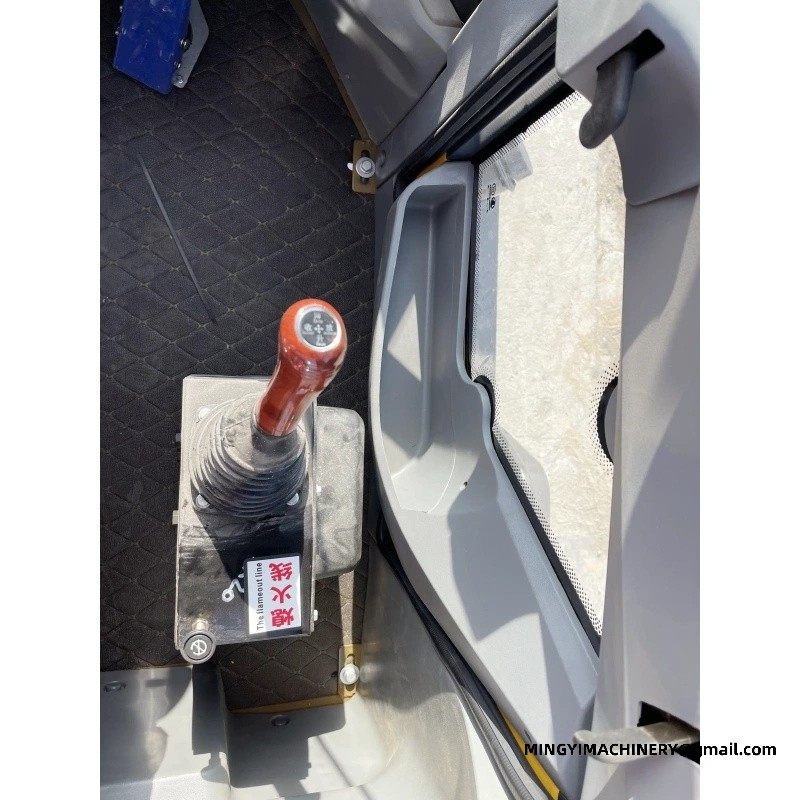
Before specifying anything else, measure the tallest body the loader will ever have to clear, at the front board, loaded, on the worst ground on site. That number decides the machine. The heavy-duty 3.5 m medium-frame wheel-side reduction wheel loader in this comparison dumps at 3.5 m; the heavy-duty 3.5 m medium-frame wheel-side reduction wheel loader at 3.5 m. The difference looks small on paper and is decisive at the face, because a loader that cannot clear the board cannot be worked around.
Once the height is settled, capacity sets the number of passes. 0.38 m³ on the light-duty 3.2 m low-profile wheel loader against 0.65 m³ on the heavy-duty 3.5 m medium-frame wheel-side reduction wheel loader. Multiply by your material weight per cubic metre and check it against what the chassis is carrying, not what the bucket holds — the frame, at 25 mm across the member, is the limit that arrives first.
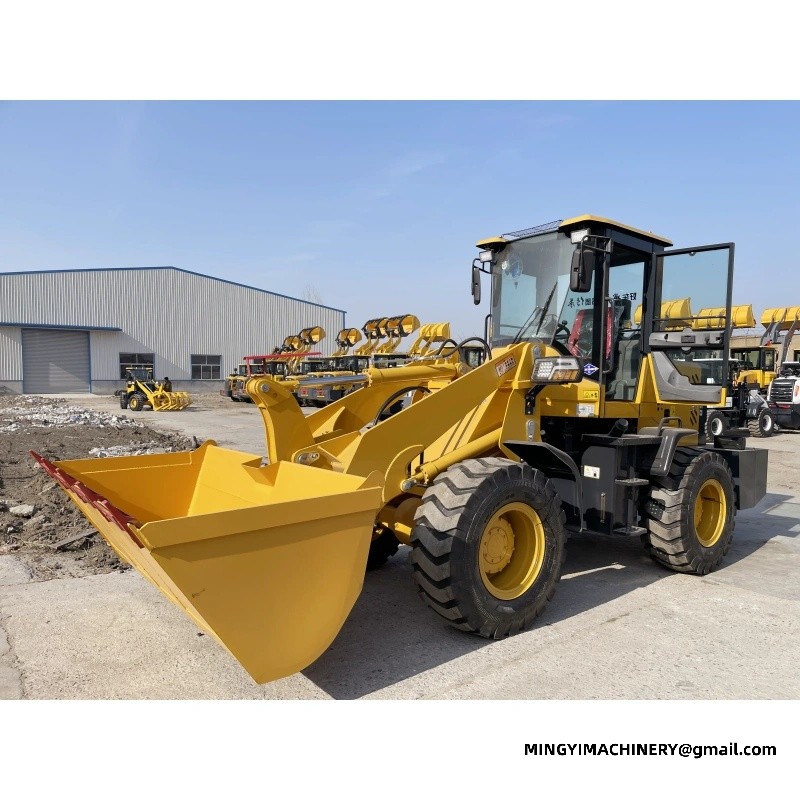
Ask any yard operator which part fails first and the answer is the articulation, not the engine. The rear hinge plate takes every reversing and turning load: 14 mm on the light-duty 3.2 m low-profile wheel loader against 14 mm on the light-duty 3.2 m small-frame wheel-side reduction wheel loader, on cross-members of 25 mm and 25 mm respectively. That pair of figures predicts whether the machine is still tight at year three.
The rest of the specification follows the duty. A 0.38 m³ bucket at 3.2 m with centre cylinder 45 / side cylinder 40 cylinders is right for loose stock and loading out; 0.38 m³ at 3.2 m with centre cylinder 45 / side cylinder 40 is right where the machine has to break out of a face. Ground decides the axle — 1.5 m (wheel-side reduction axle); 1.45 m (Isuzu axle) against 1.5 m (wheel-side reduction axle); 1.45 m (Isuzu axle) — and the material decides the radiator.
Where do frames on a wheel loader supplier crack first?
Weld toes at the cross-member and around the rear hinge. The section is 230 mm high x 800 mm wide over a 25 mm member on this build; check both monthly on hard duty.
Can a wheel loader supplier be used with forks?
Yes, and the load centre moves forward, so capacity drops. Check the boom section, 370 mm wide with 890 mm of spacing, before hanging a long carriage off it.
How is a wheel loader supplier transported between sites?
On a low-loader, arm strapped down, secured to the frame rather than the cylinders. Front wheel to counterweight is 4 m and track is 1.5 m (wheel-side reduction axle); 1.45 m (Isuzu axle), which is what the haulier needs.
How often do hydraulic hoses need replacing?
On condition rather than on a calendar: look for cracking, rubbing and weeping at the crimps. The circuit runs centre cylinder 45 / side cylinder 40 on a 40 pump (490 engine); 1045 pump (4102 turbo engine), and a burst hose is a day while a failed pump is a week.
Is it worth rebuilding an older wheel loader supplier?
If the frame is tight, yes: cylinders centre cylinder 45 / side cylinder 40, pump 40 pump (490 engine); 1045 pump (4102 turbo engine) and core 4100 core (490 engine); 4105 core (4102T engine) are all replaceable. If the pins have ovalised their bores, the geometry will not come back.
How often will a wheel loader supplier need refuelling?
The tank is 64.7 L (75# small tank), sized for a full shift at working throttle without a mid-day stop. Machines on short cycles with a lot of idling will use more than the figure suggests.
Which tyre fitment does a wheel loader supplier use?
It follows the tank and axle specification: 54 L (50# tank) on this build. The larger fitment goes with the larger tank and the heavier duty.
Where the duty is continuous rather than intermittent, the cooling and electrical rows move up the list: 4100 core (490 engine); 4105 core (4102T engine) of core and 60 Ah (490 engine); 80 Ah (4102 turbo engine) of battery on the light-duty 3.2 m low-profile wheel loader. Where it is intermittent, the frame rows do. Deciding which case you are in is most of the specification.
Keeping a service record for Wheel Loader Supplier: Spares, Answers and Lead Times
The record should follow the machine, not the owner. When Wheel Loader Supplier: Spares, Answers and Lead Times changes hands the service history travels with it, and a complete folder is often the difference between a quick sale and a long one.
Planning the season around Wheel Loader Supplier: Spares, Answers and Lead Times
Seasonal work rewards a machine that can change duty. Through the year Wheel Loader Supplier: Spares, Answers and Lead Times may move from one task to another, and the attachment list should be chosen for the whole year rather than for the first job.
Contact MINGYI Machinery for the current wheel loader lineup, configuration options and a formal specification for your market. E-mail: sales@mingycn.com | LINE (ID): mingyicn
China Wheel Loader Factory: From Order to Container · Heavy Duty Wheel Loader: Wear Points on Hard Ground · Wheel Loader for Agriculture: Gate Widths, Sheds and Wagons · Wheel Loader









