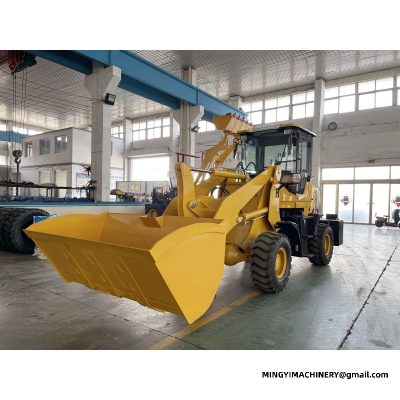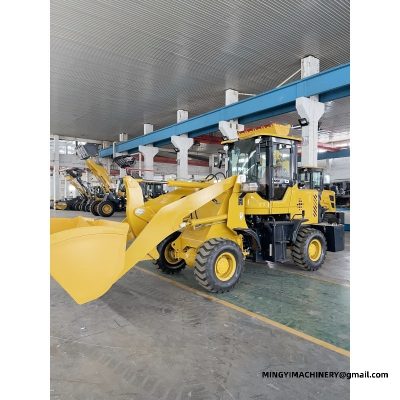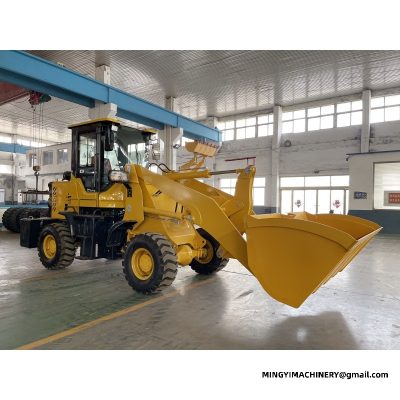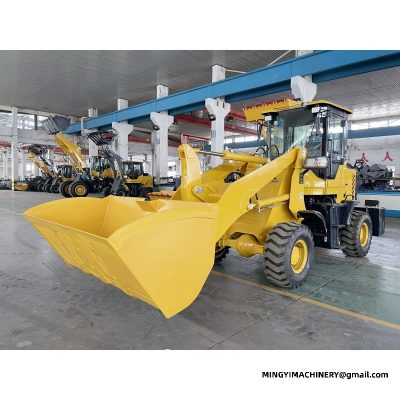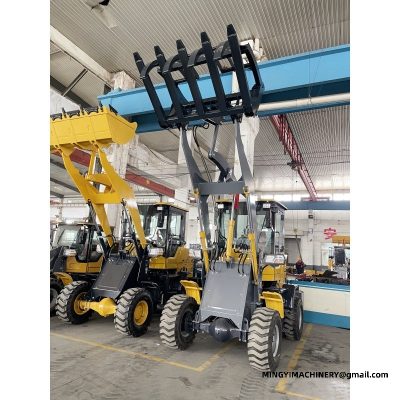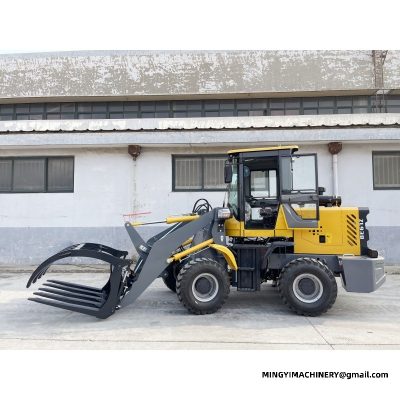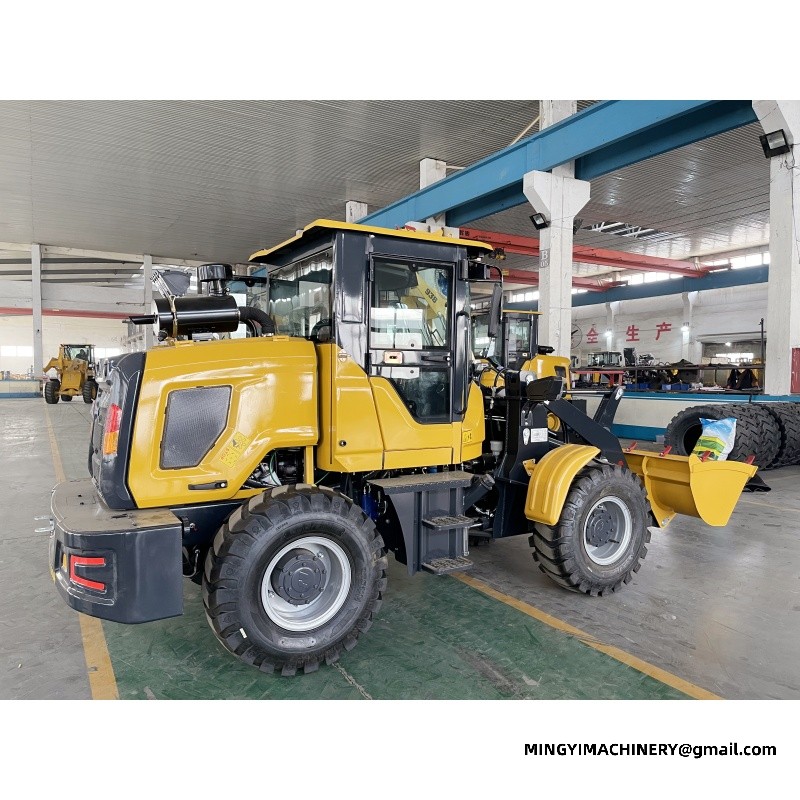
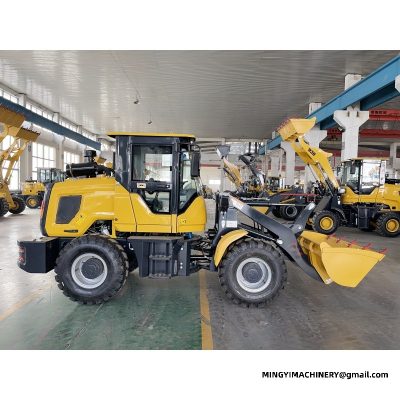
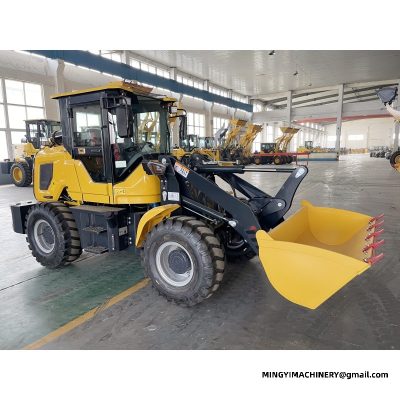
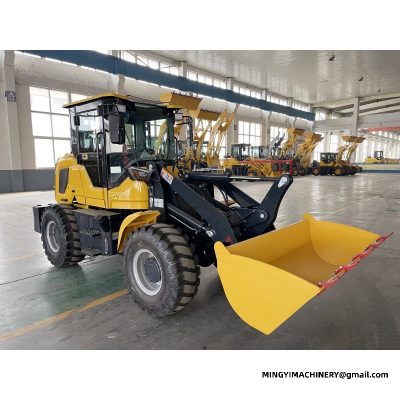
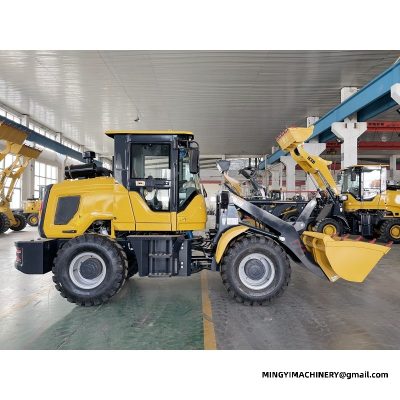
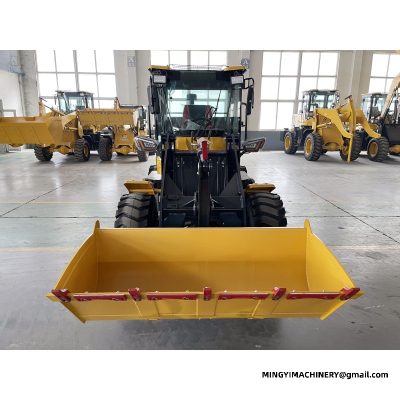
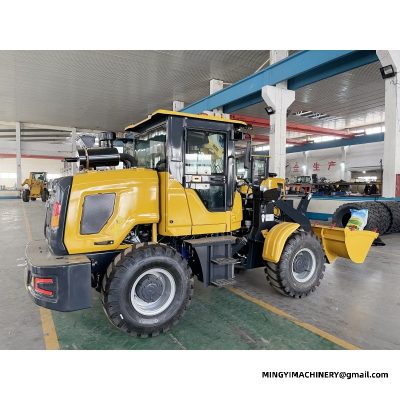
There are two ways to buy a wheel loader for agriculture: from the brochure, or from the numbers that decide whether it works. This page is the second. Bucket 0.38 m³ to 0.38 m³. Dump height 3.2 m to 3.5 m. Boom 2.3 m long, 370 mm wide and 25 mm thick on the lighter build; 2.62 m, 370 mm and 25 mm on the heavier one. Cylinders centre cylinder 45 / side cylinder 40 against centre cylinder 45 / side cylinder 40, pumps 40 pump (490 engine); 1045 pump (4102 turbo engine) against 40 pump (490 engine); 1045 pump (4102 turbo engine), radiators 4100 core (490 engine); 4105 core (4102T engine) against 4100 core (490 engine); 4105 core (4102T engine). Each figure is explained below in terms of what it does on site.
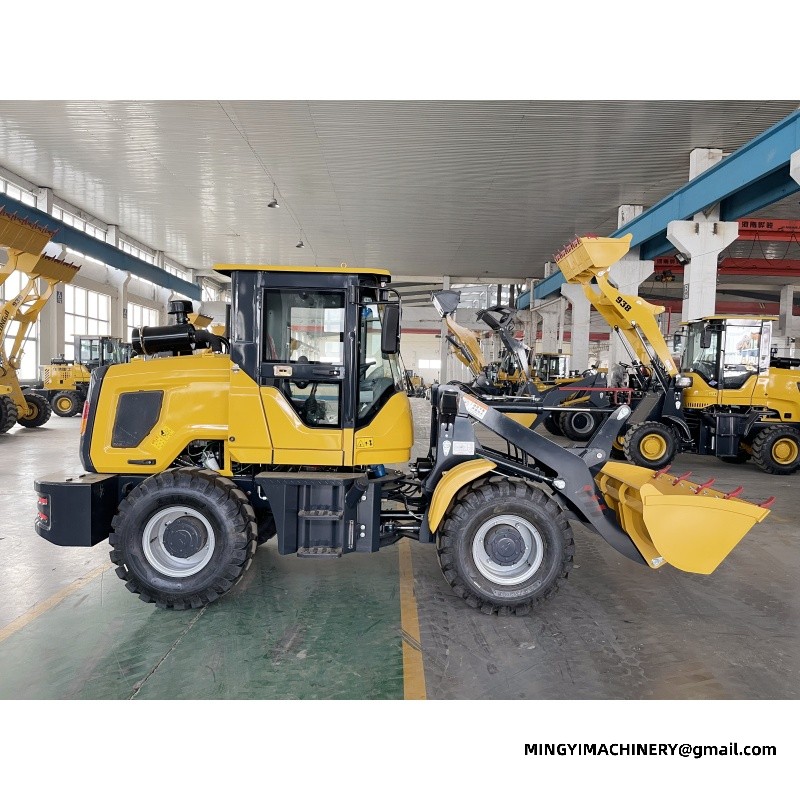
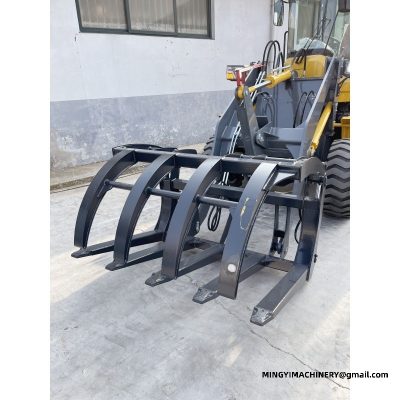
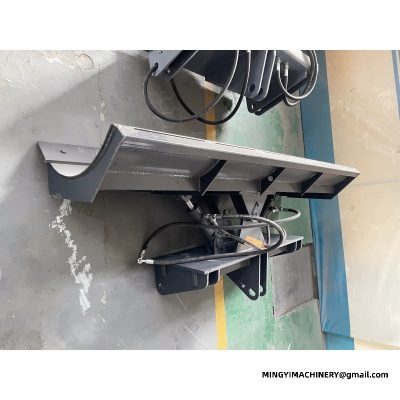
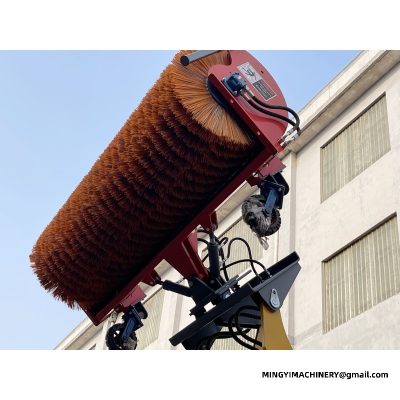
An attachment is only as useful as the hydraulics behind it. This build runs centre cylinder 45 / side cylinder 40 fed by a 40 pump (490 engine); 1045 pump (4102 turbo engine), and those two figures set the force available at the boom and the speed at which it arrives. A grapple, a fork carriage or a snow blower all ask for more flow than a bucket does.
The centre cylinder does the lifting and the side cylinders do the tilting, and they are specified together for a reason. On the heavy-duty 4.2 m medium-frame wheel-side reduction wheel loader the pair is centre cylinder 60 / side cylinder 50. If an attachment needs a third service, the question to ask is whether the pump has the flow to run it without starving the lift circuit, because a machine that lifts slowly with a grapple on is not a machine with a grapple problem. It has a 2063 pump problem.
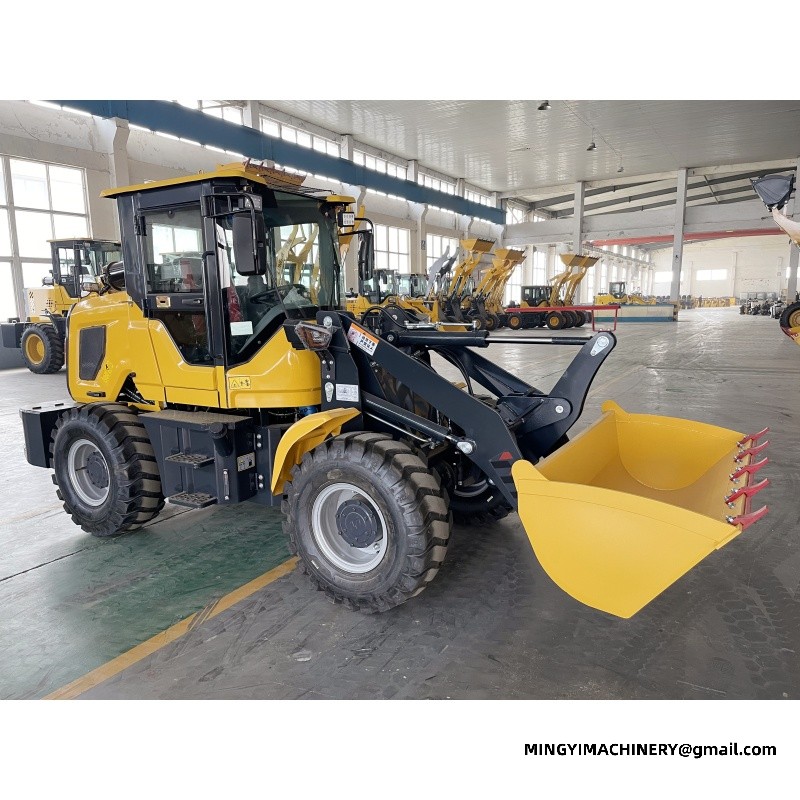
A bucket that fills completely every pass beats a larger one that fills partly, because a partly filled bucket is carrying air at the same effort as material. On a dense face, 0.38 m³ will fill where 0.38 m³ might not, and the smaller machine finishes the job first while putting less load into the 25 mm hinge.
There is also the question of what the load does to the machine in motion. Carrying a full bucket across rough ground loads the front axle, the hinge and the boom all at once. At 4.1 m front wheel to counterweight and 1.5 m (wheel-side reduction axle); 1.45 m (Isuzu axle) of track, the shorter machine with the right bucket is more stable as well as quicker, and stability is what keeps a cycle time consistent rather than occasionally fast.
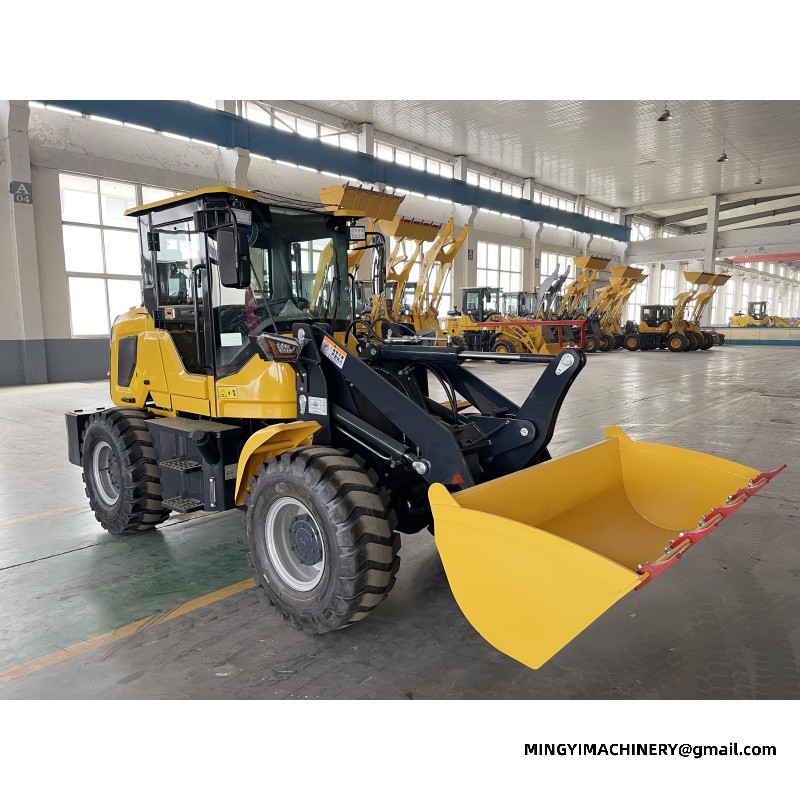
Two loaders can carry the same bucket and behave nothing alike, and the boom is usually why. Compare the light-duty 3.5 m small-frame wheel-side reduction wheel loader with the heavy-duty 3.5 m medium-frame wheel-side reduction wheel loader: bucket 0.38 m³ against 0.65 m³, but boom length 2.62 m against 3.15 m and section width 370 mm against 500 mm. The longer arm reaches further and dumps higher; the wider section survives being levered sideways. Both matter, and neither appears in a headline specification.
Wall thickness is the figure that separates a boom engineered for the frame from one merely bolted to it. The light-duty 3.5 m small-frame wheel-side reduction wheel loader runs 25 mm; the heavy-duty 3.5 m medium-frame wheel-side reduction wheel loader runs 30 mm. Centre distance — 890 mm against 920 mm — completes the picture, because pin loads fall as spacing rises. If your work involves breaking out from a stockpile face rather than shovelling loose stock, ask for those three numbers before you ask about bucket volume.
| Sample build from the range — heavy-duty 3.8 m medium-frame wheel-side reduction wheel loader | |
|---|---|
| Bucket capacity | 0.65 m³ |
| Dump height | 3.8 m |
| Track width | 1.6 m |
| Boom arm thickness | 30 mm |
| Boom arm width | 500 mm |
| Boom arm length | 2.9 m |
| Boom arm centre distance | 920 mm |
| Cross-member thickness | 45 mm |
| Front hinge plate thickness | 45 mm |
| Rear hinge plate thickness | 30 mm |
| Rear frame section | 300 mm high x 800 mm wide |
| Hydraulic cylinders | centre cylinder 60 / side cylinder 50 |
| Fuel tank | 70 L (75# large tank) |
| Battery | 80 Ah |
| Front wheel to counterweight | 4.55 m |
| Radiator | 4105 core |
| Work pump | 2063 pump |
| Travel pump | 25 pump |
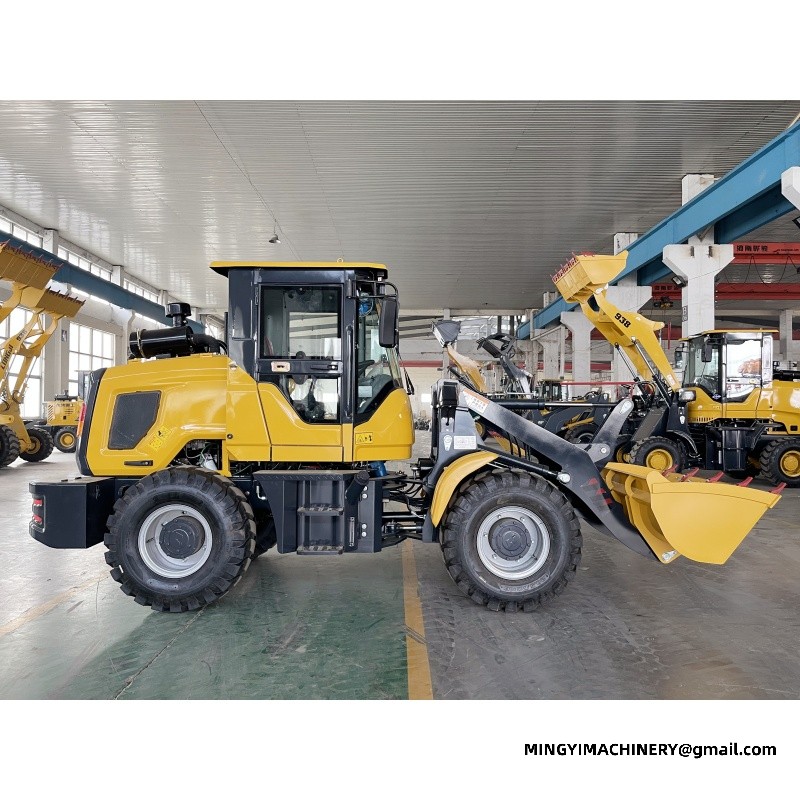
Bucket capacity is the first figure stated and the last one that should be decided. The light-duty 3.5 m small-frame wheel-side reduction wheel loader carries 0.38 m³; the light-duty 4.2 m small-frame wheel-side reduction wheel loader carries 0.38 m³. What those volumes mean depends on the material: a heaped bucket of dry sand weighs far less than the same heaped bucket of wet gravel or crushed rock, and the machine's stability, not its volume, sets the real limit.
Match the bucket to the receiving body and the material, in that order. A 0.38 m³ bucket at 3.5 m clearing a low pan mixer is correctly specified; the same bucket feeding a highway truck is a slow day. Against that, a 0.38 m³ bucket at 4.2 m needs the frame behind it — 25 mm front and 20 mm rear hinge plates, a 25 mm cross-member — or it will be a fast machine with a short life.
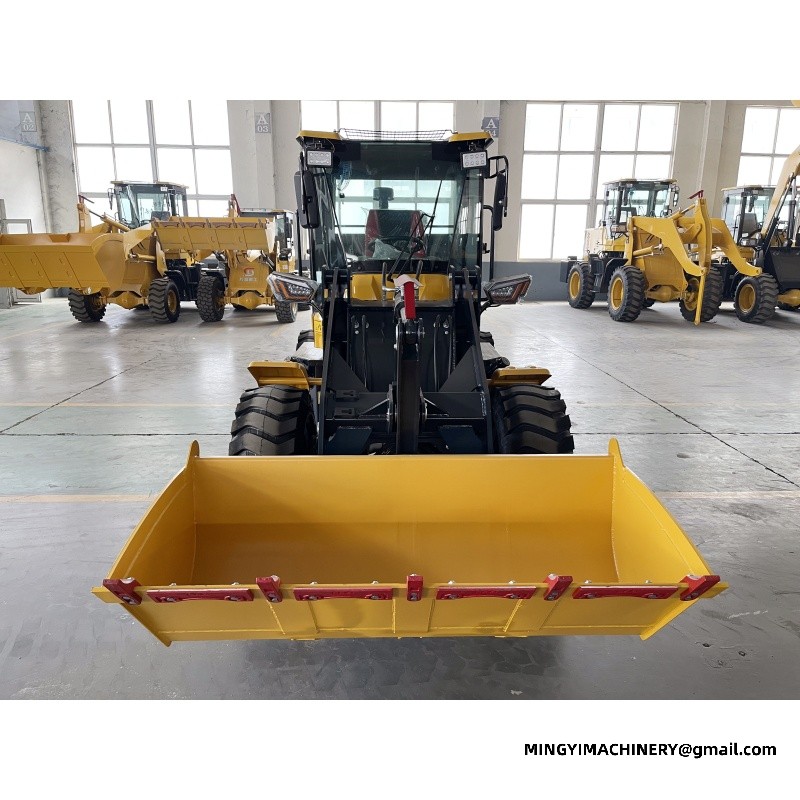
Winter changes three things: the battery has less to give, the oil is thicker, and the operator is working in gloves. The first two are specification questions. 60 Ah (490 engine); 80 Ah (4102 turbo engine) covers the first. The hydraulic side, centre cylinder 45 / side cylinder 40 with a 40 pump (490 engine); 1045 pump (4102 turbo engine), is sized for the loads it will see at working temperature and will simply be slower until it warms.
The third is a machine-layout question and comes down to the rear frame and the tank: 280 mm high x 800 mm wide of rear section and 64.7 L (75# small tank) of fuel. Cold-weather work also means more idling, so tank capacity should be read against winter consumption rather than summer consumption. A machine that needs refuelling at minus ten with an operator standing outside is a specification failure, not a weather problem.
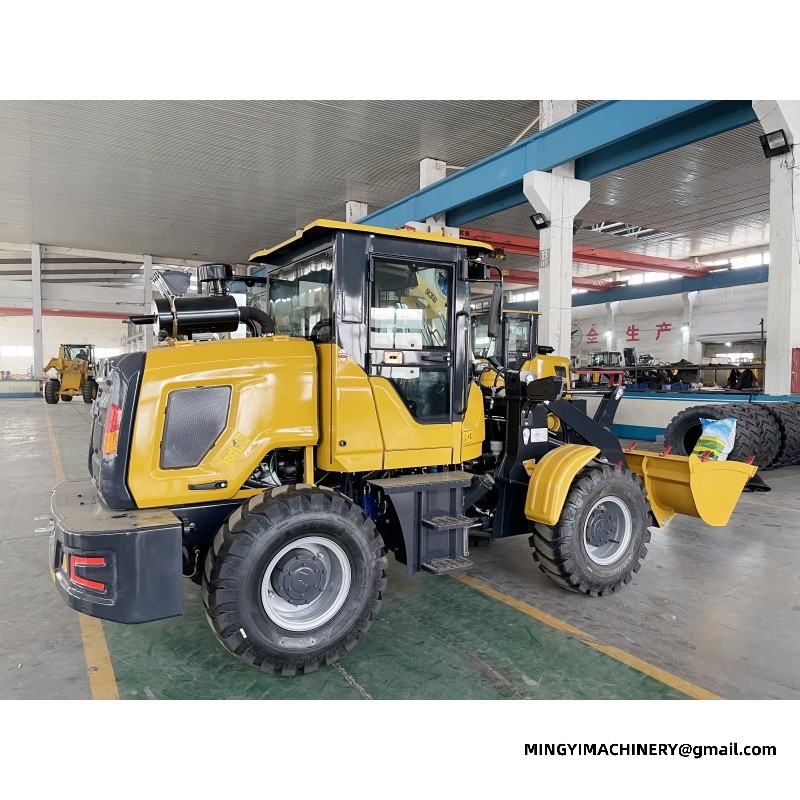
Radiator size follows the engine, not the frame. The light-duty 3.5 m small-frame wheel-side reduction wheel loader lists 4100 core (490 engine); 4105 core (4102T engine); the heavy-duty 4.5 m small-frame wheel-side reduction wheel loader lists 4100 core (490 engine); 4105 core (4102T engine). Where two engine options exist on one build, the cores differ — a 4100 core on the 490 engine and a 4105 on the 4102 turbo — and the taller, raised core is the one to specify wherever dust, chaff or dry sand blankets a standard radiator part-way through a shift.
Overheating is the single most common cause of a loader losing days rather than hours. It presents as power loss, then as a shift cut short, then as a head gasket. Choosing the raised core takes almost nothing at order time and cannot be retrofitted easily later. Pair that with the electrical package — 60 Ah (490 engine); 80 Ah (4102 turbo engine) on the light-duty 3.5 m small-frame wheel-side reduction wheel loader, 60 Ah (490 engine); 80 Ah (4102 turbo engine) on the heavy-duty 4.5 m small-frame wheel-side reduction wheel loader — and note that a battery specified for a naturally aspirated engine is often marginal for a turbo one in cold climates.
The battery is specified against the engine it has to crank: 60 Ah (490 engine); 80 Ah (4102 turbo engine) on the light-duty 3.8 m small-frame wheel-side reduction wheel loader and 80 Ah on the heavy-duty 4.2 m medium-frame wheel-side reduction wheel loader. Where a build lists two figures, they belong to two engine options — a smaller capacity for the naturally aspirated unit, a larger one for the turbo — and the difference is starting torque in cold weather rather than anything you would notice in July.
For fleets shipping to cold markets, specify the larger capacity and a battery isolator; machines shipped knock-down arrive with batteries boxed and disconnected, and a machine that has sat for six weeks at anchor will not crank on a marginal battery. Check the rest of the electrical package at the same time — the 40 pump (490 engine); 1045 pump (4102 turbo engine) and 316 pump circuits on the light-duty 3.8 m small-frame wheel-side reduction wheel loader share the same harness, and a poor earth there presents as slow hydraulics rather than as an electrical fault.
Model names are marketing; build codes are what the shop floor works from. Two machines with the same name can leave the factory with different hinge steel, and the difference is invisible until something wears. On this range the differences are published: 25 mm of cross-member against 45 mm, 25 mm of front hinge plate against 45 mm.
Specify the machine the way you would specify a pump: by the numbers. Bucket 0.38 m³, dump height 3.2 m, cylinders centre cylinder 45 / side cylinder 40, track 1.5 m (wheel-side reduction axle); 1.45 m (Isuzu axle). Write those into the order and the confirmation, and the machine that arrives is the machine you compared. Anything else relies on a name meaning the same thing to two people.
What bucket capacity should a wheel loader for agriculture be specified with?
Match it to the material and to the body being filled: 0.38 m³ on the light-duty 3.2 m small-frame wheel-side reduction wheel loader against 0.65 m³ on the heavy-duty 4.2 m medium-frame wheel-side reduction wheel loader. Heavy material limits volume before the frame does.
How do I pick between the frame tiers of a wheel loader for agriculture?
By reach and duty. The light-duty 3.2 m small-frame wheel-side reduction wheel loader carries 0.38 m³ to 3.2 m on a 25 mm cross-member; the light-duty 3.5 m small-frame wheel-side reduction wheel loader carries 0.38 m³ to 3.5 m on 25 mm.
What does commissioning a wheel loader for agriculture involve?
Fit the 2.62 m boom to the 890 mm mounts, torque the hinge pins, fill the 64.7 L (75# small tank) tank and the 4100 core (490 engine); 4105 core (4102T engine) circuit, and connect the battery. Allow a day per machine.
Can a wheel loader for agriculture work indoors?
The low-profile builds can, where height and footprint allow: 4.25 m front-to-counterweight length and 1.5 m (wheel-side reduction axle); 1.45 m (Isuzu axle) track on the heavy-duty 4.5 m small-frame wheel-side reduction wheel loader. Ventilation is the other constraint to check.
How are the pumps specified on a wheel loader for agriculture?
Lift and travel are separate circuits: a 40 pump (490 engine); 1045 pump (4102 turbo engine) work pump with a 316 pump travel pump, so a loaded climb does not take flow away from the boom.
Where is the extra steel in a heavier wheel loader for agriculture?
Boom wall 25 mm against 30 mm, front hinge 30 mm against 45 mm, rear hinge 20 mm against 30 mm, cross-member 30 mm against 45 mm.
Can a wheel loader for agriculture run a hydraulic attachment?
Yes, provided the third circuit is ordered with the machine. The 40 pump (490 engine); 1045 pump (4102 turbo engine) work pump and 316 pump travel pump are specified per build, and plumbing added later is the usual source of leaks.
Models, options and container plans are stated per order against the actual mix. Send the application, the material and the receiving body height, and we will specify the wheel loader for agriculture — axle, radiator, bucket and third circuit — in one pass.
Moving Wheel Loader for Agriculture: Gate Widths, Sheds and Wagons between sites
Securing the load is not optional. Lashing Wheel Loader for Agriculture: Gate Widths, Sheds and Wagons at the points intended for it, checking the tension before the vehicle moves and rechecking after the first kilometres is standard practice rather than extra care.
Hot, humid and dusty conditions around Wheel Loader for Agriculture: Gate Widths, Sheds and Wagons
Humidity attacks the parts that are not used. Storage in a damp climate means Wheel Loader for Agriculture: Gate Widths, Sheds and Wagons needs the exposed metal protected and the machine run regularly, because standing still does more damage than working.
Contact MINGYI Machinery for the current wheel loader lineup, configuration options and a formal specification for your market. E-mail: sales@mingycn.com | LINE (ID): mingyicn
Wheel Loader for Construction Site: Board Heights and Turn Space · Wheel Loader for Material Handling: Forks, Grapples and Circuits · Wheel Loader Series: Matching a Build to Daily Work · Loaders