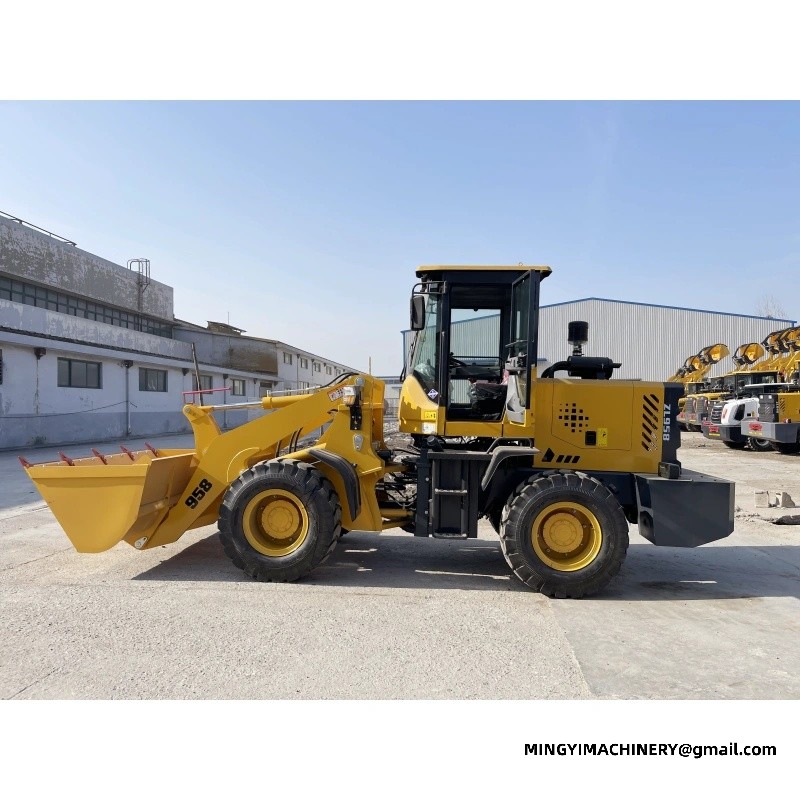
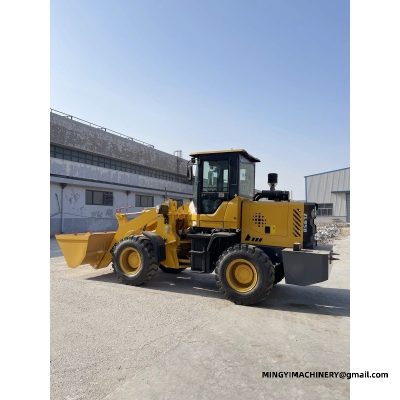
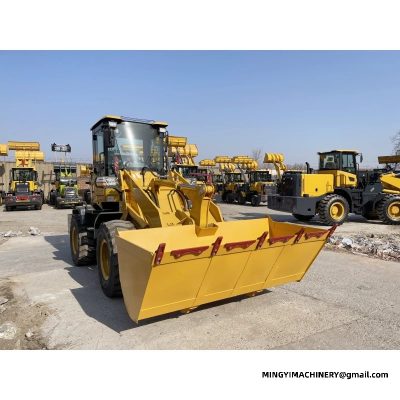
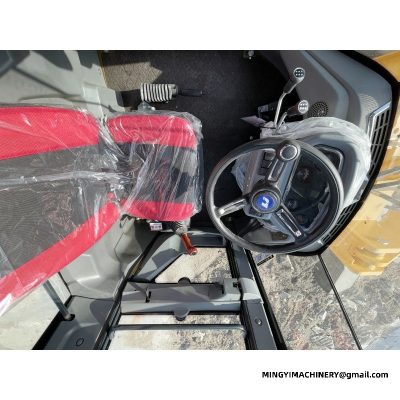
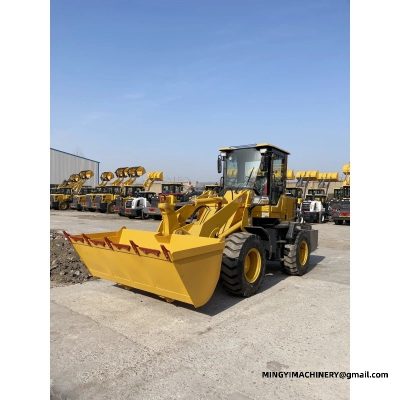
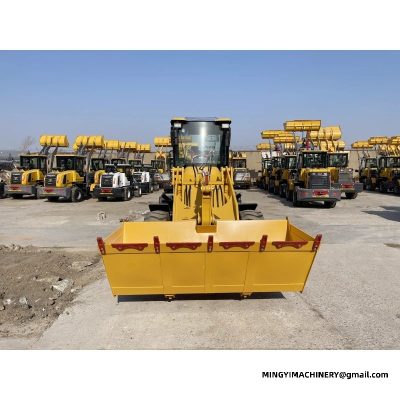
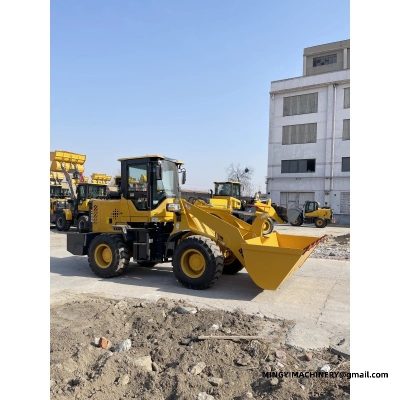
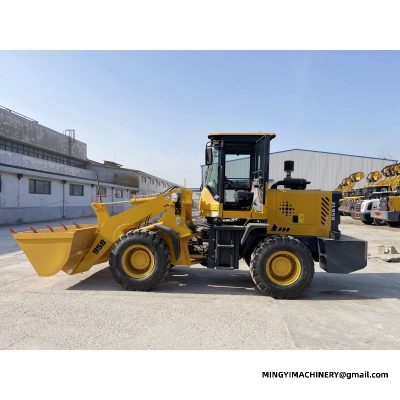
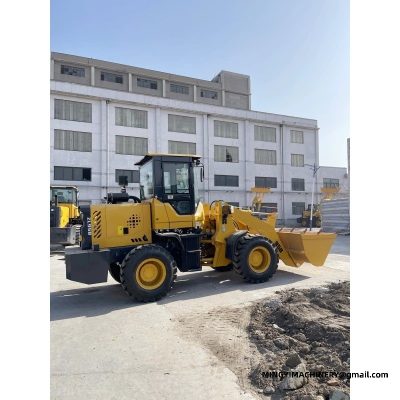
Owners judge a China wheel loader factory on things a brochure never lists. Does it start on a cold morning. Does it clear the body it was bought to clear. Does the steering still feel tight after two seasons. Those outcomes are decided by published figures: battery 60 Ah (490 engine); 80 Ah (4102 turbo engine), dump height 3.5 m, hinge plates 30 mm front and 20 mm rear. This page takes each of them in turn, using two builds from the range — the heavy-duty 3.5 m small-frame wheel-side reduction wheel loader and the heavy-duty 3.8 m small-frame wheel-side reduction wheel loader — to show what the numbers mean once the machine is working.
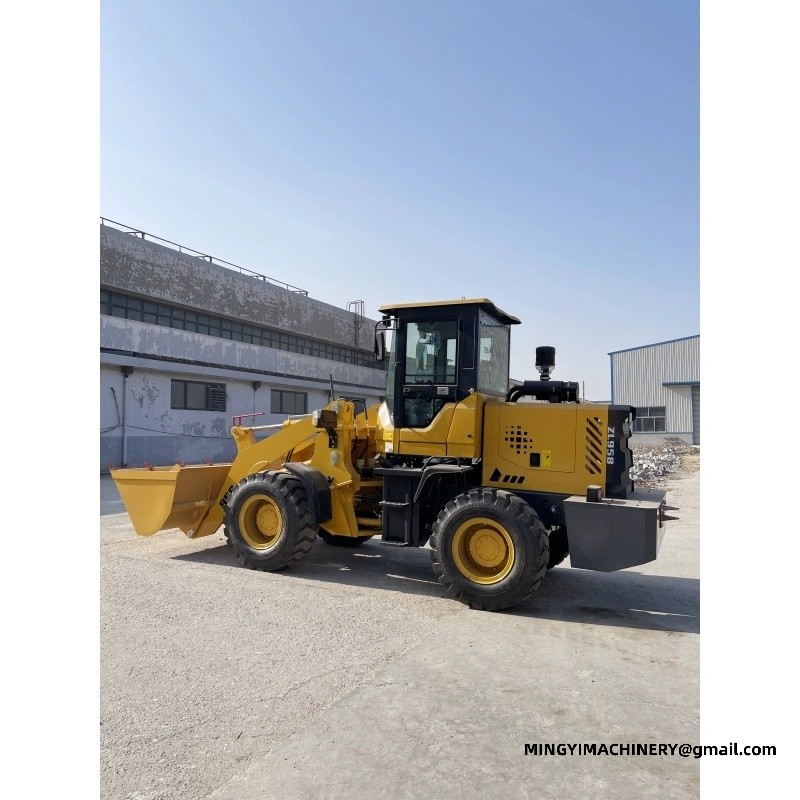
An attachment is only as useful as the hydraulics behind it. This build runs centre cylinder 40 / side cylinder 40 fed by a 32 pump, and those two figures set the force available at the boom and the speed at which it arrives. A grapple, a fork carriage or a snow blower all ask for more flow than a bucket does.
The centre cylinder does the lifting and the side cylinders do the tilting, and they are specified together for a reason. On the heavy-duty 4.2 m small-frame wheel-side reduction wheel loader the pair is centre cylinder 45 / side cylinder 45. If an attachment needs a third service, the question to ask is whether the pump has the flow to run it without starving the lift circuit, because a machine that lifts slowly with a grapple on is not a machine with a grapple problem. It has a 40 pump (490 engine); 1045 pump (4102 turbo engine) problem.
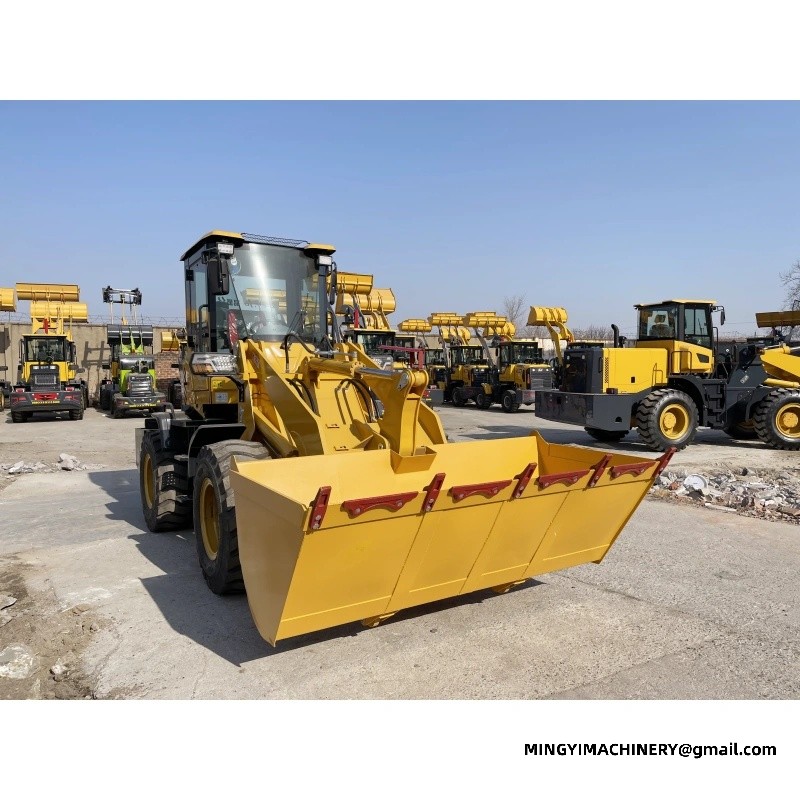
The boom section is the mounting standard. On the heavy-duty 3.5 m small-frame wheel-side reduction wheel loader it is 430 mm with a 890 mm centre distance; on the heavy-duty 3.8 m small-frame wheel-side reduction wheel loader it is 430 mm with 890 mm. Fork frames, grapples and snow tools specification against those two numbers, which is why "forks to suit a three-ton loader" is not a specification.
For a mixed fleet the practical set is four tools: a bucket for bulk, forks for pallets and bagged goods, a grapple for loose material and demolition, and a snow tool for winter work. Mechanical sets need no hydraulic circuit and swap in minutes; hydraulic sets need the circuit ordered with the machine. The 316 pump and 316 pump travel pumps keep drive independent either way, so steering is unaffected by tool load.
The bucket figures in the table are engineering capacities: 0.4 m³ on the heavy-duty 3.5 m small-frame wheel-side reduction wheel loader, 0.4 m³ on the heavy-duty 3.8 m small-frame wheel-side reduction wheel loader. They assume a material density, and the machine is stable with them at full lift because the counterweight and the 4.1 m or 4.2 m footprint were sized around that density.
Change the material and you change the limit, not the machine. Light material — grain, woodchip, compost, snow — lets you run a larger bucket and a higher cycle. Heavy material — wet sand, crushed stone, ore — means the 0.4 m³ bucket needs the 20 mm rear hinge plate and 30 mm cross-member behind it, and the 0.4 m³ bucket on the lighter frame is the honest specification for the lighter material. Tell the factory what you are moving and let them match the bucket to it.
| Specification extract — light-duty 3.5 m medium-frame wheel-side reduction wheel loader | |
|---|---|
| Bucket capacity | 0.52 m³ |
| Dump height | 3.5 m |
| Track width | 1.6 m |
| Boom arm thickness | 30 mm |
| Boom arm width | 430 mm |
| Boom arm length | 2.63 m |
| Boom arm centre distance | 900 mm |
| Cross-member thickness | 45 mm |
| Front hinge plate thickness | 45 mm |
| Rear hinge plate thickness | 30 mm |
| Rear frame section | 300 mm high x 800 mm wide |
| Hydraulic cylinders | centre cylinder 60 / side cylinder 50 |
| Fuel tank | 70 L (75# large tank) |
| Battery | 80 Ah |
| Front wheel to counterweight | 4.3 m |
| Radiator | 4105 core |
| Work pump | 2063 pump |
| Travel pump | 25 pump |
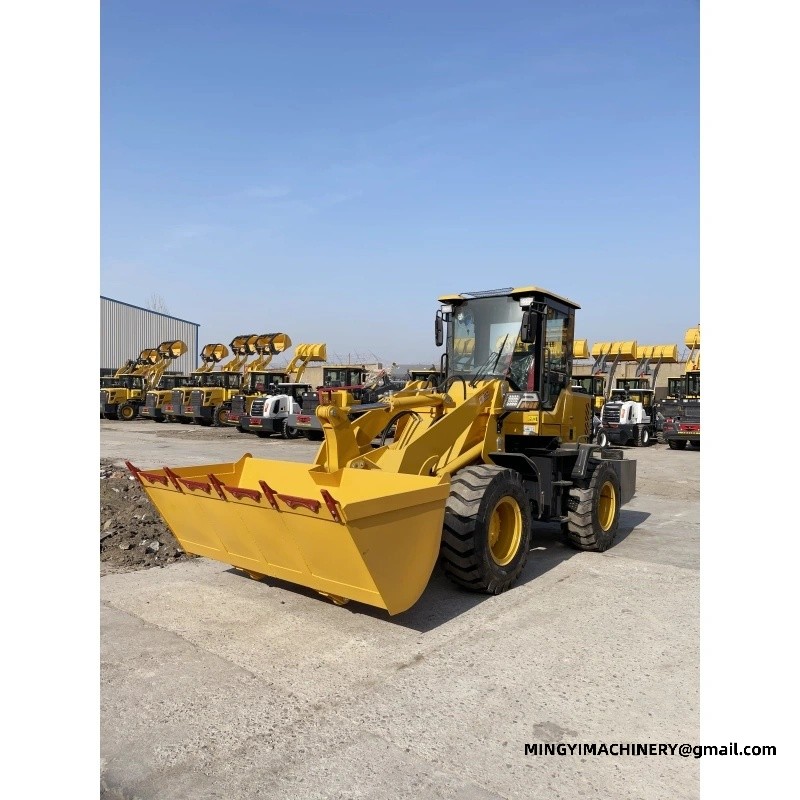
Fuel capacity on this range is specified per frame rather than per model: 30.8 L (48# large tank, 20.5/70-16 tyres); 24.6 L (48# small tank, 8.25-16 tyres) on the standard 2.4 m low-profile wheel loader and 64.7 L (75# small tank) on the heavy-duty 3.8 m small-frame wheel-side reduction wheel loader. Both are intended to cover a full shift at working throttle, and both assume the machine is not idling for hours between loads — idling is where a "full day" tank becomes a half-day tank.
Plan refuelling around the tank, not around the clock. On the standard 2.4 m low-profile wheel loader with 30.8 L (48# large tank, 20.5/70-16 tyres); 24.6 L (48# small tank, 8.25-16 tyres) and a 0.3 m³ bucket at 2.4 m, a day of continuous loading will run the tank down; on the heavy-duty 3.8 m small-frame wheel-side reduction wheel loader with 64.7 L (75# small tank) and 0.4 m³ at 3.8 m, the same day leaves allowance. Where a site has no bowser, that allowance is the difference between finishing at four and stopping at two.
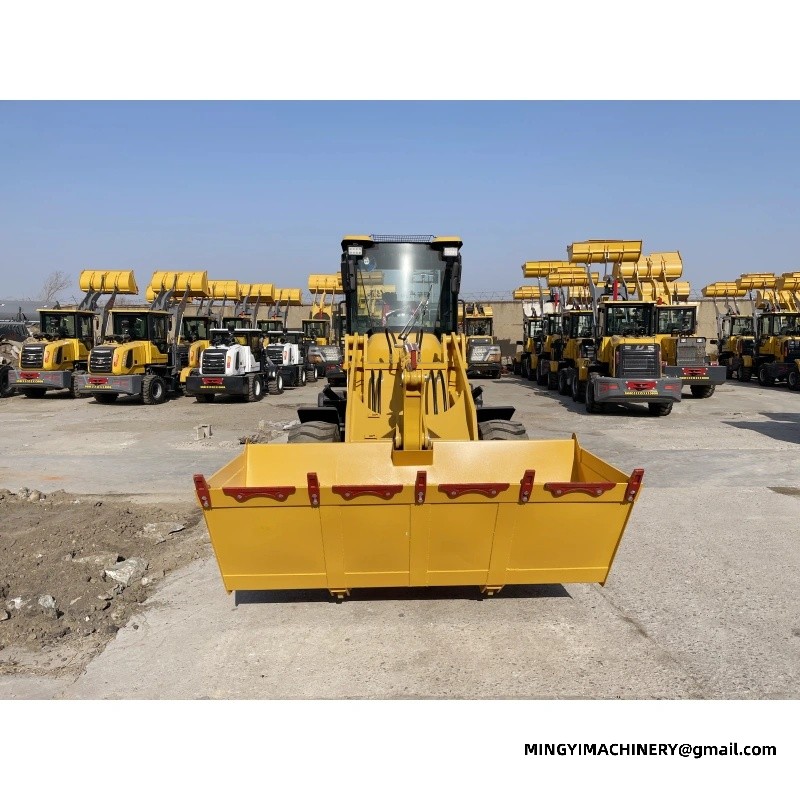
Operators describe a good machine as tight and a tired one as loose, and they are describing the hinge pins. New, the geometry is set by the plates: 45 mm forward, 30 mm aft. After a few thousand hours the geometry is set by how much those plates have allowed the pins to move, which is a function of thickness and of the 45 mm cross-member behind them.
This is why the figures are worth asking for rather than assuming. On the light-duty 4.2 m medium-frame wheel-side reduction wheel loader the same two numbers are 45 mm and 30 mm. A machine that will spend its life on short cycles — many steering inputs per hour — should be bought on these figures rather than on bucket capacity, because capacity is simple to add and hinge life is not.
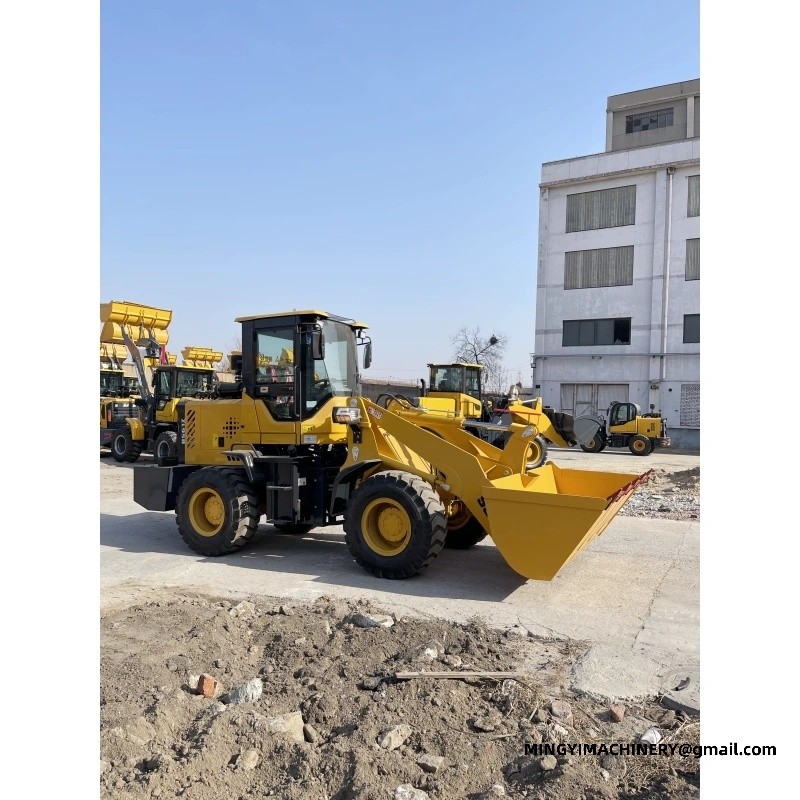
Most loader downtime is avoidable and most of what is avoidable is grease, coolant and hoses. Grease the articulation and the boom pins on the interval — on the standard 2.4 m low-profile wheel loader that is the 16 mm and 16 mm plates and the 680 mm boom mounts. Keep the 4100 core core clean, because overheating presents as lost power long before it presents as a fault.
Hoses are the second most common cause of a stopped machine and the easiest to plan for: a chafing hose on the centre cylinder 40 / side cylinder 40 circuit weeps before it bursts, and a weekly look finds it. Pumps — 32 pump and 316 pump on the standard 2.4 m low-profile wheel loader — rarely fail without warning; they get noisy first. On the heavy-duty 3.5 m small-frame wheel-side reduction wheel loader the equivalents are centre cylinder 45 / side cylinder 40, 40 pump (490 engine); 1045 pump (4102 turbo engine) and 316 pump. Keep a hose set and a filter set on site and most of this becomes a tea break rather than a week.
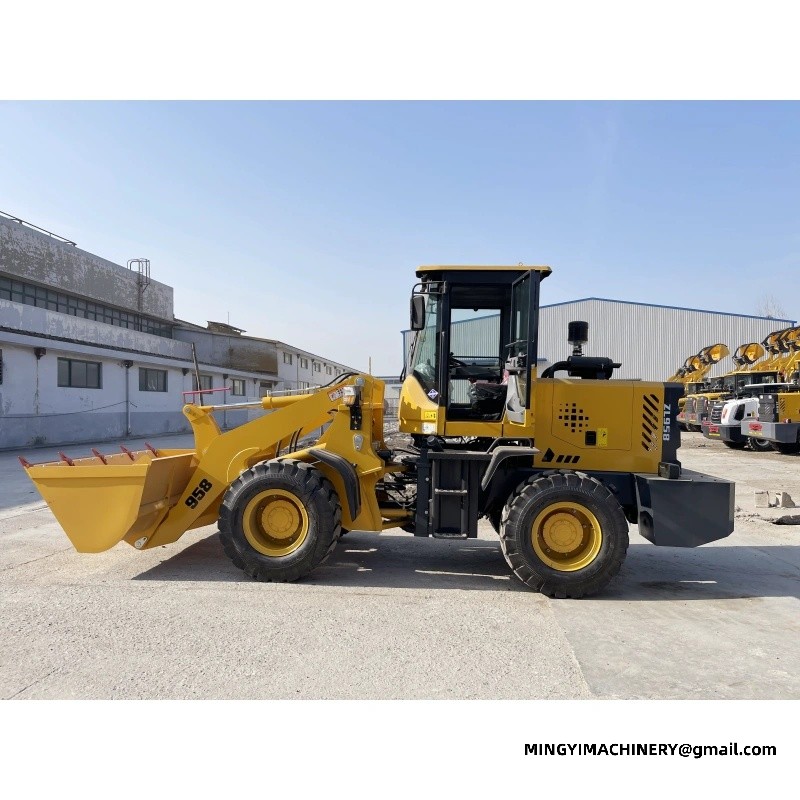
Machines ship knock-down, and rear frame width is what decides how many fit a box. Across the range that figure stays between 280 mm high x 800 mm wide and 280 mm high x 800 mm wide, which allows two to three units in a forty-foot container with booms and counterweights packed loose, tanks removed and batteries boxed disconnected.
Plan the container around the model mix rather than around a unit count. A pair of the heavy-duty 3.5 m small-frame wheel-side reduction wheel loader with its 4.1 m footprint loads differently from the heavy-duty 3.8 m small-frame wheel-side reduction wheel loader at 4.2 m, and a mixed order can often be arranged to use the space better than a uniform one. Container plans are stated per order against the actual mix.
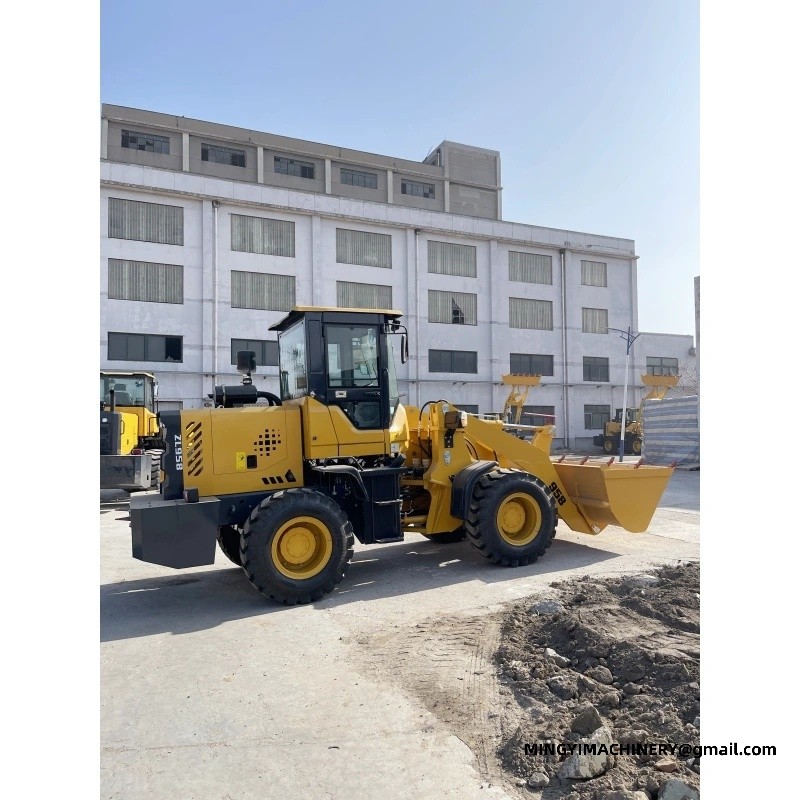
A site loader spends its life doing the same cycle, and the cycle punishes three components: the rear hinge, the cooling pack and the tyres. On the heavy-duty 4.2 m small-frame wheel-side reduction wheel loader the rear hinge is 20 mm over a 30 mm cross-member; on the light-duty 3.5 m medium-frame wheel-side reduction wheel loader it is 30 mm over 45 mm. Which of those you need depends on how often the machine turns under load.
Cycle time is the economics. A 0.4 m³ bucket at 4.2 m on a 3.15 m arm loaded by centre cylinder 45 / side cylinder 45 cylinders is quick in a tight site; a 0.52 m³ bucket at 3.5 m on a 2.63 m arm with centre cylinder 60 / side cylinder 50 is quicker where there is room to work. Neither is universally faster, and any supplier who claims otherwise is describing a different site from yours.
What does a daily check on a China wheel loader factory actually consist of?
Look at the ground under the machine, check coolant and oil, grease the hinge pins behind the 16 mm front and 16 mm rear plates, and glance at the cylinder rods. Ten minutes, every shift.
How do I keep one spares bin covering a mixed fleet?
Buy within one frame family and one engine. That keeps the 2063 pump pump, the 4105 core core and the 80 Ah battery common across every machine.
What should I check before running a grapple on a China wheel loader factory?
Side load. A grapple levers the arm in a way a bucket does not, so the 20 mm wall and 280 mm section matter more than capacity. The hinge plates at 16 mm take the reaction.
Is a China wheel loader factory suitable for night work?
With adequate lighting, yes. Electrical capacity is the constraint and the rating is 45 Ah (24 V); extra lamps and beacons come out of the same plan.
Is a China wheel loader factory noisy to work beside?
Engine and hydraulic noise, with the pump a contributor: 32 pump on this build. A pump that is cavitating is louder than a healthy one, so noise is also a diagnostic.
How often should the hinge pins of a China wheel loader factory be greased?
Measured in hours, not weeks, on short-cycle work. The pins behind the 16 mm and 16 mm plates take every steering input; dry pins are how a frame goes loose.
What should I check before the first start of a China wheel loader factory?
Coolant level in the 4100 core package, oil level, battery charge to the 45 Ah (24 V) rating, and a walk-round for anything loosened in transit. Then run it light for ten minutes before loading it.
Every figure stated on this page — bucket 0.4 m³, lift 3.5 m, hinge plates 30 mm and 20 mm — comes from the published build data for the heavy-duty 3.5 m small-frame wheel-side reduction wheel loader and the heavy-duty 3.8 m small-frame wheel-side reduction wheel loader. Send your board heights, material and shift pattern and the comparison can be run against your own numbers.
Wear items and spares worth holding for China Wheel Loader Factory: From Order to Container
The parts that stop a machine are rarely the parts that are hardest to find. Filters, belts, seals and the ground engaging tools on China Wheel Loader Factory: From Order to Container are easy to hold and slow to replace, which is why they belong on the shelf rather than on an order.
Reading the early symptoms on China Wheel Loader Factory: From Order to Container
Machines rarely fail without warning. A change in sound, a slower function or a new leak on China Wheel Loader Factory: From Order to Container is the machine saying something early, and listening then takes a fraction of the time that waiting does.
Later additions and retrofits on China Wheel Loader Factory: From Order to Container
An added function should pay for itself quickly. Whether China Wheel Loader Factory: From Order to Container gains a different bucket, a hydraulic service or a protection package, the test is the number of days a year it is actually used.
Contact MINGYI Machinery for the current wheel loader lineup, configuration options and a formal specification for your market. E-mail: sales@mingycn.com | LINE (ID): mingyicn
Heavy Duty Wheel Loader: Wear Points on Hard Ground · Construction Wheel Loader: Keeping a Site Cycle Moving · Wheel Loader for Construction Site: Board Heights and Turn Space · Wheel Loader









