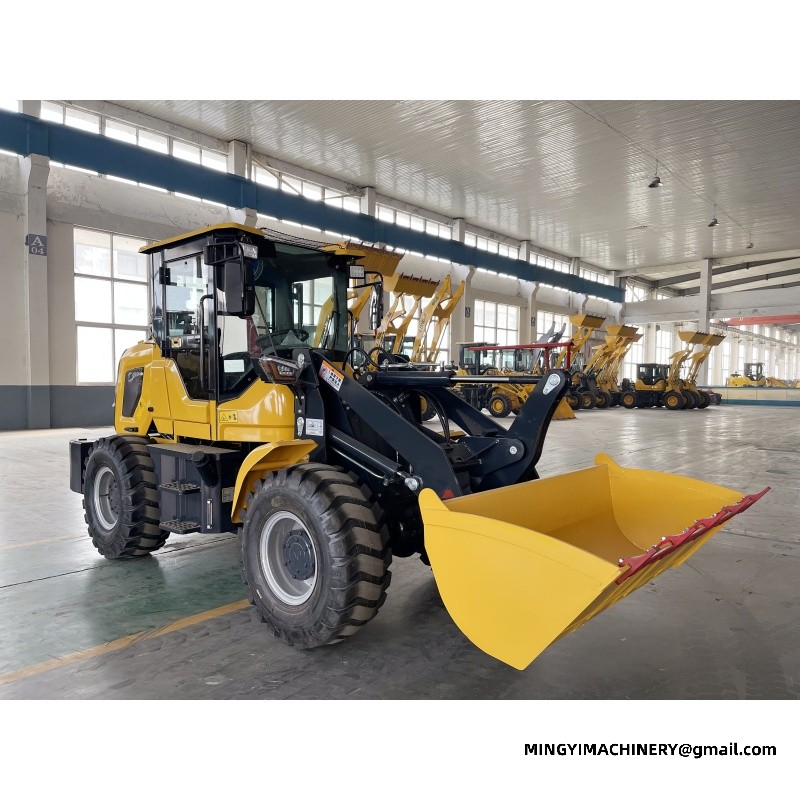
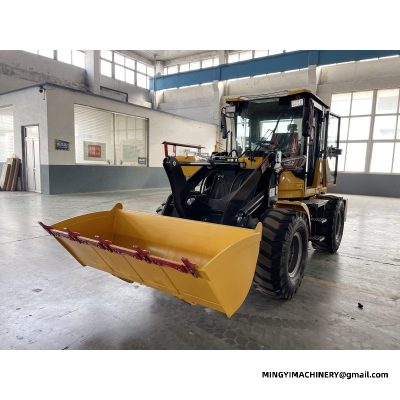
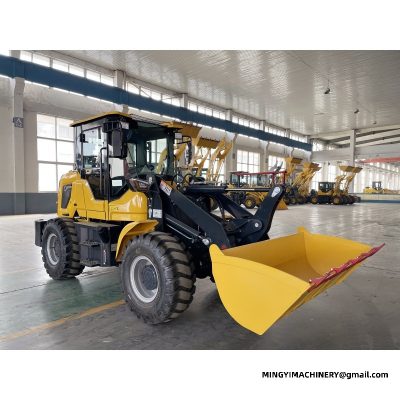
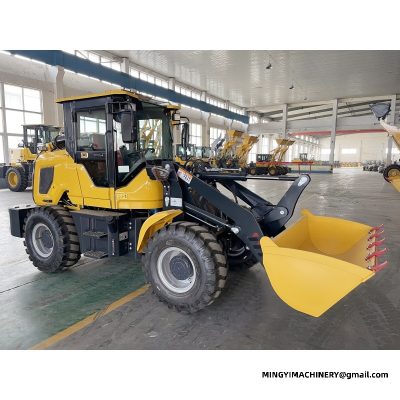
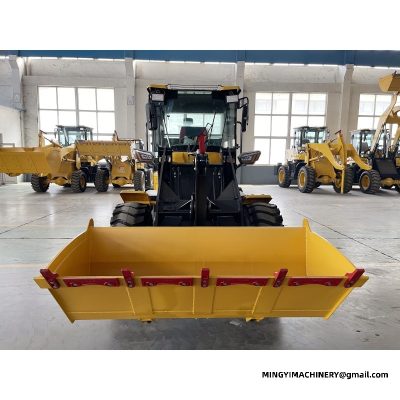
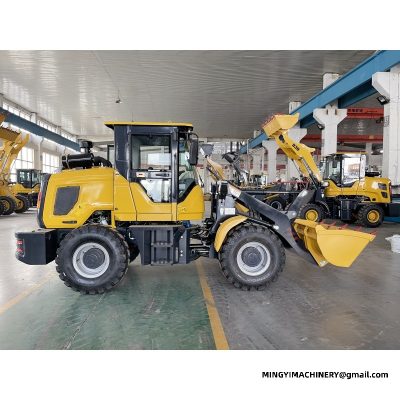
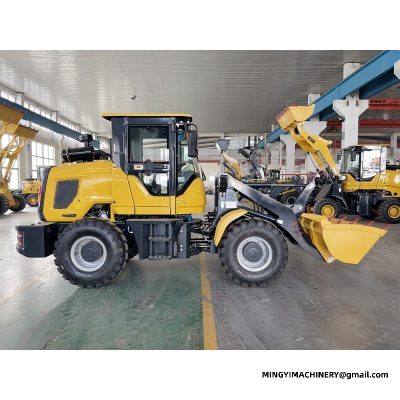
What separates a wheel loader for mining that is still tight at year five from one that is loose at year two is visible on the specification sheet, if you know which row to read. It is not the engine and it is not the bucket. It is the rear hinge plate — 30 mm on the heavy-duty 4.5 m medium-frame wheel-side reduction wheel loader against 16 mm on the standard 2.8 m low-profile wheel loader — and the cross-member behind it, 45 mm against 16 mm. Add the boom wall, 30 mm against 20 mm, and you have the frame story. The rest of this page covers the hydraulic, cooling, axle and delivery decisions that follow.
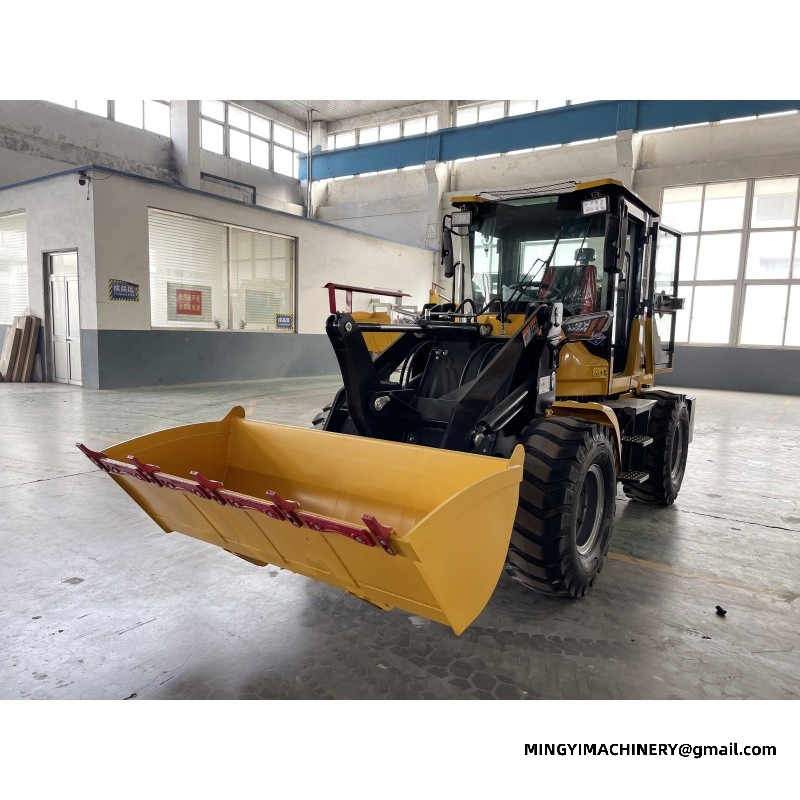
The two axle options on this range are differentiated by track: 1.5 m (wheel-side reduction axle); 1.45 m (Isuzu axle) on the heavy-duty 3.2 m small-frame wheel-side reduction wheel loader, 1.5 m (wheel-side reduction axle); 1.45 m (Isuzu axle) on the heavy-duty 3.2 m low-profile wheel loader. Behind the number is a different reduction layout. The Isuzu-pattern bridge is lighter, faster on hard ground and simpler to service. The wheel-side reduction bridge puts the final drive at the hub, which lowers the load on the shafts and raises the torque available at the tyre.
Choose by surface and gradient. On compacted hardstanding and long haul roads the Isuzu-pattern axle is the better machine; on a soft lane, a loading ramp or an uncompacted stockyard, hub reduction is what keeps the machine moving when a wheel would otherwise spin. Track width interacts with it: 1.5 m (wheel-side reduction axle); 1.45 m (Isuzu axle) on the heavy-duty 3.2 m small-frame wheel-side reduction wheel loader and 1.5 m (wheel-side reduction axle); 1.45 m (Isuzu axle) on the heavy-duty 3.2 m low-profile wheel loader are the figures to check against your narrowest gate, door or aisle before anything else on the sheet.
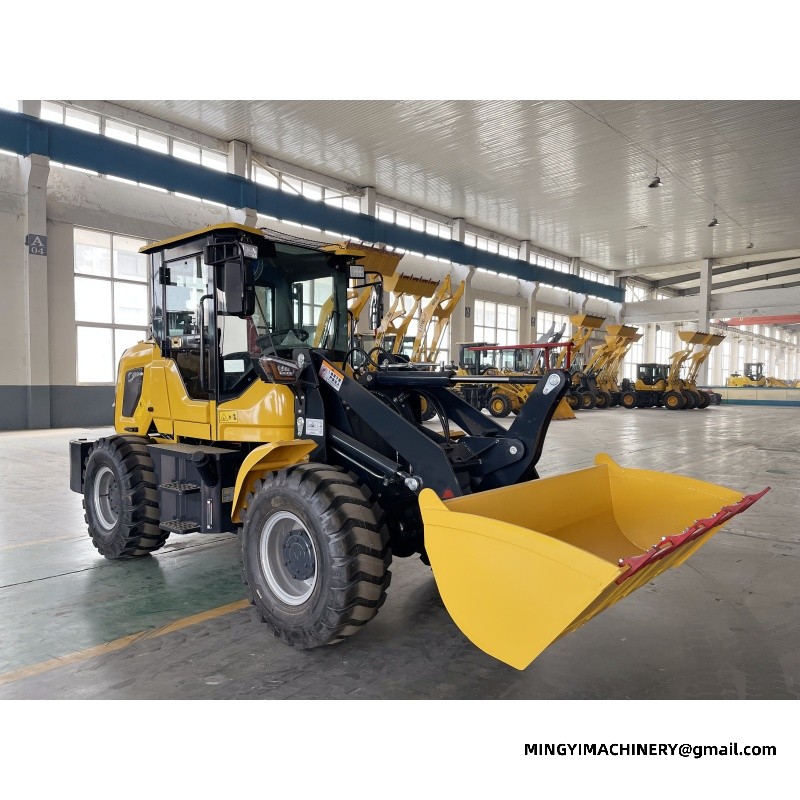
0.3 m³ on the standard 2.8 m low-profile wheel loader is a volume, and what it means depends entirely on what goes into it. Sand, gravel and crushed rock all weigh differently per cubic metre, and a bucket that is correct for one will overload the frame with another. The frame limit is the cross-member at 16 mm and the hinge plates behind it.
The practical method is to work backwards from the receiving body. If a truck takes four passes from 0.3 m³, it takes three from 0.4 m³ on the heavy-duty 4.2 m small-frame wheel-side reduction wheel loader, and the saving is real only if the loader clears the board — 2.8 m here against 4.2 m. Capacity without clearance is a specification that looks better in a brochure than on a site.
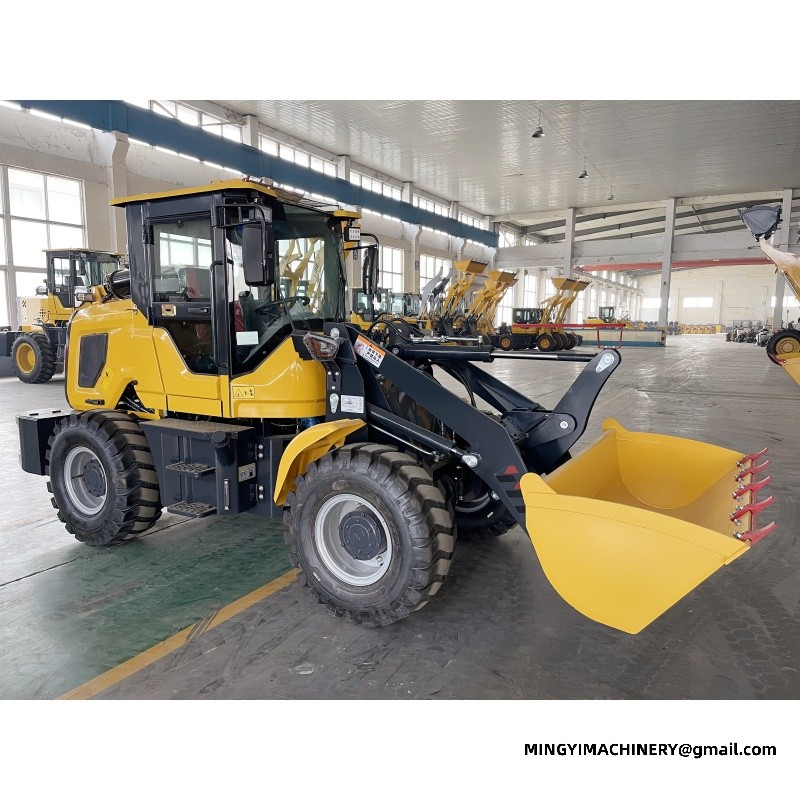
Cold cranking is the one specification that is easy to ignore and impossible to work around at five in the morning. This build is specified with 45 Ah (24 V), matched to the engine it has to turn. Capacity in ampere-hours is only half the story; the other half is whether the rating is honest at low temperature, which is why the figure should be read together with the engine option.
Where two engines are offered, the turbo option asks for more from the battery and gets it: the higher rating in 45 Ah (24 V) belongs to that build. If the machine will start cold, stop often, or run a short-haul duty with many restarts, specify the higher capacity at the order stage rather than discovering the limit in January.
| Specification extract — heavy-duty 3.5 m small-frame wheel-side reduction wheel loader | |
|---|---|
| Bucket capacity | 0.4 m³ |
| Dump height | 3.5 m |
| Track width | 1.5 m (wheel-side reduction axle); 1.45 m (Isuzu axle) |
| Boom arm thickness | 25 mm |
| Boom arm width | 430 mm |
| Boom arm length | 2.62 m |
| Boom arm centre distance | 890 mm |
| Cross-member thickness | 30 mm |
| Front hinge plate thickness | 30 mm |
| Rear hinge plate thickness | 20 mm |
| Rear frame section | 280 mm high x 800 mm wide |
| Hydraulic cylinders | centre cylinder 45 / side cylinder 40 |
| Fuel tank | 64.7 L (75# small tank) |
| Battery | 60 Ah (490 engine); 80 Ah (4102 turbo engine) |
| Front wheel to counterweight | 4.1 m |
| Radiator | 4100 core (490 engine); 4105 core (4102T engine) |
| Work pump | 40 pump (490 engine); 1045 pump (4102 turbo engine) |
| Travel pump | 316 pump |
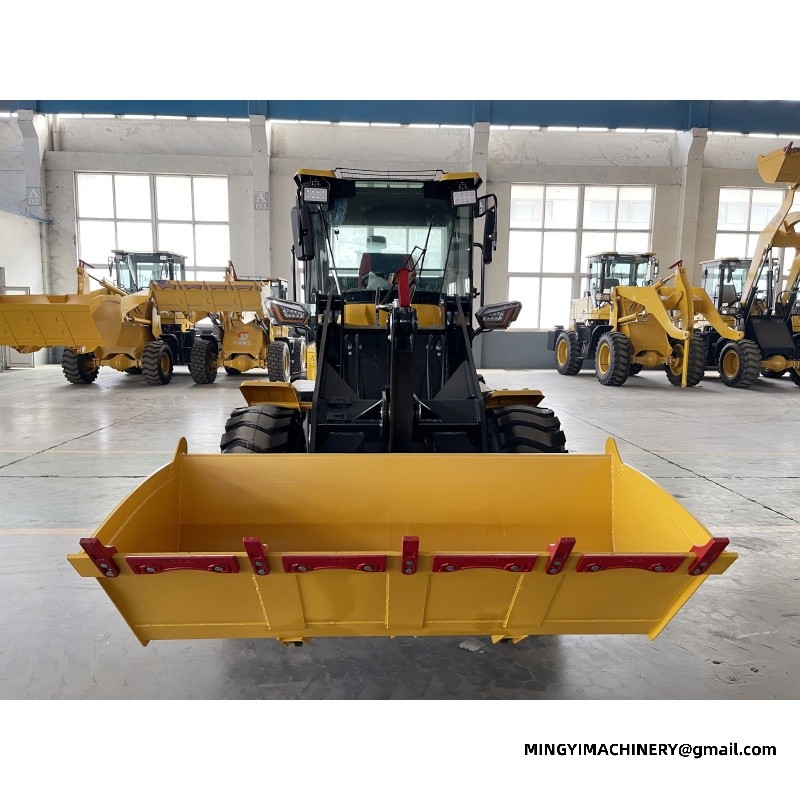
Electrical specification is short but consequential. The standard 2.8 m low-profile wheel loader lists 45 Ah (24 V); the heavy-duty 4.2 m small-frame wheel-side reduction wheel loader lists 60 Ah (490 engine); 80 Ah (4102 turbo engine). Where a build offers two engines, the higher capacity belongs to the turbo — more compression to turn, more glow-plug load, and in a cold market that difference is the whole of a morning.
Beyond the battery, specify an isolator switch and confirm the alternator output matches the load you intend to add. Work lights, a beacon, a reversing alarm and a hydraulic third-circuit solenoid all draw from the same pack, and the 32 pump driven hydraulics on the standard 2.8 m low-profile wheel loader do not reduce that draw. On the heavy-duty 4.2 m small-frame wheel-side reduction wheel loader the same applies with 40 pump (490 engine); 1045 pump (4102 turbo engine). If the machine will sit for more than a month before commissioning, specify the isolator and a maintenance charge interval.
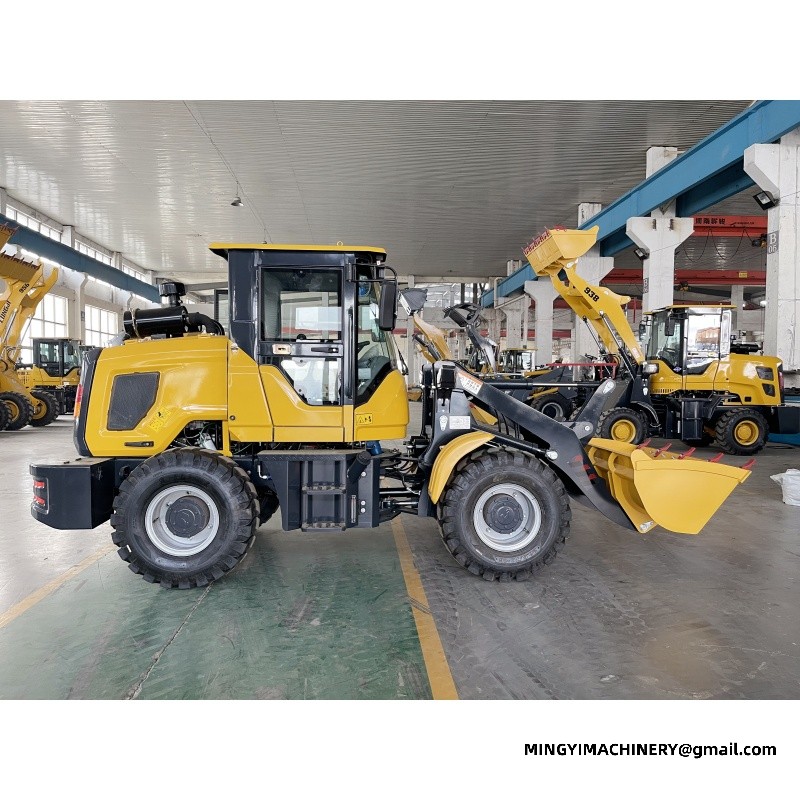
On a farm the loader is judged by whether it can get to the work. The heavy-duty 3.5 m small-frame wheel-side reduction wheel loader at 1.5 m (wheel-side reduction axle); 1.45 m (Isuzu axle) track and 4.1 m length turns in places the heavy-duty 4.2 m small-frame wheel-side reduction wheel loader at 1.5 m (wheel-side reduction axle); 1.45 m (Isuzu axle) and 4.25 m cannot enter. Capacity — 0.4 m³ against 0.4 m³ — is the last consideration, not the first.
Dump height still matters, because feed wagons and high-sided trailers are tall: 3.5 m on the heavy-duty 3.5 m small-frame wheel-side reduction wheel loader, 4.2 m on the heavy-duty 4.2 m small-frame wheel-side reduction wheel loader. Measure the wagon side, then measure the shed door. Where both fit, take the larger bucket; where only one fits, take the machine that fits. Attachments specification against the boom section — 430 mm against 500 mm — so the tool carrier is decided in the same conversation.
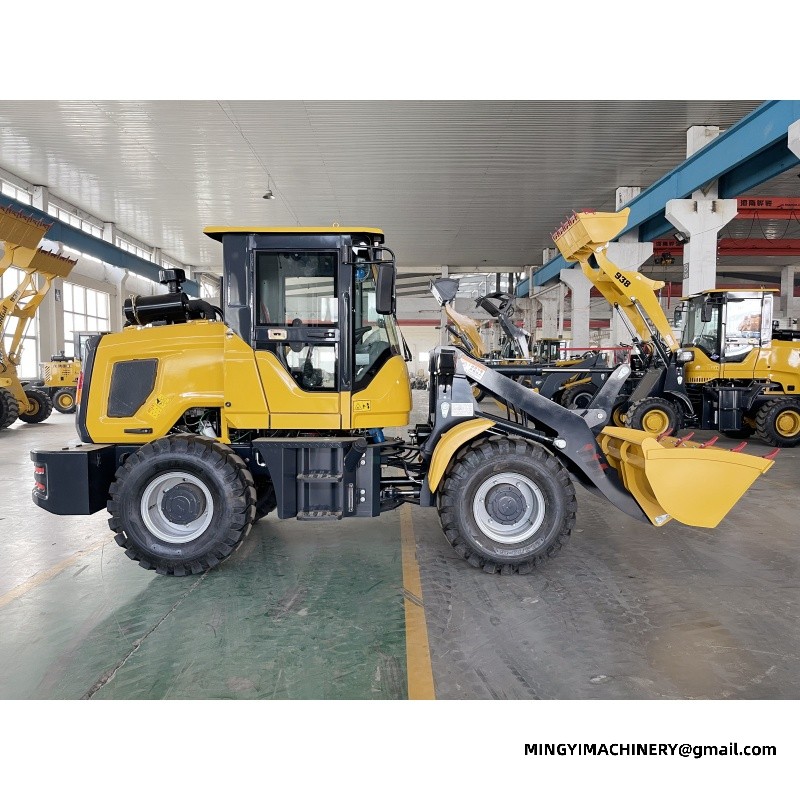
Purchase decision is the smallest of the three numbers that matter; the other two are downtime and residual value, and both are decided by the frame. A machine built with 16 mm rear hinge plates and a 16 mm cross-member, as on the standard 2.8 m low-profile wheel loader, will be tight at year three in light duty. A machine with 20 mm and 30 mm, as on the heavy-duty 3.5 m small-frame wheel-side reduction wheel loader, will still be tight in heavy duty.
Fuel, tyres and filters are the predictable takes, and they scale with duty rather than with capacity. A 0.3 m³ bucket working a short cycle on a 30.8 L (48# large tank, 20.5/70-16 tyres); 24.6 L (48# small tank, 8.25-16 tyres) tank takes less per day than a 0.4 m³ bucket on 64.7 L (75# small tank) working a long one — and moves less material. The honest comparison is effort per tonne moved, which needs your cycle, not a brochure.
Fleet effort is driven by the size of the spares bin, and that is decided at purchase. Machines sharing an engine share a pump, 32 pump, a radiator, 4100 core, and a battery rating, 45 Ah (24 V). Machines sharing a frame share cylinder sizes, centre cylinder 45 / side cylinder 40, and hinge geometry. Buy within one frame family and the bin halves.
The figures to compare are the ones that differ: bucket 0.3 m³ against 0.4 m³, dump height 2.8 m against 3.2 m, track 1.2 m (Isuzu axle); 1.3 m (wheel-side reduction axle) against 1.5 m (wheel-side reduction axle); 1.45 m (Isuzu axle). Where those differ, the wearing parts behind them usually differ too. Where they match, one part number covers both machines.
A radiator does not fail; it gets blocked. On this build the core is 4100 core (490 engine); 4105 core (4102T engine), and in dusty or chaff-heavy work it needs cleaning from the clean side outwards, in the reverse direction to normal airflow, because pushing debris further into the fins makes the blockage permanent.
Watch the cap and the seat while you are there. A system that loses pressure boils at a lower temperature, and the symptom is intermittent overheating under load that disappears on the level - - which is routinely misdiagnosed as a pump problem. The pump is 40 pump (490 engine); 1045 pump (4102 turbo engine); the travel circuit is 316 pump; neither produces that symptom. A cap does.
How is the battery specified on a wheel loader for mining?
80 Ah on the heavy-duty 4.5 m medium-frame wheel-side reduction wheel loader, matched to the engine it has to crank. The higher capacity belongs to the turbo option and matters in cold climates.
Can a wheel loader for mining be built with a non-standard bucket?
Yes, provided the volume suits the frame: the 0.52 m³ bucket on the light-duty 3.5 m medium-frame wheel-side reduction wheel loader and the 0.65 m³ bucket on the heavy-duty 4.5 m medium-frame wheel-side reduction wheel loader are the engineered sizes, and heavier material means a smaller bucket.
What should the first service on a wheel loader for mining cover?
Torque the hinge pins, grease the 890 mm boom mounts, check the centre cylinder 45 / side cylinder 40 cylinder connections and the 4100 core (490 engine); 4105 core (4102T engine) cooling circuit, then re-check the build figures.
What is the fuel tank capacity of a wheel loader for mining?
30.8 L (48# large tank, 20.5/70-16 tyres); 24.6 L (48# small tank, 8.25-16 tyres) on the standard 2.8 m low-profile wheel loader and 64.7 L (75# small tank) on the heavy-duty 4.2 m small-frame wheel-side reduction wheel loader, both sized for a full shift at working throttle without a mid-day refuel.
Which figures predict frame life on a wheel loader for mining?
Rear hinge plate and cross-member: 20 mm and 30 mm on the heavy-duty 3.2 m low-profile wheel loader, against 20 mm and 30 mm on the heavy-duty 4.2 m small-frame wheel-side reduction wheel loader. Those two rows separate light duty from heavy duty.
How do I verify the build of a wheel loader for mining on delivery?
Five figures against the published table: boom wall 25 mm, boom width 430 mm, front hinge 30 mm, rear hinge 20 mm and cross-member 30 mm.
How wide is a wheel loader for mining?
Track width is 1.6 m on the heavy-duty 4.5 m medium-frame wheel-side reduction wheel loader and 1.2 m (Isuzu axle); 1.3 m (wheel-side reduction axle) on the standard 2.8 m low-profile wheel loader. Check it against the narrowest gate, door or aisle before anything else on the sheet.
Whether the duty is farm, site or stockpile, the wheel loader for mining choice comes back to ground, board height and cycle count. Tell us those three and the build follows: axle, radiator, cylinder set and the 0.65 m³ or 0.3 m³ bucket to suit.
Packing, loading and shipment of Wheel Loader for Mining: Radiator Cores and Hub Reduction Axles
How a machine travels decides how it starts on arrival. Securing Wheel Loader for Mining: Radiator Cores and Hub Reduction Axles against movement, protecting the exposed cylinders and keeping the battery and fluids in the right state for the voyage all belong to the packing list.
Cold weather and winter care for Wheel Loader for Mining: Radiator Cores and Hub Reduction Axles
Starting is only the first problem. Until Wheel Loader for Mining: Radiator Cores and Hub Reduction Axles reaches working temperature the hydraulic response is slower and the seals are stiffer, and warming the machine before asking for full output avoids unnecessary strain.
Keeping a service record for Wheel Loader for Mining: Radiator Cores and Hub Reduction Axles
A written record is worth more than a good memory. Dates, hours and the parts fitted on Wheel Loader for Mining: Radiator Cores and Hub Reduction Axles turn a guess about the next service into a fact, and they are the first thing a buyer asks to see.
Contact MINGYI Machinery for the current wheel loader lineup, configuration options and a formal specification for your market. E-mail: sales@mingycn.com | LINE (ID): mingyicn
Wheel Loader for Agriculture: Gate Widths, Sheds and Wagons · Wheel Loader for Construction Site: Board Heights and Turn Space · Wheel Loader Manufacturer | China Factory: Checking Shipments · Loaders









