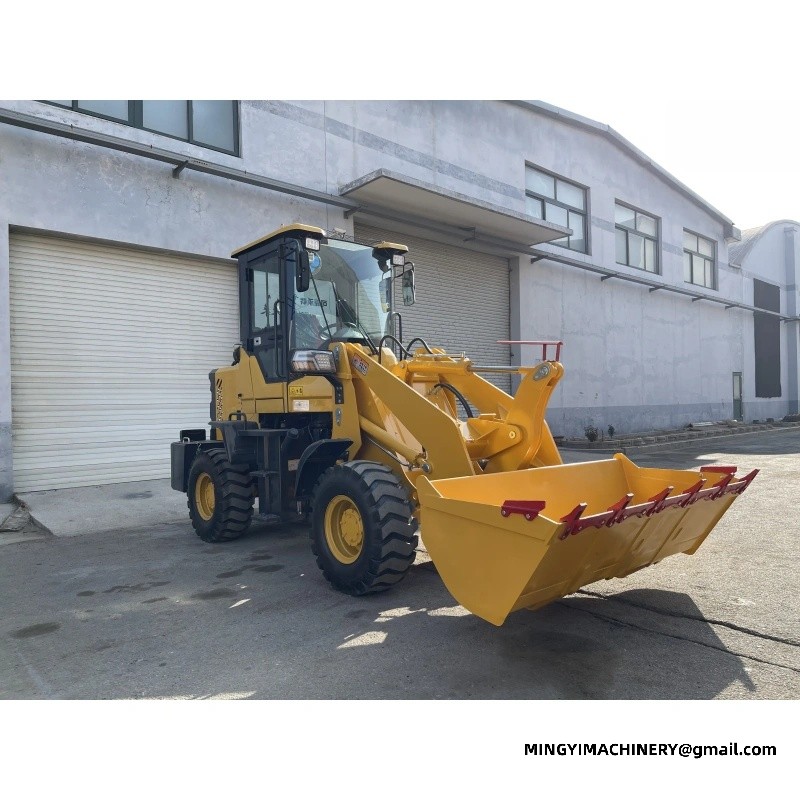
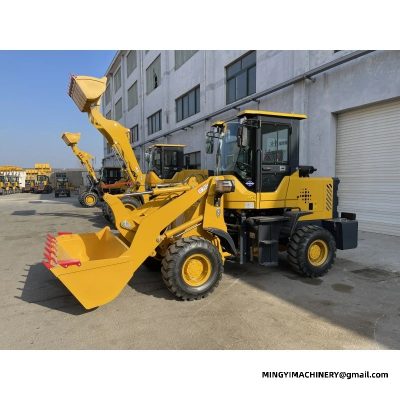
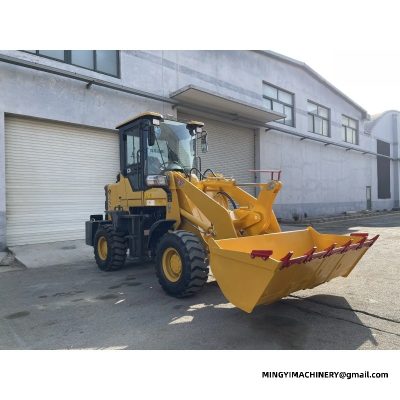
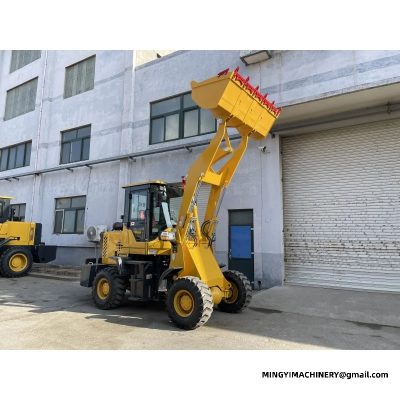
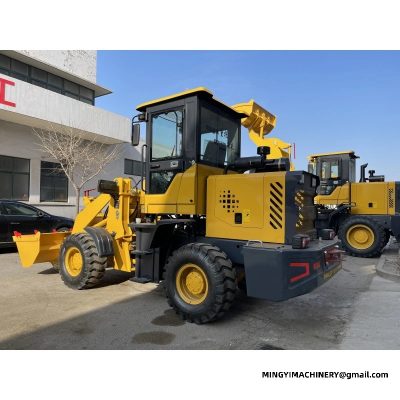
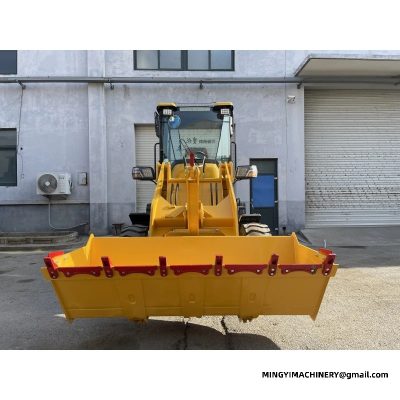
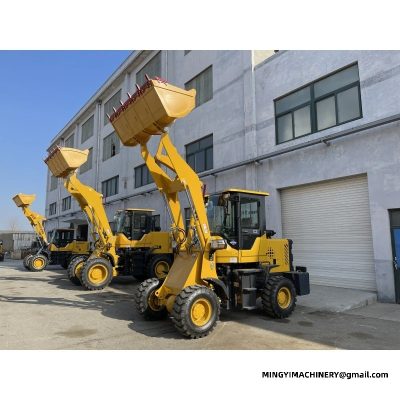
The first month tells you whether a wheel loader for sale was specified correctly. Cooling holds or it does not. The bucket matches the material or it does not. The pins stay tight or they start to move. All three are visible in the first few weeks and all three trace back to rows on the sheet: 4105 core, 0.52 m³ and 45 mm respectively. This page orders those rows by how soon they show up, using the light-duty 3.5 m medium-frame wheel-side reduction wheel loader and the light-duty 3.8 m medium-frame wheel-side reduction wheel loader as the worked examples.
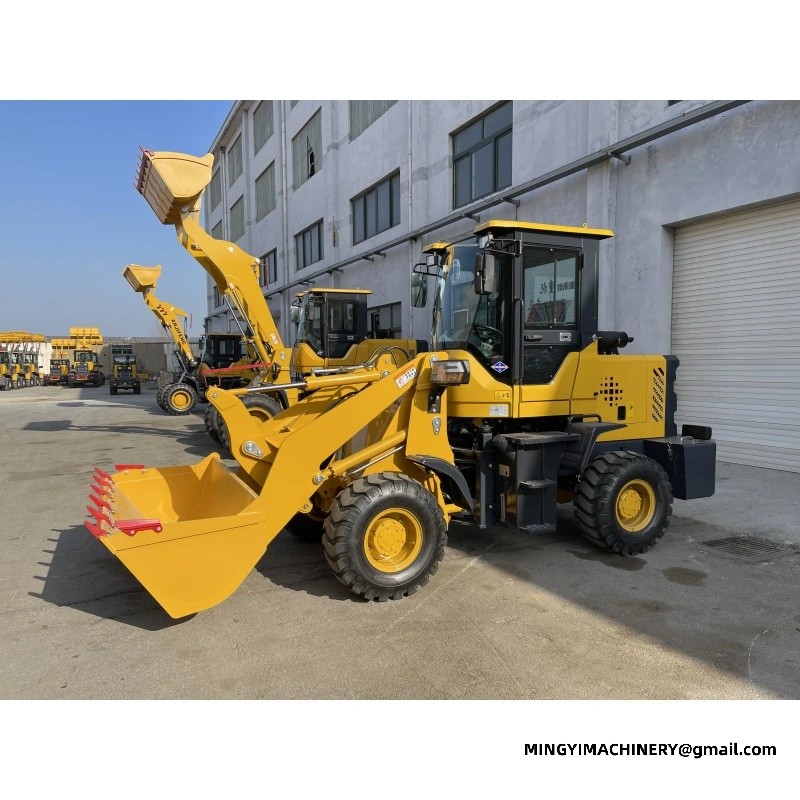
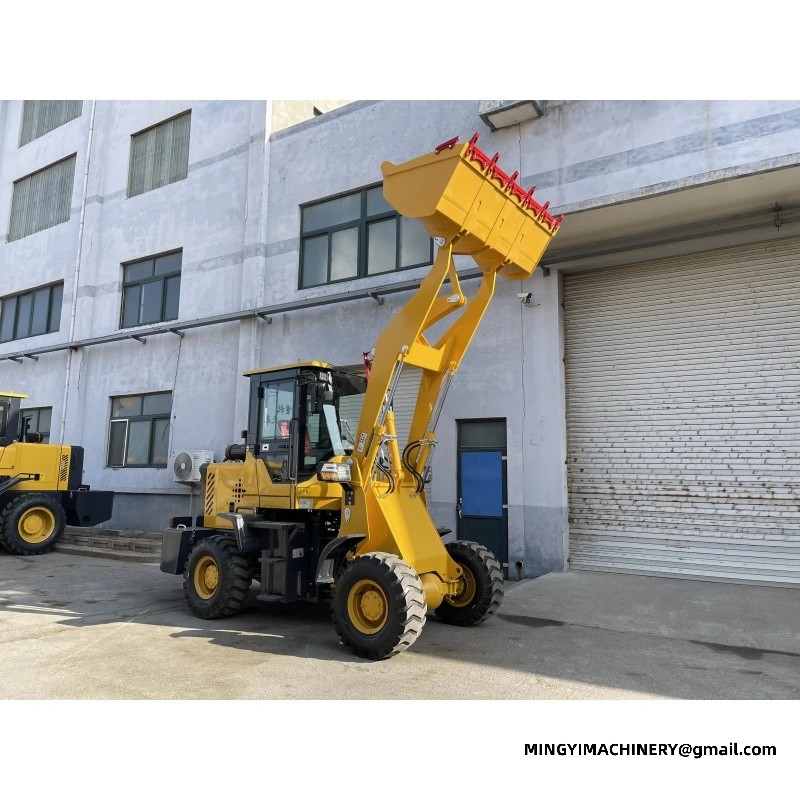
The boom is the part that turns engine power into a loaded bucket at height, and four figures describe it. Length runs 2.63 m on the light-duty 3.5 m medium-frame wheel-side reduction wheel loader against 2.9 m on the light-duty 3.8 m medium-frame wheel-side reduction wheel loader; wall thickness 30 mm against 30 mm; section width 430 mm against 430 mm; and the mount spacing — boom centre distance — 900 mm against 900 mm. Read together, those four numbers tell you more about how a machine will behave than bucket capacity ever will.
Length buys reach and takes stability, because every extra millimetre moves the load centre further from the front axle. Wall thickness resists bending; section width resists twisting. Centre distance is the one most buyers never ask about, and it is the one that decides whether the arm takes a side load cleanly or twists the pins — which matters the moment an operator digs one corner of the bucket into a heap instead of squaring up to it. On the light-duty 3.5 m medium-frame wheel-side reduction wheel loader the combination of a 2.63 m arm, a 30 mm wall and a 900 mm spacing is matched to a 0.52 m³ bucket, and that match is what keeps the frame tight over a full season.
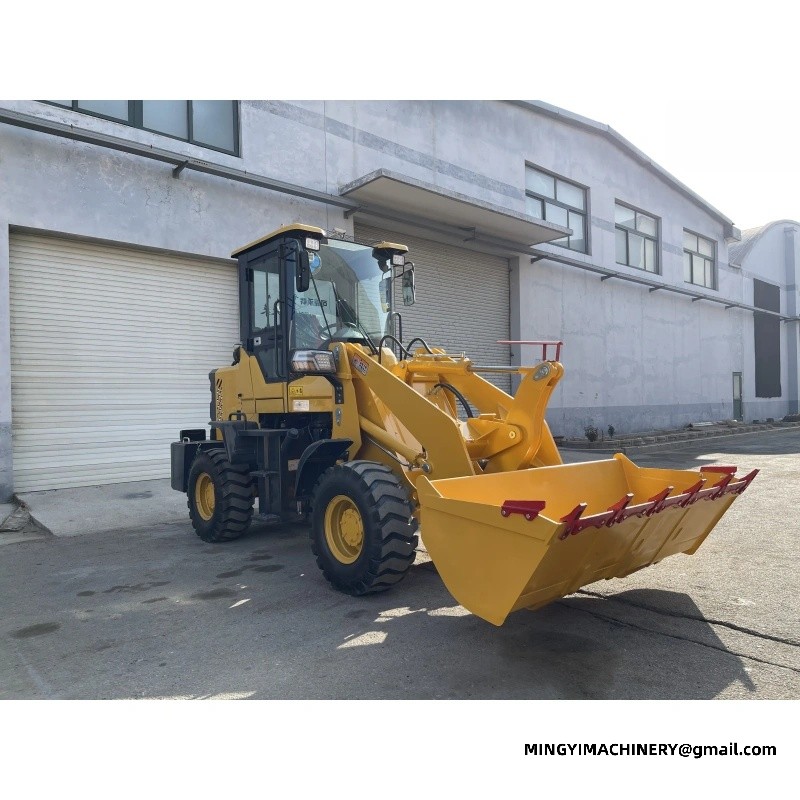
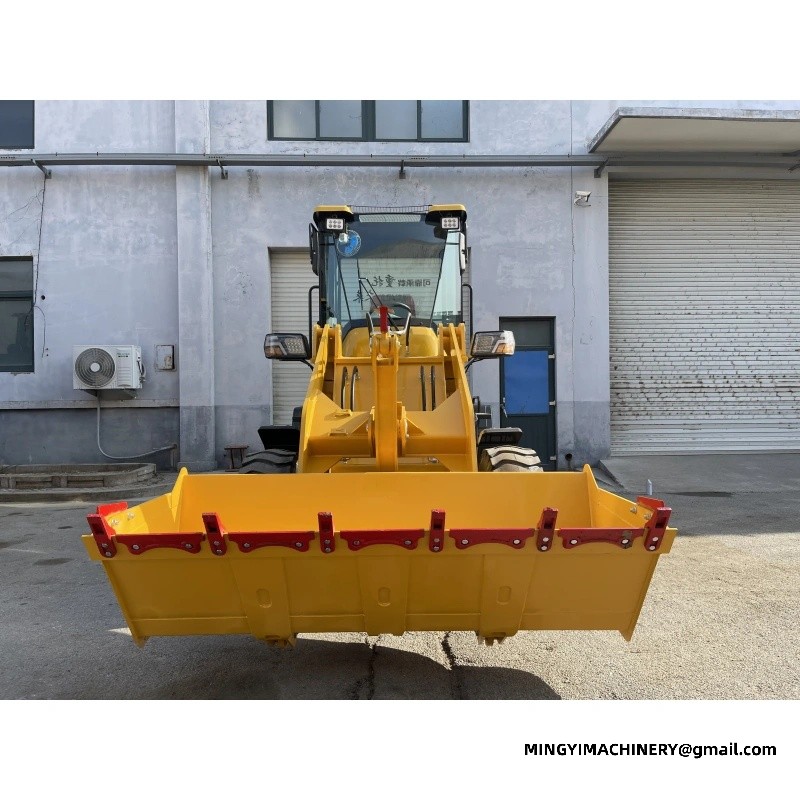
The useful way to read a range is as three decisions: how high, how heavy, and how wide. How high is dump height, 3.2 m against 3.5 m. How heavy is the steel, cross-member 25 mm against 45 mm and rear frame 230 mm high x 800 mm wide against 300 mm high x 800 mm wide. How wide is track, 1.5 m (wheel-side reduction axle); 1.45 m (Isuzu axle) against 1.6 m.
Once those three are settled, the bucket follows from the material and the boom from the height: 0.38 m³ on a 2.3 m arm here, 0.52 m³ on 2.63 m there. Reading it in that order means the specification is decided by the work rather than by whichever machine happened to be in stock.
On builds with two engine options the cooling package changes with the engine, which is why the radiator line in the table reads as a pair: 4105 core on the light-duty 3.5 m medium-frame wheel-side reduction wheel loader and 4105 core on the light-duty 3.8 m medium-frame wheel-side reduction wheel loader. The 4100 core serves the 490 engine; the 4105 raised core serves the 4102 turbo. The raised core is not a marketing variant — it is more core area in the same footprint, and it is the difference between finishing a dusty shift and stopping at noon to blow out the fins.
Where the machine will work is the deciding factor. Grain handling, lime, cement raw meal, crushing and screening all load a radiator with fine material; road building on a wet day does not. If the application is dusty, specify the raised core and a reversible fan if offered. Then check the rest of the package matches: 70 L (75# large tank) fuel on the light-duty 3.5 m medium-frame wheel-side reduction wheel loader against 70 L (75# large tank) on the light-duty 3.8 m medium-frame wheel-side reduction wheel loader, and the battery at 80 Ah against 80 Ah.
| Sample build from the range — light-duty 3.2 m low-profile wheel loader | |
|---|---|
| Bucket capacity | 0.38 m³ |
| Dump height | 3.2 m |
| Track width | 1.5 m (wheel-side reduction axle); 1.45 m (Isuzu axle) |
| Boom arm thickness | 25 mm |
| Boom arm width | 370 mm |
| Boom arm length | 2.3 m |
| Boom arm centre distance | 890 mm |
| Cross-member thickness | 25 mm |
| Front hinge plate thickness | 25 mm |
| Rear hinge plate thickness | 14 mm |
| Rear frame section | 230 mm high x 800 mm wide |
| Hydraulic cylinders | centre cylinder 45 / side cylinder 40 |
| Fuel tank | 54 L (50# tank) |
| Battery | 60 Ah (490 engine); 80 Ah (4102 turbo engine) |
| Front wheel to counterweight | 4 m |
| Radiator | 4100 core (490 engine); 4105 core (4102T engine) |
| Work pump | 40 pump (490 engine); 1045 pump (4102 turbo engine) |
| Travel pump | 316 pump |
The battery is specified against the engine it has to crank: 80 Ah on the light-duty 3.5 m medium-frame wheel-side reduction wheel loader and 80 Ah on the light-duty 3.8 m medium-frame wheel-side reduction wheel loader. Where a build lists two figures, they belong to two engine options — a smaller capacity for the naturally aspirated unit, a larger one for the turbo — and the difference is starting torque in cold weather rather than anything you would notice in July.
For fleets shipping to cold markets, specify the larger capacity and a battery isolator; machines shipped knock-down arrive with batteries boxed and disconnected, and a machine that has sat for six weeks at anchor will not crank on a marginal battery. Check the rest of the electrical package at the same time — the 2063 pump and 25 pump circuits on the light-duty 3.5 m medium-frame wheel-side reduction wheel loader share the same harness, and a poor earth there presents as slow hydraulics rather than as an electrical fault.
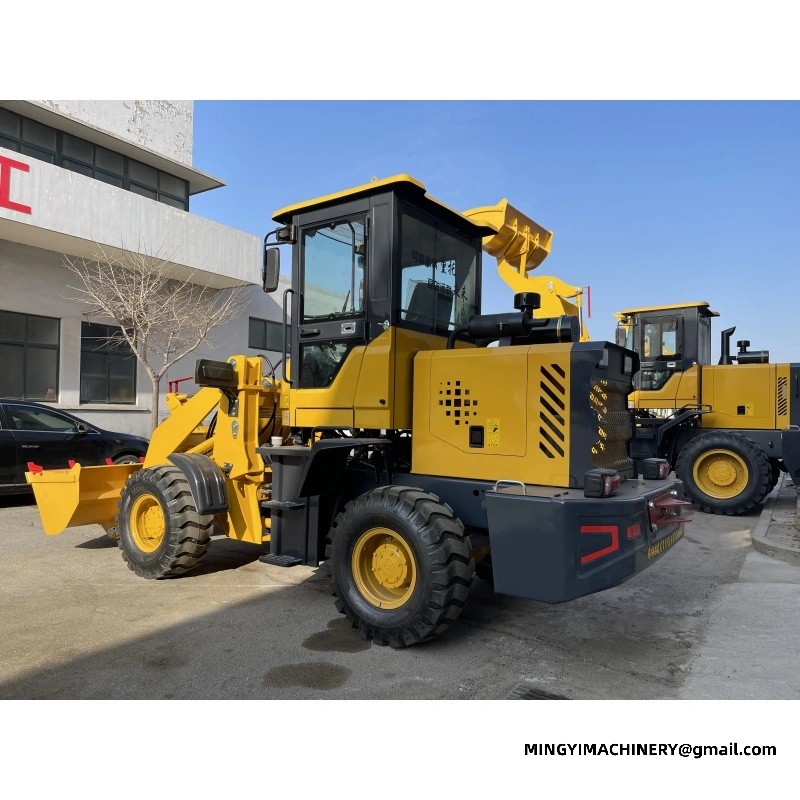
On broken ground the rear frame takes the twisting. Cabin and counterweight sit at one end, the articulation joint at the other, and every rut loads the section between them. Here that section is 200 mm high x 750 mm wide, and it is worth reading as a beam: the height resists vertical bending, the width resists twist.
The cross-member is the other half of the same job. 16 mm on the standard 2.4 m low-profile wheel loader against 45 mm on the light-duty 3.5 m medium-frame wheel-side reduction wheel loader. Thicker steel there means the mounting faces stay aligned through seasons of flexing, which is what keeps the rear hinge pin, at 16 mm, from wearing oval. Frames rarely break; they go loose, and looseness starts at the pins.
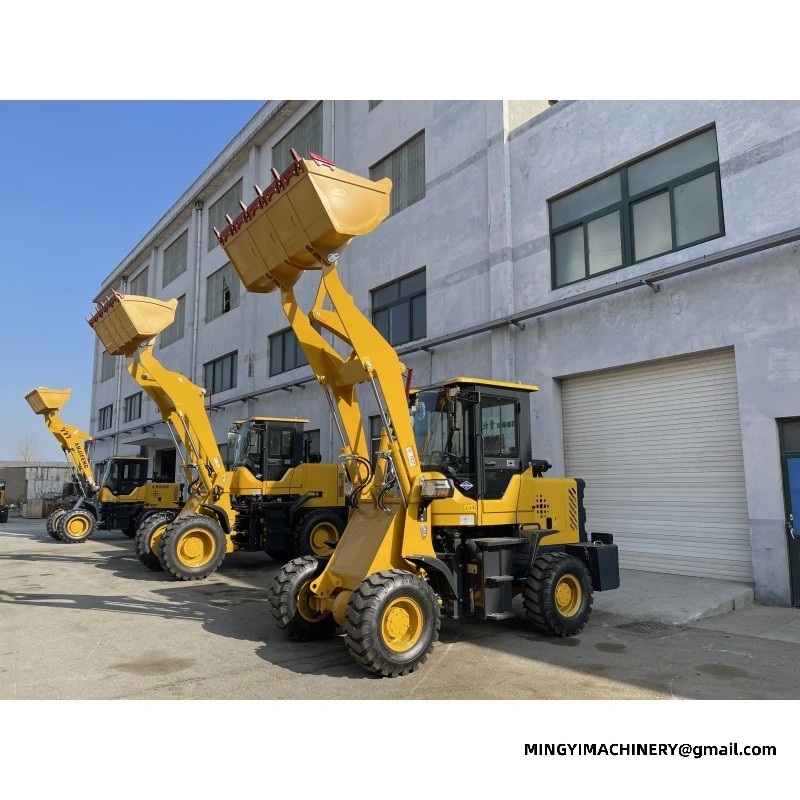
Frames do not usually break; they go loose, and looseness starts at the pins. The parts that govern it are the rear hinge plate, 16 mm, the cross-member behind it, 16 mm, and the rear frame section, 200 mm high x 750 mm wide. Buy on those three and the machine will still feel tight in year five.
Duty decides how long that takes. A machine loading twenty trucks a day ages differently from one moving material for two hours. On the light-duty 3.2 m low-profile wheel loader the same three figures are 14 mm, 25 mm and 230 mm high x 800 mm wide; choosing between them is choosing how much duty the frame was built for, and it is the decision that outlasts every other option on the order.
Hold the parts that stop the machine and cannot be improvised: hoses and seals for the centre cylinder 45 / side cylinder 40, a belt set, filters, and a battery to the 60 Ah (490 engine); 80 Ah (4102 turbo engine) rating. Do not hold the parts that are welded in — hinge plates at 25 mm and 14 mm, the 25 mm cross-member. Those are a repair, not a spare, and they are the same steel on every machine in the family.
The pump is the judgement call. 40 pump (490 engine); 1045 pump (4102 turbo engine) is a stocked item and a week of downtime if it is not; the 316 pump fails less often and is the one most fleets choose to order rather than hold. Decide on that by distance from the supplier, not by the effort of the part.
Overheating has four causes and only one of them is the radiator. In order of likelihood: blocked fins, a cap that will not hold pressure, a fan or drive problem, and genuine overloading. The core on this machine is 4100 core (490 engine); 4105 core (4102T engine); clean it first, from the clean side outwards.
If the machine is genuinely overloaded, the cause is upstream of the cooling system. A bucket carrying more than 0.38 m³ of dense material, cycled without pause, produces more heat than the system was sized to reject. The fix is a smaller bucket or a slower cycle, not a bigger radiator — and the frame, at 25 mm across the member, is the part that suffers if nobody makes that decision.
How much clearance do I need over a truck board?
Dump height is measured at the bucket edge, so subtract the crest of the material. The light-duty 3.2 m low-profile wheel loader gives 3.2 m and the light-duty 4.2 m medium-frame wheel-side reduction wheel loader gives 4.2 m; the board has to sit under the lower of the two with allowance.
How do I clean the radiator on a wheel loader for sale working in dust?
From the clean side outwards, against normal airflow, so debris comes out rather than being pushed deeper. The core on this build is 4100 core (490 engine); 4105 core (4102T engine); blocked fins are the usual cause of gradual power loss.
Which engine option should a wheel loader for sale be ordered with?
It follows the duty. The engine drags three rows with it: pump 40 pump (490 engine); 1045 pump (4102 turbo engine), core 4100 core (490 engine); 4105 core (4102T engine) and battery 60 Ah (490 engine); 80 Ah (4102 turbo engine). Choose it early rather than accepting whatever is in stock.
What makes a used wheel loader for sale easy to sell?
A verifiable specification. Bucket 0.3 m³, lift 2.4 m, plates 16 mm and 16 mm and a 16 mm cross-member can all be measured, and a buyer who can check them will pay for the certainty.
What is involved in changing attachments on a wheel loader for sale?
Mechanical mounting plus hydraulics. The cylinders are centre cylinder 45 / side cylinder 40 and the pump is 40 pump (490 engine); 1045 pump (4102 turbo engine); flow, not force, is usually what limits an added service.
How far can a wheel loader for sale travel under its own power?
Short moves between faces, not road haulage. The travel circuit is 316 pump and sustained high-speed running generates heat the 4100 core (490 engine); 4105 core (4102T engine) core was not sized to reject.
Why does my wheel loader for sale wander on the road?
Worn hinge pins. Load the bucket, hold the machine on a slope and watch the joint while the steering is rocked; movement there is wear behind the 25 mm and 14 mm plates.
Those are the rows that decide how a wheel loader for sale behaves once it is working. The full table for every build in the range is available on request, along with the engine options that change the pump, radiator and battery figures stated here.
Fuel, oil and fluid quality for Wheel Loader for Sale: What to Confirm Before Ordering
Most engine trouble starts with what went into the tank. Clean fuel, stored properly and filtered before it reaches Wheel Loader for Sale: What to Confirm Before Ordering, prevents more downtime than any other single habit an owner can adopt.
Handover and getting familiar with Wheel Loader for Sale: What to Confirm Before Ordering
Familiarisation is not the same as reading the manual. Sitting on Wheel Loader for Sale: What to Confirm Before Ordering, working through the controls at low speed and learning where the machine balances takes an hour, and that hour is what keeps the first week uneventful.
Contact MINGYI Machinery for the current wheel loader lineup, configuration options and a formal specification for your market. E-mail: sales@mingycn.com | LINE (ID): mingyicn
Wheel Loader Manufacturer: Checking the Build You Ordered · Wheel Loader Supplier: Spares, Answers and Lead Times · Loader Machine for Construction: Specifying for Site Cycles · Wheel Loader









