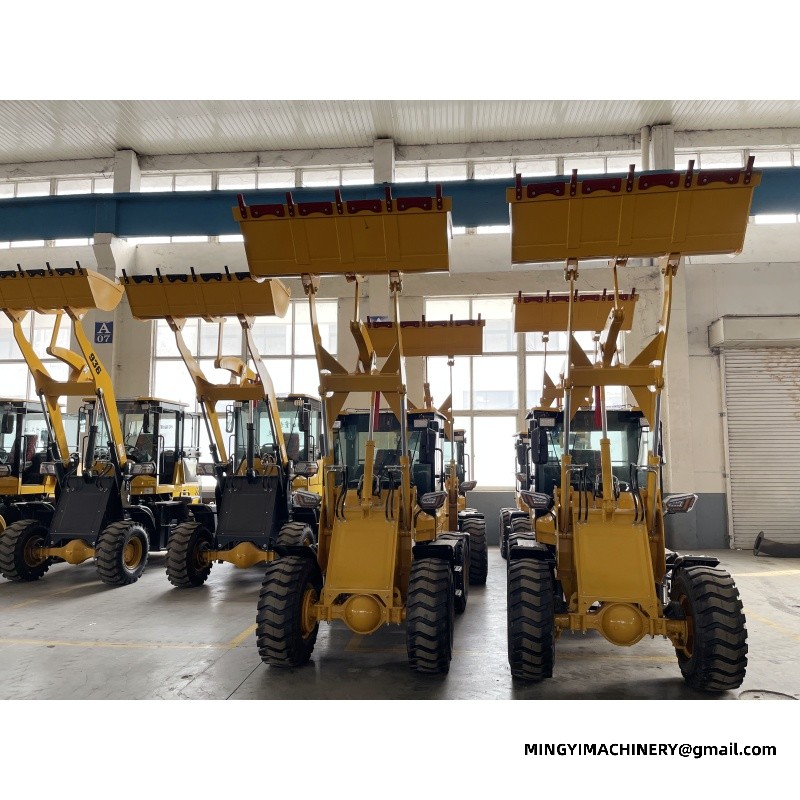
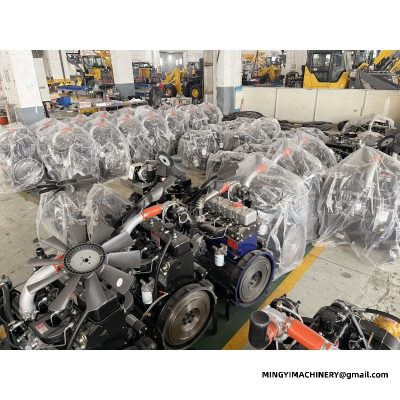
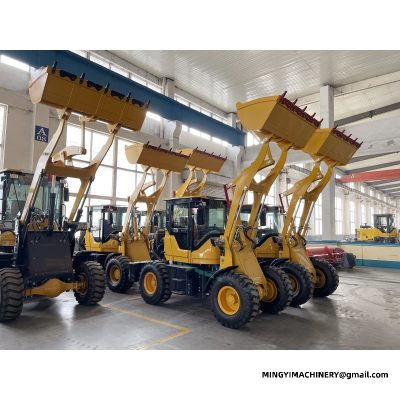
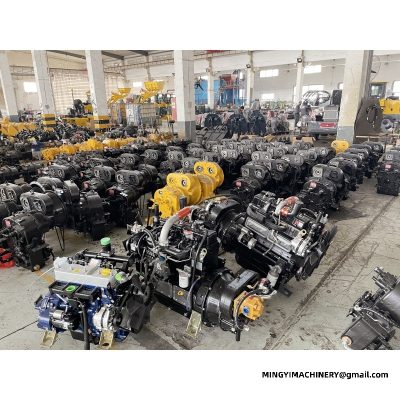
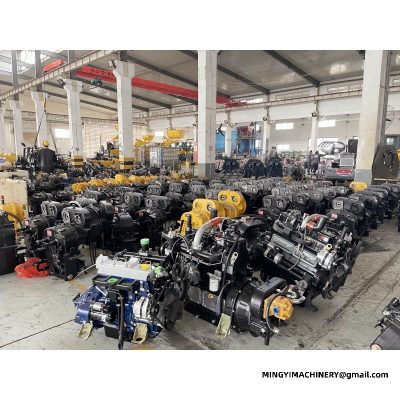
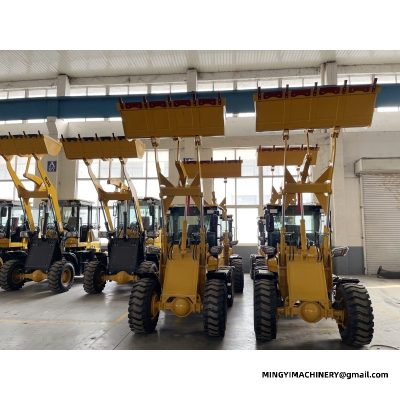
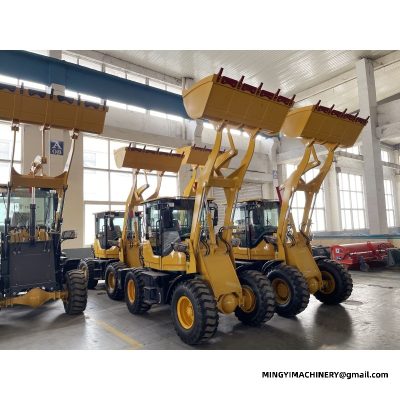
The specification gap between two front wheel loader builds is usually steel, and the steel is in four places. Boom wall: 25 mm against 25 mm. Front hinge plate: 25 mm against 30 mm. Rear hinge plate: 20 mm against 20 mm. Cross-member: 25 mm against 30 mm. Everything else — the 0.38 m³ bucket against the 0.4 m³ bucket, the centre cylinder 45 / side cylinder 40 cylinder set against centre cylinder 45 / side cylinder 45 — follows from those four. This page goes through each in turn, then through the cooling, axle and delivery questions that decide the rest.
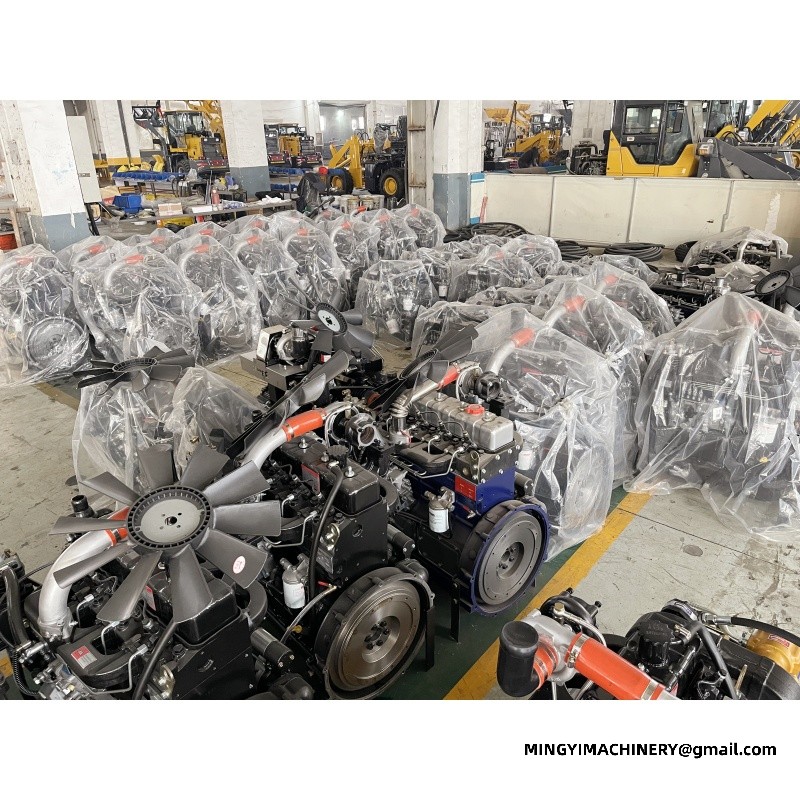
The boom is the part that turns engine power into a loaded bucket at height, and four figures describe it. Length runs 3.15 m on the light-duty 4.2 m small-frame wheel-side reduction wheel loader against 3.35 m on the heavy-duty 4.5 m medium-frame wheel-side reduction wheel loader; wall thickness 25 mm against 30 mm; section width 370 mm against 520 mm; and the mount spacing — boom centre distance — 890 mm against 960 mm. Read together, those four numbers tell you more about how a machine will behave than bucket capacity ever will.
Length buys reach and takes stability, because every extra millimetre moves the load centre further from the front axle. Wall thickness resists bending; section width resists twisting. Centre distance is the one most buyers never ask about, and it is the one that decides whether the arm takes a side load cleanly or twists the pins — which matters the moment an operator digs one corner of the bucket into a heap instead of squaring up to it. On the light-duty 4.2 m small-frame wheel-side reduction wheel loader the combination of a 3.15 m arm, a 25 mm wall and a 890 mm spacing is matched to a 0.38 m³ bucket, and that match is what keeps the frame tight over a full season.
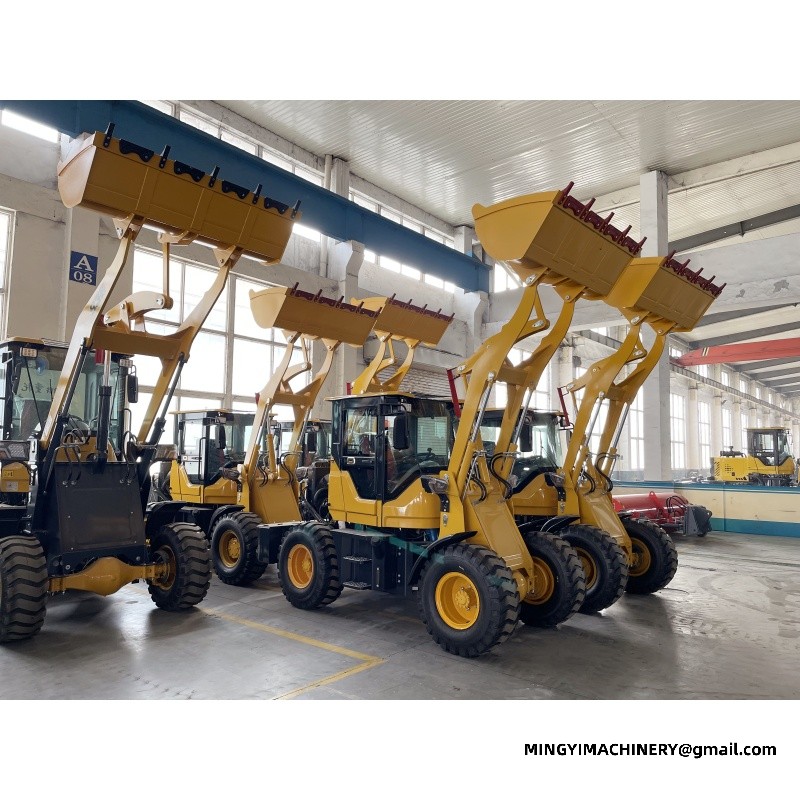
Fuel and cooling capacity are not comfort figures; they are shift-planning figures. A 70 L (75# large tank) tank on the heavy-duty 3.5 m medium-frame wheel-side reduction wheel loader is sized so a full working day at operating throttle does not need a mid-shift refuel, which matters on sites where the bowser is a long way from the face. The heavy-duty 4.5 m medium-frame wheel-side reduction wheel loader carries 70 L (75# large tank).
The radiator is the other side of the same question. 4105 core on this build against 4105 core on the other. Where a build offers two cores, the raised one serves the turbo engine, and it is the correct specification for dusty work, high ambient temperature, or any duty where the machine spends its day at high load and low speed with little air passing through the core.
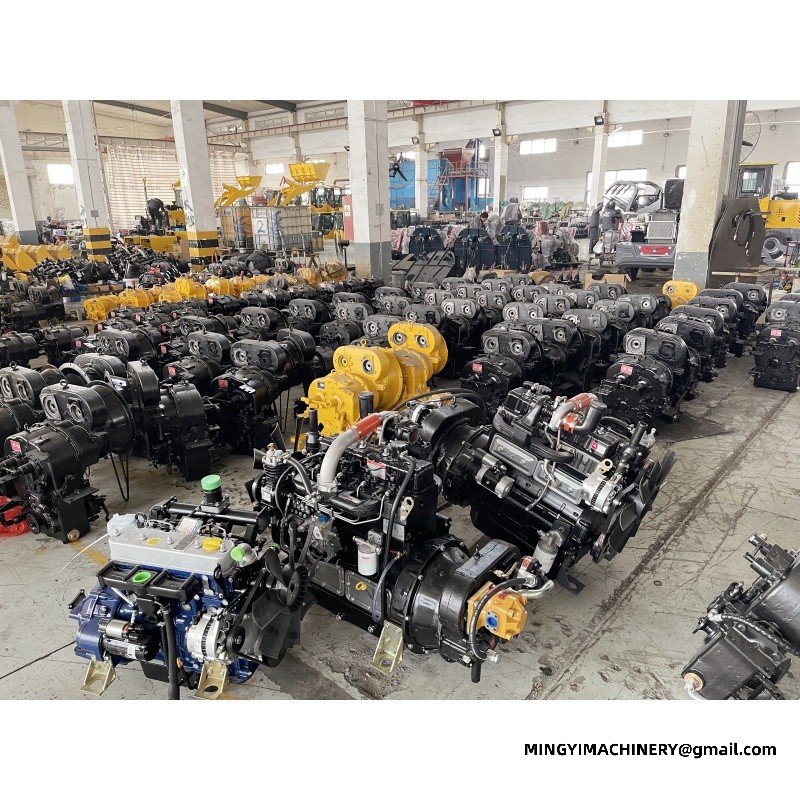
Battery capacity appears in the table as 45 Ah (24 V) for the standard 2.8 m low-profile wheel loader and 60 Ah (490 engine); 80 Ah (4102 turbo engine) for the light-duty 4.2 m small-frame wheel-side reduction wheel loader. On builds with two engine options the two figures track the engines: the naturally aspirated unit cranks on less, the turbo needs more, and the 24 V system exists precisely because cranking a turbo diesel at minus ten needs the extra headroom.
What buyers should confirm before dispatch is not the capacity but the condition and the connections. Machines ship with batteries disconnected and boxed, so the first start is also the first check of every terminal. On the standard 2.8 m low-profile wheel loader that pack feeds the 4100 core cooling circuit's fan drive and the instrument cluster; on the light-duty 4.2 m small-frame wheel-side reduction wheel loader it feeds 4100 core (490 engine); 4105 core (4102T engine) and the same cluster. A marginal earth shows up as a slow crank in winter and as gauge flicker in summer.
| Reference specification — light-duty 4.2 m small-frame wheel-side reduction wheel loader | |
|---|---|
| Bucket capacity | 0.38 m³ |
| Dump height | 4.2 m |
| Track width | 1.5 m (wheel-side reduction axle); 1.45 m (Isuzu axle) |
| Boom arm thickness | 25 mm |
| Boom arm width | 370 mm |
| Boom arm length | 3.15 m |
| Boom arm centre distance | 890 mm |
| Cross-member thickness | 25 mm |
| Front hinge plate thickness | 25 mm |
| Rear hinge plate thickness | 20 mm |
| Rear frame section | 280 mm high x 800 mm wide |
| Hydraulic cylinders | centre cylinder 45 / side cylinder 40 |
| Fuel tank | 64.7 L (75# small tank) |
| Battery | 60 Ah (490 engine); 80 Ah (4102 turbo engine) |
| Front wheel to counterweight | 4.1 m |
| Radiator | 4100 core (490 engine); 4105 core (4102T engine) |
| Work pump | 40 pump (490 engine); 1045 pump (4102 turbo engine) |
| Travel pump | 316 pump |
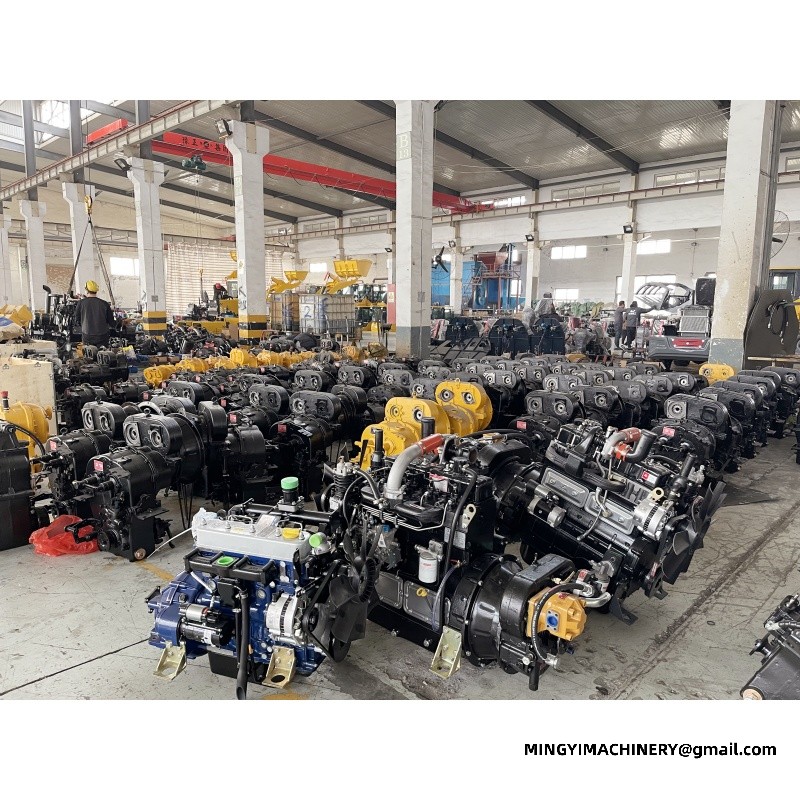
Farm work is governed by access and by the height of the things being filled. The light-duty 4.2 m small-frame wheel-side reduction wheel loader carries 0.38 m³ to 4.2 m on a 1.5 m (wheel-side reduction axle); 1.45 m (Isuzu axle) track with a 4.1 m footprint; the heavy-duty 3.5 m medium-frame wheel-side reduction wheel loader carries 0.65 m³ to 3.5 m on 1.6 m with 4.55 m. Gate widths, shed doors and feed-wagon sides are the constraints, and they are all fixed dimensions.
Attachments are where a farm loader earns its second life. Forks for bagged feed and pallets, a bale spear, a grapple for silage, a snow tool for the winter lane. They specification against the boom section, so check 370 mm on the light-duty 4.2 m small-frame wheel-side reduction wheel loader against 500 mm on the heavy-duty 3.5 m medium-frame wheel-side reduction wheel loader before ordering, and specify the hydraulic circuit at build time if any of them is hydraulically actuated.
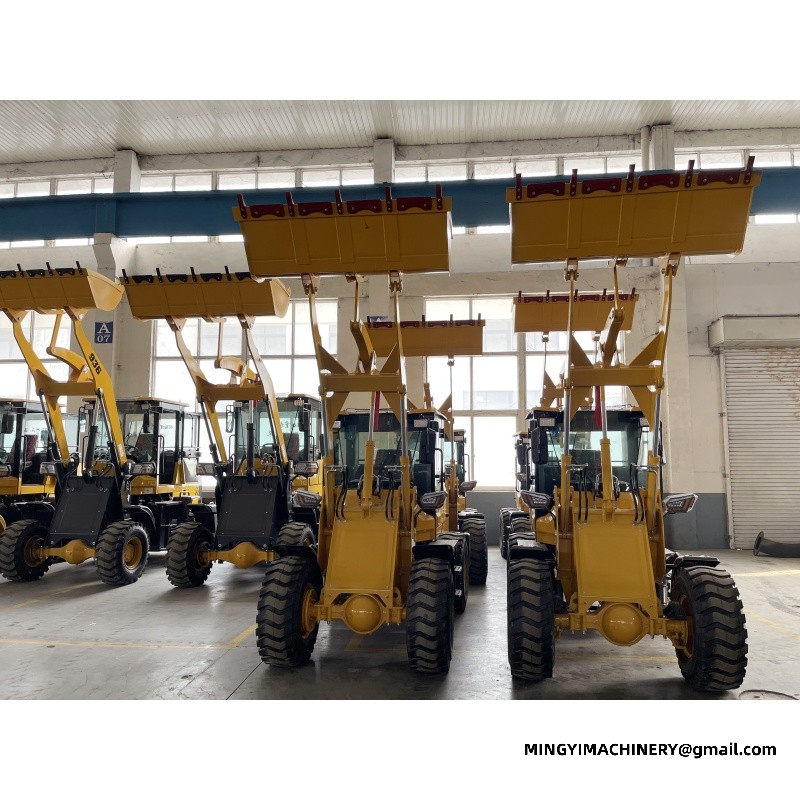
When a loaded machine turns, the load does not go straight down through the hinge. It goes through the plates at an angle, and the rear frame takes the twist. Rear section here is 300 mm high x 800 mm wide; cross-member 45 mm; rear hinge plate 30 mm. Read those three together and you have the answer to how a frame behaves when it is both loaded and turning.
The front plate, at 45 mm, is the thicker of the pair, and the boom ahead of it is designed to give way first anyway: the bucket hits the ground, the arm takes the shock, and the cylinders at centre cylinder 60 / side cylinder 50 absorb what is left. That is the intended load path. Protecting it means protecting the pins, and protecting the pins means the cross-member stays at the thickness it was built with.
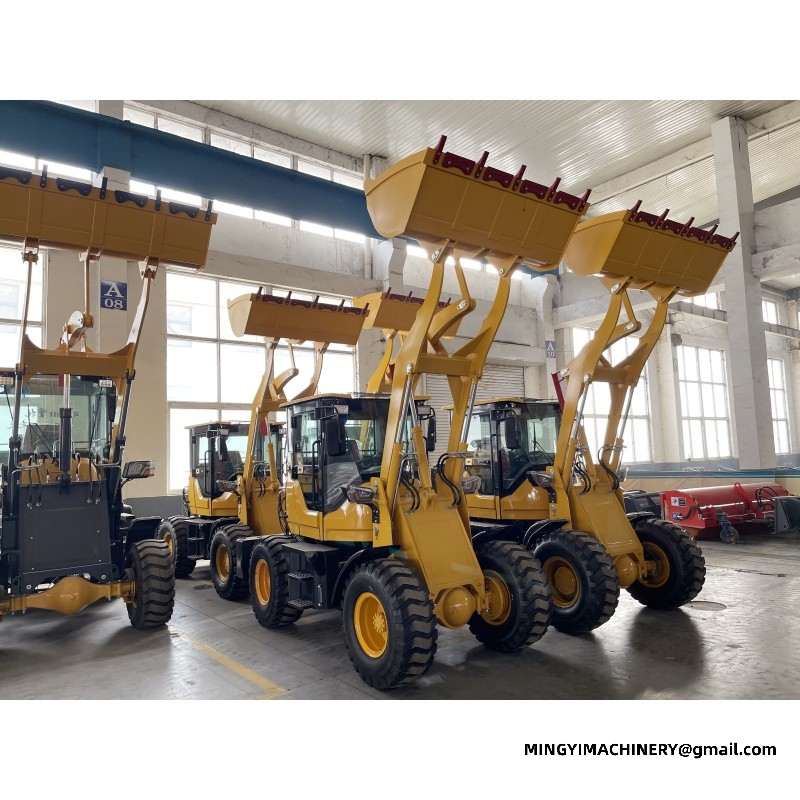
Acceptance takes twenty minutes and prevents a season of argument. Measure the bucket, 0.65 m³ on this build. Measure dump height with the arm at full lift, 4.2 m. Read the cylinders, centre cylinder 60 / side cylinder 50. Check the track, 1.6 m. Check the length from front wheel to counterweight, 4.55 m. Those five are on the sheet and on the machine.
The steel is harder to verify and worth verifying anyway, because it is what the money bought. Hinge plates 45 mm and 30 mm, cross-member 45 mm, boom wall 30 mm on a 520 mm section. A tape across the plate edge and a magnet will tell you whether the frame matches the order.
A specification is only as good as the figures on it. Before comparing numbers between suppliers, make sure the same figures appear on both: bucket 0.4 m³, dump height 3.2 m, boom section 430 mm over 25 mm of wall, hinge plates 30 mm front and 20 mm rear, cross-member 30 mm. If a sheet will not give you those five, it is not a specification, it is a description.
The second thing a sheet should let you check is which engine the figures belong to. Where a build offers two engines, the pump and radiator change with it: this one lists 40 pump (490 engine); 1045 pump (4102 turbo engine) and 4100 core (490 engine); 4105 core (4102T engine). Asking for the build by engine, not by model name, is the single change that prevents most delivery disputes.
Site work is a truck-loading problem. The machine fills, reverses, turns, approaches and dumps, several hundred times a day, and the numbers that govern it are dump height, hinge steel and cycle time. The heavy-duty 3.8 m medium-frame wheel-side reduction wheel loader brings 0.65 m³ at 3.8 m with 45 mm and 30 mm hinge plates; the heavy-duty 4.2 m medium-frame wheel-side reduction wheel loader brings 0.65 m³ at 4.2 m with 45 mm and 30 mm.
Backfilling and heel-in work load the rear hinge harder than loading does, because the machine turns while pushing. That is why the rear plate figure — 30 mm against 30 mm — is the one to read for a site machine, ahead of engine power. Add the cooling question: site dust loads a radiator fast, so the raised core and the 4105 core package earn their keep where the 4105 core spec would need blowing out at lunch.
What does commissioning a front wheel loader involve?
Fit the 3.15 m boom to the 890 mm mounts, torque the hinge pins, fill the 64.7 L (75# small tank) tank and the 4100 core (490 engine); 4105 core (4102T engine) circuit, and connect the battery. Allow a day per machine.
How is a front wheel loader prepared for export?
Knock-down: booms and counterweights packed loose, tanks removed, batteries boxed and disconnected. Rear frame sections stay between 280 mm high x 800 mm wide and 300 mm high x 800 mm wide.
What does a front wheel loader need to run a grapple?
A grapple sized to the 500 mm boom section and a hydraulic third circuit. The 40 pump (490 engine); 1045 pump (4102 turbo engine) work pump is specified per build, so order the circuit with the machine.
What should I check before a front wheel loader works a ramp?
Traction and cooling. A 1.5 m (wheel-side reduction axle); 1.45 m (Isuzu axle) track with wheel-side reduction holds on a ramp where an Isuzu-pattern axle would spin, and the 4100 core (490 engine); 4105 core (4102T engine) radiator keeps working at low speed.
How many units of a front wheel loader fit one container?
Two to three, loaded knock-down. Rear frame sections stay between 280 mm high x 800 mm wide and 300 mm high x 800 mm wide across the range, so a forty-foot box takes a mixed pair or trio.
Which front wheel loader build suits site work?
The heavier one, because dump height and hinge steel govern the day: 0.38 m³ at 4.2 m with 20 mm rear hinge plates and a 25 mm cross-member.
What spares should I keep for a front wheel loader?
Filters, a hose set for the centre cylinder 45 / side cylinder 40 cylinders, pins and bushes for the 890 mm boom mounts and a cutting edge. One pump per fleet is usually enough.
The short version for any front wheel loader: fix the dump height first, check the track against your narrowest opening second, and read the rear hinge plate — 20 mm on the light-duty 4.2 m small-frame wheel-side reduction wheel loader, 20 mm on the heavy-duty 4.5 m small-frame wheel-side reduction wheel loader — third. Everything else on the sheet is detail.
Hot, humid and dusty conditions around Front Wheel Loader: Reading Boom, Hinge and Axle Specifications
Dust is the enemy of every rotating joint. Keeping the radiator and the air intake of Front Wheel Loader: Reading Boom, Hinge and Axle Specifications clean, and cleaning them before they are blocked rather than after, is what separates a machine that lasts from one that overheats.
A second operator for Front Wheel Loader: Reading Boom, Hinge and Axle Specifications
Different operators suit different work. The person who is quickest with Front Wheel Loader: Reading Boom, Hinge and Axle Specifications on open ground is not always the one who is safest in a confined space, and having both available is a genuine advantage.
Later additions and retrofits on Front Wheel Loader: Reading Boom, Hinge and Axle Specifications
An added function should pay for itself quickly. Whether Front Wheel Loader: Reading Boom, Hinge and Axle Specifications gains a different bucket, a hydraulic service or a protection package, the test is the number of days a year it is actually used.
Contact MINGYI Machinery for the current wheel loader lineup, configuration options and a formal specification for your market. E-mail: sales@mingycn.com | LINE (ID): mingyicn
Loader Machine for Construction: Specifying for Site Cycles · Wheel Loader for Mining: Radiator Cores and Hub Reduction Axles · China Wheel Loader Factory Supplier: Repeat Orders and Spares · Loaders









