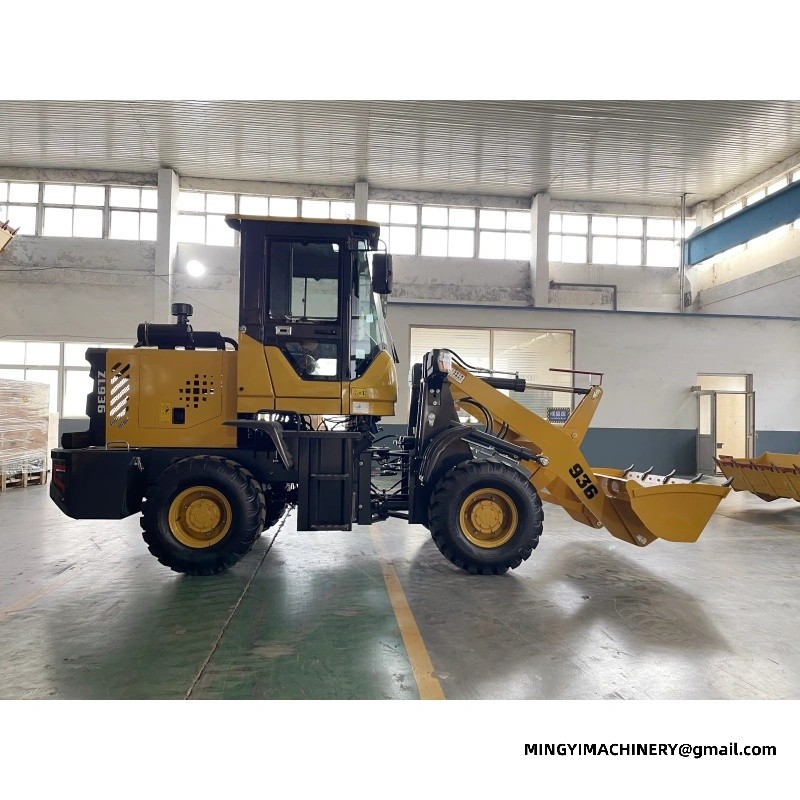
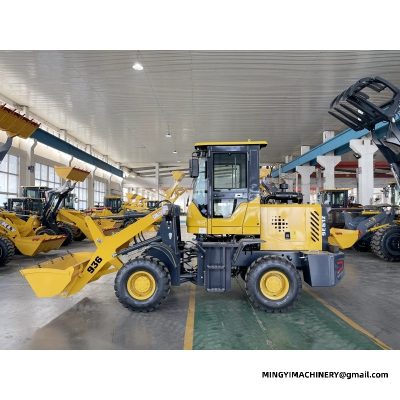
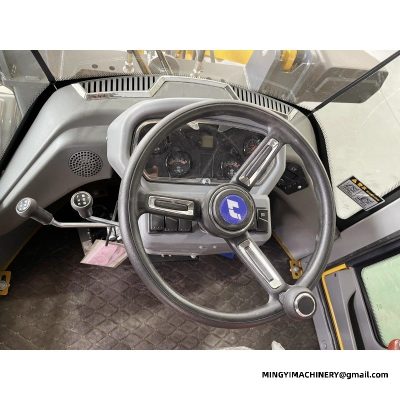
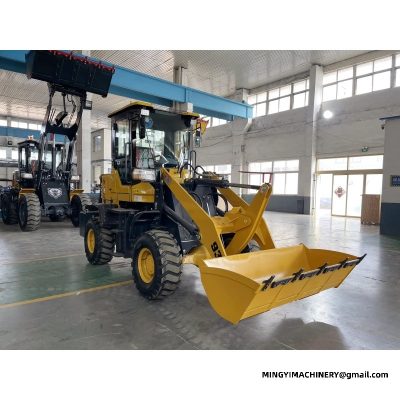
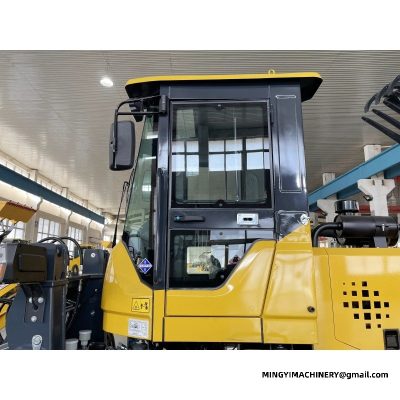
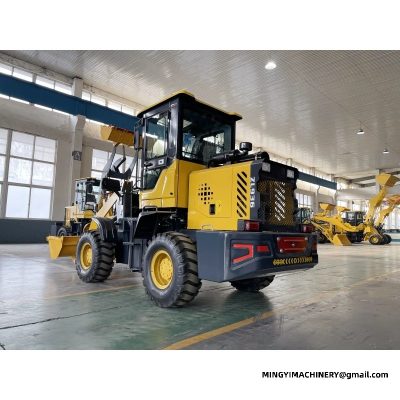
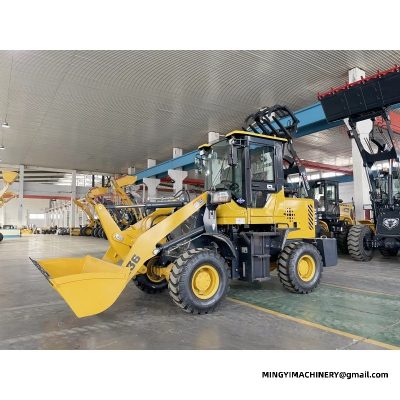
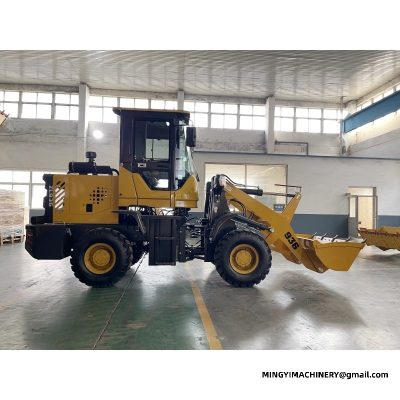
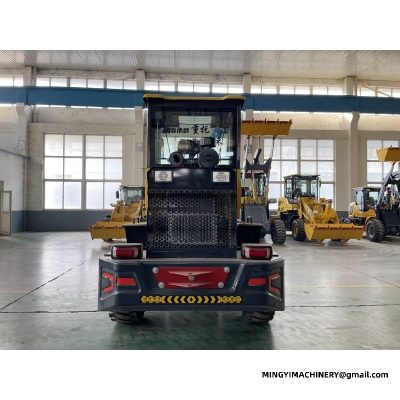
The specification gap between two loader machine for construction builds is usually steel, and the steel is in four places. Boom wall: 30 mm against 20 mm. Front hinge plate: 45 mm against 16 mm. Rear hinge plate: 30 mm against 16 mm. Cross-member: 45 mm against 16 mm. Everything else — the 0.52 m³ bucket against the 0.3 m³ bucket, the centre cylinder 60 / side cylinder 50 cylinder set against centre cylinder 40 / side cylinder 40 — follows from those four. This page goes through each in turn, then through the cooling, axle and delivery questions that decide the rest.
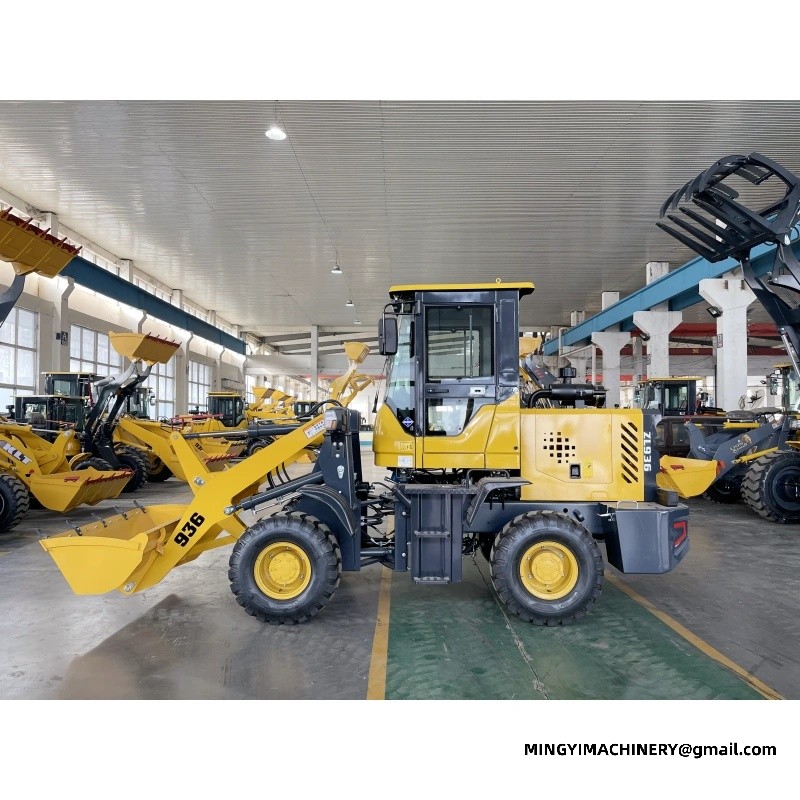
Adding a circuit after delivery is possible and never as good as specifying it at build. The pump is the constraint: 32 pump on this machine, 316 pump alongside it. Flow has to be shared, and a circuit added later shares it through plumbing that was not laid out for it.
The cylinders are less often the limit than people assume. centre cylinder 40 / side cylinder 40 gives the mechanical advantage; the pump gives the speed. If an attachment works but works slowly, look at flow before looking at bore. If it works but the arm twists, look at section instead: 280 mm of width and 680 mm of spacing resist that, and neither can be improved after the frame is welded.
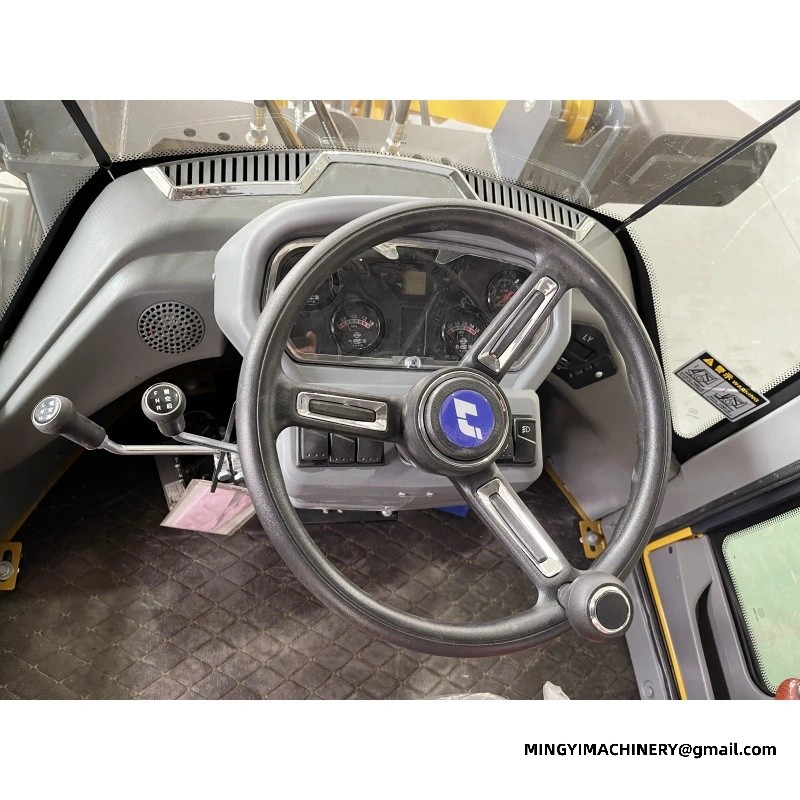
A bucket that fills completely every pass beats a larger one that fills partly, because a partly filled bucket is carrying air at the same effort as material. On a dense face, 0.38 m³ will fill where 0.52 m³ might not, and the smaller machine finishes the job first while putting less load into the 25 mm hinge.
There is also the question of what the load does to the machine in motion. Carrying a full bucket across rough ground loads the front axle, the hinge and the boom all at once. At 4 m front wheel to counterweight and 1.5 m (wheel-side reduction axle); 1.45 m (Isuzu axle) of track, the shorter machine with the right bucket is more stable as well as quicker, and stability is what keeps a cycle time consistent rather than occasionally fast.
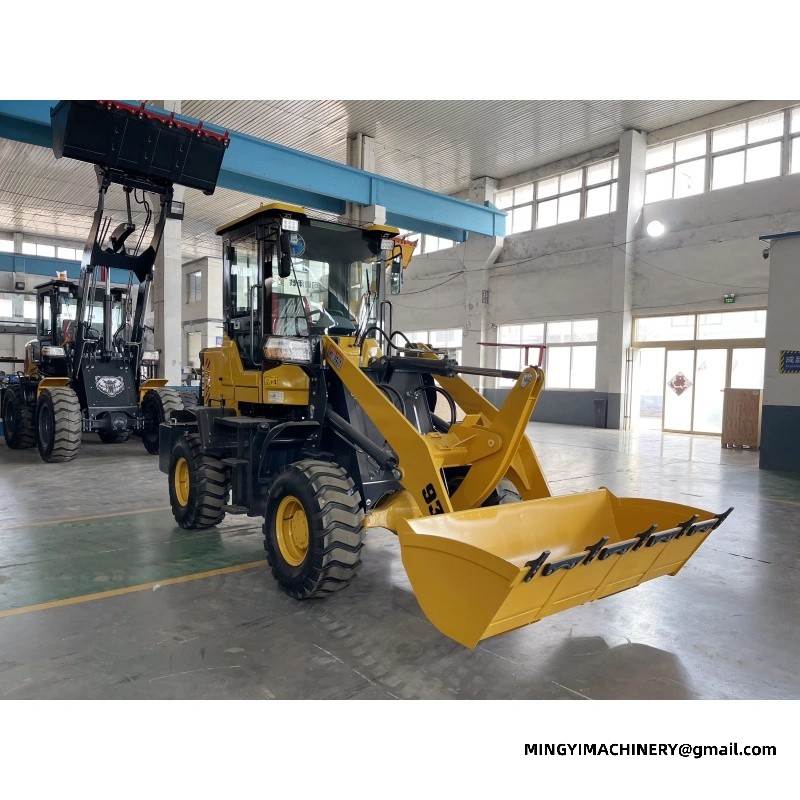
Volume is simple and stability is not. Across the range the buckets run 0.38 m³ on the light-duty 3.5 m small-frame wheel-side reduction wheel loader to 0.38 m³ on the light-duty 3.8 m small-frame wheel-side reduction wheel loader, and the machines behind them are built to match: 25 mm boom wall and 25 mm cross-member against 25 mm and 25 mm. That is why a bigger bucket on a lighter frame is a poor bargain.
Decide in three steps. First, what are you loading into — that fixes dump height, 3.5 m on the light-duty 3.5 m small-frame wheel-side reduction wheel loader or 3.8 m on the light-duty 3.8 m small-frame wheel-side reduction wheel loader. Second, what is the material's weight per cubic metre — that fixes whether 0.38 m³ or 0.38 m³ is honest. Third, how many passes a day — that fixes whether the extra volume saves enough time to pay for the heavier frame. Skip the second step and you buy a machine that is either slow or overloaded.
| Reference specification — light-duty 4.5 m medium-frame wheel-side reduction wheel loader | |
|---|---|
| Bucket capacity | 0.52 m³ |
| Dump height | 4.5 m |
| Track width | 1.6 m |
| Boom arm thickness | 30 mm |
| Boom arm width | 450 mm |
| Boom arm length | 3.35 m |
| Boom arm centre distance | 960 mm |
| Cross-member thickness | 45 mm |
| Front hinge plate thickness | 45 mm |
| Rear hinge plate thickness | 30 mm |
| Rear frame section | 300 mm high x 800 mm wide |
| Hydraulic cylinders | centre cylinder 60 / side cylinder 50 |
| Fuel tank | 70 L (75# large tank) |
| Battery | 80 Ah |
| Front wheel to counterweight | 4.7 m |
| Radiator | 4105 core |
| Work pump | 2063 pump |
| Travel pump | 25 pump |
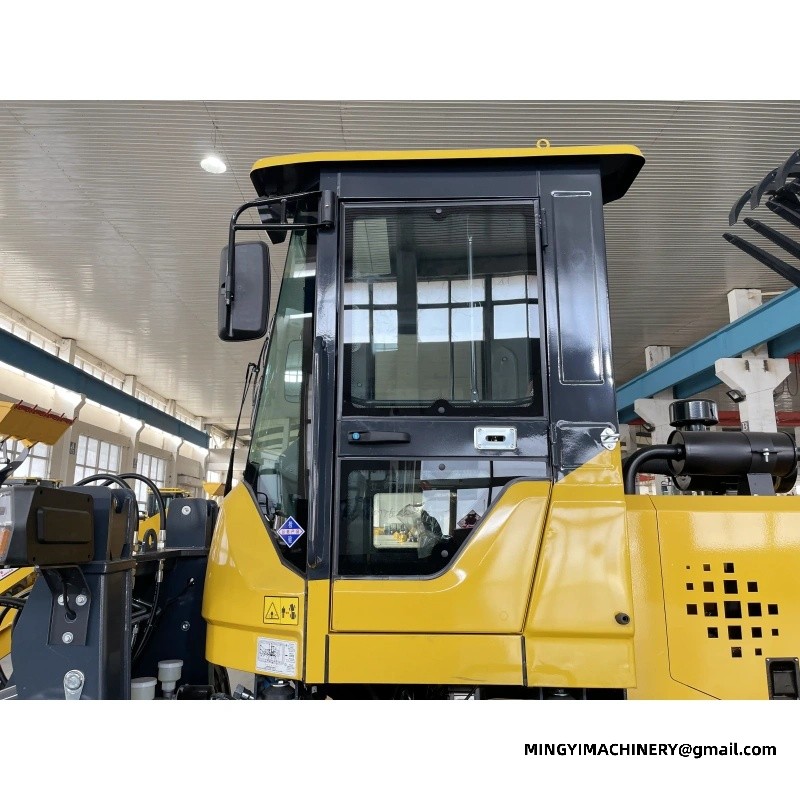
Two dimensions decide whether a loader is usable on a given site: the 4 m front-to-counterweight length of the light-duty 3.2 m low-profile wheel loader against the 3.8 m of the light-duty 3.2 m small-frame wheel-side reduction wheel loader, and track width at 1.5 m (wheel-side reduction axle); 1.45 m (Isuzu axle) against 1.5 m (wheel-side reduction axle); 1.45 m (Isuzu axle). Everything else on the sheet — engine, pump, cylinder bore — matters only after the machine fits.
The pairing matters too. A 0.38 m³ bucket lifted to 3.2 m on a 4 m footprint is a different machine in practice from a 0.38 m³ bucket at 3.2 m on 3.8 m, even where the track figures are close. Where access is tight, take the shorter machine and accept the extra pass; where the ground is open, take the longer one and take the stability it buys with the 14 mm rear hinge plate.
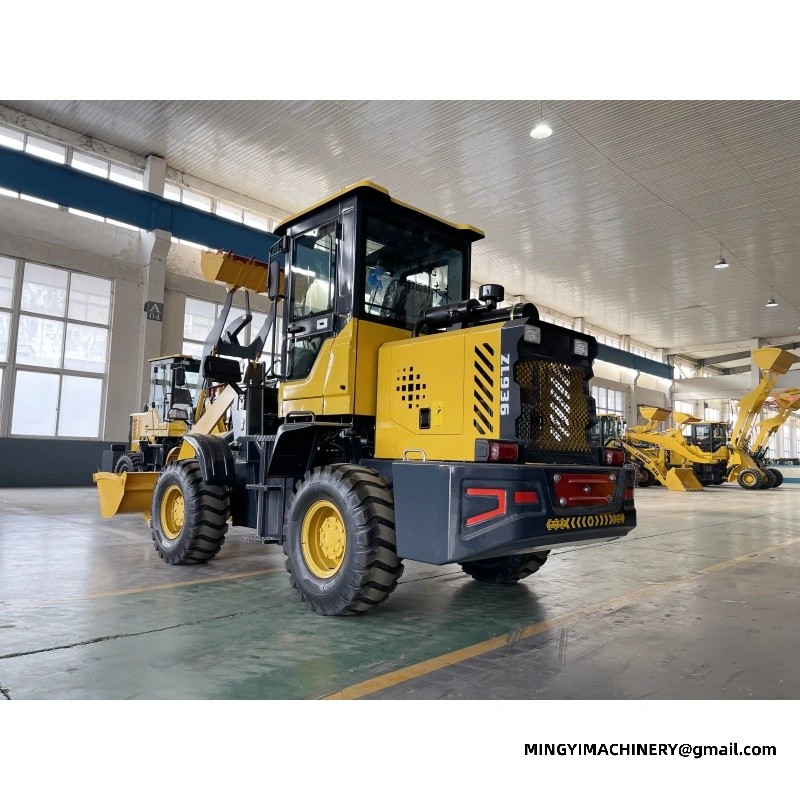
Operators describe a good machine as tight and a tired one as loose, and they are describing the hinge pins. New, the geometry is set by the plates: 25 mm forward, 14 mm aft. After a few thousand hours the geometry is set by how much those plates have allowed the pins to move, which is a function of thickness and of the 25 mm cross-member behind them.
This is why the figures are worth asking for rather than assuming. On the light-duty 4.2 m small-frame wheel-side reduction wheel loader the same two numbers are 25 mm and 20 mm. A machine that will spend its life on short cycles — many steering inputs per hour — should be bought on these figures rather than on bucket capacity, because capacity is simple to add and hinge life is not.
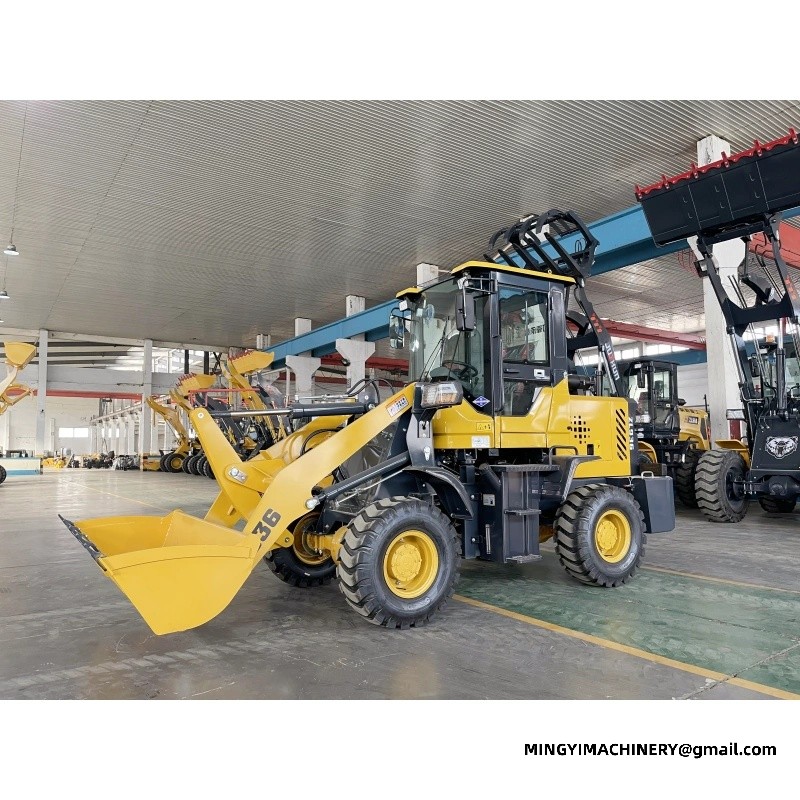
Frames do not usually break; they go loose, and looseness starts at the pins. The parts that govern it are the rear hinge plate, 14 mm, the cross-member behind it, 25 mm, and the rear frame section, 280 mm high x 800 mm wide. Buy on those three and the machine will still feel tight in year five.
Duty decides how long that takes. A machine loading twenty trucks a day ages differently from one moving material for two hours. On the light-duty 4.5 m medium-frame wheel-side reduction wheel loader the same three figures are 30 mm, 45 mm and 300 mm high x 800 mm wide; choosing between them is choosing how much duty the frame was built for, and it is the decision that outlasts every other option on the order.
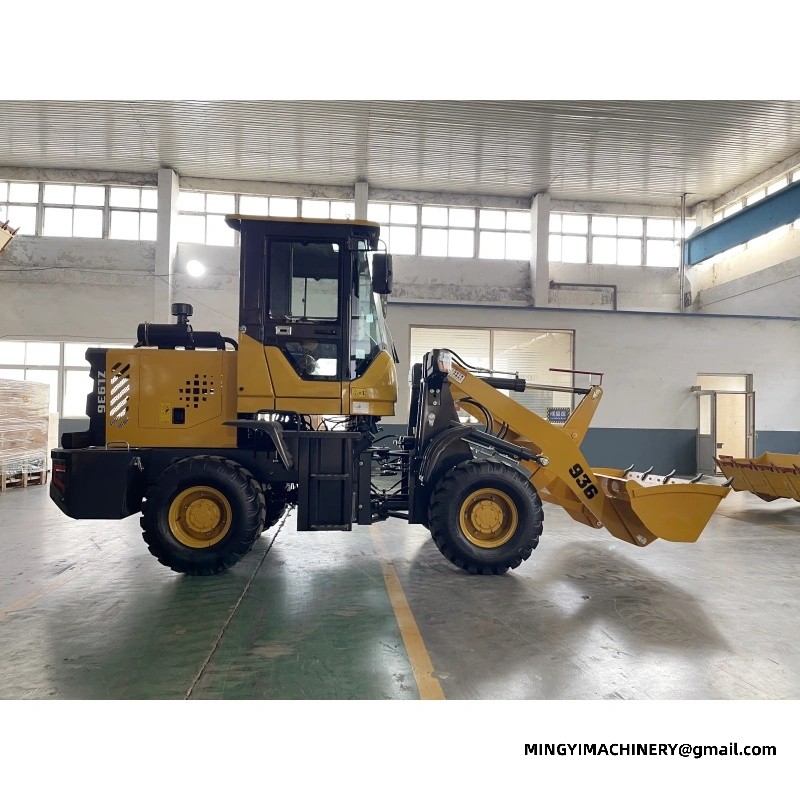
Work from the longest dimension. 4 m from front wheel to counterweight on this machine, 4.1 m on the light-duty 3.8 m small-frame wheel-side reduction wheel loader. The bucket usually comes off; the counterweight usually stays, because removing it changes the securing plan far more than the space it saves.
Track is the second constraint, 1.5 m (wheel-side reduction axle); 1.45 m (Isuzu axle), and it is the one that decides whether two machines can travel side by side. Where a build offers two axles the track differs slightly between them, so confirm which axle is on the unit before booking space. Fuel is drained to a residue for shipping, and the tank on this build is 54 L (50# tank); that figure matters for the hazmat paperwork rather than for the loading plan.
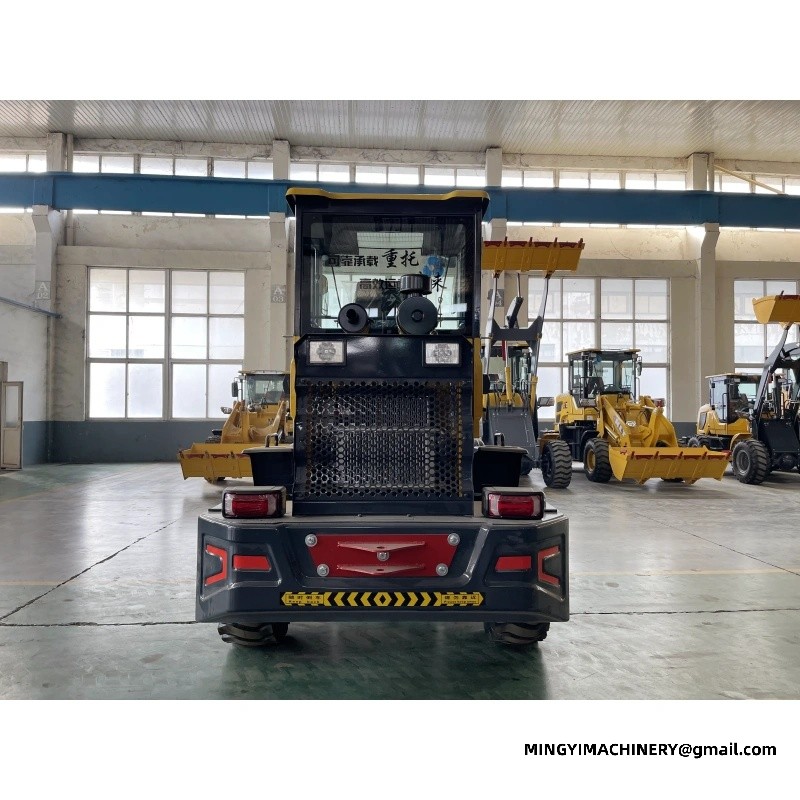
A machine that wanders on the road and feels vague in the turn has worn hinge pins. The plates are 25 mm front and 14 mm rear over a 25 mm cross-member; when the pin bores ovalise, the geometry the frame was built to hold is gone, and no amount of steering adjustment brings it back.
Check it by loading the bucket, holding the machine on a slope and watching the joint while an operator rocks the steering. Movement there is wear; movement at the rear, over the 280 mm high x 800 mm wide section, is a different and more serious problem. Catching the first case takes a set of pins; missing it takes a frame.
What does commissioning a loader machine for construction involve?
Fit the 2.61 m boom to the 890 mm mounts, torque the hinge pins, fill the 64.7 L (75# small tank) tank and the 4100 core (490 engine); 4105 core (4102T engine) circuit, and connect the battery. Allow a day per machine.
Can a loader machine for construction take a quick coupler?
Yes, if the coupler is built for the boom section and centre distance — 370 mm wide on 890 mm spacing for the light-duty 4.2 m small-frame wheel-side reduction wheel loader.
How is the counterweight mounted on a loader machine for construction?
Bolted to the rear frame section, 300 mm high x 800 mm wide on the light-duty 4.5 m medium-frame wheel-side reduction wheel loader, rather than hung off brackets. Bracket-mounted ballast is what cracks under daily face work.
Which loader machine for construction build suits farm work?
The lighter one, for access: a 0.52 m³ bucket at 4.5 m, 1.6 m track and a 4.7 m footprint that turns between sheds. Gate and door widths decide first.
How often should the articulation of a loader machine for construction be greased?
Every shift in stockpile or face work, weekly in light duty. The 25 mm front and 14 mm rear plates take every steering load, and missed greasing takes pins and bores.
What is the largest loader machine for construction in the range?
The medium-frame heavy builds: a 0.3 m³ bucket at 2.4 m on a 1.85 m boom with centre cylinder 40 / side cylinder 40 cylinders.
How wide is a loader machine for construction?
Track width is 1.2 m (Isuzu axle); 1.3 m (wheel-side reduction axle) on the standard 2.4 m low-profile wheel loader and 1.5 m (wheel-side reduction axle); 1.45 m (Isuzu axle) on the light-duty 4.2 m small-frame wheel-side reduction wheel loader. Check it against the narrowest gate, door or aisle before anything else on the sheet.
Five figures settle any loader machine for construction enquiry: dump height, track width, boom wall, rear hinge plate and cross-member. On the standard 2.4 m low-profile wheel loader those are 2.4 m, 1.2 m (Isuzu axle); 1.3 m (wheel-side reduction axle), 20 mm, 16 mm and 16 mm. Send us yours and we will tell you which build meets them.
Commissioning Loader Machine for Construction: 0.4 m3 or 0.65 m3 Bucket on site
The machine should be introduced to the site as well as the operator. Walking the route Loader Machine for Construction: 0.4 m3 or 0.65 m3 Bucket will take, noting the soft spots and the turns, prevents the kind of first-day incident that has nothing to do with the machine.
Pre-delivery inspection before Loader Machine for Construction: 0.4 m3 or 0.65 m3 Bucket leaves the shop
The last hour before packing is the best time to find a fault. Running Loader Machine for Construction: 0.4 m3 or 0.65 m3 Bucket through its full working cycle, checking for leaks under load and confirming that the controls match the specification avoids a conversation across time zones later.
Fuel, oil and fluid quality for Loader Machine for Construction: 0.4 m3 or 0.65 m3 Bucket
Fluid quality is a storage problem before it is a machine problem. Water and sediment in a drum will find the injection system of Loader Machine for Construction: 0.4 m3 or 0.65 m3 Bucket eventually, and a settling period is nothing compared with a pump.
Wear items and spares worth holding for Loader Machine for Construction: 0.4 m3 or 0.65 m3 Bucket
A spares list should follow the duty cycle. A Loader Machine for Construction: 0.4 m3 or 0.65 m3 Bucket working every day in abrasive dust consumes filters and cutting edges far faster than the same machine used once a week, and the shelf should be stocked for the harder case.
Cold weather and winter care for Loader Machine for Construction: 0.4 m3 or 0.65 m3 Bucket
Winter is hard on rubber and on seals as much as on the engine. Parking Loader Machine for Construction: 0.4 m3 or 0.65 m3 Bucket under cover, keeping the tracks or tyres off standing water and checking the hoses for cracking are all part of the season.
Contact MINGYI Machinery for the current wheel loader lineup, configuration options and a formal specification for your market. E-mail: sales@mingycn.com | LINE (ID): mingyicn
Wheel Loader for Mining: Cooling, Tyres and Abrasive Ground · Wheel Loader for Agriculture: Silage, Grain and Yard Work · Loader Machine Supplier: Parts Support After Delivery · Loaders









