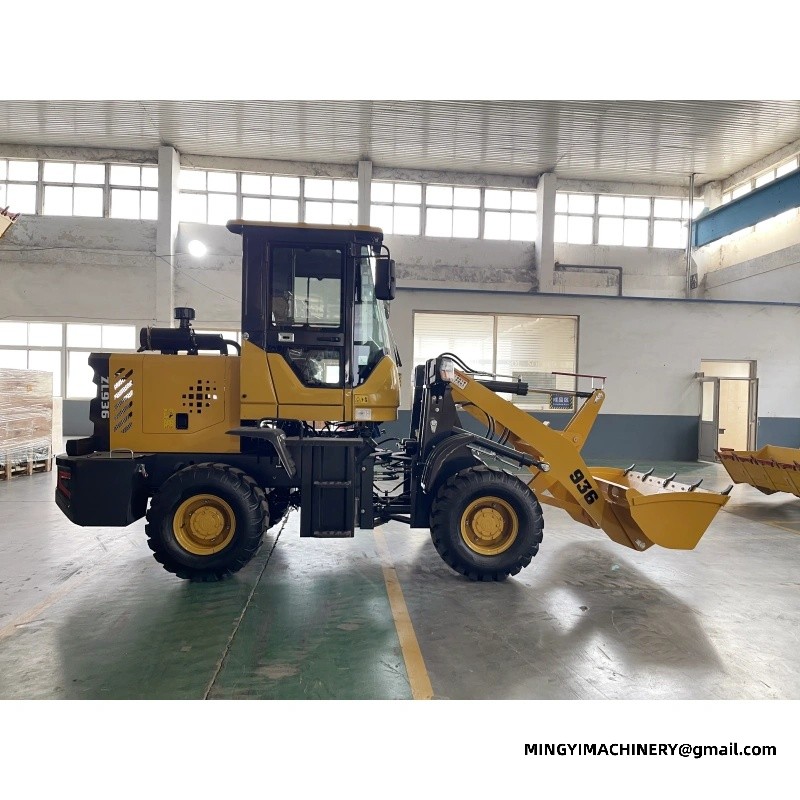
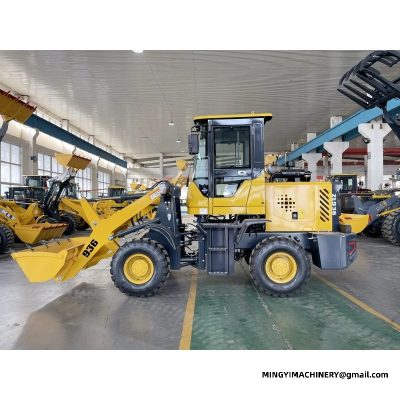
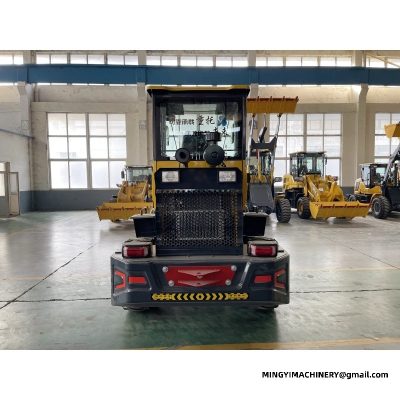
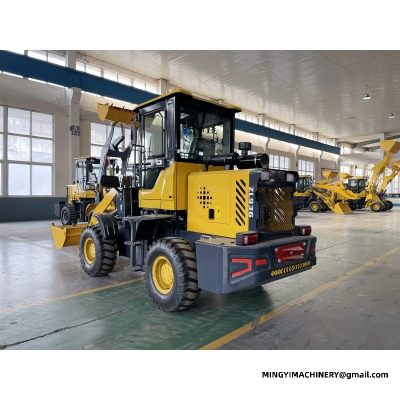
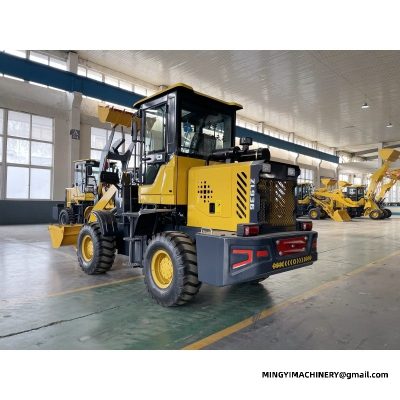
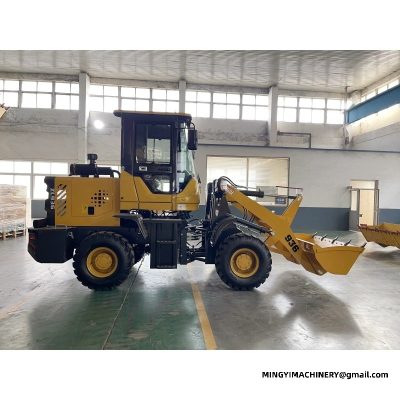
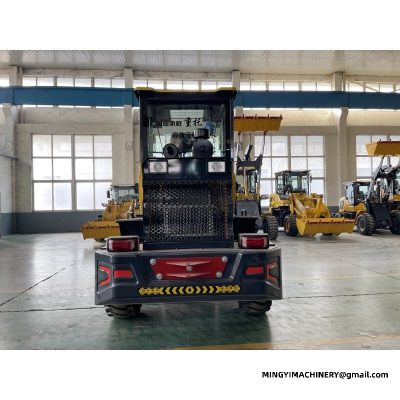
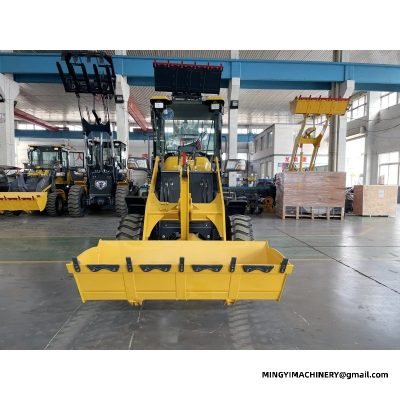
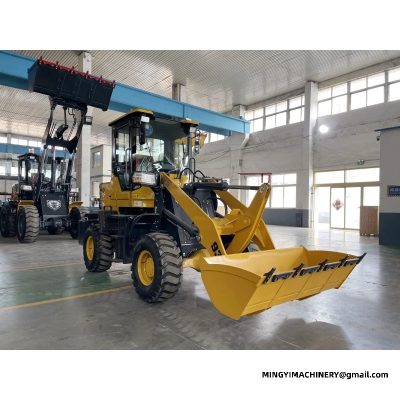
Duty decides the build, and duty is measured in cycles, not in tonnes. A wheel loader for mining loading twenty trucks a day needs heavier steel than one moving pallets and feed. The figures move together: cross-member 30 mm against 30 mm, rear hinge 20 mm against 20 mm, cylinder set centre cylinder 45 / side cylinder 45 against centre cylinder 45 / side cylinder 45, radiator 4100 core (490 engine); 4105 core (4102T engine) against 4100 core (490 engine); 4105 core (4102T engine). Buckets are 0.4 m³ and 0.4 m³, dump heights 3.2 m and 3.2 m. This page maps duty to build, with the numbers for each.
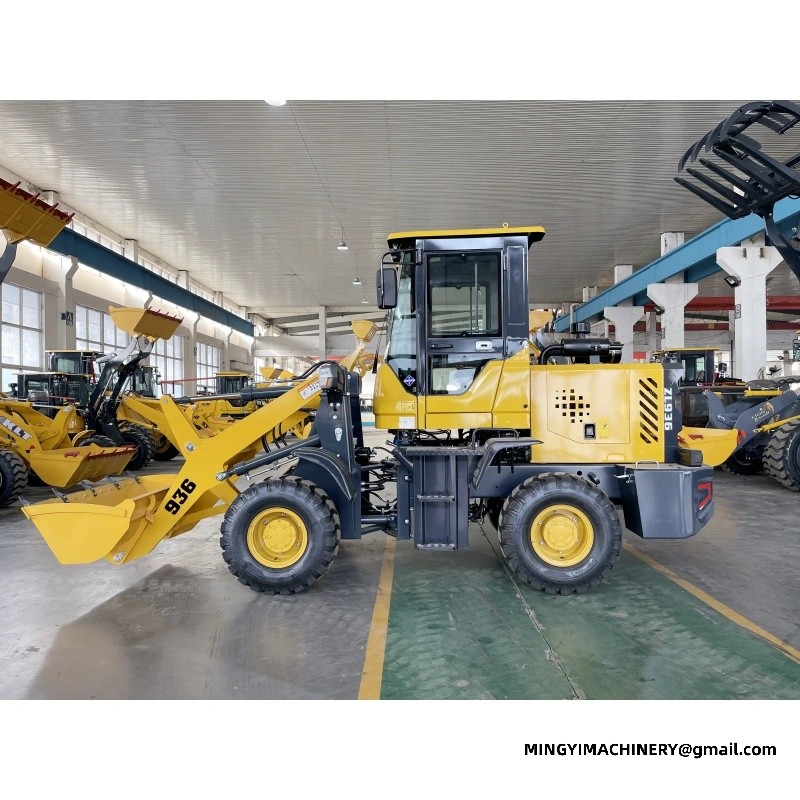
A battery specification is really an engine specification in disguise. 80 Ah tells you what the engine needs to turn over, and where two figures are listed it tells you the build is offered with more than one engine. The larger figure is the turbo; the smaller, the naturally aspirated option.
Match that to how the machine will be used. Continuous duty — one start, one long shift — is easy on a battery. Intermittent duty — yard work where the engine is stopped every time the operator gets out — is the hard case, and it is where the higher rating earns its keep. The rest of the electrical load is modest, so cranking is what the 80 Ah figure is really buying.
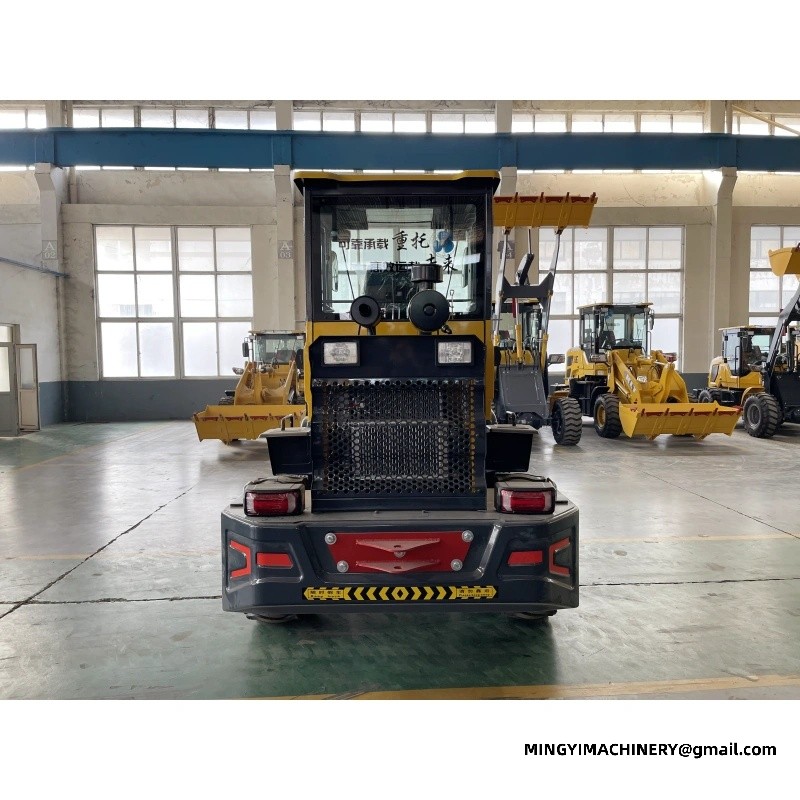
Every loader purchase starts with the thing being loaded into. On this range the choice runs from 3.2 m on the heavy-duty 3.2 m low-profile wheel loader to 3.5 m on the light-duty 3.5 m medium-frame wheel-side reduction wheel loader, and the gap between those two figures is the gap between a machine that feeds a small mixer and one that feeds a highway truck.
Take the measurement at the highest point the bucket must clear, on the near side, with the truck loaded — a suspension that settles under load lowers the board. Then add allowance for the operator's approach angle. The heavy-duty 3.2 m low-profile wheel loader at 3.2 m with a 0.4 m³ bucket and a 2.3 m arm is a compact answer; the light-duty 3.5 m medium-frame wheel-side reduction wheel loader at 3.5 m with 0.52 m³ and a 2.63 m arm is the answer where the board is high.
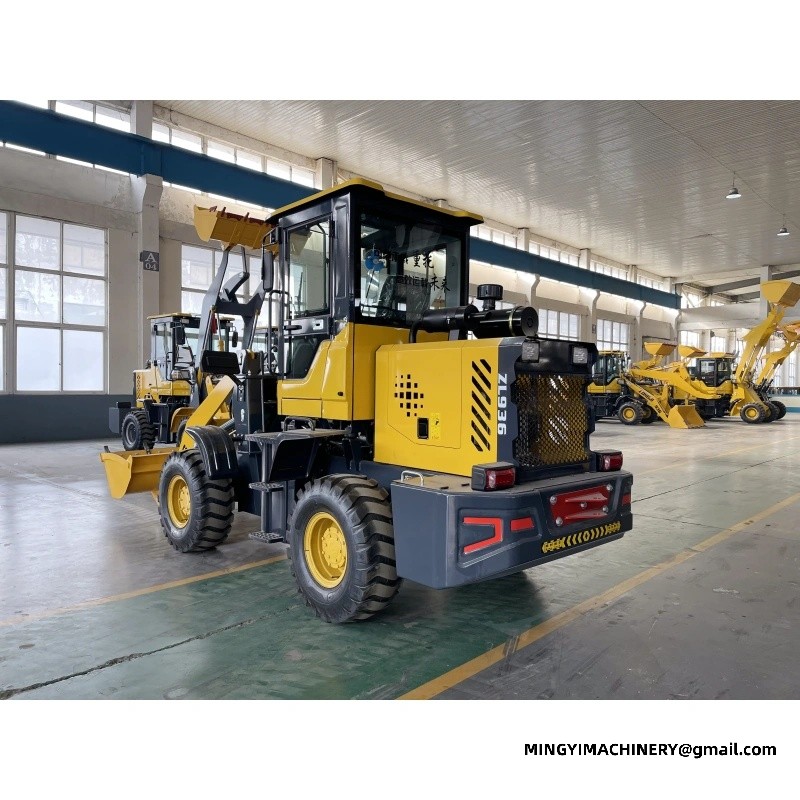
Fuel capacity on this range is specified per frame rather than per model: 64.7 L (75# small tank) on the heavy-duty 3.8 m small-frame wheel-side reduction wheel loader and 70 L (75# large tank) on the light-duty 3.5 m medium-frame wheel-side reduction wheel loader. Both are intended to cover a full shift at working throttle, and both assume the machine is not idling for hours between loads — idling is where a "full day" tank becomes a half-day tank.
Plan refuelling around the tank, not around the clock. On the heavy-duty 3.8 m small-frame wheel-side reduction wheel loader with 64.7 L (75# small tank) and a 0.4 m³ bucket at 3.8 m, a day of continuous loading will run the tank down; on the light-duty 3.5 m medium-frame wheel-side reduction wheel loader with 70 L (75# large tank) and 0.52 m³ at 3.5 m, the same day leaves allowance. Where a site has no bowser, that allowance is the difference between finishing at four and stopping at two.
| Published build data — heavy-duty 3.5 m small-frame wheel-side reduction wheel loader | |
|---|---|
| Bucket capacity | 0.4 m³ |
| Dump height | 3.5 m |
| Track width | 1.5 m (wheel-side reduction axle); 1.45 m (Isuzu axle) |
| Boom arm thickness | 25 mm |
| Boom arm width | 430 mm |
| Boom arm length | 2.62 m |
| Boom arm centre distance | 890 mm |
| Cross-member thickness | 30 mm |
| Front hinge plate thickness | 30 mm |
| Rear hinge plate thickness | 20 mm |
| Rear frame section | 280 mm high x 800 mm wide |
| Hydraulic cylinders | centre cylinder 45 / side cylinder 40 |
| Fuel tank | 64.7 L (75# small tank) |
| Battery | 60 Ah (490 engine); 80 Ah (4102 turbo engine) |
| Front wheel to counterweight | 4.1 m |
| Radiator | 4100 core (490 engine); 4105 core (4102T engine) |
| Work pump | 40 pump (490 engine); 1045 pump (4102 turbo engine) |
| Travel pump | 316 pump |
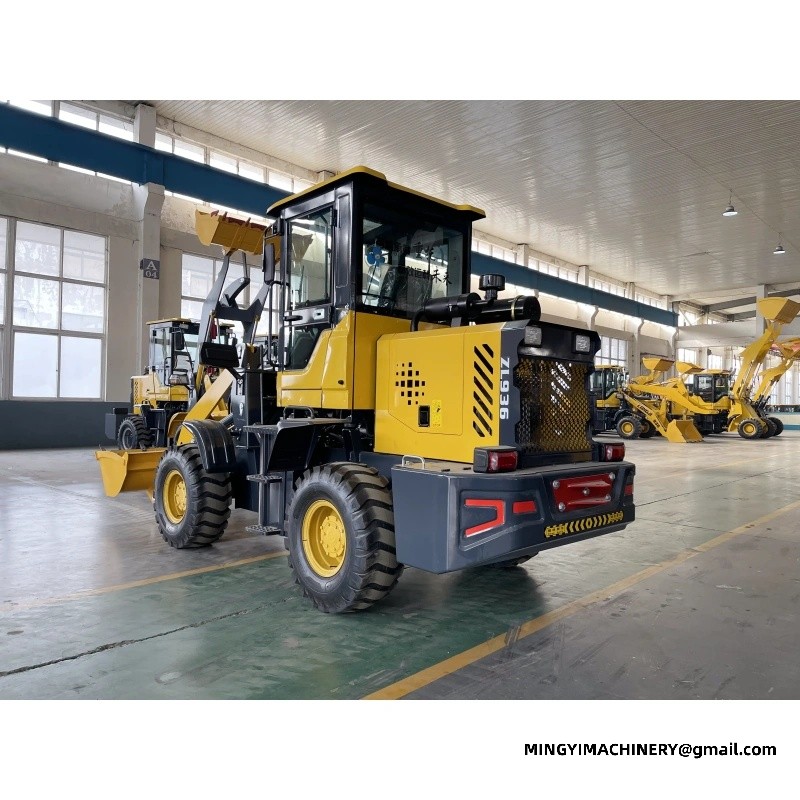
Purchase decision is the smallest of the three numbers that matter; the other two are downtime and residual value, and both are decided by the frame. A machine built with 20 mm rear hinge plates and a 30 mm cross-member, as on the heavy-duty 3.2 m small-frame wheel-side reduction wheel loader, will be tight at year three in light duty. A machine with 20 mm and 30 mm, as on the heavy-duty 3.5 m small-frame wheel-side reduction wheel loader, will still be tight in heavy duty.
Fuel, tyres and filters are the predictable takes, and they scale with duty rather than with capacity. A 0.4 m³ bucket working a short cycle on a 64.7 L (75# small tank) tank takes less per day than a 0.4 m³ bucket on 64.7 L (75# small tank) working a long one — and moves less material. The honest comparison is effort per tonne moved, which needs your cycle, not a brochure.
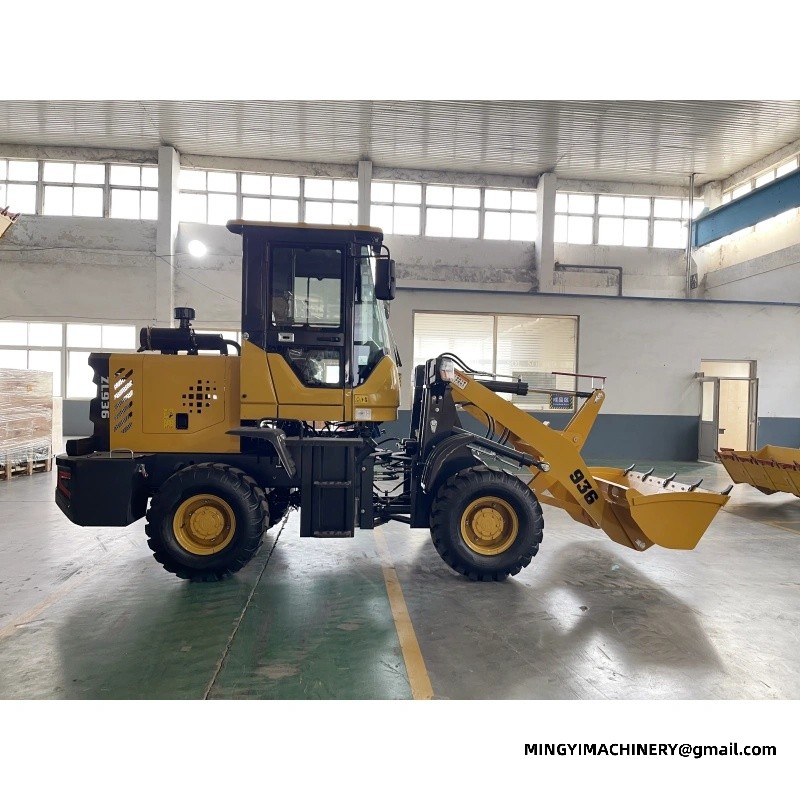
Some choices can be made after delivery and some cannot. Steel cannot: hinge plates at 30 mm and 20 mm, a 30 mm cross-member and a 280 mm high x 800 mm wide rear frame are decided when the frame is welded. Hydraulics mostly can: this build runs centre cylinder 45 / side cylinder 40 on a 40 pump (490 engine); 1045 pump (4102 turbo engine), and adding a service later is possible even if it is never as tidy as specifying it first.
The engine is the other early decision, because it drags three figures with it. Where two engines are offered, battery, radiator and pump all change: 60 Ah (490 engine); 80 Ah (4102 turbo engine), 4100 core (490 engine); 4105 core (4102T engine), 40 pump (490 engine); 1045 pump (4102 turbo engine). Choosing the engine late means choosing all three late, and usually accepting whatever is in stock.
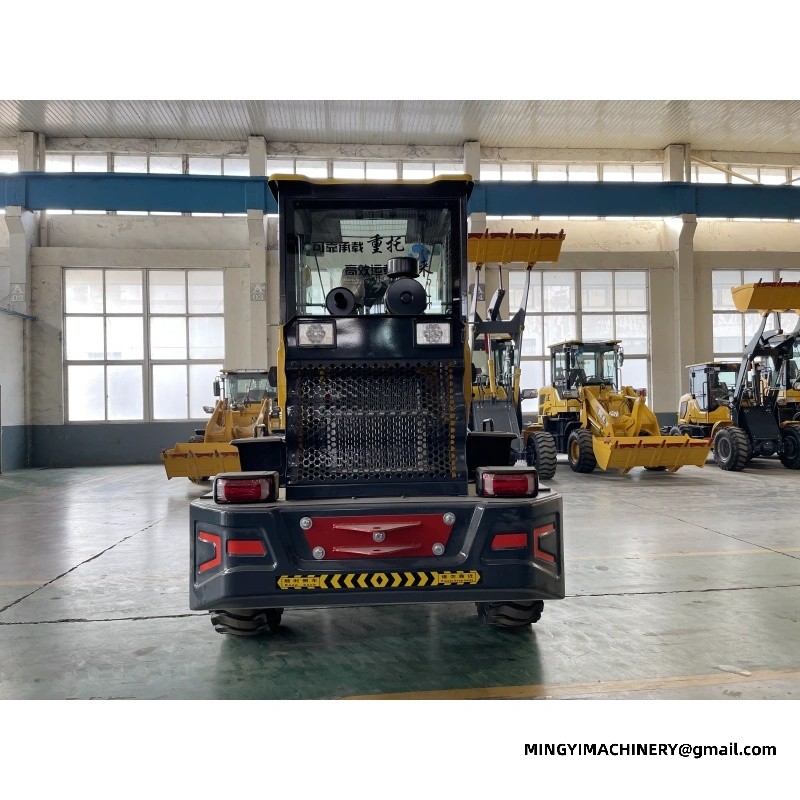
Site work is a truck-loading problem. The machine fills, reverses, turns, approaches and dumps, several hundred times a day, and the numbers that govern it are dump height, hinge steel and cycle time. The heavy-duty 3.5 m small-frame wheel-side reduction wheel loader brings 0.4 m³ at 3.5 m with 30 mm and 20 mm hinge plates; the light-duty 4.2 m medium-frame wheel-side reduction wheel loader brings 0.52 m³ at 4.2 m with 45 mm and 30 mm.
Backfilling and heel-in work load the rear hinge harder than loading does, because the machine turns while pushing. That is why the rear plate figure — 20 mm against 30 mm — is the one to read for a site machine, ahead of engine power. Add the cooling question: site dust loads a radiator fast, so the raised core and the 4105 core package earn their keep where the 4100 core (490 engine); 4105 core (4102T engine) spec would need blowing out at lunch.
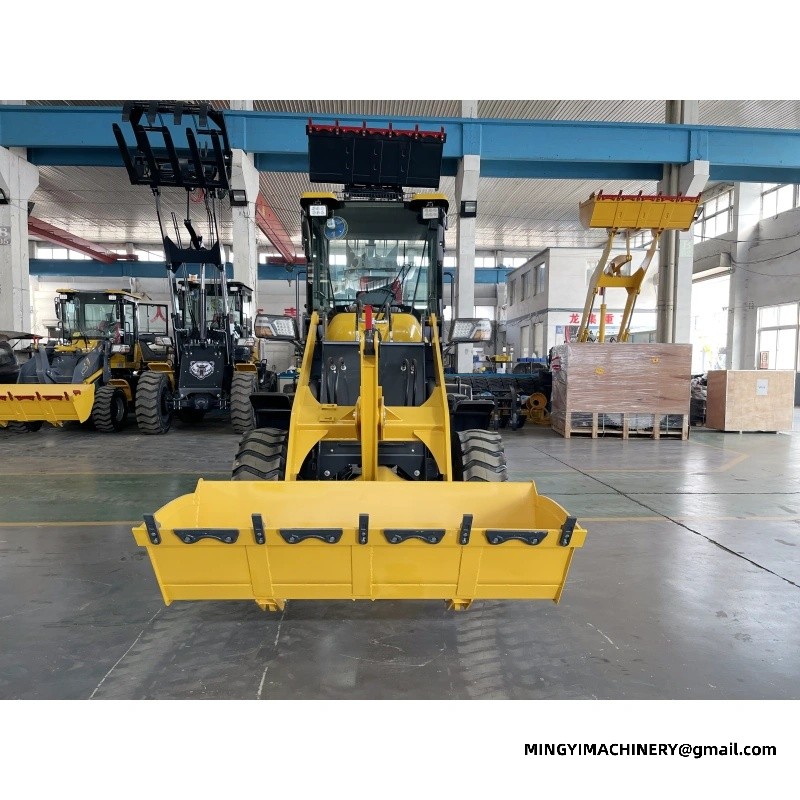
Articulated steering lets a loader turn inside its footprint, and every one of those turns is carried by two plates. Front hinge 30 mm, rear hinge 20 mm. The rear is the heavier because it carries the counterweight and the whole rear frame through every steering input.
Short wheelbase machines articulate harder and more often, which is why plate thickness matters more on a compact build, not less. At 4.1 m front wheel to counterweight and 1.5 m (wheel-side reduction axle); 1.45 m (Isuzu axle) of track, this machine will spend its life turning in tight spaces; a 30 mm cross-member is what keeps those plates in line while it does.
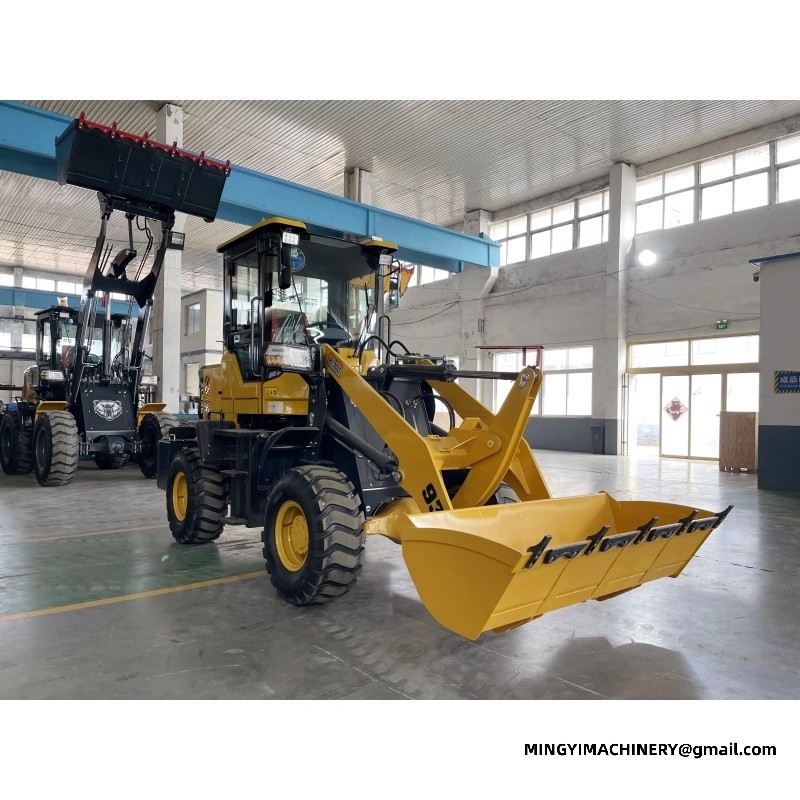
Spares consolidate by frame family rather than by model, which is the point of building a range this way. One cylinder seal kit covers the centre cylinder 45 / side cylinder 45 set across the builds that share it; one pump set covers 40 pump (490 engine); 1045 pump (4102 turbo engine) and 316 pump; pins, bushes and cutting edges are common within a family. On the heavy-duty 3.2 m small-frame wheel-side reduction wheel loader and the light-duty 4.2 m medium-frame wheel-side reduction wheel loader, where the two share a family, that is four line items.
What to keep on the shelf depends on the duty. A single machine on a farm needs a cutting edge, a hydraulic hose set, filters and a pin and bush kit. A fleet in a quarry needs those plus a cylinder seal kit, a pump, and one spare wheel-end. Because the 30 mm and 45 mm cross-members and the 20 mm and 30 mm hinge plates differ between builds, order wear parts against the model name, not against the frame.
Which axle should a wheel loader for mining be built with?
Match it to the ground. Track runs 1.5 m (wheel-side reduction axle); 1.45 m (Isuzu axle) on the heavy-duty 3.2 m small-frame wheel-side reduction wheel loader and 1.5 m (wheel-side reduction axle); 1.45 m (Isuzu axle) on the heavy-duty 3.2 m low-profile wheel loader; wheel-side reduction for soft or rutted surfaces, the Isuzu-pattern axle for hard, level ground.
How does a wheel loader for mining compare with a backhoe loader?
A loader moves more material per pass and carries it higher — 0.52 m³ at 4.2 m on the light-duty 4.2 m medium-frame wheel-side reduction wheel loader — while a backhoe digs below grade. Choose by which job you do most.
How is the battery specified on a wheel loader for mining?
60 Ah (490 engine); 80 Ah (4102 turbo engine) on the heavy-duty 3.2 m low-profile wheel loader, matched to the engine it has to crank. The higher capacity belongs to the turbo option and matters in cold climates.
Will a wheel loader for mining start in a cold climate?
With the right pack, yes: 60 Ah (490 engine); 80 Ah (4102 turbo engine) on the heavy-duty 4.2 m small-frame wheel-side reduction wheel loader, the larger capacity where the turbo engine is fitted. Specify an isolator for anything shipping long-distance.
What does the cross-member figure tell me about a wheel loader for mining?
How well the frame resists the twisting that articulation puts into it: 30 mm on the heavy-duty 3.2 m low-profile wheel loader against 30 mm on the heavy-duty 4.2 m small-frame wheel-side reduction wheel loader. It is the clearest marker of build class.
How is a wheel loader for mining prepared for export?
Knock-down: booms and counterweights packed loose, tanks removed, batteries boxed and disconnected. Rear frame sections stay between 280 mm high x 800 mm wide and 300 mm high x 800 mm wide.
What separates a light build from a heavy build of a wheel loader for mining?
Cross-member and rear hinge plate: 30 mm and 20 mm on the heavy-duty 3.2 m small-frame wheel-side reduction wheel loader, against 45 mm and 30 mm on the light-duty 4.2 m medium-frame wheel-side reduction wheel loader. Boom wall and cylinder bore follow.
Specifications are built per order: machine, attachments, spares box and container plan together. Because rear frame sections stay between 230 mm high x 800 mm wide and 280 mm high x 800 mm wide across the wheel loader for mining range, two to three units ship in one forty-foot box.
Cold weather and winter care for Wheel Loader for Mining: Cooling, Tyres and Abrasive Ground
Winter is hard on rubber and on seals as much as on the engine. Parking Wheel Loader for Mining: Cooling, Tyres and Abrasive Ground under cover, keeping the tracks or tyres off standing water and checking the hoses for cracking are all part of the season.
Storage and long idle periods for Wheel Loader for Mining: Cooling, Tyres and Abrasive Ground
Standing still is harder on a machine than working. Preparing Wheel Loader for Mining: Cooling, Tyres and Abrasive Ground for a long idle period means clean fluids, a charged battery and protection for the exposed surfaces, because neglect is not the same as rest.
Pre-delivery inspection before Wheel Loader for Mining: Cooling, Tyres and Abrasive Ground leaves the shop
The last hour before packing is the best time to find a fault. Running Wheel Loader for Mining: Cooling, Tyres and Abrasive Ground through its full working cycle, checking for leaks under load and confirming that the controls match the specification avoids a conversation across time zones later.
Contact MINGYI Machinery for the current wheel loader lineup, configuration options and a formal specification for your market. E-mail: sales@mingycn.com | LINE (ID): mingyicn
Wheel Loader for Agriculture: Silage, Grain and Yard Work · Wheel Loader for Construction Site: Tipper Clearance and Cycle Time · Wheel Loader Manufacturer: Records Worth Keeping on File · Loaders









