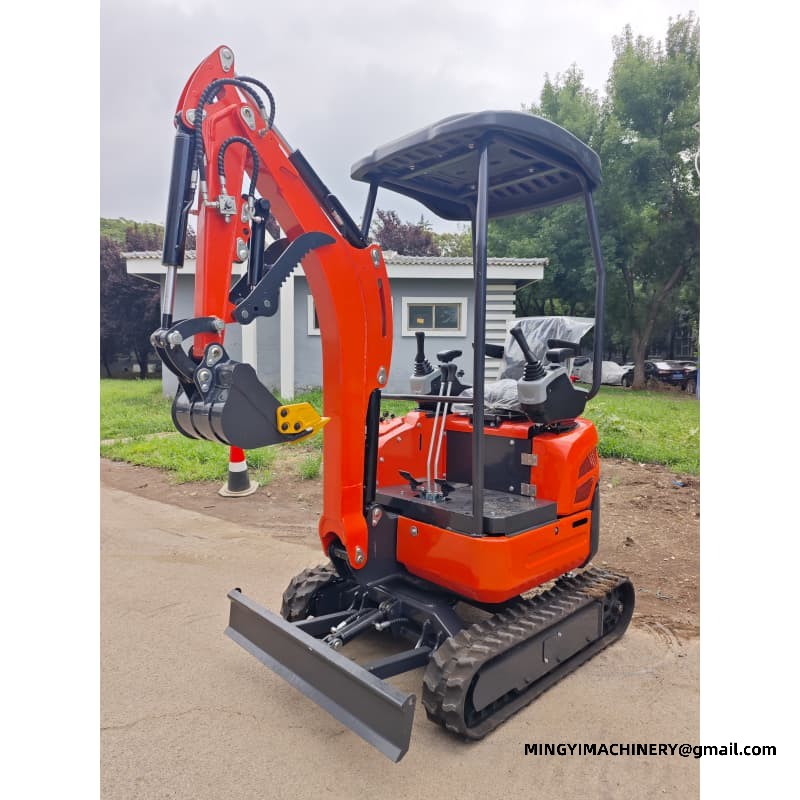
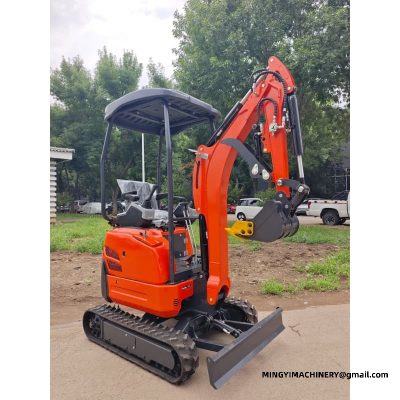
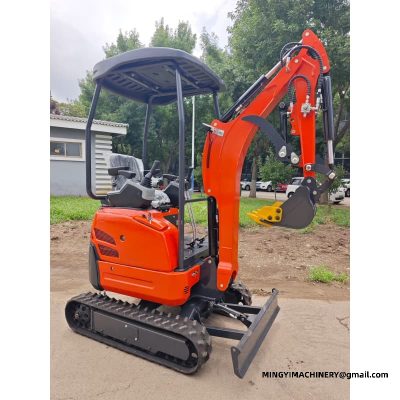
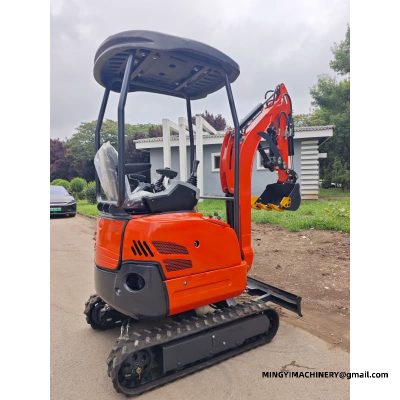
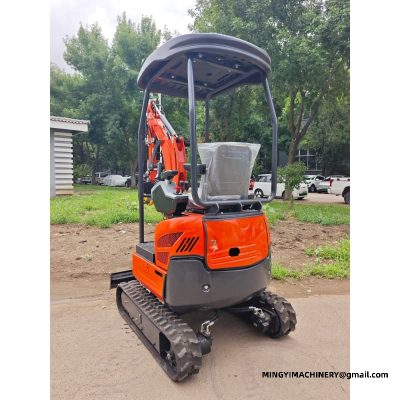
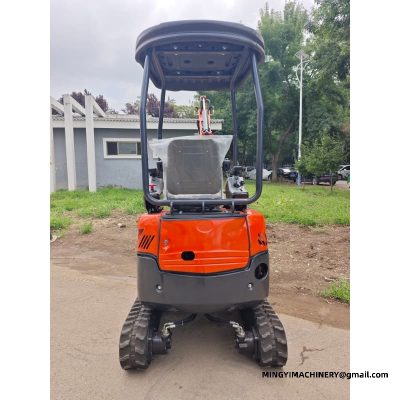
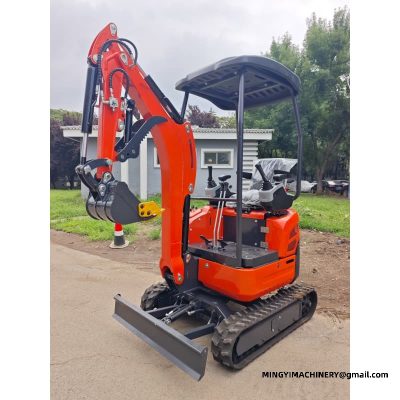
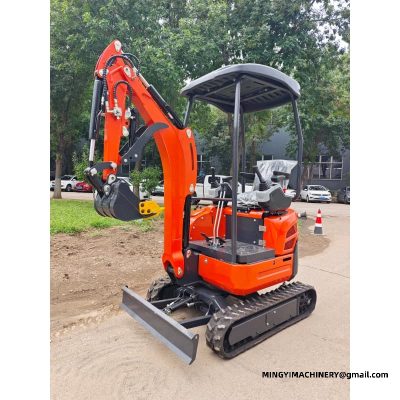
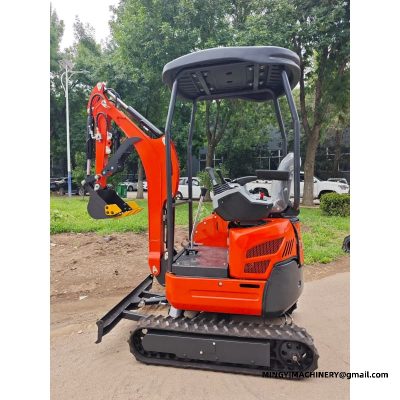
On a construction site a compact excavator may run for a full shift, so the effort of the diesel it burns over those hours is a real part of owning the machine. MINGYI builds compact excavators intended for long working hours, with the engine and hydraulics matched to that duty.
Fuel efficiency here is less about a single feature and more about the machine running at the right load through the day without wasting power.
Running a compact excavator through long shifts
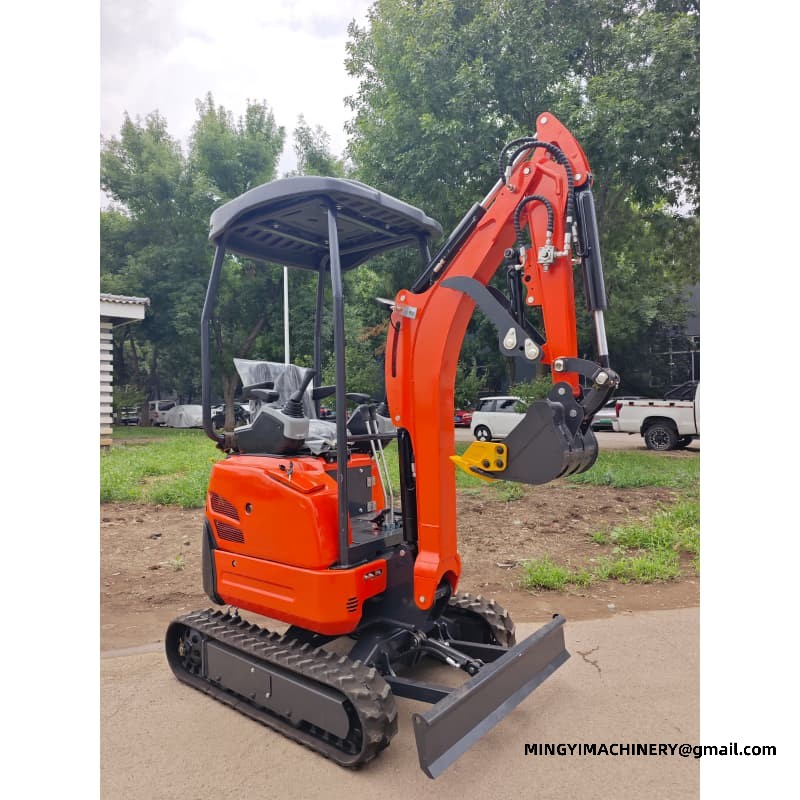
A machine on a site moves between digging, travelling and waiting, and fuel use varies with each. An engine sized to the work and a hydraulic system that only demands power when the machine is actually cutting keep consumption steady over a shift.
Good housekeeping plays a part: keeping filters and cooling clear, tracking the machine reasonably and avoiding long idle periods all reduce the fuel burned across the day without affecting output.
Specifying a machine for continuous site work
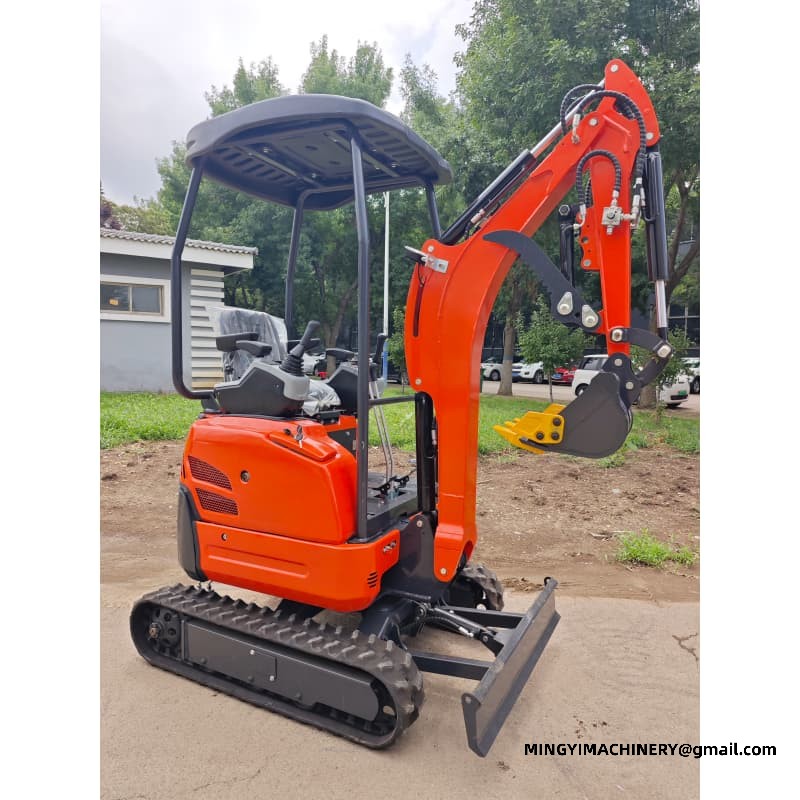
Buyers who run long hours should tell the factory about the duty cycle so the engine and hydraulic setup can be matched to it. Diesel engines offered for the compact range include Kubota D722, Kubota D902, YANMAR, Changchai, Laidong, Runtong, YARMAX, Youpu 2V80 and Youpu 195, and the choice is settled with the order.
Servicing also matters over long hours, so wearing parts are kept available and the service information supplied with the machine sets out the check intervals. MINGYI records the configuration against the unit to keep parts supply consistent.
For long construction hours, describe the shift pattern and the work to MINGYI, and the factory will confirm an engine, hydraulic setup and attachments that suit continuous site use.
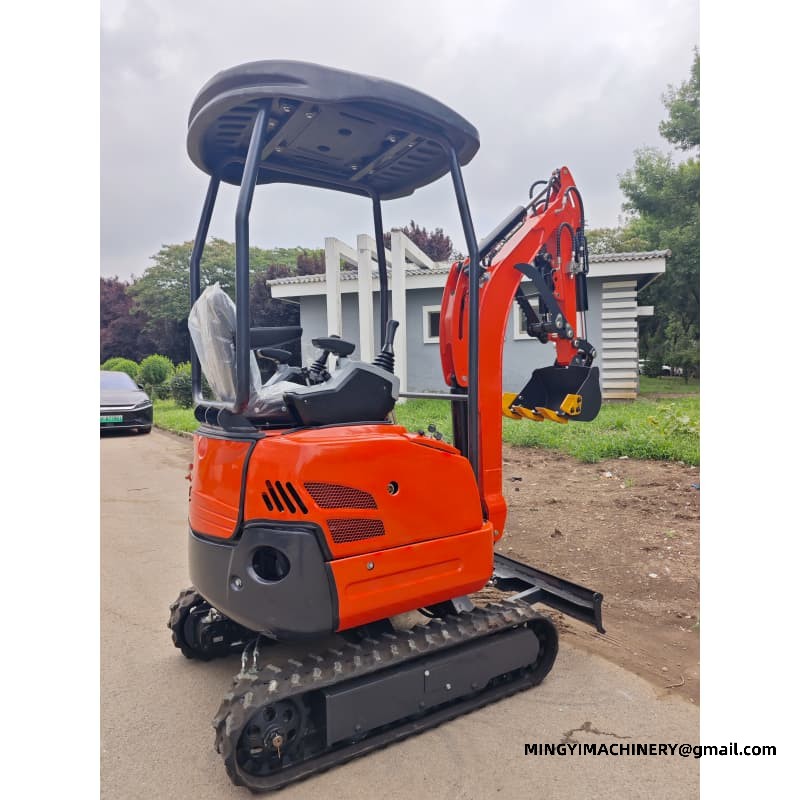
Engine options behind fuel efficient compact excavator Power unit selection is settled against the service network the buyer already uses. MINGYI offers Kubota D722, Kubota D902, YANMAR, Changchai, Laidong, Runtong, YARMAX, Youpu 2V80 and Youpu 195, so a fleet running one brand of engine can keep the same filters, the same parts supplier and the same mechanic. Engine choice is also an emissions and documentation question for some markets. Listing the available units with the excavator enquiry lets the factory confirm what can be supplied and documented for the destination country. Landscaping and ground care with fuel efficient compact excavator Landscape contractors use this class of machine for planting holes, pond excavation, grading and retaining work. The machine is light enough to cross finished lawn and narrow enough to work between established trees. Grass cutting heads, rakes and tillers extend the unit in daily use into ground care. The same carrier that digs a border in spring can cut and clear the same area later in the season. Orchard, vineyard and farm use of fuel efficient compact excavator Orchard and vineyard work is carried out between rows. A machine of this size with a narrow chassis and a swing boom works down the row without damaging the trees, which is the reason a full-size machine is not used at all. Ditching, fertilising and drainage on farmland suit the equipment on site because the work is spread over a large area in short bursts. The machine travels behind a pickup and works where it stops. What owners should plan for beyond the fuel efficient compact excavator The useful comparison is demand per working hour, not demand per machine. The machine itself that works more hours a year spreads its standing takes over more output, which is why utilisation usually matters more than the invoice figure. Downtime is the hidden line item. The model in question waiting on a part earns nothing while it stands, so parts availability and service access belong in the plan as much as fuel does. Lifting and material handling with a fuel efficient compact excavator Stability changes with reach. A load the machine in that duty handles close in becomes a different proposition at full extension, so the working radius belongs in the plan before the lift rather than during it. Ground condition under the machine is part of every lift. Soft or uneven support is the common factor in handling incidents, and checking it takes less time than recovering the unit on the job that has settled. Trenching work with fuel efficient compact excavator Service trenches are the most common reason a machine built for the work is hired. Water, sewage, cable and gas runs are narrow, shallow and often close to existing services, which is exactly the work a full-size machine cannot do safely. Trench quality depends on the bucket width and the operator, not on machine size. The equipment in service with a narrow bucket and a swing boom cuts a clean run along a boundary without disturbing the ground either side of it. Track choice for the excavator Undercarriage selection is a ground question, not a preference question. This class of machine running on finished paving needs rubber; the same machine on demolition rubble or rock wears rubber quickly, so steel with rubber blocks becomes the better answer over a full season. Track type changes what the machine can cross and what it leaves behind. Buyers specify rubber for lawns, driveways and municipal work, and steel with rubber blocks for sites where sharp material would cut a rubber belt in a week. Interior and light demolition with the unit in daily use Interior demolition is an access and a weight question. A machine of this size that fits through a doorway and works on a suspended floor does jobs that would otherwise be done by hand or by a larger machine that cannot enter. Breaking out a floor slab, a wall footing or a concrete step is routine work for the equipment on site with a breaker. The machine is small enough to work inside and heavy enough to run the tool at a practical rate. Municipal and public works with the machine itself Municipal crews work on streets, footpaths and parks where the public is present. The model in question is specified because it occupies little space, works inside a small exclusion zone and can be moved on a standard trailer. Noise and surface protection matter on public work. The machine in that duty on rubber tracks across paving, with a sealed cab for the operator, suits the conditions better than a larger tracked machine. Parts, service and support for the unit on the job Support after delivery is a parts question. Wearing items for a machine built for the work - filters, belts, track components, bucket teeth and pins - are the items a buyer should plan to hold before the first service interval. Remote support is handled by video. The equipment in service fault can often be diagnosed on a walk-around call with the panel open, which is faster than waiting for a visit and avoids shipping a part that is not needed. Working on slopes and uneven ground with the excavator Slope work is a stability question before it is a traction question. Knowing the gradient this class of machine is rated for, and working across rather than straight up where the ground allows, removes most of the risk. Planning the direction of travel helps. Working so that the unit in daily use is stable under load and not required to turn on a slope is a decision made before the job starts, not a correction made during it. Specification data for a machine of this size Buyers comparing the equipment on site usually start from four numbers - weight, digging depth, reach and transport width - because those are the ones that decide whether the machine can be delivered and whether it can do the job once it is there. Every value shown is as built for the machine itself; options such as cab, side swing or a telescopic undercarriage change the transport dimensions and are confirmed at order stage. Confined sites are decided by dimensions. Overall width, tail swing and the space needed to work the arm are what let the model in question operate inside a building, between walls or in a courtyard. Clearance above matters as much as around. Door heights, pipework and overhead services set the limit for the machine in that duty indoors, and measuring them first avoids a machine that arrives and cannot be used.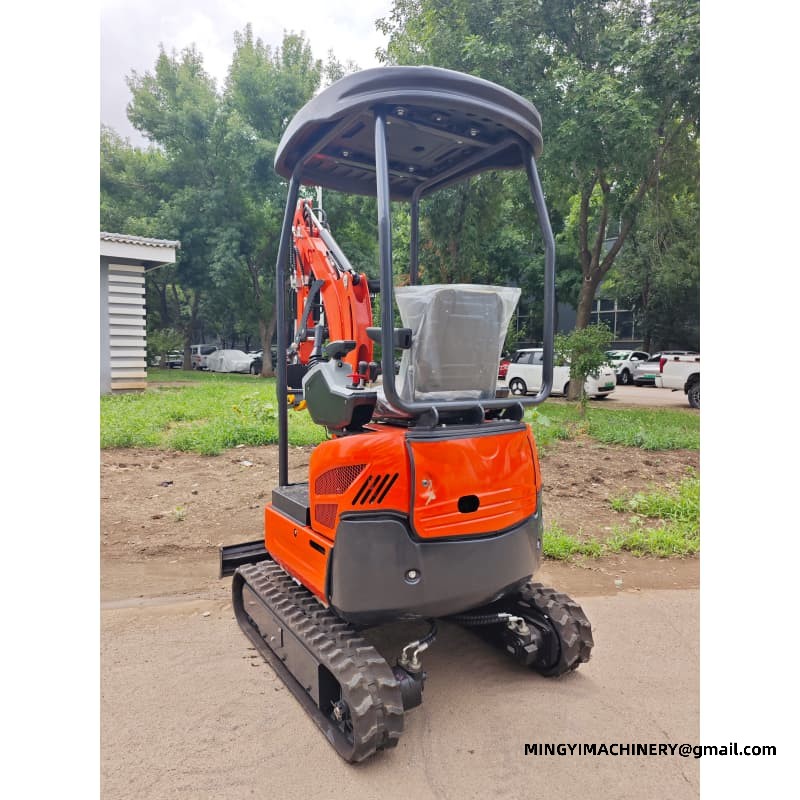
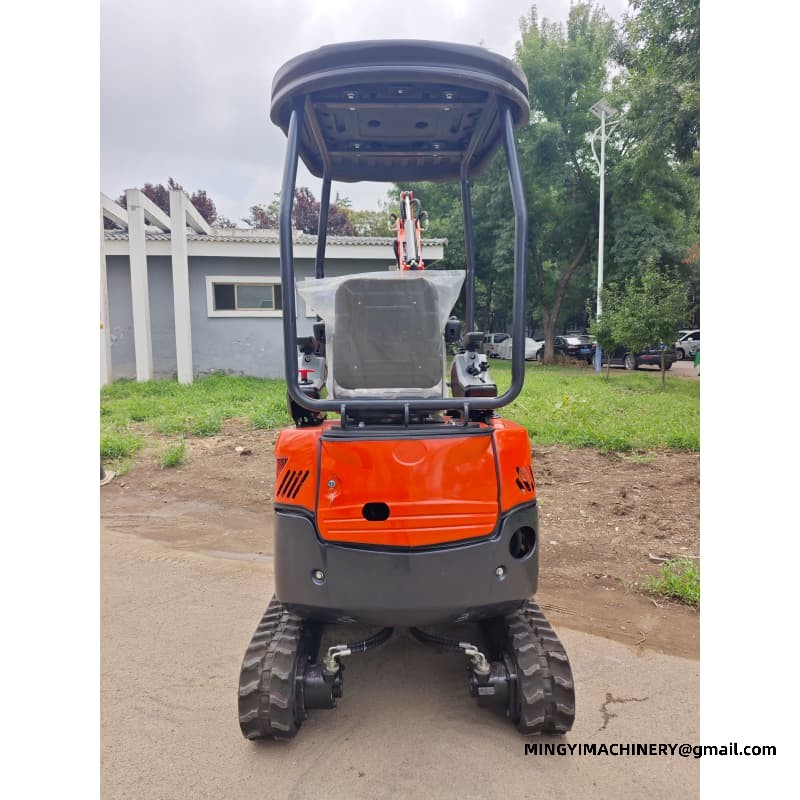
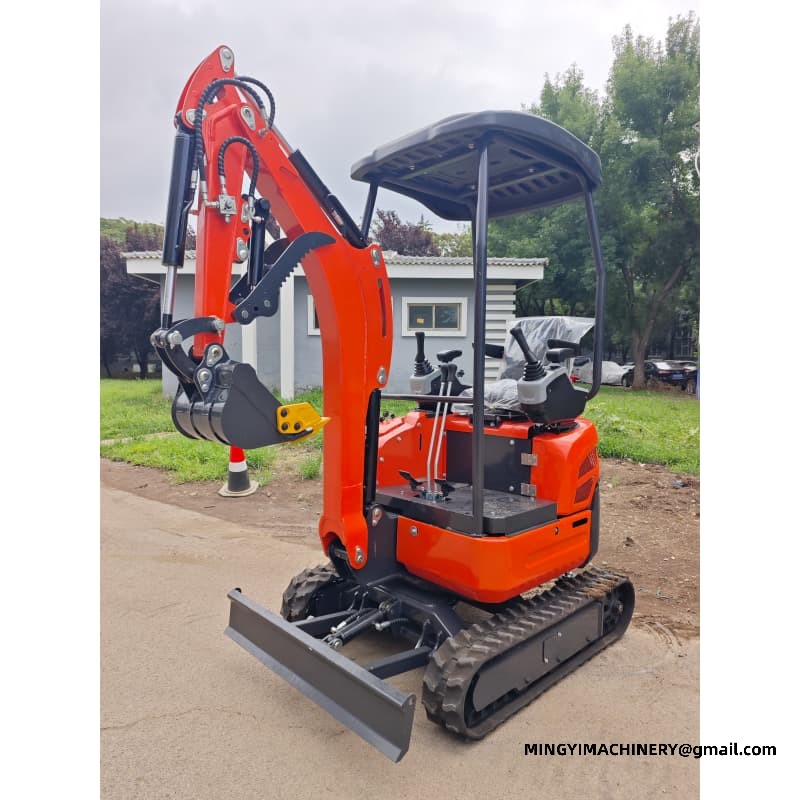
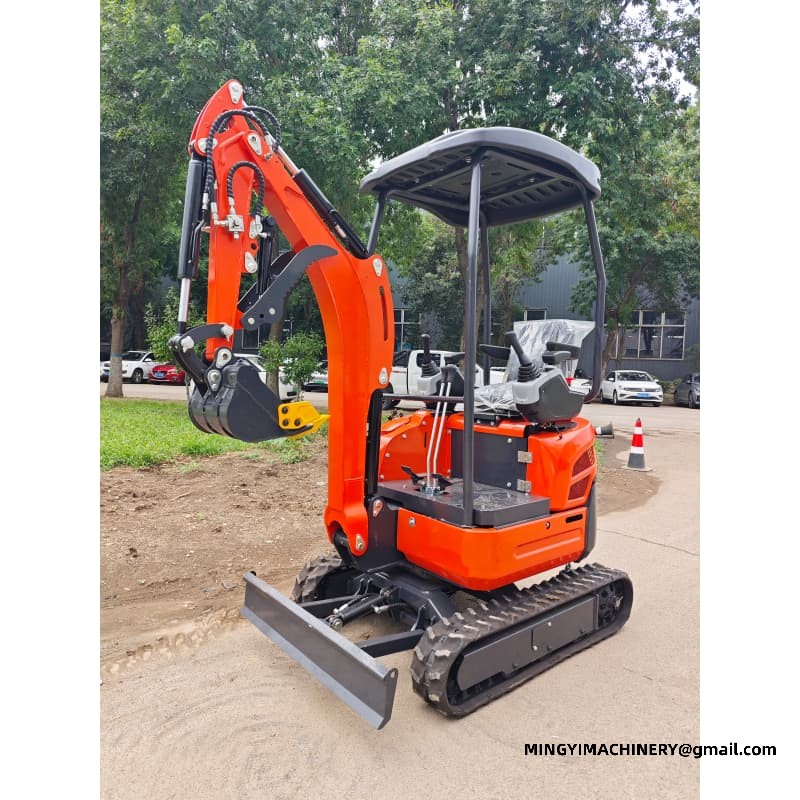
Reference specification — mini excavator range 15W 20-1WL 20-3W 25L Operating weight 1400 kg (3086.47 lb) 1900 kg (4188.78 lb) 1900 kg (4188.78 lb) 2200 kg (4850.17 lb) Transport size (L×W×H) 2200 × 930 × 2250 mm 2550 × 1100 × 2200 mm 2550 × 1100 × 2200 mm 3000 × 1300 × 2700 mm Max digging depth 1630 mm (64.17 in) 1800 mm (70.87 in) 1800 mm (70.87 in) 2300 mm (90.55 in) Max digging height 2750 mm (108.27 in) 2820 mm (111.02 in) 2820 mm (111.02 in) 3100 mm (122.05 in) Max dumping height 1960 mm (77.17 in) 2050 mm (80.71 in) 2050 mm (80.71 in) 2050 mm (80.71 in) Max digging radius 2900 mm (114.17 in) 3050 mm (120.08 in) 3050 mm (120.08 in) 3900 mm (153.54 in) Max digging distance 2100 mm (82.68 in) 2300 mm (90.55 in) 2300 mm (90.55 in) 3100 mm (125.05 in) Minimum turning radius 1300 mm (51.18 in) 1450 mm (57.09 in) 1450 mm (57.09 in) 1800 mm (70.87 in) Travel speed 3 km/h (1.86 mph) 5 km/h (3.11 mph) 5 km/h (3.11 mph) 7 km/h (4.35 mph) Gradeability 30° 30° 30° 30° Fuel consumption 1-1.3 L/h (0.264—0.343 gal) 2-3 L/h (0.528—0.793 gal) 2-3 L/h (0.528—0.793 gal) 2-3 L/h (0.528—0.793 gal) Fuel tank capacity 10 L (2.64 gal) 16 L (4.23 gal) 16 L (4.23 gal) 16 L (4.23 gal) Hydraulic oil tank 16 L (4.23 gal) 18 L (4.76 gal) 18 L (4.76 gal) 18 L (4.76 gal) Dozer blade lift height 180 mm (7.09 in) 180 mm (7.09 in) 180 mm (7.09 in) 230 mm (9.06 in) Dozer blade drop depth 210 mm (8.27 in) 210 mm (8.27 in) 210 mm (8.27 in) 280 mm (11.02 in)
Q. Who chooses the unit on the job?
A. The engine is the part of a mini excavator that sets the duty cycle: steady torque for long shifts, simple service for short property jobs. MINGYI assembles several engine options across the 08, 12 and 18 models so the machine can be matched to local fuel, parts supply and emission rules. For fuel efficient applications the practical route is to send the job list to the factory and let the build sheet answer it - which is exactly what this page invites.
Q. Can the engine be replaced later?
A. Yes, and the replacement-engine pages cover the practical side: mounts, hydraulics and cooling have to line up with the new unit. Send the model and the running hours by email or LINE and the factory confirms which engines drop into which machines without cutting the frame.
Q. Which models does MINGYI build?
A. The 08, 12 and 18 models cover the 0.8 to 6 tonne class with engine, track, cab and attachment options across the range - dealer programmes can mix models in one shipment, and each fuel efficient machine is confirmed on its own build sheet.
Packing, loading and shipment of a machine built for the work
Container loading is a planning exercise. The overall dimensions and the operating weight of the equipment in service decide whether it ships whole, partly disassembled or with the attachment removed, and that decision is made before the booking.
Documents that travel with the excavator
A clear parts book saves more time than any other document. When this class of machine needs a replacement, the illustration and the part number are what turn a phone call into a shipment instead of a description.
Keeping a service record for the unit in daily use
Service history also protects the warranty position. Evidence that a machine of this size was maintained at the specified intervals and with the specified fluids settles questions that would otherwise be argued.
E-mail : sales@mingycn.com
LINE ( ID ): mingyicn
Related pages
mini digger with grabber and breaker · heavy duty mini excavator for slopes · Wheel Loader Manufacturer: Five Figures to Ask For · Mini Excavators








