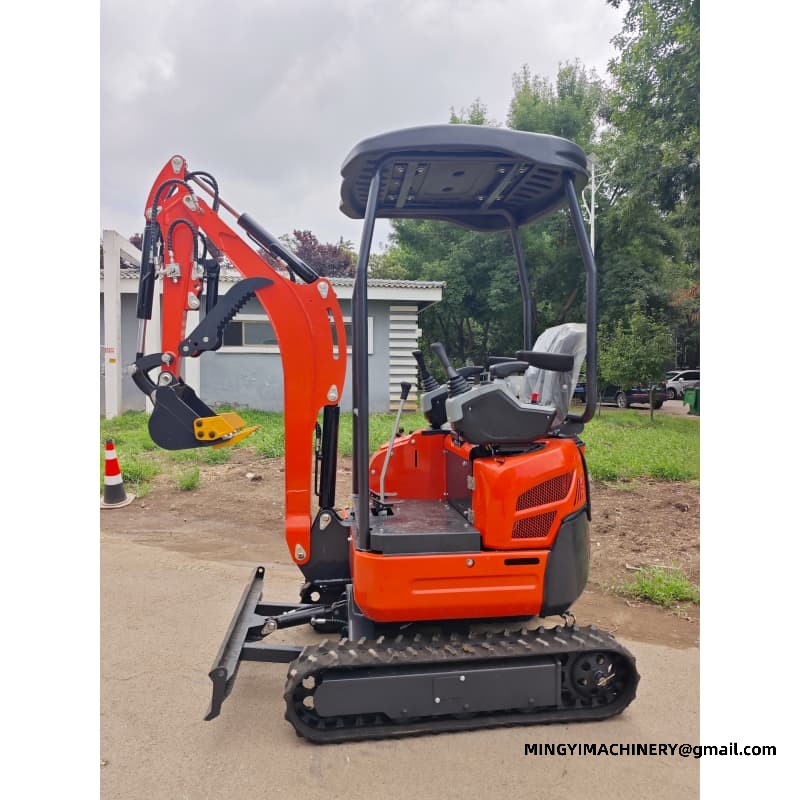
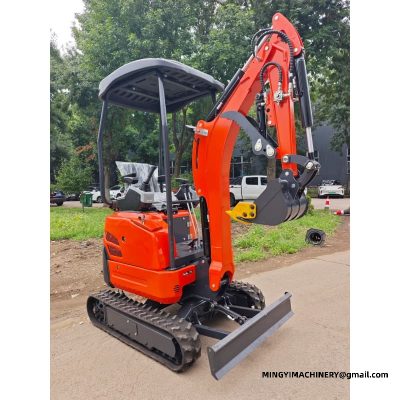
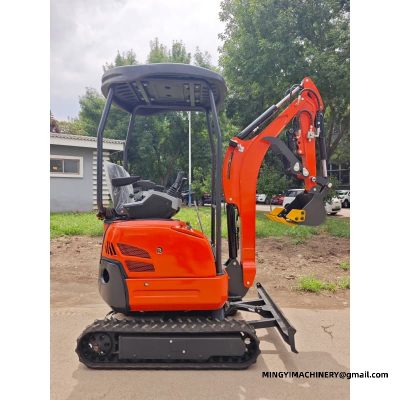
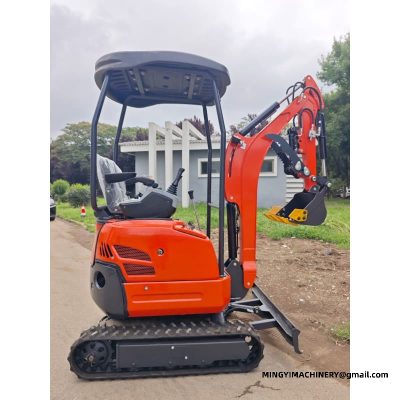
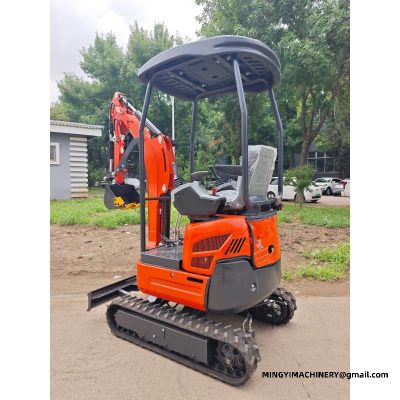
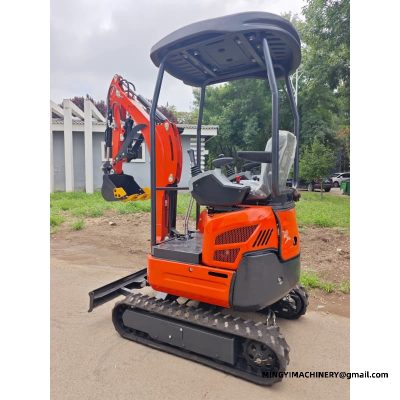
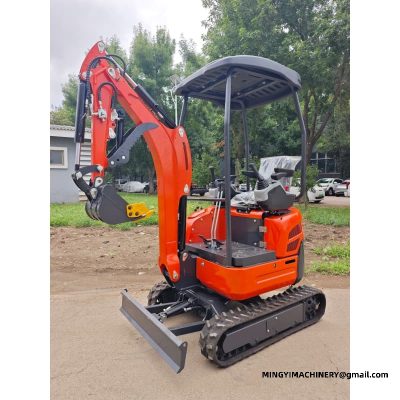
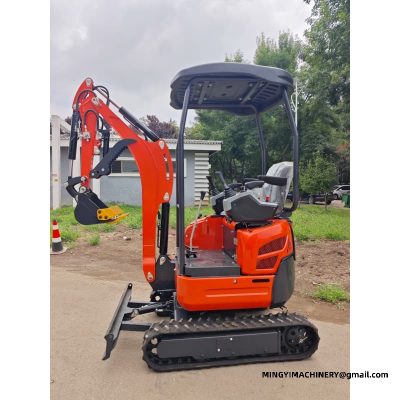
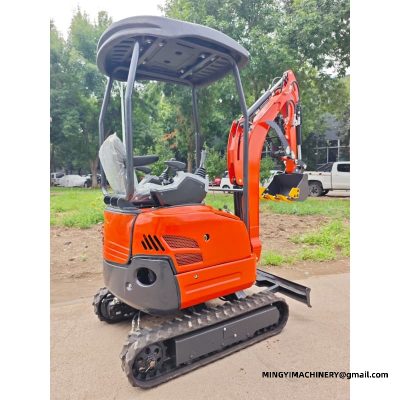
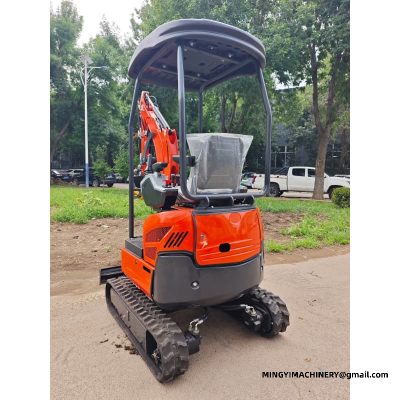
A greenhouse imposes limits that do not exist outdoors: the doorway is narrow, the internal beds are fixed and the soil beneath is often heavily compacted by years of working. An ultra narrow mini excavator can enter and work between the beds without damaging the frame.
MINGYI builds compact crawler machines with a narrow undercarriage and rubber tracks, which suits travelling along a path or a walkway inside a building. The machine is specified against the doorway and the working aisle rather than the volume of soil to be moved.
Working inside a greenhouse structure
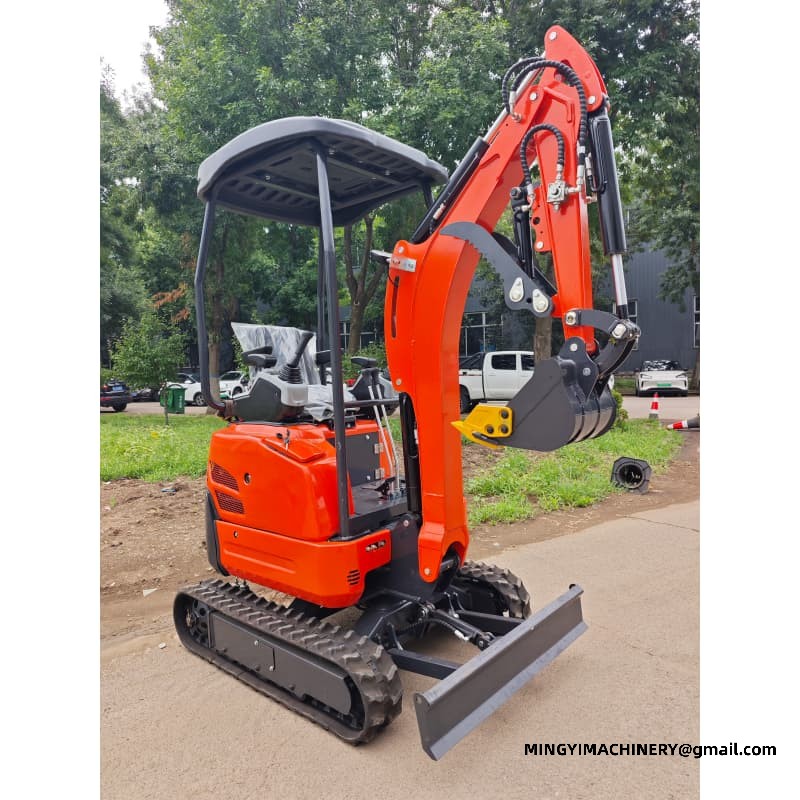
Deep tillage and soil replacement are the usual reasons for bringing a machine inside. The ground has often been compacted by foot traffic and repeated cultivation, so the material has to be loosened in place before it can be lifted out.
A rotary tiller or a soil loosener on the machine breaks the compacted layer along the bed, and the same unit then removes the loosened material with a bucket. Working in strips along the beds keeps the machine inside the available aisle.
Machine and attachment choice for greenhouse work
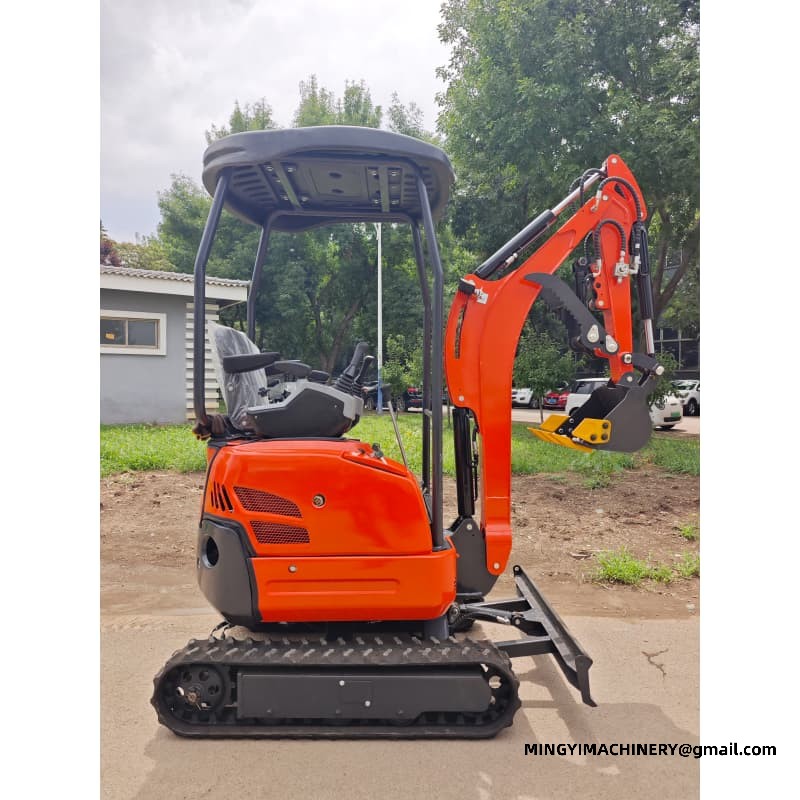
The excavator is chosen for its width first. A retractable undercarriage is useful where the doorway is tighter than the aisle, since the tracks can be narrowed to pass through and then widened inside for stability.
Attachments follow the task: a tiller or soil loosener for preparation, a bucket for removal and a plant grabber where stock must be lifted. All fit one coupler, so the machine moves between tasks without leaving the structure.
Greenhouse work rewards a machine that fits the doorway and can till as well as dig. A narrow mini excavator with rubber tracks and a tillage attachment will renovate a bed without disturbing the structure around it.
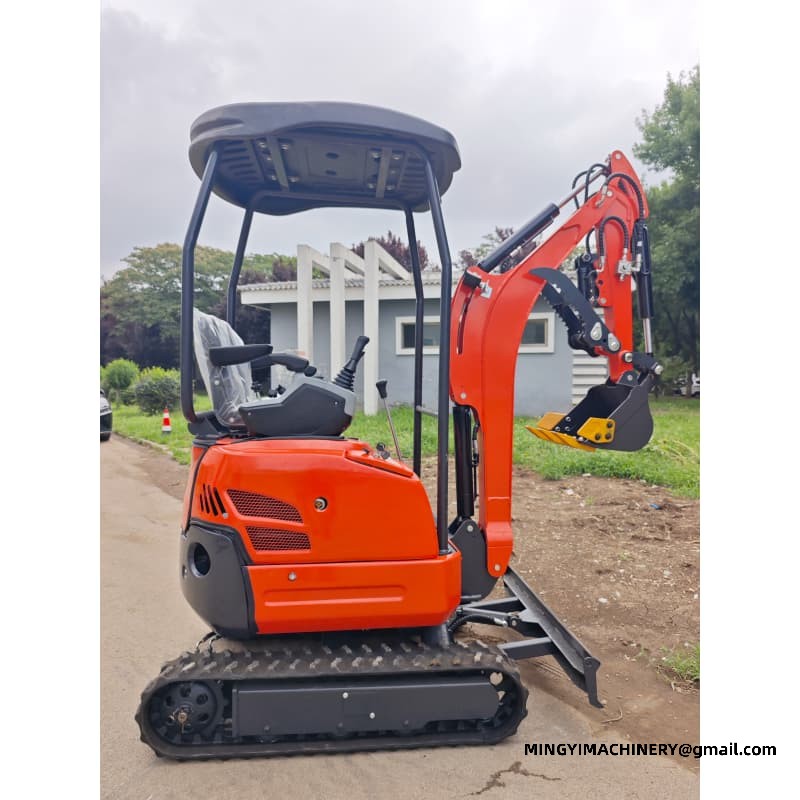
Landscaping and ground care with narrow mini excavator for greenhouses Grass cutting heads, rakes and tillers extend the excavator into ground care. The same carrier that digs a border in spring can cut and clear the same area later in the season. On soft landscape work the surface is the constraint. This class of machine on rubber tracks crosses turf without stripping it, which is why the same jobs are not given to a wheeled machine. Interior and light demolition with narrow mini excavator for greenhouses Interior demolition is an access and a weight question. The unit in daily use that fits through a doorway and works on a suspended floor does jobs that would otherwise be done by hand or by a larger machine that cannot enter. Dust, debris clearance and floor loading all argue for a compact machine indoors. A machine of this size spreads its weight over a wider track footprint than a wheeled machine of similar capacity. Trailering and moving narrow mini excavator for greenhouses Transport weight and width decide whether a machine needs a specialist haulier. The equipment on site sized to travel on a standard plant trailer behind a suitable vehicle moves with the crew rather than on a scheduled low loader. Loading practice matters as much as the numbers. The machine itself is driven up ramps under its own power with the boom lowered and the tracks aligned, and secured at the points the manufacturer specifies. Canopy or enclosed cab on a narrow mini excavator for greenhouses A canopy keeps the machine light and the operator aware of the surroundings, which suits short jobs in warm weather. A fully enclosed cab is specified where rain, dust or cold are part of the working year, and it can be added to the model in question as a retrofit rather than only at build time. The cab decision follows the climate and the hours. Operators working a full shift in the machine in that duty benefit from a sealed cab with wipers and heating; operators stepping on and off every few minutes usually prefer the canopy for the visibility and the quick exit. What owners should plan for beyond the narrow mini excavator for greenhouses Purchase decision is the visible part of the effort. Fuel, filters, tracks or tyres, the operator and the transport between sites are the items that decide what the unit on the job actually demands over a few seasons, and they are worth listing before the order. The useful comparison is demand per working hour, not demand per machine. A machine built for the work that works more hours a year spreads its standing takes over more output, which is why utilisation usually matters more than the invoice figure. Quick coupler practice on narrow mini excavator for greenhouses A quick coupler is the single option that changes how a machine is used day to day. Fitted to the equipment in service, it turns an attachment change from a two-person workshop job into a task the operator does alone in minutes. For a fleet that shares attachments between machines, a common coupler standard matters more than the coupler brand. The excavator that picks up the same tools as the larger machines keeps the rack usable across the yard. Attachments that turn this class of machine into several machines The base machine is a carrier; the tool on the end of the arm decides the task. The unit in daily use fitted with a toothed bucket digs, and the same machine with a breaker, an auger or a grab does work that would otherwise need a second unit on site. Most of the daily variety on a machine of this size comes from the attachment rack rather than from the machine itself. Bucket, breaker, auger, ripper, rake and grab cover the large majority of the work a contractor will see. Specifying the equipment on site against a job list The practical way to specify is to write the job list first: the narrowest access, the deepest trench, the heaviest tool and the surfaces the machine must cross. The machine itself is then matched to those four numbers. Buyers who skip this step either over-buy or under-buy. The model in question specified only from machine size tends to arrive without the coupler, the circuits or the track type the work actually needs. Hydraulic circuits on the machine in that duty Auxiliary hydraulic lines are what let a machine drive a tool rather than only a bucket. The unit on the job specified with the right circuits and flow runs a breaker or an auger without an add-on power pack bolted to the frame. Flow and pressure are matched to the tool, not to the machine size. Asking for the attachment list first means a machine built for the work leaves the factory with circuits that suit the heaviest tool the buyer intends to run. Working the equipment in service through the seasons Weather decides which days are productive. Rain turns some ground unusable and cold changes how the excavator starts and warms up, so planning the wet months around maintenance is more useful than planning around output. Heat and dust are as limiting as rain. Air intake condition and cooling cleanliness decide how this class of machine behaves in a dry season, and both are checked in a minute rather than repaired later. Specification data for the unit in daily use The figures below are the factory figures for the models most often matched to a machine of this size. They are the numbers to check against the site: the depth the work needs, the reach from one position, and the width of the narrowest point on the route in. Every value shown is as built for the equipment on site; options such as cab, side swing or a telescopic undercarriage change the transport dimensions and are confirmed at order stage. Two buyers can order the same the model in question and receive different engines. The decision is rarely about peak power; it is about which parts counter is closest to the site and which engine the local mechanic already knows. Engine choice is also an emissions and documentation question for some markets. Listing the available units with the machine itself enquiry lets the factory confirm what can be supplied and documented for the destination country.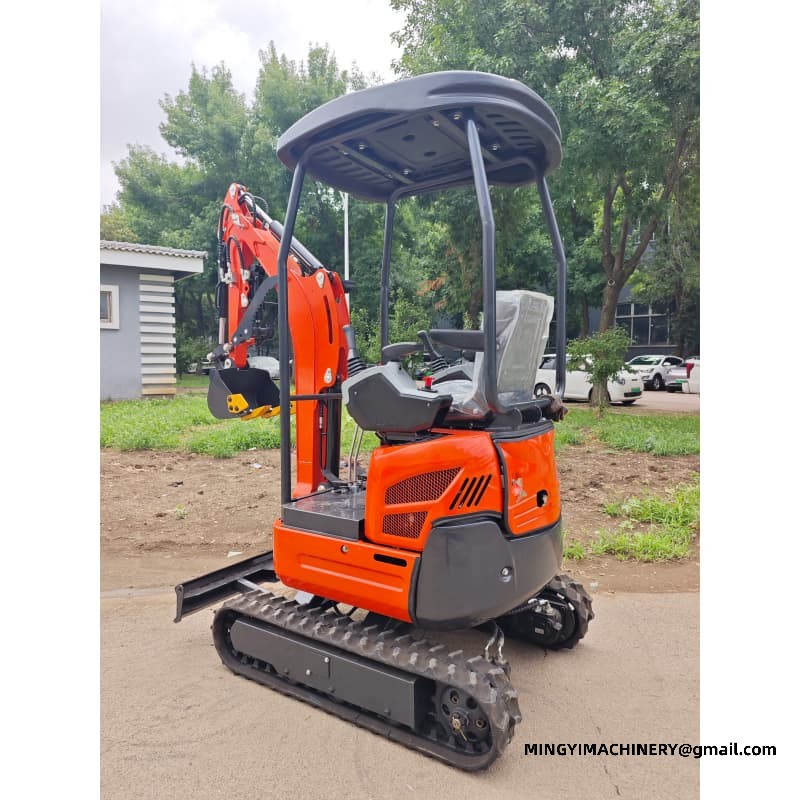
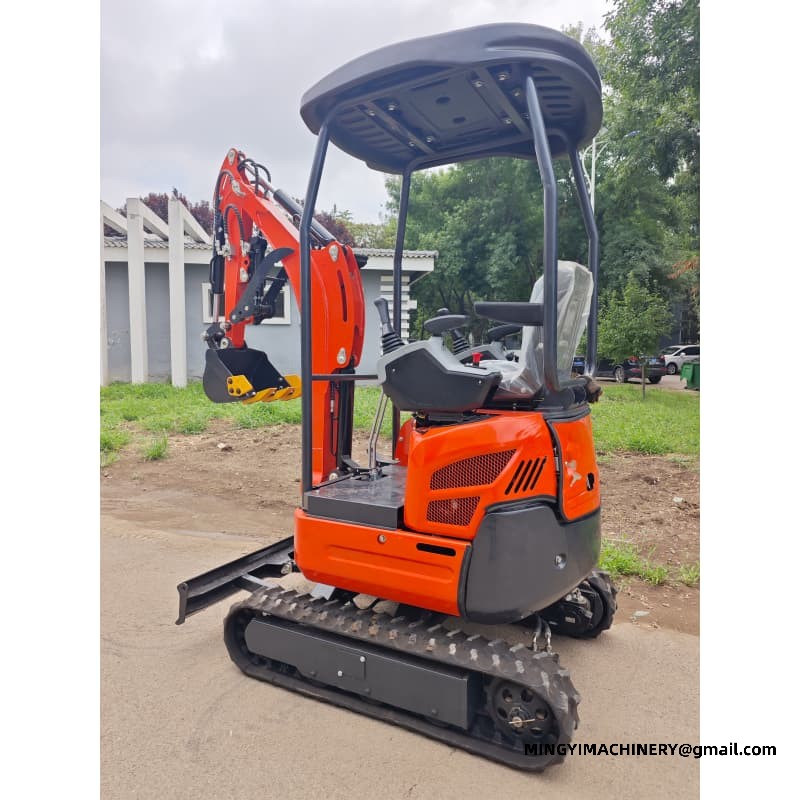
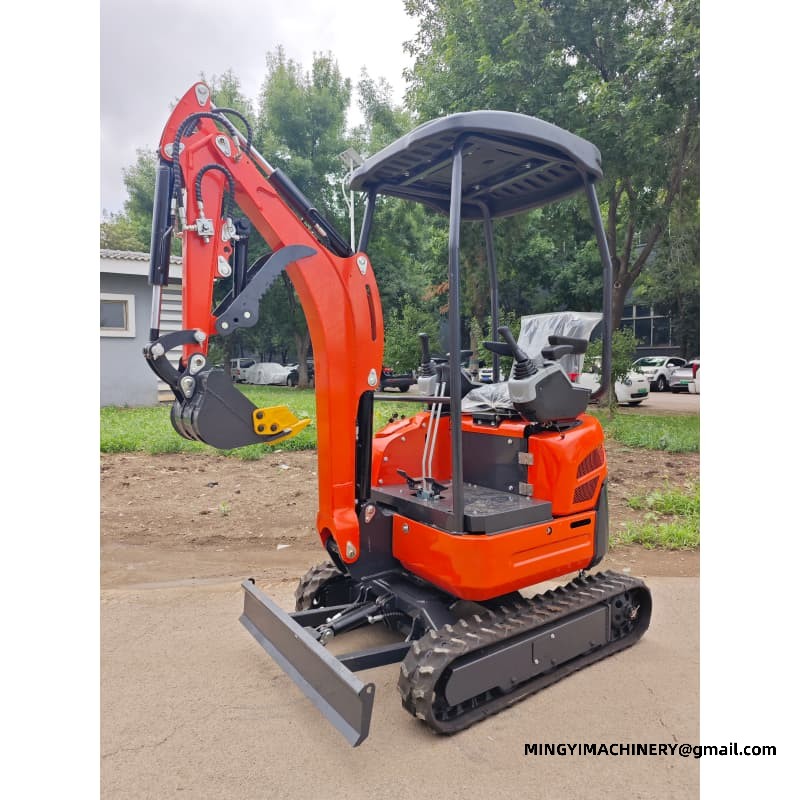
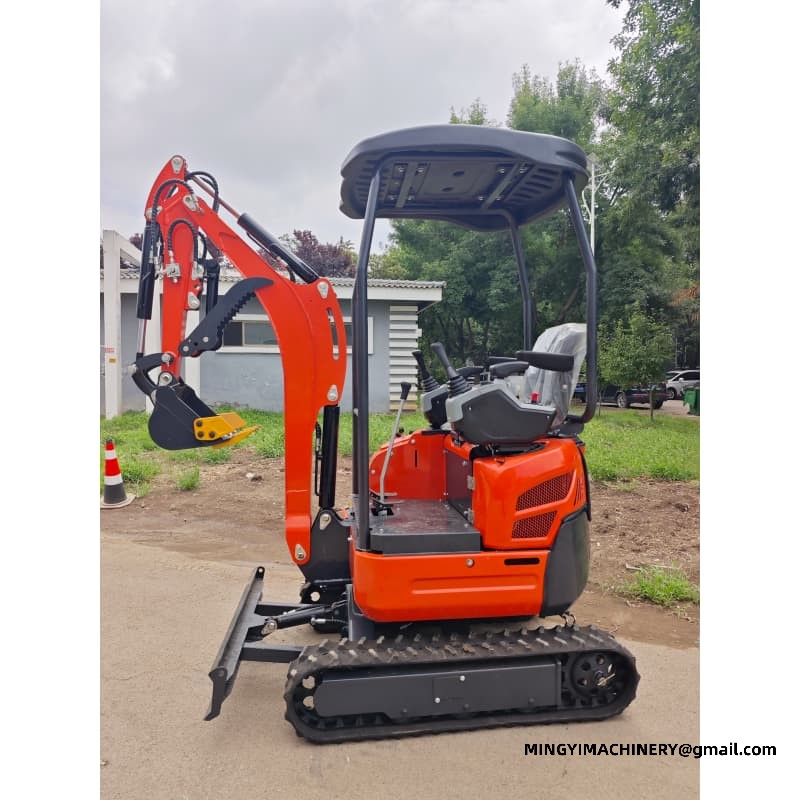
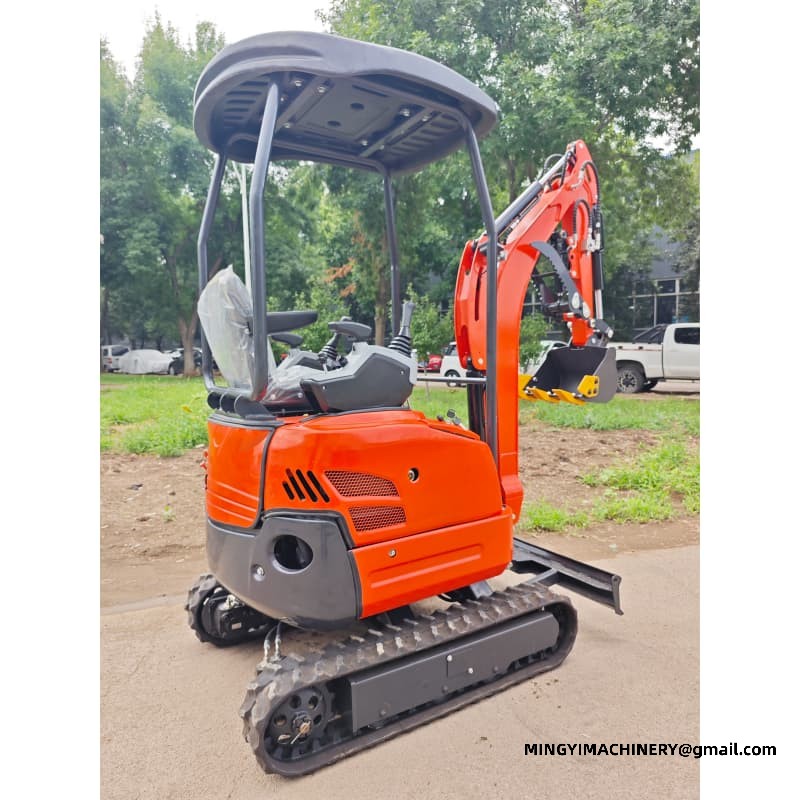
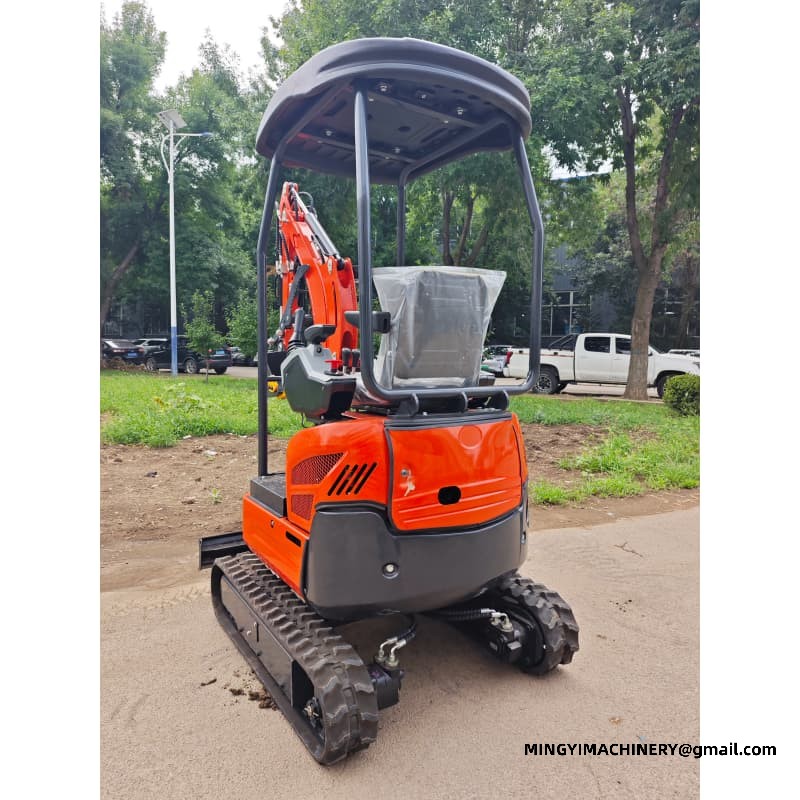
Reference specification — mini excavator range 13W 20-1WL 30-2W 20-2L Operating weight 1300 kg (2866.01 lb) 1900 kg (4188.78 lb) 2700 kg (5952.48 lb) 1900 kg (4188.78 lb) Transport size (L×W×H) 2200 × 930 × 2250 mm 2550 × 1100 × 2200 mm 3000 × 1100 × 2700 mm 2600 × 1300 × 2344 mm Max digging depth 1630 mm (64.17 in) 1800 mm (70.87 in) 2200 mm (86.61 in) 2100 mm (82.68 in) Max digging height 2750 mm (108.27 in) 2820 mm (111.02 in) 3000 mm (118.11 in) 2880 mm (113.39 in) Max dumping height 1960 mm (77.17 in) 2050 mm (80.71 in) 2000 mm (78.74 in) 2100 mm (82.68 in) Max digging radius 2900 mm (114.17 in) 3050 mm (120.08 in) 3800 mm (149.61 in) 3215 mm (126.57 in) Max digging distance 2100 mm (82.68 in) 2300 mm (90.55 in) 3050 mm (120.08 in) 2460 mm (96.85 in) Minimum turning radius 1300 mm (51.18 in) 1450 mm (57.09 in) 1750 mm (68.9 in) 1587 mm (62.48 in) Travel speed 3 km/h (1.86 mph) 5 km/h (3.11 mph) 7 km/h (4.35 mph) 5 km/h (3.11 mph) Gradeability 30° 30° 30° 30° Fuel consumption 1-1.3 L/h (0.264—0.343 gal) 2-3 L/h (0.528—0.793 gal) 2-3 L/h (0.528—0.793 gal) 2-3 L/h (0.528—0.793 gal) Fuel tank capacity 10 L (2.64 gal) 16 L (4.23 gal) 16 L (4.23 gal) 16 L (4.23 gal) Hydraulic oil tank 16 L (4.23 gal) 18 L (4.76 gal) 20 L (5.28 gal) 18 L (4.76 gal) Dozer blade lift height 180 mm (7.09 in) 180 mm (7.09 in) 230 mm (9.06 in) 180 mm (7.09 in) Dozer blade drop depth 210 mm (8.27 in) 210 mm (8.27 in) 280 mm (11.02 in) 210 mm (8.27 in)
Q. What are the machine in that duty?
A. Zero tail swing, retractable frames and short-radius booms exist for one reason: to put a real digging machine through a gap and let it work at full rate on the other side. Retractable frames narrow for the passage then widen for stability, so nothing is given up once the machine is through. For greenhouses applications the practical route is to send the job list to the factory and let the build sheet answer it - which is exactly what this page invites.
Q. What can such a small digger actually do?
A. More than its size suggests: inside a basement or behind a boundary it digs footings, breaks floors and grades the sub-base at rates hand digging cannot touch. The limit is reach and lift, not willingness.
Q. How do I get a specification?
A. Send the model, the destination and the attachment list by email or LINE - the channels listed just below this section. The reply covers the specification, lead time, packing and freight in one document, with the greenhouses build sheet attached.
Packing, loading and shipment of the unit on the job
Export packing is part of the machine, not an afterthought. A machine built for the work is blocked and braced inside the container so that it arrives in the same condition it left, and the load plan is decided by the dimensions rather than by what fits loosely.
Moving the equipment in service between sites
Travel time is not working time, and it should be planned as its own item. The hours spent moving the excavator between jobs are hours not worked, and a trailer that matches the machine reduces them every single trip.
Commissioning this class of machine on site
The machine should be introduced to the site as well as the operator. Walking the route the unit in daily use will take, noting the soft spots and the turns, prevents the kind of first-day incident that has nothing to do with the machine.
E-mail : sales@mingycn.com
LINE ( ID ): mingyicn
Water, mud and recovery planning for narrow mini excavator for greenhouses
Water is the enemy of bearings, electrical connectors and anything that is supposed to be sealed, and it rarely announces where it got in.
Wading to the hub, the track frame or the axle line is a limit rather than a target, and it is printed in the manual for a reason.
Related pages
fuel efficient compact excavator · mini digger with grabber and breaker · Wheel Loader for Sale: Builds, Options and Container Planning · Mini Excavators








