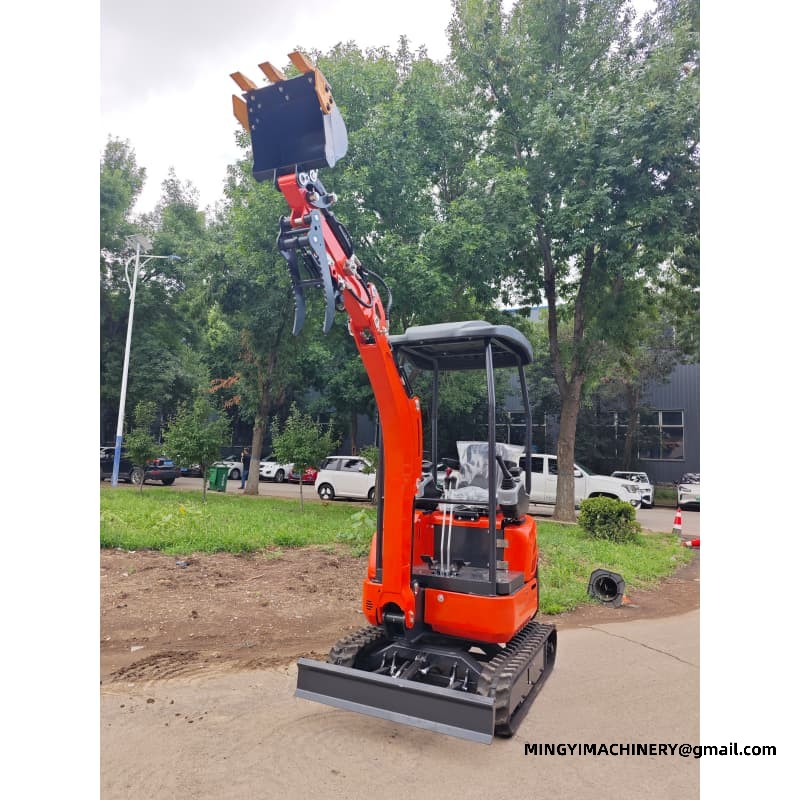
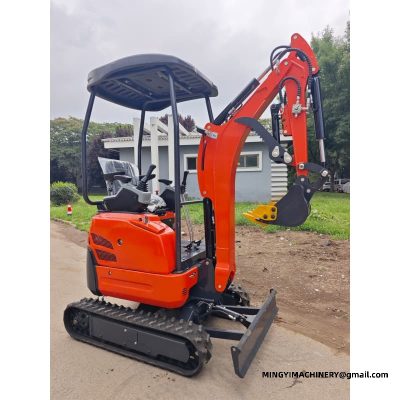
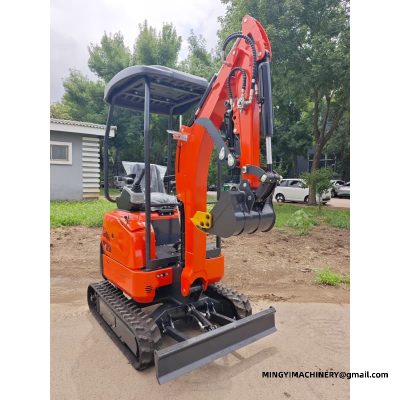
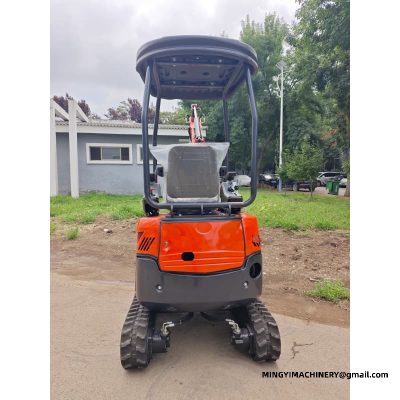
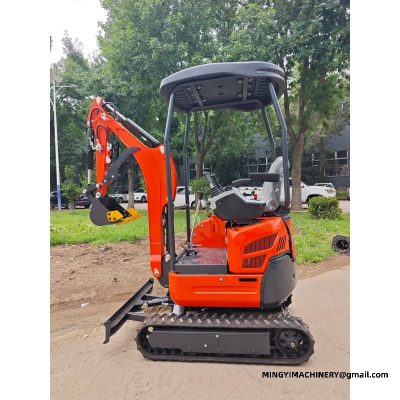
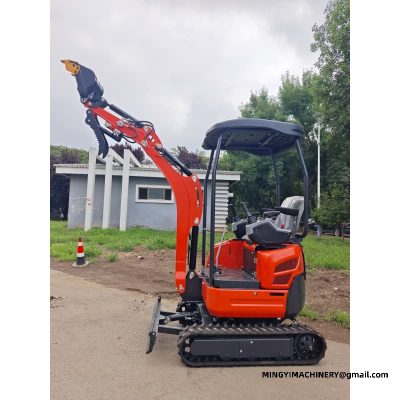
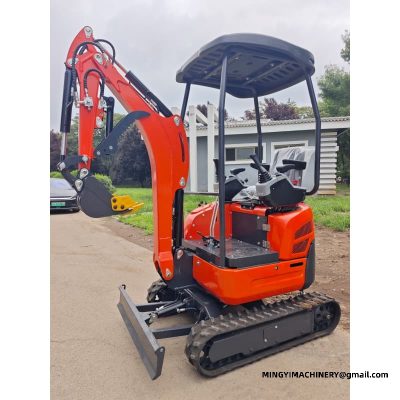
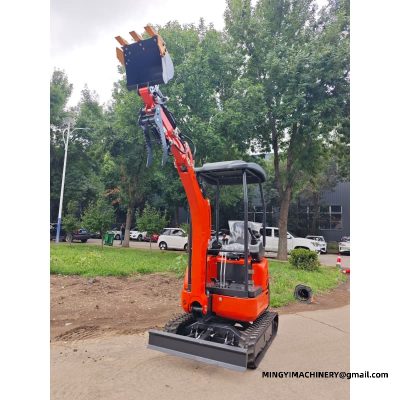
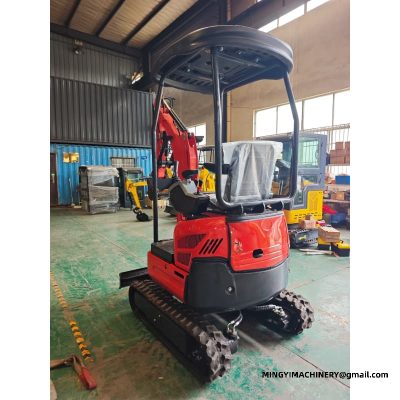
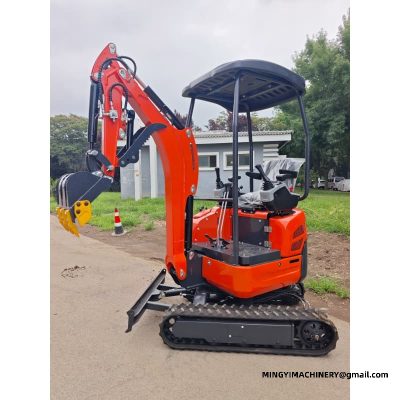
A small contractor buys plant the way they buy anything else: it has to earn its place from the first month. One machine, moved between jobs behind an ordinary vehicle, covering the digging, breaking and loading that would otherwise be hired in. MINGYI builds its machines for that decision.
The classes at the lower end of the 0.8 to 6 tonnes range suit this buyer, since the machine travels between sites without heavy transport and still runs a full attachment list. This page sets out the contractor case and the specification that supports it.
Plant that travels with the job
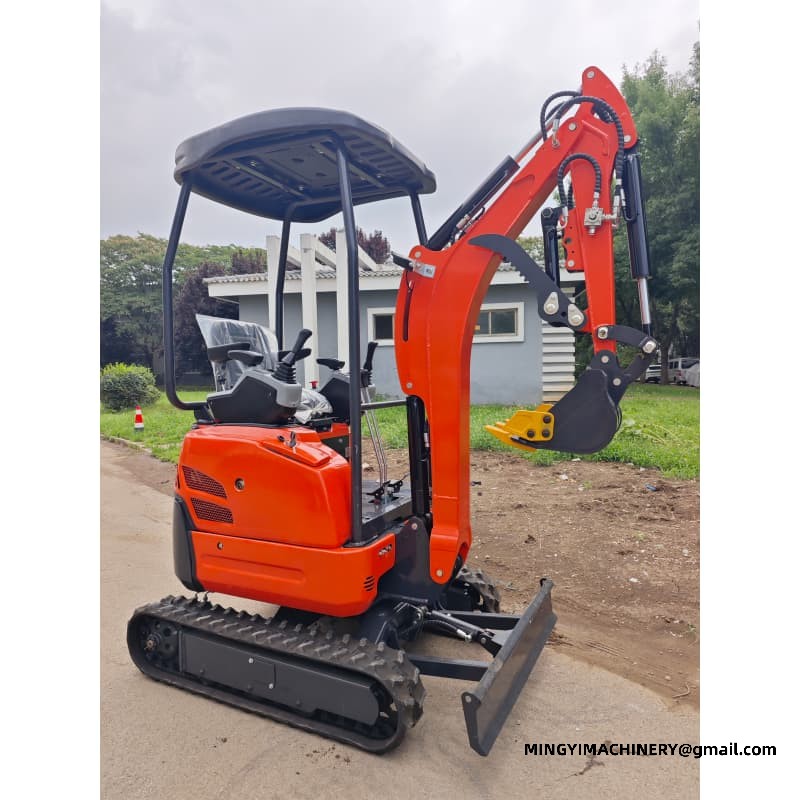
The working week is a list of small sites: a footing trench here, a drainage cut there, a driveway foundation next. The machine moves between them on a standard trailer behind the contractor vehicle, and the retractable undercarriage classes load and unload without special arrangements.
On each site the machine runs the full sequence, dig, break, lift, backfill and compact, with the attachments changed through the coupler as the job demands. The contractor keeps the allowance that would otherwise go to hire, and holds the schedule that hire availability would otherwise decide.
The contractor specification
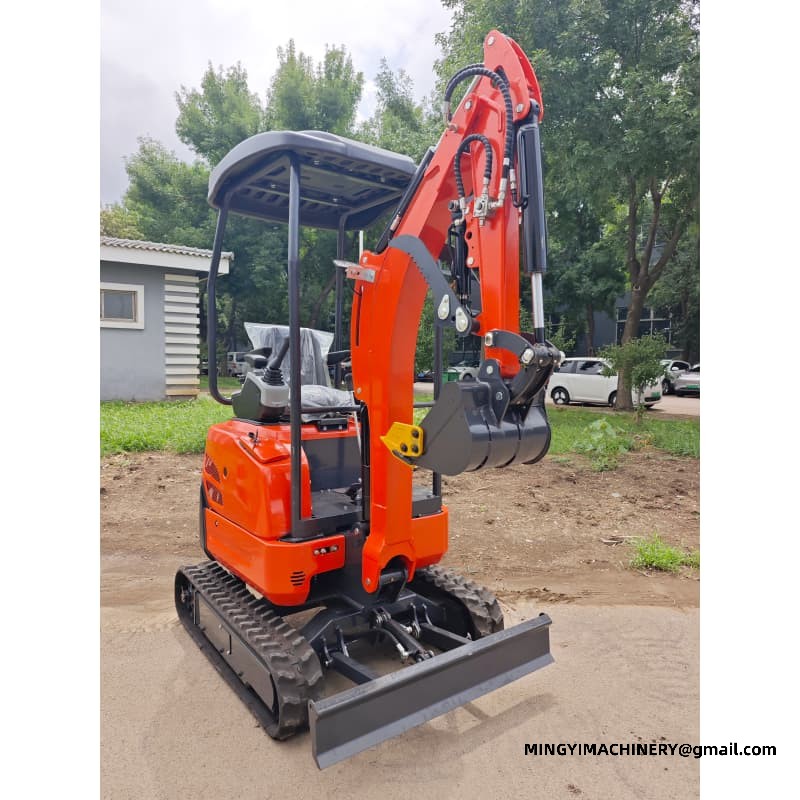
Ruggedness and serviceability come first, so the engine installation, hose routing and coupler are selected for daily use with basic workshop support. Changchai, Laidong and Youpu engines are common in this duty, with Kubota and YANMAR options where the work justifies them.
Rubber tracks suit the developed sites that make up most of the diary, with steel tracks with rubber blocks for the winter ground. The full specification is agreed at the ordering stage, recorded against the machine, and the unit ships with spare parts and service documentation.
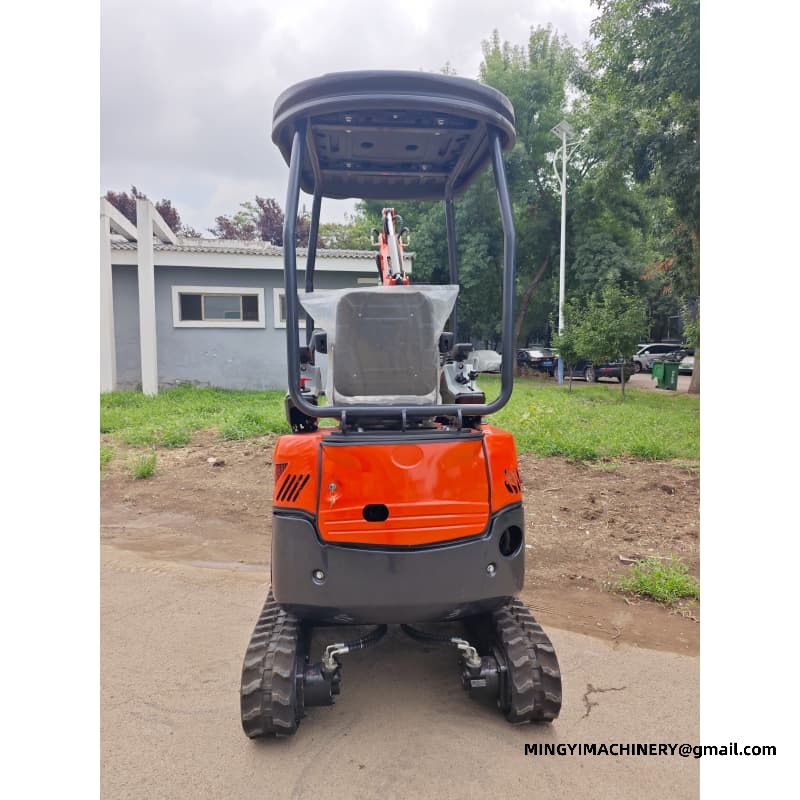
Set out the jobs your business runs in a month and how the machine travels between them, and the contractor configuration will be fixed from that list. Mingyi Machinery holds the build record so follow up parts and attachment orders stay matched.
Specifying mini excavator for small contractors against a job list The practical way to specify is to write the job list first: the narrowest access, the deepest trench, the heaviest tool and the surfaces the machine must cross. The excavator is then matched to those four numbers. Buyers who skip this step either over-buy or under-buy. This class of machine specified only from machine size tends to arrive without the coupler, the circuits or the track type the work actually needs. Quick coupler practice on mini excavator for small contractors A quick coupler is the single option that changes how a machine is used day to day. Fitted to the unit in daily use, it turns an attachment change from a two-person workshop job into a task the operator does alone in minutes. For a fleet that shares attachments between machines, a common coupler standard matters more than the coupler brand. A machine of this size that picks up the same tools as the larger machines keeps the rack usable across the yard. Noise, dust and working near occupied buildings Work near housing or occupied premises brings constraints that open sites do not. Start times, exhaust condition and how often the equipment on site needs to reverse are the practical limits that neighbours notice. Enclosure and machine condition both reduce noise. The machine itself with intact panels, sound mounts and a maintained exhaust is measurably quieter than the same machine with loose guards, and the difference matters on restricted sites. Canopy or enclosed cab on a mini excavator for small contractors A canopy keeps the machine light and the operator aware of the surroundings, which suits short jobs in warm weather. A fully enclosed cab is specified where rain, dust or cold are part of the working year, and it can be added to the model in question as a retrofit rather than only at build time. The cab decision follows the climate and the hours. Operators working a full shift in the machine in that duty benefit from a sealed cab with wipers and heating; operators stepping on and off every few minutes usually prefer the canopy for the visibility and the quick exit. Boom configuration for mini excavator for small contractors Extended and offset boom configurations change reach and working range. The unit on the job with a longer arm reaches further but lifts less at full extension, so the specification is set against the deepest and furthest point on the job list. Detachable boom sections are used where transport length matters. A machine built for the work that has to travel on a standard trailer can be built so the arm comes off for the road and goes back on at the site. What owners should plan for beyond the mini excavator for small contractors The useful comparison is demand per working hour, not demand per machine. The equipment in service that works more hours a year spreads its standing takes over more output, which is why utilisation usually matters more than the invoice figure. Downtime is the hidden line item. The excavator waiting on a part earns nothing while it stands, so parts availability and service access belong in the plan as much as fuel does. Track choice for this class of machine Rubber tracks suit paved and landscaped ground because they spread the machine weight and leave the surface intact. Steel tracks with rubber blocks are specified where the ground is rougher or the working day is longer, and the choice can be made per machine rather than accepted as a factory default. Undercarriage selection is a ground question, not a preference question. The unit in daily use running on finished paving needs rubber; the same machine on demolition rubble or rock wears rubber quickly, so steel with rubber blocks becomes the better answer over a full season. Hiring versus owning a machine of this size Availability is part of the decision. Owning the equipment on site means it is there on the day the ground is ready; hiring means competing for the same machine at the same time as everyone else in the season. Ownership brings obligations that hiring does not. Storage, servicing, insurance and an operator are the items to set against the hire rate before deciding which way the machine itself should be supplied. Lifting and material handling with the model in question Stability changes with reach. A load the machine in that duty handles close in becomes a different proposition at full extension, so the working radius belongs in the plan before the lift rather than during it. Ground condition under the machine is part of every lift. Soft or uneven support is the common factor in handling incidents, and checking it takes less time than recovering the unit on the job that has settled. Parts, service and support for a machine built for the work Support after delivery is a parts question. Wearing items for the equipment in service - filters, belts, track components, bucket teeth and pins - are the items a buyer should plan to hold before the first service interval. Remote support is handled by video. The excavator fault can often be diagnosed on a walk-around call with the panel open, which is faster than waiting for a visit and avoids shipping a part that is not needed. Specification data for this class of machine The figures below are the factory figures for the models most often matched to the unit in daily use. They are the numbers to check against the site: the depth the work needs, the reach from one position, and the width of the narrowest point on the route in. These are the reference figures for a machine of this size. MINGYI confirms the final build sheet, including engine and attachment choices, against the destination and the job list before production. Orchard and vineyard work is carried out between rows. The equipment on site with a narrow chassis and a swing boom works down the row without damaging the trees, which is the reason a full-size machine is not used at all. Farms also use the machine itself for general maintenance - clearing a watercourse, repairing a track, loading a spreader. One carrier with a few attachments covers most of the jobs that would otherwise wait for a contractor.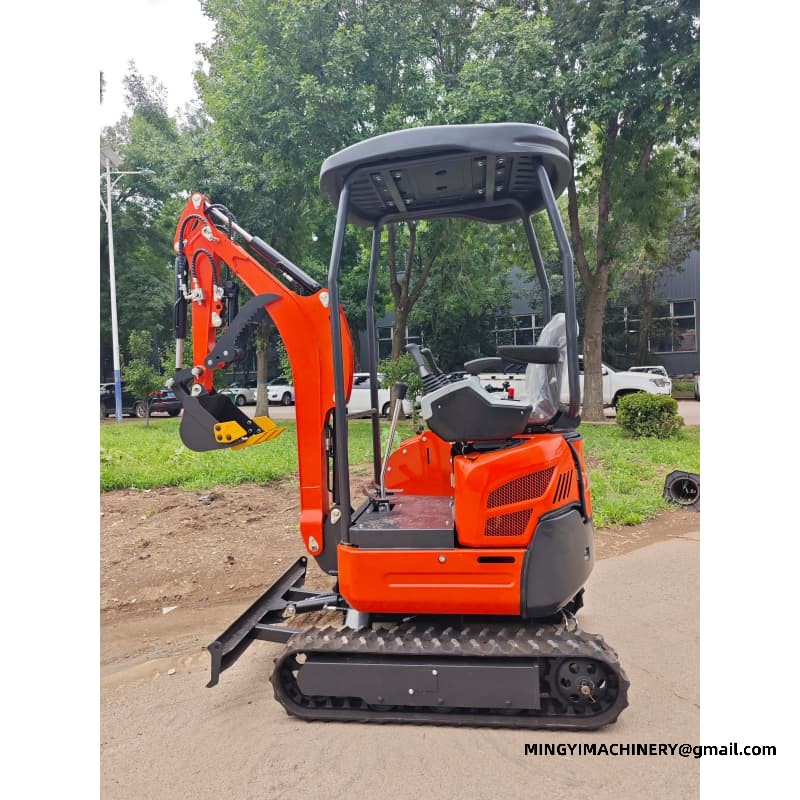
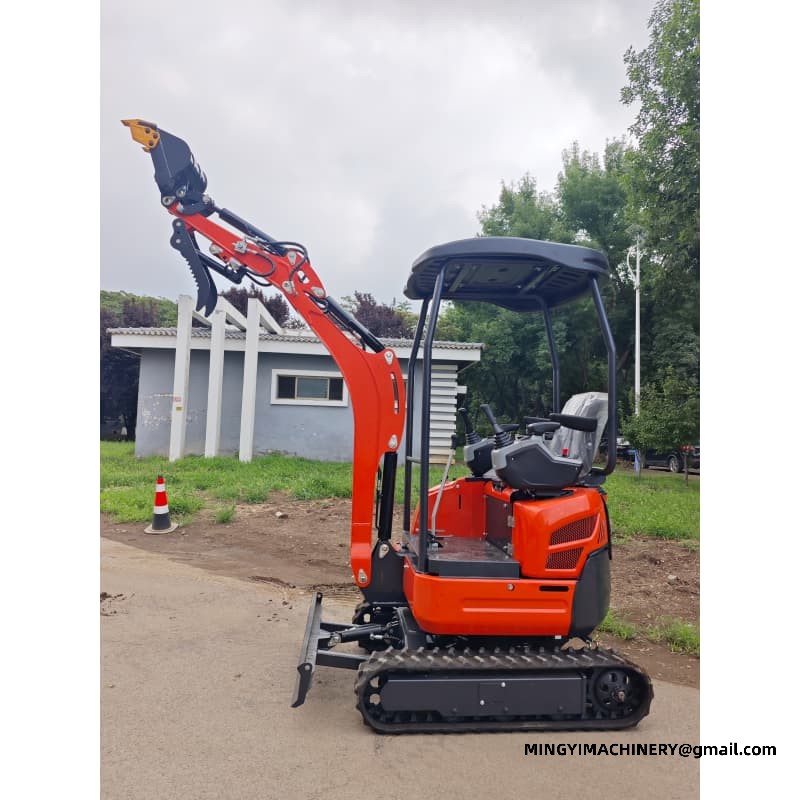
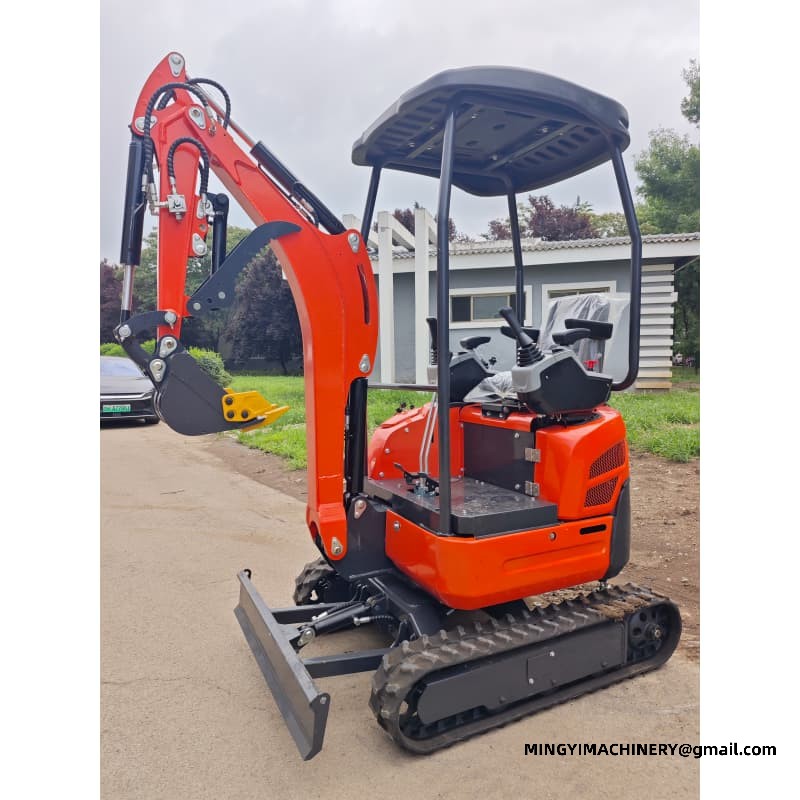
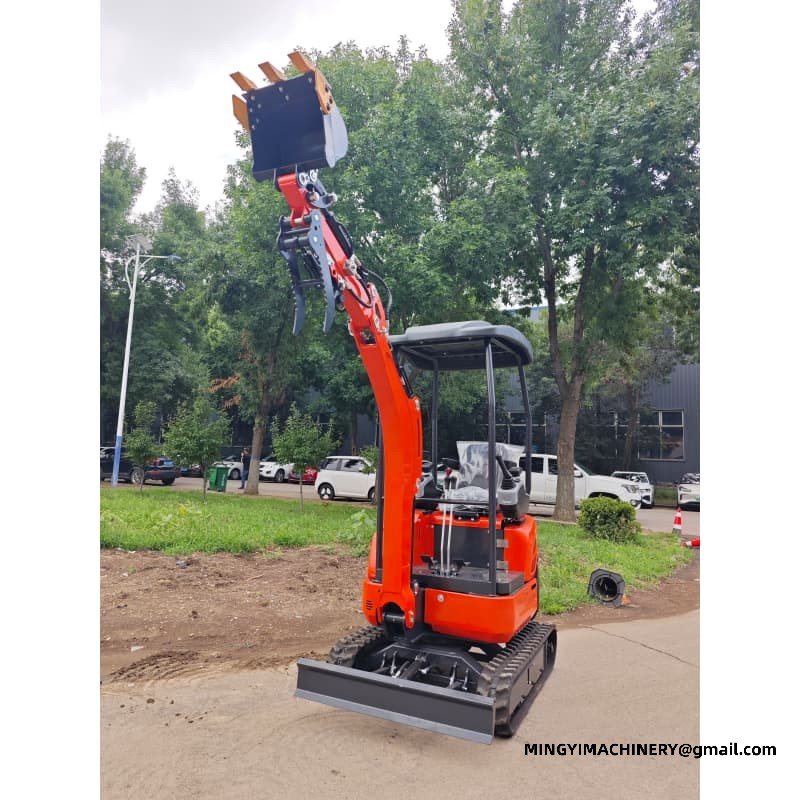
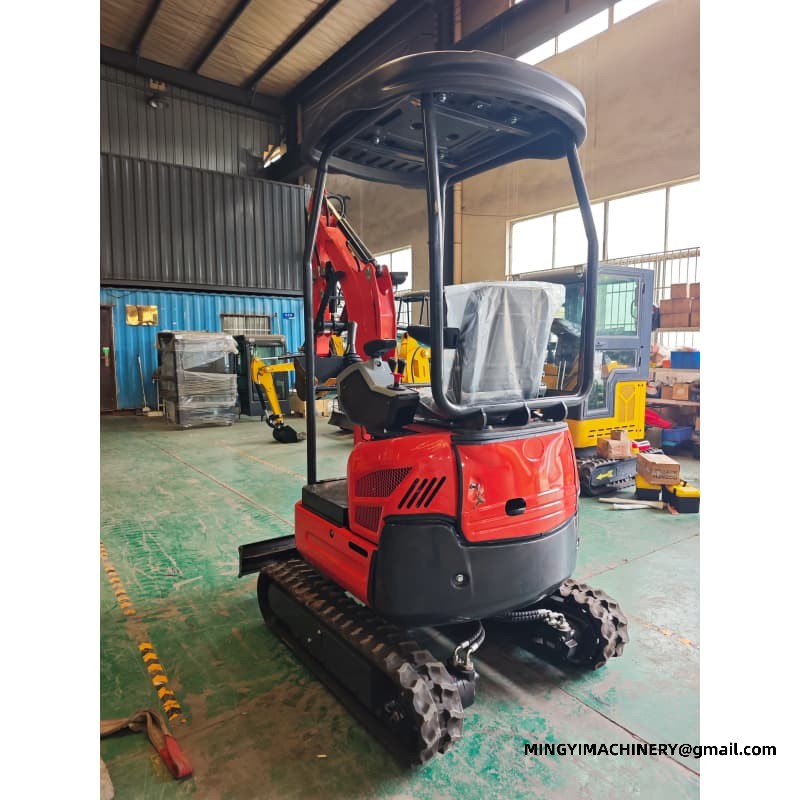
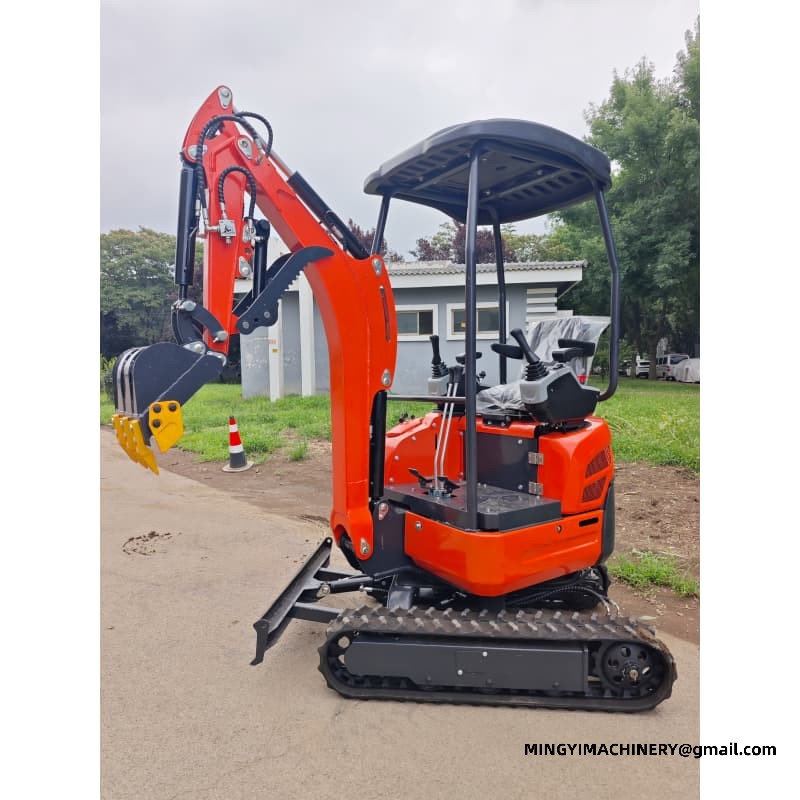
Reference specification — mini excavator range 20-1WL 09L 12L 25L Operating weight 1900 kg (4188.78 lb) 1100 kg (2425.08 lb) 1200 kg (2645.55 lb) 2200 kg (4850.17 lb) Transport size (L×W×H) 2550 × 1100 × 2200 mm 2300 × 720 × 1870 mm 2200 × 930 × 2250 mm 3000 × 1300 × 2700 mm Max digging depth 1800 mm (70.87 in) 1400 mm (55.12 in) 1700 mm (66.93 in) 2300 mm (90.55 in) Max digging height 2820 mm (111.02 in) 2800 mm (110.24 in) 2600 mm (102.36 in) 3100 mm (122.05 in) Max dumping height 2050 mm (80.71 in) 1880 mm (74.02 in) 1800 mm (70.87 in) 2050 mm (80.71 in) Max digging radius 3050 mm (120.08 in) 2490 mm (98.03 in) 2900 mm (114.17 in) 3900 mm (153.54 in) Max digging distance 2300 mm (90.55 in) 2000 mm (78.74 in) 2300 mm (90.55 in) 3100 mm (125.05 in) Minimum turning radius 1450 mm (57.09 in) 1400 mm (55.12 in) 1450 mm (57.09 in) 1800 mm (70.87 in) Travel speed 5 km/h (3.11 mph) 3 km/h (1.86 mph) 3 km/h (1.86 mph) 7 km/h (4.35 mph) Gradeability 30° 30° 30° 30° Fuel consumption 2-3 L/h (0.528—0.793 gal) 1-1.3 L/h (0.264—0.343 gal) 1-1.3 L/h (0.264—0.343 gal) 2-3 L/h (0.528—0.793 gal) Fuel tank capacity 16 L (4.23 gal) 8 L (2.11 gal) 10 L (2.64 gal) 16 L (4.23 gal) Hydraulic oil tank 18 L (4.76 gal) 16 L (4.23 gal) 16 L (4.23 gal) 18 L (4.76 gal) Dozer blade lift height 180 mm (7.09 in) 180 mm (7.09 in) 180 mm (7.09 in) 230 mm (9.06 in) Dozer blade drop depth 210 mm (8.27 in) 210 mm (8.27 in) 210 mm (8.27 in) 280 mm (11.02 in)
Q. What are the model in question?
A. Compact excavators win work by being there: small enough to reach the job, strong enough to finish it. Tracks, cab and attachments are options across the range, so the core decision is simply where the machine must fit. MINGYI builds the 08, 12 and 18 models covering the 0.8 to 6 tonne class, and the machine in that duty is where that range meets small contractors.
Q. How do I choose the right machine for mixed work?
A. List the jobs in a normal month, find the narrowest access and the deepest dig, then size the machine to both. Send the list to the factory by email or LINE and the recommendation comes back matched to the work, not to the stock.
Q. What support follows the sale?
A. Spare-part kits, wear items and service documentation ship with the programme, and the parts team works from the serial plate to match components exactly. Warranty and support terms for the small contractors order are confirmed in writing before the machine leaves.
Packing, loading and shipment of the unit on the job
Export packing is part of the machine, not an afterthought. A machine built for the work is blocked and braced inside the container so that it arrives in the same condition it left, and the load plan is decided by the dimensions rather than by what fits loosely.
Wear items and spares worth holding for the equipment in service
The parts that stop a machine are rarely the parts that are hardest to find. Filters, belts, seals and the ground engaging tools on the excavator are easy to hold and slow to replace, which is why they belong on the shelf rather than on an order.
Documents that travel with this class of machine
Keeping the documents together is part of ownership. The manual, the service record and the build sheet for the unit in daily use belong in one folder, and the machine is easier to sell later when that folder is complete.
E-mail : sales@mingycn.com
LINE ( ID ): mingyicn
Related pages
mini digger for irrigation trenches · cabin mini excavator for long shifts · Front End Loader Manufacturer: Boom Geometry and Hinge Steel · Mini Excavators








