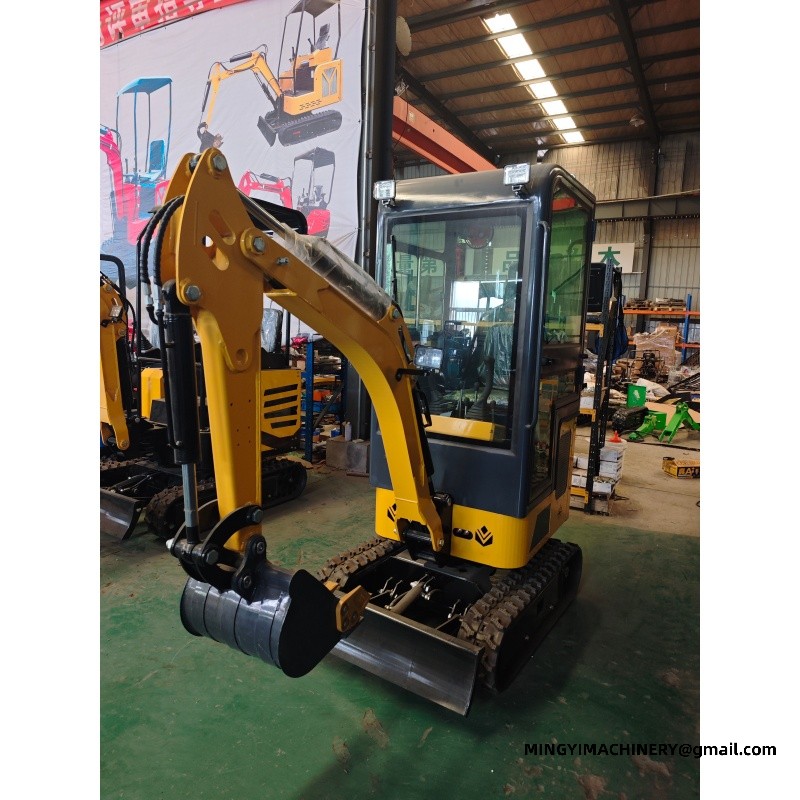
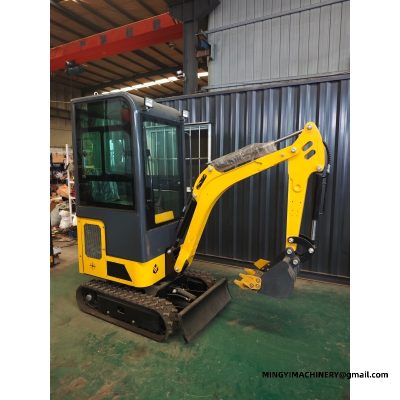
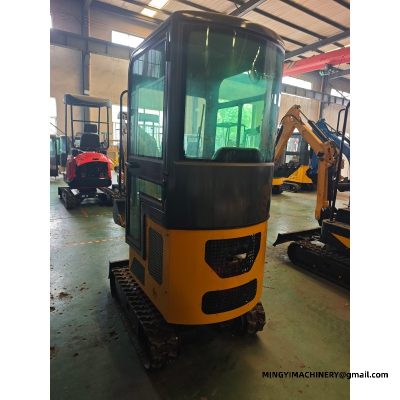
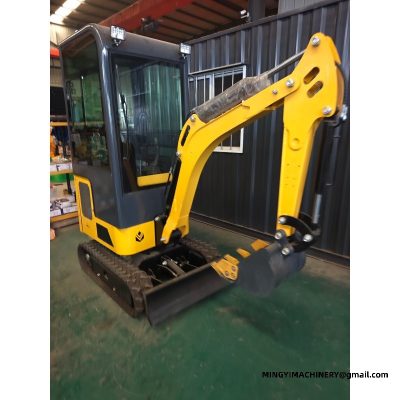
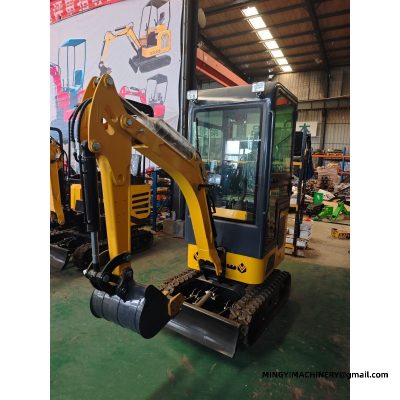
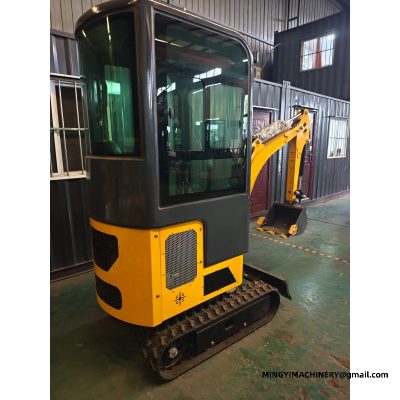
A new farm starts with a long list of ground work and a short list of machinery, so the first excavator has to cover everything. The MINGYI small digger for startup farm businesses is the single machine configured for that first phase of holding development.
It digs drainage, drills fence posts, clears scrub and levels the ground for sheds and tracks, on a footprint that travels between fields on the property. The class, engine and tool set are fixed to the buyer's development plan at the ordering stage.
First year ground work on a new holding
Land that has been idle needs ditching, scrub clearance and fence lines before stock or crops arrive, and the digger with a ripper and buckets opens that work up. A grass and tree grabber handles the cleared material into burn piles or haul loads.
Once the basics are in, the same machine digs the footings for sheds, levels yard hardstanding and maintains the tracks through the wet months. The auger and tilting bucket cover the post holes and finishing work that follow every fence and building job.
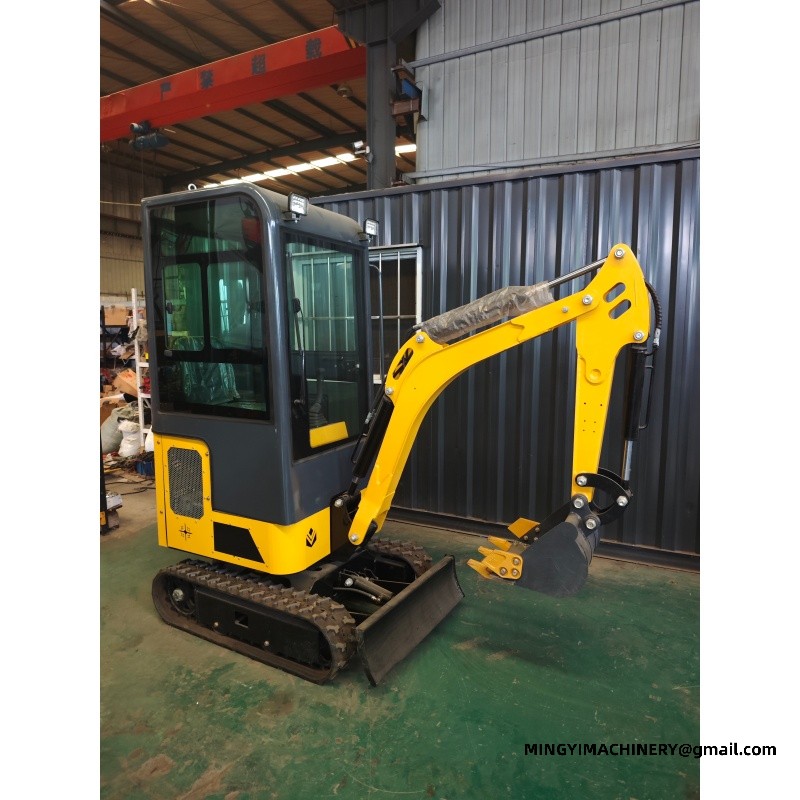
Ordering the first farm machine
Startup buyers confirm the machine class, engine option and track type at the ordering stage against the land and the work list, and the configuration is recorded against the machine. Rubber tracks are the common choice where pasture has to recover after the machine passes.
The attachment package is chosen to cover the widest range of first year jobs on one coupler, typically buckets, a ripper, an auger and a grab. Spare parts and the service documentation come with the unit.
For a startup farm the first digger has to be the whole earthmoving fleet until the holding is established. MINGYI reviews the development plan with the buyer and builds the machine and tool package around that first phase.
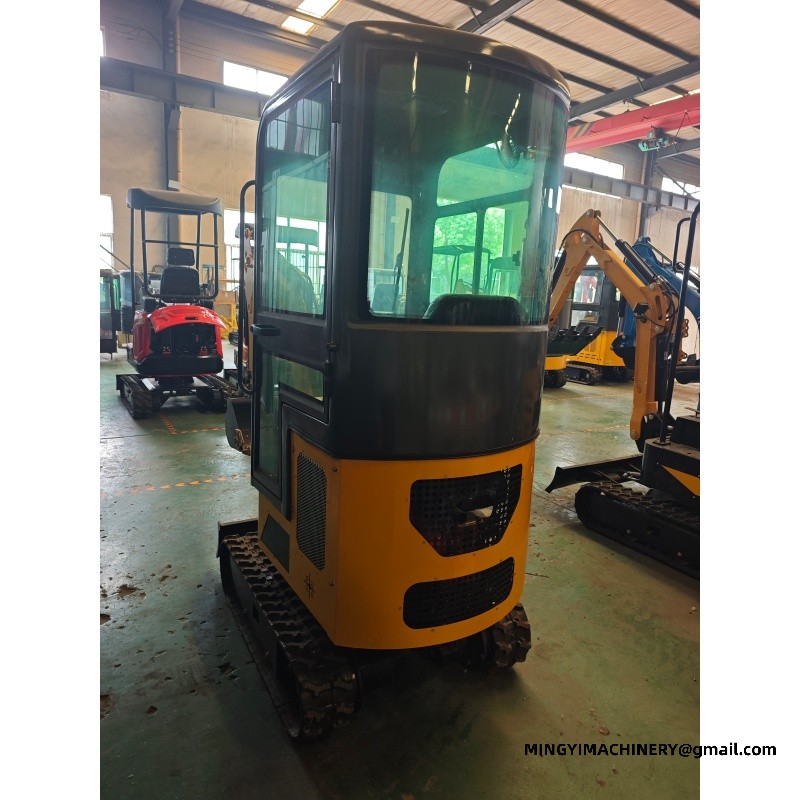
Attachments that turn small digger for startup farms into several machines The base machine is a carrier; the tool on the end of the arm decides the task. The excavator fitted with a toothed bucket digs, and the same machine with a breaker, an auger or a grab does work that would otherwise need a second unit on site. Most of the daily variety on this class of machine comes from the attachment rack rather than from the machine itself. Bucket, breaker, auger, ripper, rake and grab cover the large majority of the work a contractor will see. Engine options behind small digger for startup farms Power unit selection is settled against the service network the buyer already uses. MINGYI offers Kubota D722, Kubota D902, YANMAR, Changchai, Laidong, Runtong, YARMAX, Youpu 2V80 and Youpu 195, so a fleet running one brand of engine can keep the same filters, the same parts supplier and the same mechanic. Engine choice is also an emissions and documentation question for some markets. Listing the available units with the unit in daily use enquiry lets the factory confirm what can be supplied and documented for the destination country. Lifting and material handling with a small digger for startup farms Stability changes with reach. A load a machine of this size handles close in becomes a different proposition at full extension, so the working radius belongs in the plan before the lift rather than during it. Ground condition under the machine is part of every lift. Soft or uneven support is the common factor in handling incidents, and checking it takes less time than recovering the equipment on site that has settled. Acceptance checks when a small digger for startup farms arrives Delivery day is the best time to find a problem. Checking the specification against the order, the fluid levels, the fasteners and any transport damage while the model in question is still on the trailer is faster than claiming later. Documentation should arrive with the machine. Parts list, service schedule and any certificates for the machine itself are what the workshop needs later, and they are much easier to obtain at delivery than in month six. Working a small digger for startup farms through the seasons Weather decides which days are productive. Rain turns some ground unusable and cold changes how the machine in that duty starts and warms up, so planning the wet months around maintenance is more useful than planning around output. Heat and dust are as limiting as rain. Air intake condition and cooling cleanliness decide how the unit on the job behaves in a dry season, and both are checked in a minute rather than repaired later. Parts, service and support for small digger for startup farms Support after delivery is a parts question. Wearing items for a machine built for the work - filters, belts, track components, bucket teeth and pins - are the items a buyer should plan to hold before the first service interval. Engine parts availability usually drives the engine choice. The equipment in service built with an engine the local network already carries is serviced from stock rather than from an international order. Hydraulic circuits on the excavator Auxiliary hydraulic lines are what let a machine drive a tool rather than only a bucket. This class of machine specified with the right circuits and flow runs a breaker or an auger without an add-on power pack bolted to the frame. Flow and pressure are matched to the tool, not to the machine size. Asking for the attachment list first means the unit in daily use leaves the factory with circuits that suit the heaviest tool the buyer intends to run. Operator technique for a machine of this size The second habit is tool discipline. Running the equipment on site with the right bucket width for the trench means less spoil, less reinstatement and a cleaner job than a wide bucket and a lot of trimming. Stability is the third. The machine itself working across the tracks rather than over the corners keeps the machine steady and the undercarriage loaded evenly, which shows up as track life at the end of the season. Quick coupler practice on the model in question A quick coupler is the single option that changes how a machine is used day to day. Fitted to the machine in that duty, it turns an attachment change from a two-person workshop job into a task the operator does alone in minutes. Couplers are specified early because they affect the arm and the hydraulic kit. Adding one to the unit on the job after delivery means new pins, new hoses and a fitment session; adding it at build time is a line on the sheet. Hiring versus owning a machine built for the work Availability is part of the decision. Owning the equipment in service means it is there on the day the ground is ready; hiring means competing for the same machine at the same time as everyone else in the season. Ownership brings obligations that hiring does not. Storage, servicing, insurance and an operator are the items to set against the hire rate before deciding which way the excavator should be supplied. Working near live services with this class of machine Digging near water, gas and cable is a precision job. The unit in daily use is used here because the operator can work in short controlled cuts and because the machine can be positioned without driving over the run being exposed. Utility crews specify a machine of this size with a narrow bucket and good visibility for exactly this reason: the machine has to stop at the service, not at the edge of the operator's view. Specification data for the equipment on site Where the machine itself is being specified for a job list, the table below gives the factory figures that matter most: what the machine weighs, how deep and how far it works, and what it measures on a trailer. Figures are factory figures and are confirmed on the build sheet for the model in question. Where a job sits between two models, the larger machine usually takes less time than the smaller one spends on rework. Slope work is a stability question before it is a traction question. Knowing the gradient the machine in that duty is rated for, and working across rather than straight up where the ground allows, removes most of the risk. Planning the direction of travel helps. Working so that the unit on the job is stable under load and not required to turn on a slope is a decision made before the job starts, not a correction made during it.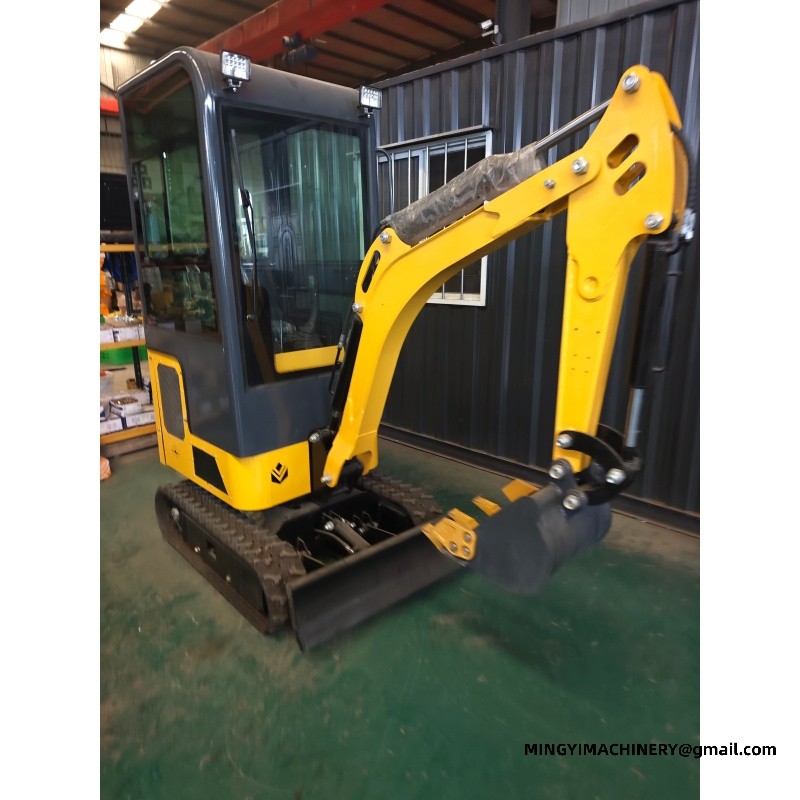
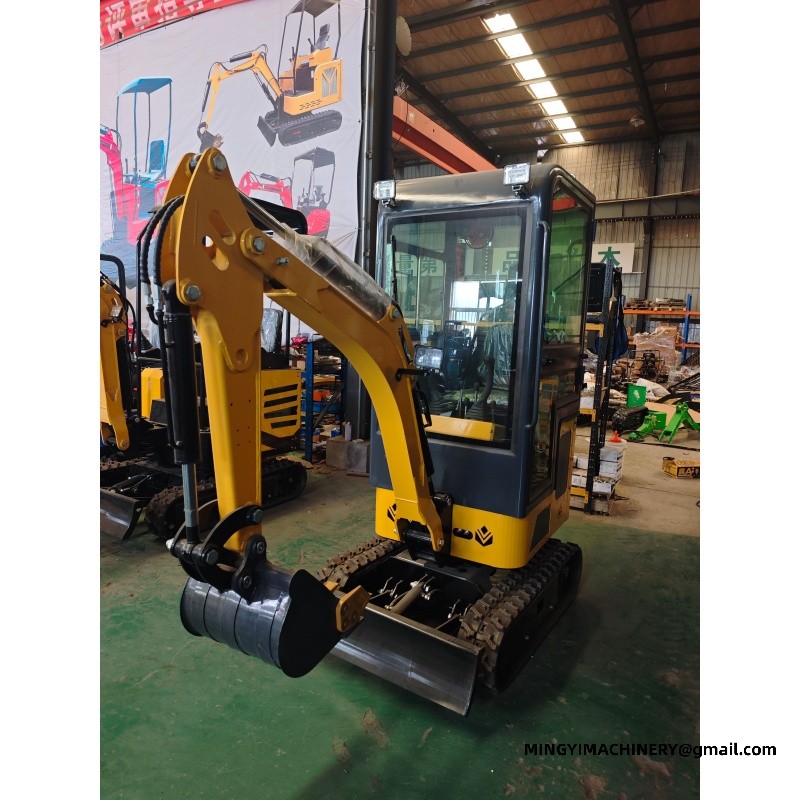
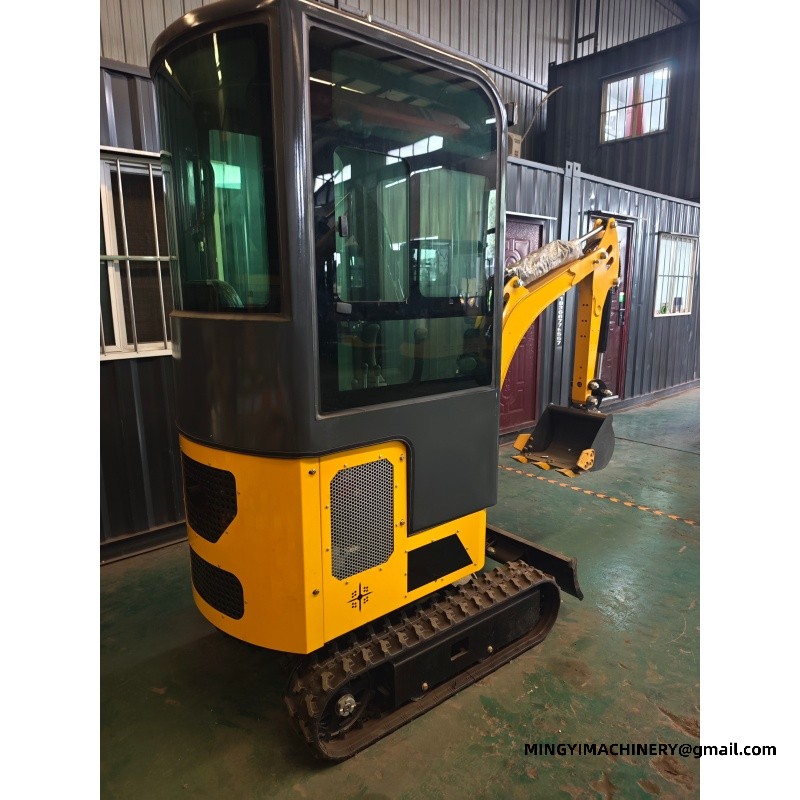
Reference specification — mini excavator range 09W 13W 12L 20-2L Operating weight 1100 kg (2425.08 lb) 1300 kg (2866.01 lb) 1200 kg (2645.55 lb) 1900 kg (4188.78 lb) Transport size (L×W×H) 1800 × 750 × 1970 mm 2200 × 930 × 2250 mm 2200 × 930 × 2250 mm 2600 × 1300 × 2344 mm Max digging depth 1250 mm (49.21 in) 1630 mm (64.17 in) 1700 mm (66.93 in) 2100 mm (82.68 in) Max digging height 2800 mm (110.24 in) 2750 mm (108.27 in) 2600 mm (102.36 in) 2880 mm (113.39 in) Max dumping height 1700 mm (66.93 in) 1960 mm (77.17 in) 1800 mm (70.87 in) 2100 mm (82.68 in) Max digging radius 2570 mm (101.18 in) 2900 mm (114.17 in) 2900 mm (114.17 in) 3215 mm (126.57 in) Max digging distance 1869 mm (73.58 in) 2100 mm (82.68 in) 2300 mm (90.55 in) 2460 mm (96.85 in) Minimum turning radius 1000 mm (39.37 in) 1300 mm (51.18 in) 1450 mm (57.09 in) 1587 mm (62.48 in) Travel speed 3 km/h (1.86 mph) 3 km/h (1.86 mph) 3 km/h (1.86 mph) 5 km/h (3.11 mph) Gradeability 30° 30° 30° 30° Fuel consumption 1-1.3 L/h (0.264—0.343 gal) 1-1.3 L/h (0.264—0.343 gal) 1-1.3 L/h (0.264—0.343 gal) 2-3 L/h (0.528—0.793 gal) Fuel tank capacity 8 L (2.11 gal) 10 L (2.64 gal) 10 L (2.64 gal) 16 L (4.23 gal) Hydraulic oil tank 16 L (4.23 gal) 16 L (4.23 gal) 16 L (4.23 gal) 18 L (4.76 gal) Dozer blade lift height 180 mm (7.09 in) 180 mm (7.09 in) 180 mm (7.09 in) 180 mm (7.09 in) Dozer blade drop depth 210 mm (8.27 in) 210 mm (8.27 in) 210 mm (8.27 in) 210 mm (8.27 in)
Q. What are the machine built for the work?
A. Agricultural digging protects the asset under the machine as much as the work in front of it: soil structure, roots and irrigation lines all decide how the digger is set up. Between farms the machine moves by trailer, and the transport pages cover ramp and tie-down practice. Read the equipment in service together with the engine, track and attachment pages: jobs around startup farms are decided by how those choices line up, not by any single number on the sheet.
Q. How does the machine move between fields and rows?
A. On rubber tracks at low ground pressure, or by trailer between farms - the transport pages cover ramp and tie-down practice. In orchards and vineyards the swing boom digs across the rows while the carrier stays on the headland.
Q. How do I get a specification?
A. Send the model, the destination and the attachment list by email or LINE - the channels listed just below this section. The reply covers the specification, lead time, packing and freight in one document, with the startup farms build sheet attached.
Pre-delivery inspection before the excavator leaves the shop
What the customer sees on arrival is decided before departure. The walk-around given to this class of machine covers the same points the operator will check on day one, so there are no surprises when the crate is opened at the destination.
Later additions and retrofits on the unit in daily use
An added function should pay for itself quickly. Whether a machine of this size gains a different bucket, a hydraulic service or a protection package, the test is the number of days a year it is actually used.
E-mail : sales@mingycn.com
LINE ( ID ): mingyicn
Heat and hydraulic temperature in small digger for startup farms
Cooling cores blocked with dust or seed husks are the common cause in summer, and cleaning them from the inside out works better than washing the face of the radiator.
Related pages
three tonne small excavator · mini excavator manufacturer for export · Wheel Loader for Mining: Cooling, Tyres and Abrasive Ground · Mini Excavators









