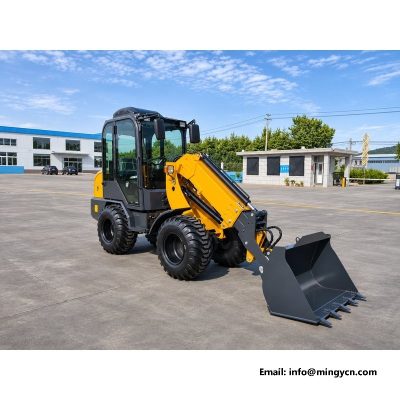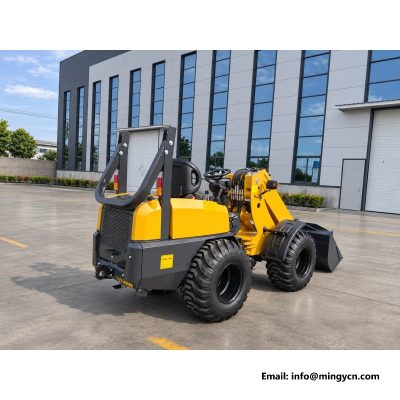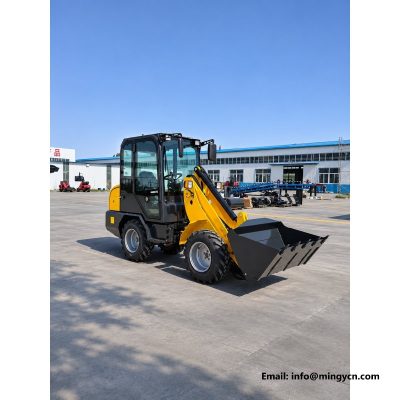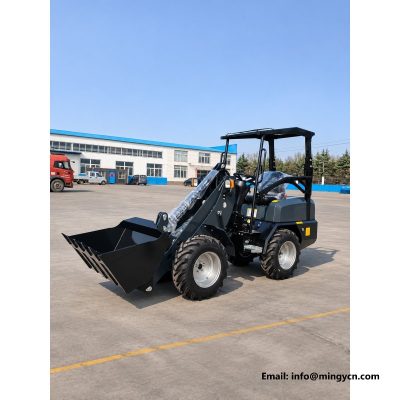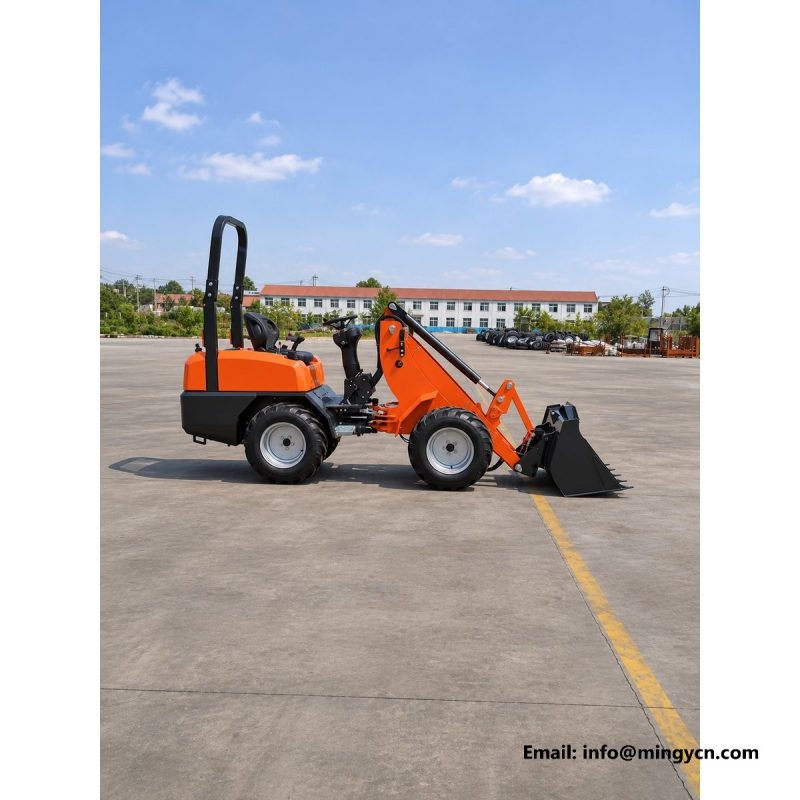
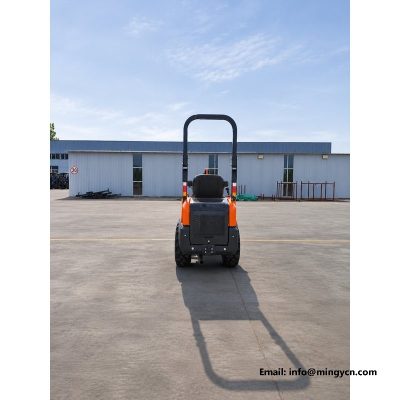
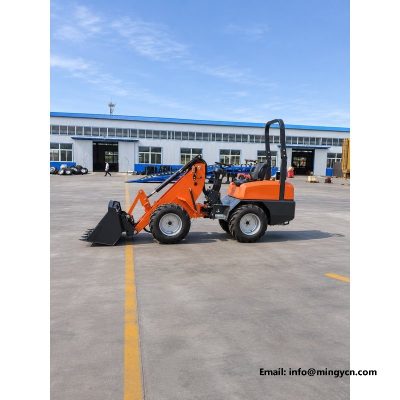
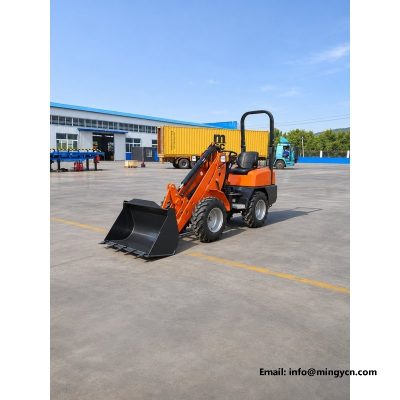
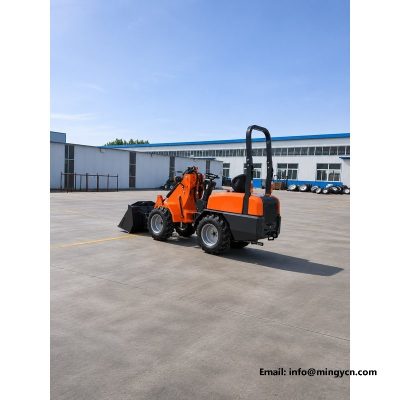
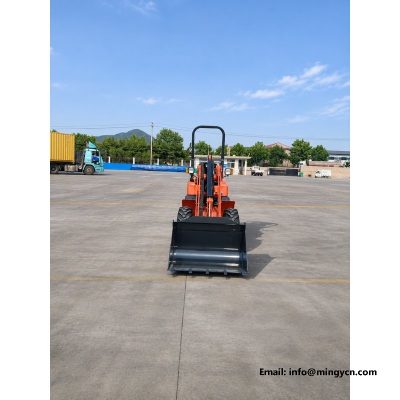
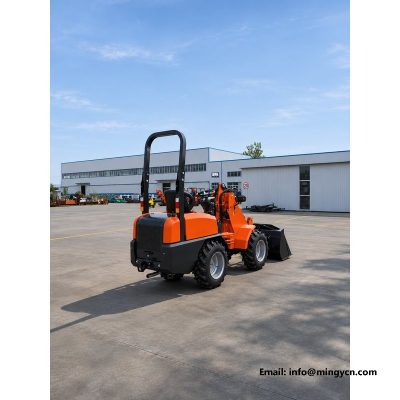
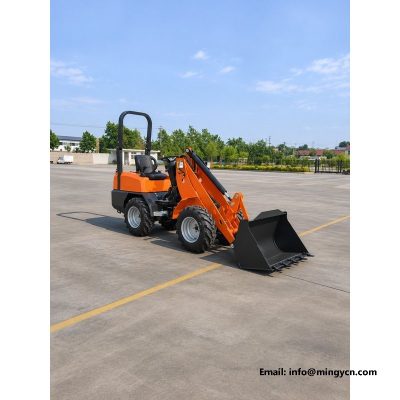
MY180D articulated loader sized for vine rows, orchard alleys and headland work.
A vineyard is not a construction site with vines on it. It is a narrow, structured, living workplace where every machine has to fit between rows, pass under trellis wires, and avoid compacting the soil that the roots depend on. That is the reason a standard farm loader so often stays parked at the gate: it is simply too wide, too tall or too clumsy for the rows. The MY180D is a mini articulated wheel loader built around the opposite set of priorities. This page explains how an articulated frame behaves between vines, what the machine is specified with, and which jobs in a vineyard or orchard it actually takes over.
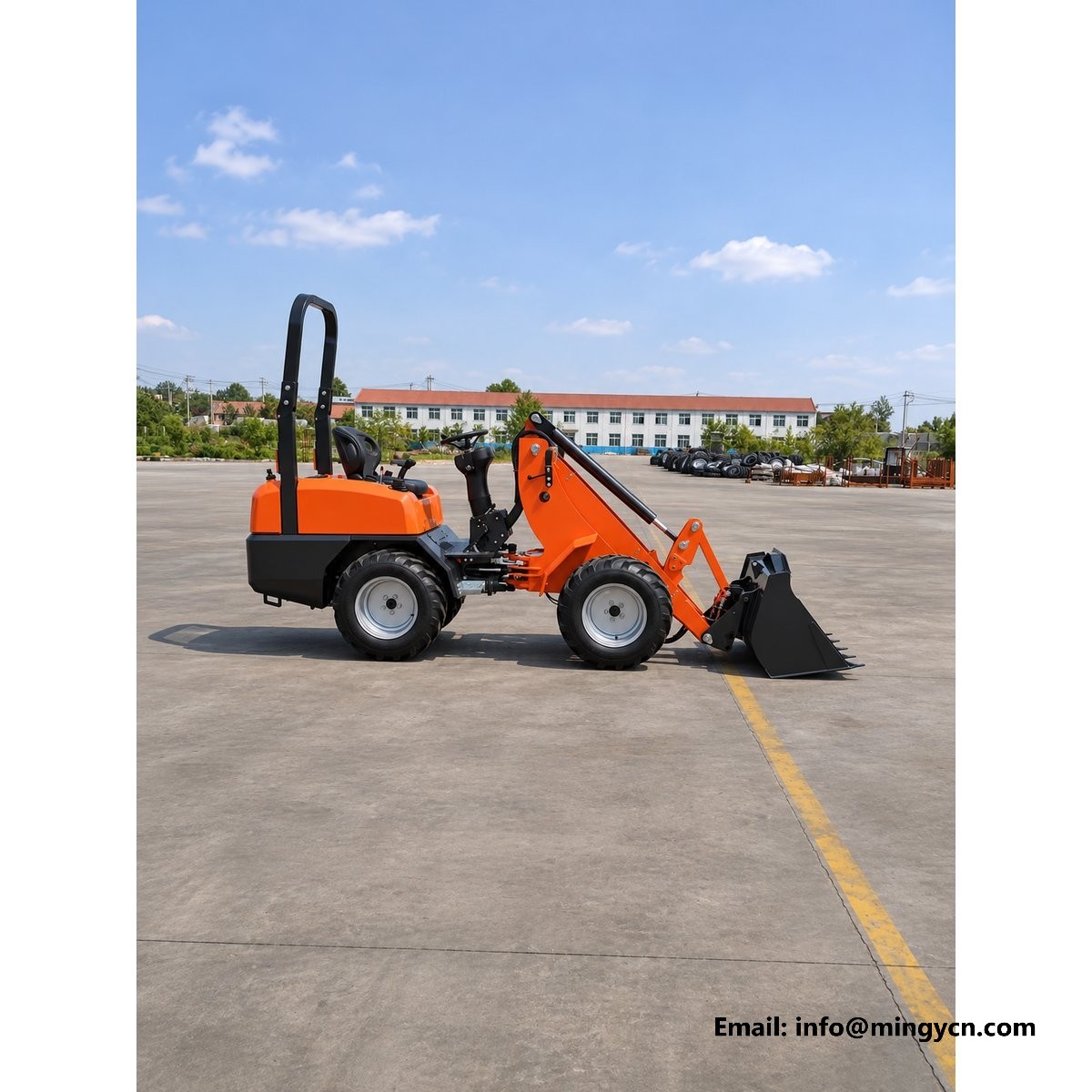
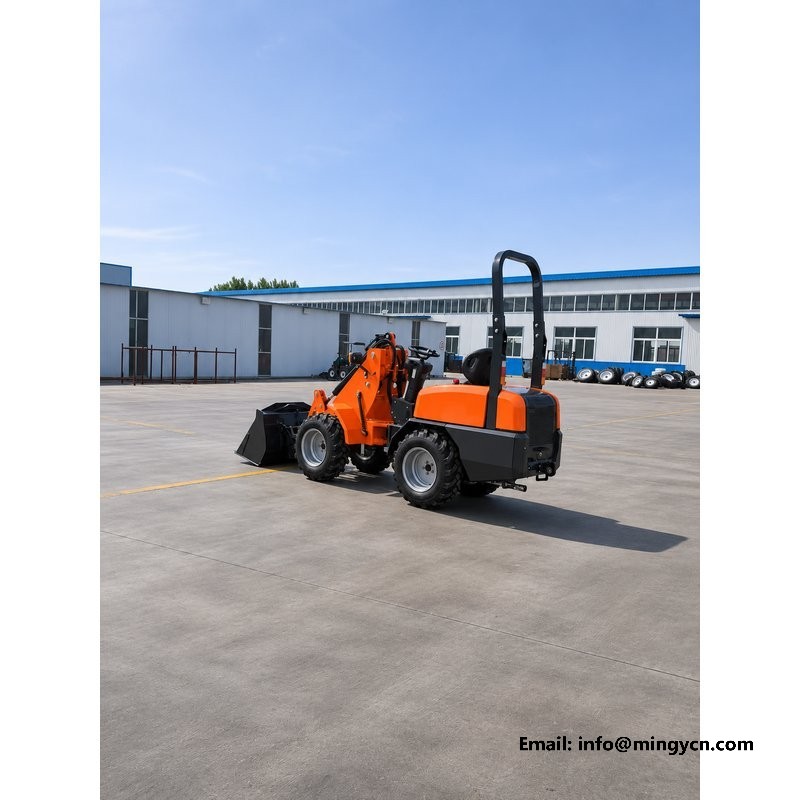
A rigid-frame loader steers with its front wheels, which means the rear of the machine swings outward as the front turns. In an open yard that is harmless. Between vine rows it is a problem, because the swing happens exactly where the posts and the cordon sit. An articulated loader bends in the middle instead: the front and rear sections follow different arcs, the rear tracks closer to the line the front has already taken, and the machine can be threaded down a row without the back end cutting into the next one. The tighter the row spacing and the closer the posts, the more that difference matters.
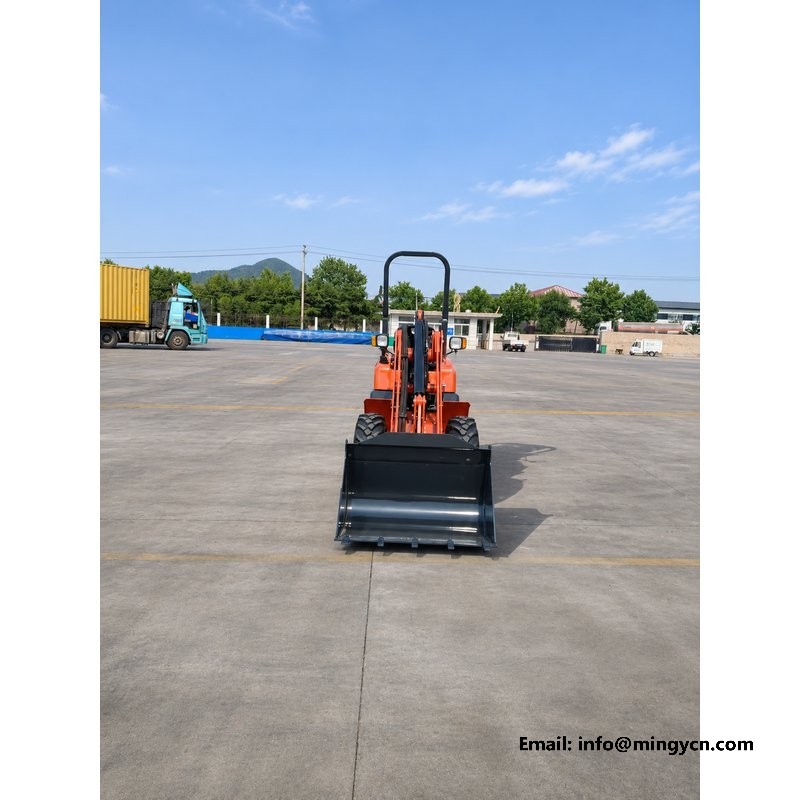
Before a vineyard buys any loader, two measurements decide whether it can work at all. The first is the overall width of the machine against the clear width between rows; the second is the height over the highest point, usually the ROPS frame, against the height of the lowest trellis wire and the fruit zone. A machine that fits the rows but clips the wires will spend its life at the headland. This is why the MY180D is specified with a ROPS frame rather than a full cab in its standard form: the frame keeps the overall height down while still providing a roll-over structure, and it leaves the operator able to hear and see the vines on both sides.
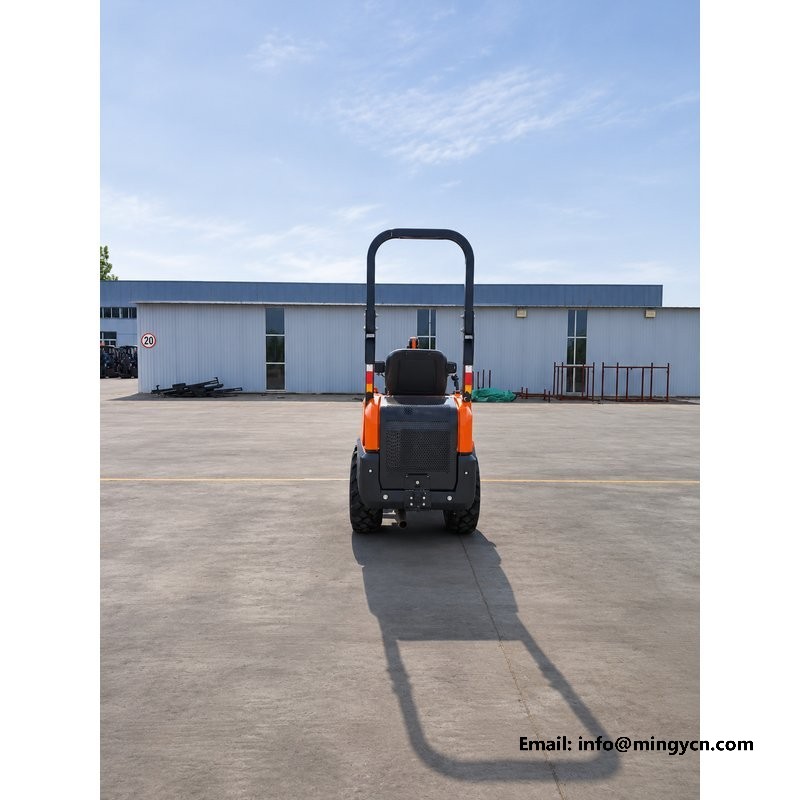
In a vineyard the loader rarely travels far and rarely travels fast. What it does do is creep: edging along a row at walking pace while the operator watches a bin, a pallet or a sprayer tank. That kind of work depends on fine control at low speed, not on top speed. The MY180D uses a hydrostatic drive axle with orbit motor drive, fed by a closed-circuit piston pump from PWG in Italy. A closed-circuit hydrostatic system holds a set speed steadily against changing load, which is exactly what creeping along a row requires, and it allows the machine to be inched forward or back without riding a clutch.
The working hydraulics are pilot operated. In practice that means the lift and tilt functions are controlled by a light joystick rather than by long levers, so the operator can keep a hand on the steering while raising or dumping the bucket. Between vines the operator is constantly making small corrections, and a control layout that allows those corrections without shifting position is worth more than any specification figure. The deluxe seat and the hose assemblies from Qingdao Xiangliu complete the working environment: hoses that are specified rather than generic are the difference between a machine that weeps at the fittings in year three and one that does not.
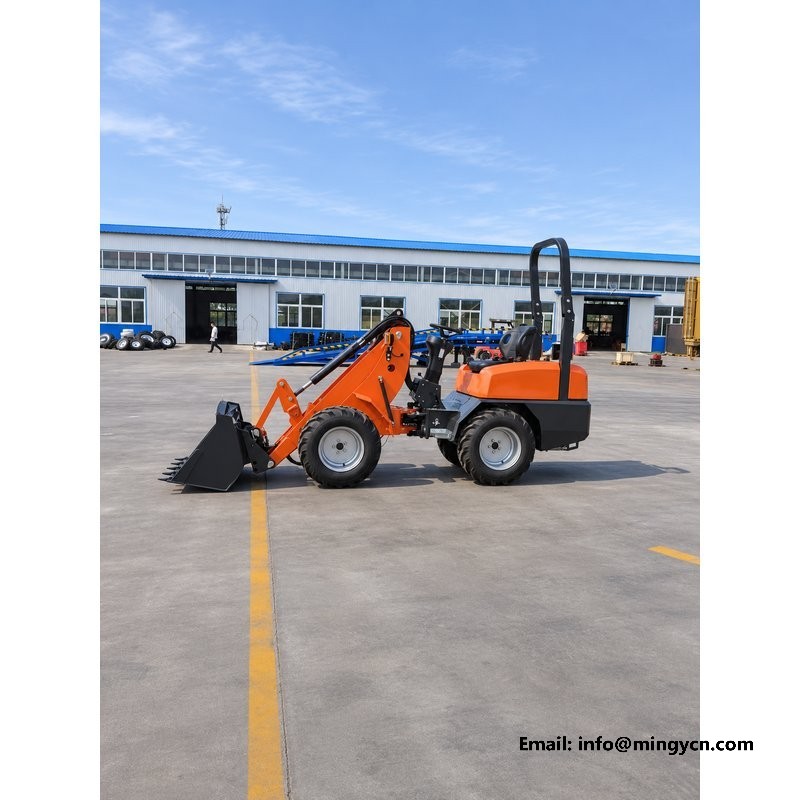
Standard fitment is 10.0/75-15.3, with 400/60-15.5 available as an option. The choice between them is not cosmetic. A narrower tyre concentrates load and is easier to place between rows and along the vine line; a wider tyre spreads load and reduces the pressure on the soil surface. In a vineyard where the rows are tight, the narrow option usually wins on manoeuvrability; where the ground is soft after rain and compaction is the main worry, the wider option is the better argument. Whichever is chosen, the load in the bucket and the number of passes along the same line determine compaction more than the tyre itself, so keeping the bucket sensibly loaded does as much good as any tyre change.
The jobs repeat every season, and each one puts a different demand on the loader. Carrying harvest bins from the row ends to the trailer is a load-and-carry task that rewards a low bucket height and a stable frame. Spreading organic fertiliser or compost along the vine line is a creep-and-tip task that rewards smooth hydraulic control. Clearing prunings and pulled vines is a grab task that depends on the attachment rather than the loader. Moving pallets of posts, wire and spray is a fork task that happens at the headland. And keeping the row middles clear is a maintenance task that runs all season. One articulated loader with a quick coupler covers all five, which is why the attachment set matters as much as the machine.
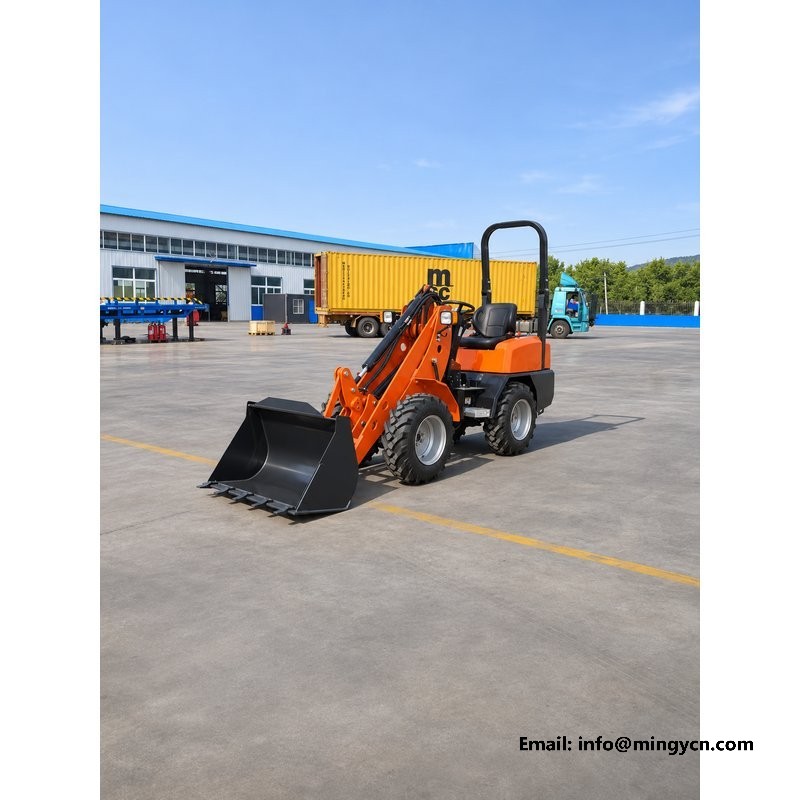
A general-purpose bucket handles soil, compost and gravel. Pallet forks are used far more than most first-time buyers expect, because almost everything that arrives at a vineyard arrives on a pallet. A grapple or a set of bale spikes deals with prunings, vine waste and hay. A four-in-one bucket adds dozing and grabbing without a second attachment, which is useful on headlands and in storage areas. The hydraulic quick coupler is available as an option and is worth specifying at the order stage rather than adding later, because changing attachments by hand in a cold morning is the fastest way to stop using them.
| Model | MY180D mini articulated wheel loader (standard boom) |
| Steering | Articulated frame, centre pivot |
| Hydraulic pump | Closed-circuit piston pump, PWG (Italy) |
| Drive | Hydrostatic drive axle with orbit (gerotor) motor drive |
| Control | Pilot hydraulic operation, joystick |
| Standard tyres | 10.0/75-15.3 (optional 400/60-15.5) |
| Standard engine | Xinchai Euro 5 3B11 |
| Engine options | Kubota D1105, Kubota V1505 |
| Operator station | ROPS frame with deluxe seat |
| Hose assemblies | Qingdao Xiangliu |
| Options | Canopy, enclosed cab, hydraulic quick coupler, high/low speed |
The questions to settle before ordering are practical ones. What is the clear width between rows, measured at the narrowest point rather than the average? What is the height of the lowest trellis wire, and does the machine need to pass under it or only alongside it? Is the ground sloping, and if so in which direction relative to the rows? Is the soil heavy clay that compacts easily, or free-draining? How far does a bin have to travel from the row end to the collection point? Answering those four or five questions turns a general loader specification into a machine that suits one property rather than a catalogue.
On arrival, drive the machine down a real row before accepting it. Work the articulation through full lock in both directions and watch the rear section against the posts. Raise the loader arms to full height and confirm the clearance under the trellis wires with the bucket empty and then loaded. Check the tyres for the specified size and the wheel nut torque. Work the joystick through every function and confirm the lift holds position under load without drift. Inspect the hose routing around the articulation joint, which is where chafing appears first. Record the hour meter reading and photograph anything that looks wrong before signing.
A vineyard loader works short days but many of them, often in dust and plant debris. The priorities are the ones that keep a hydrostatic machine healthy: keep the hydraulic oil clean and change the filter on schedule, inspect the cooler and radiator for packed chaff, grease the articulation pivot and the loader arm pins every week rather than every month, and check the tyre pressures before the season starts rather than after the first soft-ground day. Keep the ROPS mounting bolts checked, and touch up paint on the frame where prunings have scratched it, because steel left bare through a wet winter is the beginning of the end for a machine that is otherwise sound.
Ordering and technical support
Email: sales@mingycn.com
LINE (ID): mingyicn
Tell us the row spacing, trellis height, ground conditions and the attachments you need, and we will confirm the right configuration and shipping details.
Machines can be painted to a buyer colour reference, and the operator station and attachment set confirmed before production. See custom paint and configuration for how a build is specified.