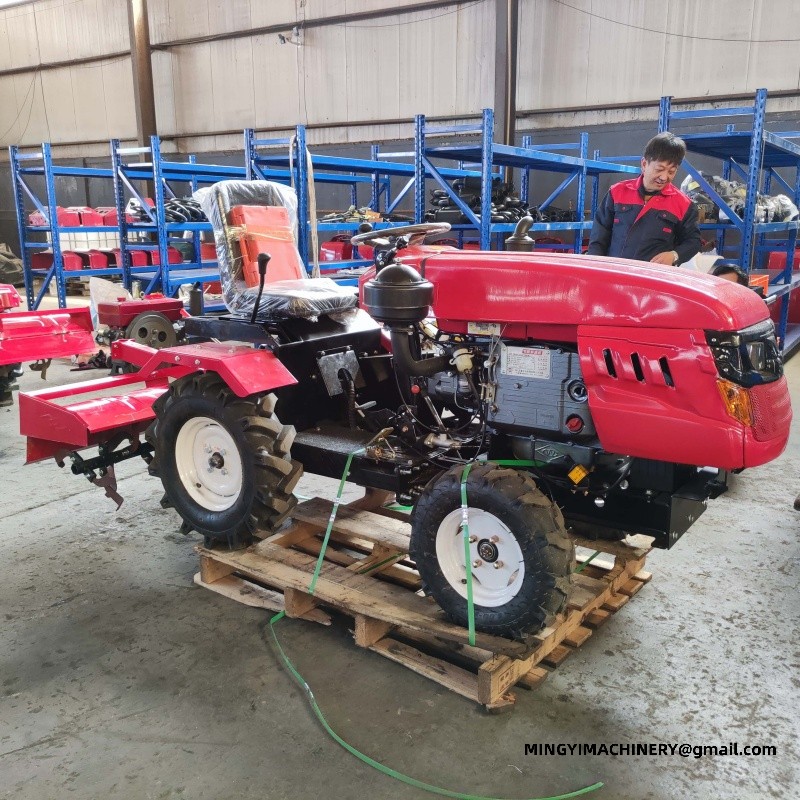
Compact machinery is bought for work, not for attention, so maintenance usually loses each day to something more urgent. Then a hydraulic hose fails during the busiest week of the season, and the machine spends more time waiting than working. This guide sets out a routine that fits into a working day, plus the intervals and records that keep a machine productive for years rather than months.
Why Compact Machines Need Discipline More Than Big Ones
Smaller machines run at higher engine speed for their size, work closer to their limits more often, and frequently operate in dust, mud, and tight spaces where nobody does a proper walkaround afterwards. Rated components leave less margin for neglect. The upside is scale: a daily check takes under ten minutes, and filters are small and reachable. The routine described here is designed around that reality.
The Ten-Minute Daily Walkaround
Do it at the start of the day, before the machine warms up, in the same order every time:
| Step | Check | What you are looking for |
|---|---|---|
| 1 | Ground under the machine | Fresh drips tell you where to look before anything else does |
| 2 | Engine oil level | Within marks, no fuel smell, no milky appearance |
| 3 | Coolant level | Correct level when cold; any drop investigated, not topped up blindly |
| 4 | Hydraulic oil level | At sight glass with machine in the parked position |
| 5 | Air cleaner indicator or condition | Dust load consistent with yesterday's conditions |
| 6 | Hoses and cylinder rods | No rubbing marks, no wet joints, rods free of scoring |
| 7 | Tracks or tyres | Track tension to specification, tyres at correct pressure |
| 8 | Bucket, teeth, and pins | Wear pattern even, no cracks developing at welds |
| 9 | Grease points visibly done | Fresh grease at pivots, no dry polished pins |
| 10 | Lights, gauges, and safety items | Everything works before the operator needs it |
Written once and laminated in the cab, this list turns into habit within a week. Machines with a visible daily discipline rarely have mysterious failures.
The First Hundred Hours
New and rebuilt engines and hydraulic components produce wear particles in their early running. Treat the first service as a deadline rather than a suggestion:
- Follow the manufacturer's first service interval, typically well before the first standard service.
- Replace engine oil and filter on schedule; inspect what comes out for anything unexpected.
- Re-check every hose clamp, electrical terminal, and fastener marked at assembly after vibration has had its say.
- Re-check track tension once the track has seated.
- Record the date and hour reading, because warranty conversations start with these numbers.
Filters: The Cheapest Reliability You Can Buy
| Filter | Why it matters | Practical habit |
|---|---|---|
| Engine oil | Removes combustion and wear particles | Replace at interval; never extend it because the machine looks clean |
| Fuel | Water and fine dirt damage injection equipment fast | Drain water separator regularly; keep the fuel source clean |
| Air, primary and safety element | Dust is the dominant wear source on site | Inspect daily in dusty work; replace rather than clean repeatedly |
| Hydraulic | Keeps valves and pumps alive | Replace at hours or condition indicator, whichever comes first |
| Cab or recirculation | Operator health in dust and sprays | Replace seasonally or when airflow drops noticeably |
Air filtration deserves special attention because the failure mode is invisible. A slightly restricted filter robs power quietly; a damaged one lets dust into the engine permanently. When an air filter has been cleaned several times already, replace it. Cleaning beyond the point printed on the element is a decision nobody can justify later.
Hydraulic Health
Three habits prevent most hydraulic trouble. Keep oil topped up with the correct grade, because low oil makes pumps cavitate. Cap every disconnected line immediately, since contamination enters through open connections rather than through the pump. Investigate heat, because rising operating temperature is usually the first sign of a restriction, a bypassing relief valve, or oil that is past its life.
Watch also for the small signals: slower cycle times, a function that hesitates, or a cylinder that drifts slightly when left loaded. Each one is cheap to diagnose when reported early. The tool connections that multiply these risks are discussed in the attachment guide.
Undercarriage and Tracks
Rubber tracks and steel undercarriages fail for opposite reasons: rubber suffers from tension extremes, contamination, and sharp angles; steel suffers from packed material and running loose or tight. Either way:
- Check tension to the figure in the manual, not by eye.
- Clean packed mud and stones from sprockets and idlers before parking overnight in freezing conditions.
- Watch for uneven wear, which usually indicates a tension or alignment issue rather than a worn track.
- Avoid prolonged high-speed travel on hard surfaces, which heats rubber tracks quickly.
Greasing: A Schedule Operators Actually Follow
Grease frequency should be stated by hours or by task, whichever your crew notices first. High-frequency pivots — bucket linkages, couplers, and slew bearings — want attention far more often than the manual's shortest interval suggests when the machine works in mud or water. Pump until fresh grease appears, wipe the excess, and note anything that will not take grease at all, because a blocked fitting is a repair waiting to be expensive.
Cooling Systems in Hot and Dusty Conditions
Cooling complaints peak in summer and in dusty yards, for the same reason: airflow blocked by chaff, dust, or seed heads. Blow out the core from the clean side outward, check fan drive condition, and make sure shrouds and seals are in place so air passes through the core rather than around it. Machines working vegetation or grain handling sites should check the core far more often than the service manual assumes.
Batteries and Electrics
Most electrical complaints begin at the terminals. Keep them clean, tight, and protected; check earth straps after any repair; and investigate slow cranking before the coldest week of the year rather than during it. Machines that sit for weeks benefit from isolation or a maintenance charge, and machines that work daily need their charging system verified rather than assumed.
Records Worth Keeping
You do not need software. A page per machine works:
- Date, hour reading, and what was done, for every service.
- Each filter change with part number.
- Oil analysis results if you use them, noting trends rather than single readings.
- Any fault, however small, and what was done about it.
- Parts ordered, from whom, and when they arrived.
These notes answer the questions buyers and new operators always ask, and they tell a technician exactly what has already been tried.
Seasonal and Storage Preparation
Machines that sit for a season should be prepared, not abandoned:
- Clean thoroughly, including the radiator core and undercarriage, then dry.
- Replace fluid levels where moisture accumulation is expected, according to manual guidance.
- Grease every point so pivots are protected rather than exposed.
- Protect exposed cylinder rods and electrical connectors.
- Support the machine so tyres or tracks are not bearing load unnecessarily.
- Remove or isolate batteries, and secure caps, covers, and loose tools.
- Record the shutdown condition, then repeat the daily walkaround carefully at restart.
Orchard owners will recognise most of this from seasonal equipment routines already described in the orchard machinery guide, where idle months are predictable and valuable preparation time.
Common Failures and Their Usual Causes
| Symptom | Usual direction of investigation |
|---|---|
| Loss of power under load | Air restriction, fuel restriction, or overheating rather than engine wear |
| Slow hydraulics when warm | Oil condition, restriction, or a relief valve issue |
| Tracks derailing repeatedly | Tension out of specification, packed material, or worn sprockets |
| Battery flat after standing | Parasitic draw or simply age; test before replacing |
| Overheating at site but not at yard | Chaff and dust blocking the core under real working conditions |
| Repeated hose failures at one point | Routing and support, not hose quality |
Building the Parts Relationship in Parallel
Maintenance planning and parts planning are the same activity. Keep a small stock of the filters and wear items that the daily routine consumes, know which engine family the machine uses, and confirm who supplies wear parts locally. The spare parts guide covers stocking levels and documentation; the point here is that a good daily routine consumes predictable items, which makes stocking straightforward.
The Operator Is Part of the Maintenance System
The person who runs the machine every day notices change before anyone else: a slightly different sound at idle, a function that hesitates once, a vibration on travel that was not there last week. Encourage reporting without penalty for being wrong, because most serious repairs begin as a small observation somebody decided not to mention. Practical measures help: keep a notepad in the cab, review it weekly, and thank people for reporting things that turn out to be nothing.
Operators also perform the tasks nobody logs: cleaning radiator cores, keeping fuel containers clean, avoiding travel on surfaces that damage tracks, and parking somewhere sensible rather than somewhere wet. Machines shared across crews without an agreed owner suffer most from exactly these habits, so naming one responsible person per machine is a maintenance decision rather than an administrative one.
Early Warnings Worth Acting On Immediately
Some signals justify stopping work the day they appear:
- Rising operating temperature under normal load — investigate before continuing.
- Any hydraulic leak at a joint that tightens the next morning but returns by afternoon.
- New vibration or noise in travel, slewing, or any rotating component.
- Changes in exhaust smoke beyond normal cold-start behaviour.
- Brake or control feel that differs from yesterday, particularly on loaders working slopes.
- Track tension surprises, especially on one side only.
Acting on these takes an hour of diagnosis; ignoring them typically spends days of downtime and a much larger repair.
A diesel engine that is worked properly rarely complains; one that idles for long periods, works cold, and lives on short trips accumulates problems that look like age but are really habits. Warm-up and cool-down matter more than owners expect, particularly for turbocharged engines: let the machine settle at low load after hard work rather than switching it off immediately, and avoid extended idling as a substitute for warming up.
Weekly and Monthly Additions
On top of the daily ten minutes:
- Weekly: grease the points the daily routine skips, inspect structural welds around the boom and arm, clean the air cleaner housing, and check tyre pressures or track condition carefully.
- Monthly: inspect coolant condition and cap seal, check drive belt or fan drive condition, review the log for small recurring notes, and order filters before they are needed rather than after.
- Seasonally: revisit operator comfort items, wipers, lighting, and cab filtration, which degrade quietly and affect productive hours more than owners expect.
Checklist: Building the Habit
- Laminate the ten-step daily list and keep it in the cab.
- Assign the log so it belongs to someone, not to everyone.
- Stock the filters the machine consumes next, not eventually.
- Check fluid levels with the machine parked in the same place each time.
- Treat any new noise, smell, or behaviour as information worth recording the same day.
- Review the log monthly and act on anything that appears twice.
- Compare hour readings against calendar time so under-used machines still get attention.
Well-kept machines are also easier to sell, easier to insure, and easier to hand to a new operator, which is why maintenance records belong with the documents you keep from the very first week.
Ask the factory for their recommended service intervals and filter part numbers for your exact configuration, including the startup kit contents, using the contact page. Machines supplied with that documentation maintained from day one spend far less time waiting for parts than machines bought on specification alone.