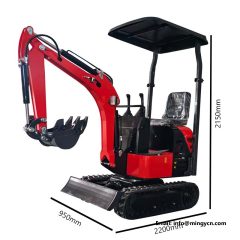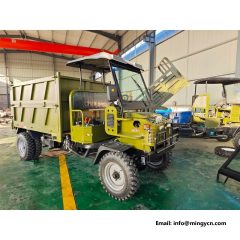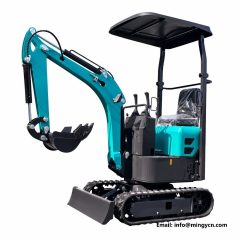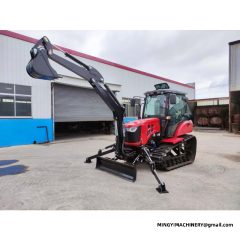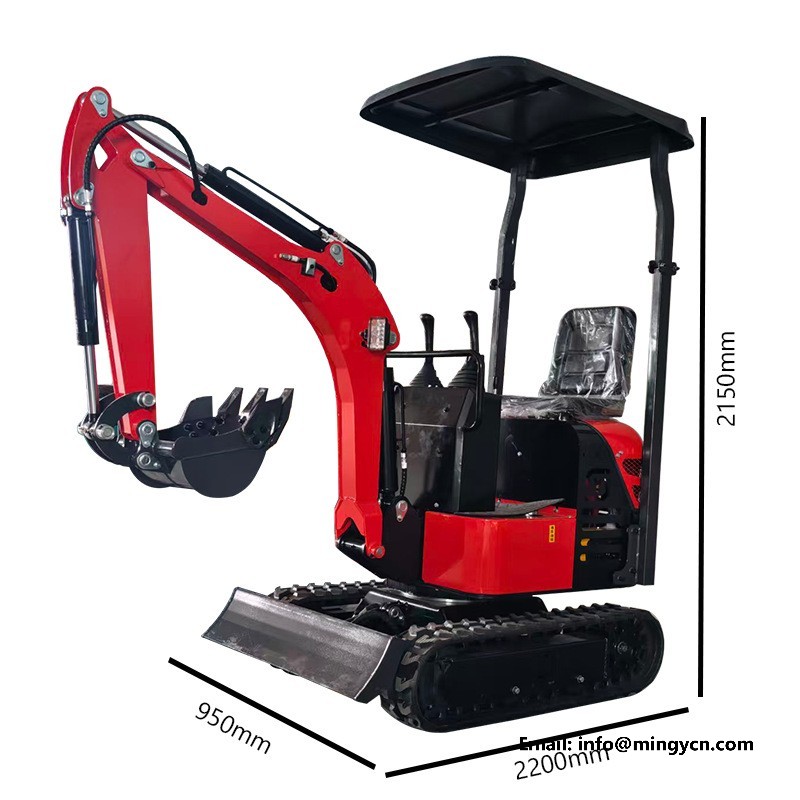
A mini excavator is often the first machine a small contractor, farm, or landscaping business buys, and it is also one of the easiest machines to buy badly. Buy too small and every trench takes twice as long. Buy too heavy and you cannot trailer it, cannot get it between buildings, and you spend your working life repositioning it. Buy the wrong engine and every filter becomes an import exercise. This guide walks through the selection process the way an equipment manager would run it: jobs first, machine second, engine and tracks third, supplier last.
Start With Your Jobs, Not the Machine
Before comparing models, write down the actual work the machine has to do over a normal month. Most buyers can fit their demand into four questions:
- What are you digging? Footings, trenches for pipes and cables, ponds, stumps, or frozen ground each favor different bucket and boom configurations.
- How deep and how far? Dig depth and reach decide the size class. A machine that just reaches the bottom of your typical trench with the bucket fully curled will feel underpowered every single day.
- Where does it have to fit? Doorways, gate posts, row spacing in orchards, and the gap between a house and a fence set a hard limit on width and tail swing.
- What surface does it work on? Finished lawns, paved yards, paddy fields, and rocky hillsides each point to a different undercarriage choice.
Be honest about the percentage of time each job takes. A machine that is perfect for the once-a-year pond dig and awkward for the daily trench is the wrong machine. Optimize for the daily work, and rent for the exceptions, or plan attachments that extend the machine's reach into the occasional jobs without changing its core configuration.
It also pays to write down who runs the machine. A skilled operator extracts full value from a basic machine; a rotating crew of part-timers benefits from simple controls, clear service points, and a machine that tolerates imperfect daily checks. Specify for the operator you actually have, not the operator you wish you had.
Understanding Size and Weight Classes
The industry groups compact excavators by operating weight. Below roughly one tonne you have micro excavators that one person can walk behind and that go through garden gates. From one to three tonnes is the sweet spot for farms and small contractors: light enough to tow behind an ordinary pickup on a trailer, heavy enough to break hard ground and run attachments with real hydraulic flow. From three to six tonnes you enter the class most rental fleets use, where dig depth, stability, and lifting capacity all step up. A useful overview of how a factory covers these classes in practice is on the three tonne small excavator page.
Two weights matter more than the class label. Transport weight decides whether your existing trailer and vehicle can move the machine legally. Operating weight decides stability and ground pressure. Always check both against the trailer you own today, not the trailer you plan to buy someday.
Boom and Arm Configurations
Buyers compare dig depth on spec sheets, but the boom and arm configuration is what actually determines how the machine works day to day. Three arrangements cover most needs:
- Standard two-piece boom for general digging, loading trucks, and grading.
- Extended boom and arm for reaching across wide trenches, cleaning ditches from one side, and finishing slopes without repositioning. The small excavator with extended boom page shows how reach changes the work the machine can take on.
- Offset or articulated boom for digging parallel to walls and foundations where the tracks cannot align with the trench line. Offset digging is what lets one machine work along a building footing without trenching under its own undercarriage, as described on the offset boom for mini excavators page.
If your job list includes ditch cleaning, slope finishing, or work against structures, put boom configuration ahead of minor differences in engine output. Reach and offset translate directly into fewer repositioning moves, and repositioning is where compact excavators spend their wasted hours.
Tracks: Steel or Rubber
This is the single most consequential option on a compact excavator, because the undercarriage is a large share of the machine's maintenance over its life.
- Steel tracks grip better on slopes, survive rocky ground, and last longer in abrasive conditions. They tear up pavement, lawns, and finished surfaces.
- Rubber tracks protect paved and landscaped surfaces, ride more smoothly, and suit orchard rows and indoor demolition work. They are vulnerable to sharp rock, rebar, and curbs.
If your week mixes both surfaces, ask about interchangeable track frames rather than compromising in one direction. Some buyers also convert machines between steel and rubber to match seasonal work; the rubber to steel track conversion page explains what that involves in practice, and the steel track replacement for mini diggers page covers the maintenance side of the choice.
Engine Choice and Where the Machine Will Work
Compact excavators from Chinese factories are offered with several engine families, and the engine matters more for your ownership experience than almost any other component, because parts, service knowledge, and resale recognition all follow the engine brand.
Internationally recognized names such as Kubota and Yanmar are widely used in compact machines; factory pages such as mini excavator with Kubota D722 engine and Yanmar diesel mini excavator show how these options are specified. Domestic Chinese diesels such as Changchai, Laidong, and Yunnei families are also common and are popular for export markets where local engine service is easy to arrange. The practical differences are discussed on pages like Changchai engine mini excavator and Laidong engine for mini excavators.
Three checks before deciding on an engine:
- Parts availability in your country. An engine with no local parts network turns every filter change into an import exercise.
- Emission rules at your destination. Some markets restrict the emission tier of imported machinery; confirm your local requirement before ordering.
- Fuel quality you will run. Engines with simple mechanical injection tolerate lower-grade fuel and rough field maintenance better than high-tech common-rail systems.
Hydraulic Flow and the Attachments You Actually Need
The dig function is only half of a compact excavator's value. The other half is the attachment ecosystem. Auxiliary hydraulic lines, a third piping set for tilt buckets and mowers, and a hydraulic or mechanical quick coupler turn one carrier into a multi-tool.
Common attachments and what they demand from the machine:
| Attachment | What to check on the carrier |
|---|---|
| General purpose and narrow buckets | Pin size, bucket width range for your trenches and rows |
| Grading and tilt buckets | Third hydraulic line, sufficient auxiliary flow |
| Grapples and log grabs | Two-way auxiliary flow, relief valve settings |
| Rippers and frost hooks | Counterweight and stability on hard pull |
| Mowers and flail heads | High continuous flow, case drain line |
| Quick couplers | Hydraulic vs mechanical trade-off between speed and simplicity |
The factory's attachment coverage is documented in practice on pages such as mini excavator log grab and buckets, shell bucket for mini excavators, and lawn mower attachment for excavators. Match the attachment list to your job audit from the first section before you fall in love with a carrier.
Quick couplers deserve a specific decision rather than a default. Mechanical couplers are simple, cheap, and hard to damage; hydraulic couplers let the operator change buckets without leaving the seat, which matters when attachments change several times a day. The trade-offs are laid out from the manufacturing side on the mechanical quick coupler for excavators and hydraulic quick coupler system pages. Decide based on how often your work actually swaps tools, not on how the option looks on a list.
Canopy or Cab
In hot climates an air-conditioned cab converts eight punishing hours into eight productive ones. In mild regions a canopy keeps the machine lighter, cheaper to maintain, and easier to trailer. If your work is seasonal or you operate near structures with falling debris, ask about falling-object protection. There is no universal answer; there is only the answer for your climate and your risk profile.
Trailers, Tow Vehicles, and Access
The cheapest mistake in compact equipment is buying a machine your transport cannot legally carry. Before committing to a size class, check three transport numbers: the loaded trailer weight your vehicle is rated to tow, the ramp angle your trailer can present to a tracked machine, and the overall width of the loaded package on public roads. Machines at the upper end of the compact range can push an ordinary car-and-trailer combination past its rating, which converts every job move into a logistics problem.
Access at the destination matters as much as the road. Measure the narrowest gate, the steepest slope the machine will climb unloaded, and any soft ground between the unloading area and the work area. A machine that arrives but cannot reach the trench through the side yard has solved one problem by creating another.
Can It Ship in a Container
If you are buying from an export factory, transport configuration belongs in the purchase decision, not after it. Machines at the smaller end of the range can share a container with attachments, spare parts, or even a second machine; larger classes need dismantling, careful blocking, and documentation. How factories actually plan this is described in the wheel loader supplier container planning example, and the same logic applies to excavators. Our ordering and shipping guide covers the full sequence from order to delivery, and the comparison with backhoe loaders is worth reading if road mobility, rather than trailer moves, drives your logistics.
Factory or Trading Company
Both can deliver a good machine, but they answer questions differently. A factory can show you welding jigs, assembly lines, and the exact bench where your machine will be tested; a trading company can compare several factories but adds a layer between you and the people who build the machine. When a factory publishes its own assembly and production processes, as on mini excavator factory in China and 12 model small excavator assembly, you can evaluate depth directly instead of taking a salesperson's word.
Common First-Time Buyer Mistakes
- Buying for the biggest job instead of the average job. The once-a-year deep footing does not justify a machine that is too wide for every other day's work.
- Ignoring the engine's local parts reality. A famous brand with no distributor in your region is worse than a common brand with parts on the shelf.
- Skipping the auxiliary hydraulics. Buyers who plan "just digging" discover mowing, grapple work, and augers within the first year, and retrofitting circuits is always harder than ordering them.
- Under-specifying the trailer. Transport problems convert productive days into waiting days.
- Choosing tracks for the best ground instead of the worst. The machine has to work in the mud season, not only the dry one.
Questions to Ask Before You Order
- What is the transport weight and width with the tracks I chose?
- Which engine options are available for this chassis, and which do you recommend for my country?
- What is included with the machine: buckets, hoses, pins, tools, manuals?
- What does the startup spare parts kit contain, and what should I add?
- What inspection and testing evidence will I receive before shipment?
- Who diagnoses a fault after delivery, and through which channel?
- What documentation ships with the machine: parts book, wiring diagram, engine manual?
The last three questions are answered in detail in our after-sales support and spare parts guide. If a supplier cannot answer them clearly in writing, treat that as information, not as an obstacle to negotiate around.
Where to Go From Here
Match the machine to the jobs, the tracks to the ground, the engine to your parts network, and the supplier to your need for transparency. The compact excavator line is covered from the manufacturing side on mini excavator manufacturer for export, and scenario pages such as vineyard soil loosening digger show how the same chassis family is configured for specific site conditions. Orchard and vineyard buyers should also read the field selection guide for orchards and vineyards, which adds row-width and seasonal considerations to this selection process. When you have narrowed your shortlist, the fastest way to resolve the remaining questions is the contact page: send the jobs, the surfaces, and the row widths, and the factory can recommend a configuration rather than just a model number.