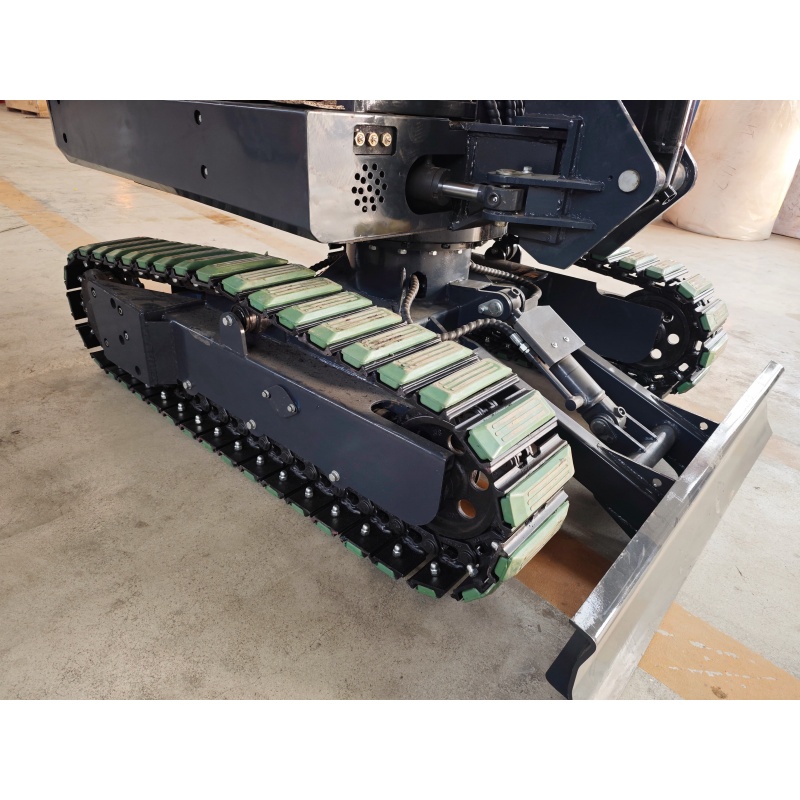
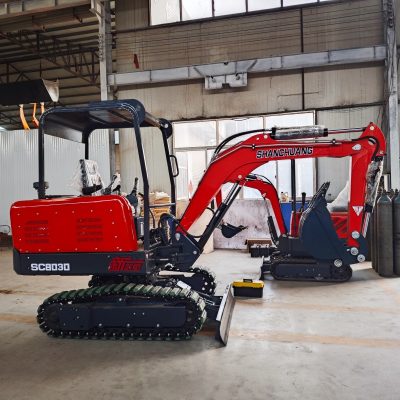
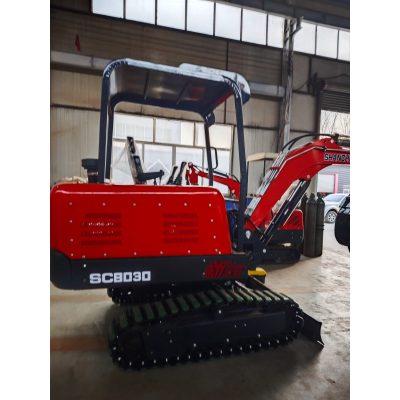
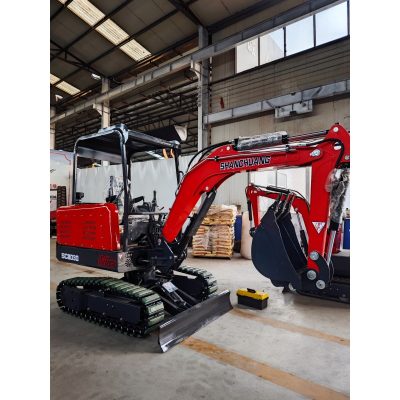
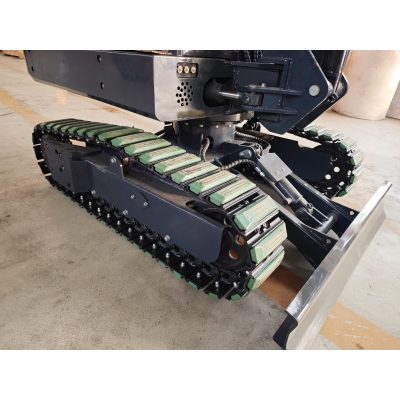
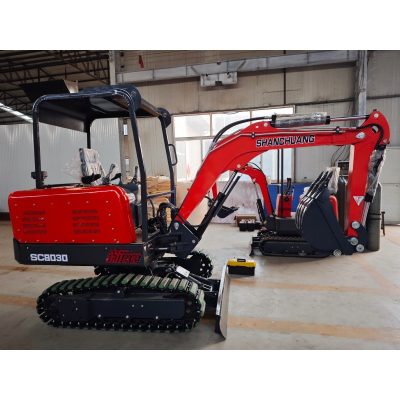
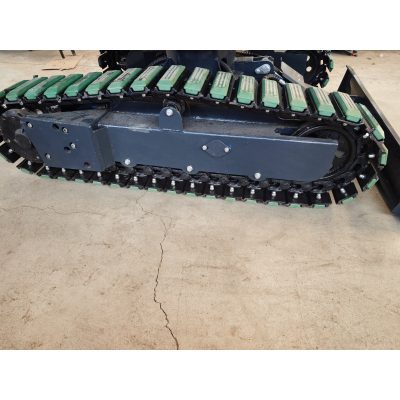
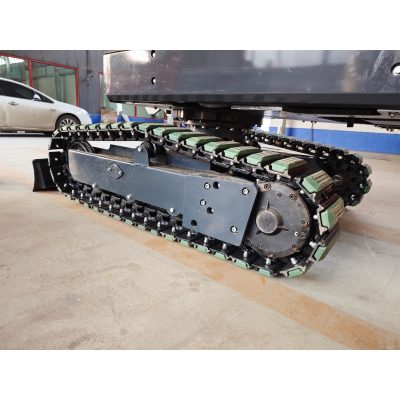
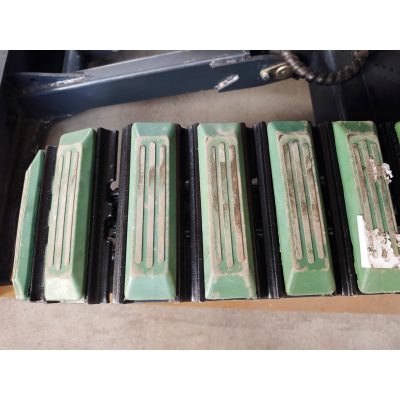
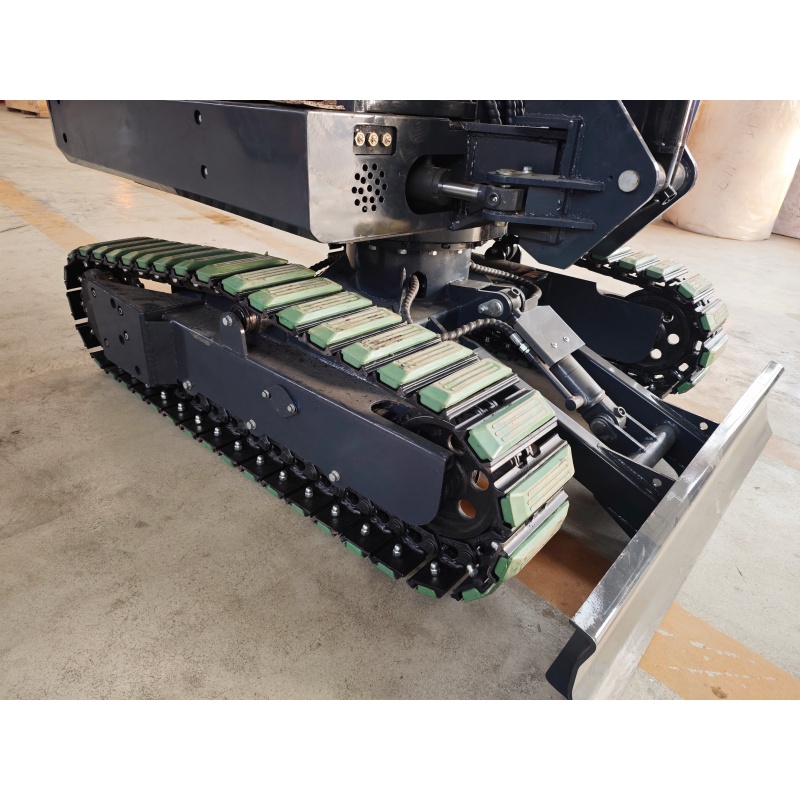
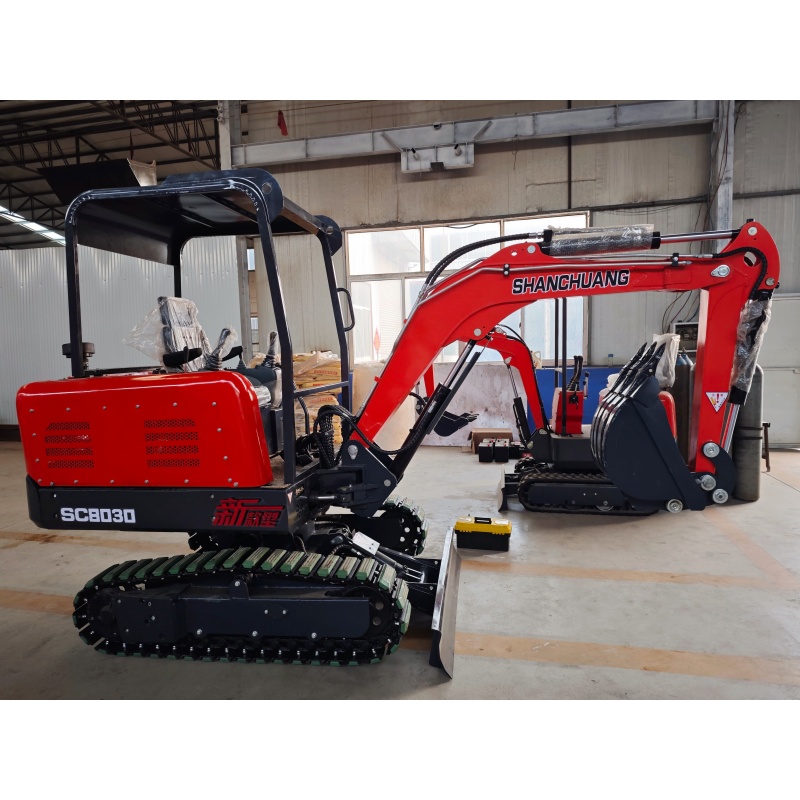
Some machines arrive on rubber tracks and then meet work that destroys them. Demolition rubble, broken slab, rocky ground and steep soft verges are exactly the conditions that eat a rubber track in a season. Converting the machine to steel tracks with rubber blocks is the answer MINGYI builds for.
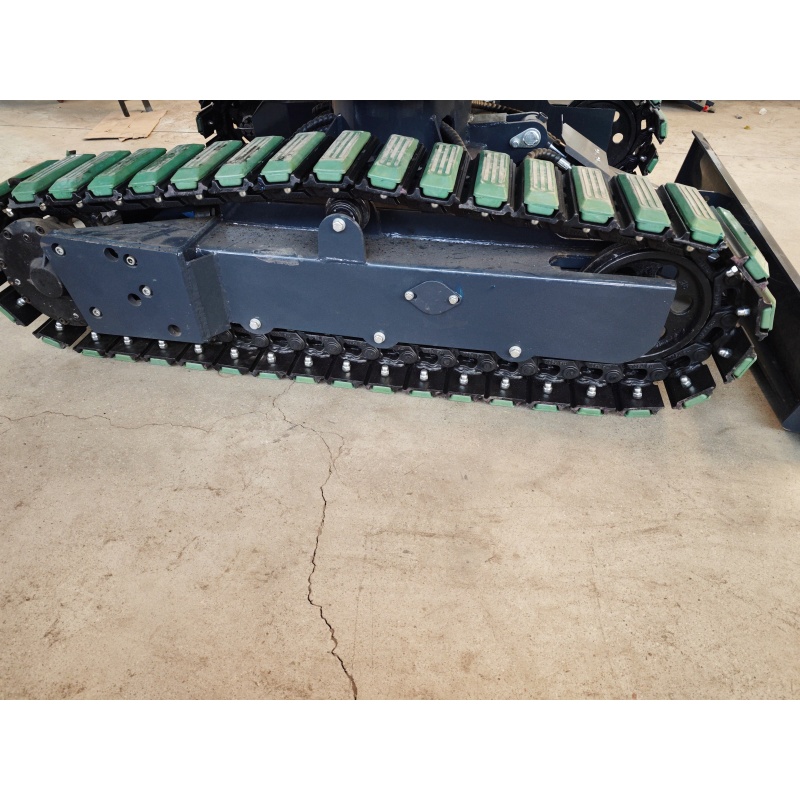
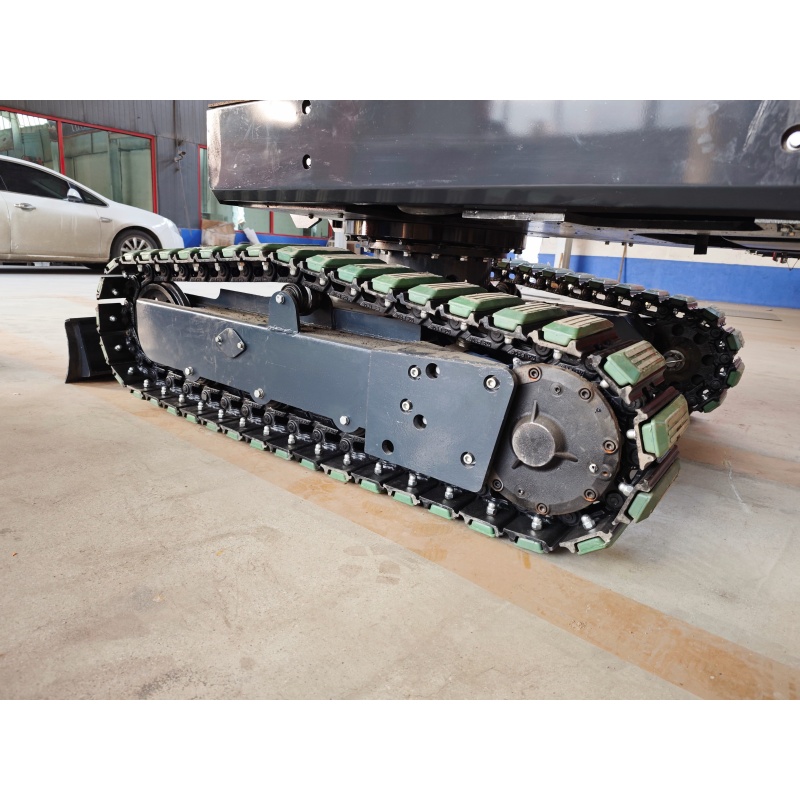
The conversion is planned rather than improvised. The track frame, drive arrangement and ground contact are specified for the machine class, and the blocks are retained so the converted unit can still cross paved surfaces when moving between work areas.
The points below decide whether a steel track conversion suits the machine in question.
| Checkpoint | What to settle for this machine |
|---|---|
| Carrier machine | Compact crawler excavators in the MINGYI range; the track frame is specified for the machine class and its weight |
| Work it takes on | Carrying the machine over demolition rubble, broken slab and rocky ground instead of wearing out a rubber track |
| Ground and material | Broken slab, rock and steep soft verges; rubber blocks keep the converted unit able to cross asphalt and concrete without marking them |
| Mounting and hydraulics | Steel track with rubber blocks on a frame built for the carrier, with drive arrangement and ground contact matched to the machine |
| Confirmed at order stage | Machine class and work profile stated in writing; on a new order the conversion can be fitted from the start |
| Handover and upkeep | Build sheet covering engine, attachments, colour and documents; service history and hour records kept with the machine |
What changes with the conversion
A steel track with rubber blocks carries the wear on its steel frame instead of on the track itself. On rough ground that means the machine keeps traction and the undercarriage survives contact with slab edges and stone that would cut a rubber track open.
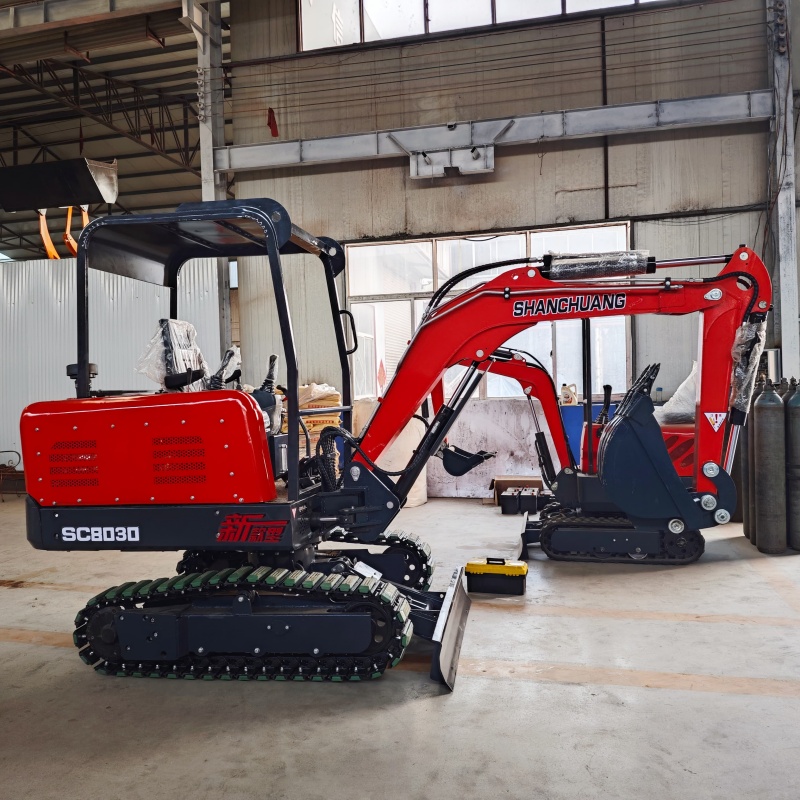
The blocks preserve the behaviour that matters on finished surfaces. The machine still crosses asphalt and concrete without marking them, which is what separates this conversion from a plain steel track that has to be sheeted over every time it meets paving.
Planning the conversion with the factory
Buyers planning this route should state the machine class and the work profile, since the track frame has to match the weight of the carrier within the 0.8 to 6 tonnes range. The ground conditions, slope work and the share of paved crossings are recorded against the build.
For new orders, the steel track with rubber blocks can be fitted from the start, which avoids buying a rubber set that will only be replaced. For machines already in the field, the same specification can be ordered as a matched set of parts.
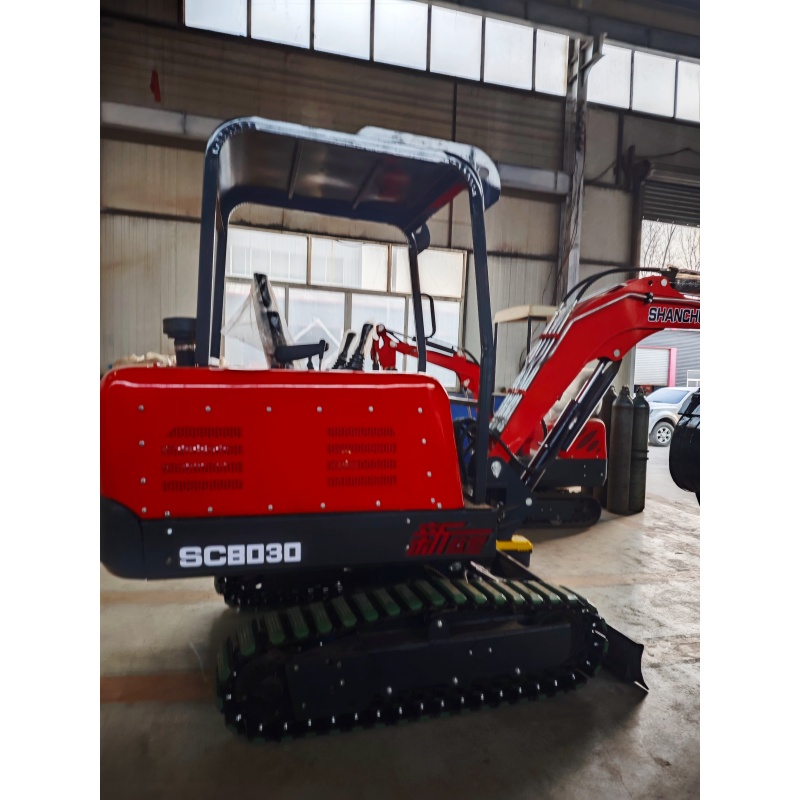
Set out the ground your current tracks are failing on and the paving the machine still has to cross, and the conversion package will be specified from that. Mingyi Machinery supplies the parts and service information needed to complete the changeover in the field.
Cold weather and low temperature work with rubber to steel track conversion Cold changes how a machine starts and how it warms up. Allowing the excavator to reach operating temperature before loading it, and using the correct grade of oil and fuel for the season, prevents most cold-start problems. Batteries and fluids are the parts that notice the cold first. This class of machine kept on a maintainer through a freezing spell starts on the first turn, while one left standing is the usual cause of a lost morning. Matching rubber to steel track conversion to ground conditions Ground decides more of the outcome than power does. Soft, wet or loose surfaces call for a wider footprint and lower ground pressure, while hard standing allows a narrower machine that turns in less space and travels faster between tasks. The working surface should be surveyed before the unit in daily use is specified. A machine that is stable on compacted gravel can be unusable on the same site after rain, and the difference shows up as lost days rather than as a fault. Ordering, lead time and delivery of rubber to steel track conversion The order should state the configuration in writing. Engine, attachments, colour, documents and any market requirement are clearer on the build sheet for a machine of this size than in a conversation after delivery. Delivery planning includes the receiving end. Knowing whether the equipment on site will be craned, driven or forked off, and whether the site can accept it, is settled before dispatch rather than on the day. Resale value and replacement planning Replacement timing is a planning decision. Knowing the intended working life of the machine itself lets an owner sell while the machine still has value rather than after a major repair becomes due. Records are part of the asset. Keeping the service history and the hour records with the model in question makes it easier to sell, easier to insure and easier to justify the replacement machine internally. Safe working practice around rubber to steel track conversion Most incidents around machinery come from the space rather than the machine. Exclusion zones, a clear signal person and a check on what is behind the unit on the job before it moves cover the large majority of the risk on a working site. Personal protective equipment and a stop rule are simple controls. Agreeing before work starts that anyone can stop the job is the single measure that most often prevents a serious incident near the machine in that duty. Export packing and shipping of rubber to steel track conversion Export orders add steps that domestic buyers never see. Packed dimensions, securing points, documentation and any dismantling required are all settled before a machine built for the work leaves the factory, and each one affects the freight booking. Documentation should be agreed at order stage. The commercial invoice, packing list and any certificate required at destination are part of shipping the equipment in service, and missing papers delay clearance longer than the voyage takes. Daily checks and maintenance on the excavator Most failures start as something small that a walk-around would have caught. Fluid levels, belt tension, tyre or track condition and any fresh leak are the items worth two minutes at the start of each shift on this class of machine. A simple log helps. Recording hours, fuel and any adjustment made to the unit in daily use gives the workshop a history, and that history is what turns an intermittent fault into a one-visit repair instead of three. Load, ballast and stability on a machine of this size Ballast and attachment weight change the machine. Adding a heavy tool to the equipment on site moves the centre of gravity, and the counterweight or configuration should be matched to the tool rather than assumed. Carrying and travelling with a load needs its own plan. Speed, gradient and surface all matter more once the machine itself is loaded, and the safe combination is the conservative one. Fitting the model in question into the wider site plan Access and storage are worth settling early. Where the machine in that duty will be parked, refuelled and serviced on site affects the working day more than most specification details, and it takes nothing to plan. Sequencing avoids rework. Doing the work in the order that suits the ground and the following trades keeps the unit on the job productive and prevents finishing a task that then has to be opened up again. Transporting a machine built for the work to and between sites Owners who work across several sites should check the transport dimensions before ordering. The equipment in service that fits a standard trailer can be moved by any operator with a suitable vehicle, while an over-width machine narrows that choice and complicates every move. Shipping dimensions matter as much on export orders as they do locally. Confirming the packed size of the excavator before booking avoids re-booking freight after the machine is built. Attachments and working tools for this class of machine The base machine is only as useful as the tool on the end of it. Matching the attachment to the task - rather than to what arrived with the machine - is what lets one the unit in daily use cover several jobs across a week. Attachment decisions are best made before delivery. Specifying hydraulics and couplers at build time is simpler than adding them later, and it avoids the downtime of a workshop visit in the first month.
Q. What does the machine of this size involve?
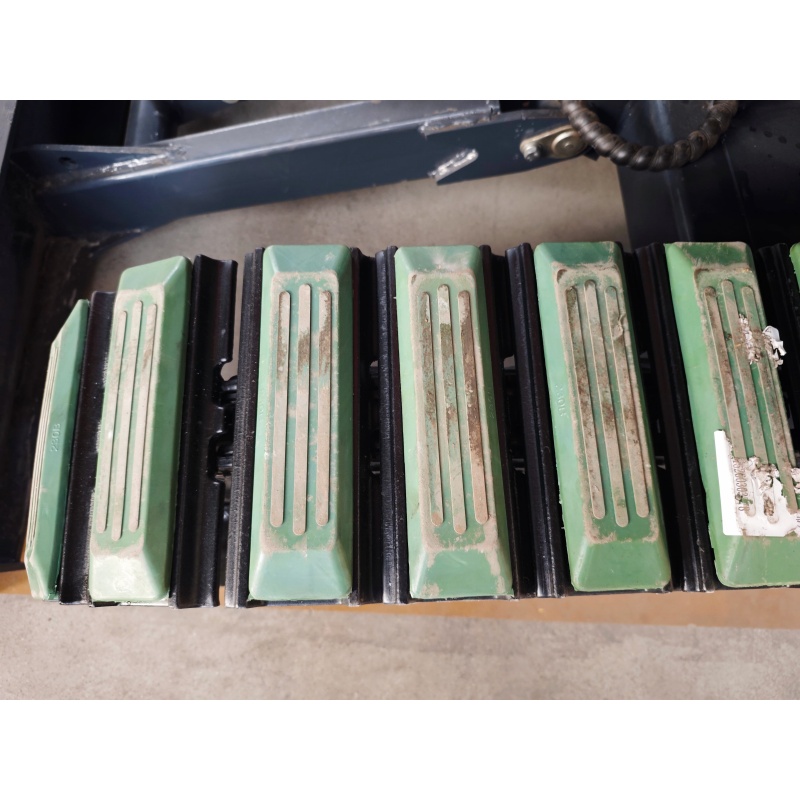
A. Track type sets ground pressure, grip and how the site looks when the machine leaves - the trade-off between rubber and steel is what the track decision comes down to. Tension checks and a walk-around for wrapped debris are the whole of daily track care, and they protect the part of the digger that is hardest to put right. MINGYI builds the 08, 12 and 18 models covering the 0.8 to 6 tonne class, and the equipment on site is where that range meets the machine itself.
Q. Which track should I run on my ground?
A. Rubber for lawns, paving and finished surfaces; steel for gravel, demolition rubble and slopes that eat rubber. Where the year takes the machine across both, the conversion and options pages describe moving between them, and MINGYI specifications both track types with the carrier.
Q. How do I get a specification?
A. Send the model, the destination and the attachment list by email or LINE - the channels listed just below this section. The reply covers the specification, lead time, packing and freight in one document, with the model in question build sheet attached.
Pre-delivery inspection before the machine in that duty leaves the shop
What the customer sees on arrival is decided before departure. The walk-around given to the unit on the job covers the same points the operator will check on day one, so there are no surprises when the crate is opened at the destination.
Commissioning a machine built for the work on site
The first hour on site should be slow. Before the equipment in service is put to work the fluid levels are rechecked after transport, the fasteners are gone over and the machine is run light so that anything loosened in transit shows up early.
Hot, humid and dusty conditions around the excavator
Heat and dust shorten service intervals rather than machine life. In these conditions the filters on this class of machine need attention more often, and the cooling surfaces need to be kept clear to hold the working temperature.
Later additions and retrofits on the unit in daily use
Most additions are easier to plan than to add. Hydraulic services, mounting brackets and electrical capacity on a machine of this size are build items, and deciding them at the specification stage is far easier than doing it later.
Reading the early symptoms on the equipment on site
Machines rarely fail without warning. A change in sound, a slower function or a new leak on the machine itself is the machine saying something early, and listening then takes a fraction of the time that waiting does.
Moving the model in question between sites
Travel time is not working time, and it should be planned as its own item. The hours spent moving the machine in that duty between jobs are hours not worked, and a trailer that matches the machine reduces them every single trip.
A second operator for the unit on the job
Shared machines need shared habits. Two operators on a machine built for the work should do the same daily checks in the same order, because the check that one person skips is the check that eventually matters.
Handover and getting familiar with the equipment in service
Familiarisation is not the same as reading the manual. Sitting on the excavator, working through the controls at low speed and learning where the machine balances takes an hour, and that hour is what keeps the first week uneventful.
Planning the season around this class of machine
The calendar decides more than the specification does. Planning when the unit in daily use will be working, when it will be serviced and when it can be spared keeps the maintenance out of the weeks that matter.
Cold weather and winter care for a machine of this size
Winter is hard on rubber and on seals as much as on the engine. Parking the equipment on site under cover, keeping the tracks or tyres off standing water and checking the hoses for cracking are all part of the season.
Keeping a service record for the machine itself
Service history also protects the warranty position. Evidence that the model in question was maintained at the specified intervals and with the specified fluids settles questions that would otherwise be argued.
E-mail : sales@mingycn.com
LINE ( ID ): mingyicn
Wear limits and replacement points on rubber to steel track conversion
Every wearing part has a measurable point where it should come off rather than be watched, and that point is published by the manufacturer.
Uneven wear usually points at alignment, pressure or a driving habit rather than at the part itself.
Keeping a record of hours at each change makes the next machine easier to plan for, and it helps whoever buys the machine later.
Related pages
steel track replacement for mini diggers · medium crawler excavator · Hydraulic Wheel Loader: Cylinders, Pumps and Circuit Options · Mini Excavators









