Orchards and vineyards are some of the most demanding environments in agriculture, not because the work is heavy, but because the space is narrow, the soil is managed rather than merely worked, and every pass with a machine has to respect the crop. Machinery that is excellent in an open field can be useless between rows, and machinery that fits the rows can be too light or too fragile for the soil work. This guide maps the main machine families to the seasonal jobs of a tree-crop or vine operation, with the measurements that decide each choice.
Start With Three Numbers From Your Own Block
Before shopping for any machine, walk your block with a tape measure and record three numbers:
- Row width, measured between the trunks or posts, not between the driplines. This sets the maximum machine width with margin on both sides.
- Headland space at the ends of rows, which decides whether a machine can turn inside the block or has to be reversibly configured.
- Soil type and moisture range across the season, which decides tracks versus wheels for every machine that has the option.
These three numbers eliminate more options than any catalog. A machine that is 20 centimeters too wide for your rows is not 20 percent less useful; it is unusable in the rows and must be replaced. The same measurement discipline applies to canopy height where machines work under the canopy: measure at the tightest point of the season, when foliage is full, not at pruning time.
Soil Work: Rotary Tillers and Loose Ground
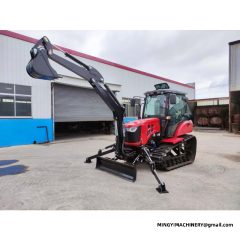
Vineyard and orchard floor management usually means working strips, not whole fields, and working them shallowly, repeatedly, and in conditions that range from too wet to too dry. Crawler-mounted rotary tillers are the natural fit: tracked traction keeps working depth consistent in soft ground, and the tiller width can be ordered to match your strip width rather than your field width. How these machines are configured for soft and sloped ground is shown on the crawler rotary tiller, multifunction crawler rotary tiller, and tracked rotary tiller pages.
Where rows are wider and the ground is firmer, a wheeled tractor with a three-point-hitch tiller can cover more ground per hour at lower running intensity. The trade is traction and compaction: wheels slip and compact soft soil that tracks walk over. The wheeled side of the range is covered on 4WD wheel tractor and agricultural tractor.
Think in terms of passes, not horsepower. A machine that works the strip perfectly twice a season beats a machine that works it badly three times, because every pass consumes fuel, labor, and a small amount of root-zone damage. Depth consistency and strip width matching are the two qualities that separate a floor-management machine from a general field machine.
Compaction and Ground Pressure Management
Compaction is the quiet way machinery taxes a block: invisible in any single pass, cumulative across seasons, and expensive to repair because the repair is deep ripping that disturces roots. Tree crops are particularly sensitive in the wet weeks of spring and around harvest, when soil moisture is high and machine traffic is heaviest. The management response is mechanical and behavioral at the same time.
Mechanically, choose undercarriages and tires that spread the load. Tracked machines carry their weight across the full track footprint, which is why crawler tillers and compact excavators dominate soft-block work. Where wheels are necessary, wider tires at correct pressures, or duals on heavier tractors, reduce the ground pressure per unit of area dramatically. Keep tire pressures where the manual puts them rather than where the tire shop guesses, because the difference between correct and lazy pressure shows up in the root zone two seasons later.
Behaviorally, control traffic lanes. Fixed alley lanes that carry the seasonal traffic let compaction concentrate where roots are fewest, while the managed strips between them stay loose. Avoid working the block when soil moisture is at its worst, even if the calendar is pressing, and make the transport vehicle's routes permanent rather than improvised each season. Buyers who combine tracked machines with fixed lanes find the block stays productive with less deep repair work, which is the cheapest form of soil management there is.
Digging and Planting: The Compact Excavator
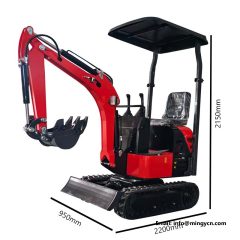
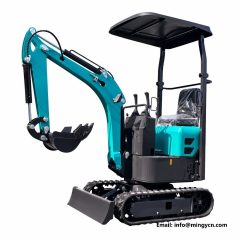
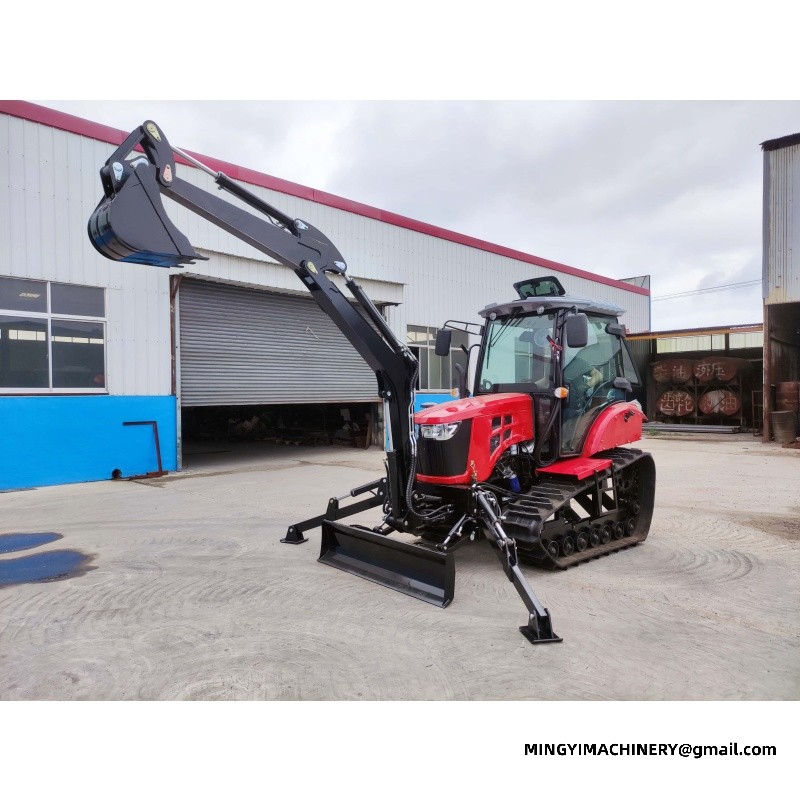
Every orchard eventually needs holes for planting, trenches for drainage and irrigation lines, pond cleaning, and stump removal around the block. A compact excavator with rubber tracks and a width matched to the rows handles all of it with minimal surface damage. Specialized configurations matter here: for example, a vineyard soil loosening digger pairs a compact excavator chassis with soil-loosening tools for deep aeration between rows without inverting the soil profile.
For selection logic, dig depth versus row access, track choice, and engine matching, see the mini excavator selection guide. In tree-crop work the decisive constraints are usually width and ground pressure rather than raw digging power, and an offset boom often pays for itself in the first season of planting work along trellis lines.
Water Management Inside the Block
Drainage is the invisible half of orchard infrastructure. Standing water kills roots, and the fix is almost always a ditch, a French drain line, or a re-graded headland, all of which are excavator work. Plan the drainage machine at the same time as the planting machine, because the same compact excavator usually does both, and ordering it with the right bucket widths for ditch profiles saves a second configuration later.
Irrigation trenches are shallower but longer, which favors reach and swing efficiency over digging force. If subsurface lines run the length of the block, a machine that can trench from the headland or work incrementally along the row without compacting the strip will finish the job with less surface repair than a heavier machine that has to straddle the line.
Hauling Inside the Block
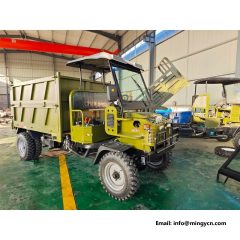
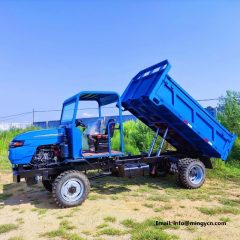
Harvest bins, pruning brush, compost, and posts all have to move along rows that trucks cannot enter. Four-wheel-drive transport vehicles with flat decks or tipping beds carry that load, and the ones worth considering are the ones designed for the ground you actually have: soft, rutted, and sloped at the worst time of the season. The category is represented by the off road cargo transporter, heavy duty utility transport vehicle, and custom 4WD transport vehicle supplier pages, which cover how deck and body options are matched to orchard work.
Match the vehicle to the aisle, not to the road. The same machine that feels small on a farm track feels exactly right between rows with a full load and one careful turning move at the headland. Tipping beds earn their keep at the brush pile and the compost windrow; flat decks earn theirs at harvest when bins must ride level.
Material Handling at the Packhouse End
Where the block meets the yard, the work shifts to pallets, bins, and loading. Rough terrain forklifts with four-wheel drive lift and carry on the uneven ground between the field edge and the shed, where a standard warehouse forklift would bottom out or spin. The rough terrain forklift, 4x4 rough terrain forklift, and all terrain forklift pages describe how these units are configured for yard and field-edge duty.
The dividing line for this machine is surface, not distance: everything the forklift travels over between the block edge and the stacking area should be within its ground clearance and traction envelope. Buyers who expect one forklift to also serve inside the shed should check mast options and tire choices against the door heights and floor conditions before ordering.
A Seasonal Framework
Use the calendar to sanity-check the machine list. A block that justifies every machine individually may still double-book the same tractor in the same week, and machines that sit idle for ten months occupy shed space and demand maintenance attention.
| Season | Dominant jobs | Machines in play |
|---|---|---|
| Pre-season | Soil loosening, strip tillage, irrigation trenching | Crawler tiller, compact excavator |
| Planting | Holes, posts, young tree care | Compact excavator, transport vehicle |
| In-season | Mowing, strip weeding, moving bins and spray supplies | Tracked carriers, transport vehicle |
| Harvest | Bin movement, pallet handling, loading | Transport vehicle, rough terrain forklift |
| Post-season | Pruning brush removal, drainage, pond and ditch work | Compact excavator, transport vehicle |
If one machine appears in only one row of the table, ask whether renting or sharing would beat owning. If one machine appears in every row, that is the machine worth buying first and specifying most carefully. Idle machines occupy shed space and demand maintenance attention even when they do nothing else.
Working With Slopes and Terraces
Many tree-crop blocks sit on ground that a flat-field farmer would call a hillside. Slope changes the machinery decision in two ways: stability under load becomes the dominant safety factor, and tracked machines gain a traction advantage that wheels cannot match on wet grades. On terraced blocks, measure the terrace width separately from the row width, because the turning constraint at terrace edges is usually tighter than the aisle constraint between trees.
Ask the factory directly about slope ratings for any machine you intend to operate across grades, and describe the worst-case wet-soil condition rather than the average one. A machine that is marginal on your slope in dry conditions is unsafe in wet ones, and orchard work happens in both.
Power Take-Off and Hydraulic Outlets
Tractors and carriers bought for the block often end up running spray pumps, mulchers, and small implements. Before ordering, confirm the power take-off arrangement and the hydraulic outlet configuration against the implements you already own or plan to buy. Mismatched outlets and PTO speeds are the most common reason a new tractor cannot run an old implement, and adapters that fix the geometry rarely fix the speed or the flow.
Cab, Canopy, and Operator Comfort in Row Work
Row work is repetitive, and repetitive work punishes poor ergonomics. Low canopy height matters under trellises; a cab with filtration matters where spray drift settles; and controls that fall naturally to hand matter more in the tenth hour of headland turns than in the first. Machines configured for orchard duty often trade raw power for these fit-and-finish factors, and that trade is usually correct for the buyer who works in rows all season.
Safety Around People and Canopies
Orchards mix machinery with people: crews pruning, picking, and moving bins while machines work nearby. Establish sight lines and hand signals before the season, keep the transport vehicle's travel paths separate from picking rows during harvest, and check every machine's visibility configuration with a full load. Falling-object protection is worth specifying on any machine that works under mature canopies, where dead branches ride above the operator for months at a time.
Buying Sequence for a Growing Operation
- Buy the transport vehicle first if harvest logistics are the current bottleneck; everything else can wait a season.
- Buy the compact excavator second; it covers planting, drainage, and infrastructure work that contractors otherwise charge for.
- Add the crawler tiller when strip floor management becomes a recurring labor burden.
- Add the rough terrain forklift when packhouse throughput justifies dedicated handling.
This sequence keeps every purchase tied to a measured bottleneck instead of a catalog impression. The same sequencing logic, applied to machine choice itself, appears in the comparison of compact digging machines, and the import mechanics of any purchase in this sequence are covered by the ordering and shipping guide.
What to Send the Factory
Orchard and vineyard machinery is specified by measurement, and factories respond best to numbers rather than adjectives. Send your row width, headland width, soil description, block slope, and the two or three jobs that consume the most labor per season. With that information the factory can propose track widths, body configurations, and attachments that fit your block rather than their standard line. The contact page is the direct channel for that conversation, and the spare parts guide covers what to order alongside any new machine so that seasonal downtime stays short.