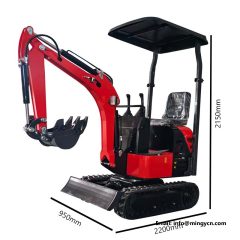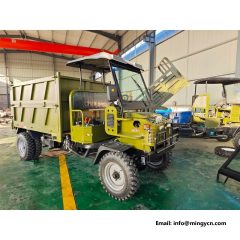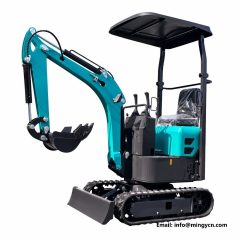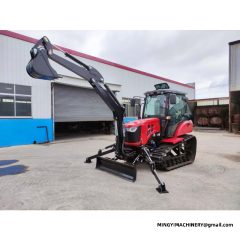
The purchase conversation usually concentrates on the machine: engine, tracks, dig depth, attachments. The ownership conversation is mostly about everything else: filters, bushings, hoses, seals, and the documentation that lets a mechanic ten time zones from the factory diagnose a fault in minutes instead of days. Buyers who plan the parts relationship before ordering run their machines; buyers who do not, wait for them. This guide sets out what to request from the factory, what to stock from day one, and how remote support actually works in practice.
Why Parts Planning Belongs in the Purchase
Every hour of downtime has the same effect regardless of cause, but the causes are wildly unequal in difficulty. A clogged fuel filter is a five-minute job if you have the filter and a ten-day job if you do not. The machine's availability over its first years is therefore determined less by its build quality than by whether a small shelf of components sits in your shed before the machine arrives. That shelf is ordered with the machine, shares the container you are already paying for, and arrives at the same time as the machine it supports.
There is a second, quieter reason: parts ordered with the machine match the machine. Engine variants, track types, and hydraulic fittings differ across a factory's range, and the parts kit assembled by the factory at order time is built against your configuration sheet, not guessed from a catalog page a year later. The configuration concept is explained in the ordering and shipping guide, which is where the parts conversation begins.
Wear Parts and Service Parts Are Different Lists
Split your thinking into two lists. Service parts are the consumables every machine eats on a schedule: fuel, oil, and air filters, engine oil and hydraulic oil, grease, and the zinc washers and seals that get disturbed at every service point. Wear parts are the components that degrade through use rather than time: bucket teeth and cutting edges, pins and bushings, track adjuster seals, hydraulic hoses, wiper blades, and undercarriage rollers and idlers on tracked machines.
The service list is predictable and cheap to stock in full. The wear list is prioritized by your working conditions: abrasive soil moves bucket wear up the list, dense brush work moves hydraulics and hoses up, and daily road travel moves wheel and drivetrain items up. Ask the factory which items their own service department flags most often for machines working in conditions like yours.
Engine Brand and the Parts Network
The engine in a compact machine is the component with the strongest external parts ecosystem, and choosing it well buys you a lifetime of convenient servicing. Recognized engine families such as Kubota and Yanmar have parts distribution in most countries, and specifying them is documented on pages like mini excavator with Kubota D722 engine, small excavator with Kubota D902 engine, and Yanmar diesel mini excavator. Chinese domestic engine families such as Changchai and Laidong are widely used in export machines, and their parts flow through established channels; the Changchai engine mini excavator and Laidong engine for mini excavators pages describe how these options are handled from the factory side, including small excavator replacement engines when a full swap is the better repair.
The practical question for your region is simple: which of these brands does the nearest parts counter stock? Your mechanic's answer to that question should weigh as heavily in the engine decision as any torque figure, and the selection logic is laid out in the mini excavator selection guide.
Documentation to Request With the Machine
Paper is cheap at the factory and irreplaceable in your workshop. Request, by name, in your order:
- Parts book with exploded diagrams, part numbers, and quantities for your exact chassis and boom configuration.
- Engine service manual for the specific engine model and serial range, not a generic family edition.
- Hydraulic schematic with pump, valve, and circuit pressures, so a local technician can trace faults without guesswork.
- Wiring diagram covering the starting, charging, and control circuits as delivered, including any attachments ordered.
- Configuration sheet with serial numbers of the machine, engine, and major hydraulic components.
Scan all of it immediately and keep digital copies with the machine's records. Paper manuals have a way of migrating into the cab door pocket of whoever borrowed the loader bucket last.
The Startup Parts Kit
When ordering the machine, add a first-order parts kit along these lines, then adjust with the factory for your conditions:
| Category | Typical first-order items |
|---|---|
| Filters | Fuel, oil, and air elements; a full filter set for the first several services |
| Fluids and consumables | Correct-spec hydraulic and engine oil, grease, thread sealants, zinc washers |
| Wear hardware | Bucket teeth and pins, one set of pins and bushings for the main joints |
| Hydraulics | Spare hoses in the lengths the machine uses, plus common o-ring and seal assortment |
| Electrical | Relays, fuses, and one of each sensor prone to wiring exposure |
| Tracks and undercarriage | For tracked machines: adjuster seal kit and hardware matched to your track type |
This kit rides in the container with the machine. The marginal transport burden of a box of filters is effectively zero; the marginal burden of not having them is measured in weeks.
Building a Service Schedule That Survives Contact With Reality
Every manual ships with a service table, and every busy operation ignores it within a month. The schedules that survive are the ones adapted to the machine's real duty, written down where the operator sees them, and attached to the parts that are actually on the shelf:
| Rhythm | What gets checked, by whom |
|---|---|
| Daily, before first start | Fluid levels, visible leaks, track and bolt walkaround, grease points in daily-use joints |
| Weekly | Full grease round, battery terminals, hydraulic hose inspection, air filter condition |
| By the hour meter | Engine oil and filter, fuel filter, track tension, swing gear lubrication |
| Seasonally | Hydraulic oil and return filter, cooling system, undercarriage measurement, stored parts inventory count |
The last line is the one that pays: a seasonal inventory count of your parts shelf, checked against the parts book, is how the next order arrives before the failure instead of after it.
Storage and Shelf Life of Parts
Parts age on the shelf, some faster than expected. Rubber components harden with heat and ozone, filters absorb moisture once their seals are broken, and hydraulic oil containers sweat and collect condensation in humid climates. Store the kit off the floor, out of sunlight, in a space that stays dry, and rotate the stock so the oldest filter is the next one installed. A shelf of expired rubber is a false sense of security with a part number on it.
Off-Season Storage and Restart
Machines that idle through a winter, a wet season, or a long project gap come back to work only as well as they were put away. Storage is a parts issue as much as a machine issue, because the restart failures that plague idle equipment are almost all storage failures: fuel that degraded in the tank, batteries that sulfated on the shelf, seals that dried out, and cylinders that rusted where the rod sat exposed.
A storage routine that works takes an afternoon. Fill the fuel tank so condensation has no air space to form in, run the machine to operating temperature so clean oil coats everything it should coat, grease every point so fresh grease excludes moisture at the joints, retract cylinders where possible so rods sit protected, and disconnect the battery, storing it charged in a cool place. Block the machine off the ground if tires or tracks will sit for months, and cover it against dust rather than sealing it against air, because sealed covers trap the moisture you are trying to exclude.
The restart is a checklist rather than a key turn: reinstall and test the battery, inspect every visible hose and seal, crank the engine with the fuel shut off until oil pressure shows, then start and let it reach temperature before asking for work. The first restarted hour is also the right moment to re-check track tension, tire pressures, and the level of every fluid, and to note the restart in the machine's file. Operators who follow this rhythm find that idle months simply stop generating repair bills.
Local Machining Versus Original Parts
Pins, bushings, and simple brackets can often be made by any competent machine shop at short notice, and for aging machines that is sometimes the only route. Hydraulic components, electronic sensors, and anything matched to a bore or a flow curve should come from the original channel, because the aftermarket version that almost fits is the most expensive part you will ever install. The parts book earns its keep exactly here: it tells you which drawing you are holding before you decide who makes the replacement.
How Remote Support Works
Good after-sales from an export factory is not a promise; it is a workflow. In practice it runs like this: you send a photo or short video of the symptom, the serial numbers from your configuration sheet, and what the machine was doing when it appeared. The factory's service side responds with a diagnosis, the part numbers involved, and the repair steps. Where a live look helps, a scheduled video call with the machine's operator walking through the checks replaces an impossibility of distance.
Make this workflow a criterion during the buying process itself, not after. Ask who answers technical messages after delivery, through which channel, and with what response rhythm. Suppliers who can name a person and a channel have already done this before; suppliers who answer with a slogan have not.
Records That Save Time Later
Keep a single file per machine: configuration sheet, serial numbers, every service with dates and hours, every part installed with its number, and every fault with its diagnosis. Six months in, that file answers questions that would otherwise take an afternoon of guesswork: which hose burst last time and with what part number on it, how many hours since the swing bearing was greased, and which filter cross-reference the local dealer confirmed works. The file also travels with the machine at resale, which is the cheapest credibility a seller can offer.
The First-Week Checklist
- Verify the delivered configuration against the configuration sheet, and photograph everything.
- Check the packing list against what actually arrived, including the parts kit and tool kit.
- File and scan all documentation, recording every serial number.
- Run the machine gently through its first hours, watching for leaks, abnormal noise, and warning indicators.
- Send the factory your first-week observations while their attention on your machine is freshest.
- Shelve the parts kit with the parts book, labeled by machine.
What Good Support Looks Like Over the Years
Years out, the relationship settles into a rhythm: seasonal services from your own kit, wear-part orders placed before the season that consumes them, and occasional diagnosis requests answered with photos and serial numbers. Machines bought from factories that maintain this rhythm, such as the mini excavator manufacturer for export line, tend to stay in productive work simply because their owners are never more than one small parcel away from a repair. Orchard buyers carrying several machine types at once will find the seasonal rhythm applied across a fleet in the orchard and vineyard machinery guide, and the comparison between the two compact digging philosophies, each with its own parts profile, is covered in the mini excavator versus backhoe loader comparison. The buying side of that equation starts with the mini excavator selection guide and the ordering and shipping guide; questions about parts for a specific machine in your conditions go directly to the factory through the contact page.