When a buyer needs one machine that both digs and loads, the shortlist usually ends with two names: the mini excavator and the backhoe loader. They overlap just enough to cause real confusion, yet they are built on completely different philosophies. The mini excavator is a digging specialist that carries attachments. The backhoe loader is a two-ended generalist that drives itself between job sites. Choosing between them is mostly a question of where your work happens and how you move between it.
The Short Version
| Factor | Mini Excavator | Backhoe Loader |
|---|---|---|
| Primary strength | Precision digging, tight spaces, attachments | Dig plus load plus travel in one machine |
| Mobility between sites | Trailer transport, slow on roads | Drives on public roads at traffic speed |
| Working footprint | Very narrow, can work against walls | Needs room for stabilizer legs and swing |
| Rotation | Full house rotation with independent tracks | Slewing arc from a fixed seated position |
| Loading work | Limited to bucket and grapple work | Full front loader with genuine lift capacity |
| Ground pressure | Low, tracked, gentle on soft ground | Higher, wheeled, firm surfaces preferred |
| Typical buyer | Farms, orchards, utility contractors, landscapers | Municipal crews, builders, road and site contractors |
Digging: Where the Mini Excavator Wins
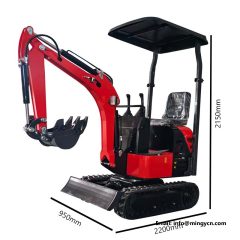
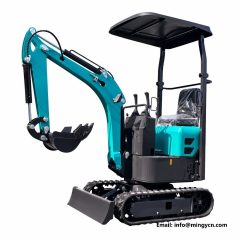
A mini excavator rotates its whole upper structure through a full circle over a tracked base that repositions itself in inches. That combination produces three practical advantages. First, spot digging: you can park once and reach a long trench line by swinging rather than repositioning. Second, confined work: alongside foundations, inside courtyards, or between orchard rows, the compact tail swing keeps the counterweight clear of obstacles. Third, soft ground: tracked undercarriages distribute weight so the machine keeps working through mud, paddy margins, and loosened soil where wheeled machines dig themselves in.
The digging attachment ecosystem is also deeper. Grading buckets, tilt buckets, grapples, rippers, mowers, and augers all run on compact excavator carriers, and the auxiliary hydraulics to drive them are engineered in from the start. If your demand is "dig, shape, and handle material in awkward places," the excavator side of the comparison is documented in our mini excavator selection guide.
Travel and Loading: Where the Backhoe Wins
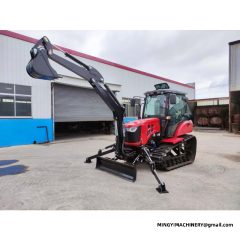
The backhoe loader's core promise is logistics. It drives to the site under its own power at road speed, digs with the rear arm, loads trucks with the front bucket, spreads material, carries pallets with fork attachments, and drives home. For a crew that visits several small sites in a day and never needs deep precision digging, that single capability eliminates a trailer, a tow vehicle, and a second machine for loading work.
The front loader end is a genuine working loader, not an afterthought. Site clean-up, aggregate handling, snow work, and pallet moves all live on that end of the machine. A practical view of the configuration trade-offs is on the backhoe loader page, which covers how the two ends are matched on one chassis.
Dig Depth and Reach: Reading the Numbers Honestly
Spec sheets list maximum dig depth to the bucket teeth with the arm fully extended at grade level, which is a laboratory figure. Real trenches are dug from a machine standing on the surface you just cut, with spoil piling alongside, and with the bucket approaching the bottom at a productive angle. Discount the printed depth by the depth of your own working realism and compare machines on their usable reach instead.
Reach matters even more than depth for long runs. A machine that can clean a ditch from one bank without repositioning finishes the line in one setup; a shorter machine repositions constantly, and each move consumes minutes and disturbs more surface than the digging itself. If ditch cleaning, slope finishing, or work parallel to structures features in your job list, read the boom configuration discussion in the selection guide before comparing anything else.
Setup Time and Stabilization
A backhoe loader must park, swing its stabilizer legs down, and take up the load before serious digging begins, then stow everything before moving again. That setup cycle is fast for a machine that digs in one spot for an hour and slow for a machine that digs a meter at a time along a trench line. The mini excavator tracks forward under load and keeps digging without a setup ceremony at all.
Count your own transitions per day honestly. Utility crews that dig one large hole per address find the backhoe's cycle perfectly matched to their rhythm; irrigation and drainage crews that move continuous meters find the excavator's lack of ceremony worth more than any spec sheet line.
Attachments: Two Different Ecosystems
Both machines accept attachments, but the ecosystems diverge. Compact excavators excel at hydraulically driven tools mounted at the stick: mowers, augers, grapples, hammers, and tilting buckets. Backhoe loaders favor tools that exploit their wheels and loader end: pallet forks, snow equipment, sweepers, and material buckets. If your planned work is mostly ground-engaging and precision-shaped, the excavator ecosystem fits better; if it is mostly material handling mixed with utility digging, the backhoe package is more coherent. Attachment options for the excavator side are shown on pages such as mini excavator log grab and buckets.
There is also a hydraulic reality behind the ecosystems. Excavator carriers pipe auxiliary flow to the stick where ground tools live; backhoe carriers concentrate flow and lift capacity at the loader end where material tools live. Neither arrangement converts well to the other's territory, which is why "we will just add an attachment later" so often disappoints: the machine was never plumbed for the tool that arrived later.
Maintenance and Parts Reality
Both machines reward the same discipline: know your wear parts, know your engine's parts network, and buy the documentation. A backhoe loader combines a loader hydraulic circuit, a backhoe circuit, and a drivetrain, so its maintenance surface is wider in one sense; a tracked excavator adds undercarriage wear items that wheeled machines simply do not have. Either way, the time to think about filters, pins and bushings, hoses, and engine service parts is before the order, not after the first breakdown. Our after-sales support and spare parts guide lists exactly what to request from the factory and what to stock from day one.
Operating With One Machine in a Small Crew
The single-machine buyer should also think about labor, not just iron. One operator on a mini excavator usually needs a second person only for truck loading and hand work; the machine digs, swings, and spots by itself. One operator on a backhoe can dig, load trucks, and travel, but gains most of that versatility by being the only one doing everything. In very small crews, the excavator's specialist focus lets a laborer or second machine handle the moving while the digger keeps digging. With a crew of exactly one, the backhoe's self-sufficiency wins by default.
Sequencing is the other half of the labor question. A backhoe works in episodes: travel, set up, dig, load, stow, travel again, which suits job lists organized by address. An excavator works in continuous lines and shares its day with whatever hauls the spoil, which suits job lists organized by task. Match the machine's natural rhythm to how your work actually arrives, because fighting a machine's rhythm shows up in every invoice for the next decade, while riding it makes an ordinary crew look organized.
What Ownership Actually Looks Like
The first month with either machine is a learning period, but the lessons differ. The new excavator owner learns a rhythm of track tension checks, undercarriage walks, and grease points that live on a weekly cycle; the new backhoe owner learns a longer daily checklist that spans two hydraulic circuits, stabilizer hardware, and a drivetrain that also has to behave on public roads. Neither rhythm is difficult, but the backhoe's is longer, and the excavator's is more concentrated on parts that wear through ground contact.
Track your utilization from the first week. A simple log of hours per job type, kept monthly, tells you within one season whether the machine earns its place: excavator logs tend to fill with trenching, grading, and attachment hours, while backhoe logs fill with a mix that includes road travel and loading. The log also exposes the second-machine question early. If a backhoe log shows loading hours crowding out digging hours, or an excavator log shows truck-loading time the machine handles awkwardly, the data is telling you what to add next, before the mismatch turns into daily friction.
Operator development differs too. Excavator controls follow widely standardized patterns, so operators move between brands easily, and the machine rewards fine control quickly. Backhoe operation combines driving, two control environments, and setup judgment, so the learning curve is longer but the resulting operator is a complete one-machine crew. Plan training around the machine you actually bought, and let the log you kept for utilization double as the record of who is competent at what.
Choosing by Buyer Type
- Farms and orchards: soft ground, narrow rows, seasonal digging and pond cleaning favor compact tracked excavators, often paired with a separate utility vehicle for hauling. The orchard and vineyard machinery guide maps this pairing in detail.
- Utility and irrigation contractors: trenching along routes with trailer moves between jobs suits the mini excavator; frequent road-side work with mixed loading tasks suits the backhoe.
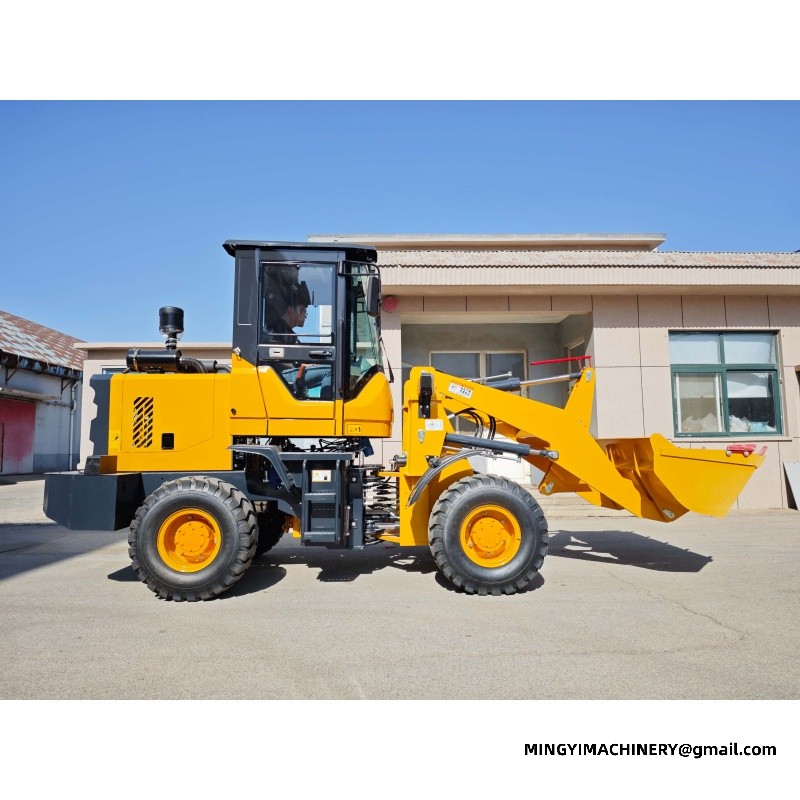
- Small builders: if foundation digging and site material handling are both daily tasks, the backhoe's two-ended design earns its keep; if digging dominates, an excavator plus a small loader is the stronger pairing, with the wheel loader line covering the loading end.
- Municipalities and estates: one machine that drives itself between locations and handles mixed tasks is usually the backhoe; dense or delicate sites tip toward the excavator.
Resale and Fleet Fit
Neither machine is an island; both eventually join a fleet or leave to a second owner. Recognized engine brands and common configurations resell faster and farther from home, which matters if your market resells into neighboring countries. Within a growing fleet, standardizing bucket pins, hydraulic fittings, and filter sizes across machines reduces the parts shelf from two inventories to one. Buyers planning to add a loader or transport vehicle within a couple of years should choose their first machine with that convergence in mind, a planning process the ordering and shipping guide also applies to mixed container orders.
Why Not Both?
For established operations the two machines are complements, not competitors. A compact excavator paired with a wheel loader covers digging and bulk material handling with more capability in each role than any single machine; the wheel loader line shows what the loading end of that pairing looks like when it is built as a specialist rather than as half of a compromise. Many export orders are planned exactly this way, with mixed machines sharing a container; the ordering and shipping guide explains how mixed loads are planned and packed.
The Decision in One Paragraph
Count your trailer moves. If the machine changes sites rarely and your work is digging, shaping, and attachment-driven, buy the mini excavator that fits your narrowest gate and your deepest daily trench. If the machine changes sites daily, must load trucks as often as it digs, and works from roads and firm yards, buy the backhoe loader. And if the decision stays balanced after honest counting, favor the machine whose attachment ecosystem covers your second-most-frequent job, because the primary job will be handled well by either. For configuration questions on specific chassis options, the contact page reaches the factory directly with your site measurements and job list.