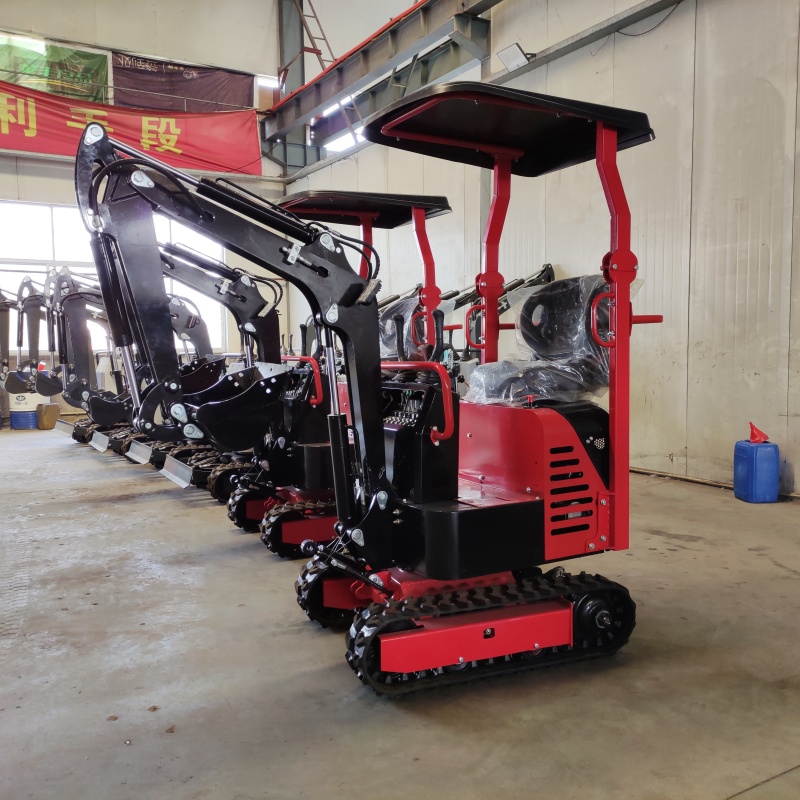
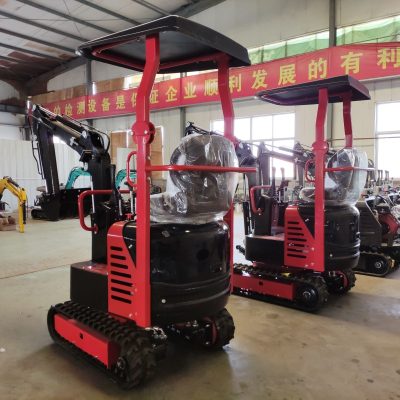
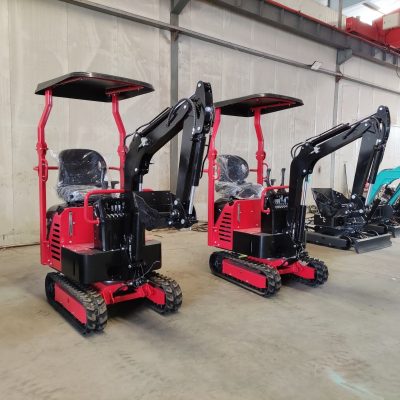
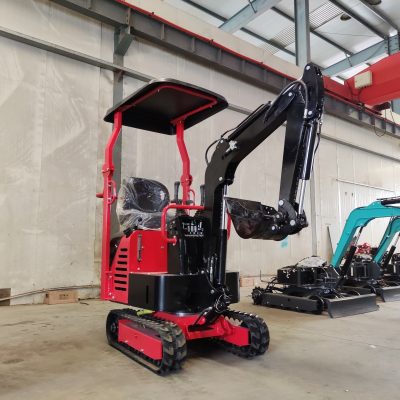
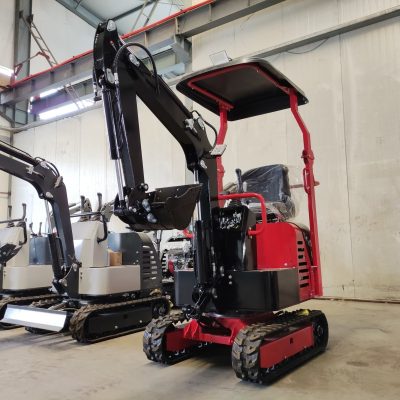
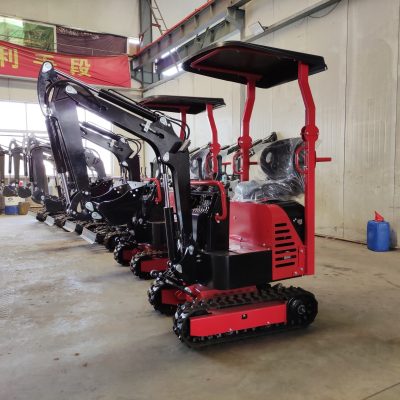
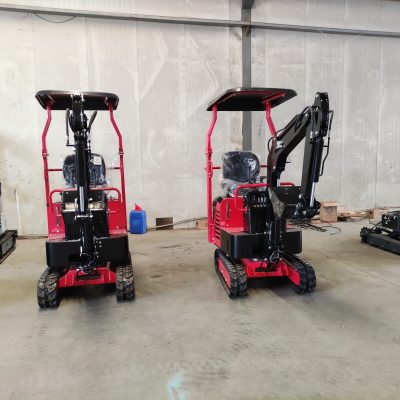
The 12 model sits in the middle of the MINGYI compact range, and it is the unit most often ordered for general civil and landscaping work.
What buyers ask about at that size is not a headline figure but how the machine is assembled: whether the frame, the boom and the undercarriage are matched as one build.
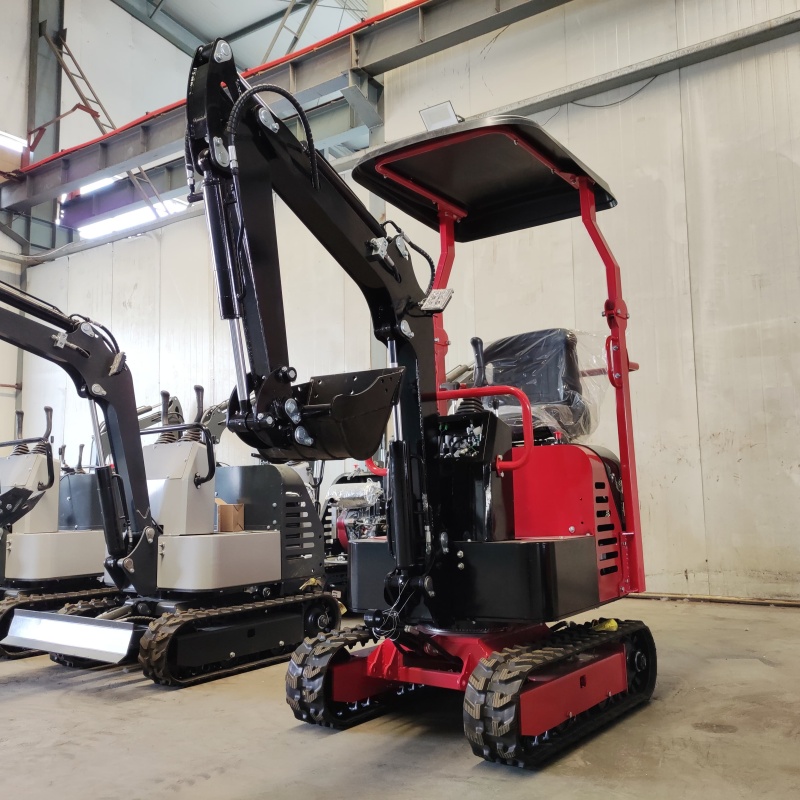
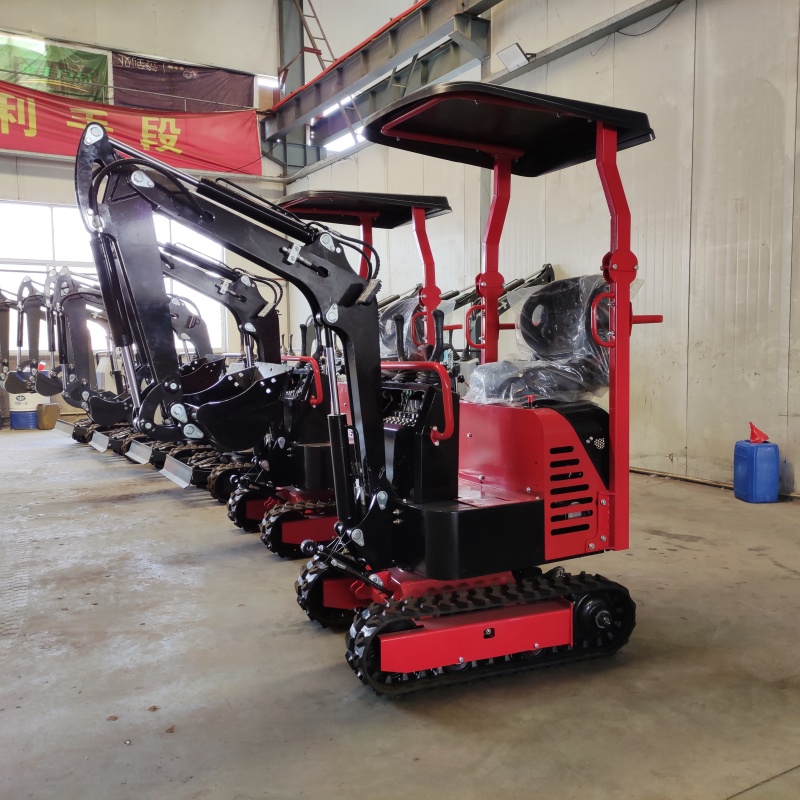
Assembly of the 12 model carrier
Each unit is assembled against a written specification, so the boom type, the track option and the attachment coupling are fixed before the machine is built rather than adapted on arrival.
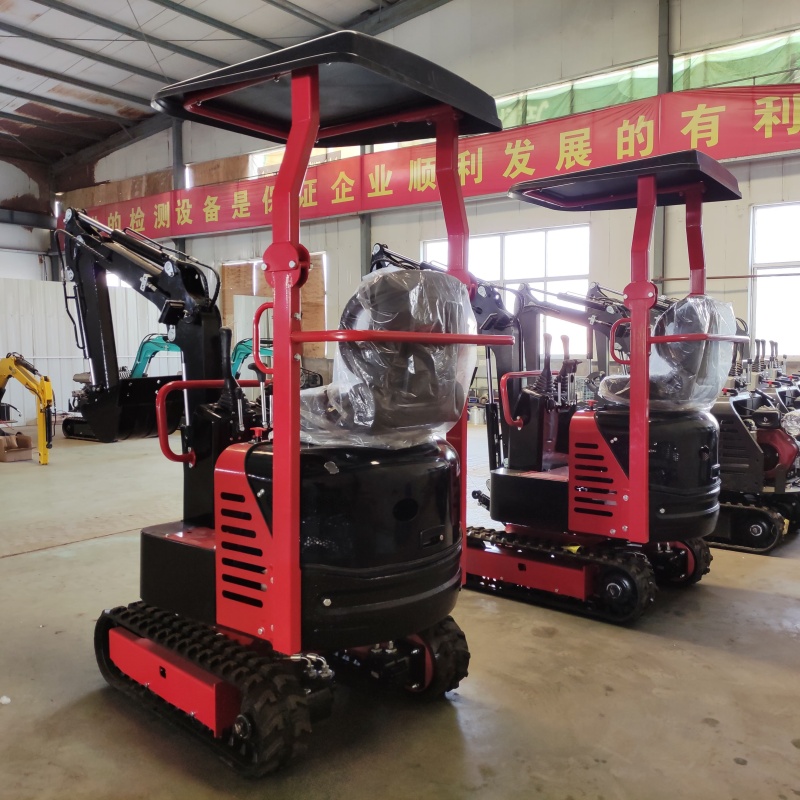
That approach matters on export orders, where a change after shipping is lengthy. Keeping the specification in one document from the start avoids mixed parts on a single carrier.
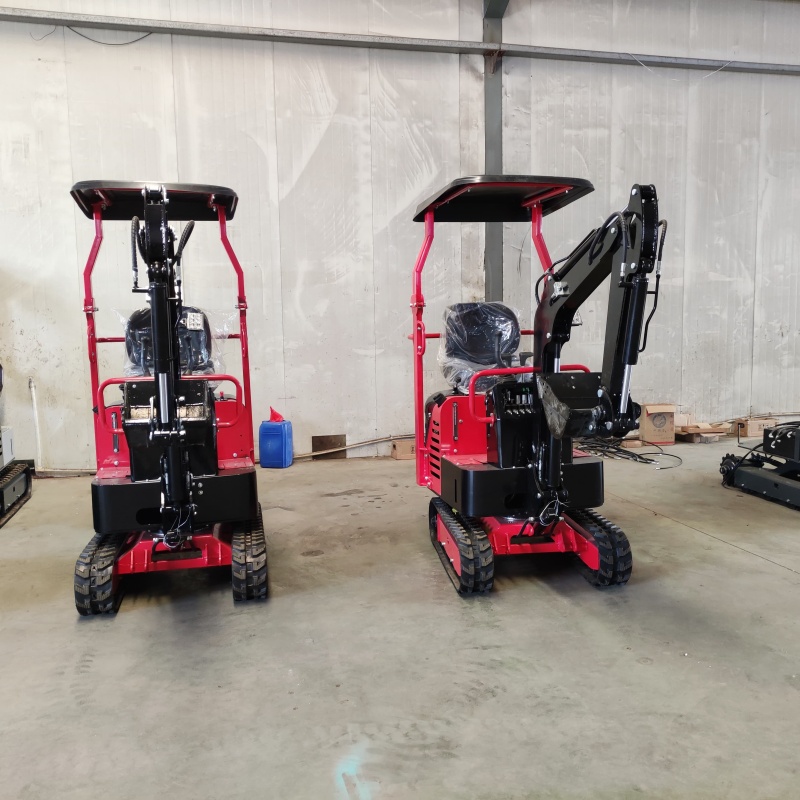
Checking a 12 model before it ships
The buyer states whether the machine will run on rubber tracks or steel tracks with rubber blocks, and whether the cab is an open canopy or an enclosed type.
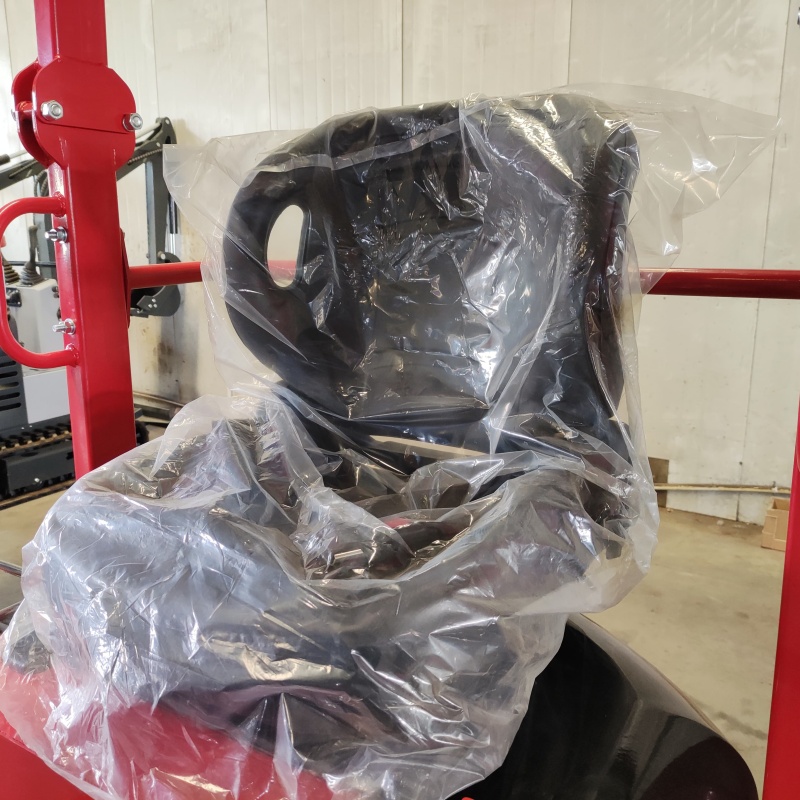
The attachment list is agreed at the same time, because a thumb bucket, a breaker hammer or an auger each needs a matching coupler and hydraulic line.
Ordering a 12 model is therefore a short specification exercise: engine, undercarriage, cab form and attachments are agreed together and recorded against the machine.
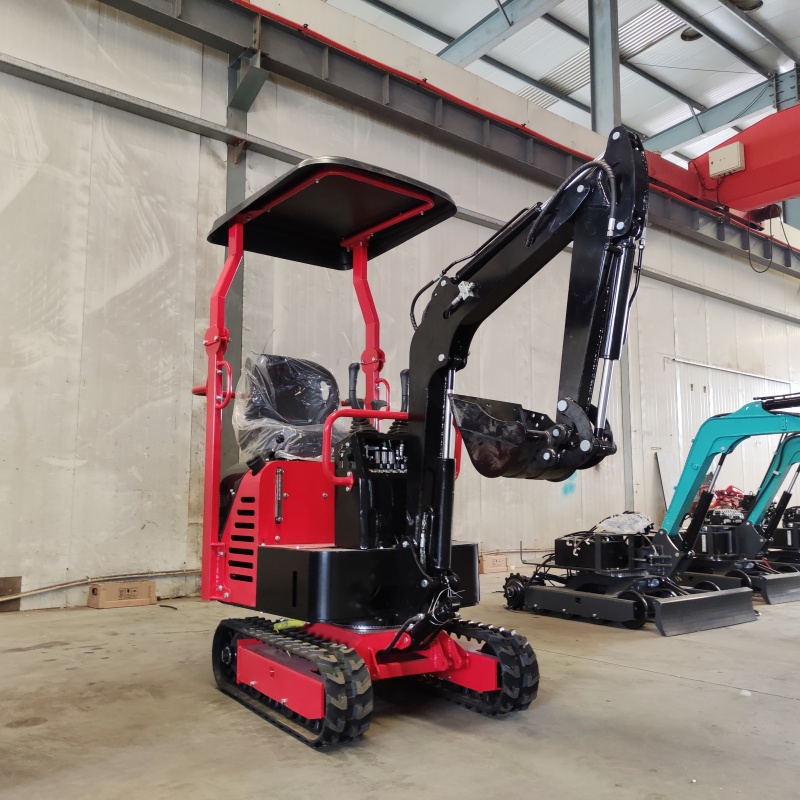
Road and paving work for 12 model small excavator assembly Patching and reinstatement favour a machine that can work in a lane closure. The excavator occupies less road than a full-size excavator, which reduces the traffic management needed and the length of the closure. Breaking out a failed slab and backfilling the same hole in one visit is normal work for this class of machine. The breaker and the bucket come off the same coupler, so the road is reopened the same day. Working a 12 model small excavator assembly in confined spaces Confined sites are decided by dimensions. Overall width, tail swing and the space needed to work the arm are what let the unit in daily use operate inside a building, between walls or in a courtyard. Clearance above matters as much as around. Door heights, pipework and overhead services set the limit for a machine of this size indoors, and measuring them first avoids a machine that arrives and cannot be used. Operator technique for 12 model small excavator assembly Output on a compact machine comes from placement rather than power. An experienced operator keeps the equipment on site working inside the swing arc, positions once and digs a full run instead of repositioning for every bucket. Stability is the third. The machine itself working across the tracks rather than over the corners keeps the machine steady and the undercarriage loaded evenly, which shows up as track life at the end of the season. Trenching work with 12 model small excavator assembly Service trenches are the most common reason the model in question is hired. Water, sewage, cable and gas runs are narrow, shallow and often close to existing services, which is exactly the work a full-size machine cannot do safely. Trench quality depends on the bucket width and the operator, not on machine size. The machine in that duty with a narrow bucket and a swing boom cuts a clean run along a boundary without disturbing the ground either side of it. Hiring versus owning a 12 model small excavator assembly Availability is part of the decision. Owning the unit on the job means it is there on the day the ground is ready; hiring means competing for the same machine at the same time as everyone else in the season. Ownership brings obligations that hiring does not. Storage, servicing, insurance and an operator are the items to set against the hire rate before deciding which way a machine built for the work should be supplied. Working near live services with 12 model small excavator assembly Digging near water, gas and cable is a precision job. The equipment in service is used here because the operator can work in short controlled cuts and because the machine can be positioned without driving over the run being exposed. The risk on utility work is not machine power but machine placement. The excavator that fits the working width leaves the surrounding ground undisturbed, which keeps the trench stable and the reinstatement small. Interior and light demolition with this class of machine Interior demolition is an access and a weight question. The unit in daily use that fits through a doorway and works on a suspended floor does jobs that would otherwise be done by hand or by a larger machine that cannot enter. Breaking out a floor slab, a wall footing or a concrete step is routine work for a machine of this size with a breaker. The machine is small enough to work inside and heavy enough to run the tool at a practical rate. Hydraulic circuits on the equipment on site Auxiliary hydraulic lines are what let a machine drive a tool rather than only a bucket. The machine itself specified with the right circuits and flow runs a breaker or an auger without an add-on power pack bolted to the frame. Flow and pressure are matched to the tool, not to the machine size. Asking for the attachment list first means the model in question leaves the factory with circuits that suit the heaviest tool the buyer intends to run. Trailering and moving the machine in that duty Loading practice matters as much as the numbers. The unit on the job is driven up ramps under its own power with the boom lowered and the tracks aligned, and secured at the points the manufacturer specifies. Detachable components reduce transport length. A machine built for the work built with a removable arm section or a folding step fits a shorter trailer and may avoid an oversize movement permit. Municipal and public works with the equipment in service Municipal crews work on streets, footpaths and parks where the public is present. The excavator is specified because it occupies little space, works inside a small exclusion zone and can be moved on a standard trailer. Noise and surface protection matter on public work. This class of machine on rubber tracks across paving, with a sealed cab for the operator, suits the conditions better than a larger tracked machine. Working on slopes and uneven ground with the unit in daily use Slope work is a stability question before it is a traction question. Knowing the gradient a machine of this size is rated for, and working across rather than straight up where the ground allows, removes most of the risk. Planning the direction of travel helps. Working so that the equipment on site is stable under load and not required to turn on a slope is a decision made before the job starts, not a correction made during it. Engine options behind the machine itself Power unit selection is settled against the service network the buyer already uses. MINGYI offers Kubota D722, Kubota D902, YANMAR, Changchai, Laidong, Runtong, YARMAX, Youpu 2V80 and Youpu 195, so a fleet running one brand of engine can keep the same filters, the same parts supplier and the same mechanic. Two buyers can order the same the model in question and receive different engines. The decision is rarely about peak power; it is about which parts counter is closest to the site and which engine the local mechanic already knows. Matching the machine in that duty to ground conditions Ground decides more of the outcome than power does. Soft, wet or loose surfaces call for a wider footprint and lower ground pressure, while hard standing allows a narrower machine that turns in less space and travels faster between tasks. Specification data for the unit on the job Buyers comparing a machine built for the work usually start from four numbers - weight, digging depth, reach and transport width - because those are the ones that decide whether the machine can be delivered and whether it can do the job once it is there. Figures are factory figures and are confirmed on the build sheet for the equipment in service. Where a job sits between two models, the larger machine usually takes less time than the smaller one spends on rework. Soft ground is a flotation problem, not a power problem. The excavator on wide rubber tracks crosses lawn, sand and cultivated soil that would stop a narrower machine or a wheeled unit of the same capacity. Mixed sites are common and argue for a compromise specification. Most buyers choose rubber for this class of machine and accept the wear, unless the majority of the work is on material that will damage it.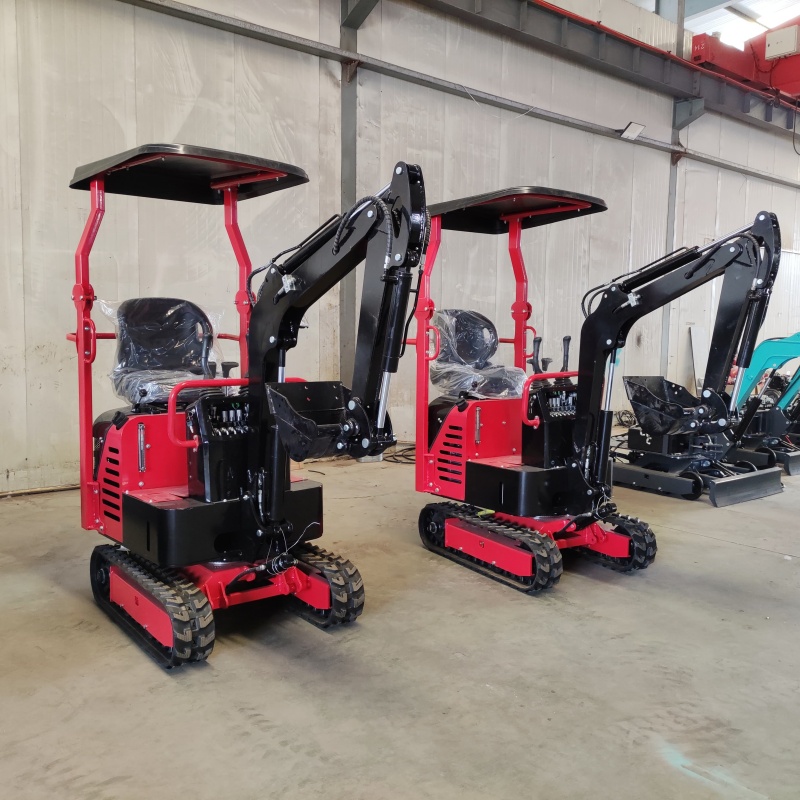
Reference specification — mini excavator range 09W 30-1W 09L 25L Operating weight 1100 kg (2425.08 lb) 2900 kg (6393.41 lb) 1100 kg (2425.08 lb) 2200 kg (4850.17 lb) Transport size (L×W×H) 1800 × 750 × 1970 mm 3000 × 1250 × 2780 mm 2300 × 720 × 1870 mm 3000 × 1300 × 2700 mm Max digging depth 1250 mm (49.21 in) 2200 mm (86.61 in) 1400 mm (55.12 in) 2300 mm (90.55 in) Max digging height 2800 mm (110.24 in) 3400 mm (133.86 in) 2800 mm (110.24 in) 3100 mm (122.05 in) Max dumping height 1700 mm (66.93 in) 2400 mm (94.49 in) 1880 mm (74.02 in) 2050 mm (80.71 in) Max digging radius 2570 mm (101.18 in) 4000 mm (157.48 in) 2490 mm (98.03 in) 3900 mm (153.54 in) Max digging distance 1869 mm (73.58 in) 2800 mm (110.24 in) 2000 mm (78.74 in) 3100 mm (125.05 in) Minimum turning radius 1000 mm (39.37 in) 2000 mm (78.74 in) 1400 mm (55.12 in) 1800 mm (70.87 in) Travel speed 3 km/h (1.86 mph) 5 km/h (3.11 mph) 3 km/h (1.86 mph) 7 km/h (4.35 mph) Gradeability 30° 30° 30° 30° Fuel consumption 1-1.3 L/h (0.264—0.343 gal) 2-3 L/h (0.528—0.793 gal) 1-1.3 L/h (0.264—0.343 gal) 2-3 L/h (0.528—0.793 gal) Fuel tank capacity 8 L (2.11 gal) 16 L (4.23 gal) 8 L (2.11 gal) 16 L (4.23 gal) Hydraulic oil tank 16 L (4.23 gal) 20 L (5.28 gal) 16 L (4.23 gal) 18 L (4.76 gal) Dozer blade lift height 180 mm (7.09 in) 420 mm (16.54 in) 180 mm (7.09 in) 230 mm (9.06 in) Dozer blade drop depth 210 mm (8.27 in) 210 mm (8.27 in) 210 mm (8.27 in) 280 mm (11.02 in)
Q. How does the unit in daily use work?
A. The class sets the trade: access on one side, reach and lift on the other, and every compact buyer picks their point on that line. The smallest classes trade reach for access; the largest trade access for output - the build sheet settles the rest. Read a machine of this size together with the engine, track and attachment pages: jobs around 12 assembly are decided by how those choices line up, not by any single number on the sheet.
Q. Is a bigger class always more machine?
A. Only where the site lets it work: a class too big for the access spends the day waiting outside the gate. Match the class to the job list, not to the brochure - the factory confirms the pairing before the build sheet is cut.
Q. What support follows the sale?
A. Spare-part kits, wear items and service documentation ship with the programme, and the parts team works from the serial plate to match components exactly. Warranty and support terms for the 12 assembly order are confirmed in writing before the machine leaves.
Handover and getting familiar with the equipment on site
Operators who come from a different machine need a short conversion. The controls on the machine itself follow the usual pattern, but the response, the sightlines and the stopping distance are learned by doing rather than by reading.
Later additions and retrofits on the model in question
An added function should pay for itself quickly. Whether the machine in that duty gains a different bucket, a hydraulic service or a protection package, the test is the number of days a year it is actually used.
E-mail : sales@mingycn.com
LINE ( ID ): mingyicn
Related pages
changchai engine mini excavator · mini excavator with kubota d722 engine · China Wheel Loader Factory: Builds, QC and Export Loading · Mini Excavators









