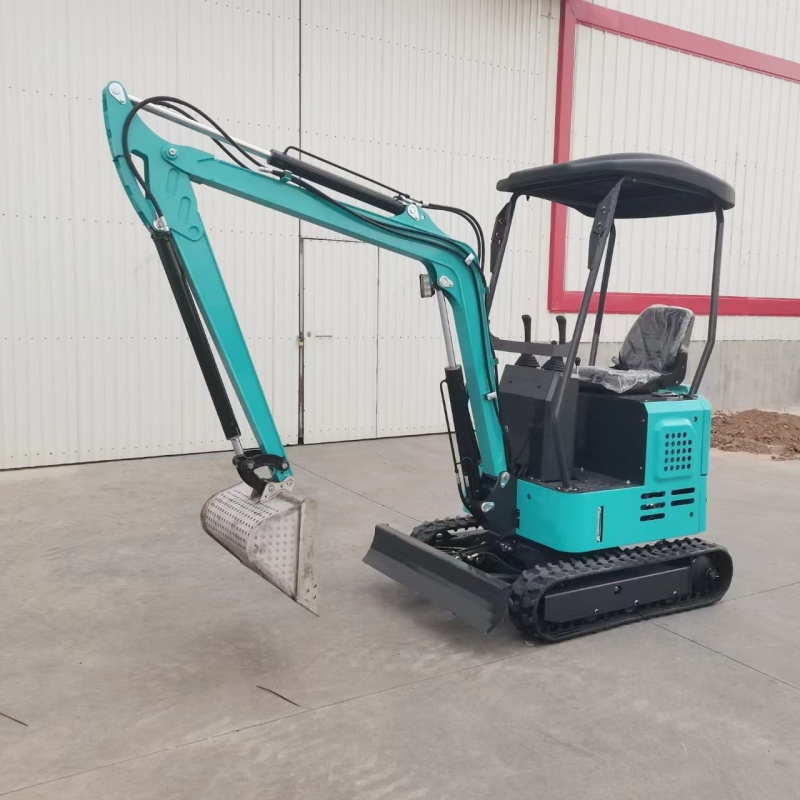
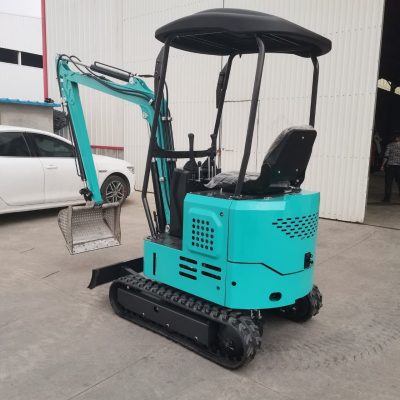
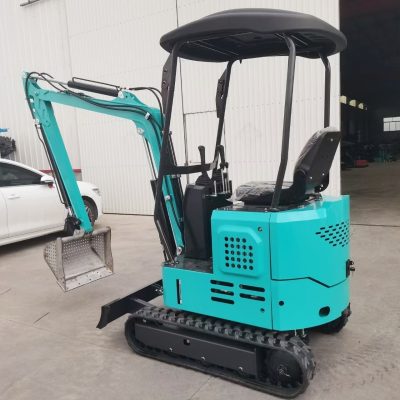
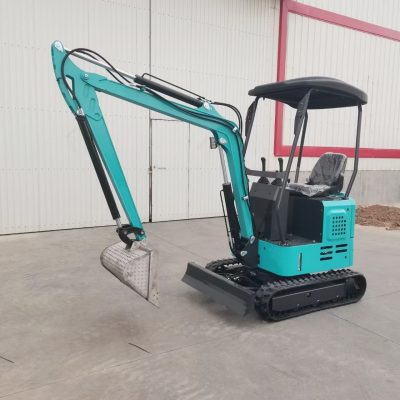
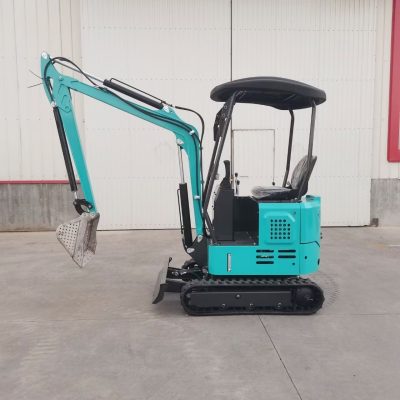
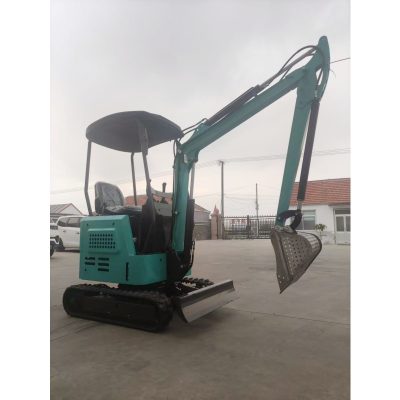
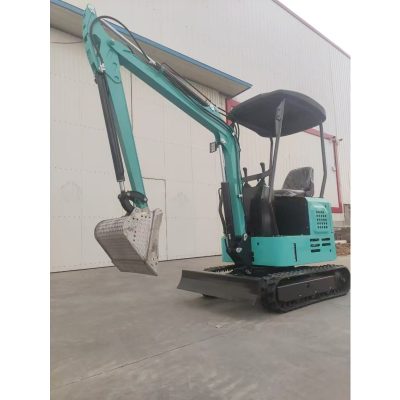
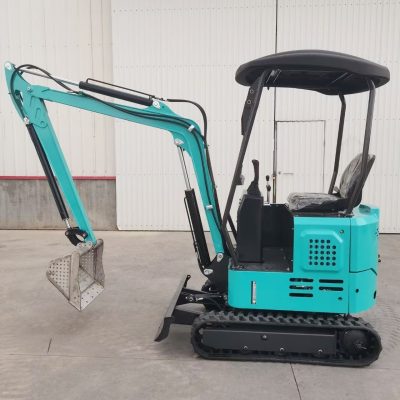
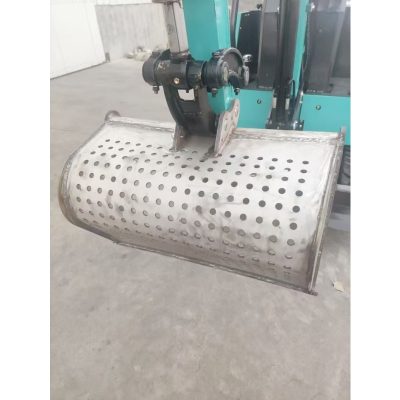
Reach is the limit that decides many small excavator jobs. If the boom cannot place the bucket where the work is, the machine has to be repositioned and the cycle lengthens.
An extended boom and arm on a compact carrier push that limit out, which is useful on embankments, canals and any site where the machine has to stand back from the cut.
Gaining reach without moving the machine
An extended boom lets the operator place the bucket further from the tracks, so the machine can cut a bank, a ditch or a pond edge from firm ground instead of sitting on the slope.
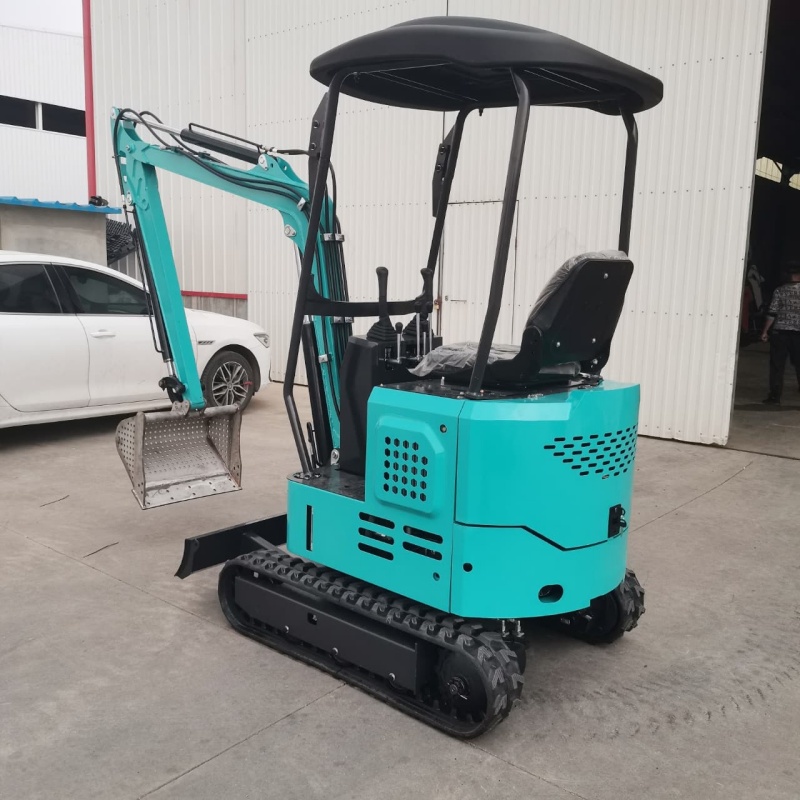
The same reach helps when material has to be loaded over the side of a truck or placed beyond an obstacle that the tracks cannot cross.
Balancing an extended boom with buckets and attachments
The bucket size is matched to the longer boom so lifting stays stable, and the counterweight arrangement is confirmed with the build. This is why the specification is agreed before assembly.
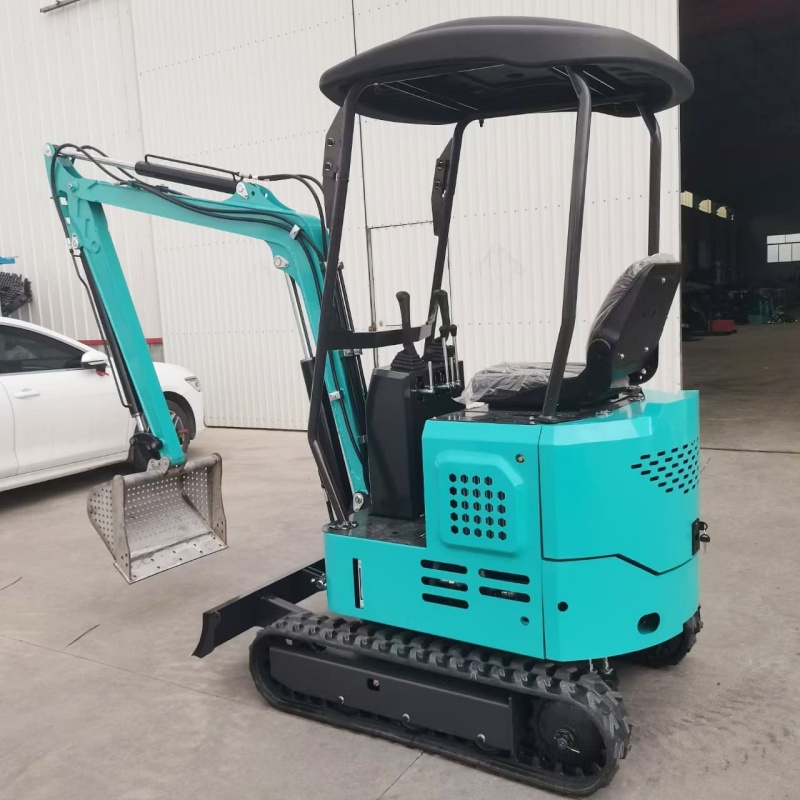
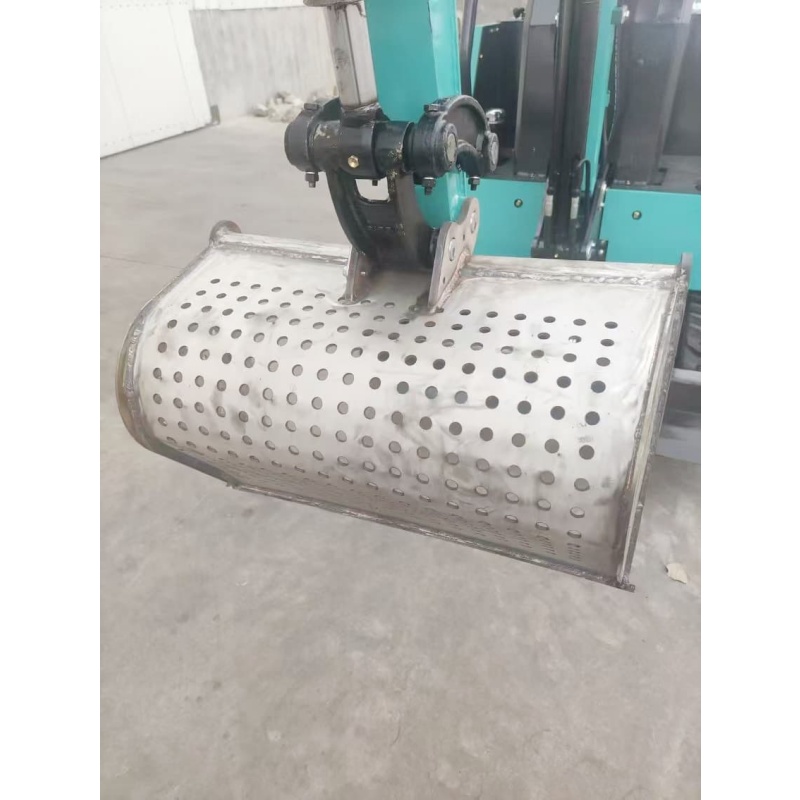
Beyond digging, the extra reach suits a grass rake, a hedge pruner or a grabber, each of which works at the far end of the boom where a standard machine cannot follow.
Buyers ordering an extended boom confirm the dipper length, the bucket set and the undercarriage together, because reach and stability are decided by those three items as a group.
Hydraulic circuits on a small excavator with extended boom Auxiliary hydraulic lines are what let a machine drive a tool rather than only a bucket. The excavator specified with the right circuits and flow runs a breaker or an auger without an add-on power pack bolted to the frame. Hydraulic specification is easier to settle at build time than to correct later. This class of machine delivered without auxiliary lines can still dig, but every additional tool becomes a retrofit project. Quick coupler practice on small excavator with extended boom A quick coupler is the single option that changes how a machine is used day to day. Fitted to the unit in daily use, it turns an attachment change from a two-person workshop job into a task the operator does alone in minutes. Couplers are specified early because they affect the arm and the hydraulic kit. Adding one to a machine of this size after delivery means new pins, new hoses and a fitment session; adding it at build time is a line on the sheet. Boom configuration for small excavator with extended boom Extended and offset boom configurations change reach and working range. The equipment on site with a longer arm reaches further but lifts less at full extension, so the specification is set against the deepest and furthest point on the job list. Detachable boom sections are used where transport length matters. The machine itself that has to travel on a standard trailer can be built so the arm comes off for the road and goes back on at the site. Working on slopes and uneven ground with small excavator with extended boom Slope work is a stability question before it is a traction question. Knowing the gradient the model in question is rated for, and working across rather than straight up where the ground allows, removes most of the risk. Ground that looks level often is not. The machine in that duty crossing a filled trench, a soft edge or a hidden void behaves differently from one on undisturbed ground, and those are the places worth walking before driving. Working a small excavator with extended boom in confined spaces Confined sites are decided by dimensions. Overall width, tail swing and the space needed to work the arm are what let the unit on the job operate inside a building, between walls or in a courtyard. Ventilation is the other indoor constraint. Running a machine built for the work inside a closed structure needs air movement, and that is a planning item rather than something to discover after the first hour. Hiring versus owning a small excavator with extended boom The choice follows the hours. Work that fills a few weeks a year is usually better hired, while the equipment in service that would be on site most weeks starts to justify ownership once the transport and booking time is counted. Ownership brings obligations that hiring does not. Storage, servicing, insurance and an operator are the items to set against the hire rate before deciding which way the excavator should be supplied. Municipal and public works with this class of machine Drainage repair, tree planting, footway reconstruction and cemetery work are all within the range of the unit in daily use. The jobs are small individually and continuous across the year. Noise and surface protection matter on public work. A machine of this size on rubber tracks across paving, with a sealed cab for the operator, suits the conditions better than a larger tracked machine. Export packing and shipping of the equipment on site Export documentation, decals and paint are settled before packing. Asking for them with the model in question order avoids a second handling session and keeps the machine on the booked vessel. Buyers who import regularly plan the spare parts with the machine. The machine itself ordered with a wearing-parts kit arrives ready to work rather than ready to wait for the first service interval. Getting the machine in that duty through a narrow gap The first question on most job lists is whether the machine can reach the work at all. The unit on the job is chosen against the narrowest point on the route - a garden gate, a doorway, a gap between two walls - because a machine that arrives and then cannot pass loses a day, not an hour. Contractors who buy a machine built for the work normally have one job in mind that nothing else reaches. The purchase order follows the access measurement, not the other way round, and the build sheet is then settled around it. Orchard, vineyard and farm use of the equipment in service Orchard and vineyard work is carried out between rows. The excavator with a narrow chassis and a swing boom works down the row without damaging the trees, which is the reason a full-size machine is not used at all. Farms also use this class of machine for general maintenance - clearing a watercourse, repairing a track, loading a spreader. One carrier with a few attachments covers most of the jobs that would otherwise wait for a contractor. Running the unit in daily use in a rental fleet Rental fleets buy for utilisation, not for a single job. A machine of this size with a quick coupler and a common attachment standard is hired more often because it suits more of the calls that come in. The specification that rents best is usually the simplest one to explain at the counter. The equipment on site with rubber tracks, a canopy and a coupler covers the majority of weekend and short-term hires. Lifting and material handling with the machine itself Ground condition under the machine is part of every lift. Soft or uneven support is the common factor in handling incidents, and checking it takes less time than recovering the model in question that has settled. Specification data for the machine in that duty Buyers comparing the unit on the job usually start from four numbers - weight, digging depth, reach and transport width - because those are the ones that decide whether the machine can be delivered and whether it can do the job once it is there. Every value shown is as built for a machine built for the work; options such as cab, side swing or a telescopic undercarriage change the transport dimensions and are confirmed at order stage. Lifting with a machine built to dig needs a plan. The load, the radius and the ground under the excavator all matter, and the safe figure is the one on the chart rather than the one that looks possible. Stability changes with reach. A load the equipment in service handles close in becomes a different proposition at full extension, so the working radius belongs in the plan before the lift rather than during it.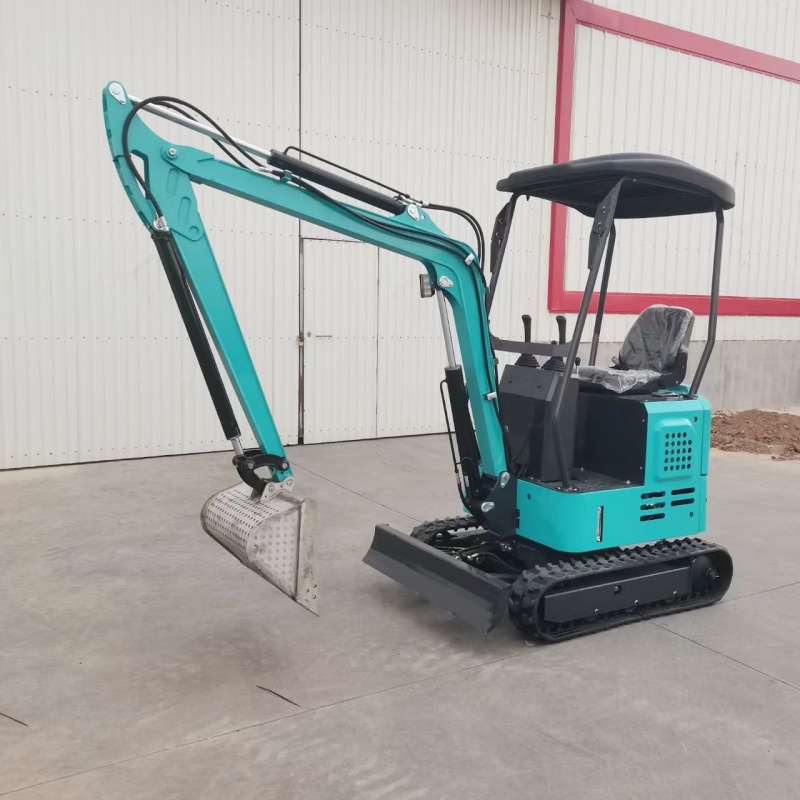
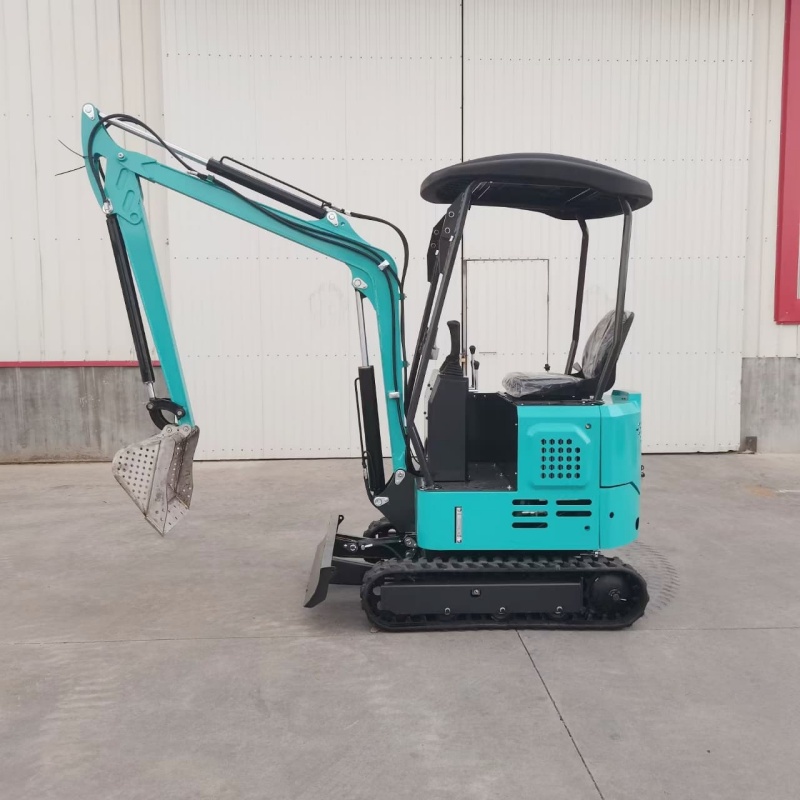
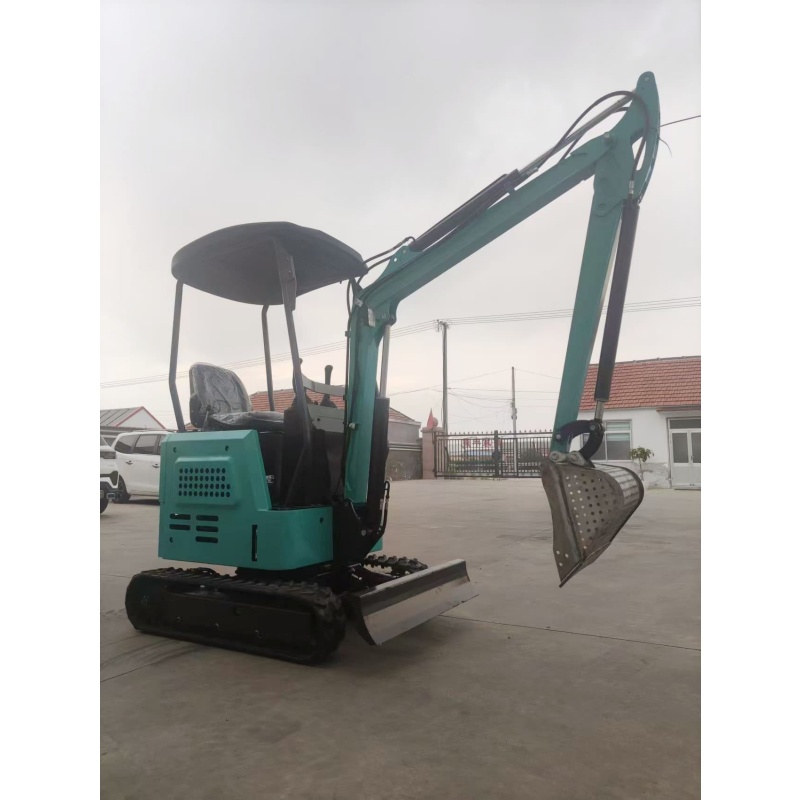
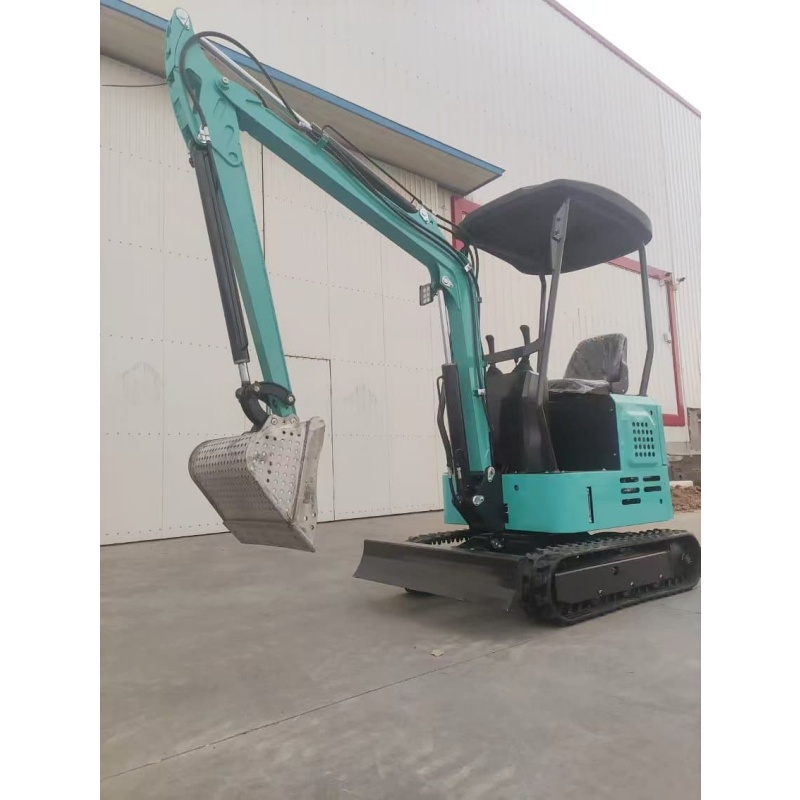
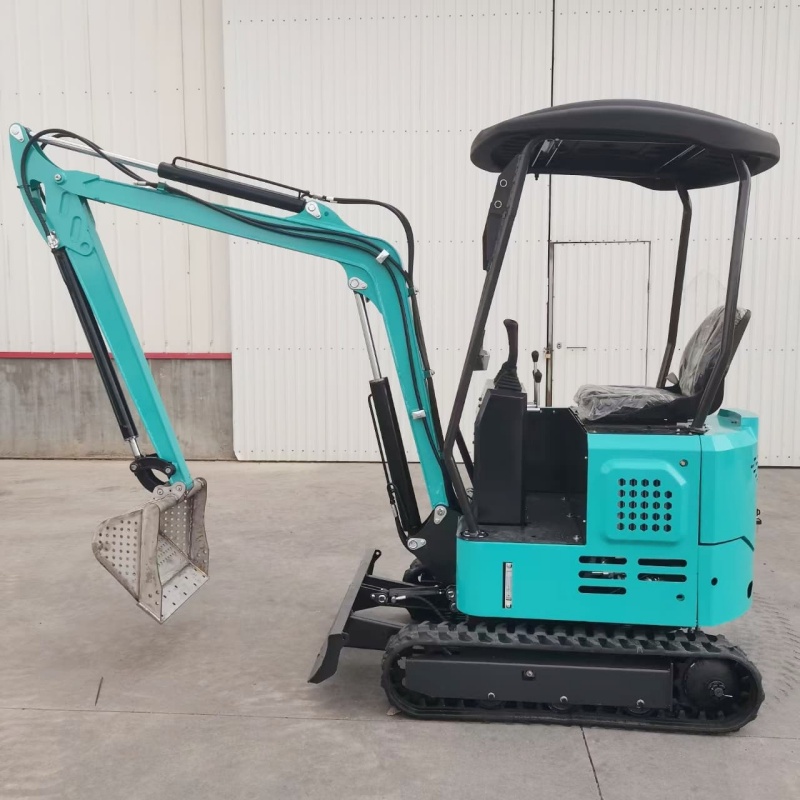
Reference specification — mini excavator range 12W 20-3W 15L 20-2L Operating weight 1200 kg (2645.55 lb) 1900 kg (4188.78 lb) 1400 kg (3086.47 lb) 1900 kg (4188.78 lb) Transport size (L×W×H) 2200 × 930 × 2250 mm 2550 × 1100 × 2200 mm 2200 × 930 × 2250 mm 2600 × 1300 × 2344 mm Max digging depth 1630 mm (64.17 in) 1800 mm (70.87 in) 1700 mm (66.93 in) 2100 mm (82.68 in) Max digging height 2750 mm (108.27 in) 2820 mm (111.02 in) 2750 mm (108.27 in) 2880 mm (113.39 in) Max dumping height 1960 mm (77.17 in) 2050 mm (80.71 in) 1960 mm (77.17 in) 2100 mm (82.68 in) Max digging radius 2900 mm (114.17 in) 3050 mm (120.08 in) 2900 mm (114.17 in) 3215 mm (126.57 in) Max digging distance 2100 mm (82.68 in) 2300 mm (90.55 in) 2300 mm (90.55 in) 2460 mm (96.85 in) Minimum turning radius 1300 mm (51.18 in) 1450 mm (57.09 in) 1450 mm (57.09 in) 1587 mm (62.48 in) Travel speed 3 km/h (1.86 mph) 5 km/h (3.11 mph) 3 km/h (1.86 mph) 5 km/h (3.11 mph) Gradeability 30° 30° 30° 30° Fuel consumption 1-1.3 L/h (0.264—0.343 gal) 2-3 L/h (0.528—0.793 gal) 1-1.3 L/h (0.264—0.343 gal) 2-3 L/h (0.528—0.793 gal) Fuel tank capacity 10 L (2.64 gal) 16 L (4.23 gal) 10 L (2.64 gal) 16 L (4.23 gal) Hydraulic oil tank 16 L (4.23 gal) 18 L (4.76 gal) 16 L (4.23 gal) 18 L (4.76 gal) Dozer blade lift height 180 mm (7.09 in) 180 mm (7.09 in) 180 mm (7.09 in) 180 mm (7.09 in) Dozer blade drop depth 210 mm (8.27 in) 210 mm (8.27 in) 210 mm (8.27 in) 210 mm (8.27 in)
Q. What is this class of machine?
A. The boom decides where the bucket works while the carrier stays put - across a wall, along a trench line, or over a row of crop. Offset and swing designs dig along walls and kerbs with the carrier square to the work, protecting both the machine and the structure. Read the unit in daily use together with the engine, track and attachment pages: jobs around extended boom are decided by how those choices line up, not by any single number on the sheet.
Q. When does an extended or detachable boom pay off?
A. Ponds, basement edges, foundation pads and finish grading across obstacles - anywhere the bucket must reach further than the carrier should travel. Detachable designs stow on the trailer, so the machine still passes the narrow gate on the next job.
Q. What support follows the sale?
A. Spare-part kits, wear items and service documentation ship with the programme, and the parts team works from the serial plate to match components exactly. Warranty and support terms for the extended boom order are confirmed in writing before the machine leaves.
Wear items and spares worth holding for a machine of this size
The parts that stop a machine are rarely the parts that are hardest to find. Filters, belts, seals and the ground engaging tools on the equipment on site are easy to hold and slow to replace, which is why they belong on the shelf rather than on an order.
Storage and long idle periods for the machine itself
The battery and the fuel are the first things to suffer in storage. Preparing the model in question properly at the start of the idle period avoids the flat battery and the contaminated tank that greet an unprepared machine.
Handover and getting familiar with the machine in that duty
The first day with a new machine sets the pattern for the next five years. Handover for the unit on the job covers the control layout, the daily check points and the limits the operator needs to know before the first real load is lifted or carried.
Later additions and retrofits on a machine built for the work
Later changes are easier when they were anticipated. Asking for the extra hydraulic circuit or the heavier mounting plate on the equipment in service at build time adds little and leaves the option open.
E-mail : sales@mingycn.com
LINE ( ID ): mingyicn
Related pages
offset boom for mini excavators · shell bucket for mini excavators · Wheel Loader Supplier: Choosing Builds for Your Market · Mini Excavators









