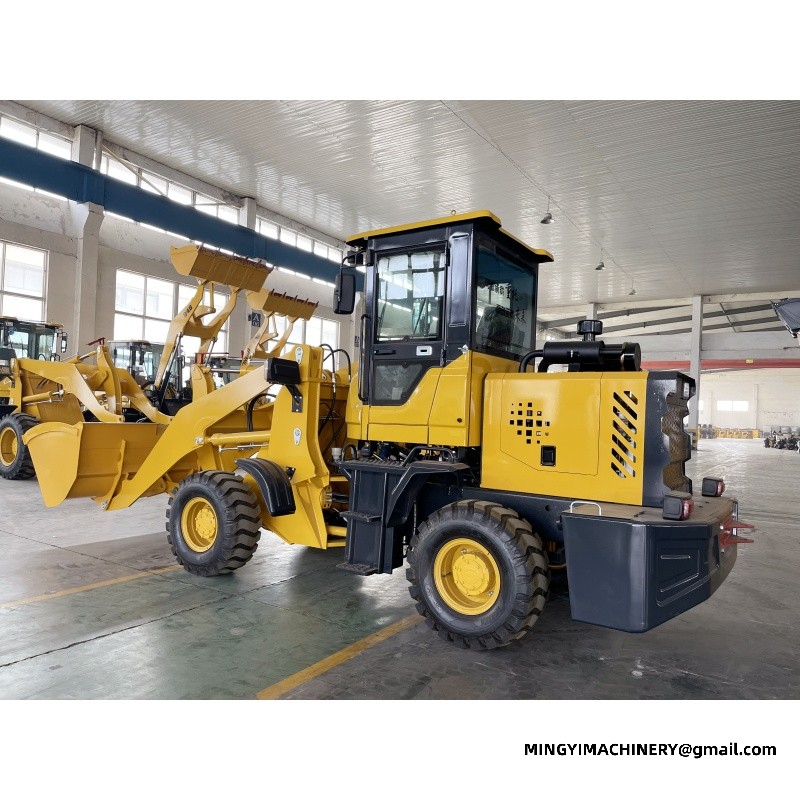
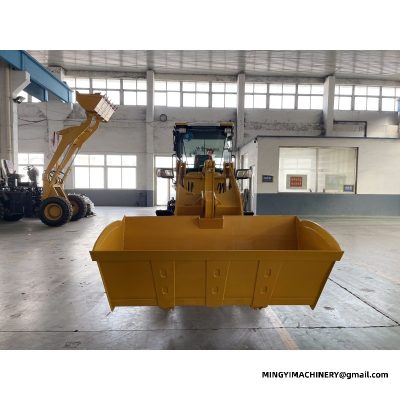
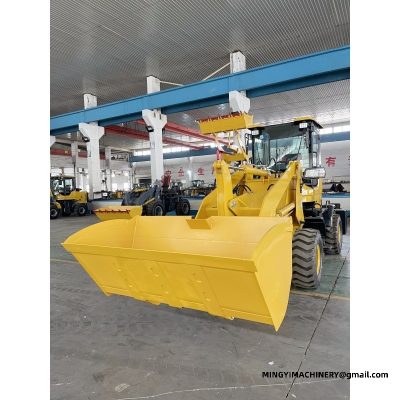
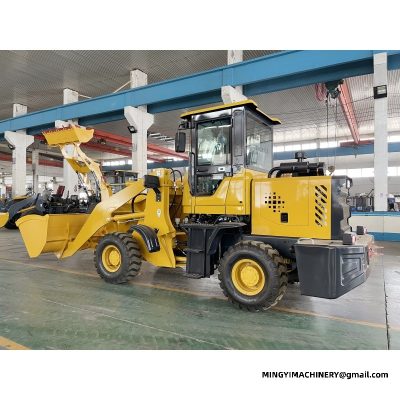
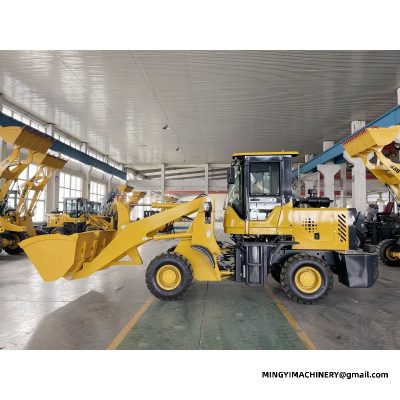
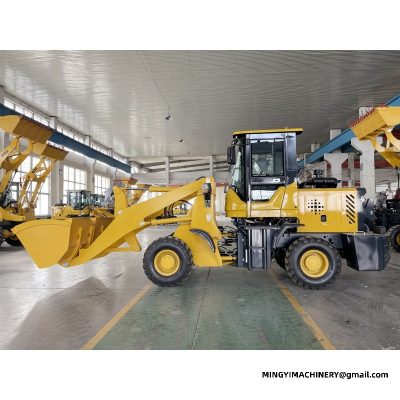
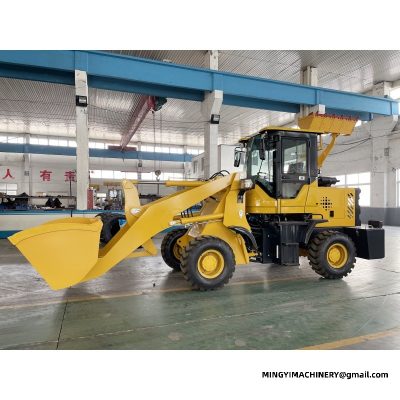
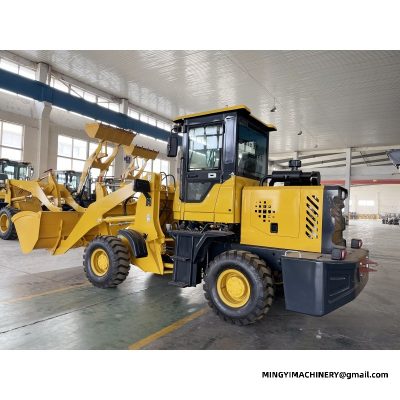
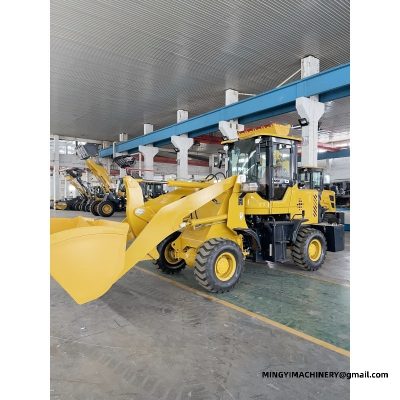
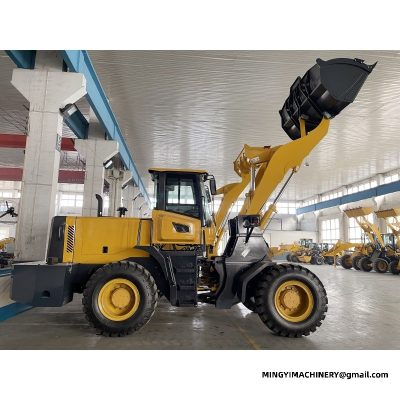
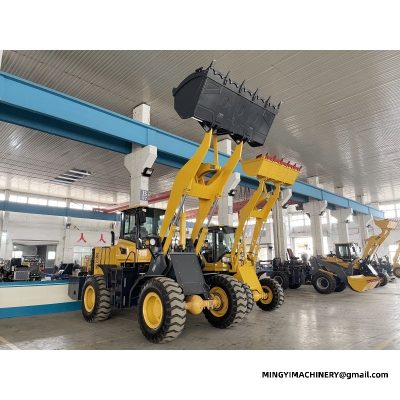
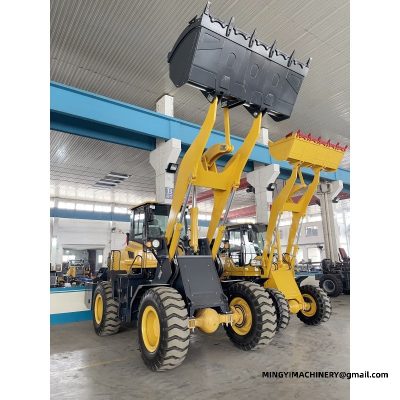
The useful question about any wheel loader supplier is not what it is called but which frame sits underneath it. Two machines can share a capacity class and differ in every respect that matters: boom wall 25 mm against 25 mm, rear hinge plate 14 mm against 14 mm, cross-member 25 mm against 25 mm. This page takes the published specification of the range — buckets 0.38 m³ to 0.38 m³, dump heights 3.5 m to 3.8 m — and shows how each figure translates into behaviour, effort and service life.
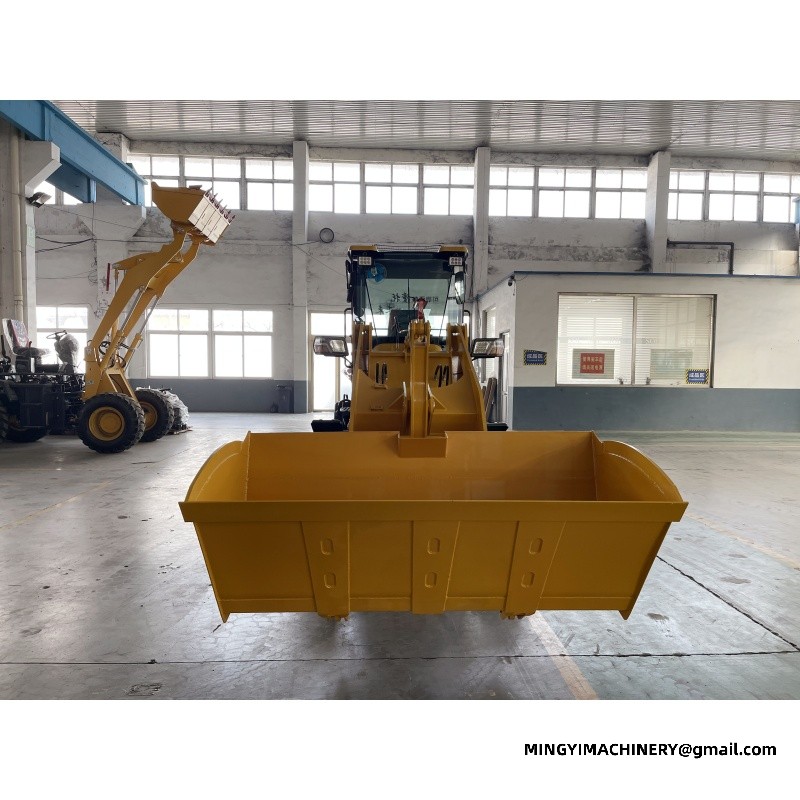
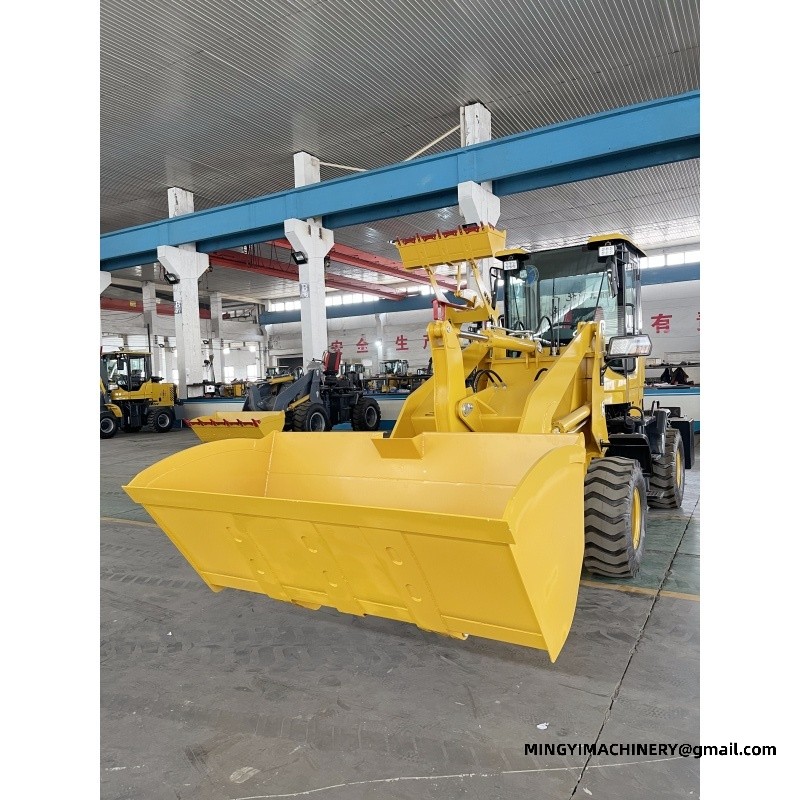
The most lengthy mistake in buying a loader is specifying capacity first. The heavy-duty 4.5 m small-frame wheel-side reduction wheel loader and the heavy-duty 3.8 m medium-frame wheel-side reduction wheel loader differ by 4.5 m against 3.8 m of clearance, and that difference decides which bodies each can fill. Capacity only decides how many passes it takes once clearance exists.
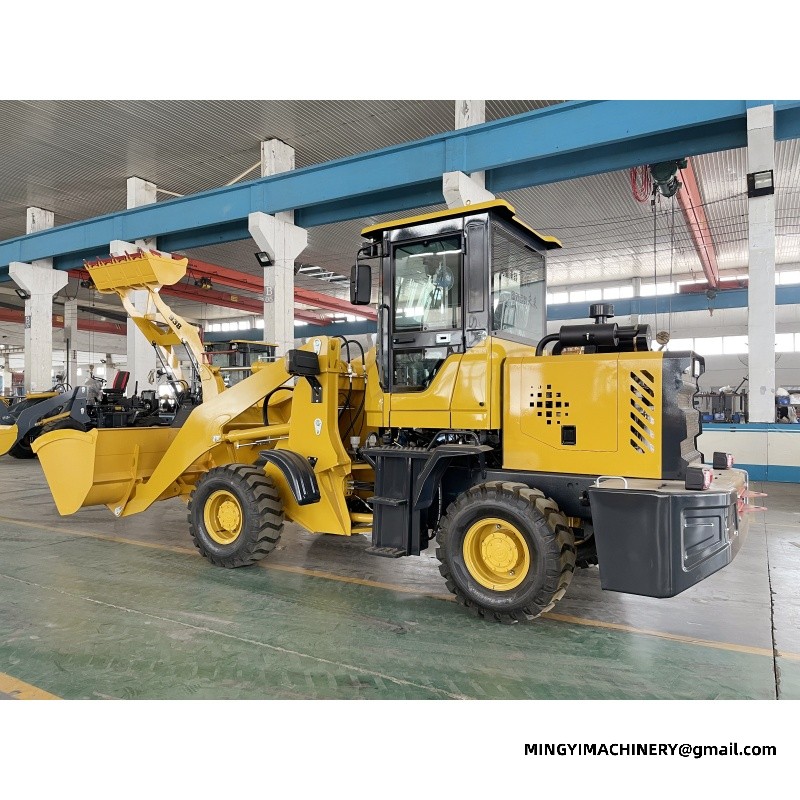
Where clearance is marginal, look at the boom rather than the machine: the heavy-duty 4.5 m small-frame wheel-side reduction wheel loader works a 3.15 m arm from a 890 mm centre distance, the heavy-duty 3.8 m medium-frame wheel-side reduction wheel loader a 2.9 m arm from 920 mm. A longer arm on a lighter frame buys height at the effort of stability, so match the arm to the counterweight — 4.25 m against 4.55 m — and not to a brochure figure.
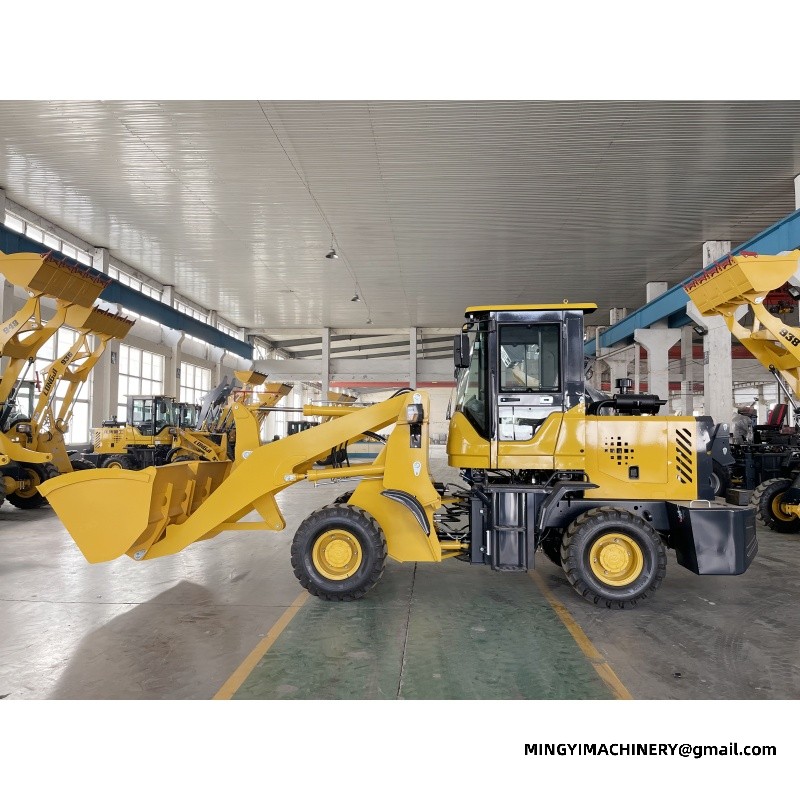
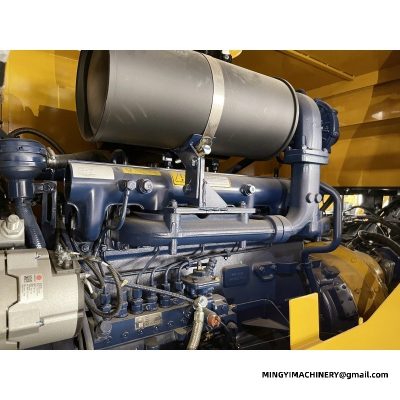
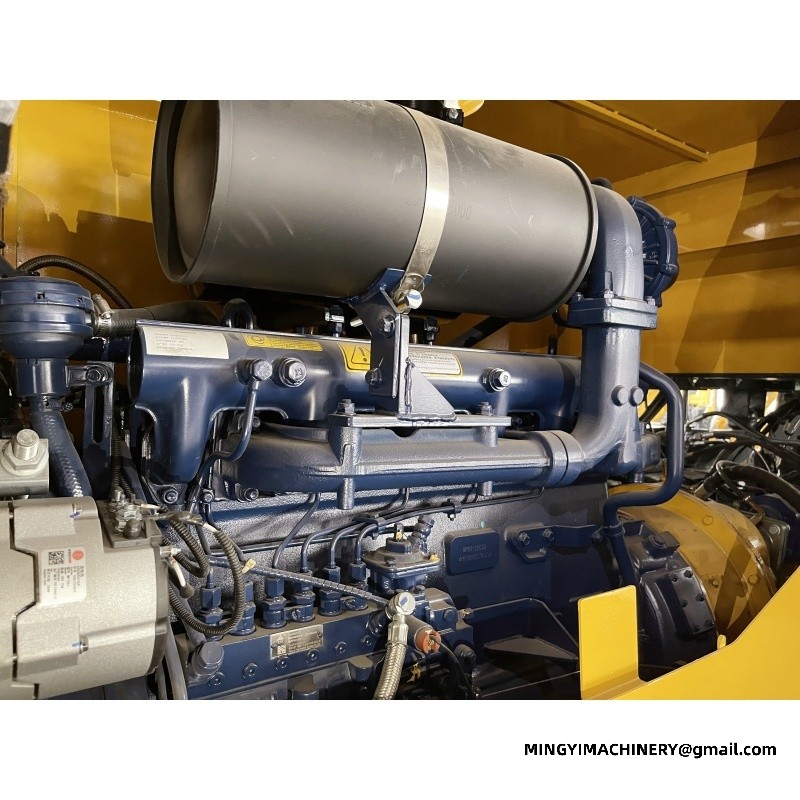
The first hour of running tells you more than the first month of paperwork. Watch the cooling: 4100 core (490 engine); 4105 core (4102T engine) should hold temperature at working load without the fan running continuously. Listen to the hydraulics: centre cylinder 45 / side cylinder 40 on a 40 pump (490 engine); 1045 pump (4102 turbo engine) should lift a full 0.38 m³ bucket to 3.8 m without the relief valve complaining.
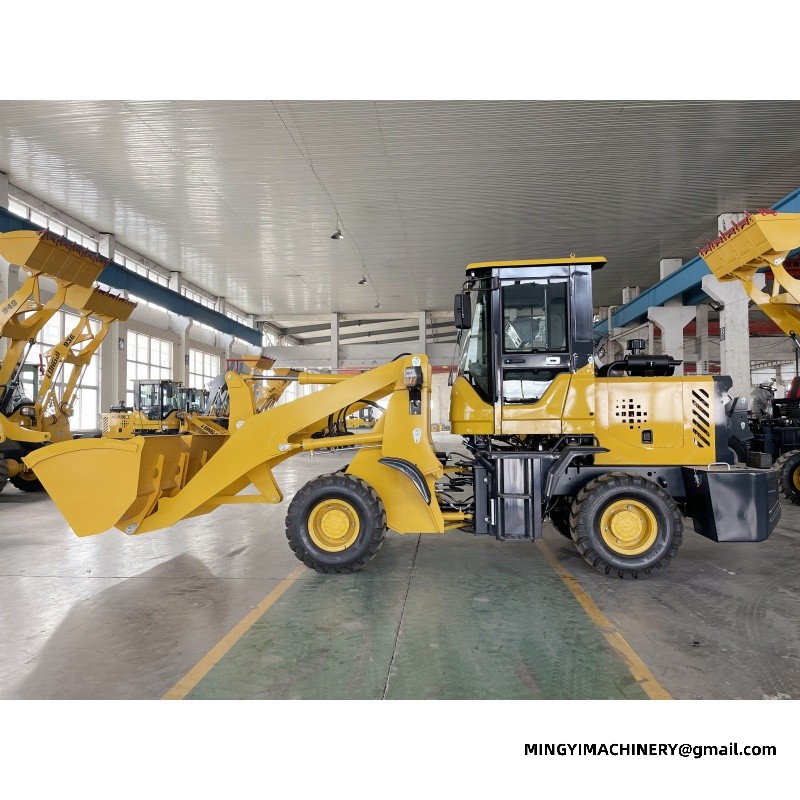
Then check the electrical side under load, which is what the 60 Ah (490 engine); 80 Ah (4102 turbo engine) rating exists for. Restart the machine hot, restart it cold, and watch the cranking. A battery that is marginal on day one will fail in the first cold week, and it is far easier to settle at commissioning than six months later.
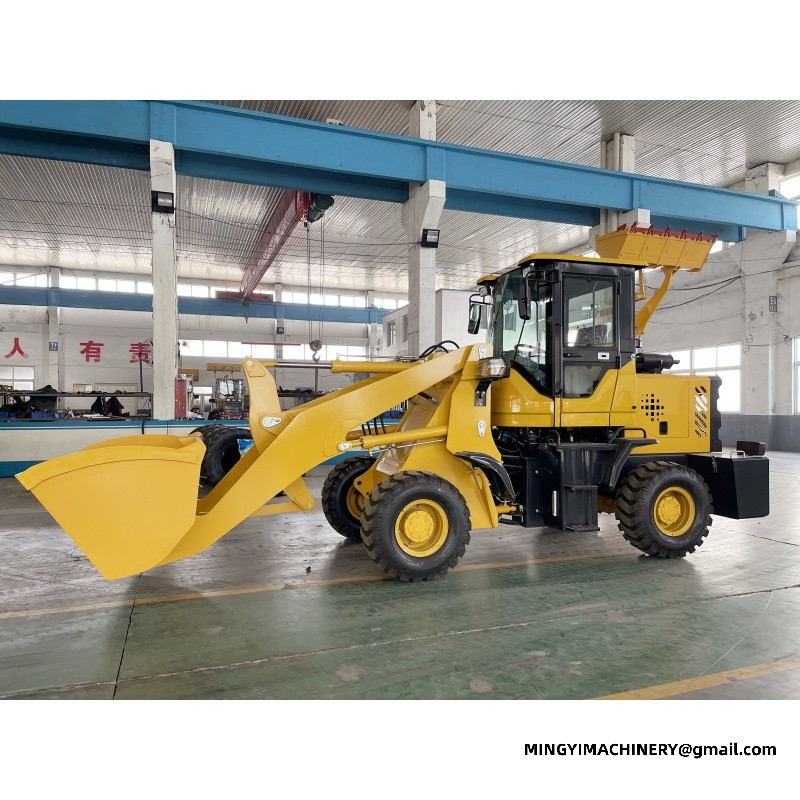
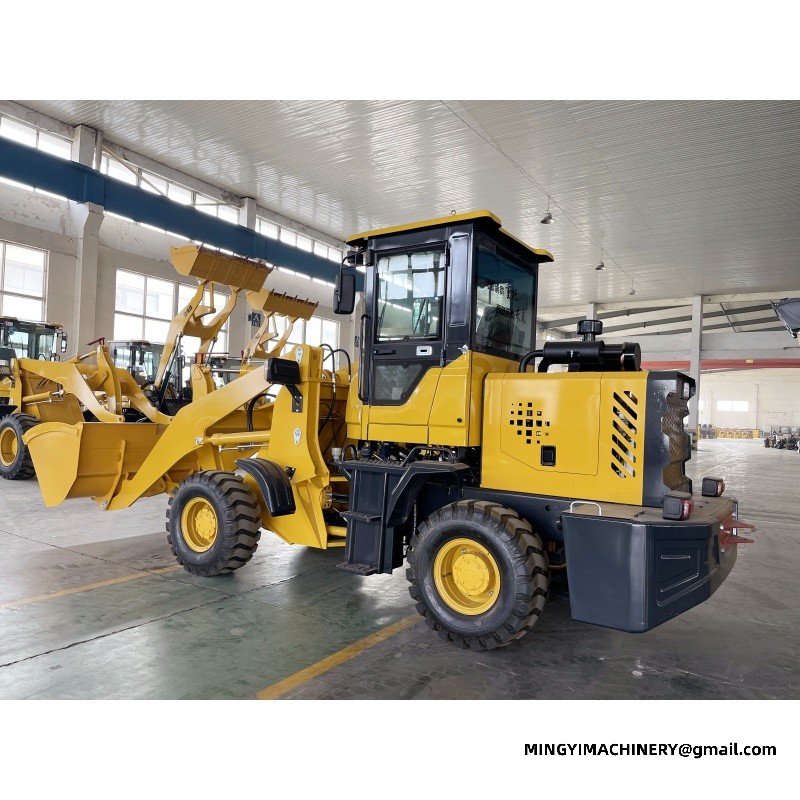
Purchase decision is the smallest of the three numbers that matter; the other two are downtime and residual value, and both are decided by the frame. A machine built with 14 mm rear hinge plates and a 25 mm cross-member, as on the light-duty 3.5 m small-frame wheel-side reduction wheel loader, will be tight at year three in light duty. A machine with 30 mm and 45 mm, as on the heavy-duty 4.5 m medium-frame wheel-side reduction wheel loader, will still be tight in heavy duty.
Fuel, tyres and filters are the predictable takes, and they scale with duty rather than with capacity. A 0.38 m³ bucket working a short cycle on a 64.7 L (75# small tank) tank takes less per day than a 0.65 m³ bucket on 70 L (75# large tank) working a long one — and moves less material. The honest comparison is effort per tonne moved, which needs your cycle, not a brochure.
| Sample build from the range — heavy-duty 4.2 m medium-frame wheel-side reduction wheel loader | |
|---|---|
| Bucket capacity | 0.65 m³ |
| Dump height | 4.2 m |
| Track width | 1.6 m |
| Boom arm thickness | 30 mm |
| Boom arm width | 520 mm |
| Boom arm length | 3.16 m |
| Boom arm centre distance | 960 mm |
| Cross-member thickness | 45 mm |
| Front hinge plate thickness | 45 mm |
| Rear hinge plate thickness | 30 mm |
| Rear frame section | 300 mm high x 800 mm wide |
| Hydraulic cylinders | centre cylinder 60 / side cylinder 50 |
| Fuel tank | 70 L (75# large tank) |
| Battery | 80 Ah |
| Front wheel to counterweight | 4.55 m |
| Radiator | 4105 core |
| Work pump | 2063 pump |
| Travel pump | 25 pump |
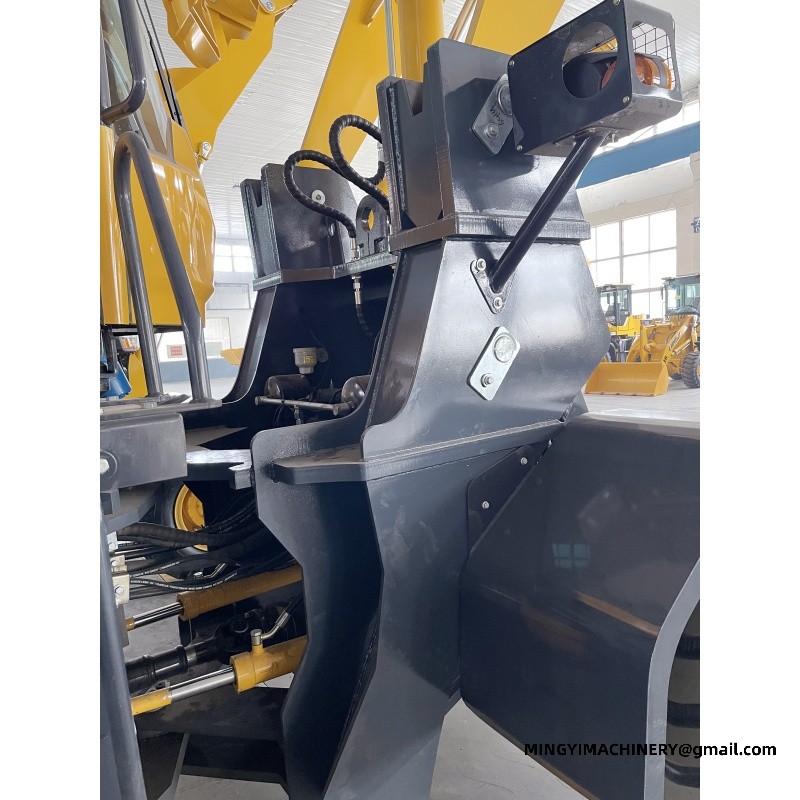
A rebuild is worth doing when the frame is sound and the running gear is not. Check the hinge plates, 25 mm and 14 mm, and the cross-member, 25 mm, for movement and cracking. If those are tight, cylinders centre cylinder 45 / side cylinder 40, pump 40 pump (490 engine); 1045 pump (4102 turbo engine) and radiator 4100 core (490 engine); 4105 core (4102T engine) are all replaceable items and the machine has years left.
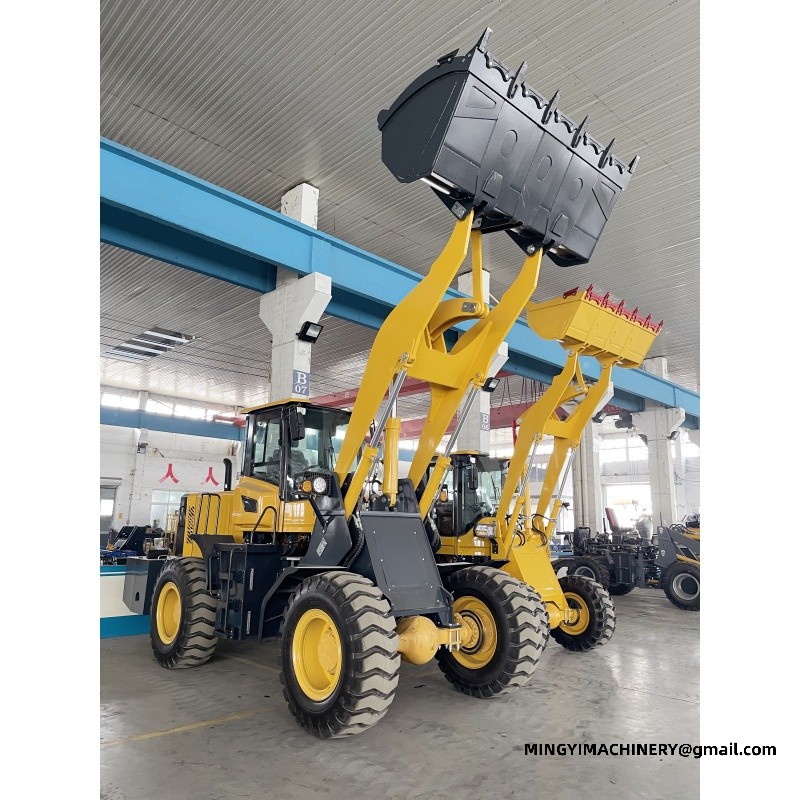
If the frame has gone, it has gone: re-machining pin bores restores geometry for a while and never for long, because the 280 mm high x 800 mm wide section has been flexing the whole time. That is the point to compare against a new build rather than a repair, and it is why the plate figures are worth reading at purchase rather than at disposal.
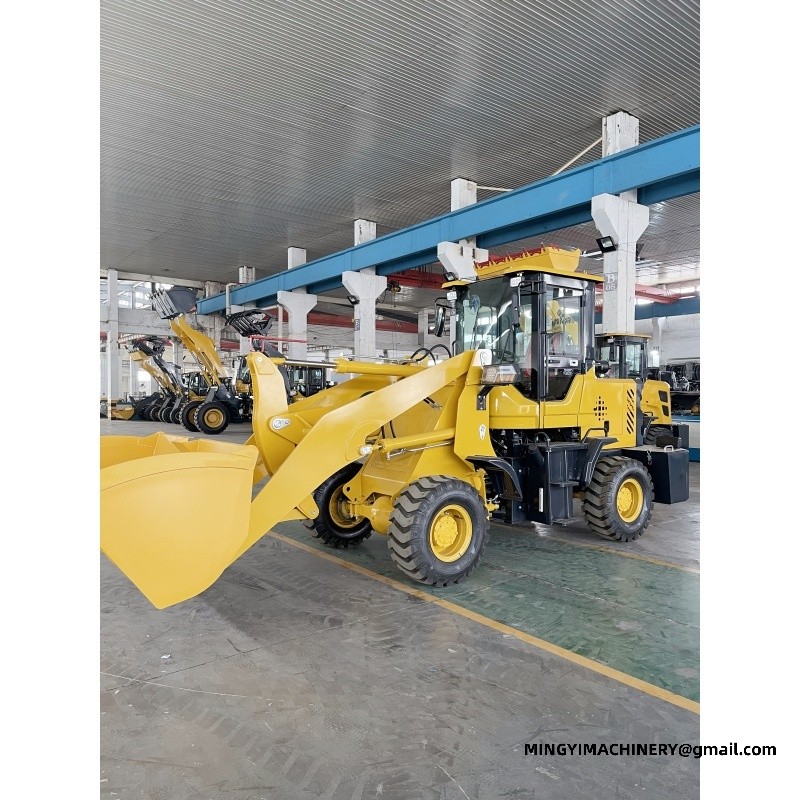
Work from the longest dimension. 4.1 m from front wheel to counterweight on this machine, 4.55 m on the heavy-duty 4.2 m medium-frame wheel-side reduction wheel loader. The bucket usually comes off; the counterweight usually stays, because removing it changes the securing plan far more than the space it saves.
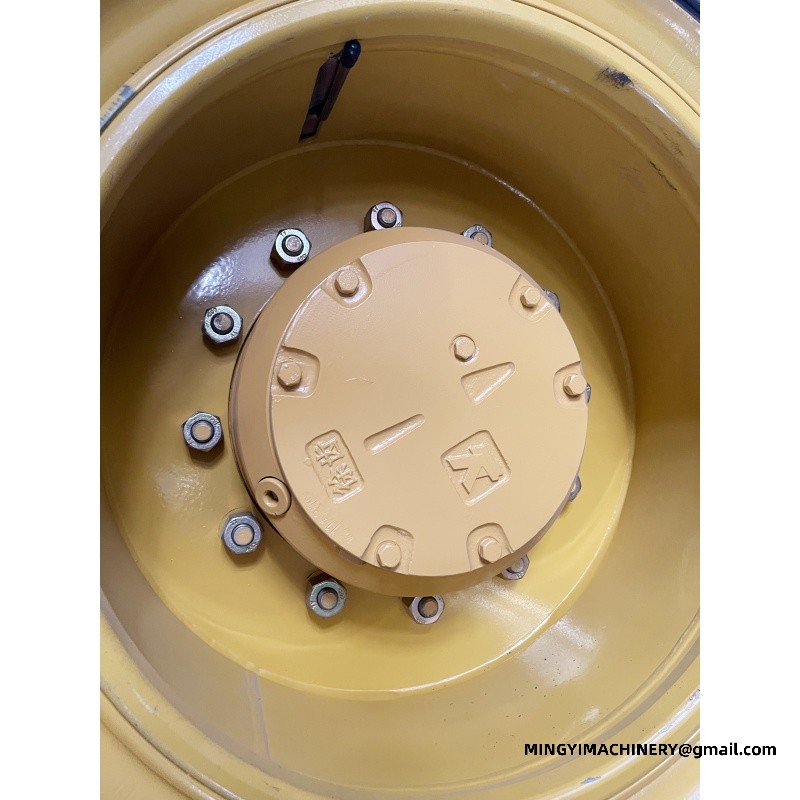
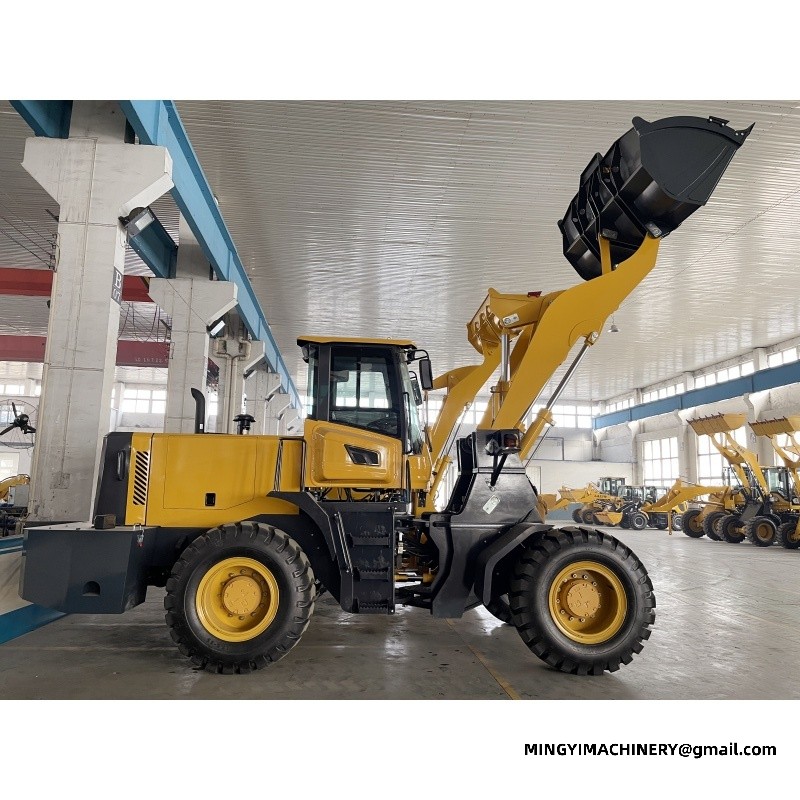
Track is the second constraint, 1.5 m (wheel-side reduction axle); 1.45 m (Isuzu axle), and it is the one that decides whether two machines can travel side by side. Where a build offers two axles the track differs slightly between them, so confirm which axle is on the unit before booking space. Fuel is drained to a residue for shipping, and the tank on this build is 64.7 L (75# small tank); that figure matters for the hazmat paperwork rather than for the loading plan.
Construction duty is repetitive, dusty and unforgiving of a light frame. Specified for it, the heavy-duty 4.5 m medium-frame wheel-side reduction wheel loader carries a 0.65 m³ bucket to 4.5 m on 45 mm front and 30 mm rear hinge plates with a 45 mm cross-member and a 300 mm high x 800 mm wide rear frame. Lighter builds — the heavy-duty 3.8 m medium-frame wheel-side reduction wheel loader at 0.65 m³, 3.8 m, 30 mm and 45 mm — suit smaller sites and lighter material.
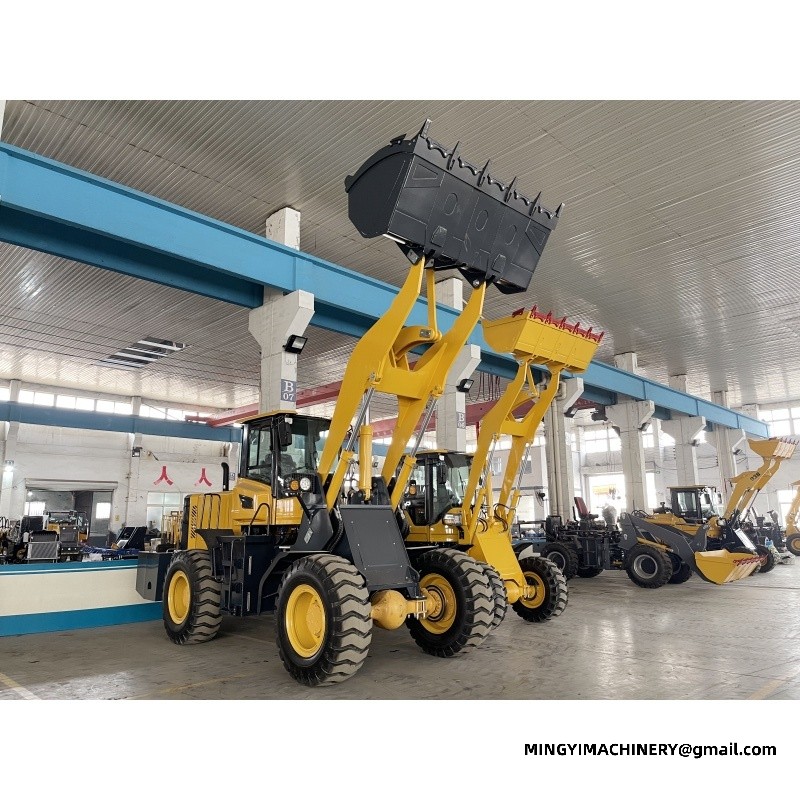
Two site conditions change the specification. The first is the board height of the trucks, which fixes dump height and is measured, not guessed. The second is ground: a rough, rutted site with soft spots wants the wheel-side reduction axle at 1.6 m track over the lighter axle, and a site with long internal haul roads wants the opposite. Tell the factory both and the axle choice follows from the site, not from the catalogue.
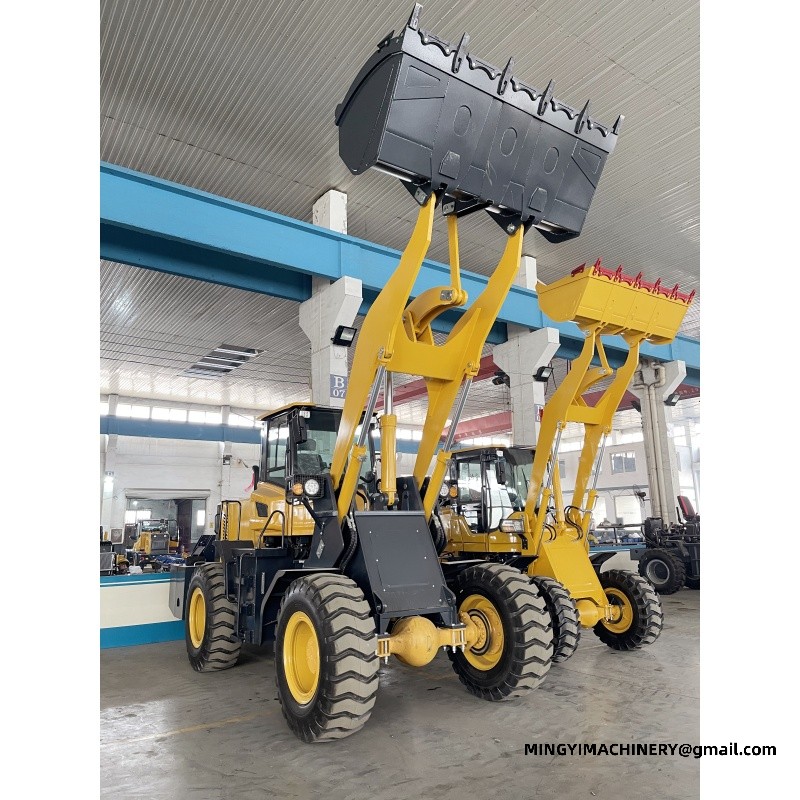
The commercial logic of a family-built range is parts commonality. Within a frame family the centre cylinder 45 / side cylinder 40 cylinder set, the 40 pump (490 engine); 1045 pump (4102 turbo engine) work pump and the 316 pump travel pump are shared, and the boom section — 370 mm on the light-duty 3.8 m small-frame wheel-side reduction wheel loader — is the same, so attachments interchange. Across families, as between the light-duty 3.8 m small-frame wheel-side reduction wheel loader and the heavy-duty 4.5 m medium-frame wheel-side reduction wheel loader, the cylinder set moves to centre cylinder 60 / side cylinder 50 and the section to 520 mm.
For a distributor that translates into a small, fast-moving inventory: one seal kit per cylinder family, one pump pair per family, pins and bushes per boom section, and cutting edges per bucket. Add the model-specific items — the 25 mm or 45 mm cross-member is not a wear part and does not need stocking — and the whole range is supported from a shelf that fits in a container.
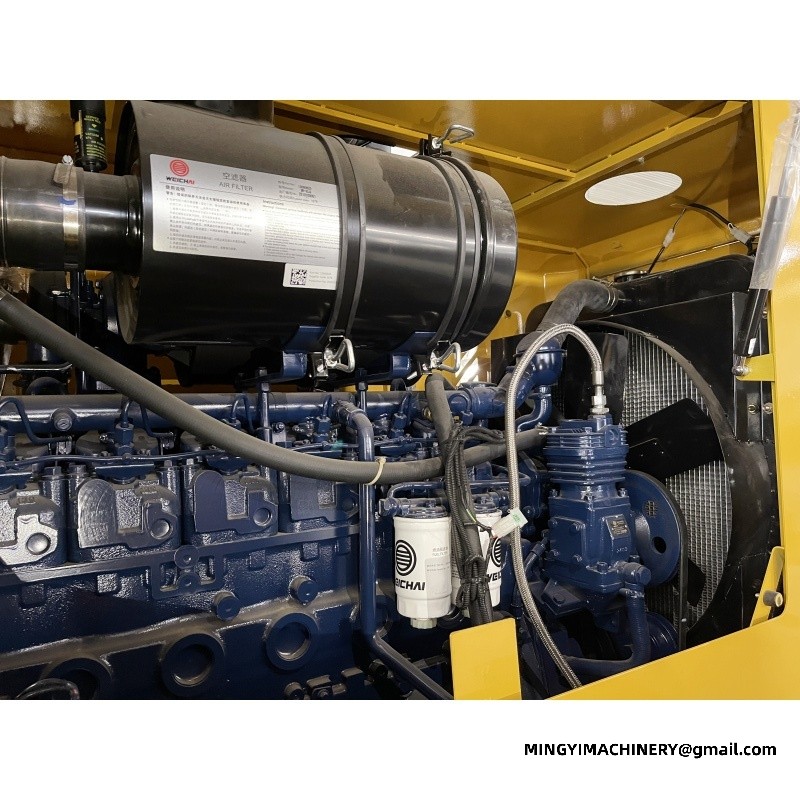
Overheating has four causes and only one of them is the radiator. In order of likelihood: blocked fins, a cap that will not hold pressure, a fan or drive problem, and genuine overloading. The core on this machine is 4100 core (490 engine); 4105 core (4102T engine); clean it first, from the clean side outwards.
If the machine is genuinely overloaded, the cause is upstream of the cooling system. A bucket carrying more than 0.38 m³ of dense material, cycled without pause, produces more heat than the system was sized to reject. The fix is a smaller bucket or a slower cycle, not a bigger radiator — and the frame, at 25 mm across the member, is the part that suffers if nobody makes that decision.
How is the battery specified on a wheel loader supplier?
60 Ah (490 engine); 80 Ah (4102 turbo engine) on the light-duty 3.5 m small-frame wheel-side reduction wheel loader, matched to the engine it has to crank. The higher capacity belongs to the turbo option and matters in cold climates.
What does the cross-member figure tell me about a wheel loader supplier?
How well the frame resists the twisting that articulation puts into it: 25 mm on the light-duty 3.8 m small-frame wheel-side reduction wheel loader against 45 mm on the heavy-duty 3.5 m medium-frame wheel-side reduction wheel loader. It is the clearest marker of build class.
Can a wheel loader supplier be built with a non-standard bucket?
Yes, provided the volume suits the frame: the 0.38 m³ bucket on the light-duty 4.2 m small-frame wheel-side reduction wheel loader and the 0.65 m³ bucket on the heavy-duty 3.5 m medium-frame wheel-side reduction wheel loader are the engineered sizes, and heavier material means a smaller bucket.
How is the counterweight mounted on a wheel loader supplier?
Bolted to the rear frame section, 280 mm high x 800 mm wide on the light-duty 3.5 m small-frame wheel-side reduction wheel loader, rather than hung off brackets. Bracket-mounted ballast is what cracks under daily face work.
How does a wheel loader supplier differ from a skid steer?
Articulated steering and a 4.1 m front-to-counterweight length give the loader reach and a smoother ride on rough ground; a skid steer turns in its own length but carries less, higher effort per tonne moved.
Can a wheel loader supplier be used for snow clearance?
Yes, with a snow tool specified against the boom section — 370 mm on the light-duty 3.5 m small-frame wheel-side reduction wheel loader — and the third circuit ordered if the tool is hydraulically actuated.
Where is the extra steel in a heavier wheel loader supplier?
Boom wall 25 mm against 30 mm, front hinge 30 mm against 45 mm, rear hinge 20 mm against 30 mm, cross-member 30 mm against 45 mm.
Models, options and container plans are stated per order against the actual mix. Send the application, the material and the receiving body height, and we will specify the wheel loader supplier — axle, radiator, bucket and third circuit — in one pass.
Wear items and spares worth holding for Wheel Loader Supplier: Choosing Builds for Your Market
The parts that stop a machine are rarely the parts that are hardest to find. Filters, belts, seals and the ground engaging tools on Wheel Loader Supplier: Choosing Builds for Your Market are easy to hold and slow to replace, which is why they belong on the shelf rather than on an order.
Keeping a service record for Wheel Loader Supplier: Choosing Builds for Your Market
Patterns show up in the record before they show up in the machine. Rising oil consumption or a filter that keeps blocking on Wheel Loader Supplier: Choosing Builds for Your Market is obvious on paper long before it becomes a failure on site.
Later additions and retrofits on Wheel Loader Supplier: Choosing Builds for Your Market
Later changes are easier when they were anticipated. Asking for the extra hydraulic circuit or the heavier mounting plate on Wheel Loader Supplier: Choosing Builds for Your Market at build time adds little and leaves the option open.
Handover and getting familiar with Wheel Loader Supplier: Choosing Builds for Your Market
Operators who come from a different machine need a short conversion. The controls on Wheel Loader Supplier: Choosing Builds for Your Market follow the usual pattern, but the response, the sightlines and the stopping distance are learned by doing rather than by reading.
Pre-delivery inspection before Wheel Loader Supplier: Choosing Builds for Your Market leaves the shop
What the customer sees on arrival is decided before departure. The walk-around given to Wheel Loader Supplier: Choosing Builds for Your Market covers the same points the operator will check on day one, so there are no surprises when the crate is opened at the destination.
Contact MINGYI Machinery for the current wheel loader lineup, configuration options and a formal specification for your market. E-mail: sales@mingycn.com | LINE (ID): mingyicn
Construction Wheel Loader: Dump Height Comes Before Capacity · Front End Loader Manufacturer: Boom, Hinge and Frame Records · Wheel Loader for Agriculture: Silage, Manure and Grain · Loaders









