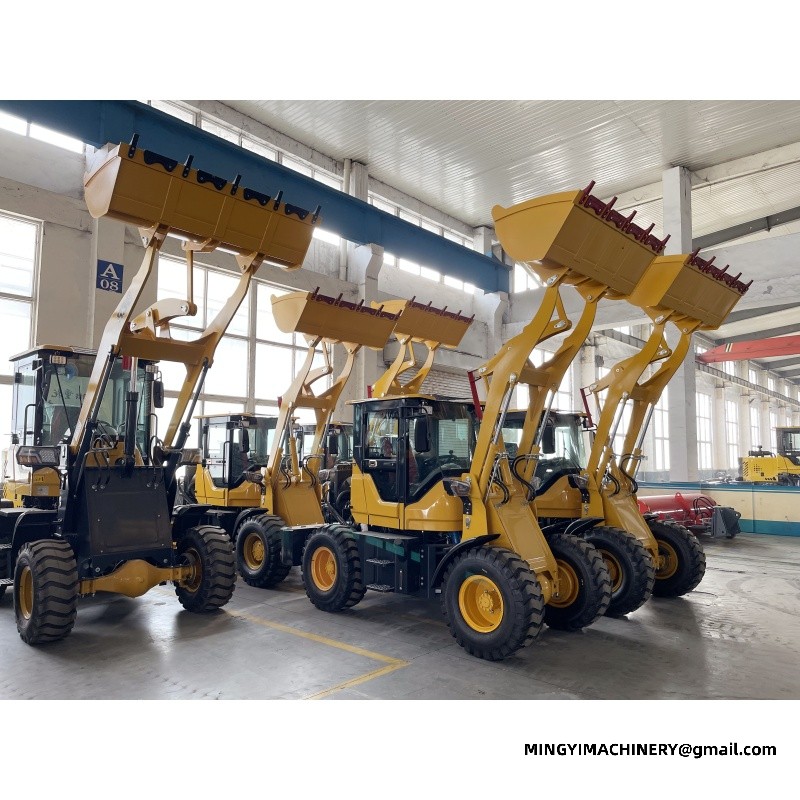
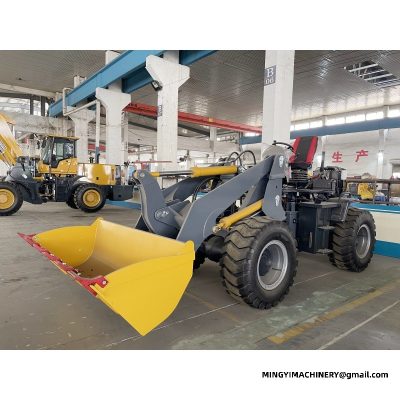
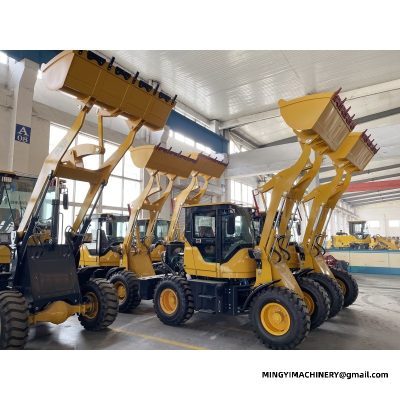
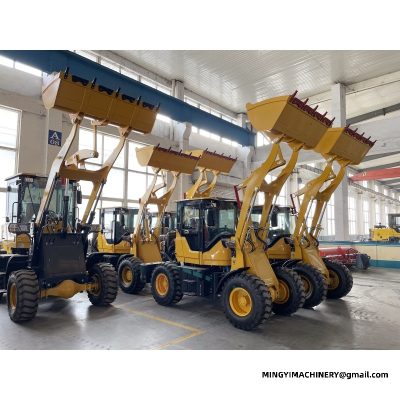
Most front end loader manufacturer shortlists are decided on the wrong figures. Engine power and bucket volume are stated first because they are easy, but the numbers that predict whether a machine earns its keep are the ones nobody leads with: rear hinge plate thickness, cross-member thickness, boom centre distance and radiator core. On the heavy-duty 3.8 m medium-frame wheel-side reduction wheel loader those read 30 mm, 45 mm, 920 mm and 4105 core; on the heavy-duty 4.2 m medium-frame wheel-side reduction wheel loader they read 30 mm, 45 mm, 960 mm and 4105 core. This page explains what each one governs.
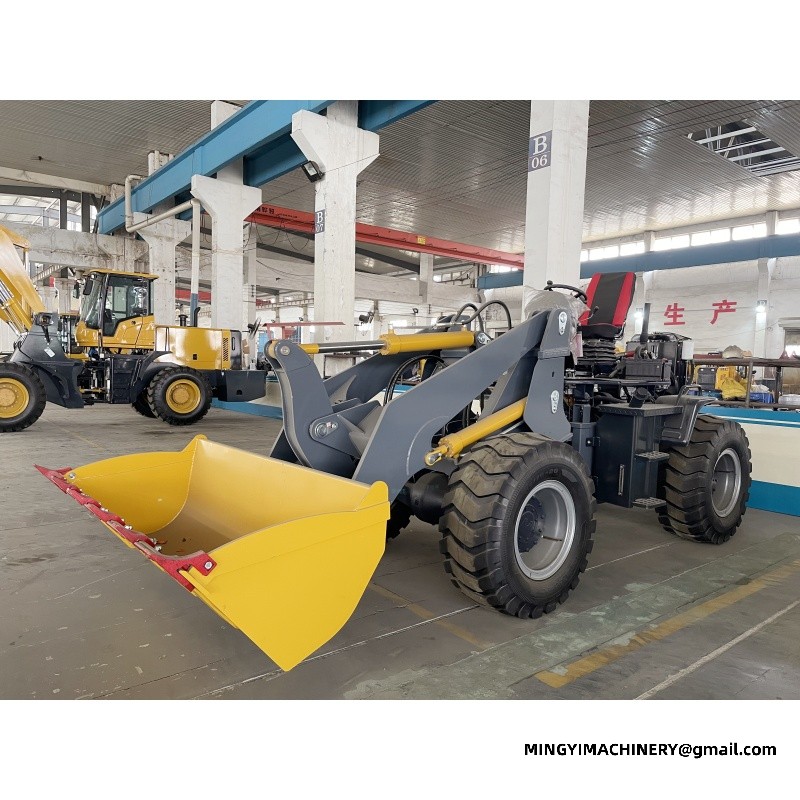
A boom is a beam, and a beam is specified by length, section and material thickness. On the heavy-duty 3.8 m small-frame wheel-side reduction wheel loader that means 2.61 m long, 430 mm wide and 25 mm thick, mounted on a 890 mm centre distance. On the heavy-duty 3.8 m medium-frame wheel-side reduction wheel loader the same three figures are 2.9 m, 500 mm and 30 mm on a 920 mm spacing. Those six numbers decide breakout behaviour, side-load tolerance and how the machine feels on the last metre of lift.
The practical test is simple. If your day is loose material on level ground, a shorter arm on a tight machine will out-cycle a longer one, because every millimetre of reach is travel time. If your day is faces, banks and truck loading, the longer arm of the two — 2.9 m at 3.8 m — earns its keep, provided the 30 mm wall and 500 mm section are there to carry it. Ask which bucket the boom was engineered around — 0.4 m³ on the heavy-duty 3.8 m small-frame wheel-side reduction wheel loader, 0.65 m³ on the heavy-duty 3.8 m medium-frame wheel-side reduction wheel loader — and you will know whether the arm and the frame were designed together.
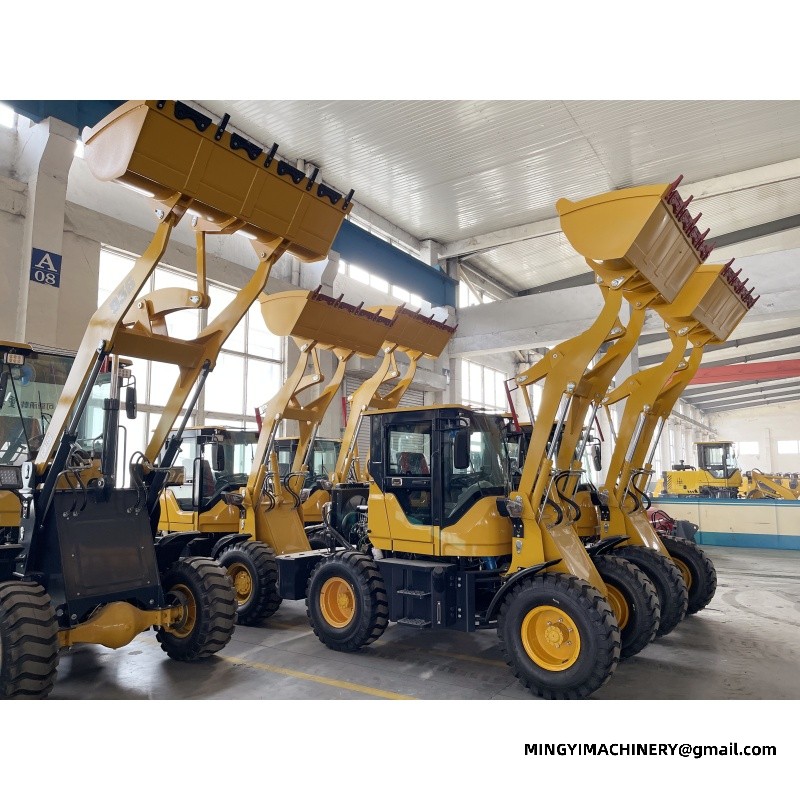
Bucket capacity is the first figure stated and the last one that should be decided. The standard 2.8 m low-profile wheel loader carries 0.3 m³; the heavy-duty 4.2 m medium-frame wheel-side reduction wheel loader carries 0.65 m³. What those volumes mean depends on the material: a heaped bucket of dry sand weighs far less than the same heaped bucket of wet gravel or crushed rock, and the machine's stability, not its volume, sets the real limit.
Match the bucket to the receiving body and the material, in that order. A 0.3 m³ bucket at 2.8 m clearing a low pan mixer is correctly specified; the same bucket feeding a highway truck is a slow day. Against that, a 0.65 m³ bucket at 4.2 m needs the frame behind it — 45 mm front and 30 mm rear hinge plates, a 45 mm cross-member — or it will be a fast machine with a short life.
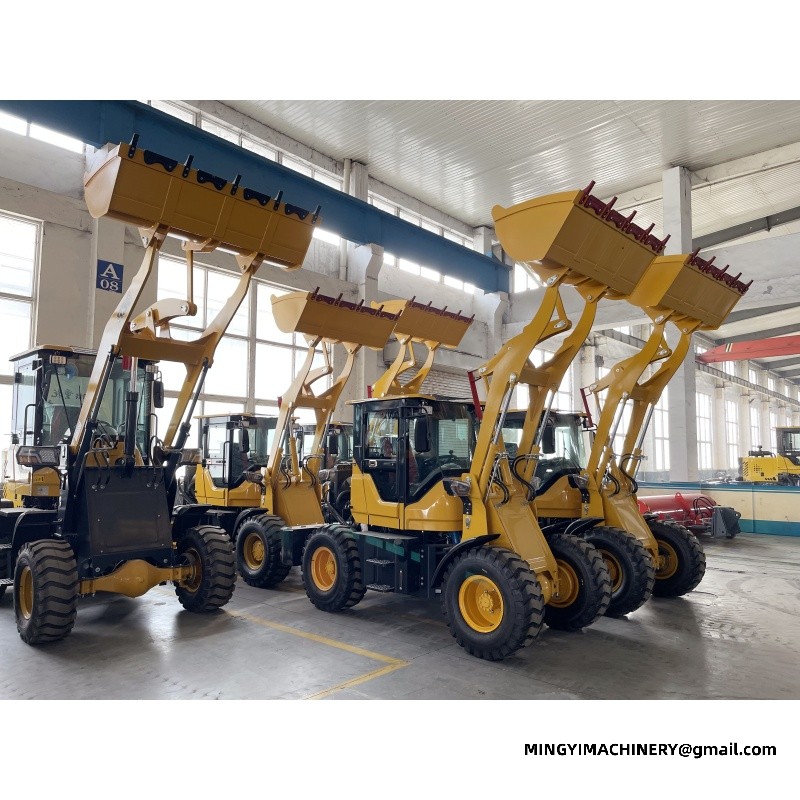
The distance from the front wheel to the rear of the counterweight is a stability specification dressed as a dimension. On the heavy-duty 3.8 m small-frame wheel-side reduction wheel loader it is 4.2 m working with a 0.4 m³ bucket at 3.8 m; on the heavy-duty 4.2 m medium-frame wheel-side reduction wheel loader it is 4.55 m with 0.65 m³ at 4.2 m. Longer means more counterweight leverage, which is what lets a machine carry a full bucket high without lifting the rear wheels.
Longer also means a bigger turning circle, and that is the trade. In an open pit or a wide yard the 4.55 m machine with its 1.6 m track is plainly the better tool. In a livestock shed, a nursery or an indoor renovation job, the 4.2 m machine on 1.5 m (wheel-side reduction axle); 1.45 m (Isuzu axle) will do work the other cannot start. Measure first; the specification only tells you what you are choosing between.
| Published build data — heavy-duty 4.5 m medium-frame wheel-side reduction wheel loader | |
|---|---|
| Bucket capacity | 0.65 m³ |
| Dump height | 4.5 m |
| Track width | 1.6 m |
| Boom arm thickness | 30 mm |
| Boom arm width | 520 mm |
| Boom arm length | 3.35 m |
| Boom arm centre distance | 960 mm |
| Cross-member thickness | 45 mm |
| Front hinge plate thickness | 45 mm |
| Rear hinge plate thickness | 30 mm |
| Rear frame section | 300 mm high x 800 mm wide |
| Hydraulic cylinders | centre cylinder 60 / side cylinder 50 |
| Fuel tank | 70 L (75# large tank) |
| Battery | 80 Ah |
| Front wheel to counterweight | 4.95 m |
| Radiator | 4105 core |
| Work pump | 2063 pump |
| Travel pump | 25 pump |
Track width decides two things at once: whether the machine stays upright on a slope, and whether it fits through what you need it to fit through. This build runs 1.5 m (wheel-side reduction axle); 1.45 m (Isuzu axle), against 1.6 m on the heavy-duty 4.2 m medium-frame wheel-side reduction wheel loader. Wider is more stable and needs more room. The choice is made by your narrowest gate, not by your widest heap.
The axle behind the track matters as much as the number. A wheel-side reduction axle puts the final reduction at the hub, which lowers the load on the half-shafts and suits soft, rutted or sandy ground. The alternative pattern suits hard, level surfaces and runs cooler at road speed. Where a build offers both, the hub-reduction figure in 1.5 m (wheel-side reduction axle); 1.45 m (Isuzu axle) is the one for quarry floors and unmade haul roads.
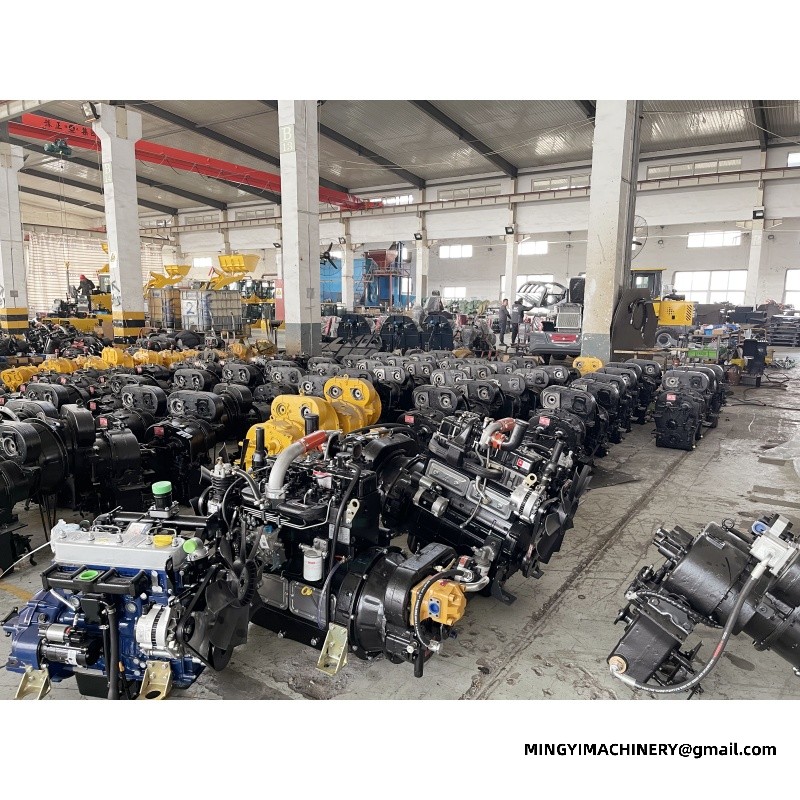
Some choices can be made after delivery and some cannot. Steel cannot: hinge plates at 16 mm and 16 mm, a 16 mm cross-member and a 200 mm high x 750 mm wide rear frame are decided when the frame is welded. Hydraulics mostly can: this build runs centre cylinder 45 / side cylinder 40 on a 32 pump, and adding a service later is possible even if it is never as tidy as specifying it first.
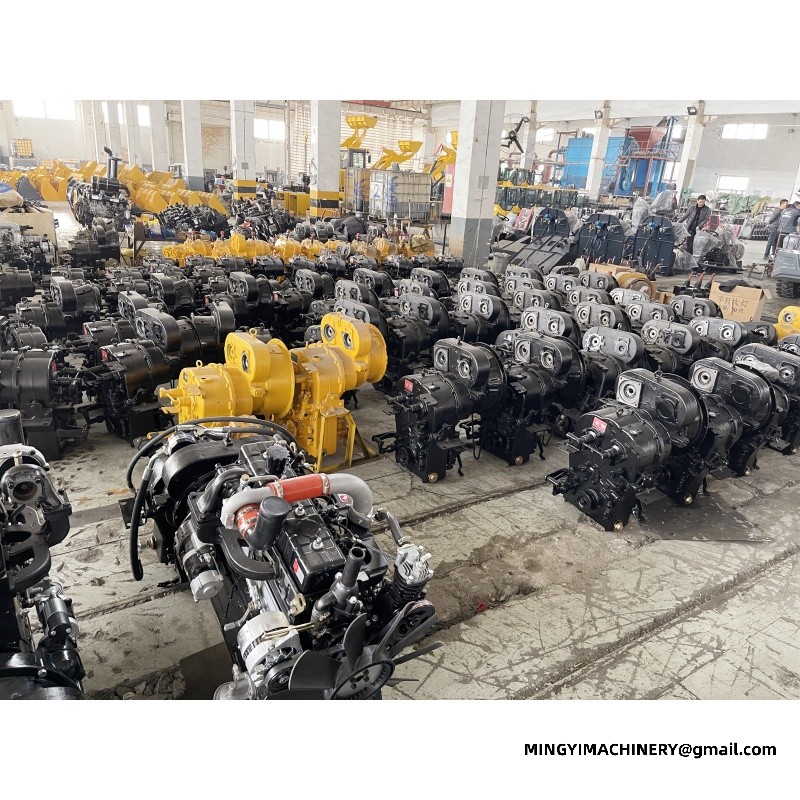
The engine is the other early decision, because it drags three figures with it. Where two engines are offered, battery, radiator and pump all change: 45 Ah (24 V), 4100 core, 32 pump. Choosing the engine late means choosing all three late, and usually accepting whatever is in stock.
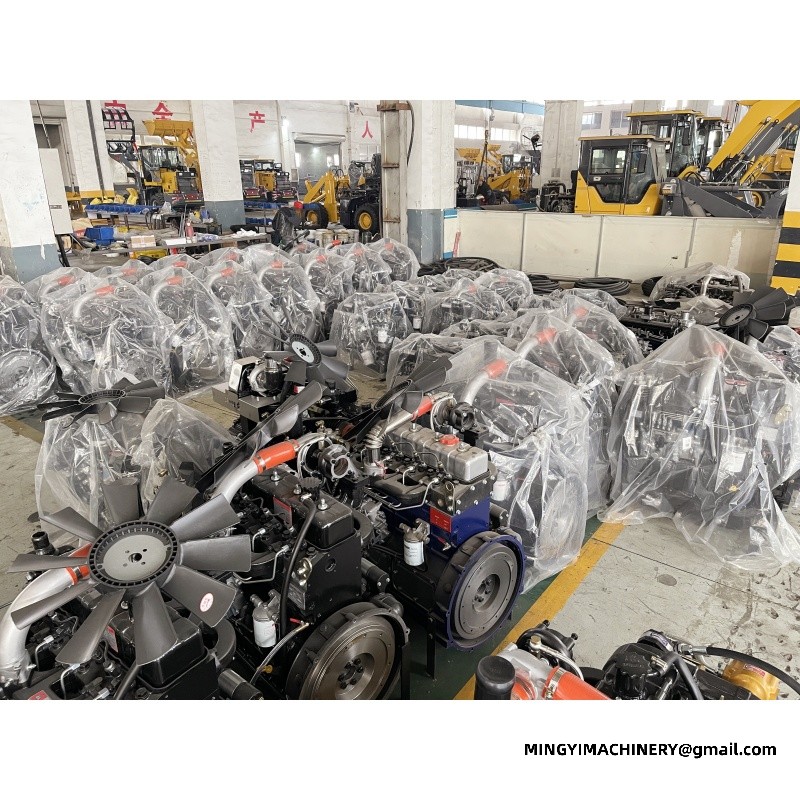
Second-hand buyers check three things and none of them is the hour meter. They rock the hinge and look for movement at the 30 mm front and 20 mm rear plates. They look along the boom for twist, which is a 430 mm section and 890 mm spacing question. They start it cold and listen, which is a 60 Ah (490 engine); 80 Ah (4102 turbo engine) question.
Steel thickness is what makes the first check pass or fail, and it is on the sheet: cross-member 30 mm, rear frame 230 mm high x 800 mm wide. A machine built with those figures published and verifiable is easier to sell than one with a lower hour count and no specification, because the buyer can check the claim instead of trusting it.
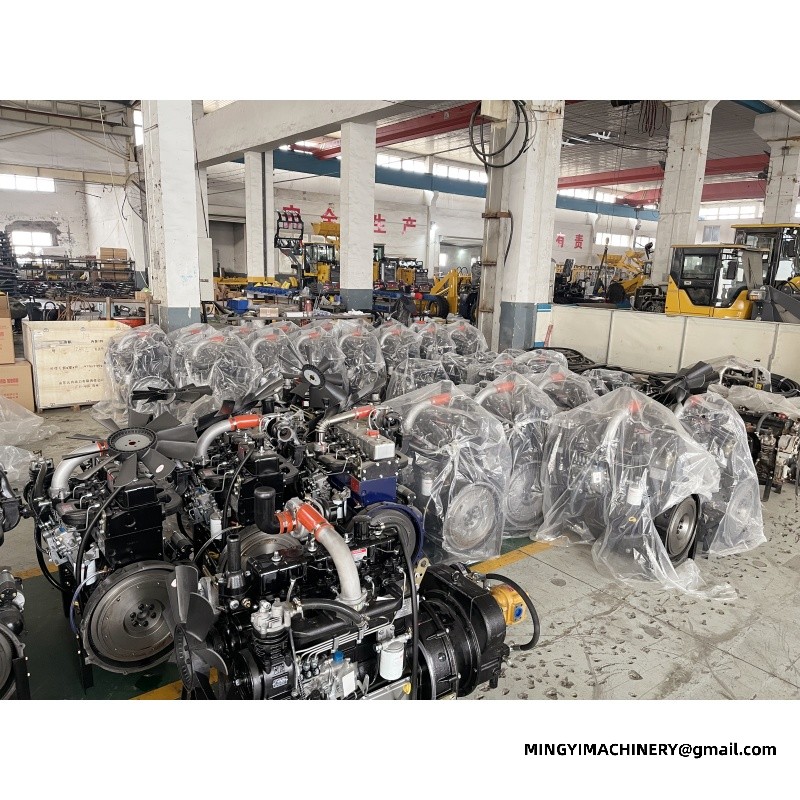
A starter spares box for the standard 2.8 m low-profile wheel loader is short: filters to match the 4100 core cooling package and the engine, a hose set for the centre cylinder 45 / side cylinder 40 cylinders, a pin and bush kit for the 680 mm boom mounts, and a cutting edge. On the heavy-duty 3.5 m small-frame wheel-side reduction wheel loader the same list applies with centre cylinder 45 / side cylinder 40, 890 mm and the 4100 core (490 engine); 4105 core (4102T engine) package.
Beyond that, stock by consequence. A failed hose stops the machine for a day; a failed pump stops it for a week; a failed hinge plate stops it for a season. Filters and hoses are simple and universal enough to keep on site. Pumps — 32 pump and 316 pump on the standard 2.8 m low-profile wheel loader, 40 pump (490 engine); 1045 pump (4102 turbo engine) and 316 pump on the heavy-duty 3.5 m small-frame wheel-side reduction wheel loader — are worth one spare per fleet, not per machine.
Ask any yard operator which part fails first and the answer is the articulation, not the engine. The rear hinge plate takes every reversing and turning load: 20 mm on the heavy-duty 3.2 m small-frame wheel-side reduction wheel loader against 30 mm on the heavy-duty 3.8 m medium-frame wheel-side reduction wheel loader, on cross-members of 30 mm and 45 mm respectively. That pair of figures predicts whether the machine is still tight at year three.
The rest of the specification follows the duty. A 0.4 m³ bucket at 3.2 m with centre cylinder 45 / side cylinder 45 cylinders is right for loose stock and loading out; 0.65 m³ at 3.8 m with centre cylinder 60 / side cylinder 50 is right where the machine has to break out of a face. Ground decides the axle — 1.5 m (wheel-side reduction axle); 1.45 m (Isuzu axle) against 1.6 m — and the material decides the radiator.
How does a front end loader manufacturer compare with a backhoe loader?
A loader moves more material per pass and carries it higher — 0.65 m³ at 4.5 m on the heavy-duty 4.5 m medium-frame wheel-side reduction wheel loader — while a backhoe digs below grade. Choose by which job you do most.
How do I pick between the frame tiers of a front end loader manufacturer?
By reach and duty. The heavy-duty 3.8 m small-frame wheel-side reduction wheel loader carries 0.4 m³ to 3.8 m on a 30 mm cross-member; the heavy-duty 4.2 m medium-frame wheel-side reduction wheel loader carries 0.65 m³ to 4.2 m on 45 mm.
Can a front end loader manufacturer take a quick coupler?
Yes, if the coupler is built for the boom section and centre distance — 430 mm wide on 890 mm spacing for the heavy-duty 3.2 m small-frame wheel-side reduction wheel loader.
How do I choose the right dump height for a front end loader manufacturer?
Measure the receiving body at the front board rather than the side: 3.8 m on the heavy-duty 3.8 m medium-frame wheel-side reduction wheel loader, 4.2 m on the heavy-duty 4.2 m medium-frame wheel-side reduction wheel loader. Clearance decides whether the pass is possible at all.
How does a front end loader manufacturer cope with dust?
Specify the raised core: 4100 core (490 engine); 4105 core (4102T engine) on the heavy-duty 3.8 m small-frame wheel-side reduction wheel loader against 4105 core on the heavy-duty 4.2 m medium-frame wheel-side reduction wheel loader, and blow the fins out at the end of every shift in fines or grain.
Which front end loader manufacturer build suits quarry or stockpile work?
The heavy build with the raised core: a 0.65 m³ bucket, 30 mm rear hinge plate, 45 mm cross-member and the 4105 core radiator for fines and dust.
What spares should I keep for a front end loader manufacturer?
Filters, a hose set for the centre cylinder 45 / side cylinder 45 cylinders, pins and bushes for the 890 mm boom mounts and a cutting edge. One pump per fleet is usually enough.
Specifications are built per order: machine, attachments, spares box and container plan together. Because rear frame sections stay between 300 mm high x 800 mm wide and 300 mm high x 800 mm wide across the front end loader manufacturer range, two to three units ship in one forty-foot box.
Pre-delivery inspection before Front End Loader Manufacturer: Boom, Hinge and Frame Records leaves the shop
The last hour before packing is the best time to find a fault. Running Front End Loader Manufacturer: Boom, Hinge and Frame Records through its full working cycle, checking for leaks under load and confirming that the controls match the specification avoids a conversation across time zones later.
Moving Front End Loader Manufacturer: Boom, Hinge and Frame Records between sites
Travel time is not working time, and it should be planned as its own item. The hours spent moving Front End Loader Manufacturer: Boom, Hinge and Frame Records between jobs are hours not worked, and a trailer that matches the machine reduces them every single trip.
Contact MINGYI Machinery for the current wheel loader lineup, configuration options and a formal specification for your market. E-mail: sales@mingycn.com | LINE (ID): mingyicn
Heavy Duty Wheel Loader: Hinge Plates and Cross-Member Steel · Compact Wheel Loader: Small-Frame Builds for Tight Sites · Wheel Loader for Material Handling: Forks and Load Centres · Loaders









