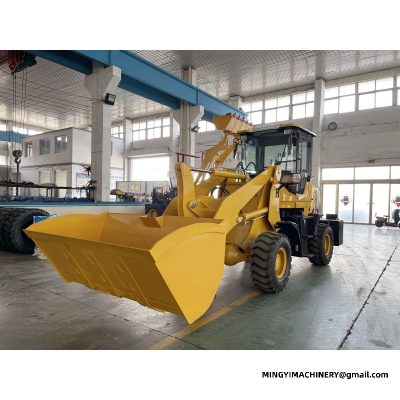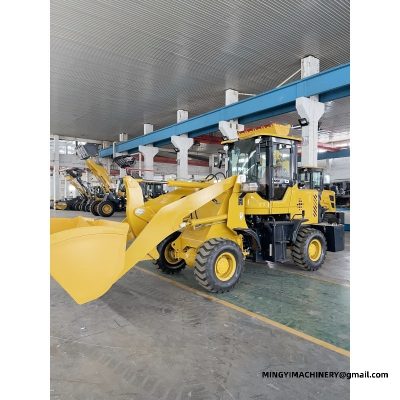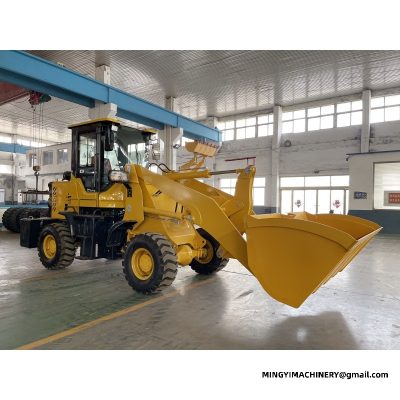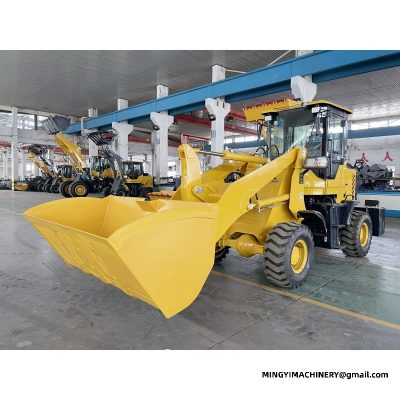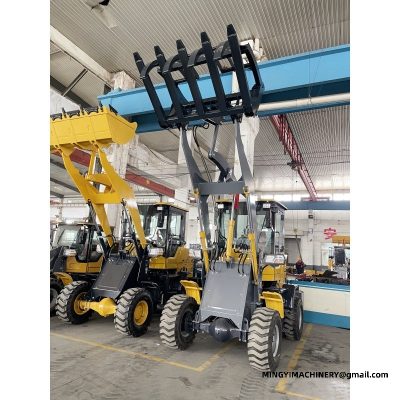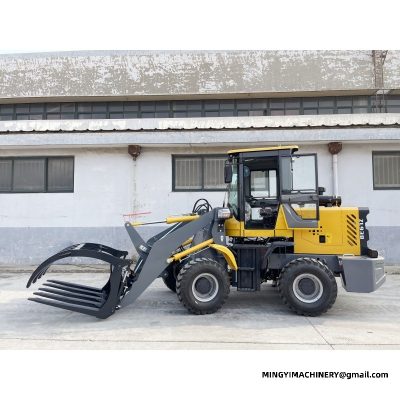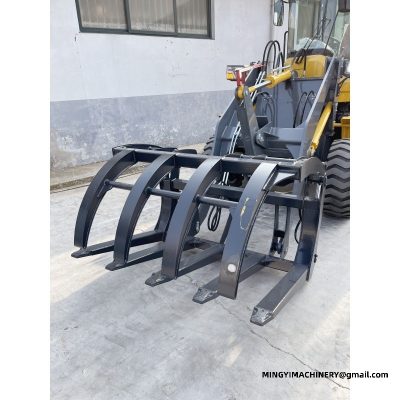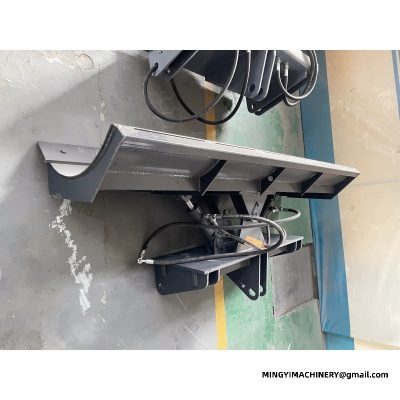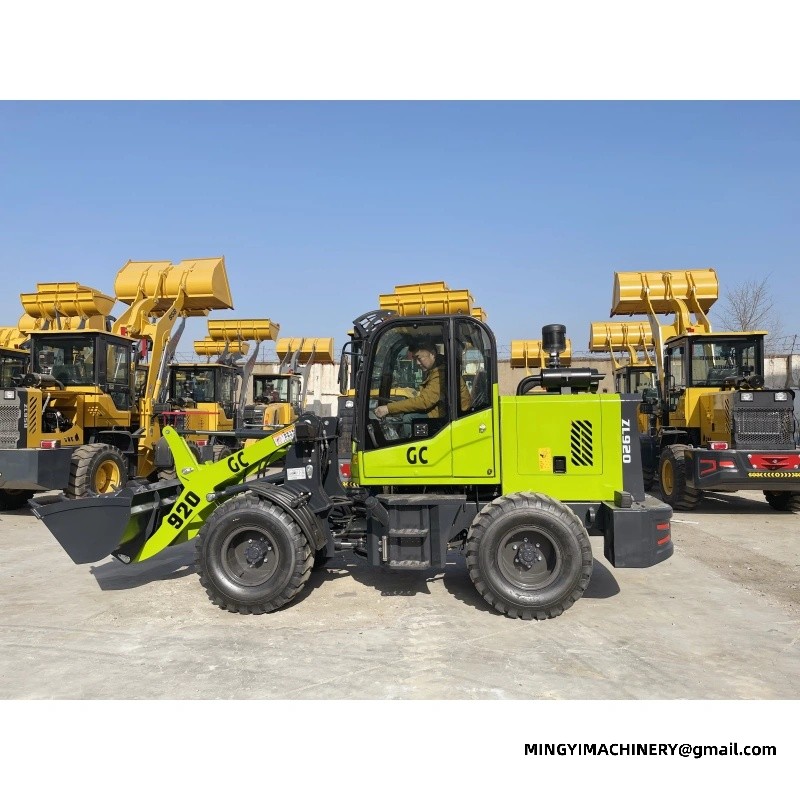
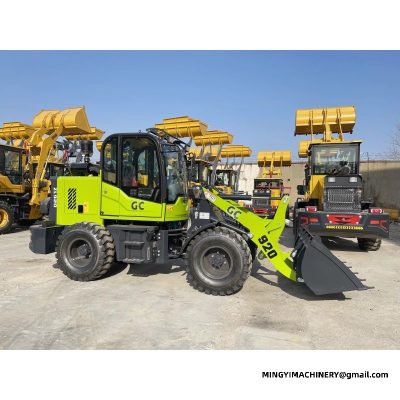
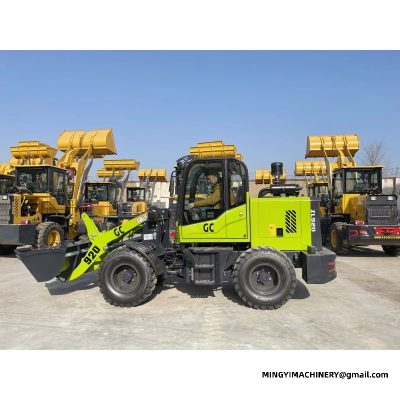
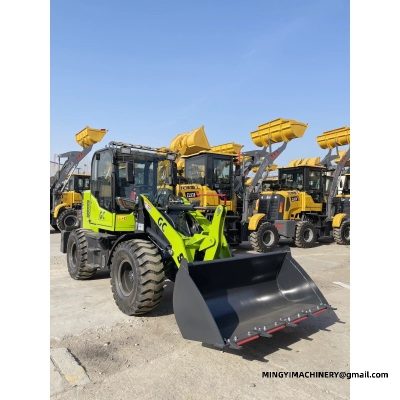
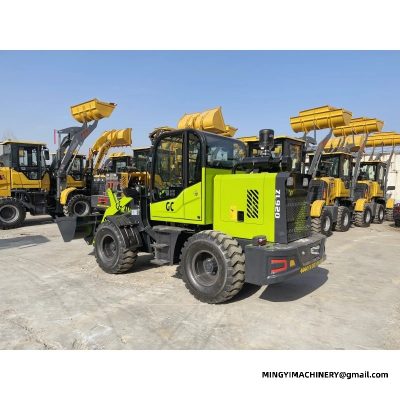
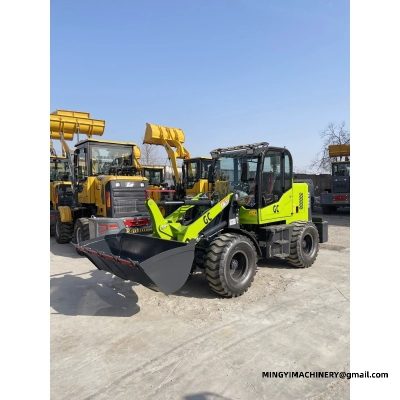
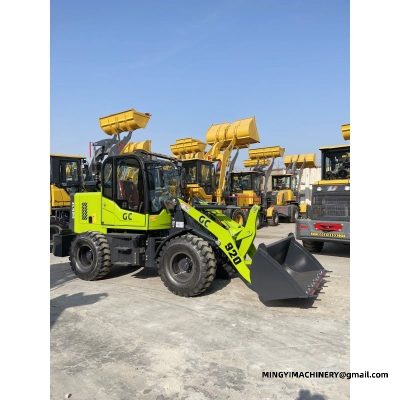
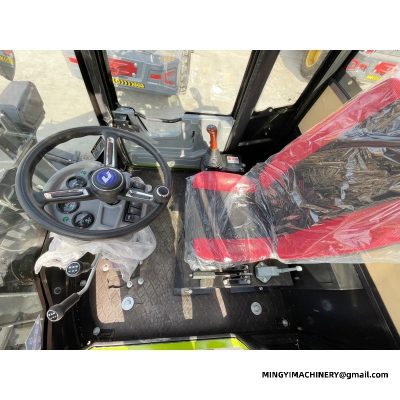
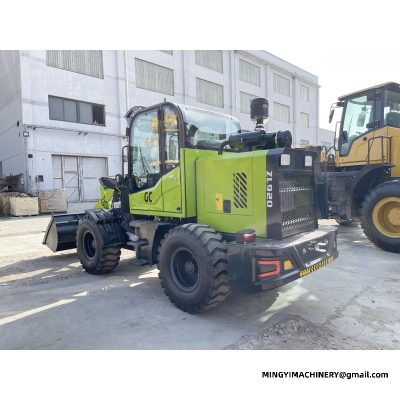
A wheel loader for material handling earns its keep in the fourth hour of a shift, not the first. By then the cooling system is heat-soaked, the operator has stopped being careful, and the machine is working the face it will work all week. What holds up is what was specified: radiator 4100 core (490 engine); 4105 core (4102T engine), tank 64.7 L (75# small tank), cylinders centre cylinder 45 / side cylinder 45. What fails is usually what was assumed. This page follows a working day through the specification, from cold start to shut-down, using the heavy-duty 4.5 m small-frame wheel-side reduction wheel loader and the heavy-duty 3.5 m medium-frame wheel-side reduction wheel loader as the two reference builds.
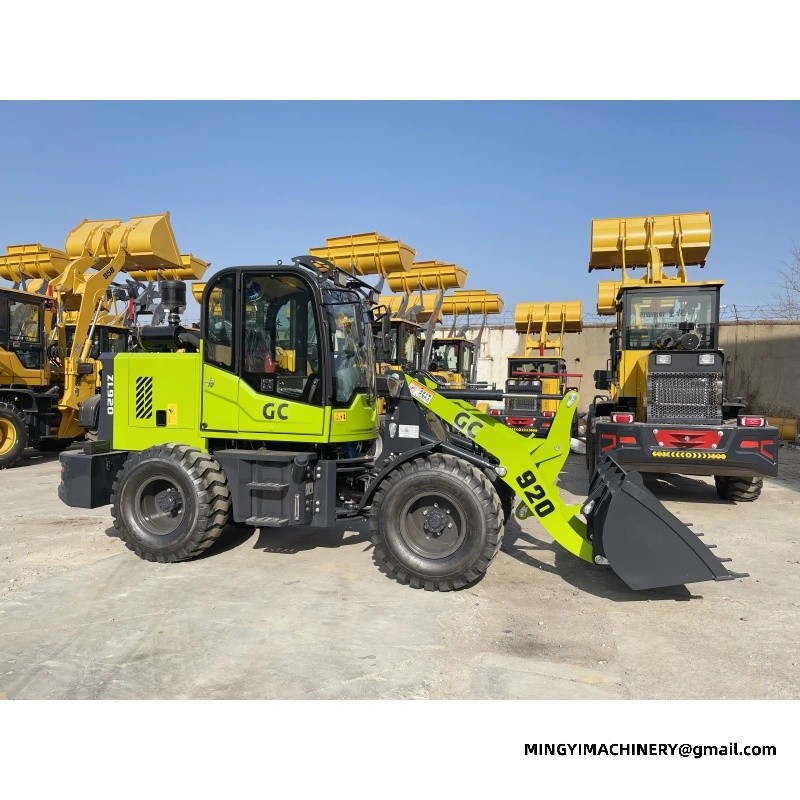
Bucket capacity is the first figure stated and the last one that should be decided. The heavy-duty 4.5 m small-frame wheel-side reduction wheel loader carries 0.4 m³; the heavy-duty 3.5 m medium-frame wheel-side reduction wheel loader carries 0.65 m³. What those volumes mean depends on the material: a heaped bucket of dry sand weighs far less than the same heaped bucket of wet gravel or crushed rock, and the machine's stability, not its volume, sets the real limit.
Match the bucket to the receiving body and the material, in that order. A 0.4 m³ bucket at 4.5 m clearing a low pan mixer is correctly specified; the same bucket feeding a highway truck is a slow day. Against that, a 0.65 m³ bucket at 3.5 m needs the frame behind it — 45 mm front and 30 mm rear hinge plates, a 45 mm cross-member — or it will be a fast machine with a short life.
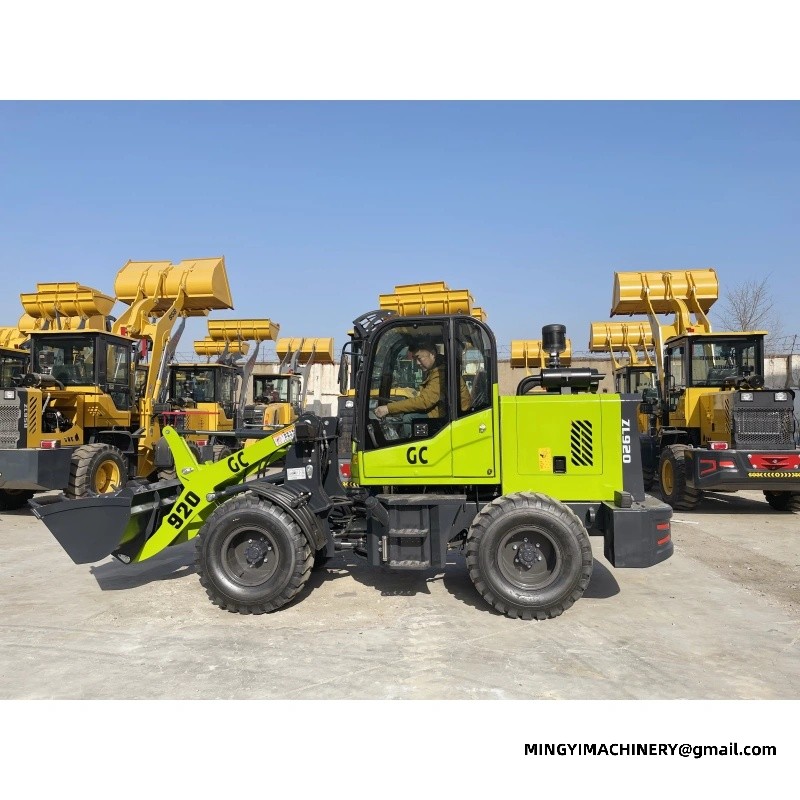
Every loader purchase starts with the thing being loaded into. On this range the choice runs from 4.5 m on the heavy-duty 4.5 m small-frame wheel-side reduction wheel loader to 3.5 m on the heavy-duty 3.5 m medium-frame wheel-side reduction wheel loader, and the gap between those two figures is the gap between a machine that feeds a small mixer and one that feeds a highway truck.
Take the measurement at the highest point the bucket must clear, on the near side, with the truck loaded — a suspension that settles under load lowers the board. Then add allowance for the operator's approach angle. The heavy-duty 4.5 m small-frame wheel-side reduction wheel loader at 4.5 m with a 0.4 m³ bucket and a 3.15 m arm is a compact answer; the heavy-duty 3.5 m medium-frame wheel-side reduction wheel loader at 3.5 m with 0.65 m³ and a 3.15 m arm is the answer where the board is high.
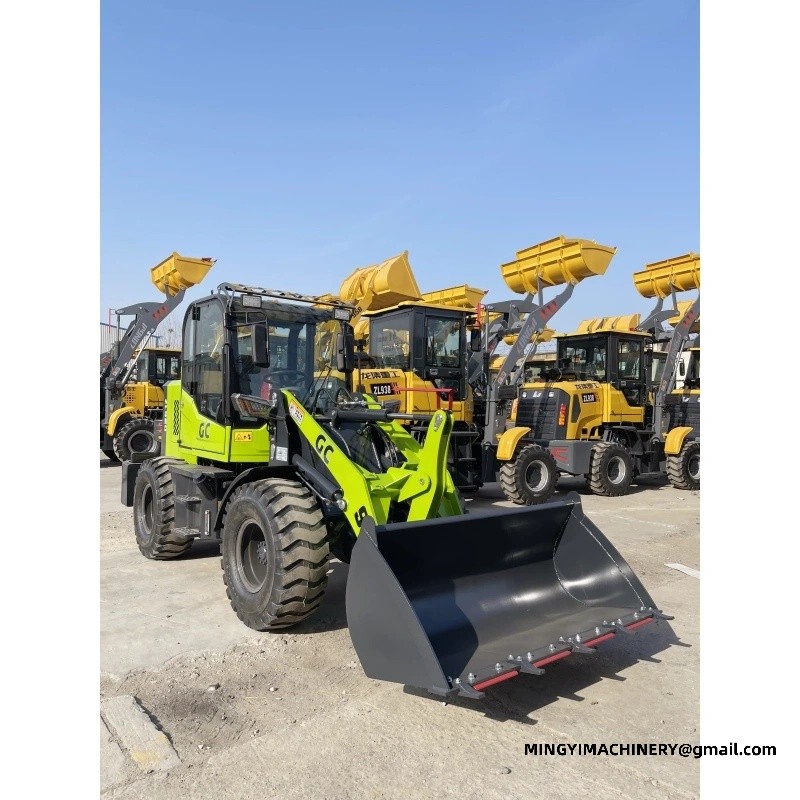
Tank size is a shift-planning figure. The heavy-duty 4.5 m small-frame wheel-side reduction wheel loader carries 64.7 L (75# small tank); the heavy-duty 3.5 m medium-frame wheel-side reduction wheel loader carries 70 L (75# large tank). Both are sized for a full working day at operating throttle without a mid-shift refuel, which matters on sites where the bowser is a ten-minute round trip away and on farms where refuelling means driving back to the yard.
The number to combine it with is cooling: 4100 core (490 engine); 4105 core (4102T engine) on the heavy-duty 4.5 m small-frame wheel-side reduction wheel loader, 4105 core on the heavy-duty 3.5 m medium-frame wheel-side reduction wheel loader. A machine that runs out of coolant capacity is stopped in the middle of a shift wherever it happens to be; a machine that runs low on fuel is stopped somewhere you chose. If the site has no refuelling point, the difference between the two tank sizes is a daily ten minutes, and over a season it is a working week.
| Reference specification — heavy-duty 3.2 m small-frame wheel-side reduction wheel loader | |
|---|---|
| Bucket capacity | 0.4 m³ |
| Dump height | 3.2 m |
| Track width | 1.5 m (wheel-side reduction axle); 1.45 m (Isuzu axle) |
| Boom arm thickness | 25 mm |
| Boom arm width | 430 mm |
| Boom arm length | 2.3 m |
| Boom arm centre distance | 890 mm |
| Cross-member thickness | 30 mm |
| Front hinge plate thickness | 30 mm |
| Rear hinge plate thickness | 20 mm |
| Rear frame section | 280 mm high x 800 mm wide |
| Hydraulic cylinders | centre cylinder 45 / side cylinder 45 |
| Fuel tank | 64.7 L (75# small tank) |
| Battery | 60 Ah (490 engine); 80 Ah (4102 turbo engine) |
| Front wheel to counterweight | 4.1 m |
| Radiator | 4100 core (490 engine); 4105 core (4102T engine) |
| Work pump | 40 pump (490 engine); 1045 pump (4102 turbo engine) |
| Travel pump | 316 pump |
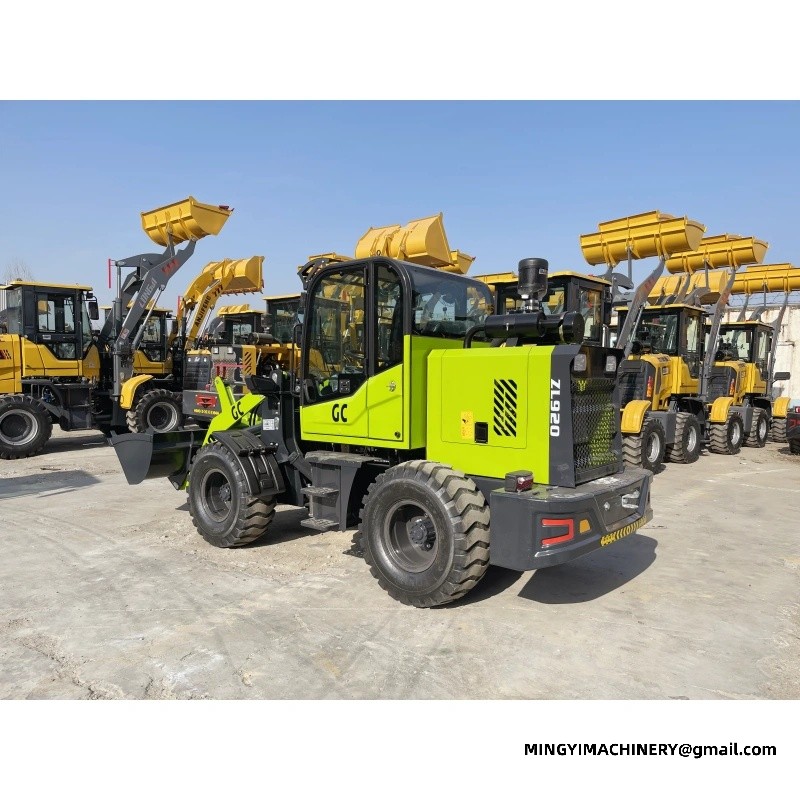
Four numbers describe a loader frame: front hinge plate, rear hinge plate, cross-member thickness and rear frame section. The heavy-duty 4.5 m small-frame wheel-side reduction wheel loader lists 30 mm, 20 mm, 30 mm and 280 mm high x 800 mm wide. The heavy-duty 3.5 m medium-frame wheel-side reduction wheel loader lists 45 mm, 30 mm, 45 mm and 300 mm high x 800 mm wide. Everything else on a specification sheet — paint, cab trim, lighting package — is cosmetic next to those four.
The rear frame section is the one that surprises people. A wider rear frame lets the counterweight bolt directly to the chassis instead of hanging off brackets, and bracket-mounted counterweights crack. On the heavy-duty 4.5 m small-frame wheel-side reduction wheel loader the 280 mm high x 800 mm wide section carries the ballast for a 0.4 m³ bucket at 4.5 m; on the heavy-duty 3.5 m medium-frame wheel-side reduction wheel loader the 300 mm high x 800 mm wide section carries it for 0.65 m³ at 3.5 m. Compare those against the 4.25 m and 4.55 m front-wheel-to-counterweight lengths and you have the whole stability picture in four figures.
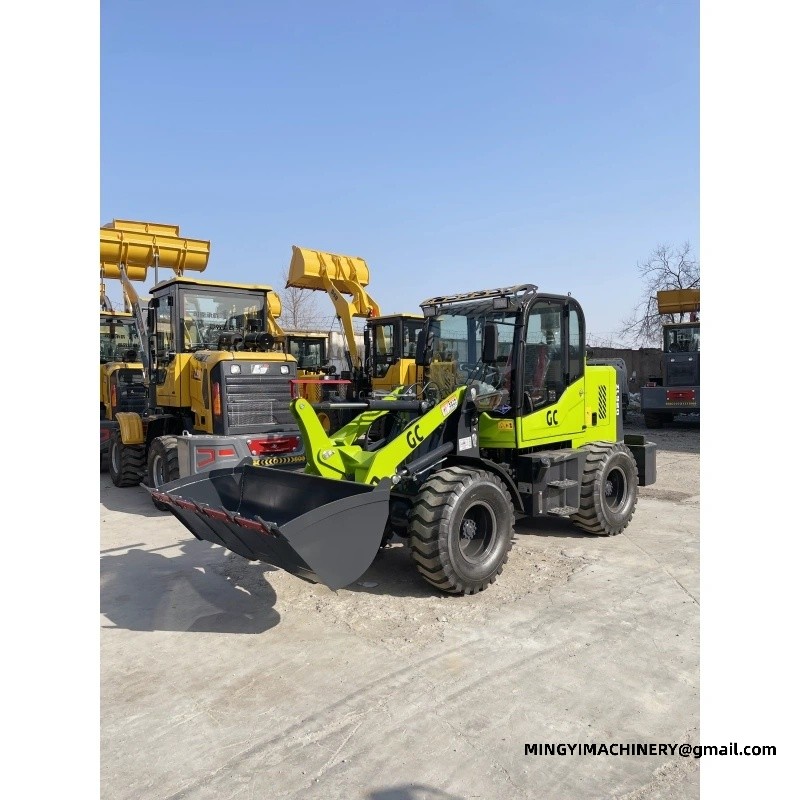
When a loaded machine turns, the load does not go straight down through the hinge. It goes through the plates at an angle, and the rear frame takes the twist. Rear section here is 280 mm high x 800 mm wide; cross-member 30 mm; rear hinge plate 20 mm. Read those three together and you have the answer to how a frame behaves when it is both loaded and turning.
The front plate, at 30 mm, is the thicker of the pair, and the boom ahead of it is designed to give way first anyway: the bucket hits the ground, the arm takes the shock, and the cylinders at centre cylinder 45 / side cylinder 45 absorb what is left. That is the intended load path. Protecting it means protecting the pins, and protecting the pins means the cross-member stays at the thickness it was built with.
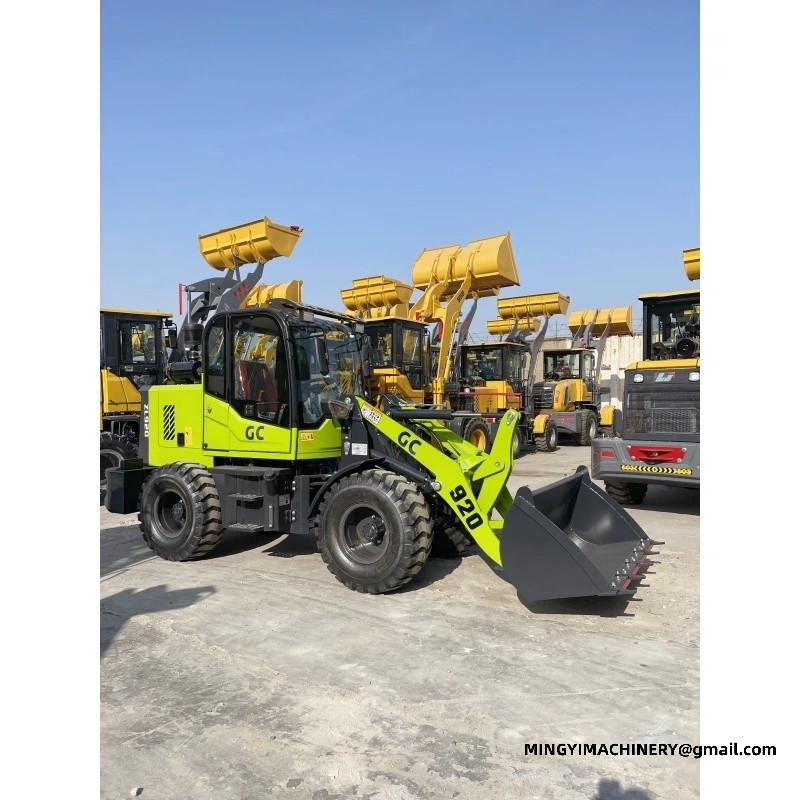
Breakout force is advertised; what you feel in the cab is the combination behind it. On the heavy-duty 4.5 m small-frame wheel-side reduction wheel loader that is a centre cylinder 45 / side cylinder 45 cylinder set on a 3.15 m boom with a 890 mm centre distance, lifting a 0.4 m³ bucket to 4.5 m. On the heavy-duty 3.5 m medium-frame wheel-side reduction wheel loader it is centre cylinder 60 / side cylinder 50 on a 3.15 m arm with 920 mm spacing, lifting 0.65 m³ to 3.5 m.
Heat is the failure mode nobody plans for. A pump working at the top of its flow all shift, in dust, at altitude, will cook its oil — and the 40 pump (490 engine); 1045 pump (4102 turbo engine) on the heavy-duty 4.5 m small-frame wheel-side reduction wheel loader and the 2063 pump on the heavy-duty 3.5 m medium-frame wheel-side reduction wheel loader were each sized against their own cylinder volumes and duty. The matching travel pumps, 316 pump and 25 pump, keep drive independent so a loaded climb does not stall the boom. Specify the third circuit at order time if a hydraulic tool is in the plan; plumbing added later is the most common source of leaks we see in the field.
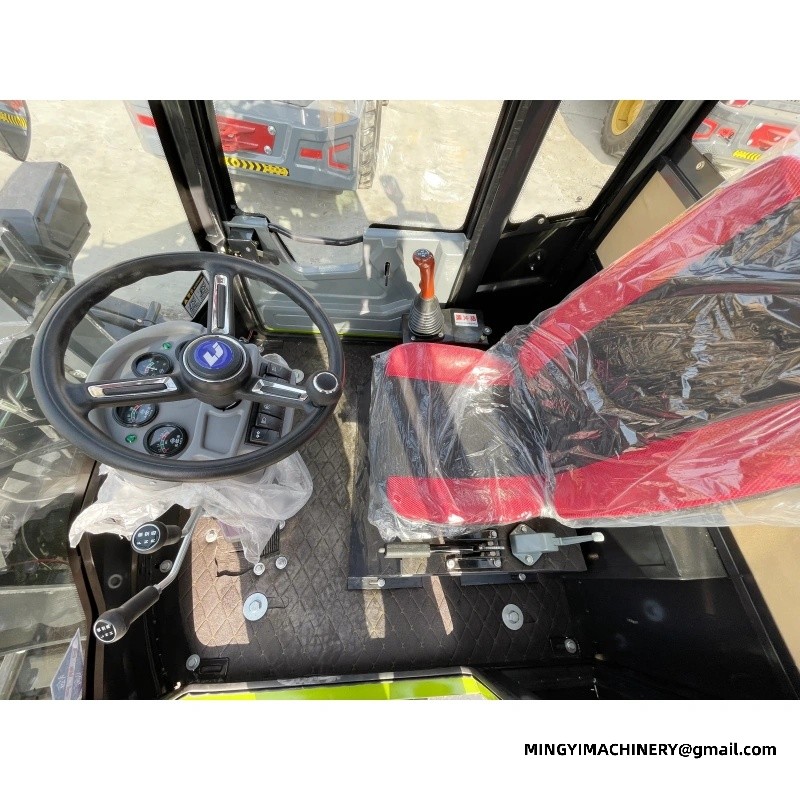
Articulated loaders wear at the pins, and pins wear because they were dry. Front plate 16 mm, rear plate 16 mm, and the cross-member behind them at 16 mm: that assembly is what steering works through, several hundred times a shift. Grease intervals are measured in hours, not months, on a machine doing short cycles.
The boom pivots are the second set, and they are the ones an operator feels first. A 2.05 m arm on a 680 mm spacing, lifted by centre cylinder 45 / side cylinder 40, loads its pins every pass. If the machine develops a clunk on lift, look there before looking at the pump — the pump, 32 pump, is usually fine and the pin is usually not.
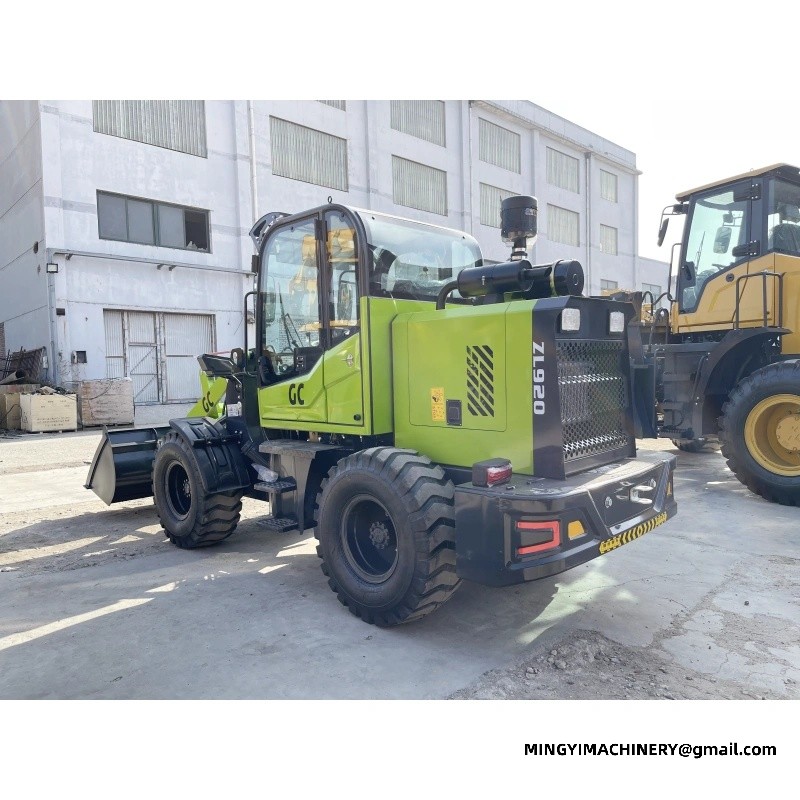
Overheating has four causes and only one of them is the radiator. In order of likelihood: blocked fins, a cap that will not hold pressure, a fan or drive problem, and genuine overloading. The core on this machine is 4100 core (490 engine); 4105 core (4102T engine); clean it first, from the clean side outwards.
If the machine is genuinely overloaded, the cause is upstream of the cooling system. A bucket carrying more than 0.4 m³ of dense material, cycled without pause, produces more heat than the system was sized to reject. The fix is a smaller bucket or a slower cycle, not a bigger radiator — and the frame, at 30 mm across the member, is the part that suffers if nobody makes that decision.
Should I go up a bucket size on a wheel loader for material handling?
Only if the material is light enough to fill it. 0.4 m³ against 0.65 m³ looks like a gain on paper and is a loss on dense material, and the extra weight lands on the hinge.
What extra care does a wheel loader for material handling need in dusty work?
Core cleaning at the end of every shift and more frequent air filter changes. The core is 4100 core (490 engine); 4105 core (4102T engine); a blocked one shows up as a slow loss of power rather than a stoppage.
How often do hydraulic hoses need replacing?
On condition rather than on a calendar: look for cracking, rubbing and weeping at the crimps. The circuit runs centre cylinder 45 / side cylinder 45 on a 40 pump (490 engine); 1045 pump (4102 turbo engine), and a burst hose is a day while a failed pump is a week.
Is a wheel loader for material handling noisy to work beside?
Engine and hydraulic noise, with the pump a contributor: 32 pump on this build. A pump that is cavitating is louder than a healthy one, so noise is also a diagnostic.
Which engine option should a wheel loader for material handling be ordered with?
It follows the duty. The engine drags three rows with it: pump 40 pump (490 engine); 1045 pump (4102 turbo engine), core 4100 core (490 engine); 4105 core (4102T engine) and battery 60 Ah (490 engine); 80 Ah (4102 turbo engine). Choose it early rather than accepting whatever is in stock.
What does winter duty change on a wheel loader for material handling?
Cold cranking, oil viscosity and operator access. Battery 45 Ah (24 V) covers the first; the 30.8 L (48# large tank, 20.5/70-16 tyres); 24.6 L (48# small tank, 8.25-16 tyres) tank covers the longer idling that cold work brings.
Which spares should I hold for a wheel loader for material handling?
Hoses and seals for the centre cylinder 45 / side cylinder 40, filters, belts and a battery to the 45 Ah (24 V) rating. Do not stock welded items; plates at 16 mm and 16 mm are a repair, not a spare.
If the comparison here is close, decide on the rows that outlast the job: cross-member 30 mm against 45 mm, rear frame 280 mm high x 800 mm wide against 300 mm high x 800 mm wide. Capacity can be changed with a bucket; steel cannot be changed at all.
Fuel, oil and fluid quality for Wheel Loader for Material Handling: Forks and Load Centres
Fluid quality is a storage problem before it is a machine problem. Water and sediment in a drum will find the injection system of Wheel Loader for Material Handling: Forks and Load Centres eventually, and a settling period is nothing compared with a pump.
Commissioning Wheel Loader for Material Handling: Forks and Load Centres on site
Commissioning is where the specification meets the ground. The settings chosen for Wheel Loader for Material Handling: Forks and Load Centres are confirmed against the actual site, and the working pattern is adjusted before the machine is asked for a full day.
Contact MINGYI Machinery for the current wheel loader lineup, configuration options and a formal specification for your market. E-mail: sales@mingycn.com | LINE (ID): mingyicn
Wheel Loader for Aggregate Yard: Fines, Dust and Stockpiles · OEM Wheel Loader Manufacturer: Repeating a Build Exactly · Front End Loader Manufacturer: Boom Geometry and Hinge Steel · Wheel Loader