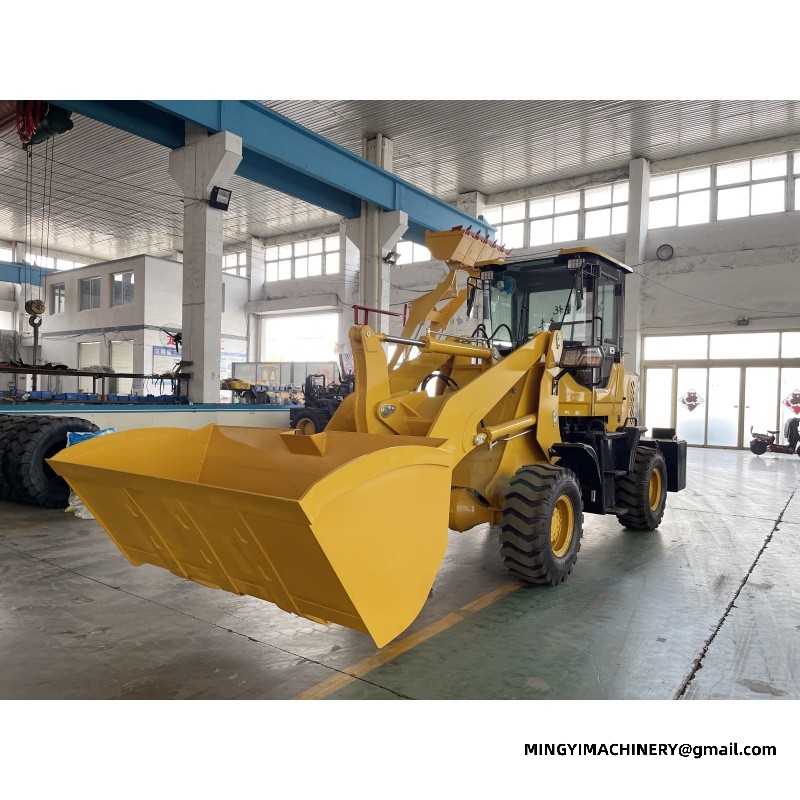
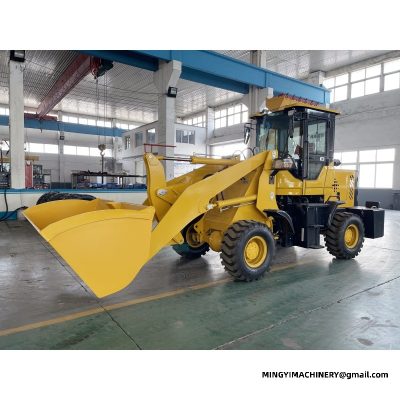
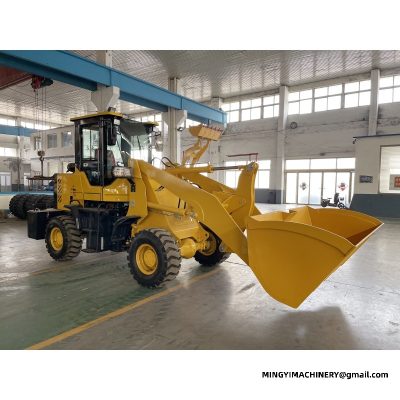
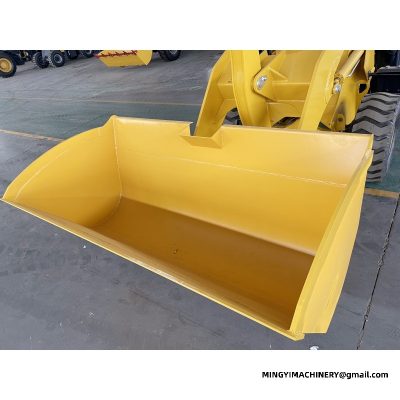
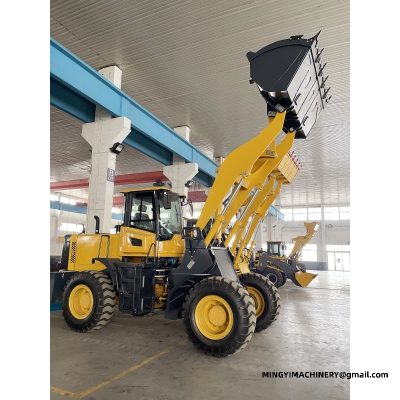
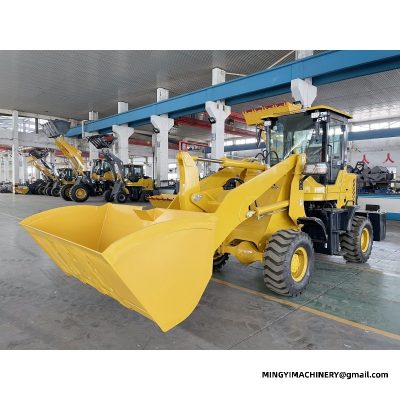
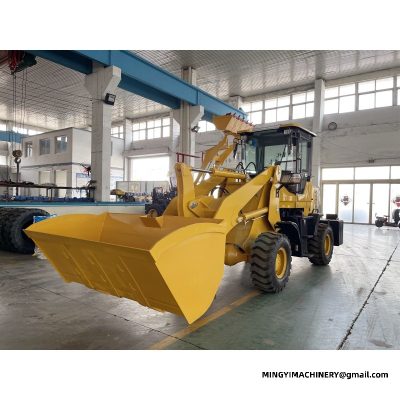
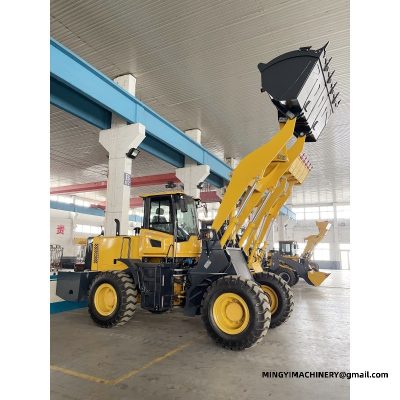
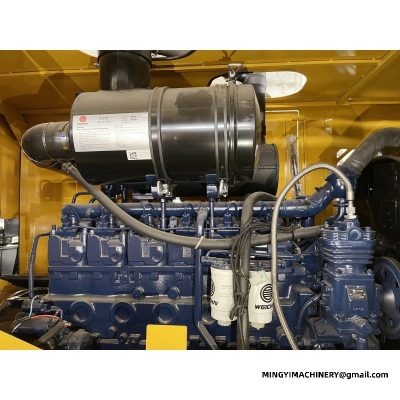
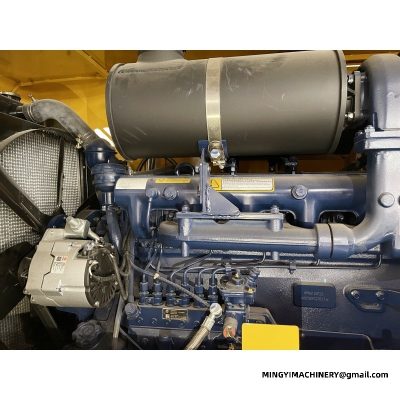
Specify a construction wheel loader from the work backwards, not from the catalogue forwards. Start with what it loads into — that fixes dump height, 4.2 m on the heavy-duty 4.2 m small-frame wheel-side reduction wheel loader or 3.5 m on the light-duty 3.5 m medium-frame wheel-side reduction wheel loader. Then the narrowest gap it must pass — that fixes track, 1.5 m (wheel-side reduction axle); 1.45 m (Isuzu axle) or 1.6 m. Only then look at bucket volume, 0.4 m³ or 0.52 m³. What follows is the full sequence, with the steel, hydraulic and cooling figures that separate one build from the next and the reasoning behind each.
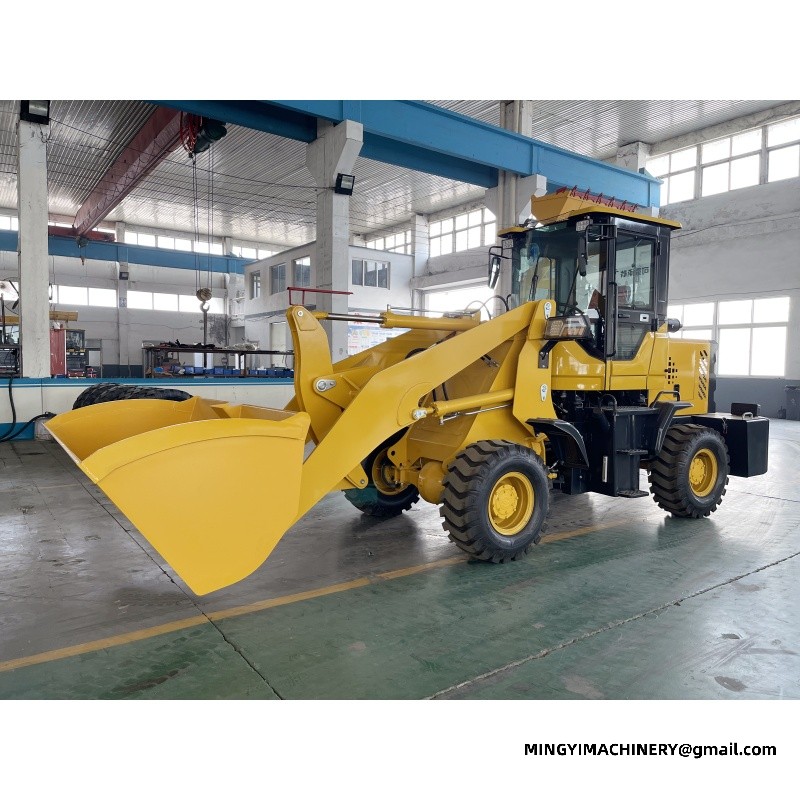
The boom section is the mounting standard. On the heavy-duty 4.2 m small-frame wheel-side reduction wheel loader it is 500 mm with a 890 mm centre distance; on the light-duty 3.8 m medium-frame wheel-side reduction wheel loader it is 430 mm with 900 mm. Fork frames, grapples and snow tools specification against those two numbers, which is why "forks to suit a three-ton loader" is not a specification.
For a mixed fleet the practical set is four tools: a bucket for bulk, forks for pallets and bagged goods, a grapple for loose material and demolition, and a snow tool for winter work. Mechanical sets need no hydraulic circuit and swap in minutes; hydraulic sets need the circuit ordered with the machine. The 316 pump and 25 pump travel pumps keep drive independent either way, so steering is unaffected by tool load.
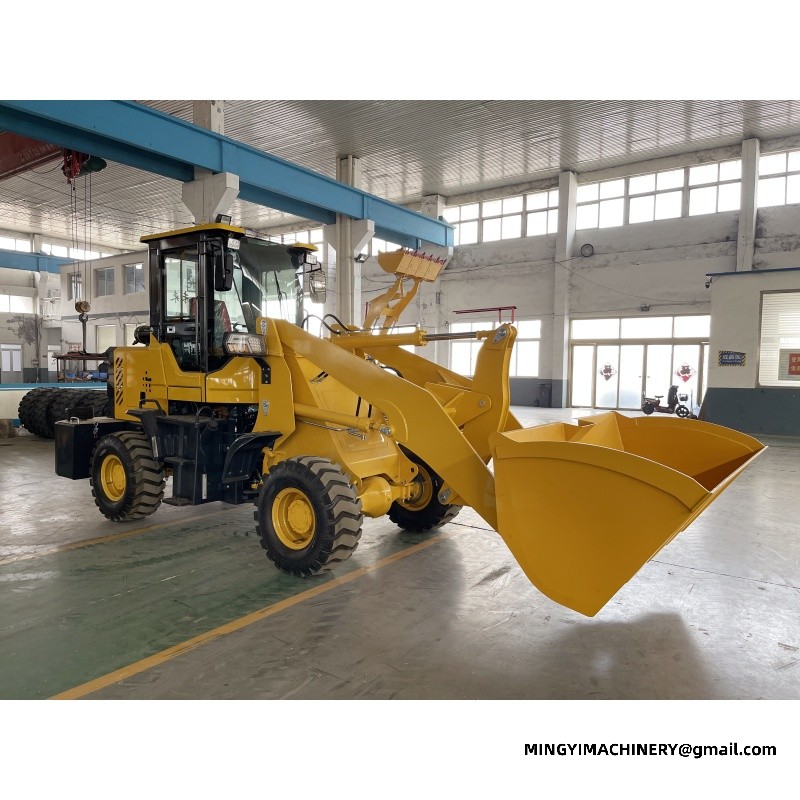
Every axle specification is a compromise between traction and speed, and the range resolves it with two families: 1.5 m (wheel-side reduction axle); 1.45 m (Isuzu axle) track on the light-duty 3.2 m small-frame wheel-side reduction wheel loader and 1.6 m on the light-duty 3.8 m medium-frame wheel-side reduction wheel loader. The wider track adds stability; the reduction layout decides whether the torque reaches the ground. Ask which ground the machine will spend eighty per cent of its hours on, then read the axle line.
Stability also comes from elsewhere in the table. The light-duty 3.2 m small-frame wheel-side reduction wheel loader carries a 3.8 m front-wheel-to-counterweight length and a 0.38 m³ bucket at 3.2 m; the light-duty 3.8 m medium-frame wheel-side reduction wheel loader carries 4.3 m with 0.52 m³ at 3.8 m. A wide track on a short wheelbase is less stable than a narrower track on a long one, which is why the footprint figure belongs in the same conversation as the axle. On soft or rutted ground, take the hub reduction every time.
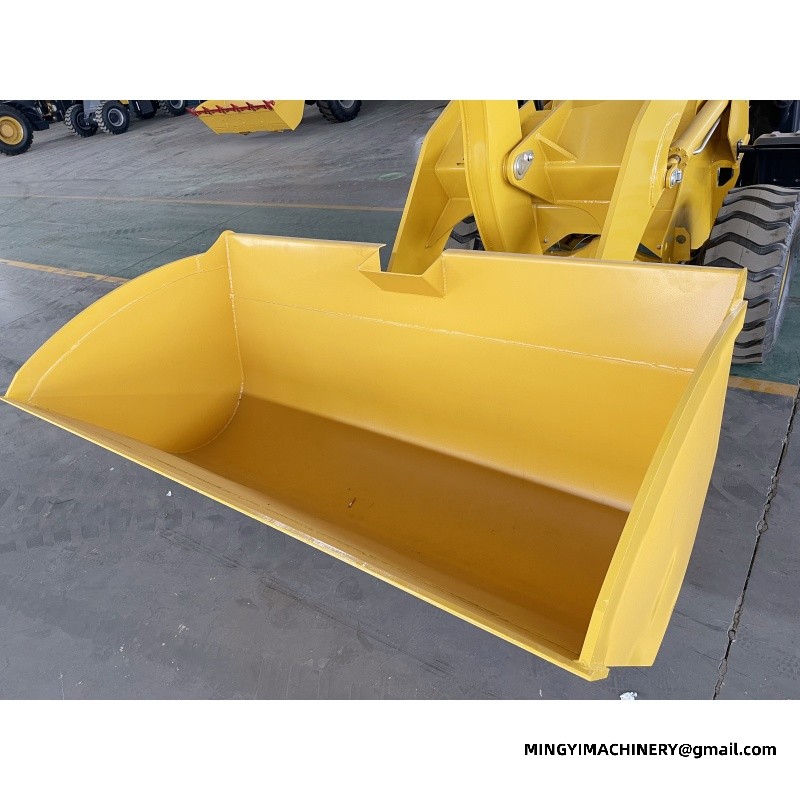
Work out how many passes fill the body, then work backwards. A body that takes four passes from a 0.52 m³ bucket will take three from 0.52 m³, but only if the machine can clear the board, and that is the part people get wrong. The light-duty 4.2 m medium-frame wheel-side reduction wheel loader reaches 4.2 m; the light-duty 3.5 m medium-frame wheel-side reduction wheel loader reaches 3.5 m. If the board sits between those two figures, the capacity comparison is academic.
The second check is whether the machine can dump without striking. Dump height is measured at the bucket edge with the arm at full lift, so the clearance you actually have is that figure less the height of the material crest. On the light-duty 4.2 m medium-frame wheel-side reduction wheel loader the arm is 2.9 m and the spacing between the arms is 900 mm; a longer arm with a wider spacing tips a bucket cleanly instead of rolling it off the corner.
| Reference specification — heavy-duty 4.2 m small-frame wheel-side reduction wheel loader | |
|---|---|
| Bucket capacity | 0.4 m³ |
| Dump height | 4.2 m |
| Track width | 1.5 m (wheel-side reduction axle); 1.45 m (Isuzu axle) |
| Boom arm thickness | 25 mm |
| Boom arm width | 500 mm |
| Boom arm length | 3.15 m |
| Boom arm centre distance | 890 mm |
| Cross-member thickness | 30 mm |
| Front hinge plate thickness | 30 mm |
| Rear hinge plate thickness | 20 mm |
| Rear frame section | 280 mm high x 800 mm wide |
| Hydraulic cylinders | centre cylinder 45 / side cylinder 45 |
| Fuel tank | 64.7 L (75# small tank) |
| Battery | 60 Ah (490 engine); 80 Ah (4102 turbo engine) |
| Front wheel to counterweight | 4.25 m |
| Radiator | 4100 core (490 engine); 4105 core (4102T engine) |
| Work pump | 40 pump (490 engine); 1045 pump (4102 turbo engine) |
| Travel pump | 316 pump |
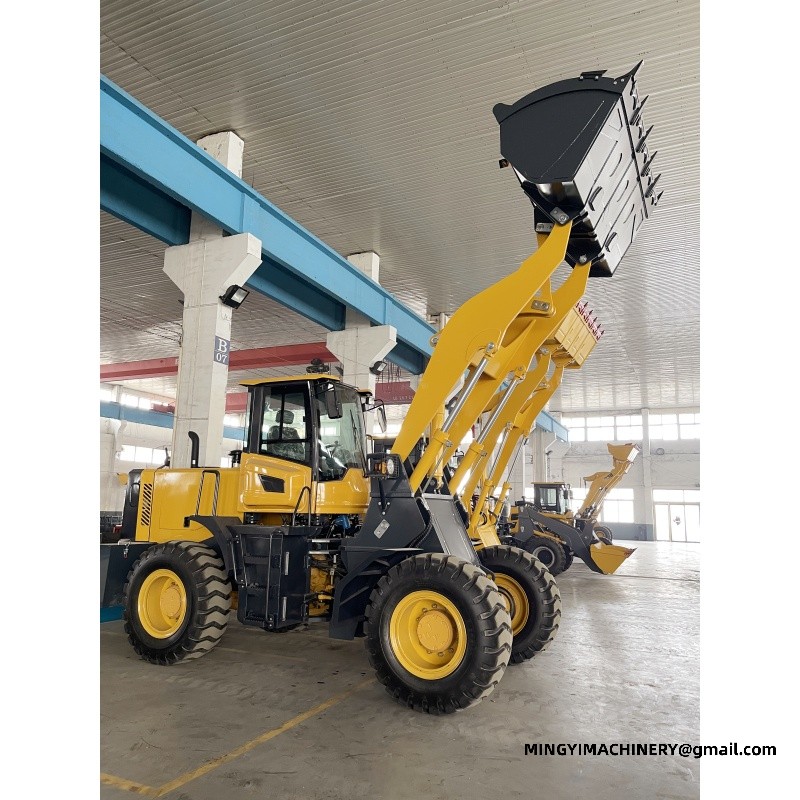
Two figures govern refuelling: tank capacity and consumption per hour, and only the first is published — 54 L (50# tank) on the light-duty 3.2 m low-profile wheel loader, 64.7 L (75# small tank) on the heavy-duty 4.2 m small-frame wheel-side reduction wheel loader. Consumption depends on duty, and the duty differences between a 0.38 m³ bucket at 3.2 m and a 0.4 m³ bucket at 4.2 m are mostly about how hard the engine works per cycle.
What you can plan on: a machine working a short, level cycle will finish a shift on one tank; the same machine ripping from a face or loading up a ramp will not. If your site has no refuelling point, size the tank to the worst day rather than the average one, and specify the larger option where a build offers it. The cooling package is the other half of the same calculation — 4100 core (490 engine); 4105 core (4102T engine) on the light-duty 3.2 m low-profile wheel loader and 4100 core (490 engine); 4105 core (4102T engine) on the heavy-duty 4.2 m small-frame wheel-side reduction wheel loader — because a machine that stops for temperature stops wherever it is.
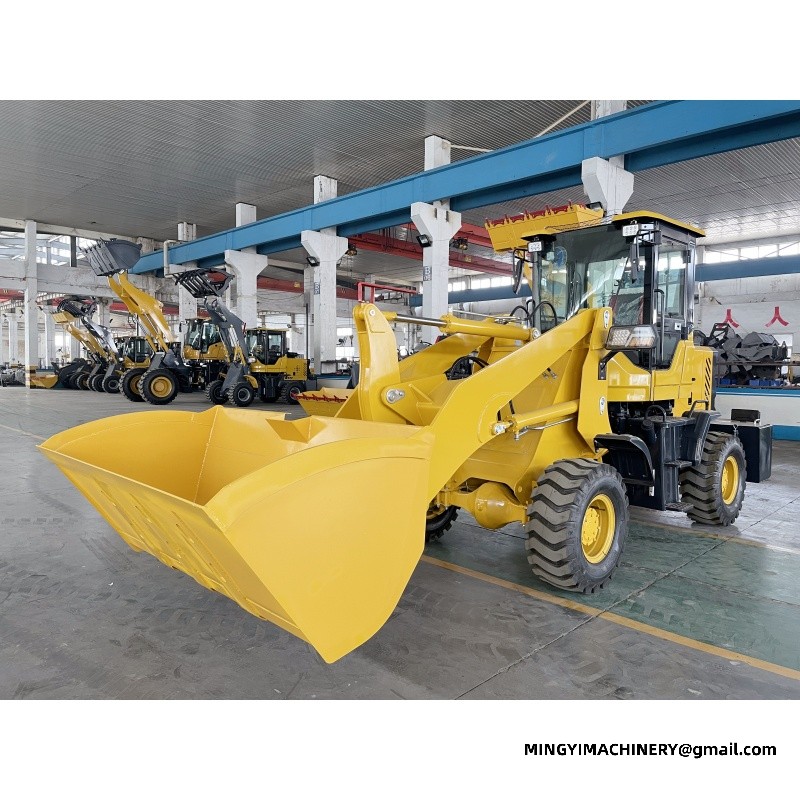
Acceptance takes twenty minutes and prevents a season of argument. Measure the bucket, 0.52 m³ on this build. Measure dump height with the arm at full lift, 4.2 m. Read the cylinders, centre cylinder 60 / side cylinder 50. Check the track, 1.6 m. Check the length from front wheel to counterweight, 4.3 m. Those five are on the sheet and on the machine.
The steel is harder to verify and worth verifying anyway, because it is what the money bought. Hinge plates 45 mm and 30 mm, cross-member 45 mm, boom wall 30 mm on a 450 mm section. A tape across the plate edge and a magnet will tell you whether the frame matches the order.
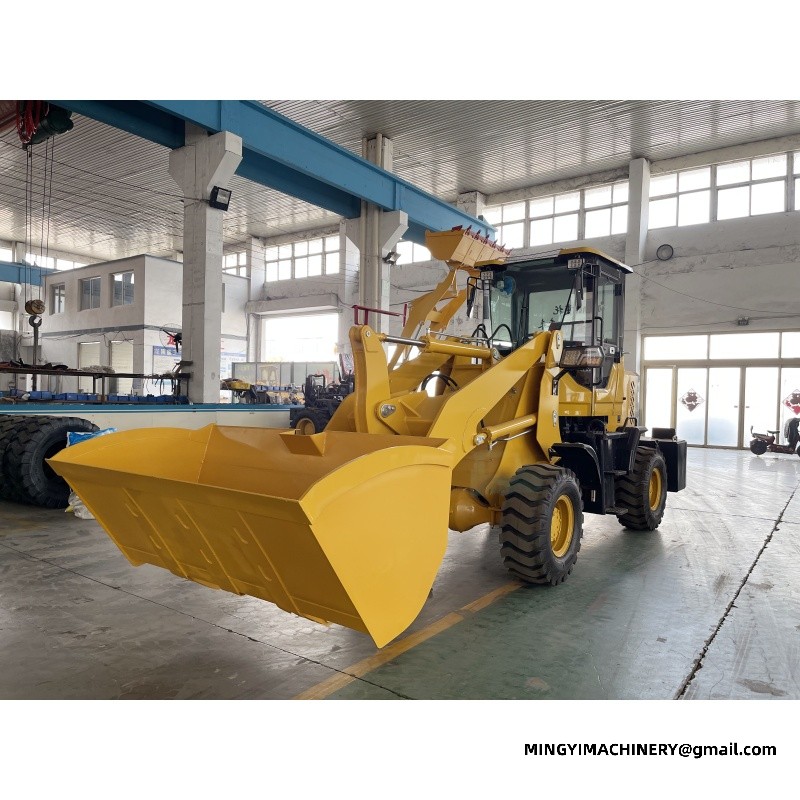
Export loading is a dimension problem. Rear frame width is the governing figure and it stays in a narrow band across this range — 200 mm high x 750 mm wide on the standard 2.4 m low-profile wheel loader, 280 mm high x 800 mm wide on the heavy-duty 4.2 m small-frame wheel-side reduction wheel loader — so two to three units load in a single forty-foot container with the booms and counterweights packed alongside.
Commissioning is the part buyers under-plan. Before the first start: torque the hinge pins, fill the 30.8 L (48# large tank, 20.5/70-16 tyres); 24.6 L (48# small tank, 8.25-16 tyres) tank and the 4100 core circuit, check the 32 pump and 316 pump connections, and charge or replace a battery that has sat through a voyage. Then check the five build figures — boom wall, boom width, front and rear hinge plates, cross-member — against the published table, because that is the one moment when a discrepancy is simple to fix.
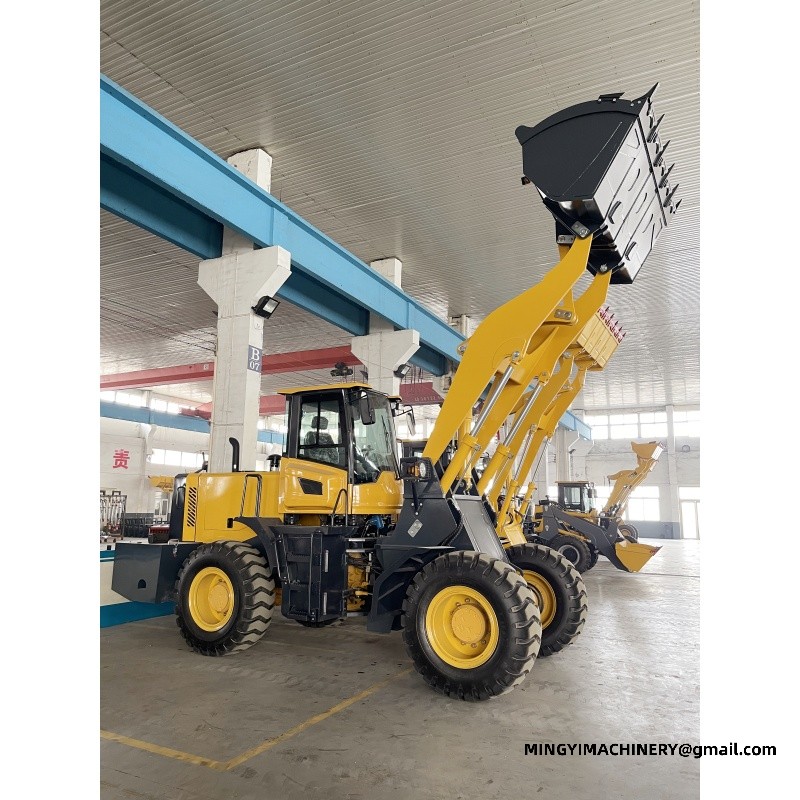
Articulated steering lets a loader turn inside its footprint, and every one of those turns is carried by two plates. Front hinge 45 mm, rear hinge 30 mm. The rear is the heavier because it carries the counterweight and the whole rear frame through every steering input.
Short wheelbase machines articulate harder and more often, which is why plate thickness matters more on a compact build, not less. At 4.3 m front wheel to counterweight and 1.6 m of track, this machine will spend its life turning in tight spaces; a 45 mm cross-member is what keeps those plates in line while it does.
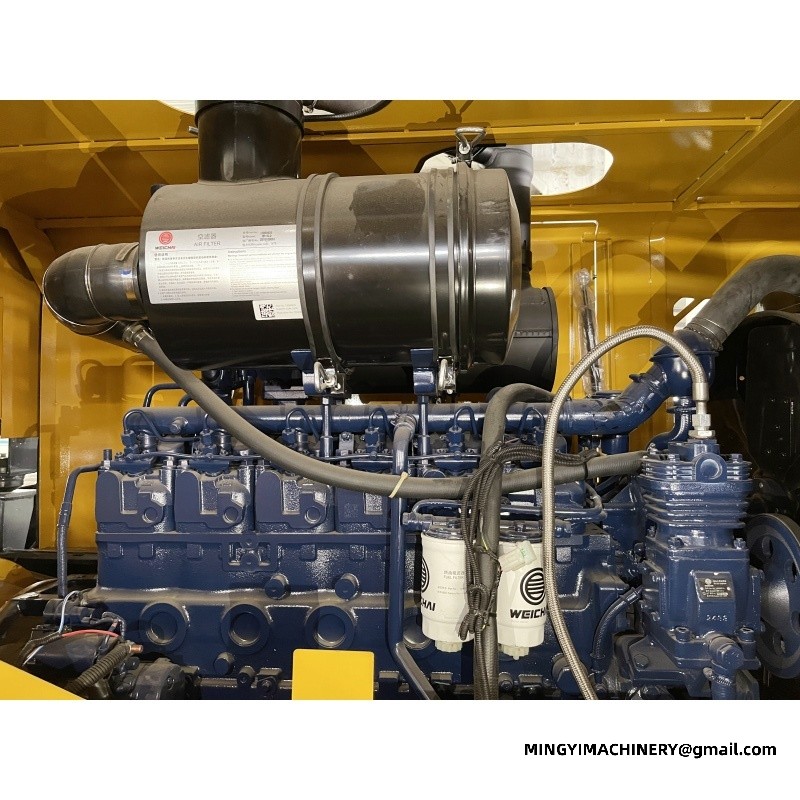
Before specifying anything else, measure the tallest body the loader will ever have to clear, at the front board, loaded, on the worst ground on site. That number decides the machine. The light-duty 4.5 m medium-frame wheel-side reduction wheel loader in this comparison dumps at 4.5 m; the light-duty 4.5 m medium-frame wheel-side reduction wheel loader at 4.5 m. The difference looks small on paper and is decisive at the face, because a loader that cannot clear the board cannot be worked around.
Once the height is settled, capacity sets the number of passes. 0.3 m³ on the standard 2.4 m low-profile wheel loader against 0.52 m³ on the light-duty 4.5 m medium-frame wheel-side reduction wheel loader. Multiply by your material weight per cubic metre and check it against what the chassis is carrying, not what the bucket holds — the frame, at 16 mm across the member, is the limit that arrives first.
Why does boom centre distance matter on a construction wheel loader?
It sets how side loads travel into the frame: 890 mm on the heavy-duty 4.2 m small-frame wheel-side reduction wheel loader against 900 mm on the light-duty 3.5 m medium-frame wheel-side reduction wheel loader. Wider spacing lets the cylinders work through a better lever.
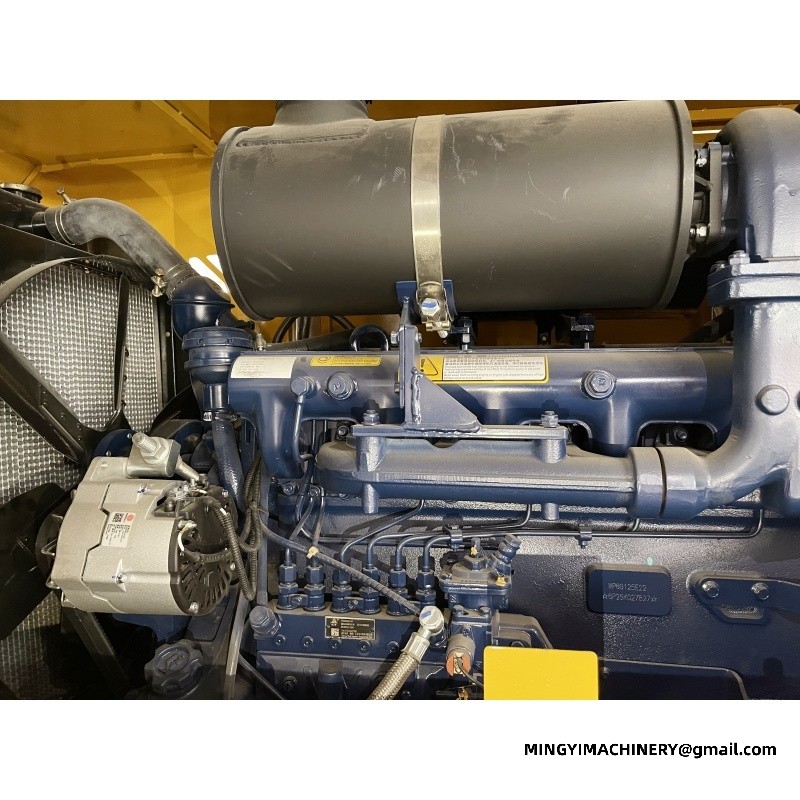
What engine options are offered on a construction wheel loader?
Where two are offered, cooling and electrics change with them: 4100 core (490 engine); 4105 core (4102T engine) radiator and 60 Ah (490 engine); 80 Ah (4102 turbo engine) battery on the heavy-duty 4.2 m small-frame wheel-side reduction wheel loader, with the raised core belonging to the turbo option.
What should the first service on a construction wheel loader cover?
Torque the hinge pins, grease the 890 mm boom mounts, check the centre cylinder 45 / side cylinder 40 cylinder connections and the 4100 core (490 engine); 4105 core (4102T engine) cooling circuit, then re-check the build figures.
How often should the articulation of a construction wheel loader be greased?
Every shift in stockpile or face work, weekly in light duty. The 16 mm front and 16 mm rear plates take every steering load, and missed greasing takes pins and bores.
What is the difference between the two hinge plates on a construction wheel loader?
The front plate carries boom loads, which are mostly vertical; the rear carries articulation, which is sideways and shock-loaded. Hence 16 mm front against 16 mm rear.
What should I check before a construction wheel loader works a ramp?
Traction and cooling. A 1.5 m (wheel-side reduction axle); 1.45 m (Isuzu axle) track with wheel-side reduction holds on a ramp where an Isuzu-pattern axle would spin, and the 4100 core (490 engine); 4105 core (4102T engine) radiator keeps working at low speed.
What is the smallest construction wheel loader in the range?
The entry low-profile builds: a 0.38 m³ bucket at 3.2 m, 1.5 m (wheel-side reduction axle); 1.45 m (Isuzu axle) track and a 3.8 m front-to-counterweight length for indoor and nursery work.
Five figures settle any construction wheel loader enquiry: dump height, track width, boom wall, rear hinge plate and cross-member. On the light-duty 3.5 m medium-frame wheel-side reduction wheel loader those are 3.5 m, 1.6 m, 30 mm, 30 mm and 45 mm. Send us yours and we will tell you which build meets them.
Moving Construction Wheel Loader: Dump Height Comes Before Capacity between sites
Loading is where most damage happens. Ramps, angle of approach and the condition of the ground under them matter more than the machine when Construction Wheel Loader: Dump Height Comes Before Capacity is being loaded, and a careful driver is worth more than a fast one.
Handover and getting familiar with Construction Wheel Loader: Dump Height Comes Before Capacity
The first day with a new machine sets the pattern for the next five years. Handover for Construction Wheel Loader: Dump Height Comes Before Capacity covers the control layout, the daily check points and the limits the operator needs to know before the first real load is lifted or carried.
Reading the early symptoms on Construction Wheel Loader: Dump Height Comes Before Capacity
Operators notice things first because they hear the machine every day. Encouraging the person on Construction Wheel Loader: Dump Height Comes Before Capacity to report small changes, and acting on them, is the most effective maintenance programme there is.
Contact MINGYI Machinery for the current wheel loader lineup, configuration options and a formal specification for your market. E-mail: sales@mingycn.com | LINE (ID): mingyicn
Front End Loader Manufacturer: Boom, Hinge and Frame Records · Heavy Duty Wheel Loader: Hinge Plates and Cross-Member Steel · Wheel Loader for Construction Site: Tipper Clearance Checks · Loaders









