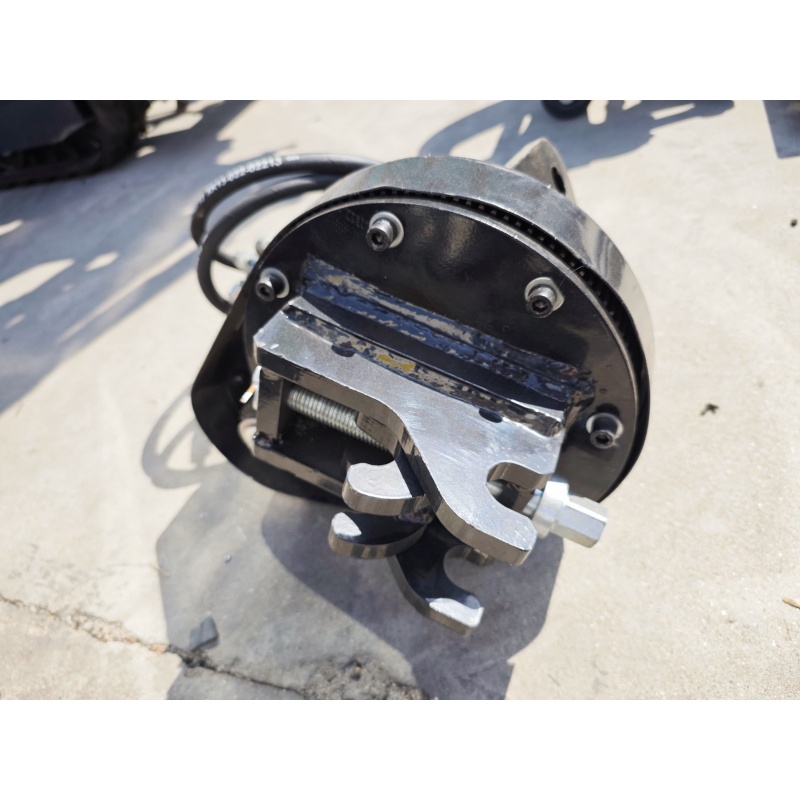
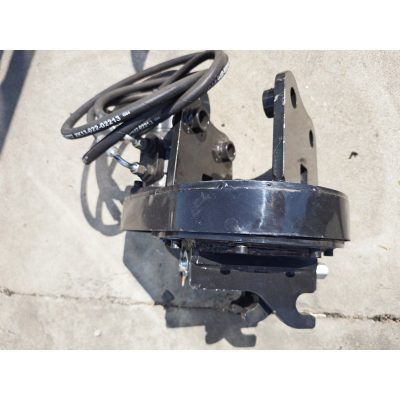
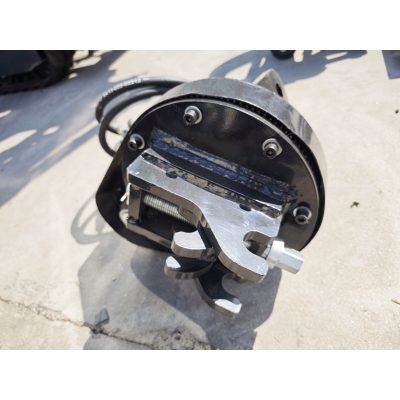
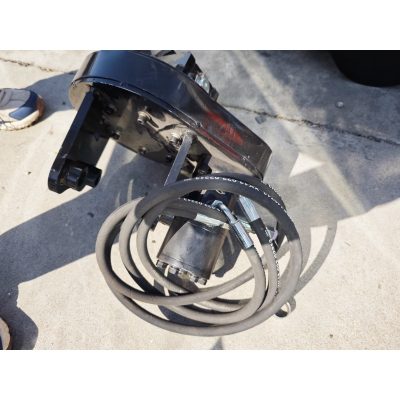
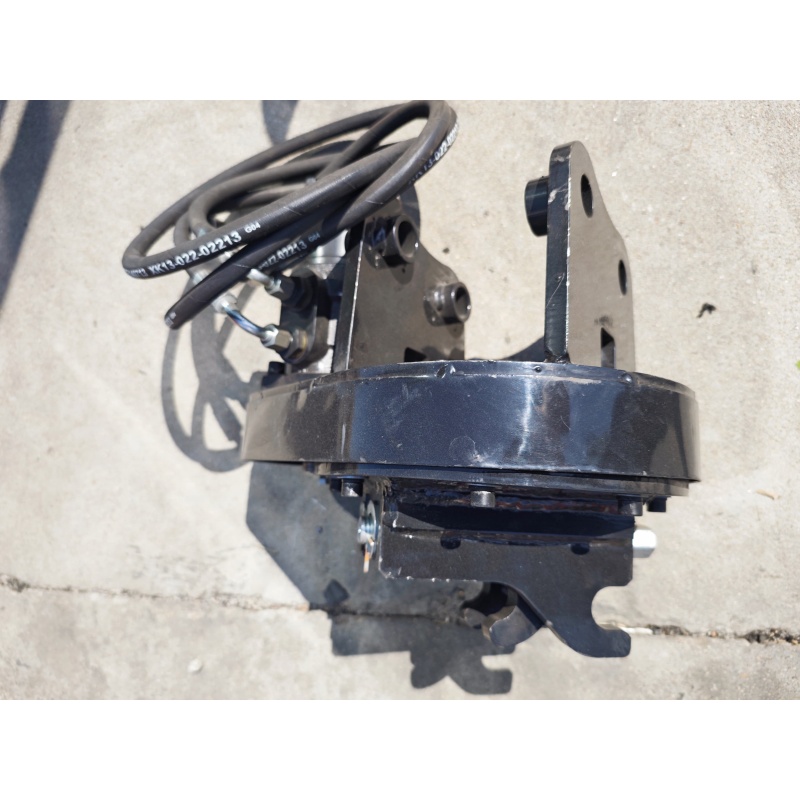
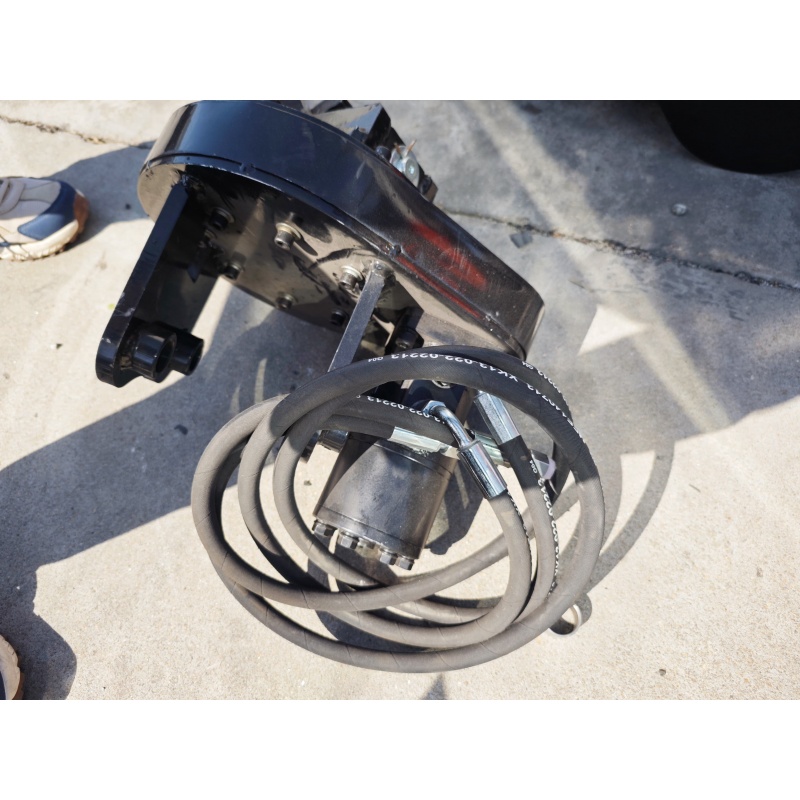
Changing between a bucket, a breaker and an auger by hand takes the workday in minutes that add up across a week. MINGYI offers a hydraulic quick coupler for its mini excavators that changes tools from the seat, controlled from the cab.
The hydraulic coupler locks and unlocks the attachment pins through a circuit on the dipper, so the operator aligns, couples and verifies the lock without leaving the machine. For crews running several tools in one shift, this is the configuration that keeps the schedule.
A coupler is specified against the tool list rather than bought on its own.
| Checkpoint | What to settle for this machine |
|---|---|
| Carrier machine | MINGYI mini excavators, with the coupler confirmed at the ordering stage against the carrier model and attachment list |
| Work it takes on | Changing between bucket, breaker and auger from the seat: grading with a tilting bucket, clearing with a rake, drilling with an auger, lifting with a thumb |
| Ground and material | Open ground and confined spaces alike, where changing tools by hand takes minutes every time |
| Mounting and hydraulics | Controlled from the cab, with pin geometry matched across the whole tool set |
| Confirmed at order stage | Which tools the buyer plans to run, so the pin geometry matches; configuration confirmed in writing |
| Handover and upkeep | Commercial invoice, packing list and any certificate required at destination, plus clarity on what counts as a wearing item |
Hydraulic coupling in the working cycle
The sequence takes less time than climbing down and driving out pins, and it removes the manual handling risk of wrestling heavy tools on uneven ground. The lock is verified before work resumes, and the tool change can happen anywhere the machine can park.
Because the coupler is hydraulic rather than mechanical, the operator keeps control of the alignment through the circuit rather than by repositioning the machine repeatedly. That matters on demolition and utility sites where tool changes are frequent.
Ordering the hydraulic coupler with a machine
The coupler is confirmed at the ordering stage against the carrier model and the attachment list, and the configuration is recorded against the machine. Buyers should state which tools they plan to run so the pin geometry matches across the set.
The coupler ships with its service information and the hydraulic connections matched to the machine circuit. Where a mixed tool set is planned, MINGYI checks that every attachment couples to the same head.
A hydraulic quick coupler pays for its complexity on any site where the tool list changes within a shift. MINGYI can review the attachment plan with the buyer and configure the coupler and machine together.
Attachments and working tools for hydraulic quick coupler system The base machine is only as useful as the tool on the end of it. Matching the attachment to the task - rather than to what arrived with the machine - is what lets one the excavator cover several jobs across a week. Attachment decisions are best made before delivery. Specifying hydraulics and couplers at build time is simpler than adding them later, and it avoids the downtime of a workshop visit in the first month. Warranty, commissioning and early checks Warranty terms are clearer when they are read before purchase. Knowing what is covered, what counts as a wearing item and what documentation is required makes a claim on this class of machine straightforward rather than contested. Early faults are usually simple. The unit in daily use that behaves differently in its first few hours is more often mis-set than defective, and a call to the supplier at that point usually resolves it the same day. Ordering, lead time and delivery of hydraulic quick coupler system The order should state the configuration in writing. Engine, attachments, colour, documents and any market requirement are clearer on the build sheet for a machine of this size than in a conversation after delivery. Delivery planning includes the receiving end. Knowing whether the equipment on site will be craned, driven or forked off, and whether the site can accept it, is settled before dispatch rather than on the day. Export packing and shipping of hydraulic quick coupler system Export orders add steps that domestic buyers never see. Packed dimensions, securing points, documentation and any dismantling required are all settled before the machine itself leaves the factory, and each one affects the freight booking. Documentation should be agreed at order stage. The commercial invoice, packing list and any certificate required at destination are part of shipping the model in question, and missing papers delay clearance longer than the voyage takes. Daily checks and maintenance on hydraulic quick coupler system Service intervals exist because wear is predictable. Following the maker schedule on the machine in that duty takes far less time than repairing the damage that follows a missed oil change or a filter left in place past its life. A simple log helps. Recording hours, fuel and any adjustment made to the unit on the job gives the workshop a history, and that history is what turns an intermittent fault into a one-visit repair instead of three. Cold weather and low temperature work with hydraulic quick coupler system Cold changes how a machine starts and how it warms up. Allowing a machine built for the work to reach operating temperature before loading it, and using the correct grade of oil and fuel for the season, prevents most cold-start problems. Batteries and fluids are the parts that notice the cold first. The equipment in service kept on a maintainer through a freezing spell starts on the first turn, while one left standing is the usual cause of a lost morning. Lighting and low light operation of the excavator Working after daylight changes the risk. Lighting coverage on the unit in daily use and across the working area, plus high-visibility clothing for anyone on foot, are the items that make low-light work practical. Visibility from the seat is different at night. Reflections, shadows and glare all hide detail, so this class of machine used after dark benefits from clean lenses, working wipers and a slower working pace. Transporting a machine of this size to and between sites Owners who work across several sites should check the transport dimensions before ordering. The equipment on site that fits a standard trailer can be moved by any operator with a suitable vehicle, while an over-width machine narrows that choice and complicates every move. Shipping dimensions matter as much on export orders as they do locally. Confirming the packed size of the machine itself before booking avoids re-booking freight after the machine is built. Operator technique and familiarisation Familiarisation should cover the limits as well as the controls. Knowing where the model in question loses stability, how it behaves at full reach, and what the warning lights mean prevents the incidents that are put down to bad luck. A short handover pays for itself. Operators who understand why the machine in that duty is set up the way it is will report a change in behaviour early, which is usually the point where a repair is simplest. Fuel use and running demands of the unit on the job Fuel is usually the largest controllable running demand. Operating style, correct tyre or track condition and a clean air supply all move consumption on a machine built for the work by more than most buyers expect. Consumption is best measured over a full week rather than judged per hour. Idle time, repositioning and waiting for other trades are often the largest share of the fuel the equipment in service burns on a site. Working hours and duty cycle of the excavator Duty cycle is the honest measure of a machine. This class of machine working a few hours a week has different needs from one working two shifts, and the cooling, filtration and service intervals should follow the hours rather than the calendar. Seasonal work changes the maintenance calendar. Machines that work hard for two months and stand for ten need preparation before storage and a check before returning to work, and both are simpler than the repairs they prevent. Parts, service and support for the unit in daily use Support after delivery is a parts question. Filters, belts, hoses and the wearing items specific to a machine of this size are what a buyer should plan to hold before the first service interval rather than order after a failure. Remote diagnosis shortens most faults. A walk-around on video with the panels open often identifies the cause on the equipment on site without waiting for a visit, and avoids shipping a part that turns out not to be needed. Upgrading and reconfiguring the machine itself Reconfiguration can extend the useful life of a machine. The model in question that no longer suits the current work may suit it again with a different attachment, guarding or control arrangement. Upgrades should be checked against the base machine. Hydraulic capacity, mounting interface and stability all limit what can reasonably be added to the machine in that duty, and confirming those limits avoids an unsatisfactory result. Engine and power options behind the unit on the job Emissions documentation is part of engine selection for some destinations. Confirming which units can be supplied and documented for the destination country is worth doing at enquiry stage rather than after the build sheet is signed. Matching the engine to the duty matters more than the peak rating. A machine built for the work that spends its day at part load benefits from a different setup than one that works at full output, and the difference shows in fuel use over a season.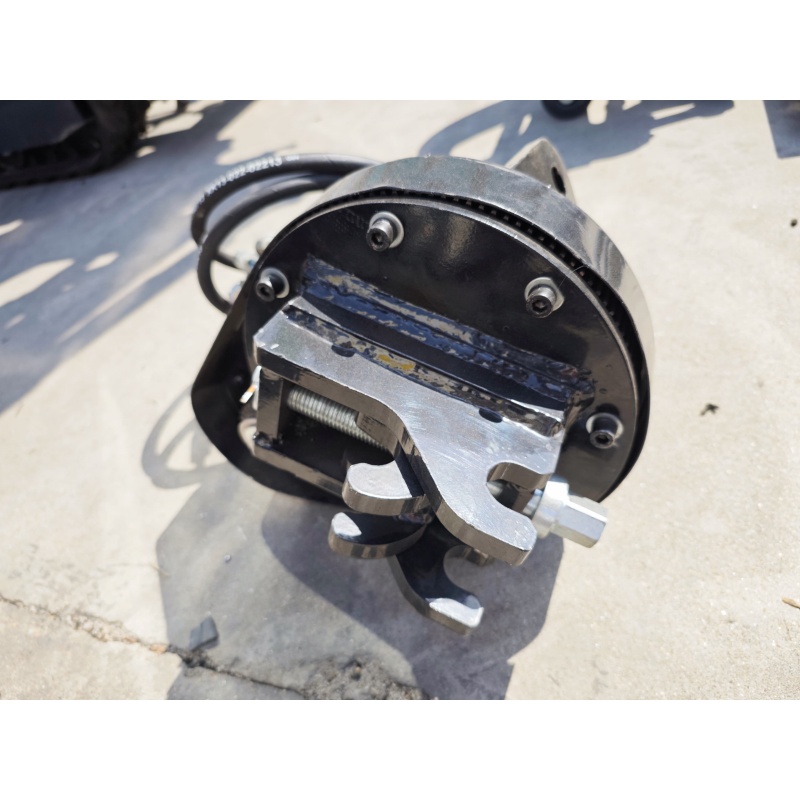
Q. What does the equipment in service involve?
A. The attachment story on a compact digger is about earning across trades: one carrier, one trailer, and a quick coupler that swaps tools in about a minute. Every attachment on this page runs on the same carrier the machine ships with, matched to its hydraulic flow and coupler. The excavator is one of the pages buyers land on when comparing machines for this class of machine, and the factory treats it as a specification conversation rather than a catalogue line.
Q. What does the attachment add to daily work?
A. Reach into jobs the bucket alone cannot specification: grading with a tilting bucket, clearing with a rake, drilling with an auger, lifting with a thumb. One carrier, several trades - the machine stays on site earning instead of waiting for a specialist.
Q. What about colours and branding?
A. OEM colours and decals are part of the build: private-label machines carry the buyer brand on the standard MINGYI platform, and the unit in daily use order confirms colours, marks and documents before production starts.
Documents that travel with a machine of this size
Keeping the documents together is part of ownership. The manual, the service record and the build sheet for the equipment on site belong in one folder, and the machine is easier to sell later when that folder is complete.
Reading the early symptoms on the machine itself
The symptom is usually not at the fault. A hydraulic function that has become sluggish on the model in question may point to a filter, a relief setting or a pump, and starting with the simple checks avoids the wrong guess.
Pre-delivery inspection before the machine in that duty leaves the shop
Inspection is a list, not a glance. Before the unit on the job is released the fluid levels, belt tension, electrical connections and safety decals are each ticked off, and anything that fails stays in the shop rather than travelling with the machine.
Keeping a service record for a machine built for the work
Service history also protects the warranty position. Evidence that the equipment in service was maintained at the specified intervals and with the specified fluids settles questions that would otherwise be argued.
A second operator for the excavator
Different operators suit different work. The person who is quickest with this class of machine on open ground is not always the one who is safest in a confined space, and having both available is a genuine advantage.
Commissioning the unit in daily use on site
Transport shakes things loose. A short check of a machine of this size after the crate is opened, covering the same points the pre-delivery inspection covered, is the most useful insurance available on delivery day.
Planning the season around the equipment on site
Seasonal work rewards a machine that can change duty. Through the year the machine itself may move from one task to another, and the attachment list should be chosen for the whole year rather than for the first job.
E-mail : sales@mingycn.com
LINE ( ID ): mingyicn
Visibility and blind spots around hydraulic quick coupler system
Mirrors, cameras and a signal person cover what the seat cannot. Walk the route before the first load and mark the corners where sight is lost.
Glass, wipers and mirrors are safety items rather than comfort items, and they belong on the daily walk-around with the lights and the horn.
The seat position, the mirror setting and the camera angle are worth recording once the operator is settled, so a change of driver does not undo them.
Related pages
mini excavator auger attachment · auger drill attachment for mini excavators · Wheel Loader Snow Blower: Specifying the Third Circuit · Mini Excavators









