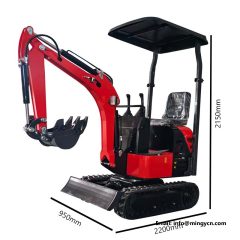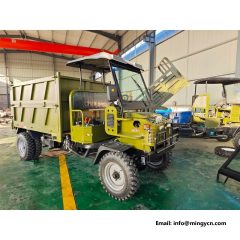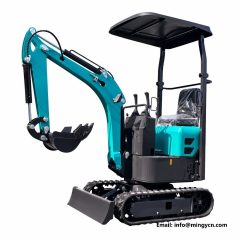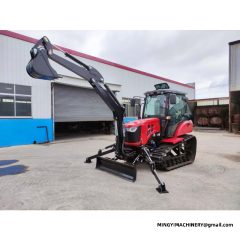
Attachments are where a compact machine stops being one tool and becomes ten. They are also the most common source of buyer regret, because tools are usually bought after the carrier, by which point the carrier's hydraulic supply and stability are already fixed. This guide walks through what to check before buying either half of the pair, so the tool you buy next year actually works on the machine you buy this year.
Carrier First: The Four Numbers That Decide Everything
Before looking at tools, write down four figures for the carrier you own or intend to buy:
- Maximum auxiliary hydraulic flow at the tool connection, stated where the tool actually receives it.
- Hydraulic operating pressure available to that circuit.
- Rated lift capacity at the reach you work at, not at the machine's closest position.
- Transport weight and stability margin, which determines how much tool mass the carrier can carry before it feels nervous.
Every attachment can be mapped against these four numbers. When a tool underperforms, the cause is almost always one of them rather than a defective tool. If you are still choosing between machine sizes, the excavator sizing guide shows how much a serious attachment plan can change the size answer.
Quick Coupler or Pin-On
| Option | Advantages | What to watch |
|---|---|---|
| Mechanical quick coupler | Fast changes, simple, no electrics | Must be checked for engagement every change |
| Hydraulic quick coupler | Change tools from the seat, safest workflow | Needs a control circuit and periodic checks |
| Pin-on (direct mount) | Strongest, lightest, no slack | Slow changes, pushes owners toward fewer tools |
For an owner who expects three or more tools, a coupler pays for itself in weeks. Specify it with the machine so the hydraulic lines, mounting lugs, and control are integrated rather than added afterwards.
Buckets: More Variety Than Buyers Expect
| Bucket | Job | Note |
|---|---|---|
| Standard digging | General trenching and loading | The baseline every machine ships with |
| Narrow / trenching | Service lines, drainage, tight utility work | Width set by trench requirement, not by preference |
| Grading / ditching | Cleaning ditches, shaping, finish work | Wide, flat cutting edge, no teeth |
| Rock or heavy duty | Hard ground, demolition debris | Reinforced, heavier, needs stable carrier |
| Skeleton / sieving | Sorting stone from soil, screening | Volume falls; cycle planning changes |
| Tilt bucket | Slopes, shaping, finish grading | Excellent versatility, more hydraulics to maintain |
The useful question is not how many buckets exist but which two cover eighty percent of your week. Most owners settle on a standard bucket plus either a narrow or a grading bucket, then add speciality tools later.
Auger Drives: Matching Torque to Ground
Auger work is deceptively easy to get wrong. The drive must deliver enough torque for the ground you actually have, and the auger bit must suit the material. Soft soil wants a standard flight and a soil tooth; compacted ground and light rock need a rock head and more patience; wet clay demands steady feed rather than more downward pressure. Ask for a recommended drive against your described soil, and treat auger stalls as a sizing problem rather than an operator problem.
Breakers and Hammers
Hammers ask more from a carrier than any other tool: continuous flow at pressure, plus enough mass to keep the tool planted. Undersized carriers make a hammer feel weak and cause overheating in the circuit. Check the recommended carrier range for the hammer before ordering, and confirm the machine has the correct flow and possibly a case drain line so the motor does not run hot.
Mowers, Mulchers, and Anything With Continuous Flow
Rotary vegetation tools need sustained flow and, in many designs, a case drain back to tank to protect the motor. Municipal verges, orchard inter-rows, and ditch banks all suit these tools, and all three punish machines specified without them in mind. If vegetation is a serious part of your season, mention it at carrier specification time, because adding high-flow circuits later is the expensive path.
Vegetation work planning
- Describe the growth: grass, woody saplings, bramble, or scrub — each wants a different rotor.
- Describe the ground underneath: ruts, rocks, hidden fence lines, and drainage channels all matter.
- Confirm guarding and debris containment appropriate to whether the public is nearby.
Grapples, Thumbs, and Handling Material
Handling tools convert digging machines into placers. A mechanical or hydraulic thumb turns awkward rocks and demolition frames into one-person jobs; a sorting grapple handles brush and scrap; a log grapple suits forestry cleanup. Each adds weight at the end of the arm, which reduces effective lift, so size the tool against the lift figure at your normal working reach rather than at the machine's maximum.
Rippers and Compaction Tools
Single-point rippers break compacted ground, frost, and thin rock layers where a bucket would only polish the surface. Plate compactors reinstate trench backfill in layers, which reduces settlement complaints later. Both are simple tools, and both are frequently bought after the first difficult season rather than before it.
Tiltrotators and Tilt Hitches
A tilt hitch or tiltrotator transforms finish work: slopes, shaping, and detailed grading become practical without repositioning the carrier. They also add height, weight, and hydraulic requirements, and they change the feel of every other bucket you own. They suit finish specialists and utility contractors; owners doing bulk trenching may never recover the difference.
Buying Sequence: Year One and Year Two
A sensible sequence for most owners looks like this:
- With the machine: standard bucket, quick coupler, auxiliary lines, and the control to operate them.
- First season: the tool that covers the second most frequent job — usually grading or trenching.
- Second season: whichever speciality tool has repeatedly caused you to hire someone else.
- Later: handling tools such as grapples or thumbs once the workflow justifies them.
This order works because it spends money against demonstrated demand rather than against enthusiasm. The parts and service side of running tools is covered in the spare parts guide.
Guarding, Visibility, and Site Safety
Tools change how a machine interacts with people nearby. Hammer work throws fragments; mowers eject debris at speed; grapples move loads over ground nobody expects them over. Ask whether the tool ships with appropriate guarding, whether additional cab protection is recommended, and what exclusion distance the manufacturer expects. Then plan the job around that distance rather than relying on the operator to judge it continuously.
Wear Parts: What Ownership Actually Consumes
Every tool has consumable elements, and knowing them before purchase changes how the tool is run:
- Buckets: teeth, side cutters, and edge segments.
- Hammers: tool point, bushings, seals, and nitrogen charge checks.
- Augers: teeth and pilot, plus the drive's hydraulic seals.
- Mowers and mulchers: blades or hammer flails, rotor bearings, drive belts.
- Couplers: locking mechanism wear and the wedge or pin that does the work.
Stock at least one change of consumables for any tool you depend on weekly. Waiting for cutting edges is how a productive tool turns into yard furniture.
Hiring Versus Buying a Tool
Not every tool deserves ownership. A useful test: if you expect to use it more than a handful of times a year, and it is central to how you work, buy it; if it is needed once, hire it and note the hire date. Tools that sit unused still require storage, occasional exercise, and protection from the weather, which quietly argues for a smaller owned set and a good hire relationship.
Specifying Tools Alongside the Machine
Ordering tools with the carrier solves several problems at once. The mounting matches because both are made to the same drawing; the hydraulic circuits are plumbed for the tools rather than adapted; the tools ship inside the same container, avoiding a separate freight arrangement; and the operator learns the whole system at handover rather than piece by piece. If you already know even one tool you will own, include it in the original order conversation.
A Sensible Starting Fleet of Tools
For most compact carriers, three tools cover the great majority of work: a standard bucket, a grading or narrow bucket matched to your most common trench width, and one genuinely useful productivity tool chosen from your own job list — often an auger or a mower. Add beyond three only after the log shows a specific recurring job that the fleet cannot cover. Growing this way keeps carrier hydraulics, transport weight, and maintenance effort within comfortable limits.
Hydraulic Hygiene for Tool Owners
Tools multiply the number of connections in a hydraulic system, and every connection is both a leak path and a contamination path. Adopt three habits. Cap every line the moment it is disconnected; wipe couplers before connection rather than after; and keep dust out of the storage area. Contamination, not age, is what ends most hydraulic components early, and the filter and oil discipline behind that is described in the maintenance guide.
Transport, Storage, and Security
Tools are awkward to store and easy to damage. Plan a rack or pallet storage so couplers stay off the ground, seal faces stay clean, and cylinders are not left extended in sunlight. Owners who store tools properly change them more often, which is ultimately what makes a tool collection worth having.
Matching Attachments to the Job, Not the Catalog
The following mental model keeps purchasing honest:
| Job pattern | Tool set worth owning |
|---|---|
| Utility trenching and reinstatement | Narrow bucket, standard bucket, compactor plate |
| Landscaping and grading | Grading bucket, tilt option, auger |
| Orchard and vineyard rows | Narrow tools, auger, low-impact buckets per the orchard guide |
| Light demolition and clearance | Hammer, sorting grapple, heavy bucket |
| Verges and banks | Mower or flail head, hedge option where available |
Questions to Ask Before Ordering Any Tool
- Which carrier weight range and flow range does the manufacturer recommend, and does mine fit?
- Is a case drain needed, and does my machine have one plumbed to the arm end?
- What mounting standard does the tool use, and does it match my coupler exactly?
- Are wear parts available in my country, or only from the factory?
- What does routine daily maintenance consist of, and how long does it take?
- Can the tool ship inside the same container as the machine, if ordered together?
Common Attachment Mistakes
- Buying the tool before checking carrier flow. The result is a tool that works slowly and runs hot.
- Ignoring tool weight at full reach. Lift capacity falls sharply away from the machine.
- Skipping the coupler to save money. Tool changes then take long enough that tools go unused.
- Overlooking third-function hydraulics. Many genuinely useful tools need more than one circuit.
- Storing tools uncovered. Contamination enters at the coupler, not at the pump.
- Buying before describing the job. Tools sold against enthusiasm rather than against tasks tend to stay in the shed.
- Forgetting the electrical and control side. A hydraulic tool still needs somewhere to switch it on.
Attachment decisions reward patience. Buy the two tools your work genuinely shows it needs, learn how the carrier behaves with them, and let the third purchase be evidence-driven rather than aspirational. Owners who build slowly almost always end up with a smaller, better-used collection than owners who buy everything in the first month, and their hydraulics stay cleaner for it.
If you tell the factory your machine model and the jobs you want to cover, tool recommendations can be made against real numbers rather than guesses. Use the contact page to send your carrier specification, preferred workflows, and outstanding tool list, and ask which tools suit machines like yours.