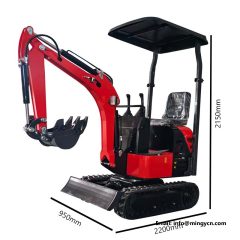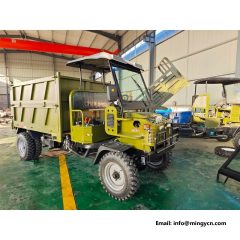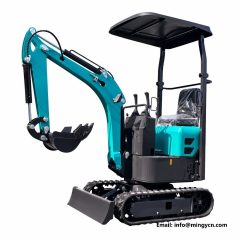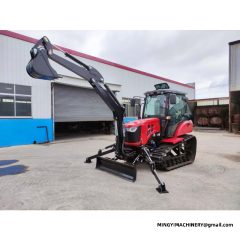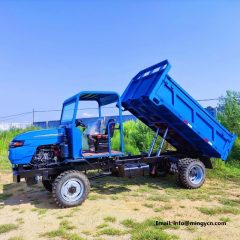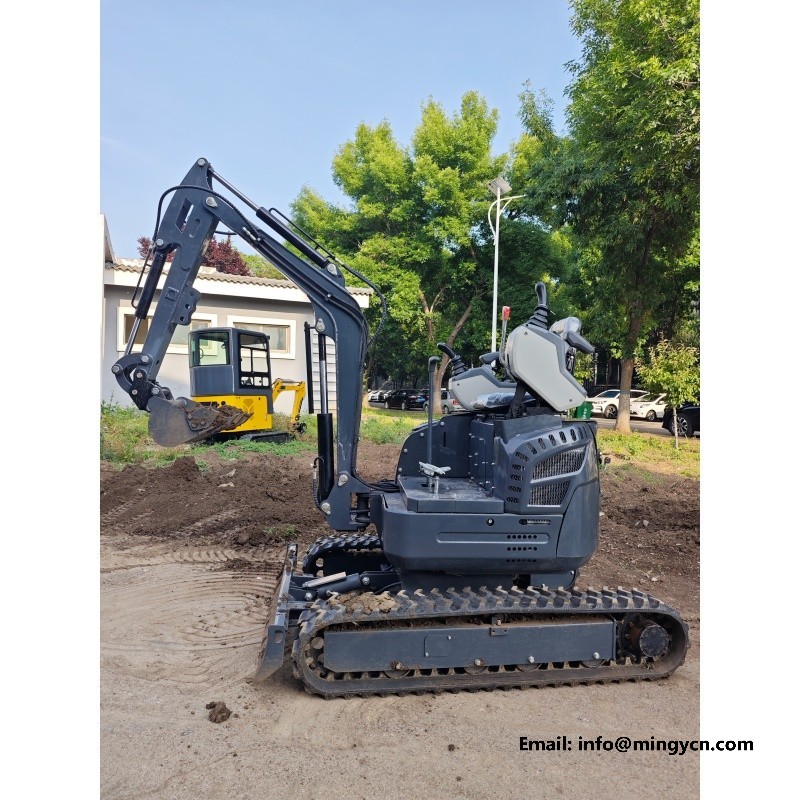
Every buyer asks the same question in a slightly different way: how big does it need to be? The honest answer is that machine size is not a preference, it is a consequence of the work. This guide sizes machines by job rather than by catalog class, so you can point at your own week and see which size range it lands in. It follows the same logic as the mini excavator selection guide, but stays focused on the sizing question alone.
The Six Jobs That Decide Machine Size
Most compact excavator demand comes from a small set of recurring jobs. Work through them with the measurements you actually have:
- Trenching for utilities and irrigation. Depth is fixed by the line, width by the excavator's smallest bucket, and length by reach. Depth sets the class more than anything else.
- Foundation and footing work. Requires digging below finished level and lifting spoil clear of formwork; stability and lift capacity start to matter alongside depth.
- Landscaping and grading. Shallow work, lots of repositioning, frequent attachment changes, and finished surfaces that must survive traffic.
- Demolition inside structures. Height and width limits dominate; lift capacity follows; depth is rarely the binding constraint.
- Orchard and vineyard work. Row width sets machine width, and the machine must aerate and trench without compacting the strip, as described in the orchard machinery guide.
- Pond, drainage, and ditch maintenance. Reach from one bank matters more than dig depth, and long-reach boom configurations earn their keep quickly.
Only after listing these should you compare size classes, because two buyers with the same budget can legitimately need machines two classes apart. The size that suits the list above is the size to buy, even when it disagrees with what looked sensible in a showroom.
Reading Size Classes by What They Can Reach
Three practical bands cover almost all compact work:
| Band | What it suits | What it cannot do |
|---|---|---|
| Micro (below about one tonne) | Garden gates, indoor work, planting holes, tight courtyards | Breaking hard ground, serious lift work, deep continuous trenching |
| Compact (about one to three tonnes) | Farms, small contractors, utility trenching, yard and orchard work | Heavy production trenching in rock, large lift tasks |
| Mid-compact (about three to six tonnes) | Rental fleets, road works, larger foundations, heavier attachments | Light towing behind small vehicles, delicate finished surfaces |
Notice that the bands are defined by limits rather than by power. A micro machine is defined by the gate it can pass and the surface it can stand on; a mid-compact machine is defined by the attachment it can carry and the trench volume it can produce in a day. That framing keeps the decision practical.
The three tonne small excavator page shows how one factory arranges options inside the third band, and the vineyard soil loosening digger page shows why the same job family can be handled lower down the range when access is the constraint.
Depth: Do Not Buy to the Number on the Specification Sheet
Specification sheets publish a maximum digging figure measured from grade with the arm fully extended. Your trench is dug by a machine standing on spoil it has already cut, working to a productive bucket angle, often alongside material you cannot pile in front of you. The usable depth therefore sits below the published figure, and the gap grows when the ground is soft or the trench is deep enough that you are reaching over the spoil pile.
The practical rule is simple. When your required depth sits near the published maximum, move up one size. The benefit is fewer repositionings, cleaner bucket angles, and a machine that is not permanently working at the edge of its geometry. The penalty is usually smaller than feared, because the transport step that makes people hesitate is often already determined by the trailer they own.
Width, Height, and the Doorway Problem
Width is the hardest limit because no amount of operator skill fixes a machine that does not fit. Measure the tightest passage on every regular route: gates, gates with posts, gaps between buildings, aisle widths in sheds, and the space beside machinery already parked. Then compare those numbers with the machine width using the tracks you intend to order, remembering that transport frames, wider shoes, and optional steps all change the answer.
Height applies when work happens under structures, canopies, or full orchard canopies. Reduced-height canopy and cab configurations exist precisely for this reason, and specifying one at order time is straightforward while adding one later is not.
Tail Swing: The Difference Between Working and Not Working
Two machines with identical dig depth behave completely differently beside a wall. Conventional tail swing machines sweep the counterweight beyond their tracks when rotating, so they need clearance behind them or a working pattern that never rotates fully. Reduced and zero tail swing designs keep the rear inside the track width, letting the machine rotate completely inside a corridor as wide as itself. For utility work against buildings, fences, and live drives, this option is worth more than several hundred kilograms of extra mass.
The same logic applies inside buildings. A zero tail machine lets one person work safely in a room with material stacked on both sides; a conventional machine in that room requires a spotter, and eventually stops being allowed there at all.
Rubber Tracks, Steel Tracks, and Their Effect on Effective Size
Track choice quietly changes the machine you thought you had bought. Rubber tracks protect paved and finished surfaces, run faster on site, and are mandatory for most municipal work. Steel tracks survive rock, demo debris, and sharp fill, and they grip better on steep slopes. Either way, the widest available shoe increases width beyond the base figure, sometimes by enough to fail the doorway test above.
If your work mixes hard surfaces and rough ground, ask whether the machine can accept both types and what the track frame width becomes in each case. Order that information in writing before the build starts.
Ground Conditions Push Size in Both Directions
Soft or cultivated ground pushes toward lower ground pressure, meaning wider tracks and a lighter machine; hard, rocky, or compacted ground pushes toward mass and breakout force. In a single season most owners meet both. The honest approach is to size for the ground you work most often and to plan equipment strategy for the exception, such as track pads or a different bucket rather than a second size class.
Hydraulic Flow: The Hidden Specification Behind Size
Because attachments are the reason most owners eventually want a bigger machine, check the auxiliary circuit alongside the size band. Two specifications matter: the maximum auxiliary flow available at the tool, and whether a dedicated case drain line exists. A mower, mulcher, or auger that stalls or overheats on a small carrier is rarely the tool's fault; it is usually a carrier that cannot supply what the tool needs.
Tool matching is laid out in the attachment guide, and the practical point here is that the flow available in each band is one of the real differences between them, alongside dig depth and transport weight.
Weight Versus Stability Versus Transport
Heavier machines cut harder and lift more, and low ground pressure protects soft surfaces. The trade is movement: heavier means a bigger trailer, a bigger tow vehicle, and possibly different legal limits on the road. There is no universal optimum, only the point where the production gain stops justifying the transport burden.
| Factor | Lighter machine | Heavier machine |
|---|---|---|
| Access | Fits more places, less surface damage | Limited routes, ramps must be rated |
| Transport | Tows behind ordinary vehicles | Needs rated trailer and tow vehicle |
| Production | Slower in hard ground, more cycles | Faster digging, fewer passes |
| Attachments | Limited by hydraulic flow and stability | Runs larger mowers, hammers, rippers |
| Ground | Works soft lawns and cultivated strips | Compaction and rutting risk |
Transport Reality Check
Before settling on a size, write down the actual transport chain. What is the trailer's rated payload, not its advertised one? What is the tow vehicle's rated braked towing capacity? What licence class applies in your country at that combination? Who is insured to drive it? Owners rarely regret buying a machine one size smaller for this reason, and often regret discovering afterwards that every job now needs a second driver.
Rental Fleets and Owner-Operators Arrive at Different Sizes
Rental fleets optimize for the unknown customer, which pushes them to the middle of each band and toward zero tail swing, enclosed cabs, and quick couplers. Owner-operators optimize for their own job list, which frequently justifies a smaller or larger machine than the rental default. If you are buying your own, ignore what the fleet next door runs; their machine has a different job.
Sizing When You Buy Sight-Unseen From Overseas
Export buyers rarely test before ordering, which makes the written specification more important than usual. Reduce uncertainty with three habits. First, ask for a dimension drawing showing transport length, width, height, and track width in the configuration you are ordering. Second, ask for a configuration sheet naming the engine model, pump type, auxiliary line flow, coupler type, and included buckets. Third, request a walkaround video of your own machine before it loads, which is standard practice and covered in detail by the pre-delivery inspection guide.
Operator Comfort Is a Sizing Factor Too
A machine that fits the job but exhausts the operator produces less work than expected. Small carriers put the operator close to the work with limited cab volume, which suits short tasks and punishes long days. Seat quality, control layout, visibility to the bucket edge, and climate control all change how productive the size you chose turns out to be. If the machine will run eight hours most days, the comfort discussion inside the selection guide matters as much as the size band.
Sizing Mistakes Worth Avoiding
- Sizing from a competitor's machine. Their job list is not yours, even when their business looks identical from the road.
- Buying for one extreme job. A single annual task should not dictate twelve months of machine economics.
- Measuring the gate but not the trailer. Access limits and transport limits are two separate lists, and both can stop the machine.
- Ignoring how often the machine will move between sites. Frequent moves favour smaller and lighter, even when the work itself argues larger.
- Assuming the operator will adapt. If three people share the machine, size for comfort rather than for minimum dimensions.
Sizing Checklist
- List the six jobs from the first section with realistic frequencies.
- Take the deepest required depth and add margin for working method.
- Measure the narrowest passage and lowest overhead on every regular route.
- Confirm your trailer's rated payload against transport weight.
- Choose tracks for surfaces, and recompute machine width afterwards.
- Confirm auxiliary flow and case drain for the attachments you expect.
- Decide whether tail swing or machine mass is the more useful tool where you work.
- Check engine parts availability for your region before locking size.
When the Answer Is Two Machines Instead of One
Sometimes no single size satisfies the job list: a compact machine for finished surfaces and rows, plus a heavier one for production digging and loading. That combination usually outperforms one compromise machine, and many export buyers combine both into a single container. For buyers who mainly need loading capability alongside digging, the trade-offs are laid out in the mini excavator versus backhoe loader comparison, and the import mechanics for a two-machine order are covered by the ordering and shipping guide. Send your job list, site measurements, and trailer rating through the contact page, and the factory can recommend a size rather than leaving you to interpolate from a catalog.