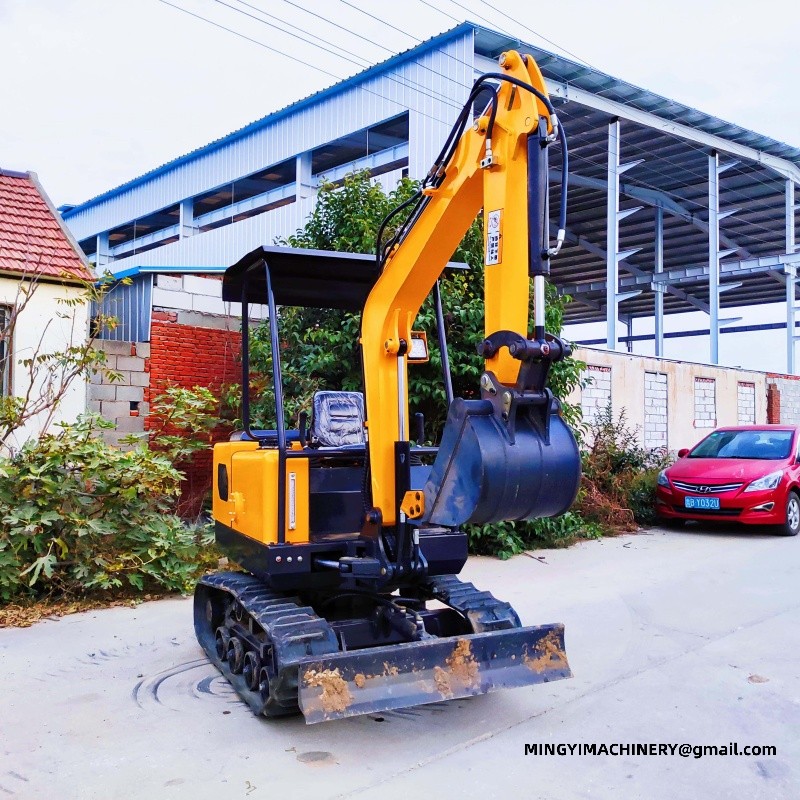
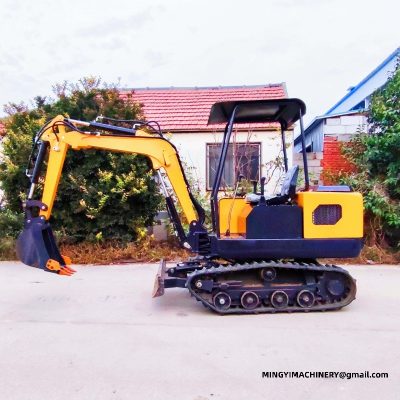
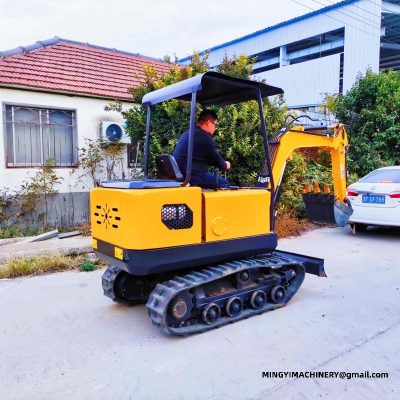
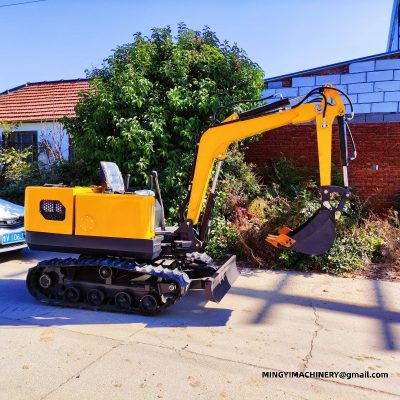
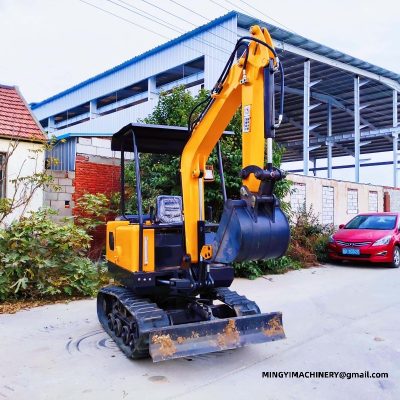
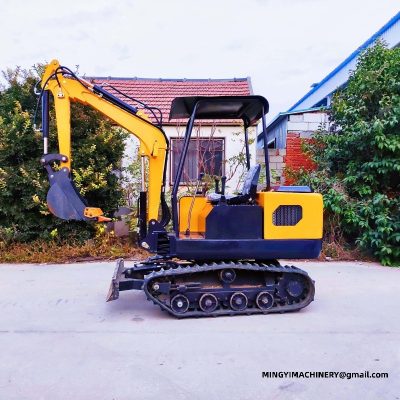
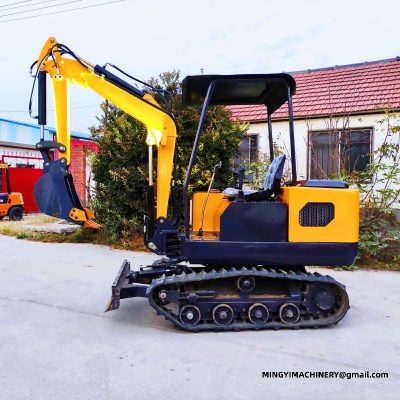
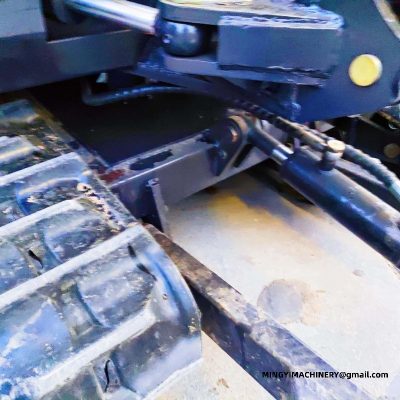
On a compact excavator every working motion is hydraulic: travel, swing, boom, arm and bucket, plus whatever attachment is fitted to the end of the arm. The circuit is therefore the part of the machine that decides how smoothly it does its job.
MINGYI builds hydraulic mini crawler excavators in the 0.8 to 6 tonnes class, assembled to order for export buyers. Because each unit is specified individually, the attachment requirements can be reflected in the machine as it is built.
What the hydraulic circuit carries on a compact machine
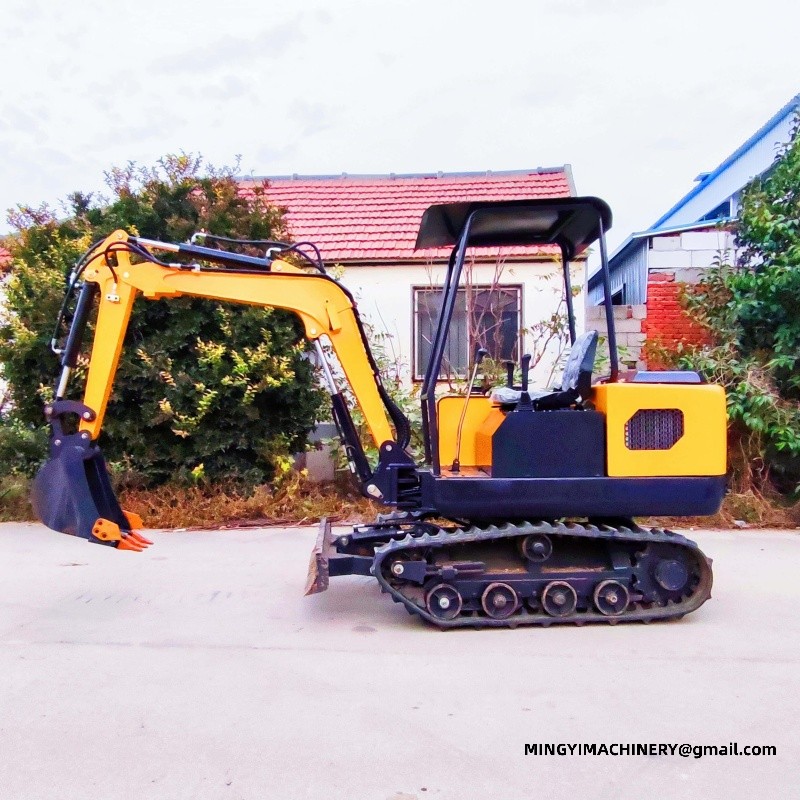
A single pump arrangement drives the travel motors, the slew and the boom services, and the way that flow is divided shapes the feel of the machine. A circuit that holds pressure well keeps the bucket steady when it meets a root or a lump of rock.
Auxiliary lines taken to the end of the arm are what make attachments possible. Where a breaker hammer or auger is planned, those lines and their couplers are fitted during assembly rather than added later on site.
Quick coupler and attachment selection
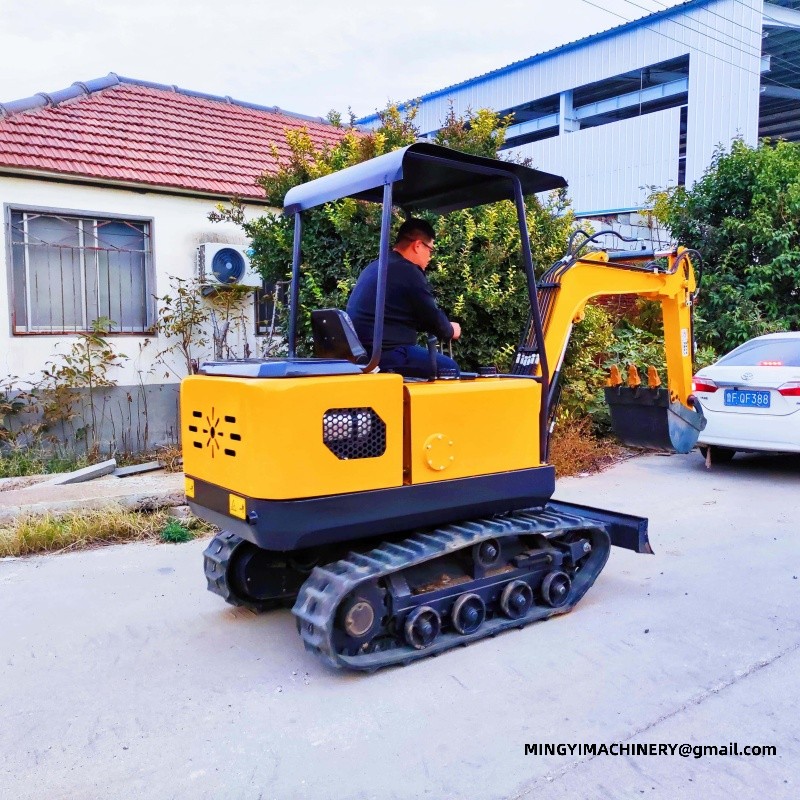
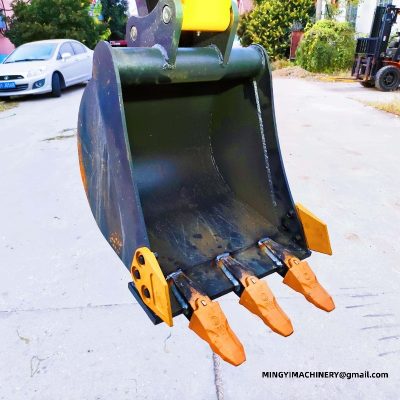
The coupler is the point at which one carrier becomes several machines. A mechanical coupler is simple and light; a hydraulic coupler lets the operator change the attachment from the seat, which matters where changes happen several times a day.
Attachment choice follows the work rather than the catalogue. Digging, breaking, drilling, raking, grabbing and cutting each call for a different tool, and the ones selected are recorded against the machine so the correct brackets travel with it.
The hydraulic specification is what a buyer is really choosing when an attachment-led machine is ordered. A compact excavator with correctly plumbed auxiliary lines and a settled attachment list works as a single system rather than a machine plus additions.
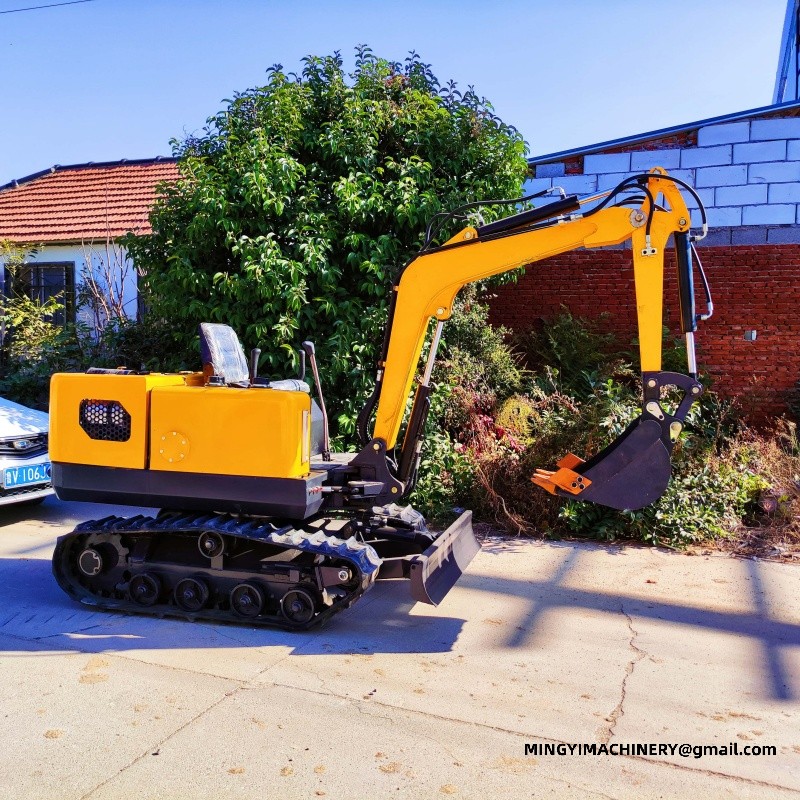
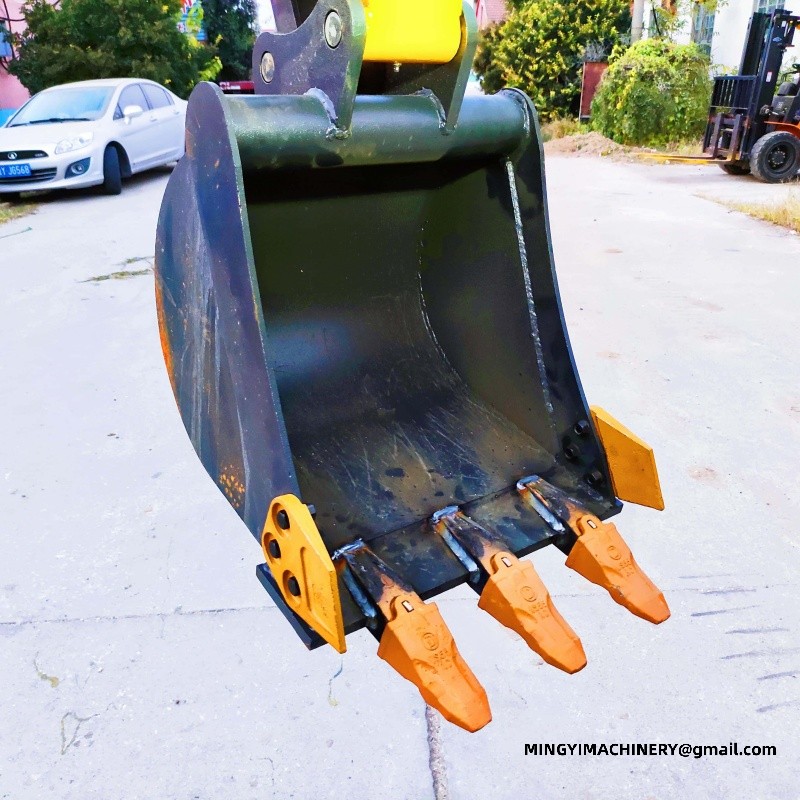
Trenching work with fully hydraulic mini excavator Trench quality depends on the bucket width and the operator, not on machine size. The excavator with a narrow bucket and a swing boom cuts a clean run along a boundary without disturbing the ground either side of it. Depth control matters more on service work than speed. This class of machine working beside live services is chosen because it can be placed precisely and stopped instantly, which is what the job actually requires. Orchard, vineyard and farm use of fully hydraulic mini excavator Ditching, fertilising and drainage on farmland suit the unit in daily use because the work is spread over a large area in short bursts. The machine travels behind a pickup and works where it stops. Farms also use a machine of this size for general maintenance - clearing a watercourse, repairing a track, loading a spreader. One carrier with a few attachments covers most of the jobs that would otherwise wait for a contractor. What owners should plan for beyond the fully hydraulic mini excavator Purchase decision is the visible part of the effort. Fuel, filters, tracks or tyres, the operator and the transport between sites are the items that decide what the equipment on site actually demands over a few seasons, and they are worth listing before the order. Downtime is the hidden line item. The machine itself waiting on a part earns nothing while it stands, so parts availability and service access belong in the plan as much as fuel does. Hiring versus owning a fully hydraulic mini excavator The choice follows the hours. Work that fills a few weeks a year is usually better hired, while the model in question that would be on site most weeks starts to justify ownership once the transport and booking time is counted. Availability is part of the decision. Owning the machine in that duty means it is there on the day the ground is ready; hiring means competing for the same machine at the same time as everyone else in the season. Noise, dust and working near occupied buildings Enclosure and machine condition both reduce noise. The unit on the job with intact panels, sound mounts and a maintained exhaust is measurably quieter than the same machine with loose guards, and the difference matters on restricted sites. Dust control is often part of the same conversation. Water, timing and work sequence reduce what leaves the site, and agreeing them in advance keeps a machine built for the work working rather than stopped after a complaint. Parts, service and support for fully hydraulic mini excavator Engine parts availability usually drives the engine choice. The equipment in service built with an engine the local network already carries is serviced from stock rather than from an international order. Remote support is handled by video. The excavator fault can often be diagnosed on a walk-around call with the panel open, which is faster than waiting for a visit and avoids shipping a part that is not needed. Attachments that turn this class of machine into several machines Attachment lists are best written before delivery. Specifying the unit in daily use with the tools the job list needs avoids the work and delay of adding hydraulics later, and a quick coupler makes the swap a few minutes instead of a workshop job. Most of the daily variety on a machine of this size comes from the attachment rack rather than from the machine itself. Bucket, breaker, auger, ripper, rake and grab cover the large majority of the work a contractor will see. Quick coupler practice on the equipment on site Couplers are specified early because they affect the arm and the hydraulic kit. Adding one to the machine itself after delivery means new pins, new hoses and a fitment session; adding it at build time is a line on the sheet. For a fleet that shares attachments between machines, a common coupler standard matters more than the coupler brand. The model in question that picks up the same tools as the larger machines keeps the rack usable across the yard. Matching the machine in that duty to ground conditions Soft ground is a flotation problem, not a power problem. The unit on the job on wide rubber tracks crosses lawn, sand and cultivated soil that would stop a narrower machine or a wheeled unit of the same capacity. Hard and abrasive ground reverses the specification. On rock, demolition rubble or sharp gravel, steel tracks with rubber blocks on a machine built for the work survive conditions that cut a rubber belt quickly. Lifting and material handling with the equipment in service Lifting with a machine built to dig needs a plan. The load, the radius and the ground under the class of machine all matter, and the safe figure is the one on the chart rather than the one that looks possible. Ground condition under the machine is part of every lift. Soft or uneven support is the common factor in handling incidents, and checking it takes less time than recovering the excavator that has settled. Acceptance checks when the unit in daily use arrives Delivery day is the best time to find a problem. Checking the specification against the order, the fluid levels, the fasteners and any transport damage while the equipment on site is still on the trailer is faster than claiming later. A function check before the machine goes to work is worth the hour. Running through the controls, the travel and the attachment circuit on a machine of this size confirms it is set up as specified and ready for the site. Road and paving work for the machine itself Patching and reinstatement favour a machine that can work in a lane closure. The model in question occupies less road than a full-size excavator, which reduces the traffic management needed and the length of the closure. Breaking out a failed slab and backfilling the same hole in one visit is normal work for the machine in that duty. The breaker and the bucket come off the same coupler, so the road is reopened the same day. Specification data for the unit on the job Where a machine built for the work is being specified for a job list, the table below gives the factory figures that matter most: what the machine weighs, how deep and how far it works, and what it measures on a trailer. These are the reference figures for the equipment in service. MINGYI confirms the final build sheet, including engine and attachment choices, against the destination and the job list before production. Machines leave the factory prepared for container or flat rack shipment. The excavator is normally shipped with the attachment set and the spare parts list agreed in advance so the container is planned once. Export documentation, decals and paint are settled before packing. Asking for them with the this class of machine order avoids a second handling session and keeps the machine on the booked vessel.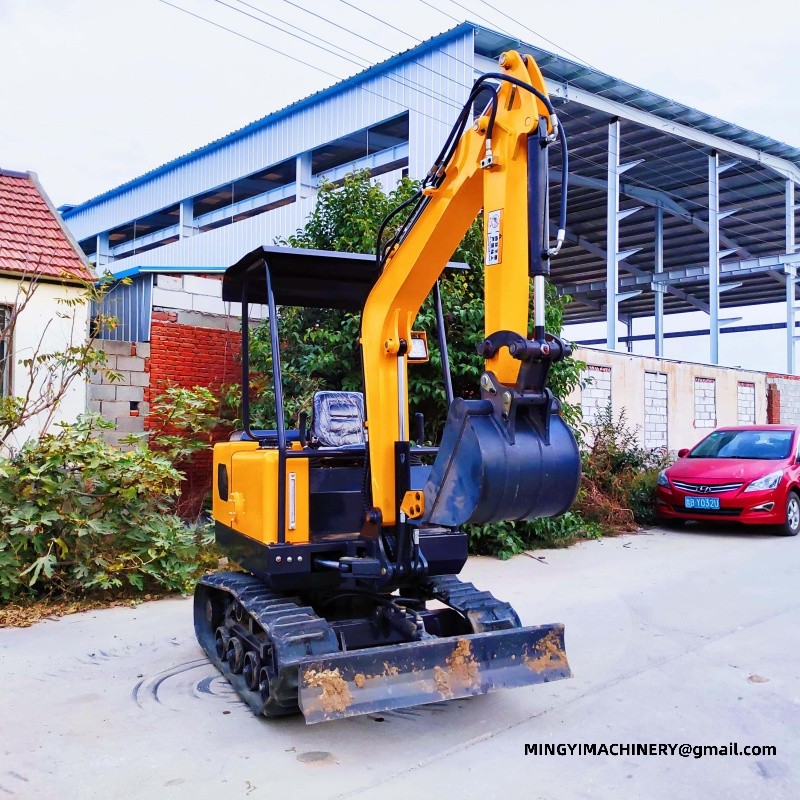
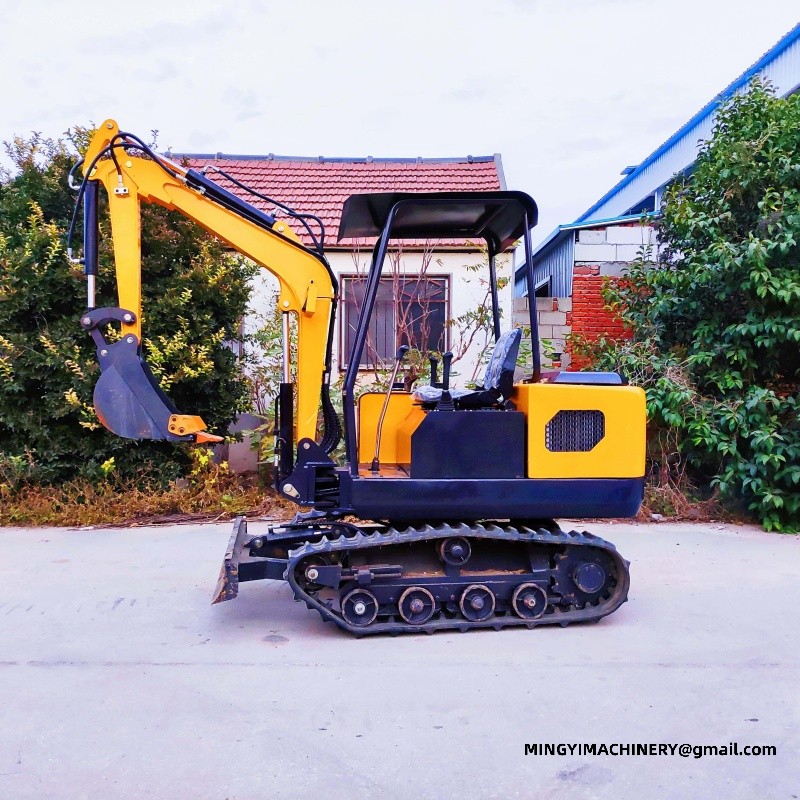
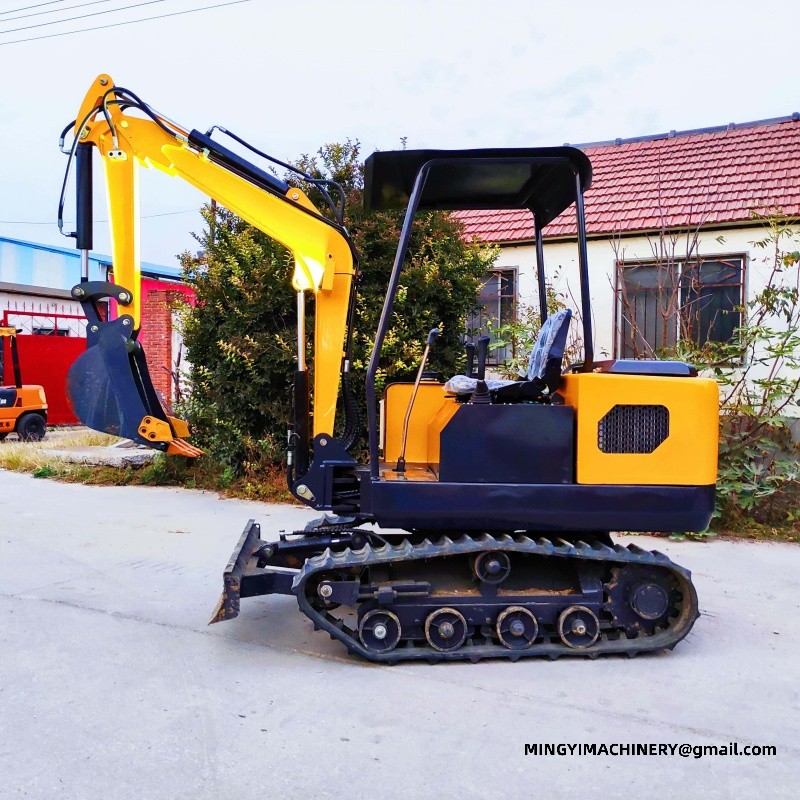
Reference specification — mini excavator range 09W 12W 15L 20-2L Operating weight 1100 kg (2425.08 lb) 1200 kg (2645.55 lb) 1400 kg (3086.47 lb) 1900 kg (4188.78 lb) Transport size (L×W×H) 1800 × 750 × 1970 mm 2200 × 930 × 2250 mm 2200 × 930 × 2250 mm 2600 × 1300 × 2344 mm Max digging depth 1250 mm (49.21 in) 1630 mm (64.17 in) 1700 mm (66.93 in) 2100 mm (82.68 in) Max digging height 2800 mm (110.24 in) 2750 mm (108.27 in) 2750 mm (108.27 in) 2880 mm (113.39 in) Max dumping height 1700 mm (66.93 in) 1960 mm (77.17 in) 1960 mm (77.17 in) 2100 mm (82.68 in) Max digging radius 2570 mm (101.18 in) 2900 mm (114.17 in) 2900 mm (114.17 in) 3215 mm (126.57 in) Max digging distance 1869 mm (73.58 in) 2100 mm (82.68 in) 2300 mm (90.55 in) 2460 mm (96.85 in) Minimum turning radius 1000 mm (39.37 in) 1300 mm (51.18 in) 1450 mm (57.09 in) 1587 mm (62.48 in) Travel speed 3 km/h (1.86 mph) 3 km/h (1.86 mph) 3 km/h (1.86 mph) 5 km/h (3.11 mph) Gradeability 30° 30° 30° 30° Fuel consumption 1-1.3 L/h (0.264—0.343 gal) 1-1.3 L/h (0.264—0.343 gal) 1-1.3 L/h (0.264—0.343 gal) 2-3 L/h (0.528—0.793 gal) Fuel tank capacity 8 L (2.11 gal) 10 L (2.64 gal) 10 L (2.64 gal) 16 L (4.23 gal) Hydraulic oil tank 16 L (4.23 gal) 16 L (4.23 gal) 16 L (4.23 gal) 18 L (4.76 gal) Dozer blade lift height 180 mm (7.09 in) 180 mm (7.09 in) 180 mm (7.09 in) 180 mm (7.09 in) Dozer blade drop depth 210 mm (8.27 in) 210 mm (8.27 in) 210 mm (8.27 in) 210 mm (8.27 in)
Q. What is the unit in daily use used for?
A. The hydraulic circuit is the character of a compact excavator: how it responds to the levers, how it shares flow between boom and swing, how it protects the attachment. Load sensing keeps the flow where the work is; pilot levers give the finesse that trench walls and grading finish demand. For fully hydraulic applications the practical route is to send the job list to the factory and let the build sheet answer it - which is exactly what this page invites.
Q. Do I need the high-flow option?
A. Only if the attachment list asks for it: breakers, mulching heads and larger augers drink more than a standard circuit serves. Match the circuit to the tools before the build, not after.
Q. Which models does MINGYI build?
A. The 08, 12 and 18 models cover the 0.8 to 6 tonne class with engine, track, cab and attachment options across the range - dealer programmes can mix models in one shipment, and each fully hydraulic machine is confirmed on its own build sheet.
Storage and long idle periods for a machine of this size
Standing still is harder on a machine than working. Preparing the equipment on site for a long idle period means clean fluids, a charged battery and protection for the exposed surfaces, because neglect is not the same as rest.
Keeping a service record for the machine itself
Patterns show up in the record before they show up in the machine. Rising oil consumption or a filter that keeps blocking on the model in question is obvious on paper long before it becomes a failure on site.
E-mail : sales@mingycn.com
LINE ( ID ): mingyicn
Related pages
off grid diesel mini excavator · open canopy mini excavator · Wheel Loader Manufacturer | China Factory: 0.3 m3 Entry Class · Mini Excavators









