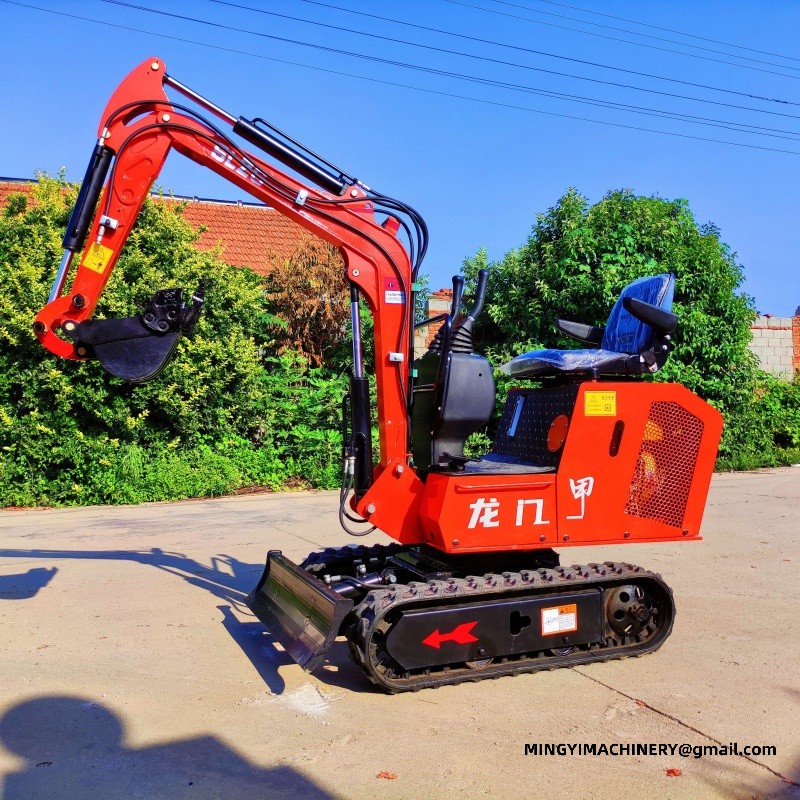
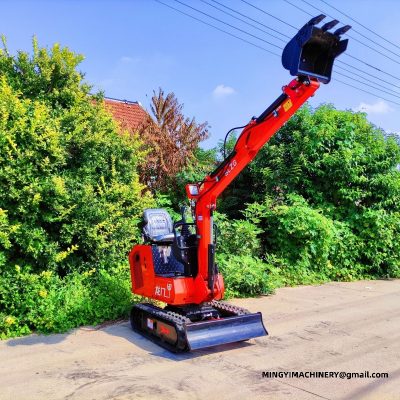
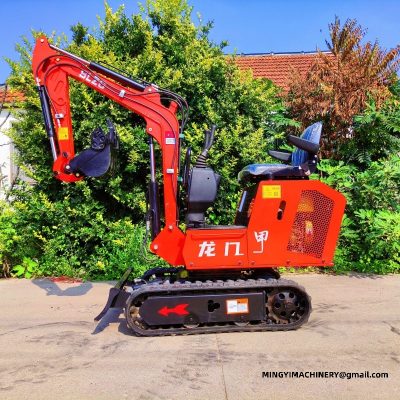
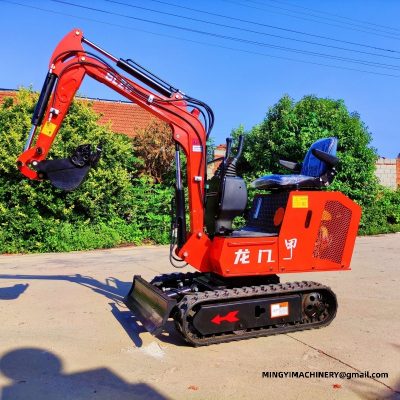
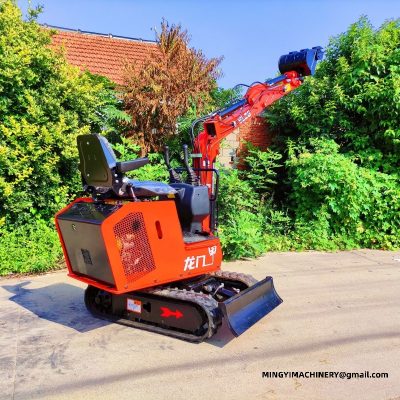
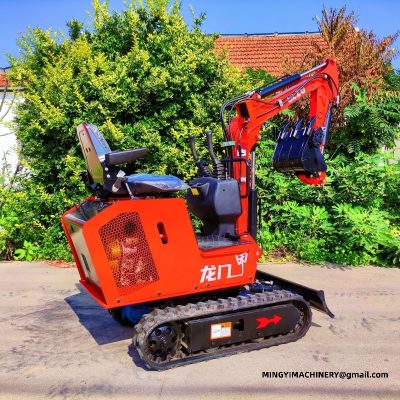
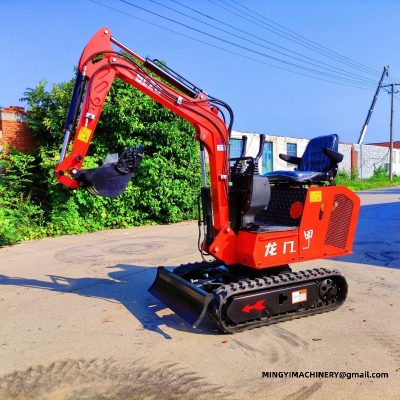
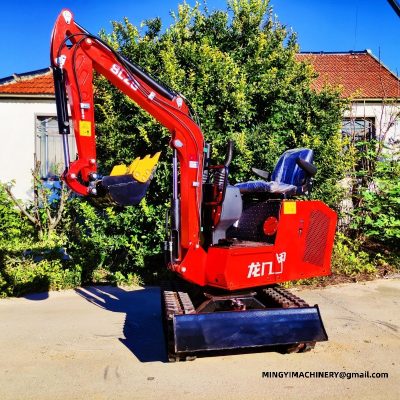
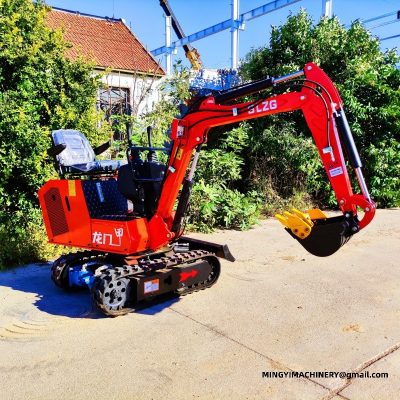
Farm drainage is decided by water, so the ditch has to fall the right way and hold its section over a long run. A compact excavator lets a farmer open and clean these channels without calling in a larger machine for a job that is often short and repeated.
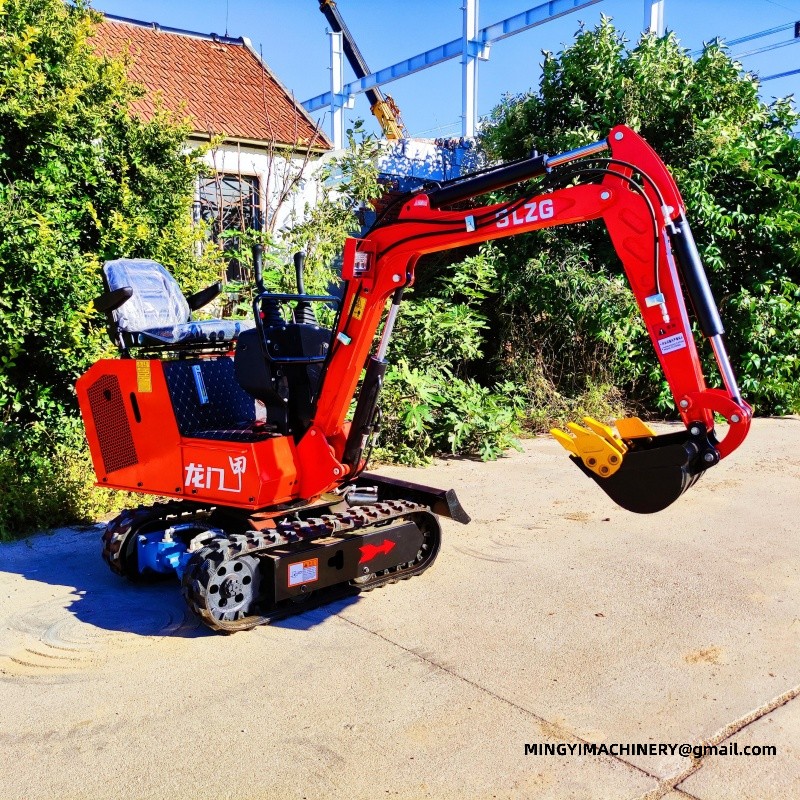
MINGYI mini excavators are used for this work where the ditch is narrow and the ground is soft, and where the machine has to move between fields and wet corners without bogging down.
Opening and cleaning farm drainage ditches
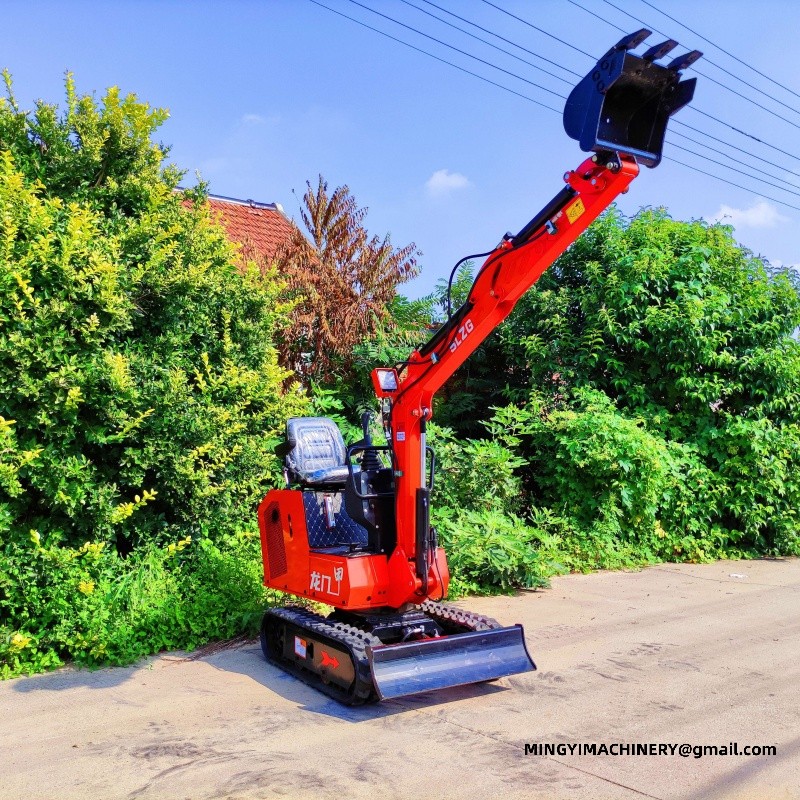
A drainage ditch is cut to a width and depth that carries the water off the field, so the bucket is chosen for the section and the boom for the reach. Cleaning an existing ditch usually means lifting the accumulated silt out and casting it to one side.
Depth control matters more than speed here, since a wrong fall leaves water standing. The operator works along the channel in short sections, checking the level as the ditch progresses.
Ground and track choice on wet ground
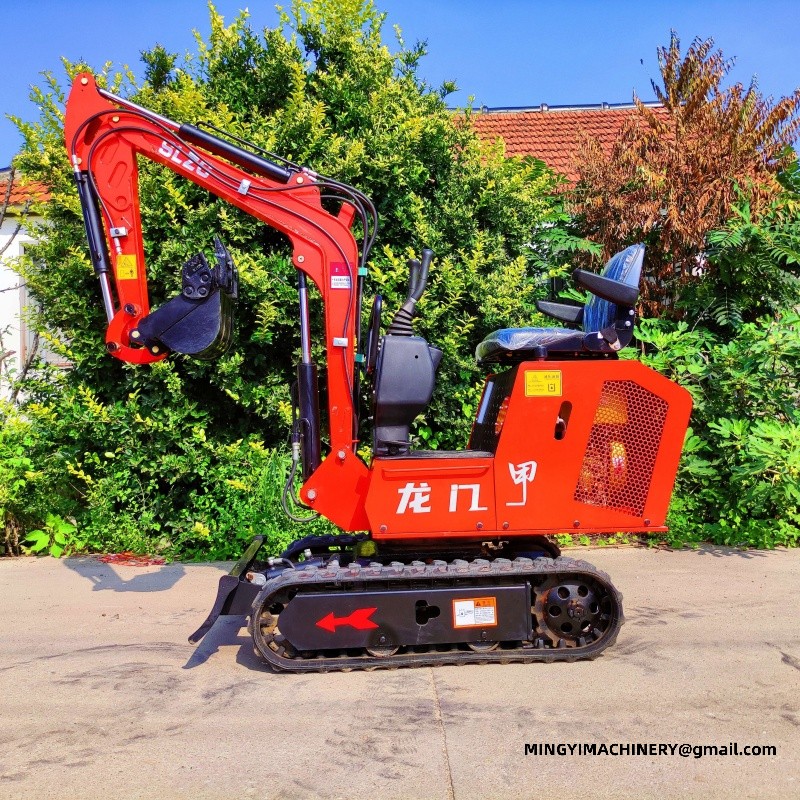
Drainage is often needed on the wettest part of the farm, so how the machine bears on the ground is important. Rubber tracks spread the load and travel across pasture with less rutting, while steel tracks with rubber blocks are used where a firmer bite is needed.
The spoil from the ditch is usually laid along the edge and spread later, and a bucket or grading attachment can tidy the bank. Keeping the machine compact lets it follow the ditch into corners a larger unit would not reach.
When ordering a mini excavator for farm drainage, describe the ditch width and depth, the length of run and how soft the ground is, and MINGYI will match the model and tracks to the job.
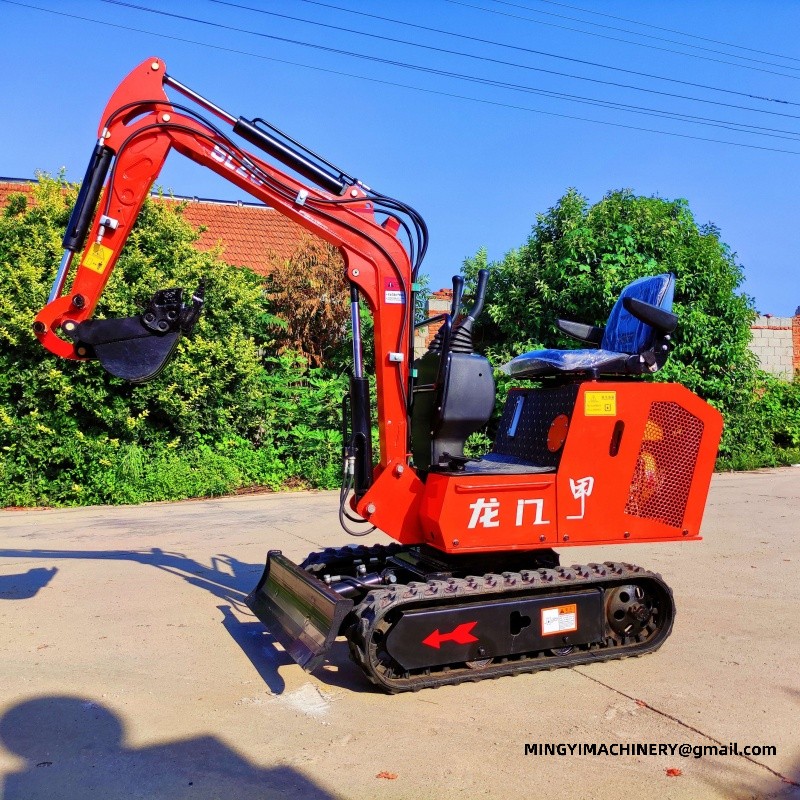
Matching mini excavator for farm drainage ditching to ground conditions Soft ground is a flotation problem, not a power problem. The excavator on wide rubber tracks crosses lawn, sand and cultivated soil that would stop a narrower machine or a wheeled unit of the same capacity. Hard and abrasive ground reverses the specification. On rock, demolition rubble or sharp gravel, steel tracks with rubber blocks on this class of machine survive conditions that cut a rubber belt quickly. Canopy or enclosed cab on a mini excavator for farm drainage ditching The cab decision follows the climate and the hours. Operators working a full shift in the unit in daily use benefit from a sealed cab with wipers and heating; operators stepping on and off every few minutes usually prefer the canopy for the visibility and the quick exit. Enclosure also changes noise and dust exposure. A sealed cab on a machine of this size keeps dust out on dry sites and lets the machine work through weather that would otherwise stop a canopy machine for the day. Track choice for mini excavator for farm drainage ditching Rubber tracks suit paved and landscaped ground because they spread the machine weight and leave the surface intact. Steel tracks with rubber blocks are specified where the ground is rougher or the working day is longer, and the choice can be made per machine rather than accepted as a factory default. Track type changes what the machine can cross and what it leaves behind. Buyers specify rubber for lawns, driveways and municipal work, and steel with rubber blocks for sites where sharp material would cut a rubber belt in a week. Working near live services with mini excavator for farm drainage ditching Digging near water, gas and cable is a precision job. The equipment on site is used here because the operator can work in short controlled cuts and because the machine can be positioned without driving over the run being exposed. The risk on utility work is not machine power but machine placement. The machine itself that fits the working width leaves the surrounding ground undisturbed, which keeps the trench stable and the reinstatement small. Quick coupler practice on mini excavator for farm drainage ditching Couplers are specified early because they affect the arm and the hydraulic kit. Adding one to the model in question after delivery means new pins, new hoses and a fitment session; adding it at build time is a line on the sheet. For a fleet that shares attachments between machines, a common coupler standard matters more than the coupler brand. The machine in that duty that picks up the same tools as the larger machines keeps the rack usable across the yard. Landscaping and ground care with mini excavator for farm drainage ditching Landscape contractors use the unit on the job for planting holes, pond excavation, grading and retaining work. The machine is light enough to cross finished lawn and narrow enough to work between established trees. On soft landscape work the surface is the constraint. A machine built for the work on rubber tracks crosses turf without stripping it, which is why the same jobs are not given to a wheeled machine. Trenching work with the equipment in service Trench quality depends on the bucket width and the operator, not on machine size. The excavator with a narrow bucket and a swing boom cuts a clean run along a boundary without disturbing the ground either side of it. Depth control matters more on service work than speed. This class of machine working beside live services is chosen because it can be placed precisely and stopped instantly, which is what the job actually requires. Getting the unit in daily use through a narrow gap Access decides the machine before output does. With a machine of this size the limiting dimension is usually the widest point on the way in, so measuring the gate, the corridor and the turning space first saves a wasted delivery and a second visit. Contractors who buy the equipment on site normally have one job in mind that nothing else reaches. The purchase order follows the access measurement, not the other way round, and the build sheet is then settled around it. Engine options behind the machine itself Power unit selection is settled against the service network the buyer already uses. MINGYI offers Kubota D722, Kubota D902, YANMAR, Changchai, Laidong, Runtong, YARMAX, Youpu 2V80 and Youpu 195, so a fleet running one brand of engine can keep the same filters, the same parts supplier and the same mechanic. Two buyers can order the same the model in question and receive different engines. The decision is rarely about peak power; it is about which parts counter is closest to the site and which engine the local mechanic already knows. Running the machine in that duty in a rental fleet The specification that rents best is usually the simplest one to explain at the counter. The unit on the job with rubber tracks, a canopy and a coupler covers the majority of weekend and short-term hires. Fleet buyers also weigh transport. A machine built for the work that a customer can tow on a normal licence and a standard trailer is a hire that does not need a delivery truck, which changes how often it goes out. Working the equipment in service in confined spaces Clearance above matters as much as around. Door heights, pipework and overhead services set the limit for the excavator indoors, and measuring them first avoids a machine that arrives and cannot be used. Ventilation is the other indoor constraint. Running this class of machine inside a closed structure needs air movement, and that is a planning item rather than something to discover after the first hour. Specification data for the unit in daily use The figures below are the factory figures for the models most often matched to a machine of this size. They are the numbers to check against the site: the depth the work needs, the reach from one position, and the width of the narrowest point on the route in. These are the reference figures for the equipment on site. MINGYI confirms the final build sheet, including engine and attachment choices, against the destination and the job list before production. Transport weight and width decide whether a machine needs a specialist haulier. The machine itself sized to travel on a standard plant trailer behind a suitable vehicle moves with the crew rather than on a scheduled low loader. Loading practice matters as much as the numbers. The model in question is driven up ramps under its own power with the boom lowered and the tracks aligned, and secured at the points the manufacturer specifies.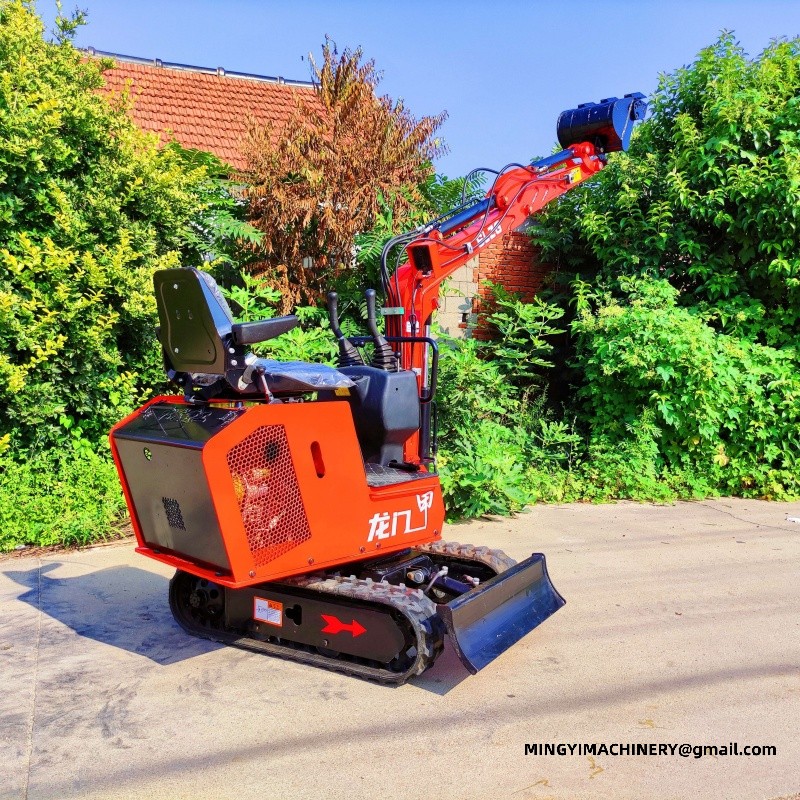
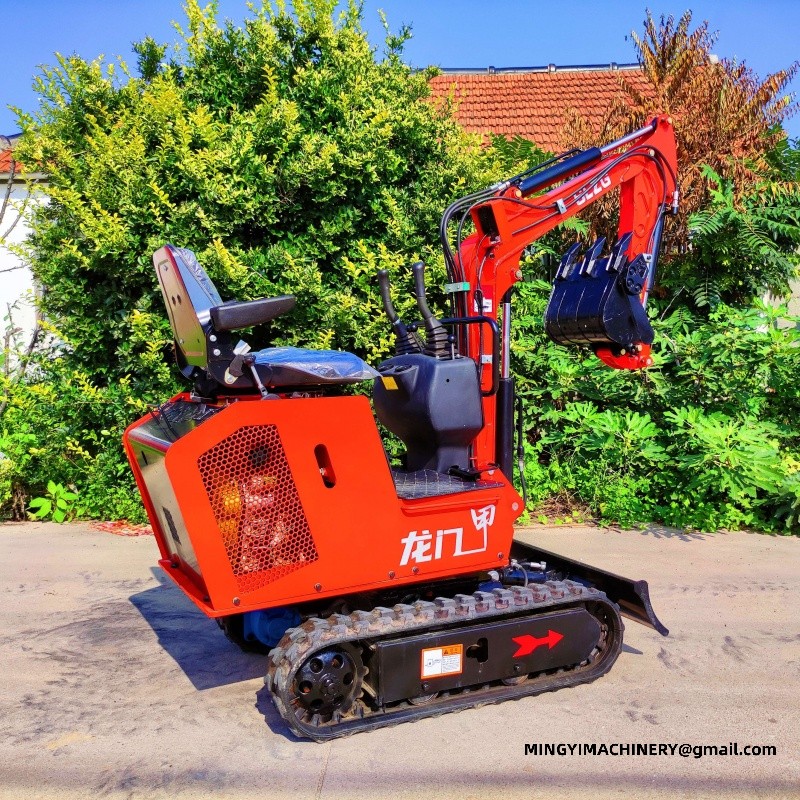
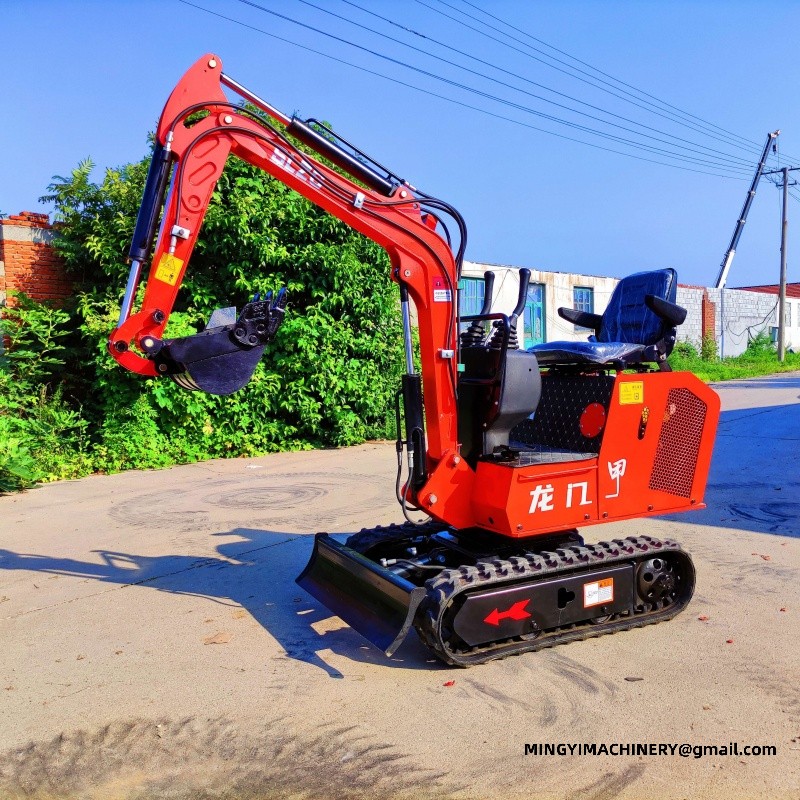
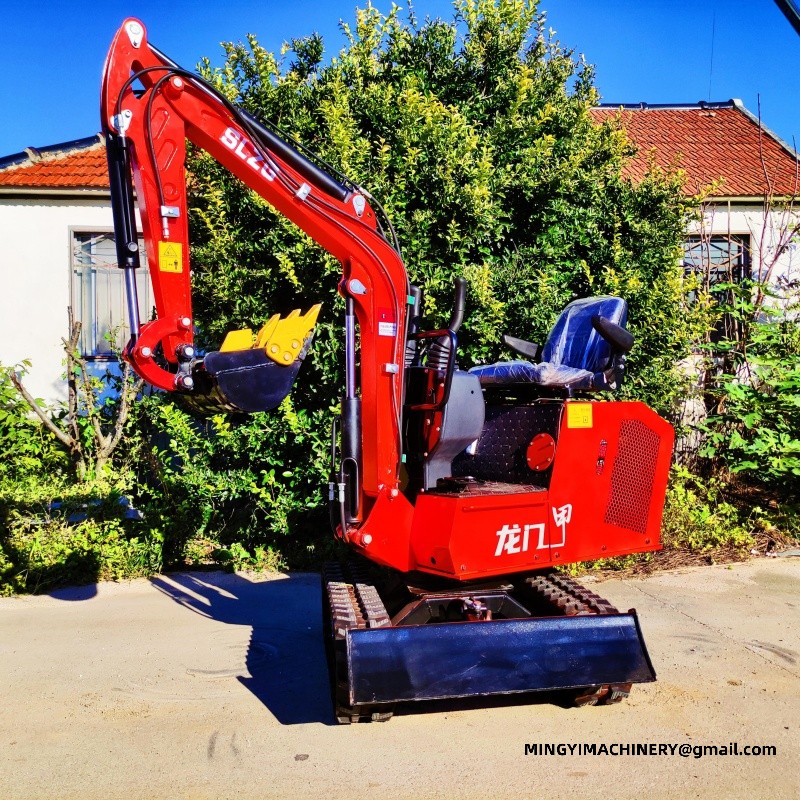
Reference specification — mini excavator range 20-3W 30-2W 09L 25L Operating weight 1900 kg (4188.78 lb) 2700 kg (5952.48 lb) 1100 kg (2425.08 lb) 2200 kg (4850.17 lb) Transport size (L×W×H) 2550 × 1100 × 2200 mm 3000 × 1100 × 2700 mm 2300 × 720 × 1870 mm 3000 × 1300 × 2700 mm Max digging depth 1800 mm (70.87 in) 2200 mm (86.61 in) 1400 mm (55.12 in) 2300 mm (90.55 in) Max digging height 2820 mm (111.02 in) 3000 mm (118.11 in) 2800 mm (110.24 in) 3100 mm (122.05 in) Max dumping height 2050 mm (80.71 in) 2000 mm (78.74 in) 1880 mm (74.02 in) 2050 mm (80.71 in) Max digging radius 3050 mm (120.08 in) 3800 mm (149.61 in) 2490 mm (98.03 in) 3900 mm (153.54 in) Max digging distance 2300 mm (90.55 in) 3050 mm (120.08 in) 2000 mm (78.74 in) 3100 mm (125.05 in) Minimum turning radius 1450 mm (57.09 in) 1750 mm (68.9 in) 1400 mm (55.12 in) 1800 mm (70.87 in) Travel speed 5 km/h (3.11 mph) 7 km/h (4.35 mph) 3 km/h (1.86 mph) 7 km/h (4.35 mph) Gradeability 30° 30° 30° 30° Fuel consumption 2-3 L/h (0.528—0.793 gal) 2-3 L/h (0.528—0.793 gal) 1-1.3 L/h (0.264—0.343 gal) 2-3 L/h (0.528—0.793 gal) Fuel tank capacity 16 L (4.23 gal) 16 L (4.23 gal) 8 L (2.11 gal) 16 L (4.23 gal) Hydraulic oil tank 18 L (4.76 gal) 20 L (5.28 gal) 16 L (4.23 gal) 18 L (4.76 gal) Dozer blade lift height 180 mm (7.09 in) 230 mm (9.06 in) 180 mm (7.09 in) 230 mm (9.06 in) Dozer blade drop depth 210 mm (8.27 in) 280 mm (11.02 in) 210 mm (8.27 in) 280 mm (11.02 in)
Q. What is the machine in that duty?
A. Most compact excavator hours are spent in the ground for services and drainage, and the whole job is matching the machine to exactly that work. A bucket too wide pulls more spoil than the job needs and leaves a messy backfill; a bucket matched to the service keeps the cut clean. For farm drainage ditching applications the practical route is to send the job list to the factory and let the build sheet answer it - which is exactly what this page invites.
Q. How do I keep a trench straight and at depth?
A. Mark the line, set the bucket to the trench width and let the machine hold the cut - working back along the trench keeps spoil clear and the sightline open. A swing boom helps along walls and fences where the carrier cannot align.
Q. How do I get a specification?
A. Send the model, the destination and the attachment list by email or LINE - the channels listed just below this section. The reply covers the specification, lead time, packing and freight in one document, with the farm drainage ditching build sheet attached.
Keeping a service record for the unit on the job
Patterns show up in the record before they show up in the machine. Rising oil consumption or a filter that keeps blocking on a machine built for the work is obvious on paper long before it becomes a failure on site.
Packing, loading and shipment of the equipment in service
Export packing is part of the machine, not an afterthought. The excavator is blocked and braced inside the container so that it arrives in the same condition it left, and the load plan is decided by the dimensions rather than by what fits loosely.
E-mail : sales@mingycn.com
LINE ( ID ): mingyicn
Related pages
mini excavator for greenhouse work · mini excavator for straight trenches · Heavy Duty Wheel Loader: Hinge Plates and Cross-Member Steel · Mini Excavators









