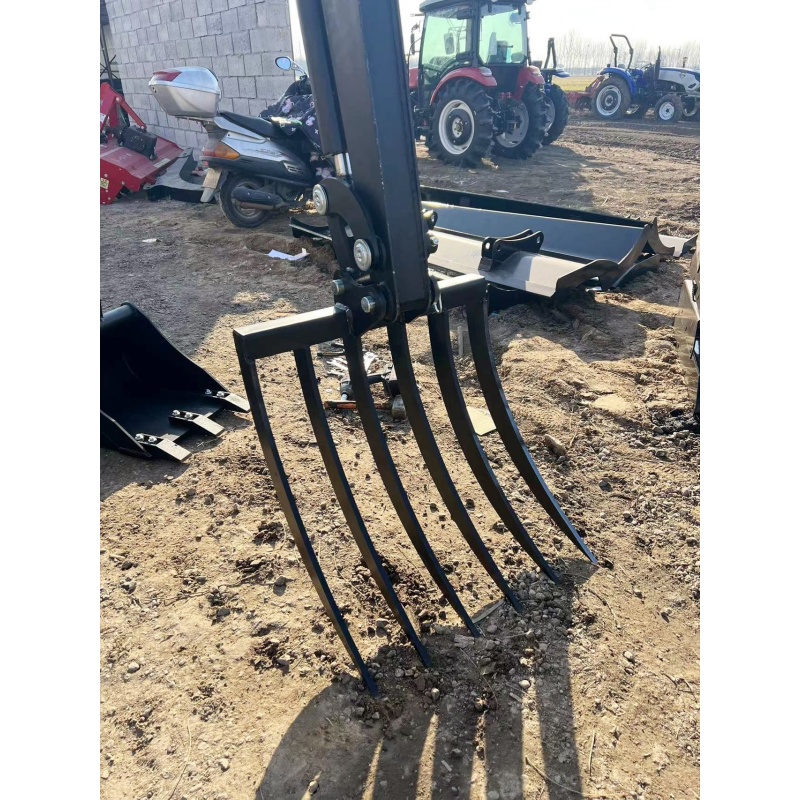
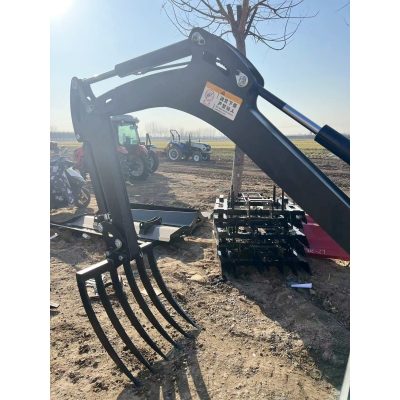
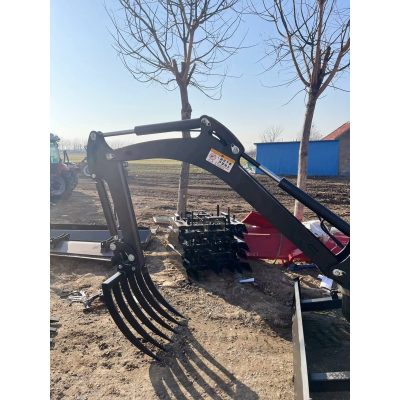
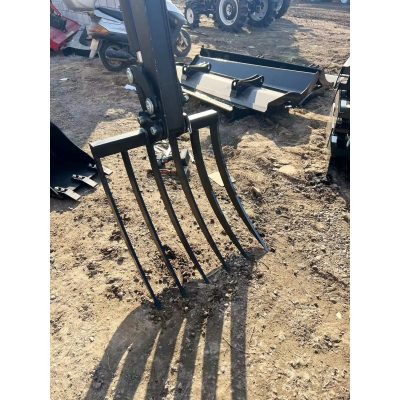
Vegetation is awkward material for a digging bucket. Grass, brash and light scrub slip off the cutting edge and stay mixed with the soil, so the ground ends up rougher than it started.
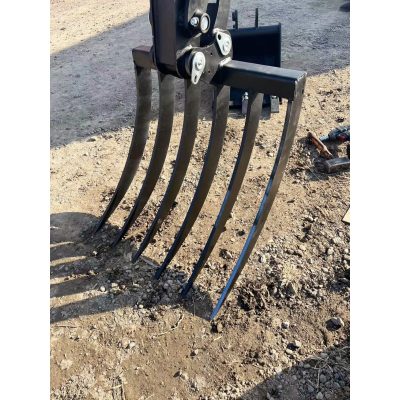
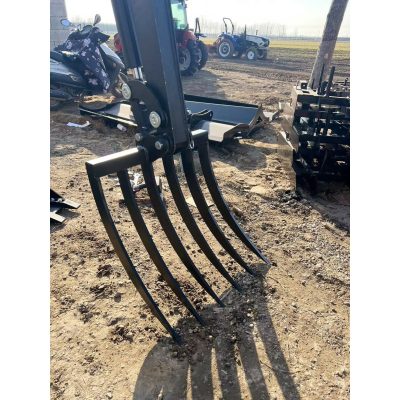
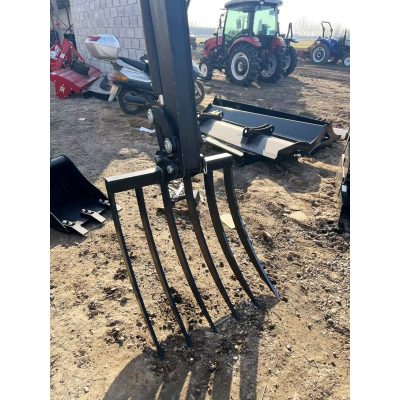
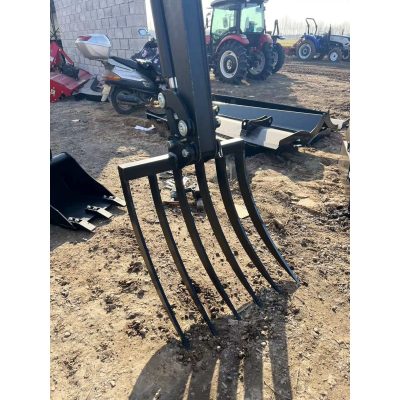
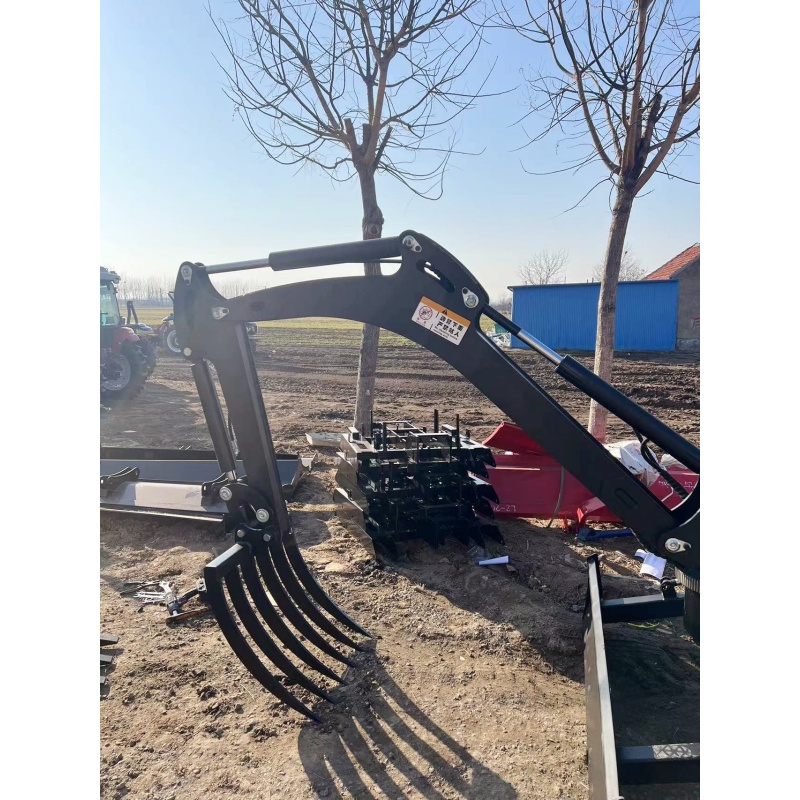
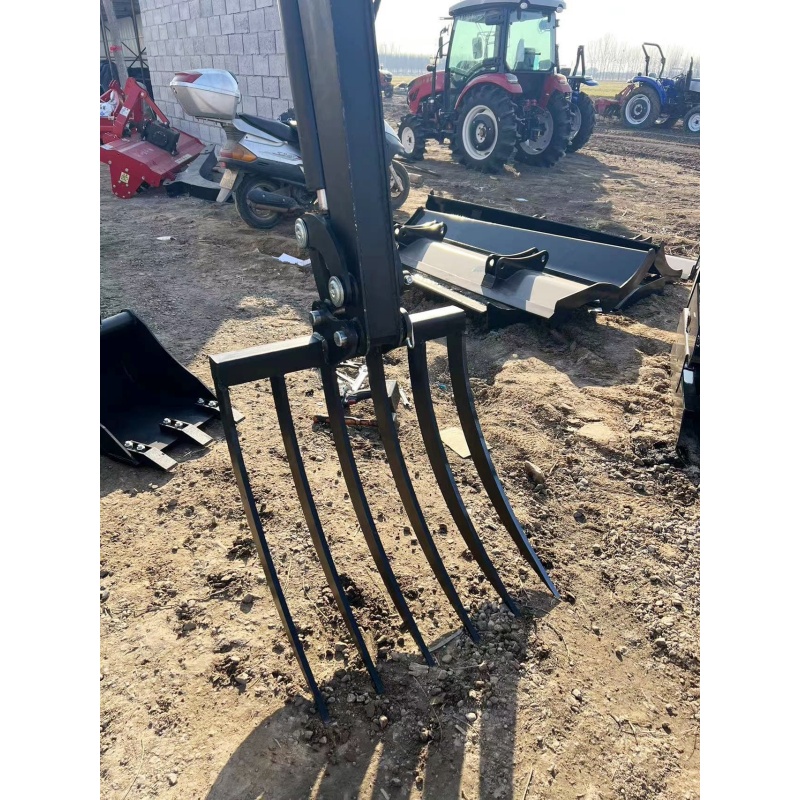
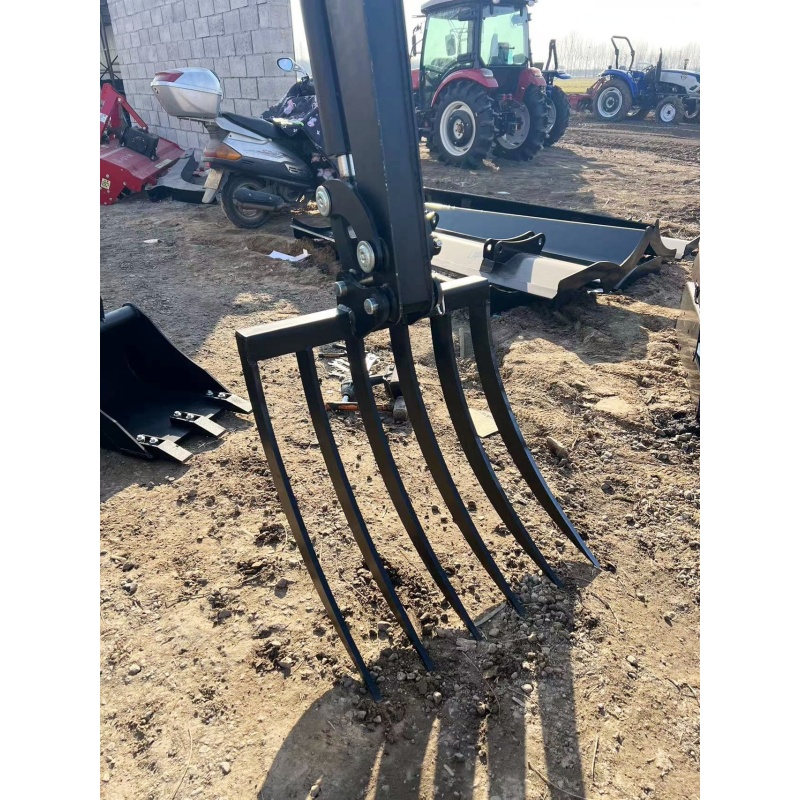
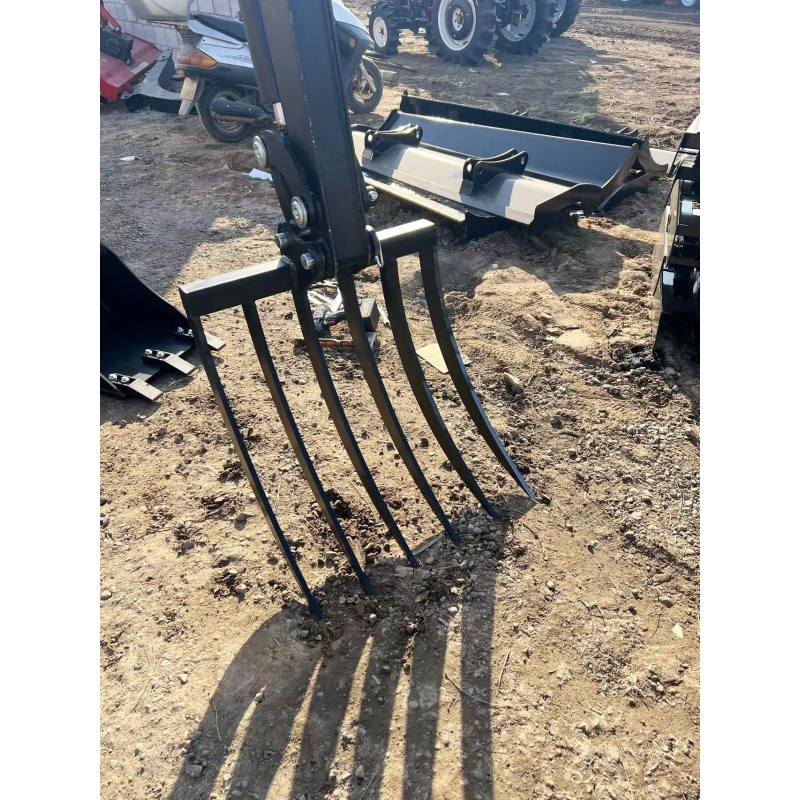
A multi-tooth grass rake replaces the bucket on the end of the arm and gives the machine a way of collecting that material instead. MINGYI supplies the rake with its compact excavators, and the mounting is matched to the carrier when the order is placed.
What a multi-tooth rake clears
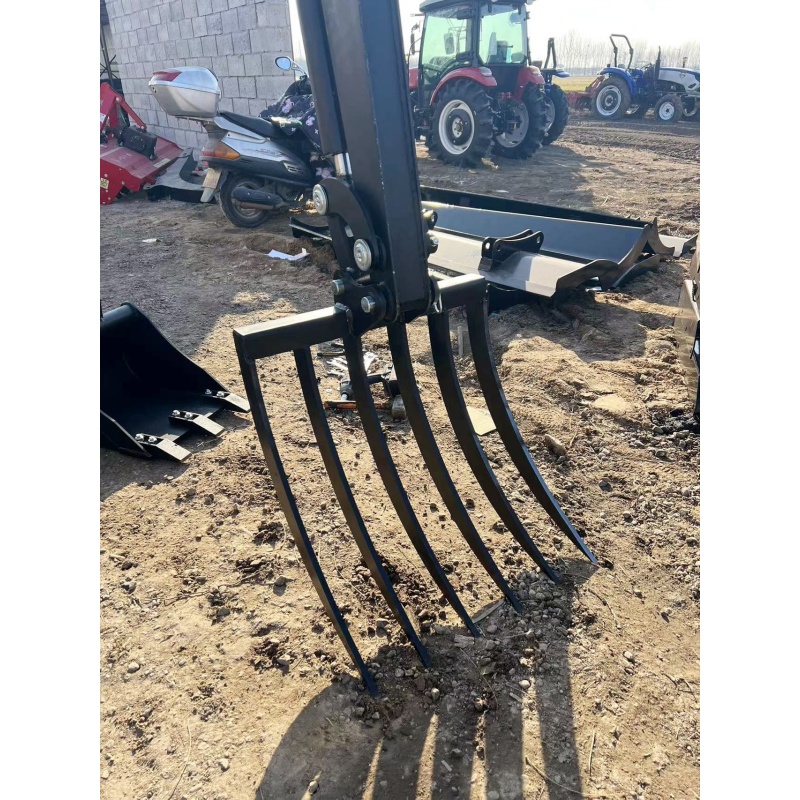
The long tines comb through surface growth and lift it clear, leaving soil behind and taking the vegetation away in a bundle. That suits rough grass, weeds, brambles and light scrub on verges, boundaries and undeveloped plots.
Because the tines are spaced, the rake also levels loose material as it travels. Roots, stones and small debris can be pulled into heaps rather than being buried, which makes the following pass with a bucket far quicker.
Fitting and using the rake on a compact carrier
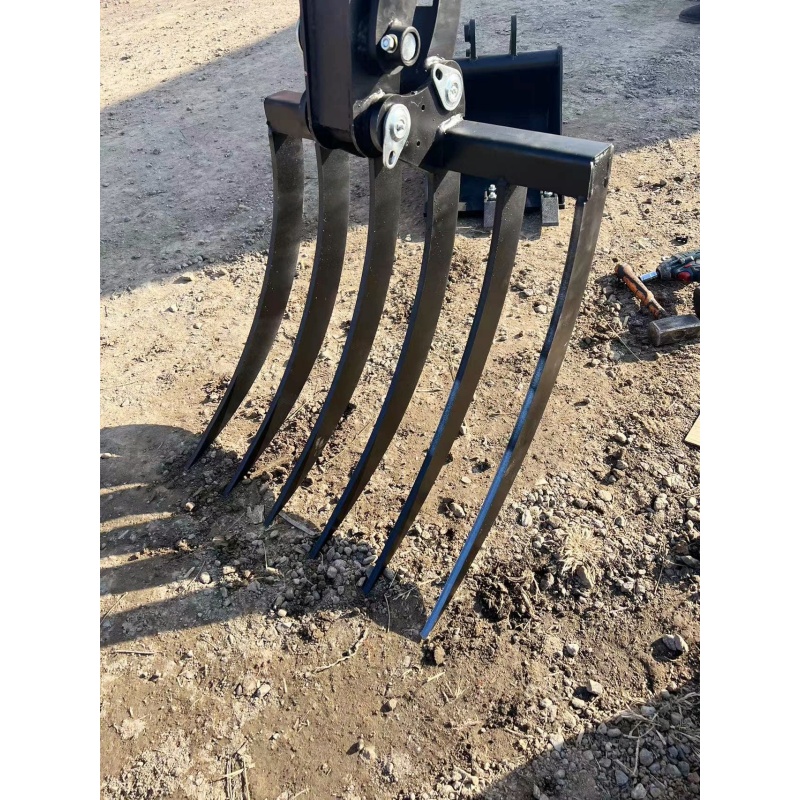
The rake is normally mounted on the same quick coupler as the digging bucket, so the operator can change between them from the seat. That matters where the work alternates between clearing growth and cutting a trench in the same area.
On a machine working near planting or finished surfaces, the rake is used with the arm extended and the bucket crowd kept shallow, so the tines skim rather than dig. Rubber tracks are usually chosen alongside it where the machine crosses lawns or paving.
A rake does the job that a bucket does badly. For contractors clearing growth before earthworks begin, fitting a multi-tooth rake to an existing compact excavator turns a slow, mixed operation into a clean one.
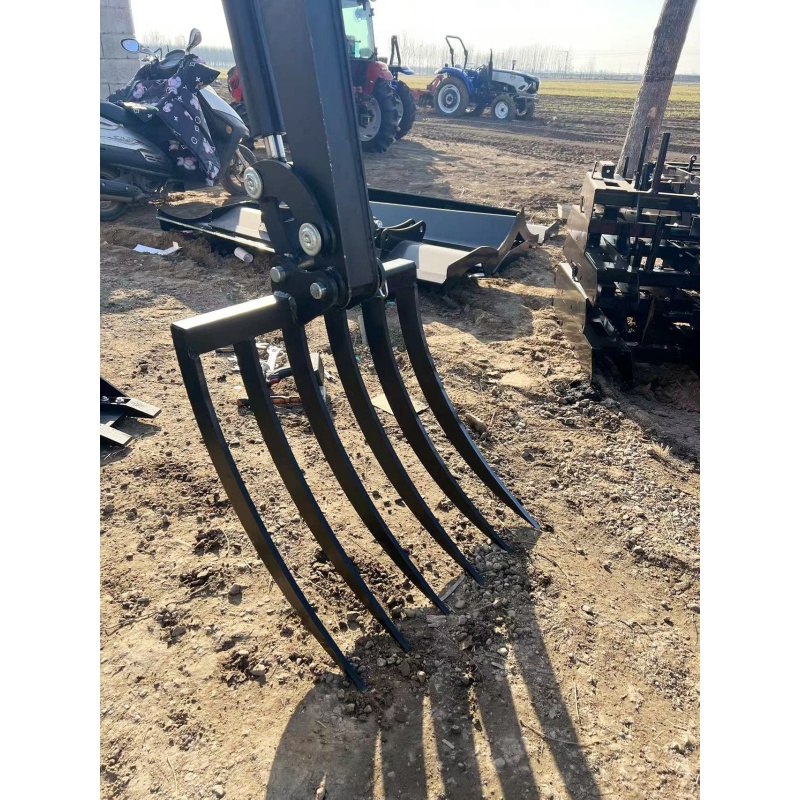
Attachments that turn grass rake attachment for mini excavators into several machines The base machine is a carrier; the tool on the end of the arm decides the task. The excavator fitted with a toothed bucket digs, and the same machine with a breaker, an auger or a grab does work that would otherwise need a second unit on site. Most of the daily variety on this class of machine comes from the attachment rack rather than from the machine itself. Bucket, breaker, auger, ripper, rake and grab cover the large majority of the work a contractor will see. What owners should plan for beyond the grass rake attachment for mini excavators Purchase decision is the visible part of the effort. Fuel, filters, tracks or tyres, the operator and the transport between sites are the items that decide what the unit in daily use actually demands over a few seasons, and they are worth listing before the order. The useful comparison is demand per working hour, not demand per machine. A machine of this size that works more hours a year spreads its standing takes over more output, which is why utilisation usually matters more than the invoice figure. Trenching work with grass rake attachment for mini excavators Service trenches are the most common reason the equipment on site is hired. Water, sewage, cable and gas runs are narrow, shallow and often close to existing services, which is exactly the work a full-size machine cannot do safely. Trench quality depends on the bucket width and the operator, not on machine size. The machine itself with a narrow bucket and a swing boom cuts a clean run along a boundary without disturbing the ground either side of it. Daily checks and maintenance on grass rake attachment for mini excavators Track tension is the item most often neglected. The model in question run with slack tracks wears the undercarriage and can throw a track on a turn; run too tight, the same components wear from the other direction. Greasing is the second item. The slew ring, the boom and arm pins and the bucket linkage on the machine in that duty take grease daily in dusty work, and the intervals shorten further when the machine is used in water or mud. Noise, dust and working near occupied buildings Work near housing or occupied premises brings constraints that open sites do not. Start times, exhaust condition and how often the unit on the job needs to reverse are the practical limits that neighbours notice. Enclosure and machine condition both reduce noise. A machine built for the work with intact panels, sound mounts and a maintained exhaust is measurably quieter than the same machine with loose guards, and the difference matters on restricted sites. Lifting and material handling with a grass rake attachment for mini excavators Stability changes with reach. A load the equipment in service handles close in becomes a different proposition at full extension, so the working radius belongs in the plan before the lift rather than during it. Ground condition under the machine is part of every lift. Soft or uneven support is the common factor in handling incidents, and checking it takes less time than recovering the excavator that has settled. Running this class of machine in a rental fleet Rental fleets buy for utilisation, not for a single job. The unit in daily use with a quick coupler and a common attachment standard is hired more often because it suits more of the calls that come in. Fleet buyers also weigh transport. A machine of this size that a customer can tow on a normal licence and a standard trailer is a hire that does not need a delivery truck, which changes how often it goes out. Track choice for the equipment on site Undercarriage selection is a ground question, not a preference question. The machine itself running on finished paving needs rubber; the same machine on demolition rubble or rock wears rubber quickly, so steel with rubber blocks becomes the better answer over a full season. Track type changes what the machine can cross and what it leaves behind. Buyers specify rubber for lawns, driveways and municipal work, and steel with rubber blocks for sites where sharp material would cut a rubber belt in a week. Engine options behind the model in question Two buyers can order the same the unit on the job and receive different engines. The decision is rarely about peak power; it is about which parts counter is closest to the site and which engine the local mechanic already knows. Engine choice is also an emissions and documentation question for some markets. Listing the available units with the machine in that duty enquiry lets the factory confirm what can be supplied and documented for the destination country. Municipal and public works with a machine built for the work Municipal crews work on streets, footpaths and parks where the public is present. The equipment in service is specified because it occupies little space, works inside a small exclusion zone and can be moved on a standard trailer. Noise and surface protection matter on public work. The excavator on rubber tracks across paving, with a sealed cab for the operator, suits the conditions better than a larger tracked machine. Working near live services with this class of machine The risk on utility work is not machine power but machine placement. The unit in daily use that fits the working width leaves the surrounding ground undisturbed, which keeps the trench stable and the reinstatement small. Utility crews specify a machine of this size with a narrow bucket and good visibility for exactly this reason: the machine has to stop at the service, not at the edge of the operator's view. Operator technique for the equipment on site The second habit is tool discipline. Running the machine itself with the right bucket width for the trench means less spoil, less reinstatement and a cleaner job than a wide bucket and a lot of trimming. Specification data for the model in question Buyers comparing the machine in that duty usually start from four numbers - weight, digging depth, reach and transport width - because those are the ones that decide whether the machine can be delivered and whether it can do the job once it is there. These are the reference figures for the unit on the job. MINGYI confirms the final build sheet, including engine and attachment choices, against the destination and the job list before production. Output on a compact machine comes from placement rather than power. An experienced operator keeps a machine built for the work working inside the swing arc, positions once and digs a full run instead of repositioning for every bucket. Stability is the third. The equipment in service working across the tracks rather than over the corners keeps the machine steady and the undercarriage loaded evenly, which shows up as track life at the end of the season.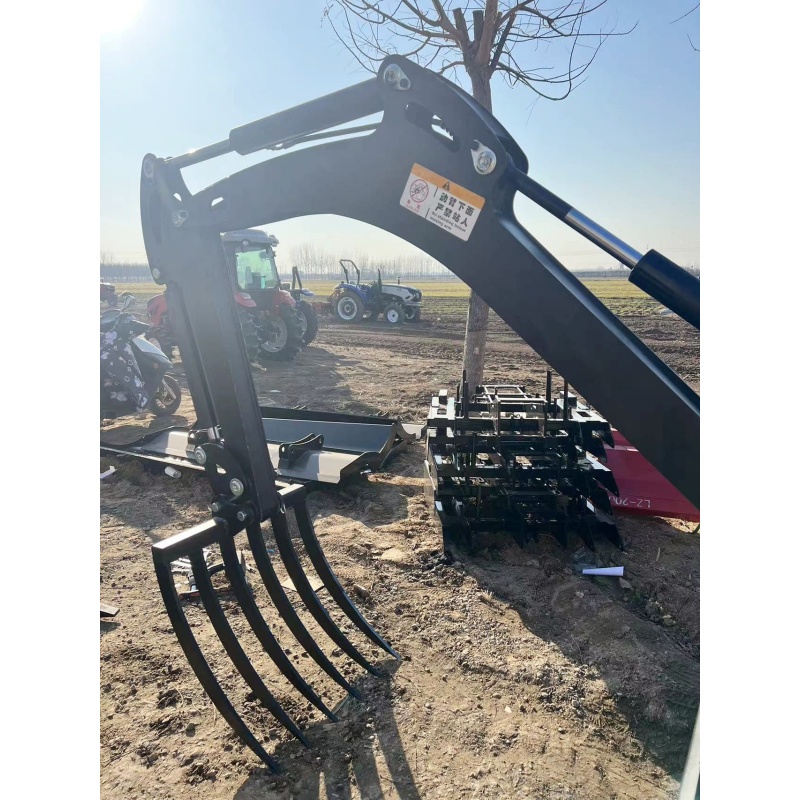
Reference specification — mini excavator range 13W 15W 30-1W 09L Operating weight 1300 kg (2866.01 lb) 1400 kg (3086.47 lb) 2900 kg (6393.41 lb) 1100 kg (2425.08 lb) Transport size (L×W×H) 2200 × 930 × 2250 mm 2200 × 930 × 2250 mm 3000 × 1250 × 2780 mm 2300 × 720 × 1870 mm Max digging depth 1630 mm (64.17 in) 1630 mm (64.17 in) 2200 mm (86.61 in) 1400 mm (55.12 in) Max digging height 2750 mm (108.27 in) 2750 mm (108.27 in) 3400 mm (133.86 in) 2800 mm (110.24 in) Max dumping height 1960 mm (77.17 in) 1960 mm (77.17 in) 2400 mm (94.49 in) 1880 mm (74.02 in) Max digging radius 2900 mm (114.17 in) 2900 mm (114.17 in) 4000 mm (157.48 in) 2490 mm (98.03 in) Max digging distance 2100 mm (82.68 in) 2100 mm (82.68 in) 2800 mm (110.24 in) 2000 mm (78.74 in) Minimum turning radius 1300 mm (51.18 in) 1300 mm (51.18 in) 2000 mm (78.74 in) 1400 mm (55.12 in) Travel speed 3 km/h (1.86 mph) 3 km/h (1.86 mph) 5 km/h (3.11 mph) 3 km/h (1.86 mph) Gradeability 30° 30° 30° 30° Fuel consumption 1-1.3 L/h (0.264—0.343 gal) 1-1.3 L/h (0.264—0.343 gal) 2-3 L/h (0.528—0.793 gal) 1-1.3 L/h (0.264—0.343 gal) Fuel tank capacity 10 L (2.64 gal) 10 L (2.64 gal) 16 L (4.23 gal) 8 L (2.11 gal) Hydraulic oil tank 16 L (4.23 gal) 16 L (4.23 gal) 20 L (5.28 gal) 16 L (4.23 gal) Dozer blade lift height 180 mm (7.09 in) 180 mm (7.09 in) 420 mm (16.54 in) 180 mm (7.09 in) Dozer blade drop depth 210 mm (8.27 in) 210 mm (8.27 in) 210 mm (8.27 in) 210 mm (8.27 in)
Q. What are the excavator?
A. The attachment story on a compact digger is about earning across trades: one carrier, one trailer, and a quick coupler that swaps tools in about a minute. The quick coupler makes the changeover a minute job at the trench edge, and mechanical tools need no hydraulic lines at all. For mini excavators applications the practical route is to send the job list to the factory and let the build sheet answer it - which is exactly what this page invites.
Q. What does the attachment add to daily work?
A. Reach into jobs the bucket alone cannot specification: grading with a tilting bucket, clearing with a rake, drilling with an auger, lifting with a thumb. One carrier, several trades - the machine stays on site earning instead of waiting for a specialist.
Q. Which models does MINGYI build?
A. The 08, 12 and 18 models cover the 0.8 to 6 tonne class with engine, track, cab and attachment options across the range - dealer programmes can mix models in one shipment, and each mini excavators machine is confirmed on its own build sheet.
Later additions and retrofits on this class of machine
An added function should pay for itself quickly. Whether the unit in daily use gains a different bucket, a hydraulic service or a protection package, the test is the number of days a year it is actually used.
Reading the early symptoms on a machine of this size
Temperature and pressure are the two things worth watching. The equipment on site that runs hotter than it used to, or whose pressure has drifted, is reporting a problem that is still simple to fix.
E-mail : sales@mingycn.com
LINE ( ID ): mingyicn
Related pages
grass rake for mini excavators · grass rake and tamper attachment · Heavy Duty Wheel Loader: Hinge Plates and Cross-Member Steel · Mini Excavators









