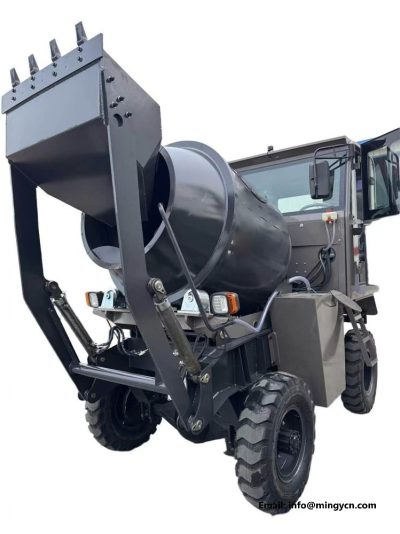
0.8 m³ 4WD Self Loading Concrete Mixer with Enclosed Operator Cab, Cab Mini Cement Mixer, Four Wheel Drive Concrete Truck
The difference between this mixer and an open-roof one is the hour theoperator spends in it. A 0.8 m³ four-wheel-drive self loading concrete mixer does the same batch, travels the same site and discharges the same waywhether or not the operator sits under a roof. What changes is what happens at 6am in November, or at three o'clock in the middle of a monsoon build: whether the operator is still able to hold the machine straight and keep the rhythm of the batch.
This page is about the cab version — the enclosed variant of the standard 0.8 m³ 4WD machine. It covers what the enclosure actually changes, where the cab earns its cost, and how to confirm at handover that you are receiving the machine you ordered.
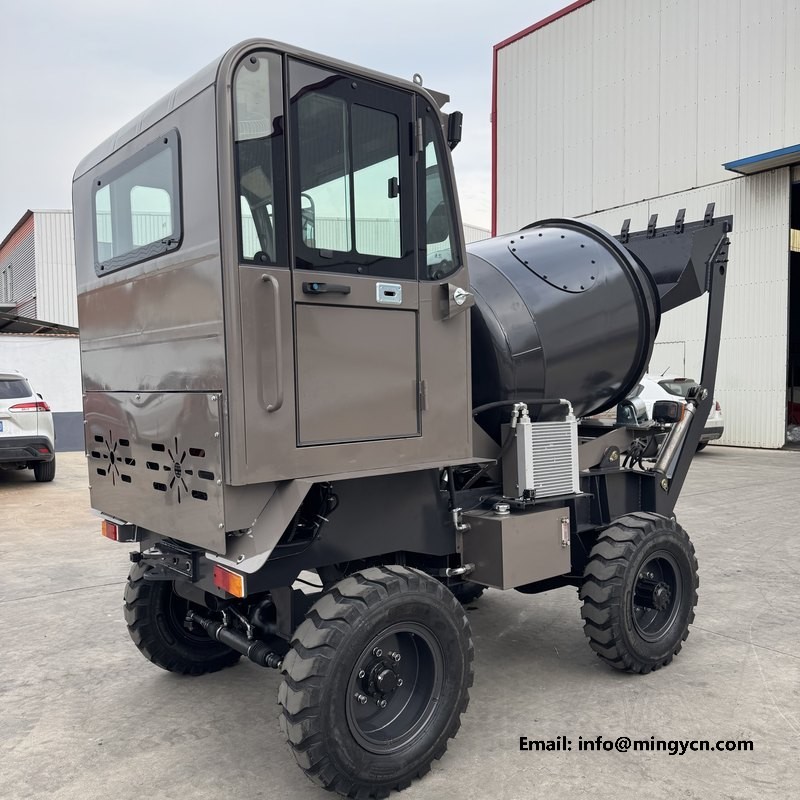
The enclosure is not a cosmetic shell. It changes three operating conditions at once, and each of them has a measurable consequence on a small batching run.
Rain on the batch. Concrete is sensitive to water at the wrong moment, and an operator standing in the open will not add water because of rain deliberately — but a wet lapel, a soaked seat or water running down an arm leads to an interrupted cycle, and an interrupted cycle on small-volume work is where consistency is lost. Under a cab, the mixing rhythm stops depending on the weather.
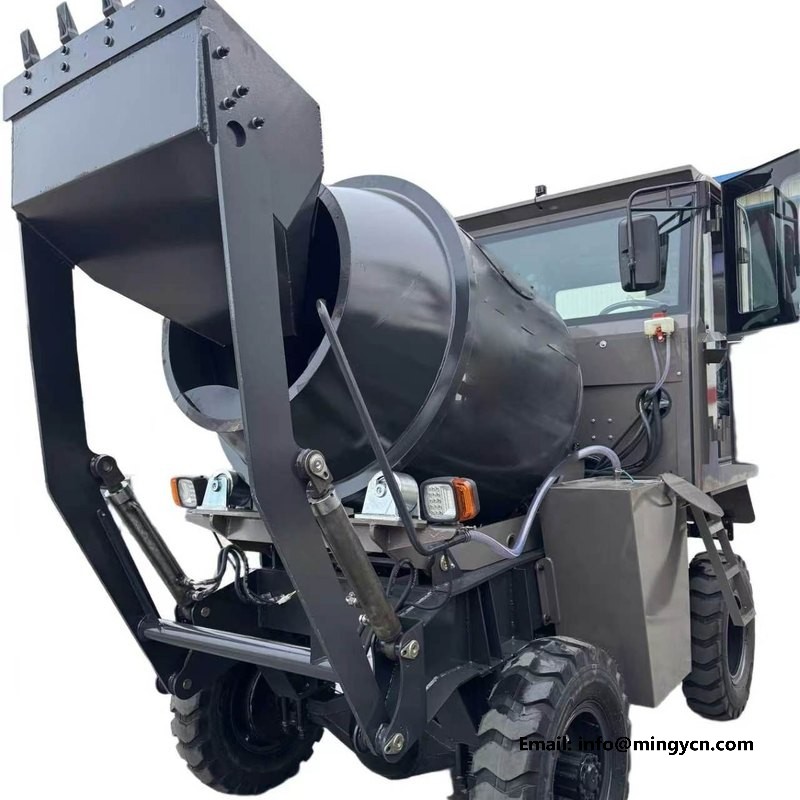
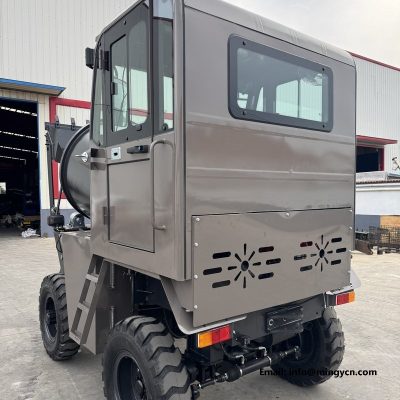
Visibility in low light and dust. The cab frame carries a glazed screen, side windows and rear glass, so the operator sees the drum mouth, the shovel pivot and the discharge guide without leaning out. On sites where the drum is raised, or where the machine works in the shadow of a building or a line of material stacks, that difference is the difference between seeing the load and guessing at it.
Continuous operation through long pours. A continuous pour is measured in hours, not batches. Anything that sends the operator out of the seat — to clear the drum, to check the load, to wipe the screen — costs a cycle. The cab is not a comfort feature on a long pour; it is a cycle-protection measure.
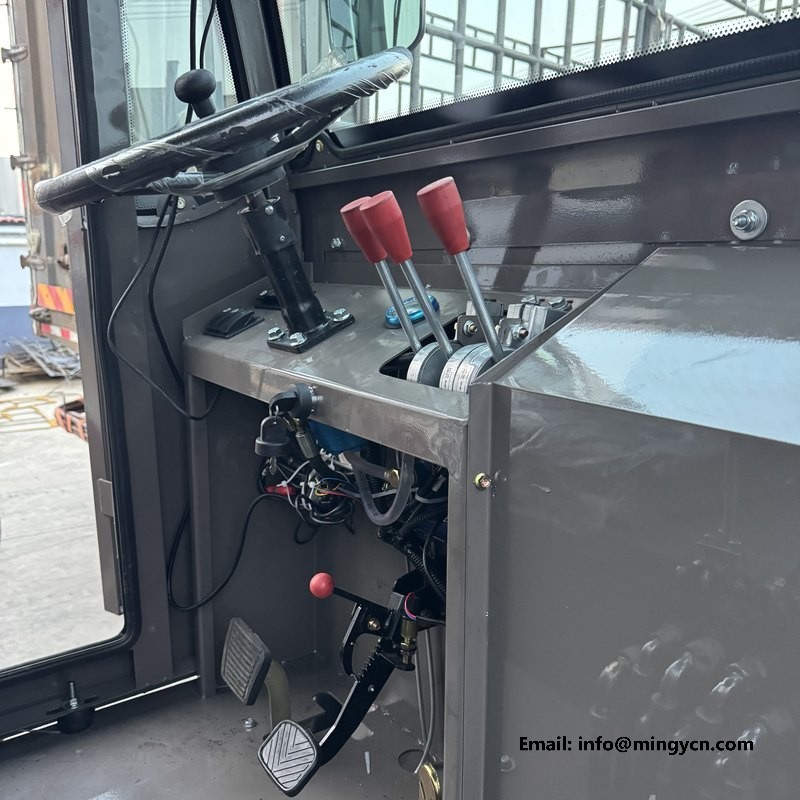
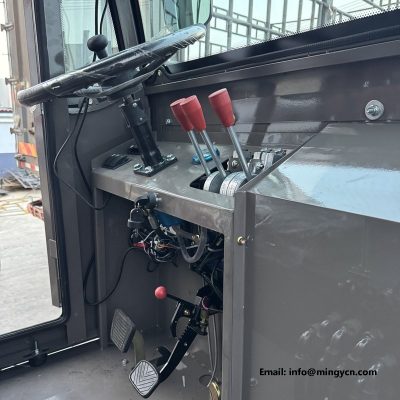
The control layout is worth looking at before signing off, because it is where the cab either pays for itself or does not. The steering wheel and the two primary hydraulic levers sit together within reach, so the operator does not break hand contact to switch between travel and drum functions. Fewer hand movements per cycle is the whole argument.
A cab adds weight, adds a service surface, and adds a price. Those are real. It also adds three things that are not visible on a specification sheet but show up in a working day.
It widens the hours of the day. On canal work, culvert work and small foundation pours, the constraint is frequently the daylight window rather than the concrete. An operator who can work through the hours that the site allows directly extends the productive day.
It reduces the number of people needed. Not by replacing a banksman — the machine still moves under its own power and still needs the site to be clear — but by keeping one operator comfortable enough to stay with the batch instead of rotating people through it.
It does not shorten the discharge cycle, increase the drum volume, or reduce the loading time. Anyone buying the cab version for those reasons should buy the standard machine and spend the difference elsewhere. The cab is a decision about the operator, the weather and the working day, not about the batch.
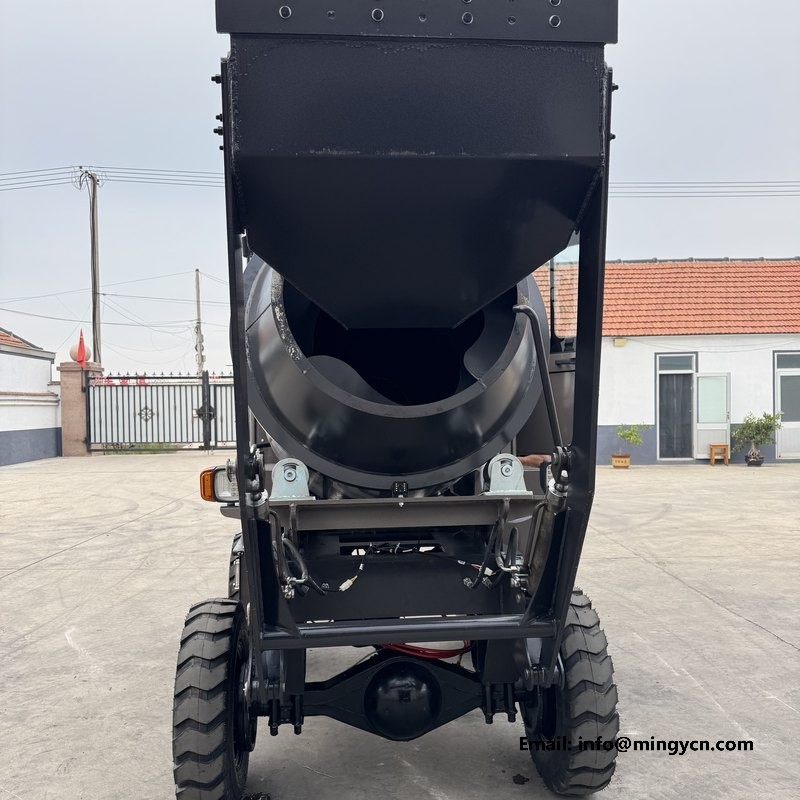
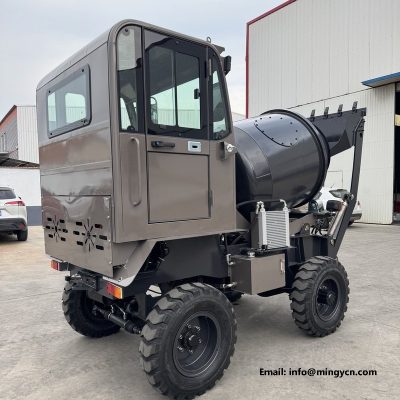
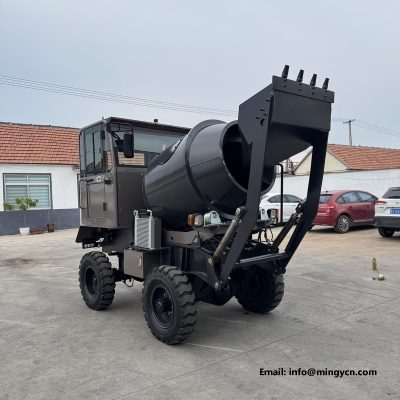
This is the part worth being precise about, because the photograph on a supplier page and the machine on your yard are not always the same machine. Before the deposit clears, ask for photographs of the specific unit, and check them against a short list.
Then run the machine, not just look at it. Sit in the seat. Check that the mirrors let you see both rear corners of the drum and the discharge guide. Check that the reversing alarm is audible with the cab closed — it is quieter inside than outside, and that is a real safety difference. Check that the levers reach without the operator standing up.
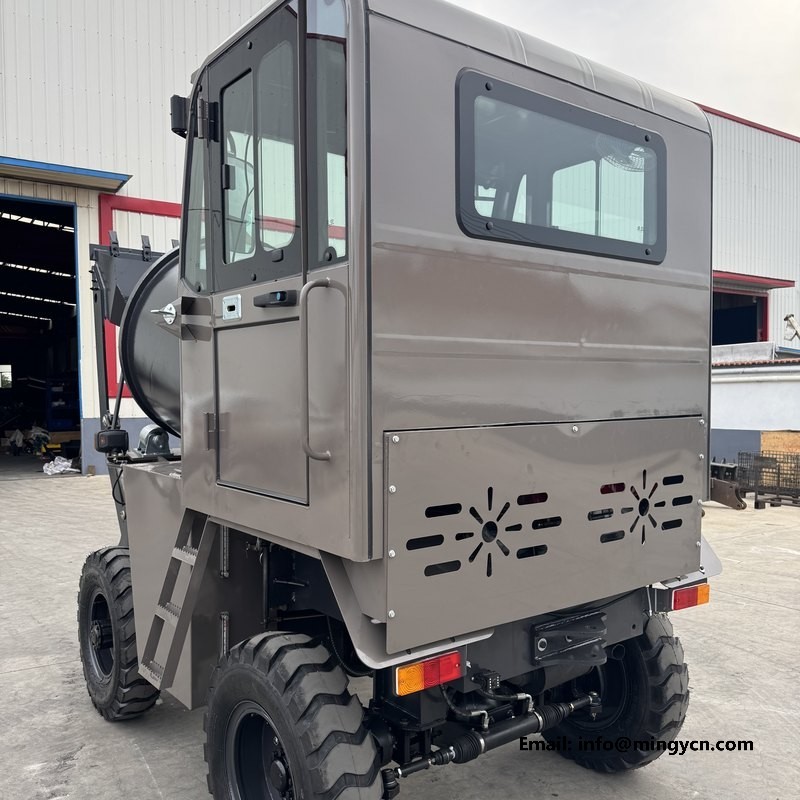
Thirty minutes at handover, done properly, prevents the kind of argument that outlives the purchase.
The figures below are the reference machine for this page. Confirm every line against the quotation and the packing list before ordering — the cab version shares the running gear of the standard 0.8 m³ 4WD machine and can differ in overall height.
| Reference — 0.8 m³ 4WD self loading concrete mixer, cab version | |
|---|---|
| Rated capacity | 0.8 m³ |
| Rated load | 1,500 kg |
| Drivetrain | 4WD, hydraulic power steering |
| Overall dimensions (L x W x H) | 3,500 x 1,600 x 2,200 mm — confirm cab height |
| Ground clearance | 204 mm |
| Front / rear tyre | 8.25-16 / 7.50-16 |
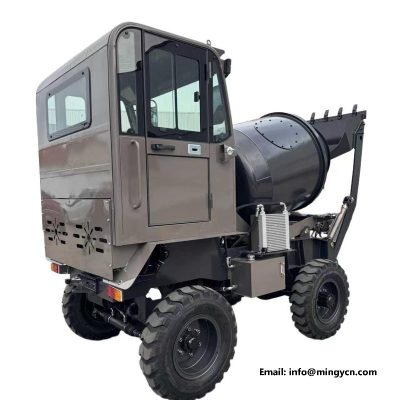
| Operator station | Enclosed cab, three-side glazing, two doors |
| Drum rotation | Forward and reverse |
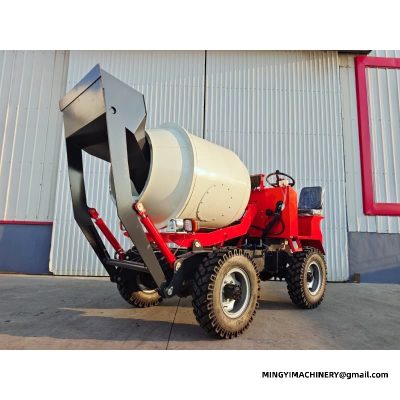
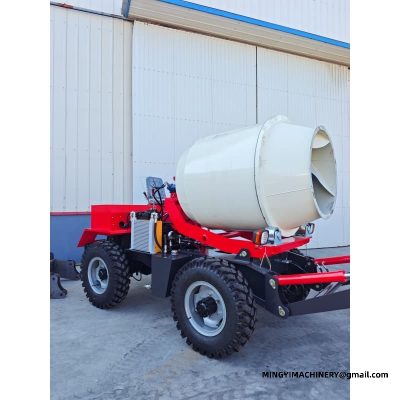
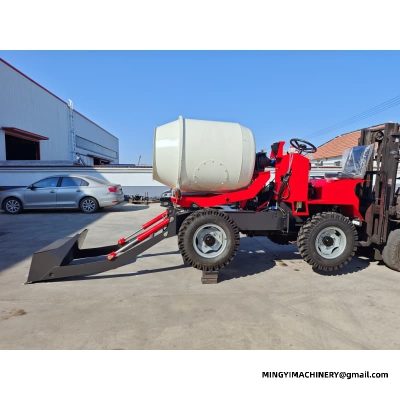
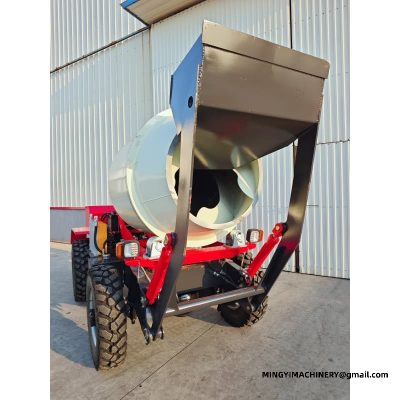
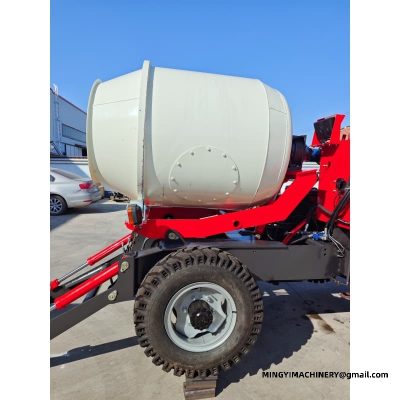
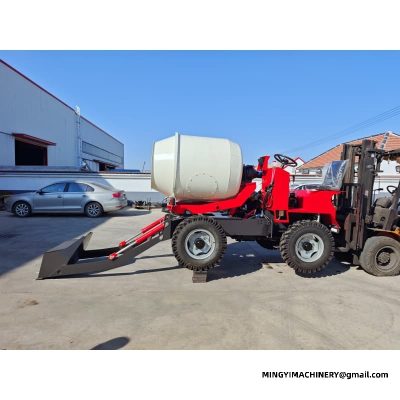
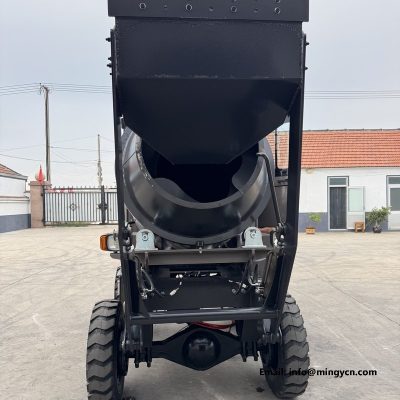
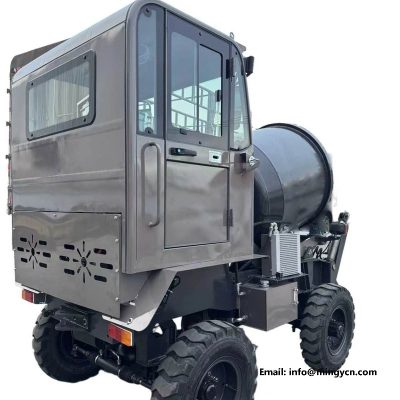
The white-background views below show the machine without site context, which is the view most useful when comparing specification sheets: the cab width relative to the drum, the clearance under the mirror arms, and the loading shovel geometry.
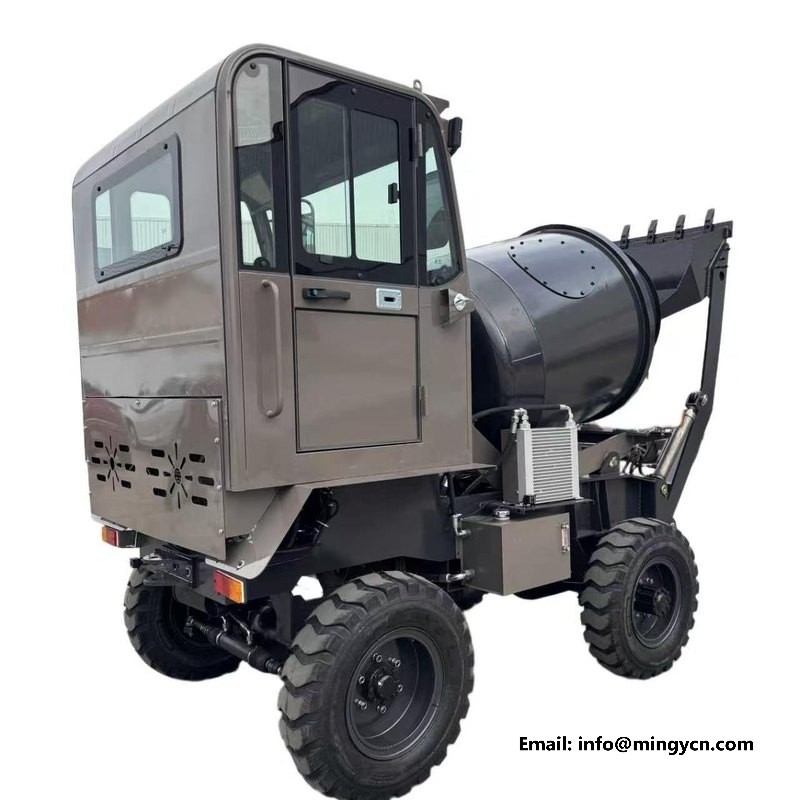
This machine class ends up on the jobs that are too small for a transit mixer and too awkward to run a shovel line into a fixed drum. A 2,200 mm-wide machine passes where a loaded truck cannot; a 0.8 m³ batch matches what a small foundation or a run of kerb units actually consumes, so there is no waste and no wait for a full load.
On canal work the pattern is repeated all day: travel a short distance, discharge, return. Every metre travelled between loads is a metre the operator is not loading. That is where the enclosed cab earns its place — it keeps the operator in the seat for the repetitive middle part of the day, which is where productivity on small pours is actually won or lost.
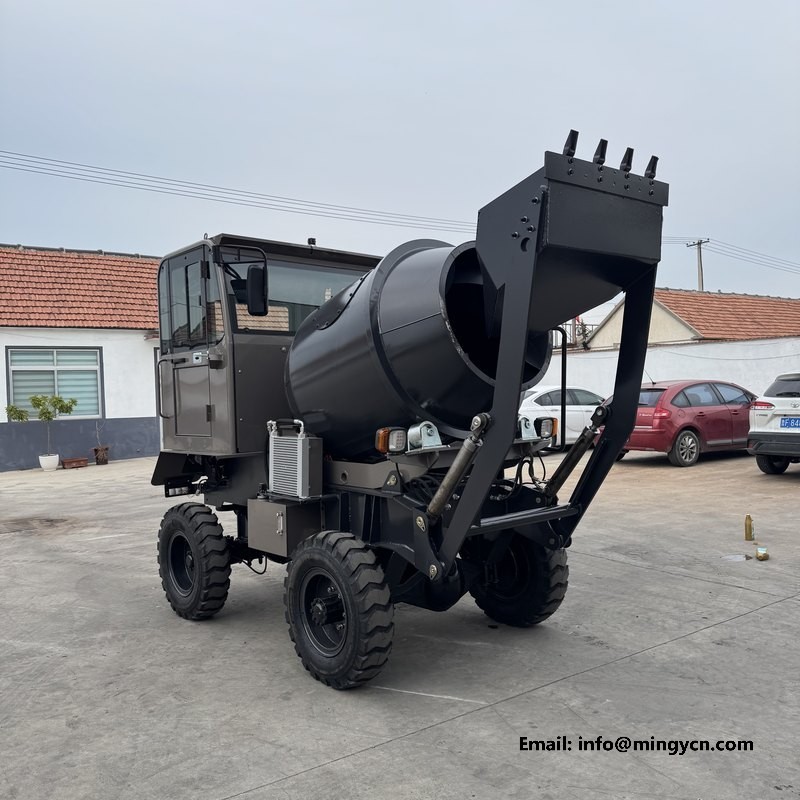
Ask honestly how long the machine will be on site, and in what season. A machine on site for three weeks through a wet season earns the cab differently from one delivered for a fortnight of clear-weather work. In the first case the cab is the difference between consistent batches and weather-dependent ones; in the second it is largely comfort, and the money may be better spent on a second machine or on site preparation.
Where the machine is hired rather than bought, specify the cab version in the hire order in writing. Hire yards rotate machines between contracts, and the cab is the specification most likely to be quietly substituted with a canopy.
At 3,500 x 1,600 x 2,200 mm the cab version ships in a standard container without disassembly beyond lashing. On arrival: inspect the drum and shovel for transit damage, check that the cab frame is not racked and that glazing has not shifted, turn the engine by hand before first start, prime the hydraulics, and run the drum empty in both directions before the first batch.
Walk the machine with the supplier against the photographs you were shown before the deposit. A cab is visible from twenty metres — if it is not there, you will see it in the yard, not at the port.
The cab is the one modification on this machine that changes its regulatory profile rather than only its capability. A 0.8 m³ 4WD mixer is usually described by its rated capacity and its axle split, and both of those figures move once a cab, its glazing, its frame and its mounts are added.
Three things follow, and all three belong in the conversation before the deposit rather than after it. First, the gross weight and the axle loads: a heavier machine on the same axles can sit closer to a limit than the standard machine does. Second, the overall height, which is quoted for the standard machine and rises with a cab — relevant under bridges, in covered yards and for container stuffing. Third, the width including mirrors, which on a machine of this size is often what actually sets the transport width.
Ask for the loaded axle weights and the mirror-to-mirror width in writing, and check them against the vehicle regulations that apply at the delivery address and along the route. On a machine that travels from the port to a rural site, the route is often the constraint that the specification sheet never mentions.
An enclosed cab adds a small, predictable maintenance list, and it is worth knowing before handover rather than discovering in the first wet week.
Wiper blade and washer fluid. The front screen is the one surface the operator depends on to see the drum mouth. A worn blade is a reason to stop working, which is the opposite of what the cab was bought for.
Screen seals and door seals. These are consumable items on any cab, and on a mixer they live a harder life than on a road tractor because the machine is washed down on site. Keep a spare set.
Door hinges and the latch. An operator wearing gloves gets in and out dozens of times a day. The hinge pins and the latch mechanism are cheap to service and expensive to ignore.
Mirrors. If the machine is supplied with mirrors rather than camera systems, they are the operator's only view of the rear corners during reverse. Clean them as part of the daily check, not as part of the wash.
None of this is significant next to the drum, engine and hydraulics. It is significant compared with a canopy version, which has almost nothing to maintain — and that difference should be priced honestly against the hours the machine will actually work in bad weather.
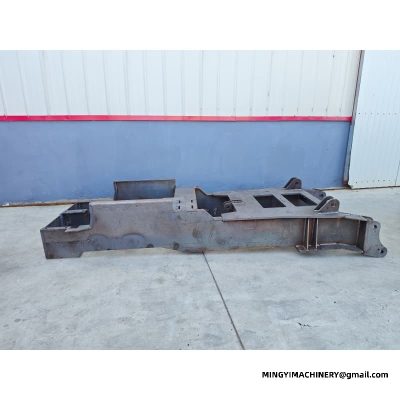
The two images here are the ones worth keeping for reference once the machine is delivered. They show the delivered condition against which the acceptance check is made.
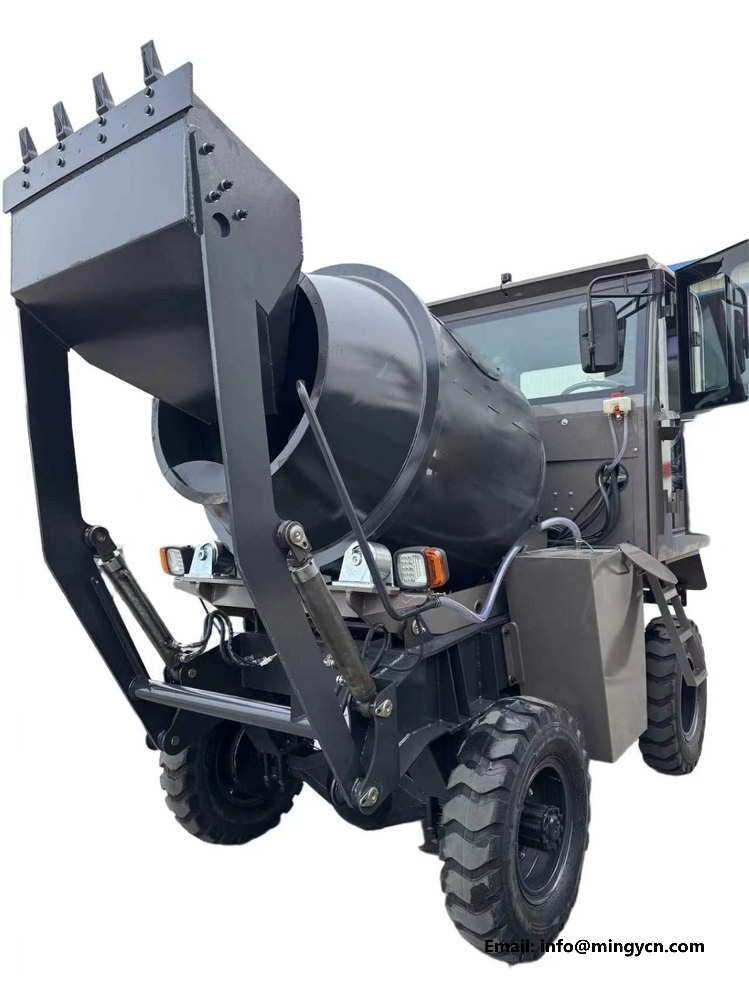
Because the cab version is a variation rather than the base machine, the questions that matter most are about availability and confirmation rather than specification. Four of them, in the order they are usually answered:
None of these questions is difficult to ask, and all four are expensive to discover late. The photographs in this page are of a real machine; ask for the same of yours.
The most common failure in a purchase like this is not a manufacturing defect. It is a specification that was never written down. "Machine with cab", "cab version", "enclosed" and "canopy" get used interchangeably in conversation, in photographs and occasionally in a quotation, and they describe machines that differ by a full enclosure and its glazing.
The distinction that matters in writing is between an enclosed cab and a canopy. A canopy is a roof on posts: it keeps the direct rain off the operator, and it does nothing for wind-driven rain, nothing for sideways spray while travelling on a wet site, and nothing for the dust that comes off a dry cutting. An enclosed cab has glazing on the front and sides and a door that closes, which is a different machine in the way that matters to the person sitting in it for eight hours.
When the quotation is written, it needs to name the glazing, the doors, the wiper, the mirror set and the cab height. When the machine arrives, it needs to be checked against that list rather than against the feeling that it looked right in a photograph. The photographs on a supplier page are usually of the best unit available, which is exactly why they are not a specification.
Where the order is placed through an intermediary, ask for the machine specification to be attached to the order confirmation as an annex. It takes one paragraph, and it settles an argument that would otherwise be settled by whoever travelled furthest to look.
Same chassis, same drum, same drivetrain. The difference is the operator station, and the resulting overall height. Everything else in this specification applies to both.
No. The 0.8 m³ drum and 1,500 kg rated load are unchanged. Confirm the axle rating and the gross weight with the supplier, since the cab adds weight and the machine may need a lower axle load or a higher braked rating to stay within local road limits.
Yes, and it will be during loading cycles in the normal way. The cab is there for travel and discharge, not to close the operator in.
It should not — the reference width is 1,600 mm. Confirm the mirror width separately, since mirrors often set the practical transport width rather than the body.
Very little: check the wiper and washer, lubricate the door hinges and the screen channel, and keep the seals clean. Everything else on the machine is unchanged. The advantage is that the operator is not weathering the cab seal problem in the first place.
Contact MINGYI Machinery for the current cab-version self-loading concrete mixer specification, export packing and a formal specification for your market. E-mail: sales@mingycn.com | LINE (ID): mingyicn
For the standard open version of the same machine, see the 4WD self loading concrete mixer page. For the wider range of drum and discharge configurations, browse the mini self loading concrete mixer category, and for site application notes, read the self loading mixer guides.