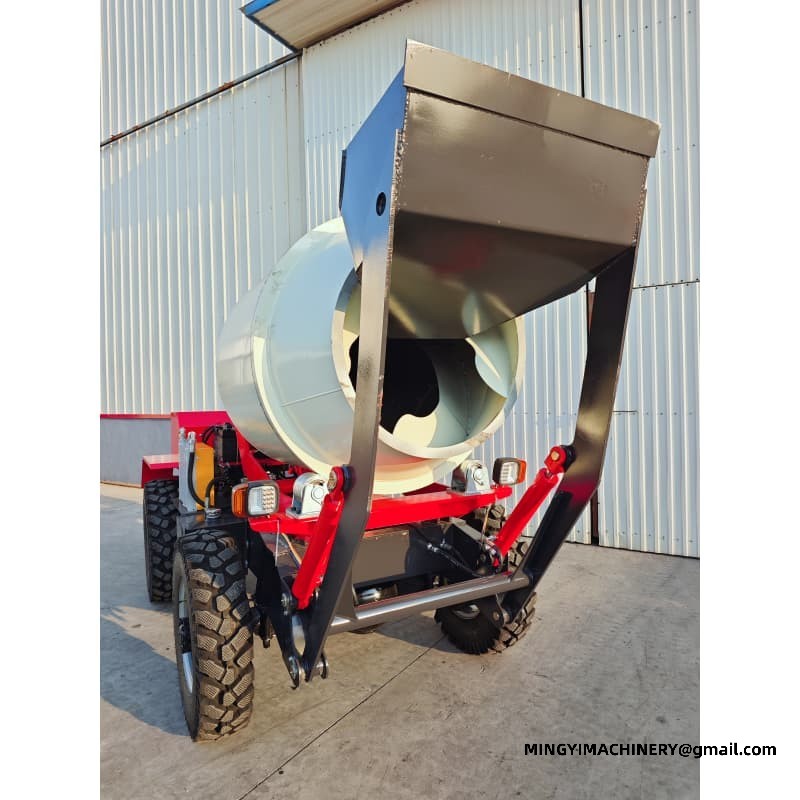
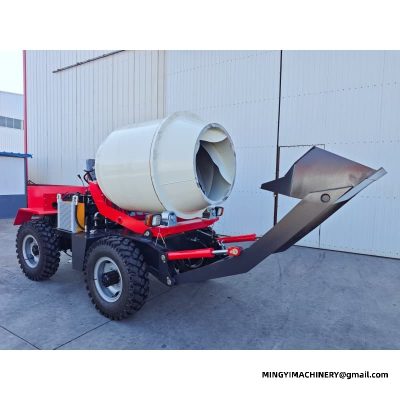
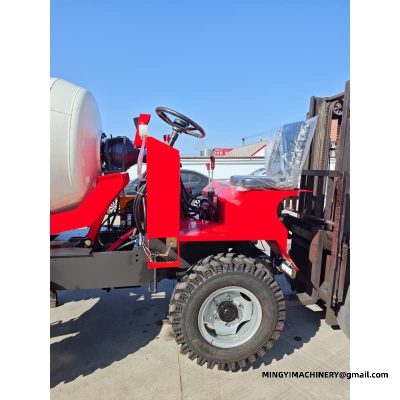
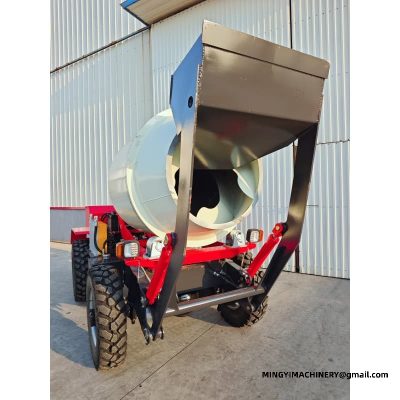
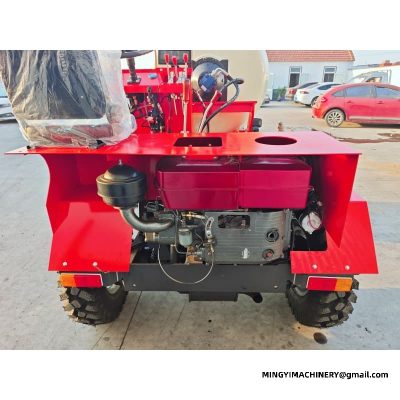
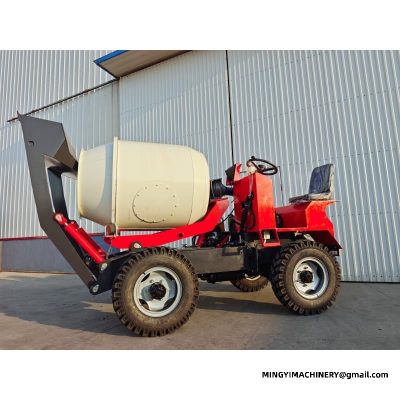
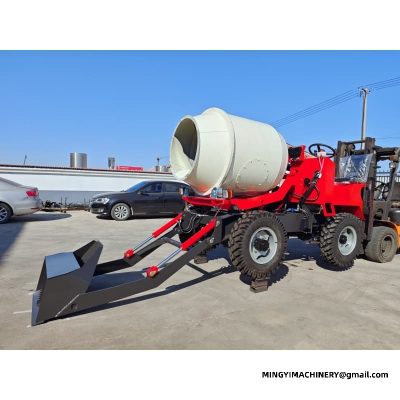
Low Clearance 0.8m3 Concrete Mixer, Tunnel 4WD Self Loader, Underground 0.8m³ Truck
Access decides concrete work before capacity does. A transit mixer that cannot reach the pour is a plant on the street; a low clearance 0.8m3 concrete mixer at 3,500 x 1,600 x 2,200 mm overall and 2,464 mm of turning circle drives to where the formwork is. This page follows the machine on plantation work from the stockpile to the discharge point and reads each published figure along the way.
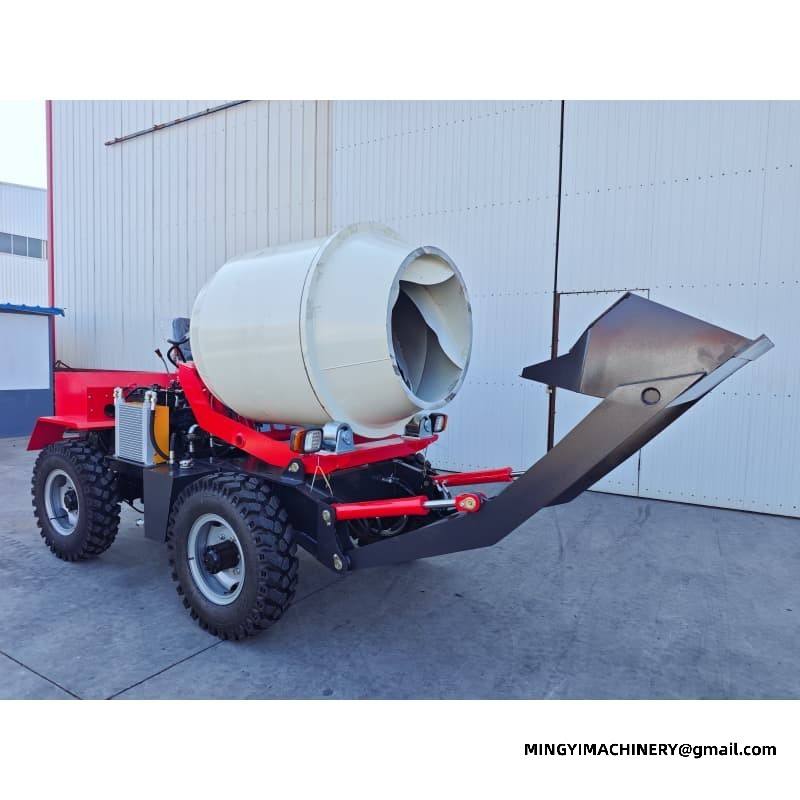
Measure the narrow gate before delivery on plantation work — width, height bar, and the turn immediately inside it. The 2,464 mm turning circle handles the inside turn; the measurement turns hope into a plan.
Protect the services anyway. Boarding over exposed ducts and marking headroom limits takes an hour and prevents the kind of strike that turns a concrete pour into a claim.
The comparison also holds when ready-mix is available but the pour is small: a part-load minimum pays for concrete nobody placed, while a drum batches exactly what the formwork needs and stops when it stops.
The wash-out discipline from the drum section doubles as an effort control: washed aggregate and water are simple, hardened drum heels and wasted returns are not. Batching to demand is the quiet economic argument for the whole machine class.
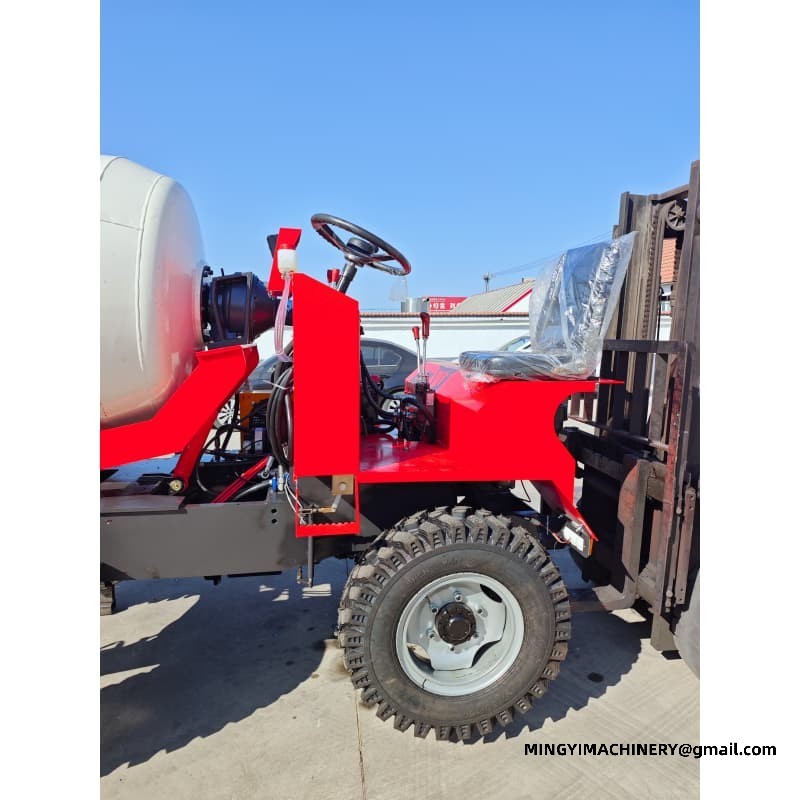
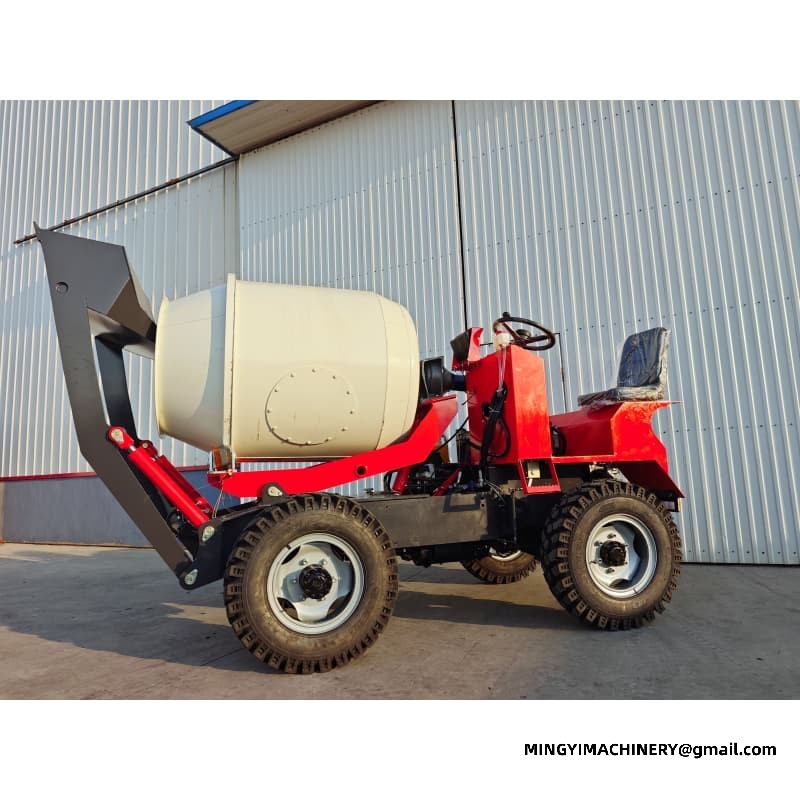
Tie it down at the chassis for transport, chock the wheels, and note that the shovel adds length when raised. The published envelope describes the machine in travel order; a few minutes of folding and lashing keeps it true.
Inside a container, the machine anchors to the floor at four points and the shovel secures against a hardwood block — the shipping agent's standard practice, and worth confirming in the packing photos before the container doors close on plantation work.
| Specification extract — 0.8 m³ 4WD self-loading concrete mixer | |
|---|---|
| Rated load | 1,500 kg |
| Rated capacity | 0.8 m³ |
| Overall dimensions (L x W x H) | 3,500 x 1,600 x 2,200 mm |
| Front tyre size | 8.25-16 |
| Rear tyre size | 7.50-16 |
| Minimum ground clearance | 204 mm |
| Steering angle | 28° |
| Turning dimension (outer tyre) | 2,464 mm |
| Maximum travel speed | 24 km/h |
| Transmission | 4WD |
| Gears | 3 forward / 1 reverse + travel gear |
| Front axle | 130 drive axle |
| Rear axle | 212 selectable 4WD steering axle |
| Engine | single-cylinder diesel / 25 hp |
| Steering | hydraulic power steering |
The machine's resale case is its simplicity: a buyer can see the drum, the axles and the engine in a walk-round, and the service book tells the rest. Machines with records, straight shovels and clean drums sell within days in most markets.
The decision turns on continuity of work more than on specification. A contractor who pours most weeks owns with confidence; one who pours once a season hires with relief, and neither is wrong for the other's job.
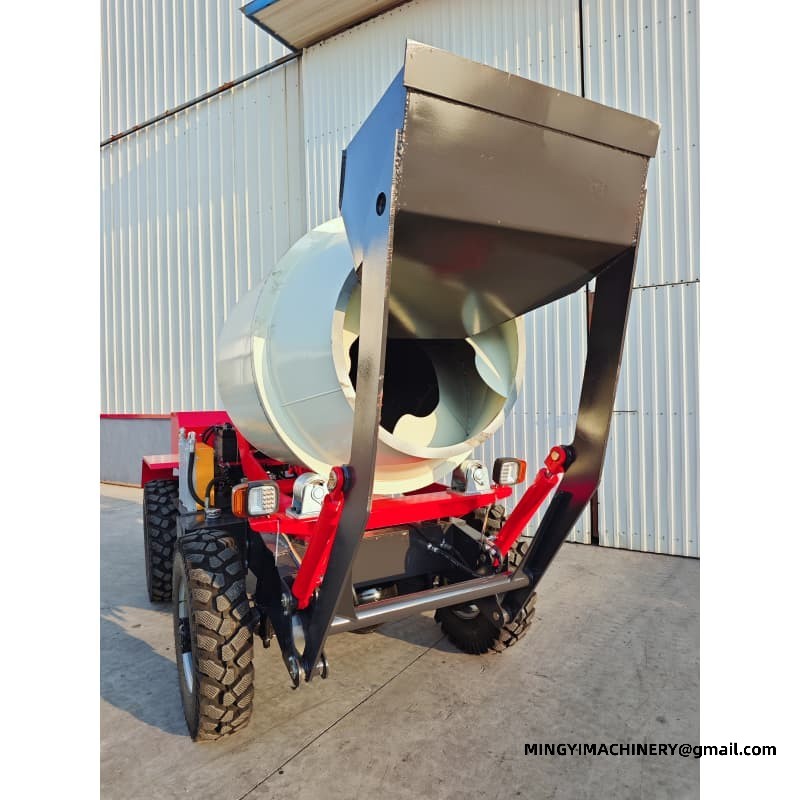
Four-wheel drive also changes how the machine fails — or rather, how rarely. Wheels that share the work share the wear, and a chassis that is never bogged is a chassis that never needs towing out of a pour on plantation work.
A 28° steering angle on the rear axle turns the machine inside a 2,464 mm circle measured at the outer tyre. Village lanes, orchard rows, basement ramps and gateways all live inside that radius.
Utilisation is the quiet number that decides payback. A machine used four hours a day beats an identical machine used one hour a day and parked the rest, and the difference is almost entirely waiting — for cement, for the finishers, for the next bay.
Cut the waiting, not the machine. Sequence the day by geography and recipe, keep inputs stocked, and the same 3,500 x 1,600 x 2,200 mm chassis turns a low-utilisation week into a working one without spending a coin on capacity.
A tidy pile also protects the mix. Contamination from ground spoil is the usual cause of weak batches on sites that store material directly on soil; a hardened standing area takes little and keeps post-hole and shed-base concrete honest from the first scoop.
The shovel is sized for this class of machine. It handles sand, gravel and coarse aggregate freely, and it will lift bagged cement if the crew breaks bags in first. It is not a demolition tool, and forcing it into compacted or oversized material shortens a working day quickly.
Bore, stroke and emission figures matter less than the parts supply behind them. Ask the supplier for the engine's own reference numbers, not just the mixer's, and the first filter change becomes a two-minute order rather than a search.
Read the rated load and the rated capacity together, never one without the other. The 1,500 kg rating is what the chassis and tyres are built to carry; the 0.8 m³ is what the drum actually holds per cycle, and the honest pour lives in the gap between the two.
Aggregate temperature is the hidden variable in hot-weather concrete: stockpiles in the sun can carry the mix temperature past the design window before the drum spins. Shade, sprinkling and morning batching are the simple answers.
Four-wheel drive and the 28° steering keep it moving where two-wheel machines stop, but no tyre argues with deep mud under a loaded drum. The crews who win wet seasons are the ones who maintain their haul routes like part of the pour.
The first week should include one empty drum deliberately: let the new operator feel the 28° rear steer, the 2,464 mm circle and the stopping distance without a live load aboard. Familiarity earned empty arrives safely loaded.
Fleets that run a small logbook on the machine solve most inter-crew friction before it starts, and the record doubles as the service history the resale market will one day ask for.
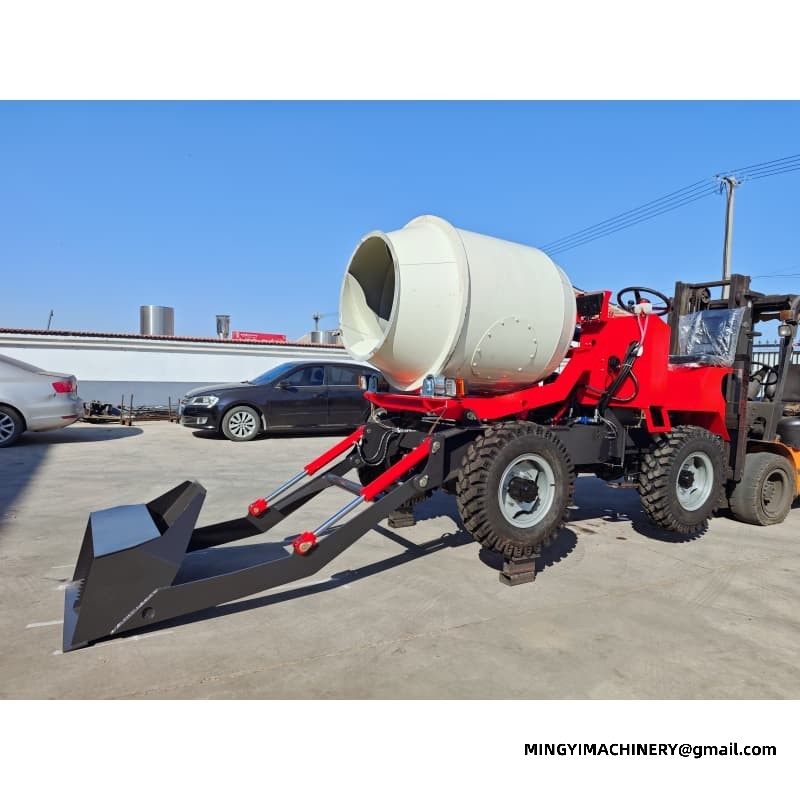
Stand the machine where the finishing crew already is, not where it would be convenient to park. A discharge point within barrow reach of the formwork is worth more than a flat, tidy spot fifty metres away, because the last metres are where hand-mixed batches lose their workability.
Agree the standing spot and the stop signal with the crew before the first batch. Ten minutes of positioning planning beats an hour of manoeuvring once the pouring starts.
Build the plan around the standing spot rather than the drum: a machine that parks once and serves a bay from one position outserves a machine that shuttles. Positioning time is the only time the drum spends doing nothing.
On plantation work, the practical habit is to batch slightly smaller in heat, slightly larger in cold, and never to batch ahead of the formwork by more than one drum. The machine makes that kind of just-in-time batching possible; the pour plan should use it.
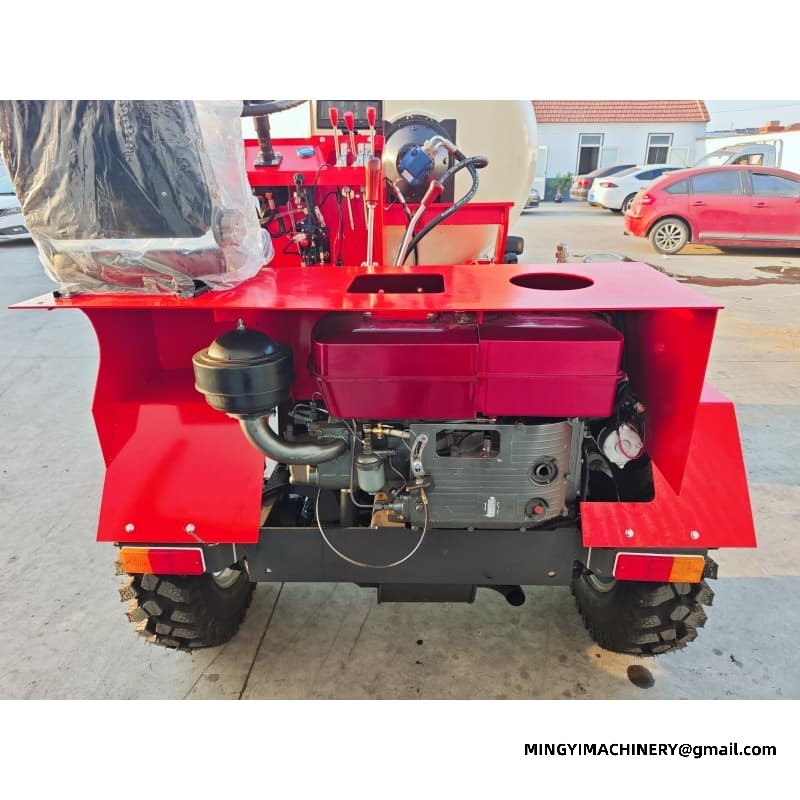
Single-cylinder engines also teach their operators. The rhythm of a healthy 25 hp unit — exhaust note, vibration, smoke colour — tells an attentive operator more than a dashboard of warning lamps, and small deviations get fixed small.
Starting is electric from a key, with a decompression lever as the manual fallback. Cold mornings ask for the lever and a little patience; the engine itself asks for nothing more than clean fuel and a serviced air filter.
Output is decided by the cycle, not the drum. Loading the shovel, mixing, travelling and discharging repeat, and the slowest of the four sets the rate. With 0.8 m³ per batch and a short haul, the drum rarely waits; with a long carry at 24 km/h, travel becomes the constraint and the arithmetic changes.
Crews that log batches for a week know their true rate, and the log is worth more than any brochure promise. The machine's contribution is regularity: the drum turns at the same speed whether it is the first batch of the morning or the fortieth, on plantation work.
Steering effort drops to nothing at crawl speed, which is precisely when a loaded machine needs precision. The 28° rear steer responds proportionally, so the wheel's first inch means a small correction and the last inch means the full lock.
Every limit here has a workaround worth knowing: a 2,464 mm circle cannot fit, but a three-point turn can; 204 mm of clearance will not ride a boulder, but a boarded path will. The machine rewards a crew that thinks in routes rather than in straight lines.
What should I check on day one with a low clearance 0.8m3 concrete mixer?
Fluids, tyre pressures, drum rotation both directions, shovel lift, steering full lock, and the wash-out routine before the first batch sets. The commissioning checklist in the manual covers each.
Why does my low clearance 0.8m3 concrete mixer drum hold less than it used to?
Almost always a hardened heel of paste inside the drum, built up by late wash-outs. Chip it out, return to daily rinsing, and the full 0.8 m³ comes back.
How many labourers does a low clearance 0.8m3 concrete mixer replace?
Commonly the two-to-four people of a hand-mixing and barrow chain, depending on the haul. The honest number comes from timing your own crew's cycle against the machine's.
What is the delivery time for a low clearance 0.8m3 concrete mixer?
It varies with build schedule and sailing dates, so confirm current lead time when you request the specification — the same message that fixes the specification fixes the date.
Does the low clearance 0.8m3 concrete mixer come with a manual?
Ask for the operator and parts manuals with the machine, in your language where available, and check the parts references match what you will be ordering later.
Does the low clearance 0.8m3 concrete mixer need a driving licence?
Depends on your market's rules for site plant versus road use. Where it works inside private sites, site-operator rules apply; regular road travel changes the question.
Can the low clearance 0.8m3 concrete mixer use site sand and gravel straight from the ground?
From a clean stockpile on hardened standing, yes. Straight from contaminated ground, no — soil in the mix is the classic cause of weak site concrete.
What is the turning circle of the low clearance 0.8m3 concrete mixer?
2,464 mm at the outer tyre, from the 28° steering angle. Measure your tightest gateway against that figure before the machine arrives.
Measure the gateway, time the cycle, write the recipe — three small exercises that turn the published specification into a working plan for your site.
Packing, loading and shipment of Low Clearance 0.8m3 Mixer: Working Under 2,200 mm
How a machine travels decides how it starts on arrival. Securing Low Clearance 0.8m3 Mixer: Working Under 2,200 mm against movement, protecting the exposed cylinders and keeping the battery and fluids in the right state for the voyage all belong to the packing list.
Storage and long idle periods for Low Clearance 0.8m3 Mixer: Working Under 2,200 mm
Rubber, seals and hoses age whether the machine works or not. Keeping Low Clearance 0.8m3 Mixer: Working Under 2,200 mm out of direct sun and off damp ground slows that, and running it briefly at intervals keeps everything moving.
Cold weather and winter care for Low Clearance 0.8m3 Mixer: Working Under 2,200 mm
Starting is only the first problem. Until Low Clearance 0.8m3 Mixer: Working Under 2,200 mm reaches working temperature the hydraulic response is slower and the seals are stiffer, and warming the machine before asking for full output avoids unnecessary strain.
Reading the early symptoms on Low Clearance 0.8m3 Mixer: Working Under 2,200 mm
The symptom is usually not at the fault. A hydraulic function that has become sluggish on Low Clearance 0.8m3 Mixer: Working Under 2,200 mm may point to a filter, a relief setting or a pump, and starting with the simple checks avoids the wrong guess.
Contact MINGYI Machinery for the current self-loading concrete mixer specification, export packing and a formal specification for your market. E-mail: sales@mingycn.com | LINE (ID): mingyicn
0.8m3 Road Construction Self Loader: Canal and Kerb Work · 4WD Diesel Self Discharging Mixer: Reverse, Tip, Drive Away · 4x4 site dumper for construction site haulage · Mini Self-Loading Concrete Mixer









