
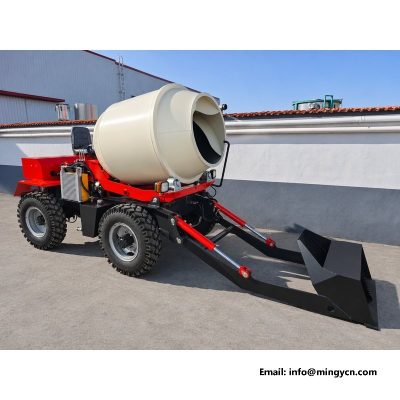
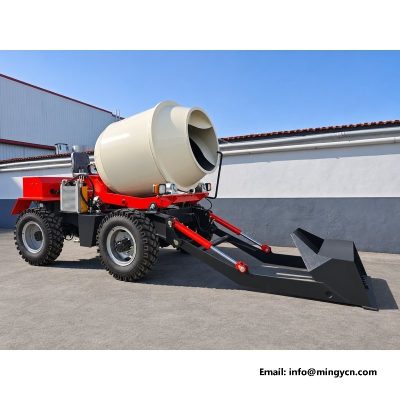
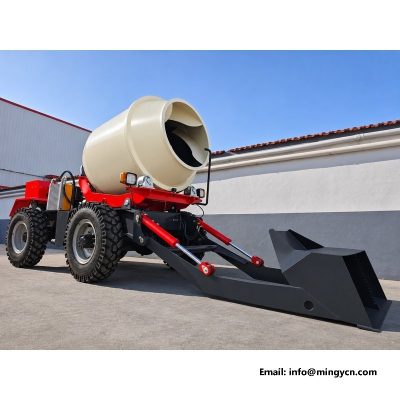
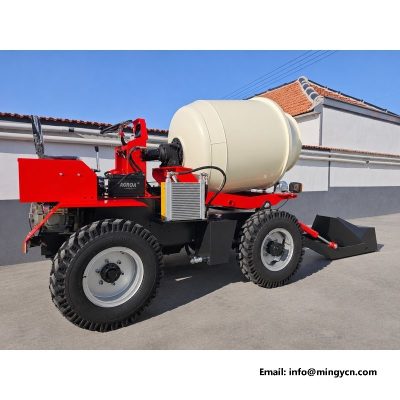
loading prep: bucket position and arm travel
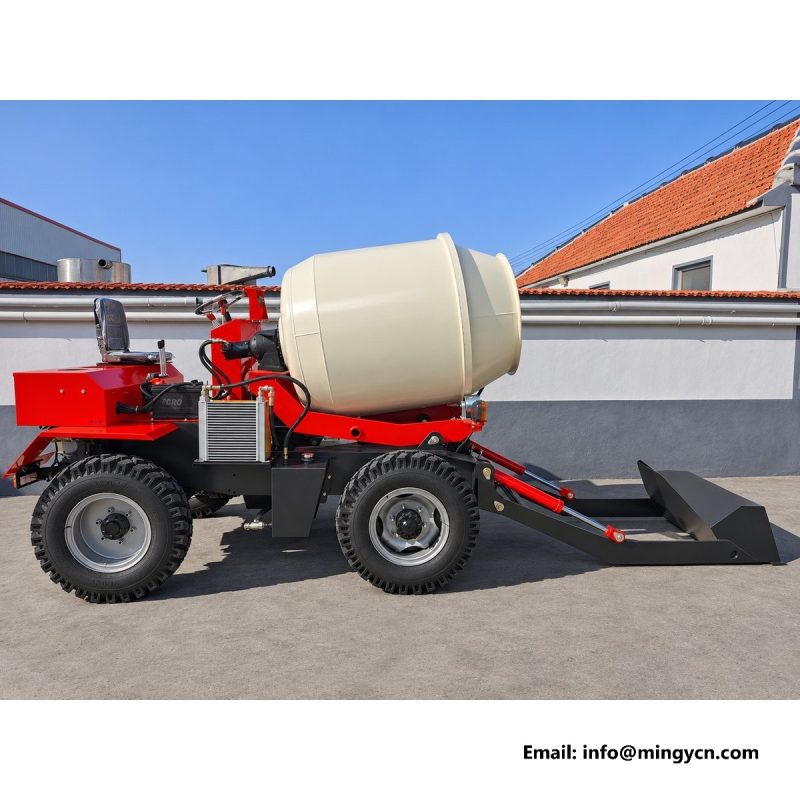
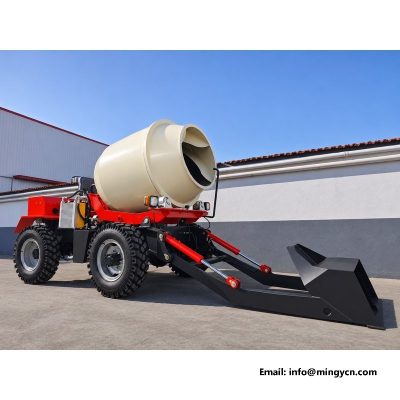
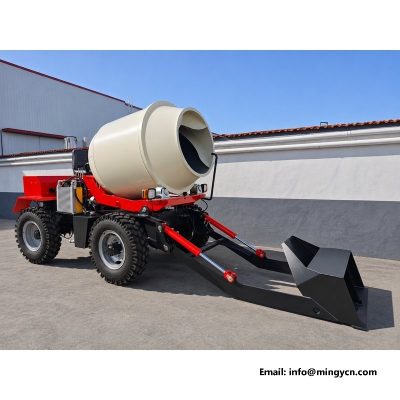
Loading starts before the engine does. The position of the bucket on the ground, the attitude of the cutting edge and the order in which the controls are moved decide whether the first scoop is clean or whether the arm takes a shock it will remember. The frames here follow the machine from parked to half raised, with the bucket and the arm in view together. They are not action shots. They are a sequence of positions, and each one has a correct form that can be learned by looking at it. Read them in order and the working cycle assembles itself, step by step.
| Specification | 1.5 m³ self loading mixer |
|---|---|
| Rated load | 5,000 kg |
| Drum capacity | 1.5 m³ (1,500 L) |
| Minimum ground clearance | 204 mm |
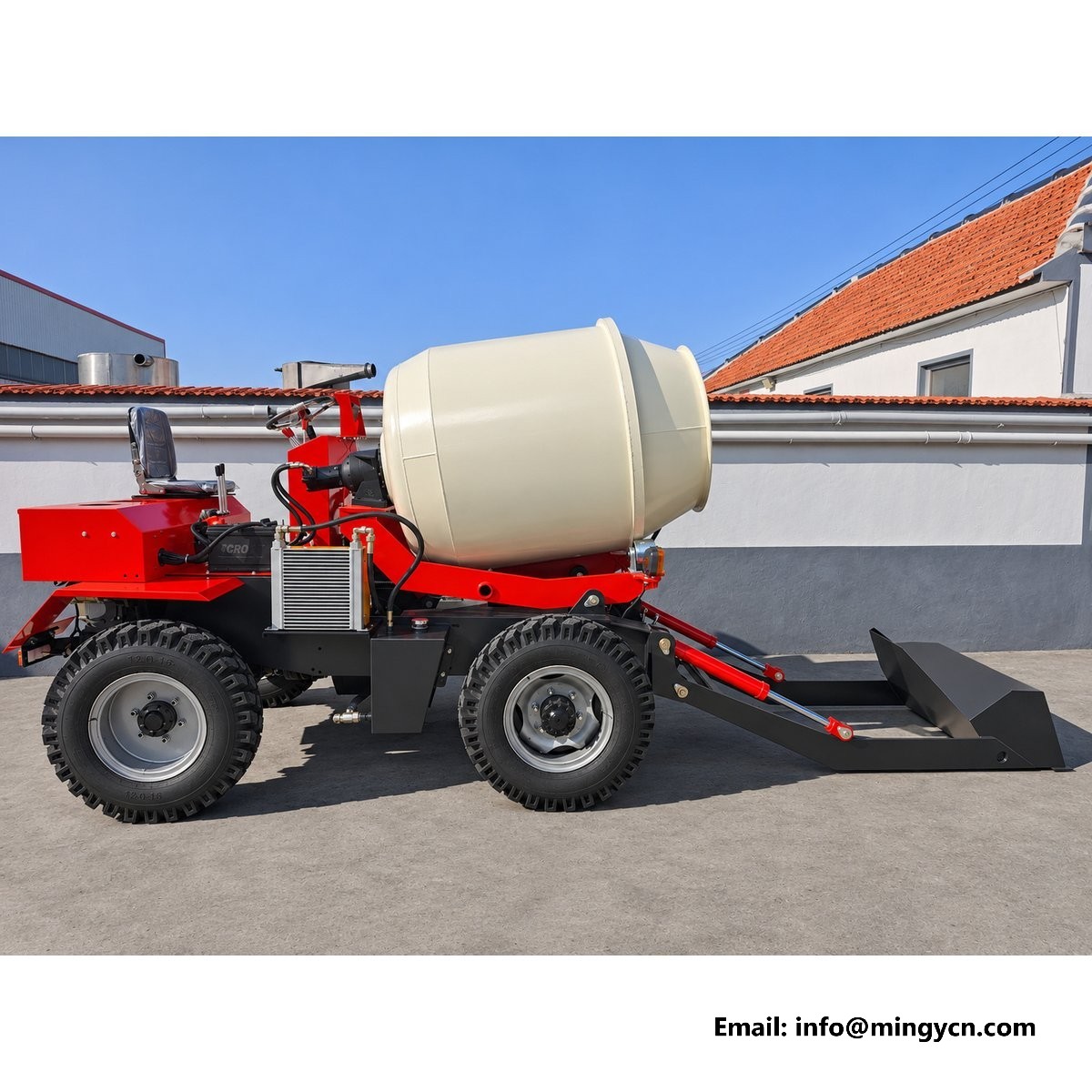
Before the engine starts, the bucket should be flat on the ground with the cutting edge level and the arm just taking the weight off the hydraulic circuit. That position is not housekeeping. It is the reference for everything that follows. In these frames the bucket sits with its heel clear of the surface and the lip touching evenly along its width. Even contact means the arm is square and the loader frame has not been twisted. Uneven contact, with one corner down and the other lifted, is the first sign of a bent arm or a worn pivot, and it will show later as a bucket that digs to one side however carefully the operator steers. Look at the shadow under the lip: an even shadow line means the bucket is sitting flat rather than resting on one corner.
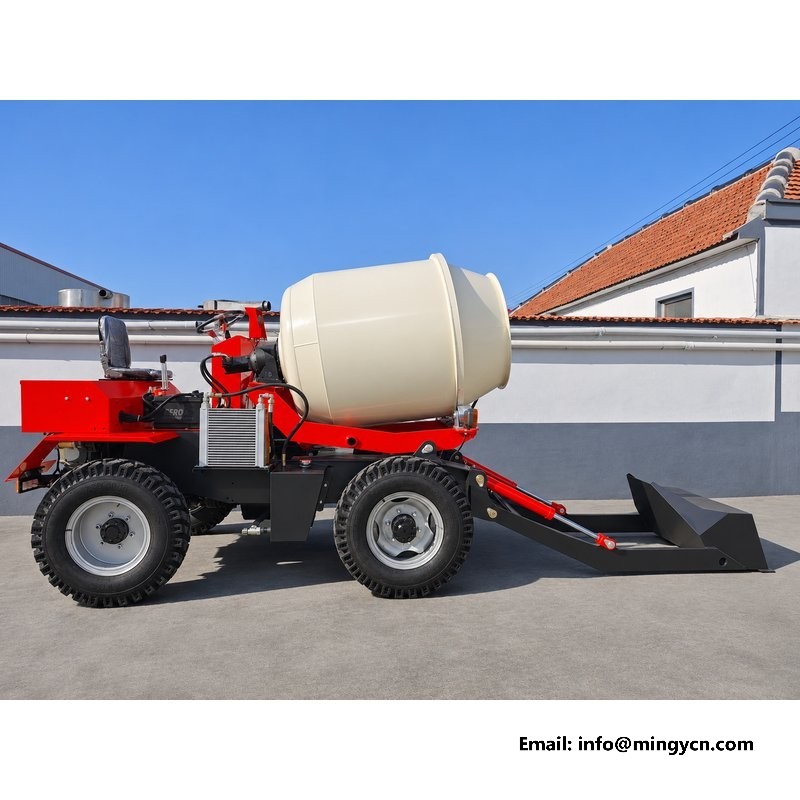
The angle of the cutting edge against the ground decides how the bucket enters a pile, and it is set by the arm position rather than by the bucket alone. Too flat and the lip skates over the material; too steep and the machine climbs the pile instead of cutting into it. In the photographs the edge sits with a slight downward attitude, enough to bite without digging in. The heel behind the edge should be clear of the ground by a visible margin, because a heel that drags turns the bucket into a scraper and adds to the load on the arm. Both details are easier to judge on level ground with the tyres at working pressure. Photograph the edge square on, because a worn or chipped corner is easy to see from the front and invisible from three quarters.
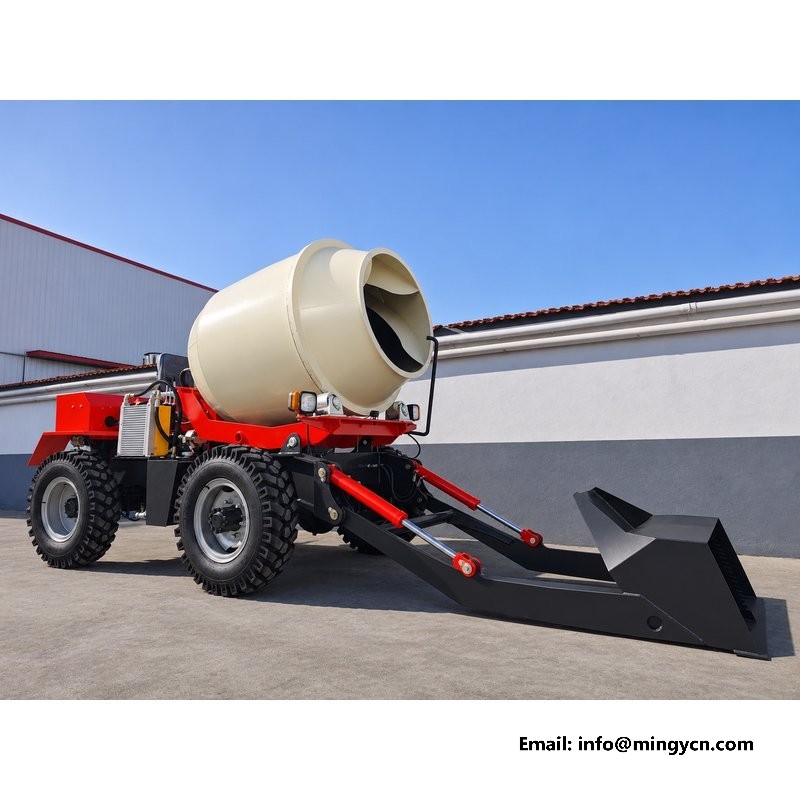
The lift stroke is an arc, not a straight line, and the side view is the only place where that is obvious. Watch the bucket lip as the arm rises: it moves up and slightly back towards the machine, which is why the load shifts rearward as the bucket climbs. That rearward travel is what keeps the machine stable at height, and it is also what makes the transfer to the drum mouth a matter of timing rather than brute force. The arm appears at more than one stage of its travel in these photographs, and the change in bucket attitude between them is small. A bucket that rotates sharply through the stroke will spill at the top. Watch the bucket heel as well as the lip, because the heel limits how far the arm can drop before the bucket tips forward.
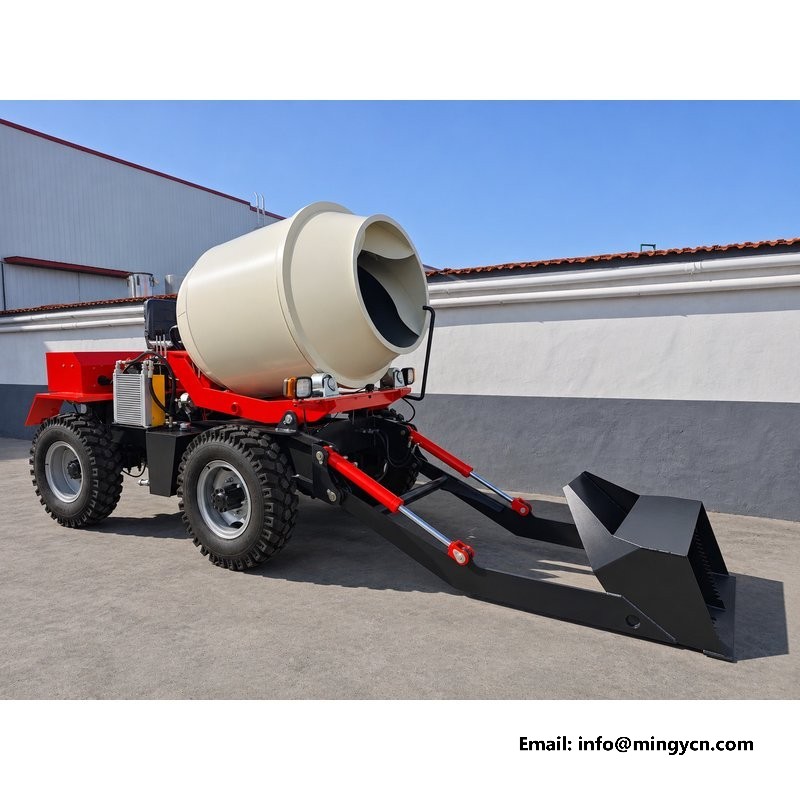
A loading cycle has a fixed order, and skipping a step is how damage starts. The machine stops square to the pile, the bucket is set flat, the arm is lowered until the lip touches, and only then does the machine creep forward. Digging on the move with the arm dropping is the habit that bends cutting edges and shocks the pivot. Once the bucket is full, the machine reverses clear before the arm lifts, so the load is not dragged out of the pile against the lip. In these frames the bucket is full and the machine is stationary, which is exactly the condition the rest of the cycle should be built around. The pause between reversing and lifting is the step most often skipped, and it is the one that protects both the pile and the arm.
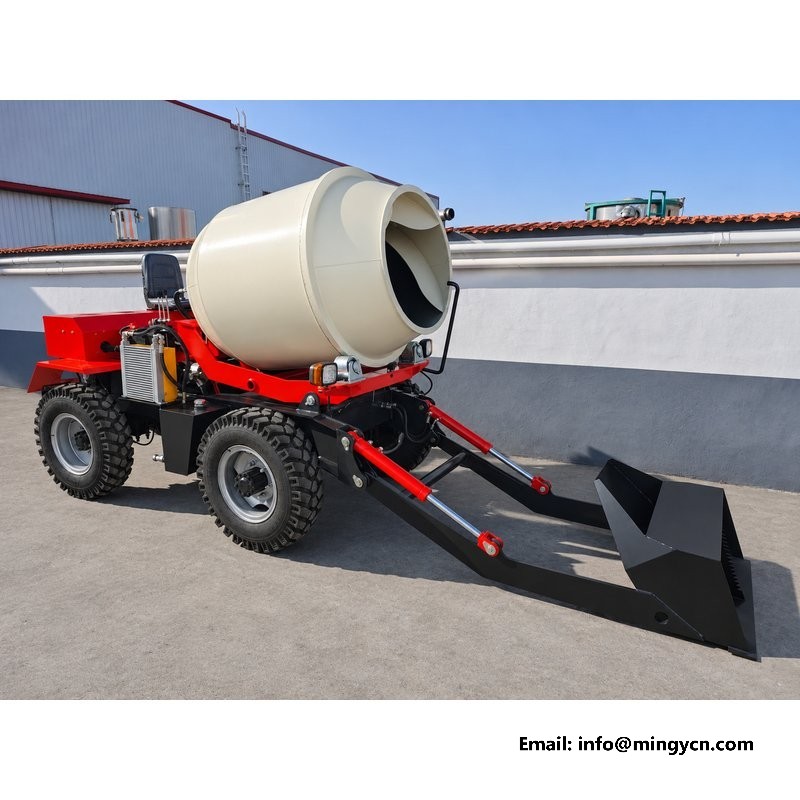
A self loading mixer works on ground it did not choose, and the loading position is where that shows. The machine should stand with all four tyres bearing. A tyre that has sunk into soft ground changes the geometry: the frame tilts, the arm swings on a slope, and the bucket arrives at the pile at an angle that no amount of lever work will correct. In the photographs the machine stands on a firm, level surface, and the tyre sidewalls show normal deflection rather than a bulge at the bottom. On site, walk the loading spot before positioning. It takes less time than digging a wheel out of a rut. If the ground is soft, move the machine to firmer footing rather than compensating with the arm, which cannot correct a leaning frame.
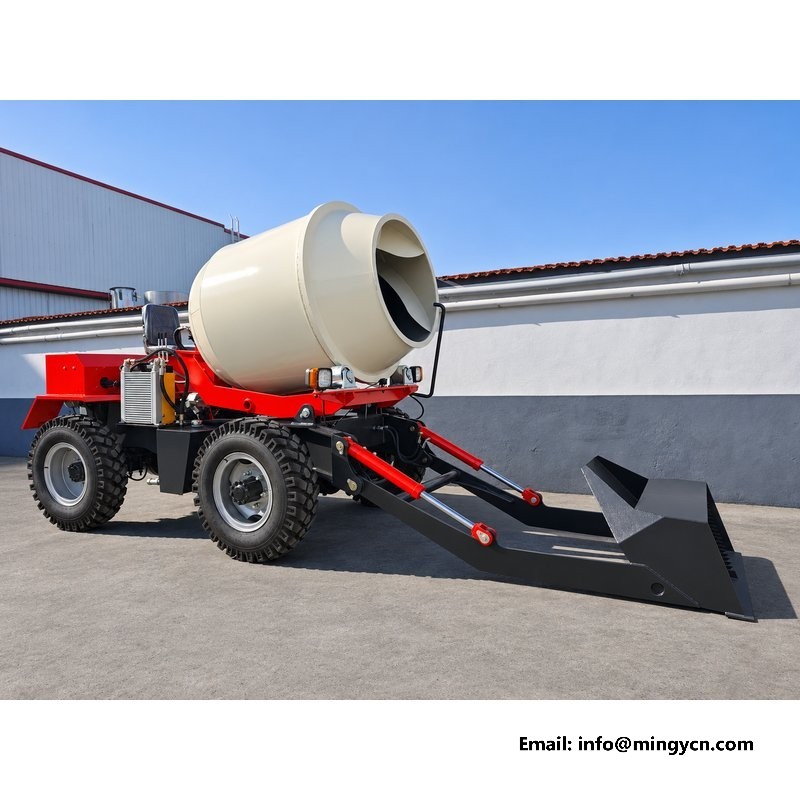
The 750-16 tyres carry the machine and set its working height, and the 204 mm of ground clearance under the frame is a figure that only means something when you see where the low points are. In the side frames the lowest part of the chassis sits between the axles, clear of the tyre envelope, so a crown in the track passes under the centre rather than catching a bracket. Tyre condition belongs in the same judgement. Even wear across the tread suggests the machine has run loaded on hard surfaces; wear on the shoulders suggests a lot of turning on abrasive ground. Both tell you how the machine has spent its hours. Compare both sides in the same frame, because a difference in ride height between left and right points to a spring or a bent axle.
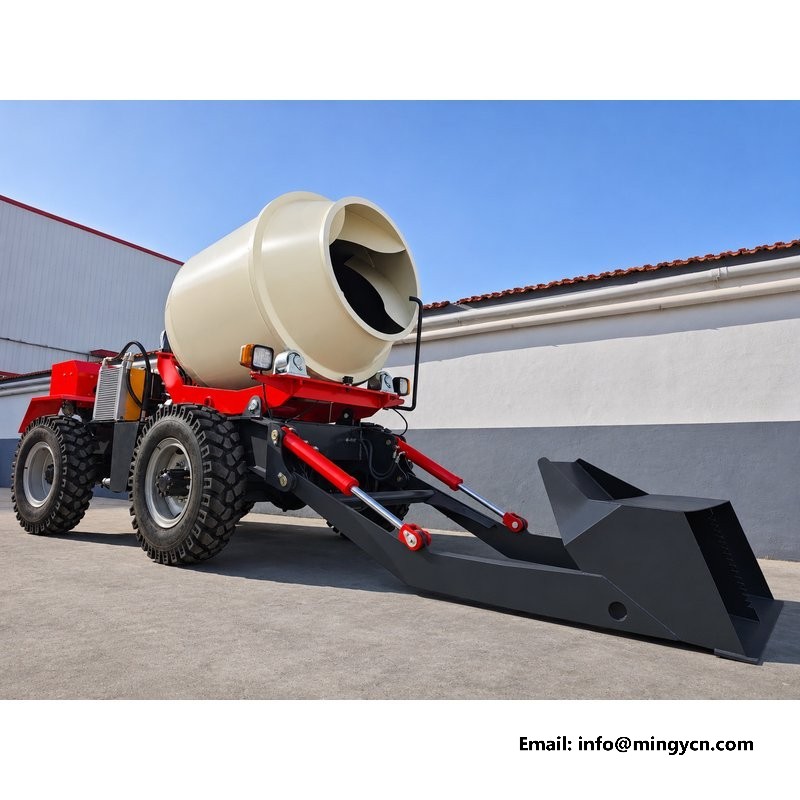
The machine is laid out for one operator, and the loading sequence shows why that works. The driver stays in the seat: the bucket is positioned with the arm levers, the machine creeps forward in the low range, the bucket curls, the machine reverses, and the arm lifts to the drum mouth without anyone leaving the platform. That continuity is the whole argument for a self loading machine on a site with no second man and no separate loader. In the frames here the controls sit within reach of a hand that never leaves the lever bank, and the sight line over the bucket is unobstructed at ground level, which is where the operator needs it most. Count the lever movements in a full cycle and compare that with the number of times the operator's hand leaves the bank.
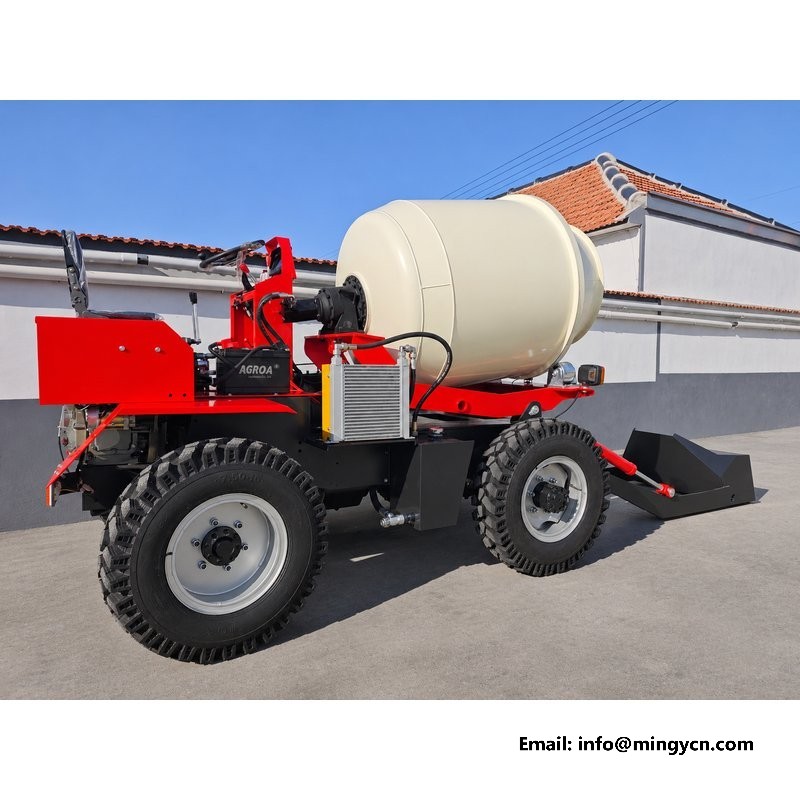
A short check before the first scoop saves time later. Walk around the machine: check that the tyres are at pressure and free of embedded stone, that the arm pins are greased, that the bucket lip is not cracked at the corners, and that nothing has been left on the platform. Then start the engine and work the arm through its full stroke slowly, listening for a knock at the pivot and watching for a hesitation in the cylinder. In the frames here the machine is clean and parked square, which is the state the check should be done in. A machine checked while it is still moving is checked by habit rather than by eye. Do the walk-around in the same order every day, so that a missed step is noticed as a gap rather than as a surprise.
Several common habits are visible as absences in a good loading photograph. There is no load carried with the arm at half height while the machine travels, because that puts the mass high and the bucket blind. There is no bucket dragged backwards with the lip down, because that wears the edge and loads the arm in a direction it was not designed for. There is no operator standing beside the machine to guide it, because the sight lines do not need a second pair of eyes. What the frames show instead is a machine that is either working or parked, with nothing in between. That discipline is worth more than any single component on the build sheet. The absence of a second man on the ground is a design feature rather than a shortcut, and it depends on those sight lines being kept clear.
At the end of a shift the bucket should come down to the ground, not stop at waist height because it is convenient. Leaving the arm raised puts the weight on the hydraulic circuit through the night, and a slowly drifting cylinder will let the bucket settle onto whatever is underneath. Lowering it also takes the load off the pivot and lets the grease distribute rather than sit in one place. In the frames here the bucket rests flat with the lip just touching, the arm is unloaded, and the machine sits square. Park it that way and the next morning's check starts from a known position instead of from whatever the hydraulics decided overnight. A bucket left resting on the ground also keeps the arm from settling onto the tyres if a hose fails overnight.
Flat on the ground, cutting edge level, with the arm just taking the weight off the circuit so the bucket rests on the surface rather than hanging. The heel should be clear and the lip should touch evenly across its width. Uneven contact points to a twisted loader frame or a worn pivot, and it will show later as a bucket that always digs to one side.
More than most operators allow for. A wheel in soft ground tilts the frame, which swings the arm on a slope and brings the bucket to the pile at an angle the levers cannot correct. All four tyres should bear, with normal sidewall deflection and no bulge at the bottom. Walking the loading spot first takes less time than extracting a wheel from a rut.
For the current specification, build options and a formal quotation for your market, contact MINGYI Machinery. E-mail: sales@mingycn.com | LINE (ID): mingyicn
Loading Hopper and Lift Arm on the 1.5m3 Self Loading Mixer · 1.5 m3 Self Loading Concrete Mixer: Full Specification and Walkaround · 1.5m3 Self Loading Mixer from Every Angle: A Yard Photo Reference








