1.5 m3 4WD Self Loading Concrete Mixer with 5000 kg Rated Load, 25 hp Diesel Engine, 3500 x 1600 x 2200 mm Body and 2464 mm Turning Circle
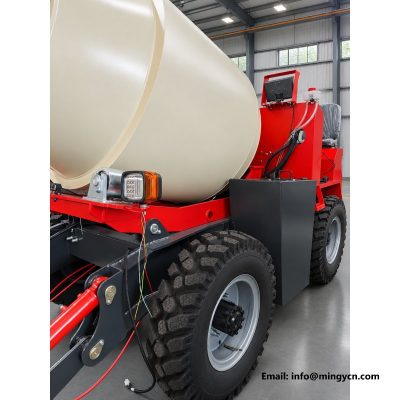
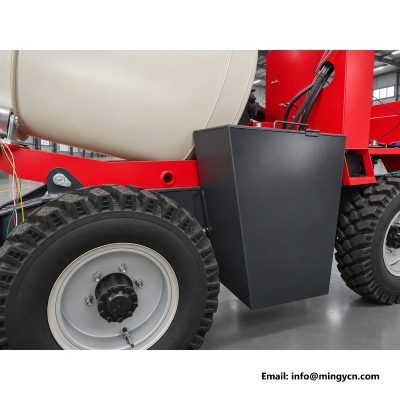
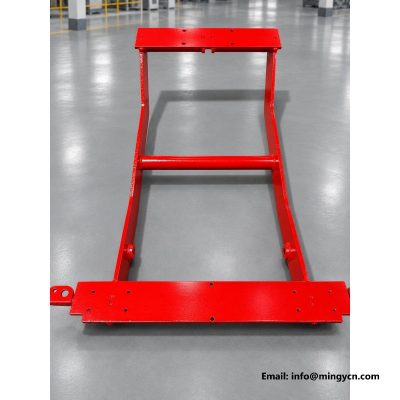
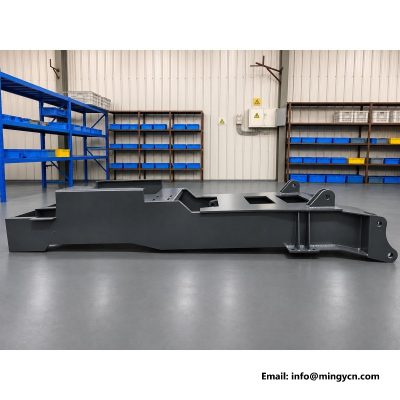
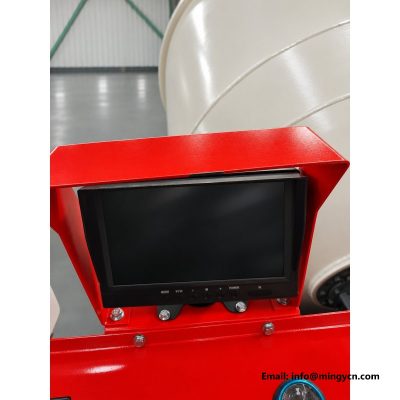
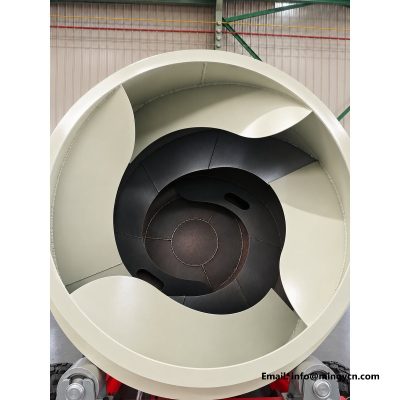
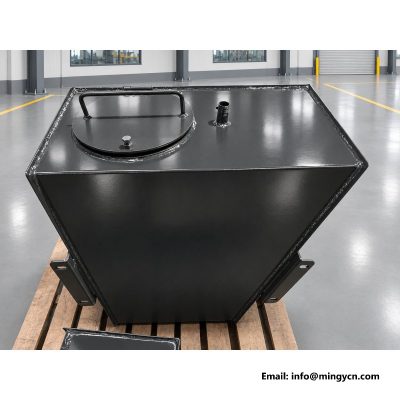
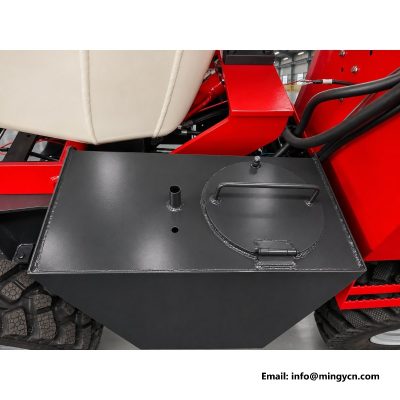
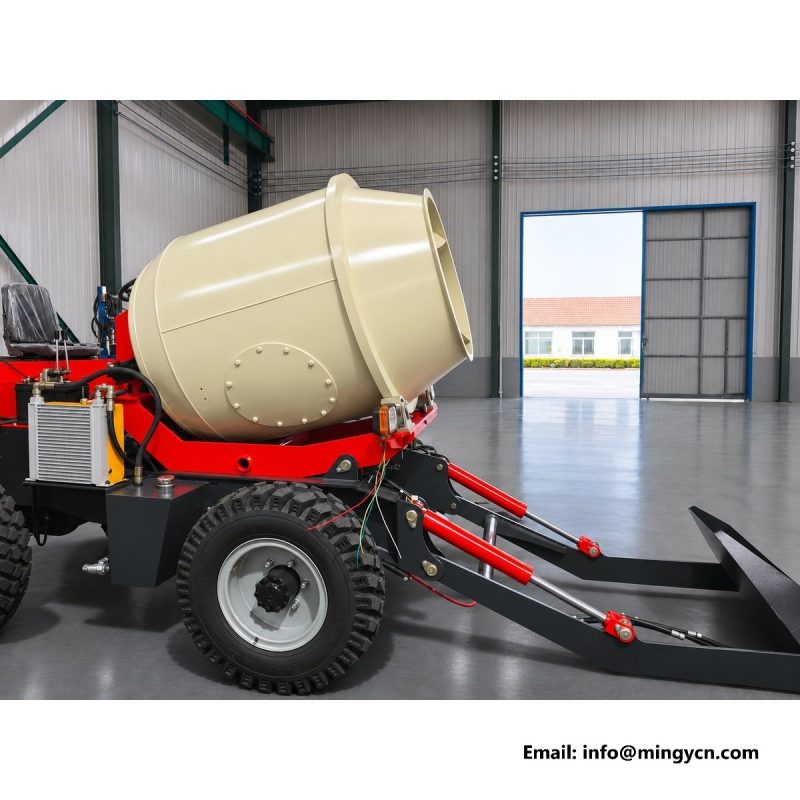
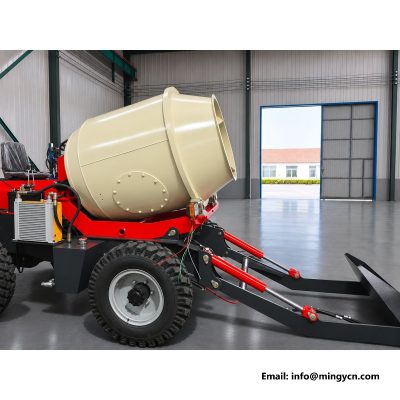
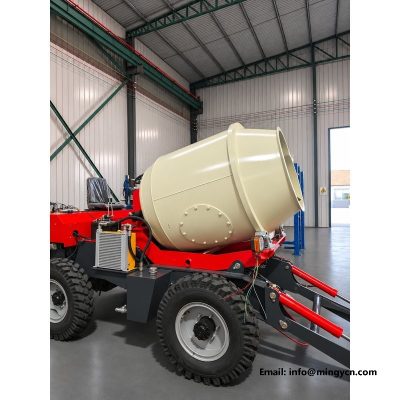
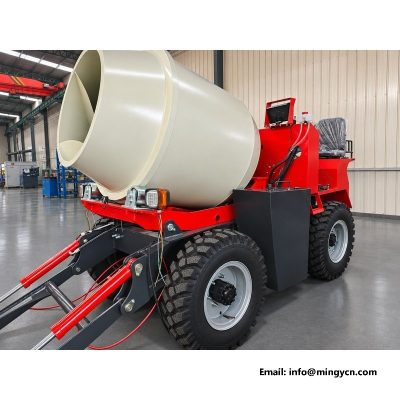
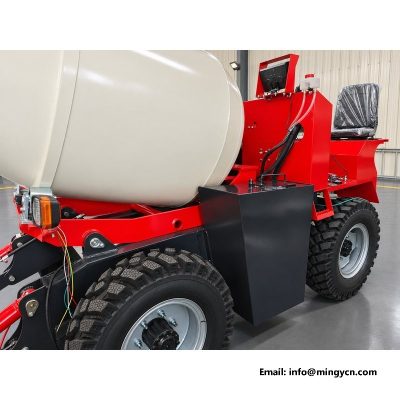
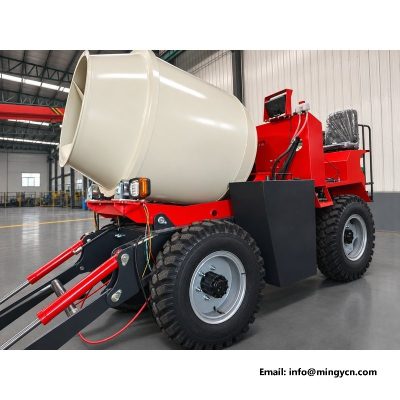
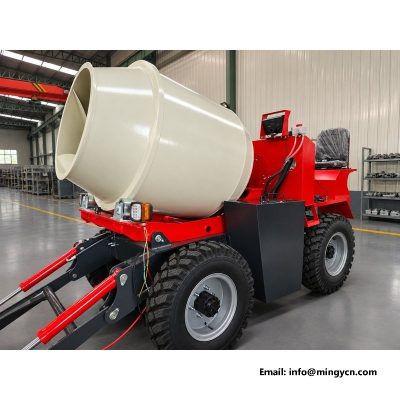
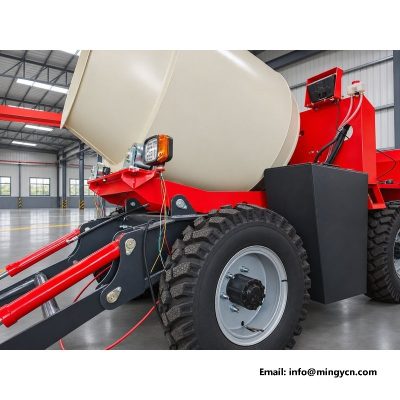
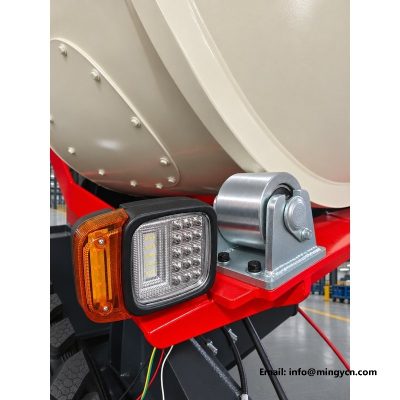
These eight photographs show one 1.5 m3 self loading concrete mixer photographed from several angles inside the workshop, before it is loaded for delivery. You can see the pale mixing drum, the red frame and lift arms, the black trapezoidal water tank, the deep-lug 750-16 tyres, the operator seat, the display panel, the work lights and the front loading shovel all on the same machine. This page uses that single, consistent machine to walk through the published specification line by line, to explain what the 1.5 m3 drum means next to the smaller capacity class, and to set out what a buyer should check at handover and before the machine enters a site. Figures quoted here follow the supplied data sheet, and the final definitions belong in the technical file.
Capacity is the first number a buyer quotes, and it is also the one most often read carelessly. A nominal 1.5 m3, or 1,500 L, drum describes the volume of the mixing vessel, not the volume of concrete delivered in one cycle; the working batch is smaller once the drum is kept clear of the mouth for charging and discharge. Compared with the smaller 0.8 m3 class, the larger drum means each cycle carries more material, so a given pour needs fewer loading and mixing cycles and fewer passes of the shovel. The trade-off is a wider, heavier machine that asks more of the site. Read capacity as a productivity choice: more output per cycle on open ground, less advantage where access is narrow and the machine must turn constantly. Confirm the working batch definition in the technical file rather than assuming the nominal figure is the delivered yield.
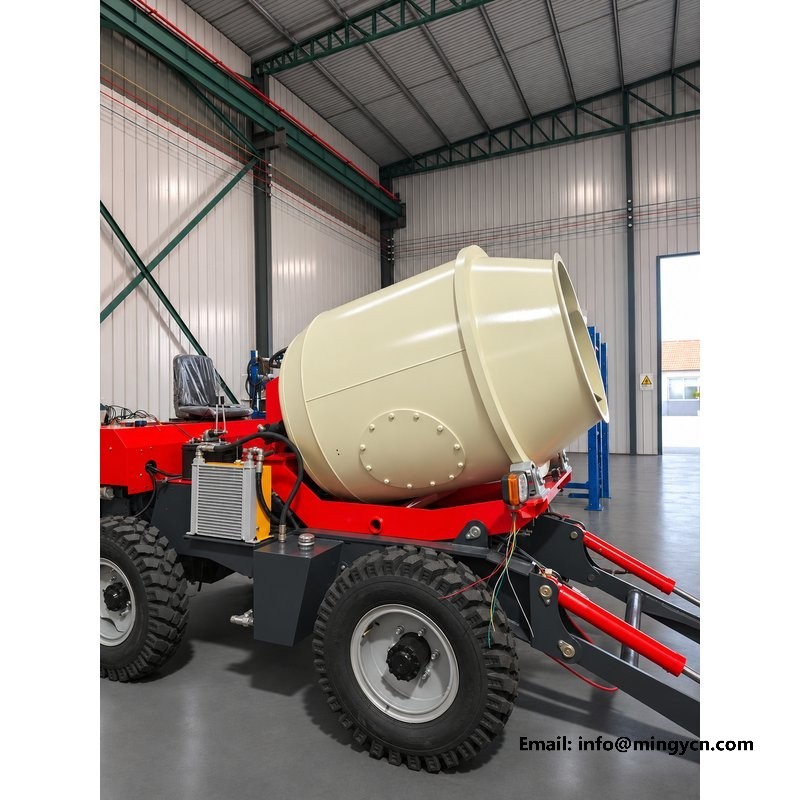
A photo set of one machine taken from several angles is more useful than a catalogue render, because you can cross-check parts against each other. Start by fixing a reference point: the red lift arms and the pale drum appear in most frames, so use them to confirm which side you are looking at. Then follow the black trapezoidal water tank from frame to frame to establish where it sits relative to the rear wheel and the drum shell. Check that the deep-lug 750-16 tyres, the operator seat, the display panel and the work lights are consistent across views, which is a quick way to spot a set stitched together from different builds. Look for the fixed mounting points and the weld toes at the arm pivots. When a supplier publishes one consistent machine rather than mixed stock photos, the details agree, and that agreement is itself a quality signal.
Two figures on the sheet are often confused: rated load of 5,000 kg and operating weight of 1,900 kg. Rated load is the payload the machine is built to carry and mix; operating weight is the machine on its own, with fluids but without a batch. The gap between them tells you how much of the total moving mass is structure and how much is product. A buyer should treat the rated load as a limit on the shovel and the drum together, not as a target to fill every cycle. Overloading shows up first as slow drum rotation, extra strain on the lift arm pivots and longer stopping distances on the road gear. When you compare offers, ask both numbers on the same basis, because a quoted weight that quietly excludes the water tank or the shovel is not comparable with one that includes them.
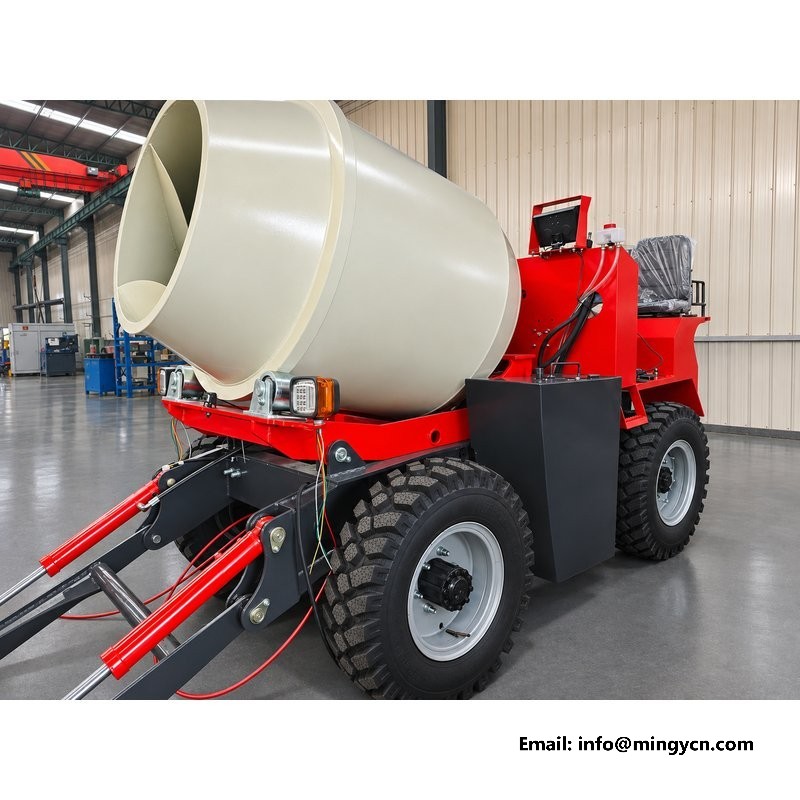
Length 3,500 mm, width 1,600 mm and height 2,200 mm set the envelope the machine needs at every stage between the factory and the pour. Measure the narrowest gate, the ramp width and the clear height under any beam or cable before the truck is booked, and remember that the shovel and the raised lift arms change the working footprint beyond the parked dimensions. The 1,600 mm width is the figure most likely to decide whether the mixer fits through a site gate or between formwork. Height matters under low structures and on a low-loader. Ask for the dimensions in the transport condition, with the drum and shovel secured, as well as the working condition. A machine that fits the yard but not the delivery route is a scheduling problem that no amount of on-site performance will recover.
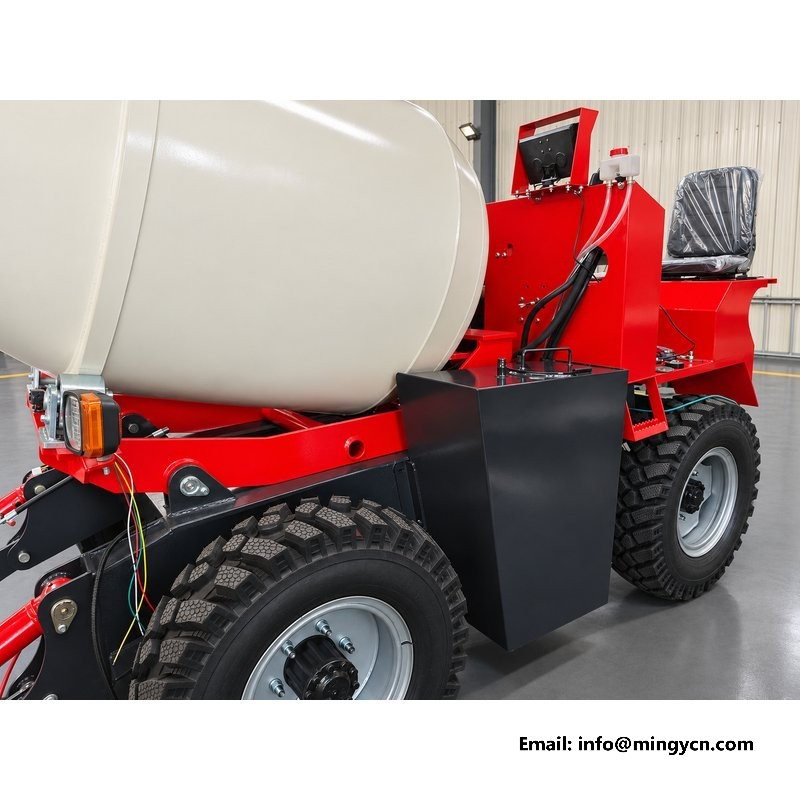
The data sheet gives a steering angle of 28 degrees and a turning circle measured at the outer tyre edge of 2,464 mm, with a four-wheel steering rear axle noted on the specification. Both figures describe how the machine behaves where space is tight: a compact outer tyre path lets the operator reverse and re-align without repeated shunting, and the rear steering contribution is what keeps the tail from swinging wide. Read these numbers as envelope data, not as a promise about every surface; a loaded drum, soft ground and a wet slab all change the real path. The sheet also notes that the turning circle and the gear description follow the supplied data and that the final definitions should be confirmed in the technical file, so treat them as provisional until that document is agreed.
A minimum ground clearance of 204 mm, with 750-16 tyres at the front and the same 750-16 at the rear, tells you what sort of ground the machine was drawn for. Clearance under the chassis decides whether a rut, a broken slab edge or a pile of coarse aggregate catches the belly; it is measured at the lowest fixed point, so ask which component sets it on this build. The deep lug pattern visible in the photographs is chosen for grip on loose, wet or graded surfaces rather than for comfort on hard road. Matching tyre sizes front and rear keeps the rolling radii equal, which matters for a four-wheel-drive drivetrain working on uneven ground. Check the lugs for cuts in the walkaround photos and confirm the tyre pressure and condition at handover, because a soft tyre quietly changes the clearance and the steering geometry.
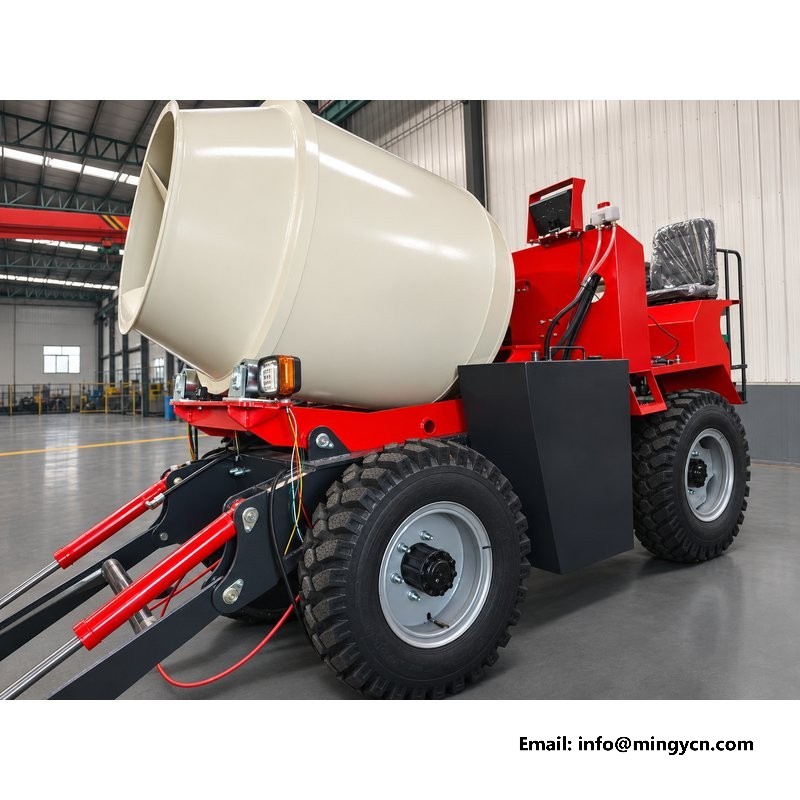
The transmission is described as a four-wheel-drive gearbox with three forward gears, one reverse and an additional road gear, with a maximum travel speed of 24 km/h. The working gears are for loading, mixing and creeping around the stockpile; the road gear is for moving between sites or along a haul road without holding the engine at full speed. Keep the distinction in mind when you read the 24 km/h figure: it is a maximum under defined conditions, not a speed to use with a full drum on a rough track. The sheet flags that the gear description follows the supplied data and that the final definition belongs in the technical file, so confirm how the road gear is selected and what it is rated to carry before an operator relies on it. A buyer should also ask for the shift pattern in writing, since a misunderstood road gear is a common early complaint.
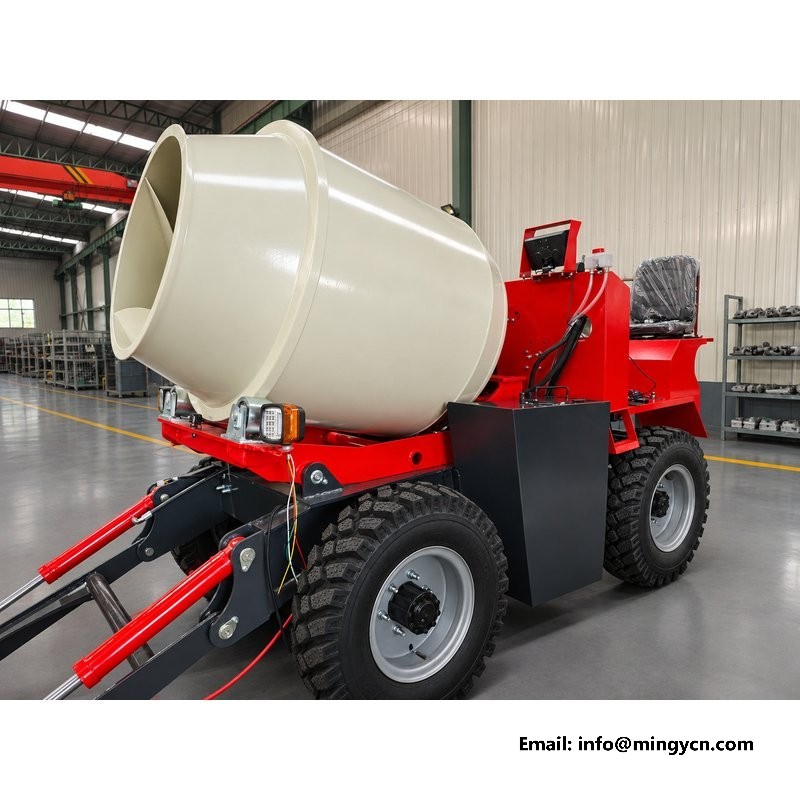
The sheet names an Isuzu-type reinforced front axle and a 130 four-wheel steering rear axle, which is the pair a buyer should ask about in plain terms. The front axle carries the loading shovel and takes the shock when the edge digs into a stockpile, so a reinforced housing and properly sized pivot bushes matter more here than anywhere else on the drivetrain. The rear steering axle is what lets the tail follow a tighter path and keeps the machine manageable in a confined yard. Ask how the steering linkage is protected and where the grease points sit, because these are the first places mud and wash water attack. In the walkaround photos, look at the hub faces and the steering arms for signs of weeping seals or fresh paint used to hide a repair. Confirm the axle designations against the technical file before you sign off a specification.
Power comes from a single-cylinder diesel engine rated at 25 hp, with hydraulic power steering listed on the sheet. A single-cylinder unit is simple to service and economical on fuel, which suits a machine that spends much of its day idling between loads; the trade-off is vibration, so the engine mounts and the exhaust routing deserve a close look in the photographs. Hydraulic power steering is worth more than it sounds on a machine that shuttles between a stockpile and a discharge point all day, because it takes the effort out of repeated lock-to-lock turns on soft ground. Check the hose runs for chafe points and the reservoir for a visible level mark. Ask what the 25 hp rating covers, since a figure quoted at the flywheel is not the same as power available at the drum and the hydraulics together.
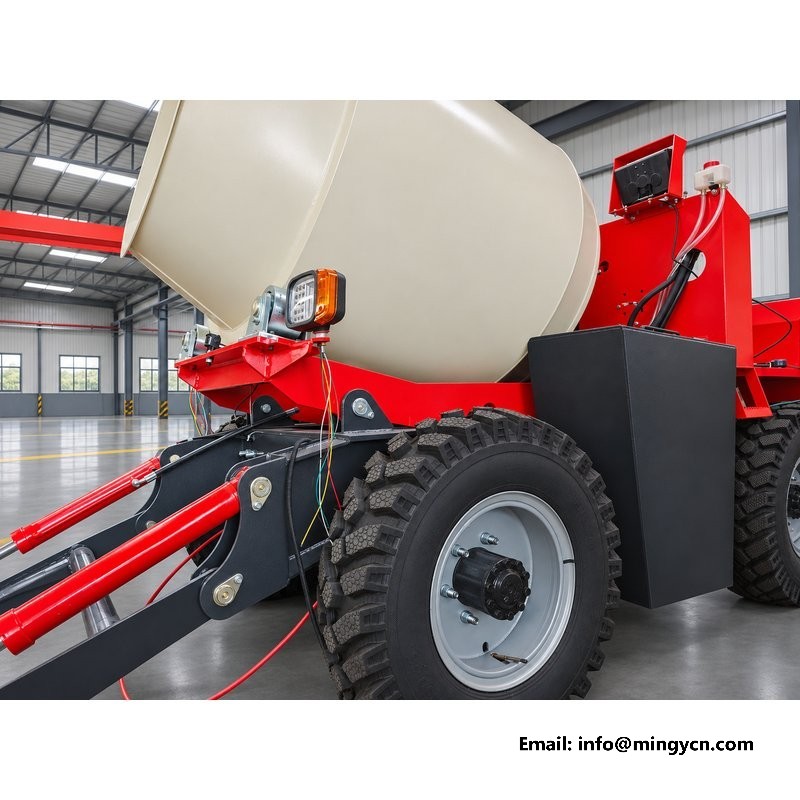
The front loading shovel, the driver seat, the display panel and the LED work lights complete the walkaround, and each is worth judging as a working component rather than a feature. The shovel edge and its lift arm pivots take the hardest loading, so look in the photos for a straight cutting edge, sound welds at the bosses and hoses routed clear of pinch points. A clear display and a seat with usable adjustment reduce the small errors that accumulate over a long shift, and the work lights decide whether the machine can safely finish a pour after daylight. Check that the light brackets are welded to the frame and not simply clamped to a panel. At handover, cycle the shovel, read the display with the engine running and switch every light on, because these are cheap faults to fix before shipment and awkward ones to argue about afterwards.
A handover checklist keeps the conversation about facts rather than impressions. With the machine stationary, confirm the nameplate matches the quoted rated load, operating weight and drum capacity, and photograph it. Walk the frame and the lift arm pivots looking for weld undercut, fresh overspray or mismatched fasteners. Check the tyre size and condition on all four corners, the ground clearance at the lowest point, and that the water tank, shovel and lights are all fixed to drilled points rather than ad-hoc brackets. Start the engine, listen for irregular idle from the single-cylinder unit, cycle the steering to both locks, select each gear including the road gear, and verify the display and work lights. Record any gap against the data sheet in writing and agree how the turning circle and gear definitions will be stated in the technical file.
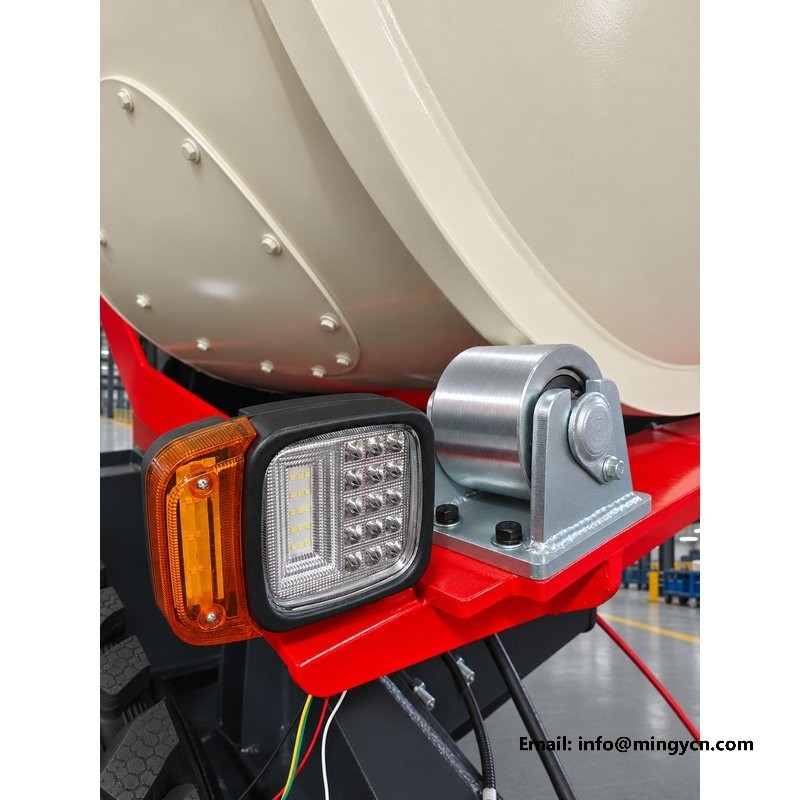
Plan the delivery before the machine leaves the workshop. The stated length 3,500 mm, width 1,600 mm and height 2,200 mm, plus the operating weight of 1,900 kg, determine the trailer, the tie-down points and the ramp capacity needed; confirm whether the quoted weight includes a full water tank, because that changes the load on the ramp. Agree the transport condition with the drum and shovel secured and the lift arms lowered. On arrival, check the ground can carry the machine without ruts that would exceed the 204 mm clearance, and give the operator a turning area consistent with the 2,464 mm outer tyre path. Keep the stockpile and the discharge point on firm, level ground, and set out the wash-down area before the first batch, since cleaning the drum and tank is far easier when a drain and a water point are already in place.
| 1.5 m³ self loading concrete mixer — full machine specification, walkaround, what 1.5 m3 changes | |
|---|---|
| Model | 1.5 m³ 4WD self loading concrete mixer |
| Rated load | 5,000 kg |
| Nominal drum capacity | 1.5 m³ (1,500 L) |
| Operating weight | 1,900 kg |
| Overall dimensions (L x W x H) | 3,500 x 1,600 x 2,200 mm |
| Front / rear tyres | 750-16 / 750-16 |
| Minimum ground clearance | 204 mm |
| Steering angle | 28° |
| Turning circle (outer tyre edge) | 2,464 mm |
| Gearbox | 4WD, three forward and one reverse plus road gear |
| Maximum travel speed | 24 km/h |
| Front axle | Isuzu-type reinforced front axle |
| Rear axle | 130 four-wheel steering axle |
| Engine | Single-cylinder diesel, 25 hp |
| Steering | Hydraulic power steering |
Turning circle and gearbox descriptions follow the supplied data sheet; final definitions should be confirmed in the technical file before order.
No. The 1.5 m3, or 1,500 L, figure is nominal drum volume, not the delivered batch. A working mix leaves freeboard below the drum mouth for charging and discharge, so the yield per cycle is lower. Treat the nominal capacity as a comparison figure and ask for the working batch volume in the technical file. Confirm how rated load and operating weight relate to that batch, so the shovel, drum and water are not planned against a number the machine cannot carry.
Start with the nameplate and match rated load, operating weight and drum capacity to the quotation. Walk the frame, lift arm pivots and mounting points for undercut, overspray or mismatched fasteners. Check the 750-16 tyres and the lowest ground clearance. Start the engine, cycle the steering, select each gear including the road gear, and test the display and lights. Log any gap against the data sheet and agree how the turning circle and gear definitions will be worded in the technical file.
Use the stated 3,500 x 1,600 x 2,200 mm envelope, but measure the tightest gate, ramp and overhead clearance yourself before booking transport. The 1,600 mm width is usually the deciding figure, and the shovel plus raised lift arms extend the working footprint well beyond the parked dimensions. Ask for dimensions in both transport and working condition, and check the 204 mm ground clearance against ruts on the approach. A machine that reaches the yard but cannot reach the pour is a planning error, not a performance issue.
For the current 1.5 m³ self loading concrete mixer specification, engine options and a formal quotation for your market, contact MINGYI Machinery. E-mail: sales@mingycn.com | LINE (ID): mingyicn
Self Loading Concrete Mixer: The Complete Specification · Mini Self Loading Concrete Mixer: The 0.8 m³ · Self Loading Concrete Mixer: What the Specification Really Means · 0.8m3 Self Loading Mixer from Every Angle: A Photographic Reference
More in the 1.5 m³ series: 1.5m3 Self Loading Mixer Water Tank: Filler, Capacity and Mounting · Water Tank Fabrication on the 1.5m3 Mixer: Welds and Baffles · Mixing Blades and Drum Interior on the 1.5m3 Self Loading Mixer