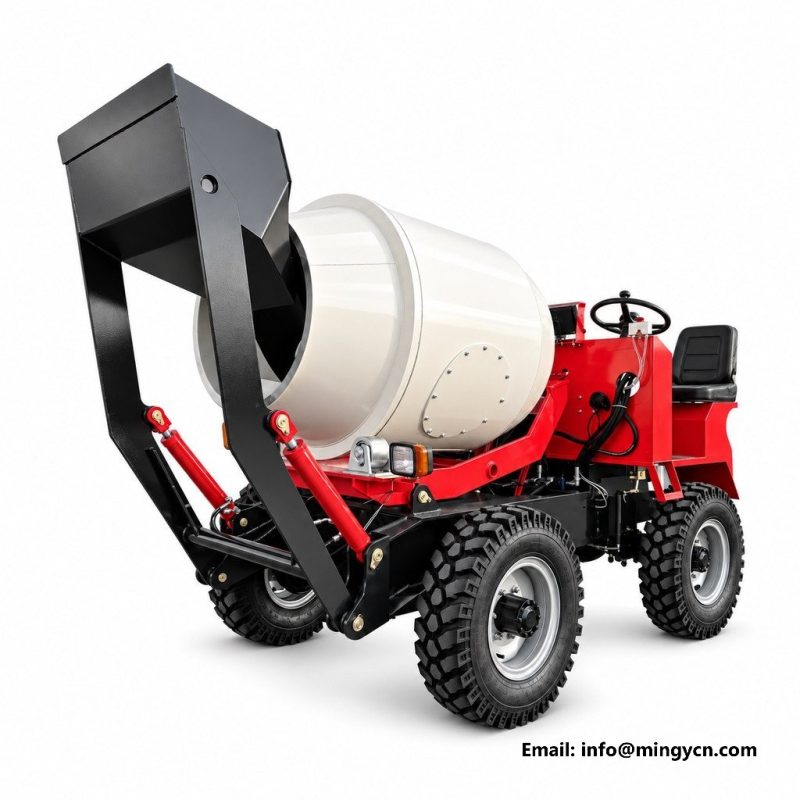
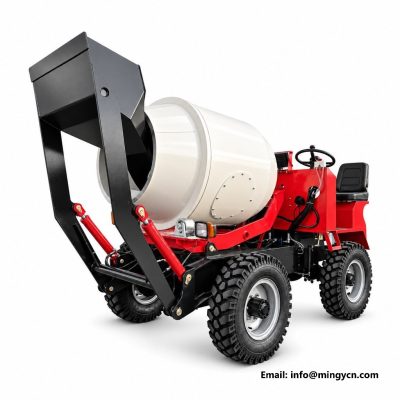
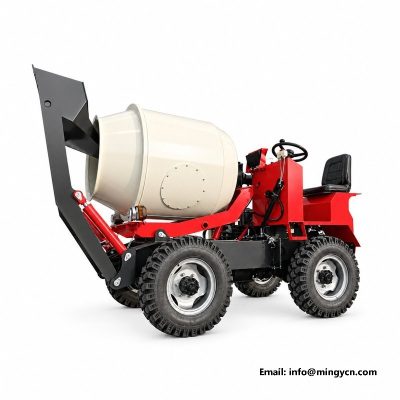
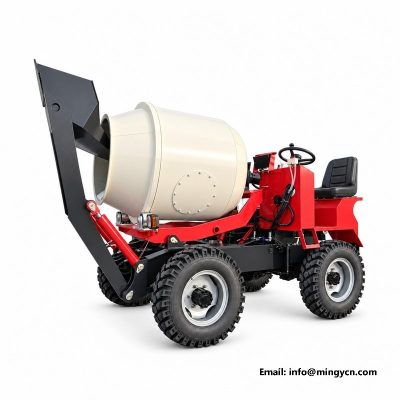
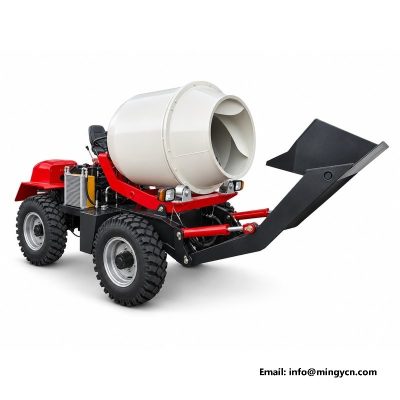
0.8 m3 4WD Self Loading Concrete Mixer Shown from Twelve Angles for Buyer Comparison and Quotation Checks
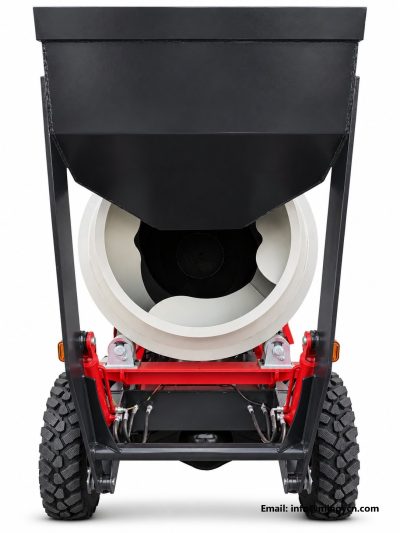
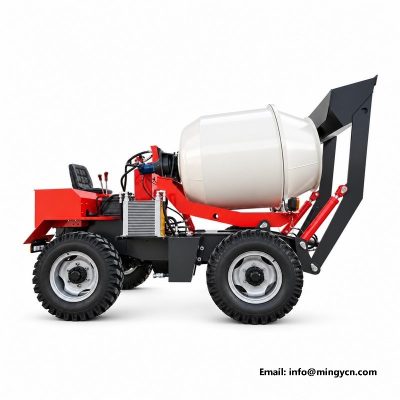
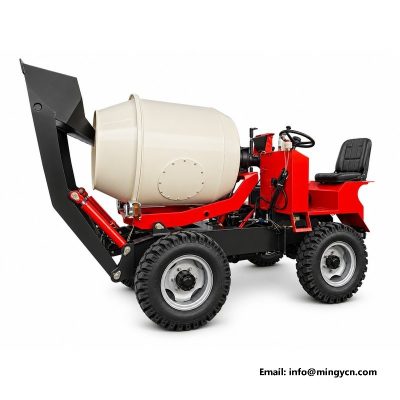
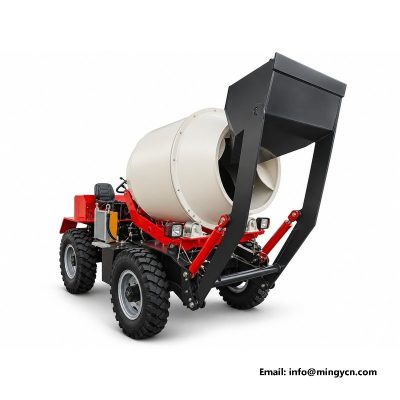
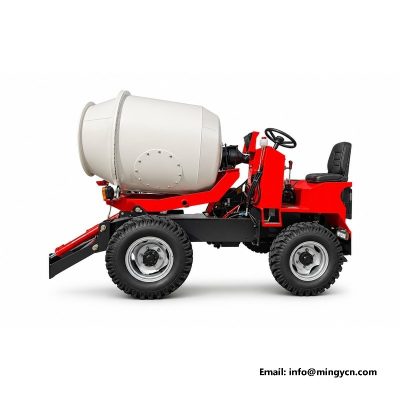
Comparing quotations is easier when every machine is photographed the same way. This page presents the 0.8 m³ 4WD self loading concrete mixer from twelve fixed angles against a clean white ground — front, rear, both sides, each corner, and the views that matter when a machine is being specified, inspected or shipped. The set works as a reference standard: buyers can hold any supplier’s quotation beside these images and check configuration claim against configuration shown, line by line.
The sections below explain what each view is for, how to use the set when comparing two machines, which dimensions to read from which angle, and how the same twelve images serve the delivery inspection and the shipping file.
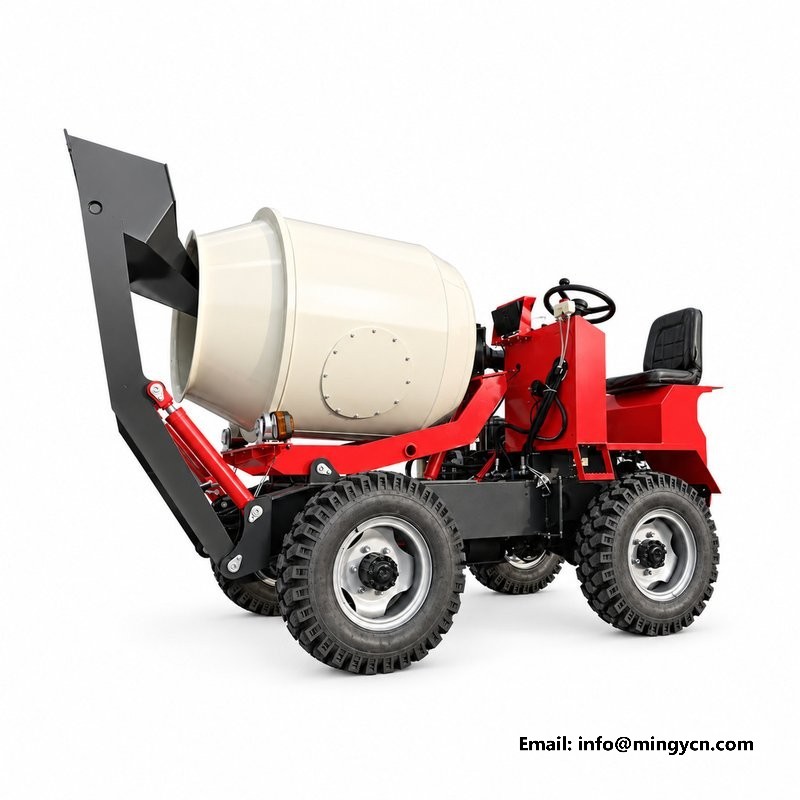
Machine photographs usually flatter, because each supplier shoots the angle that hides what the price cut removed. A fixed set removes that freedom. When the front three-quarter, the left side, the rear and both corners are always present, a missing hydraulic line, a thinner frame tube or an absent guard shows as an absence against a standard rather than a choice of viewpoint. The factory publishes the twelve because it expects the comparison; the set is a statement about the machine as much as a convenience for the buyer.
The white ground serves the same honesty. Without shadows and yard clutter, the outline of the machine reads clean, weld lines and panel gaps stand in relief, and the images print into quotations and approval documents without retouching. The set is refreshed on the line rather than in a studio, so what a quotation shows is what the assembly line builds that month.
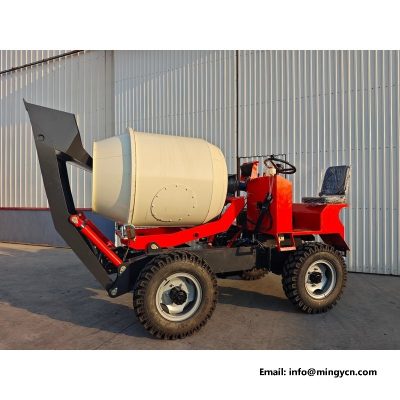
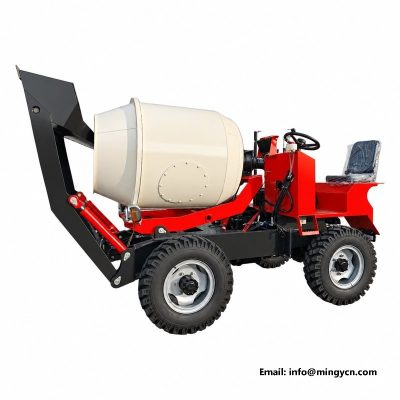
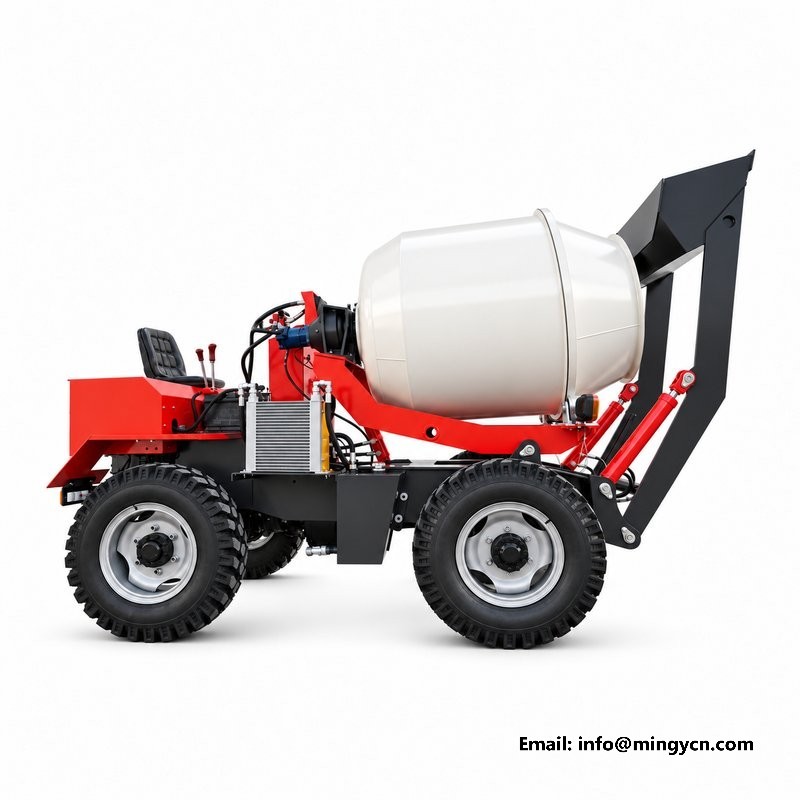
The side views carry the machine’s layout story. On the left profile, the shovel arm, the cab-less platform and the drum sit in one readable line, and the gaps between them are the access the service routine depends on. The right profile shows the water tank, its filler position and the steps to the platform. Buyers planning daily checks read these two images the way a mechanic does: where the grease points land, whether the tank fills from the ground, and whether the platform edge protects the operator or decorates the drawing.
Both profiles also read the wheelbase and the balance of mass between the axles, which the driveline pages tie to traction and stability.
A third read from the same profiles is the working envelope. The shovel at carry pose, the drum mouth height and the stowed chute all sit inside the silhouette, and a buyer with a shed, a gate or a tunnel on the route checks clearances directly from the side views without a tape: the images are shot square, so proportions read true. Sites that have welcomed a machine in person rarely think about this; sites fed by photographs alone depend on it, which is why the profiles are shot at the same square stance every time the set is refreshed.
The square front view is the width view. It reads the track across the tyre outers, the shovel at its carry pose, and the machine as a gate will meet it. The square rear view reads the discharge side, the steering cylinder layout and the lights a road-legal machine must carry. Between the two, a buyer can confirm the numbers a site cares about: will it pass the gate, will it pour where the pour is planned, and will it travel the road legally between them.
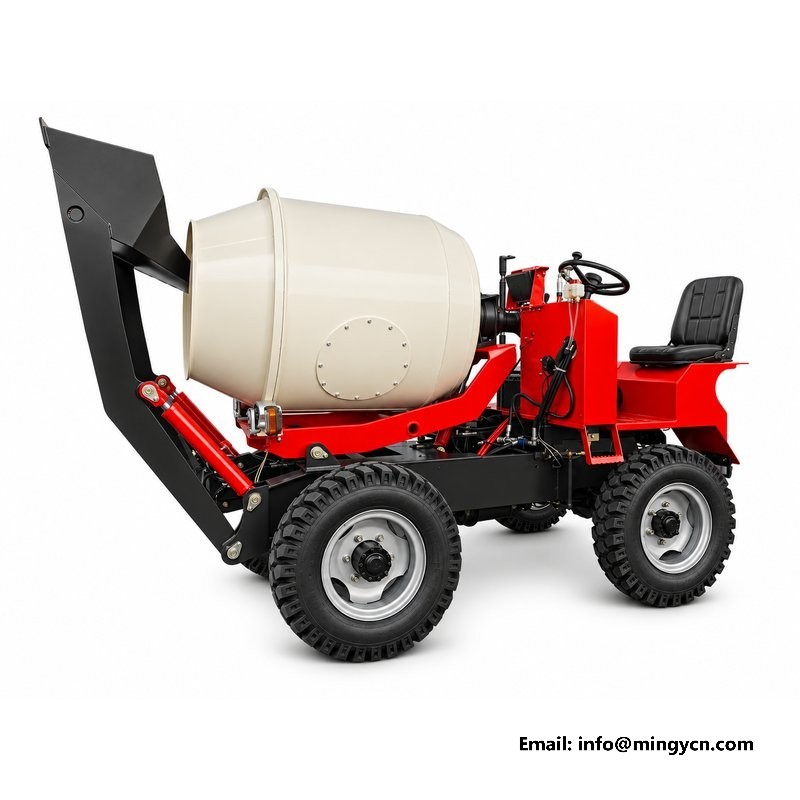
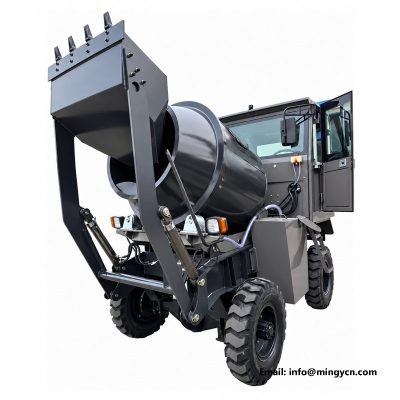
The rear corner views then add what the square views flatten: the drum mouth height, the chute swing clearance and the three-dimensional relationship of shovel, drum and platform that the operator lives with all day.
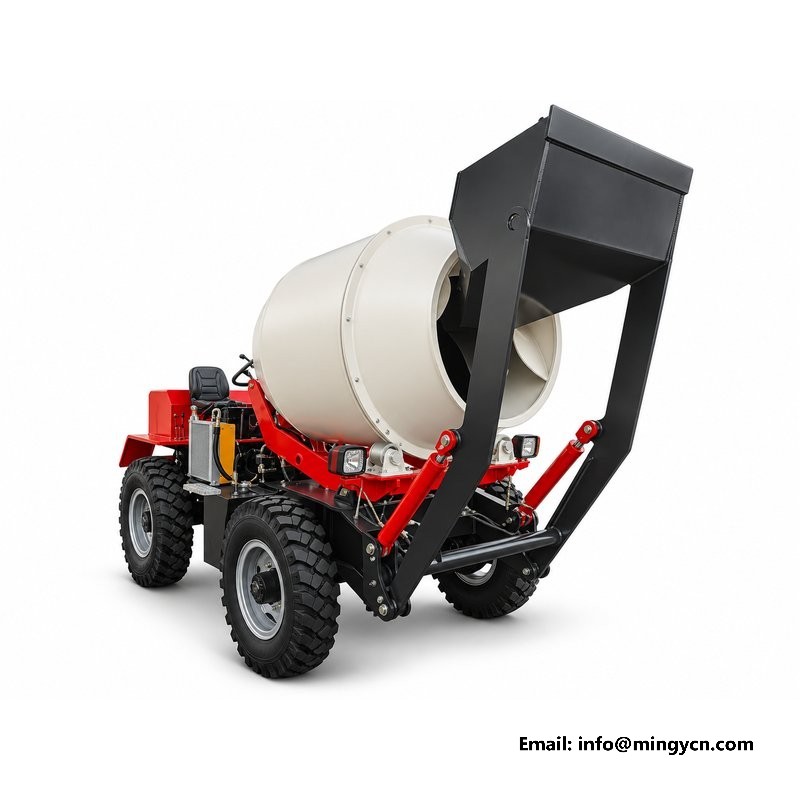
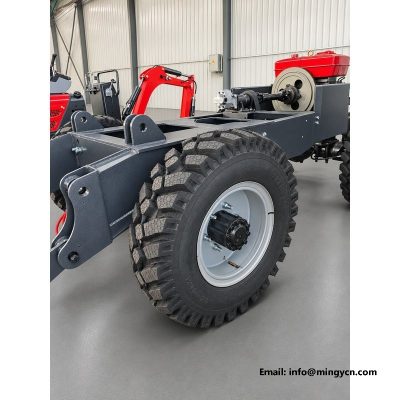
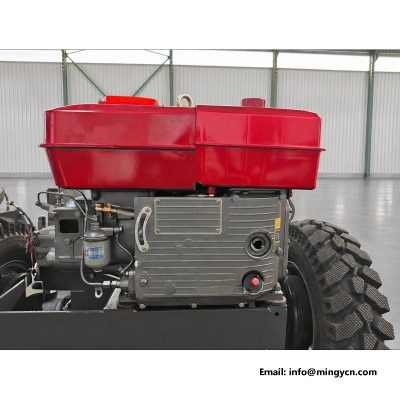
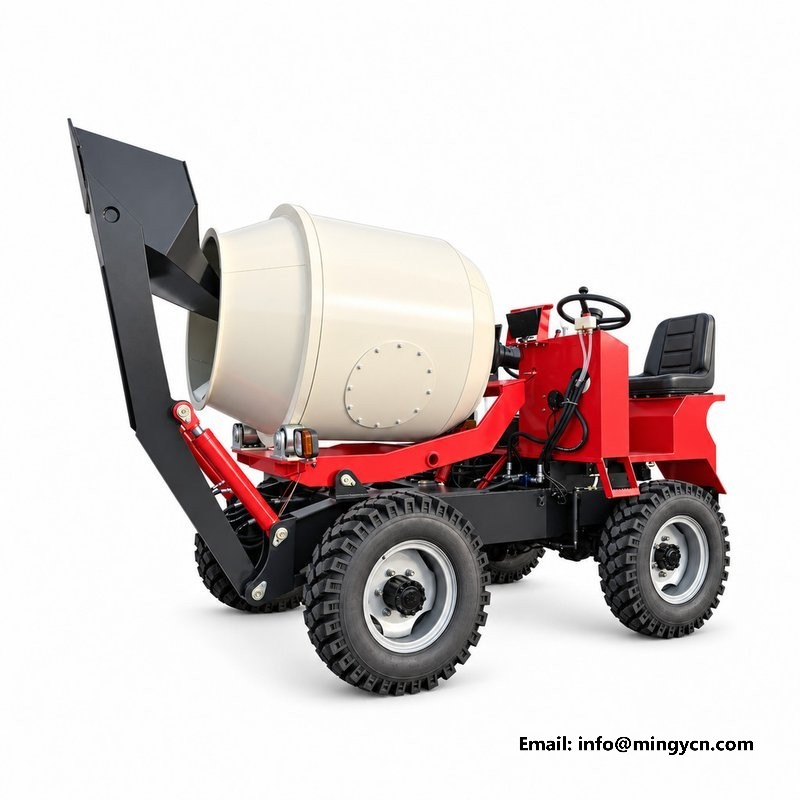
The four three-quarter views are the honest ones. They show two faces of the machine at once, which is where assembly quality and configuration differences surface: a guard missing on one side, a cylinder routed differently, a tank moved to fit a cheaper drum. When comparing two suppliers, the corner views answer the question the brochures dodge, because each shows whether both faces of the machine were engineered together or one was fixed after the photograph was taken.
The corner views also carry the safety story. Handrails, step faces and the platform edge appear on both corners of a symmetrical machine, and a guard present on the photographed side but absent on the working side is exactly the asymmetry a three-quarter view catches. Buyers checking two machines should put the four corners beside each other before any other comparison, because it is the fastest read in the set and the one most likely to change a decision.
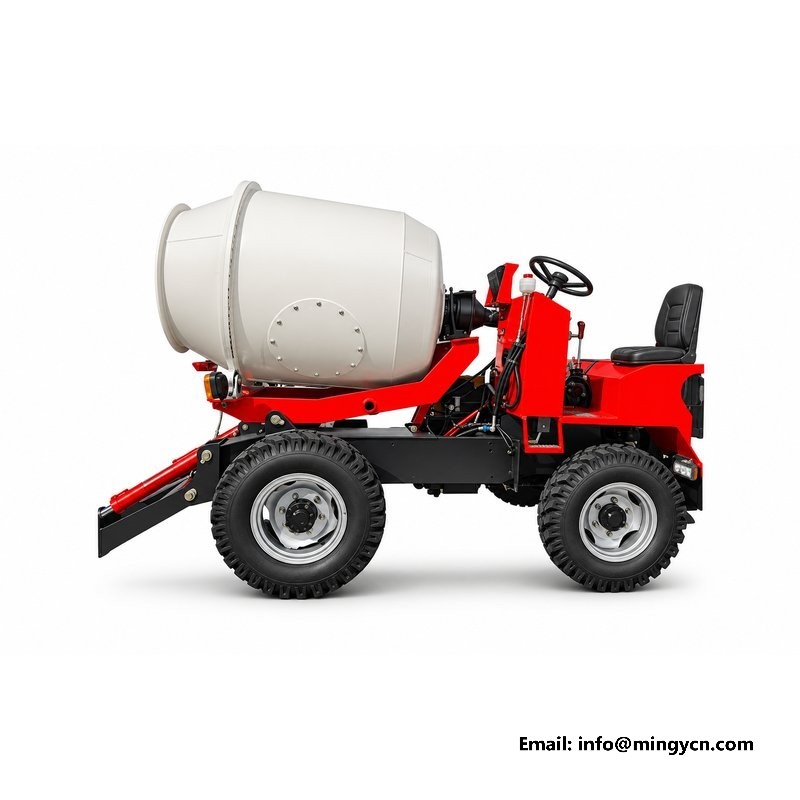
The comparison method is a table, and the twelve angles are its rows. Down the left: the twelve views. Across the top: the machines quoted. Each cell asks one question — is the component present, is it the size claimed, is it finished the same — and the photographs answer without a word of marketing. Buyers who run the table on two quotations typically find the differences concentrate in three places: the chassis sections, the hydraulic fittings and the guards, which are exactly the places a price is cut when a machine is built to a lower number.
The same table works across model years of the same machine, which is how repeat buyers spot a specification that has quietly changed between orders.
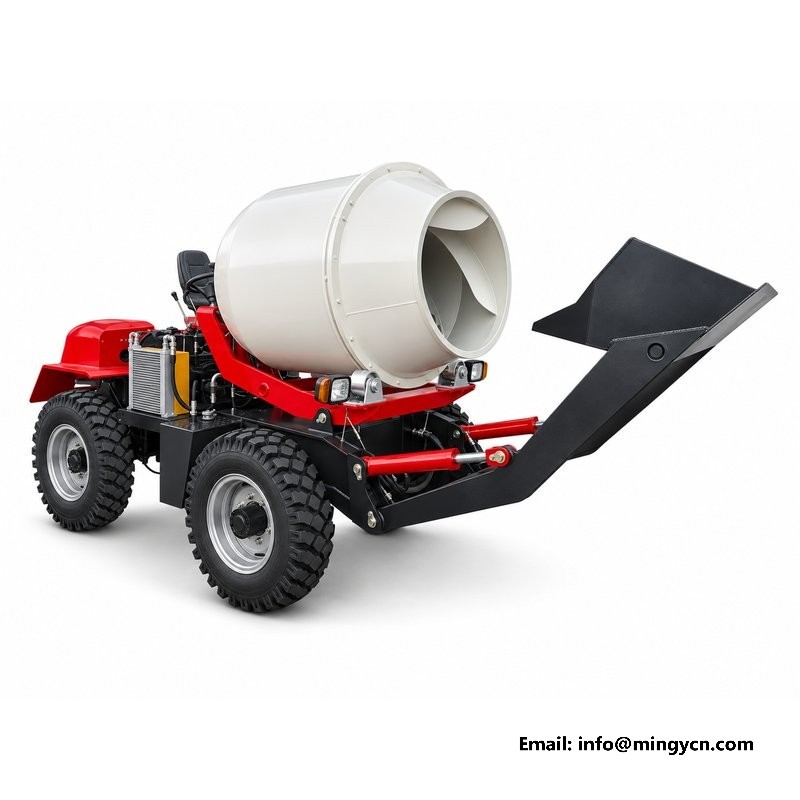
At delivery, the same twelve angles become the baseline. The set shipped with the quotation is compared against the machine in the container, and any difference — a moved clamp, a different fitting, an absent part — is settled before the truck is released, while the leverage is on the factory side of the transaction. The images then file with the shipping documents as the machine’s birth record, and every later inspection, resale conversation or insurance claim refers back to the day it left the works photographed from twelve angles.
The delivery comparison also disciplines the receiving crew in the best way: they walk the machine angle by angle before the first start, which means they have seen every face of it before they drive it. Crews that receive this way find the loose hose or the transit scuff on day one, when it is a claim rather than a mystery, and the twelve angles give the walk a structure that survives being done by two different people on two different sites.
| Photographic reference — 0.8 m³ 4WD self-loading mixer | |
|---|---|
| Views in set | twelve fixed angles: front, rear, sides, corners, details |
| Ground | clean white, daylight-balanced, unretouched |
| Uses | quotation comparison, pre-shipment check, delivery baseline |
| Availability | supplied with every quotation and shipping file |
The set is photographed from production machines on the line, and a buyer’s own unit can be photographed against the same standard before shipment on request.
Consistency is the whole craft of the reference set, and the method is simple enough to describe in a paragraph. The machine stands square on marked positions against a seamless white ground; the camera moves to twelve marked stations at a fixed height and distance; the light is daylight-balanced and even, so no shadow hides a gap or a weld; and the images publish unretouched, because retouching would defeat the set’s only purpose. A machine photographed this way can be compared with another machine photographed the same way, which is the standard the factory invites and the reason the set travels with every quotation rather than living in a marketing folder.
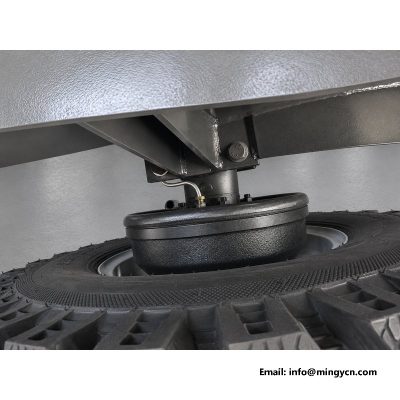
Between the full views, the set includes three details that decide daily use. The drum mouth shot shows the opening against the shovel dump pose, so the charge path is visible rather than promised. The platform detail shows lever positions and the step arrangement an operator uses a hundred times a day. The discharge detail shows the chute mount, its latch and the swing clearance that sets what the machine can pour into. Each detail exists because a working question lands on it during the first week of ownership, and a buyer who studies the three details before ordering has pre-lived the machine’s working day.
The container door is where the photograph set earns its keep. The machine inside should match the images in the quotation exactly, and the comparison takes minutes at the unloading: same guards, same fittings, same finish, same twelve silhouettes. Differences found there, against a paper trail that the factory itself supplied, are settled fastest, because there is nothing to argue about — the factory’s own reference describes the machine. Buyers who file the set with the shipping documents and photograph the machine beside them at delivery hold the strongest position a machinery purchase allows, before the truck ever leaves the port.
Tenders and dealership agreements want standardised images, and the set is produced for that reuse. The views carry consistent naming that matches the specification sheet, so a tender line item can cite a view by name and the evaluator sees the referenced component without hunting. Distributors building local materials assemble pages from the set without photography budgets, and the machine they print is the machine the factory builds, which keeps the chain of representation honest from the works to the buyer’s desk.
The clean ground removes context by design, and some questions need context to answer. Ground clearance, approach angles and the machine’s stance on slopes read better from the working-yard photographs in the other pages of this series; noise, smoke and the feel of the controls need the test run; and nothing but a factory visit shows the line that built the machine. The two kinds of photography work as a pair: the white set answers “what exactly am I buying”, and the yard pages answer “what is it like to work”. Buyers are encouraged to use both, and the factory supplies both from the same production machines.
Specifications drift quietly in every machinery market, and a dated photograph set is the antidote. Each set carries its shooting date and build batch, and repeat buyers comparing this year’s set against last year's catch a changed hose route, a new tank shape or a restyled guard before the order, not after delivery. The factory re-photographs the set whenever a running change lands on the machine, so the images in a current quotation always describe the current build — and any supplier unwilling to date and refresh their images has told the buyer something worth knowing.
They are of the current production build, and orders can request the same twelve-angle set of their own unit before it ships, which most buyers fold into the pre-shipment inspection.
Yes, within the agency terms. The white-ground images are produced for exactly that reuse, and higher-resolution versions are supplied to distributors with the model documentation.
The rear three-quarter corners. They show the most faces at once, and suppliers cutting corners on guards, fittings or drum supports are exposed there before any other view.
The views are shot square so that widths and heights read true, and the quoted dimension sheet sits alongside the set in the documentation pack, keyed to the same view names.
Contact MINGYI Machinery for the current 0.8 m³ self loading concrete mixer specification, the full twelve-angle photograph set and a formal quotation for your market. E-mail: sales@mingycn.com | LINE (ID): mingyicn
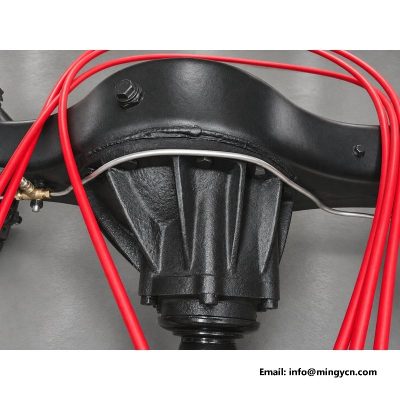
For the machine behind the outlines, see Reinforced Axle 0.8m3 Self Loading Mixer for Unpaved Sites and the component pages in the mini self loading concrete mixer category.